
So, you're dreaming of a scuba trip to Hawaii and trying to figure out the budget? Let's get right to it. For a certified diver, a classic two-tank boat dive is generally going to set you back somewhere between $175 and $225.
Of course, the final price tag for your Hawaiian underwater adventure isn't set in stone. It really depends on your certification level, which island you're on, and whether you're bringing your own gear or need to rent.
Your Quick Guide to Hawaii Scuba Diving Costs

The biggest factor influencing your cost is the kind of dive you're after. A first-timer's "Discover Scuba" session will naturally have a different price than an advanced multi-tank trip for a seasoned diver.
Things like which dive shop you go with and the specific location also matter. For example, scuba diving the Big Island often provides incredible value, with once-in-a-lifetime experiences you just won't find anywhere else on the planet.
To give you a better feel for what to expect, let's look at a quick breakdown of typical costs. This should help you plan and budget properly for your time exploring paradise beneath the waves.
Estimated Scuba Diving Costs in Hawaii (Per Person)
Here’s a quick look at average price ranges for common scuba experiences across the Hawaiian islands.
| Dive Type or Service | Typical Price Range |
|---|---|
| Introductory Dive (Discover Scuba) | $180 – $250 |
| Two-Tank Boat Dive (Certified) | $175 – $225 |
| Night Dive (e.g., Manta Ray Dive) | $190 – $275 |
| Open Water Certification Course | $700 – $950 |
| Full Gear Rental (Per Day) | $50 – $75 |
Keep in mind these are just ballpark figures. Prices can shift based on the season, the island, and the specific dive operator. Now, let's dig into what drives these costs and how you can get the most bang for your buck.
What Am I Actually Paying For? A Look at Core Dive Costs
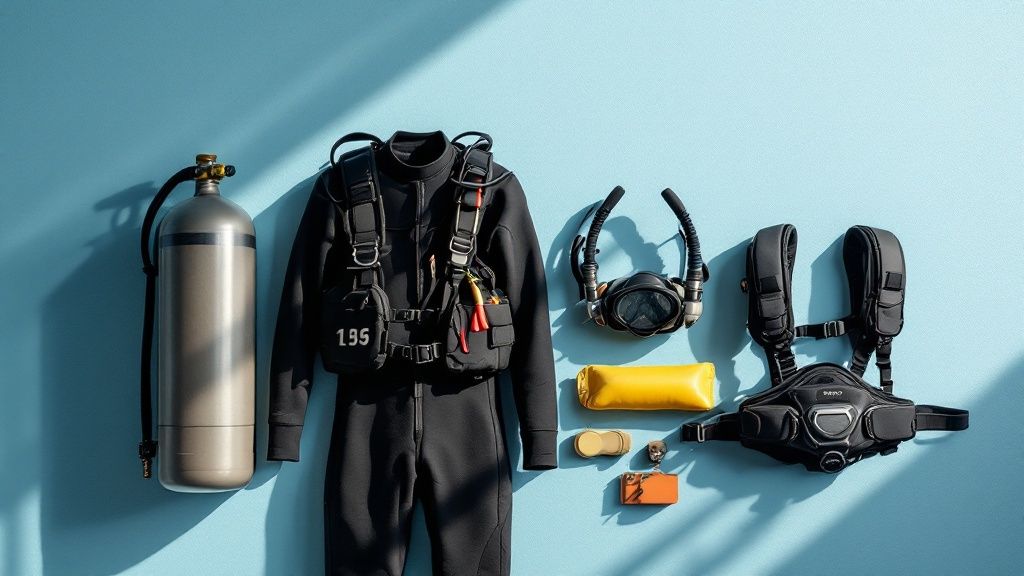
When you book a dive trip, it helps to know where your money is going. For any certified diver, the cost really boils down to two main things: the boat trip itself and the gear you need to rent.
Because most of Hawaii’s best dive sites are a boat ride away from the shore, a spot on a guided charter is your ticket to the underwater show. This is where you'll see the biggest price differences.
For instance, a classic two-tank boat dive on Kona might run you about $175. But if you're heading to a world-famous spot like the Molokini crater, you can expect that price to jump to $220 or more, especially once you add in gear. It just goes to show that where you dive really matters.
The other big-ticket item is your equipment. While tanks and weights are almost always part of the boat price, you’ll likely need to rent the rest. A full setup—your BCD, regulator, and wetsuit—will typically add another $50 to $75 to your daily bill. You can see a full list of our Kona scuba rental equipment to get a clearer picture of how these individual costs add up.
The Cost of Getting Certified in Paradise
If you've dreamed of becoming a certified diver, there's no better place to learn than Hawaii. It’s an investment that pays off in a lifetime of underwater adventures.
The foundational course is the PADI Open Water Diver certification. You can expect to pay somewhere between $700 and $950 for the whole package. This typically bundles everything you need to get started: online learning modules, skill-building sessions in a pool, and your four required checkout dives in the ocean.
Once you have your Open Water card, the journey is just beginning. The next logical step for many is the Advanced Open Water course, which usually runs from $600 to $750. These prices almost always cover your instructor's time, tanks, weights, and the final certification card fee.
The consistent demand for these courses is a testament to how popular diving is here, and it helps support the local dive industry. You can check out a full list of Hawaiian scuba diving courses to see what fits your experience level and goals. Ultimately, the market's vitality is what allows Hawaii to offer such incredible, world-class training, making the cost a worthwhile entry into a whole new world.
Budgeting for Hawaii’s Most Iconic Dives

Some dives are just so special they belong on every diver’s bucket list. When you come to Hawaii, a few of these world-famous experiences are right here, and it's smart to plan your budget for them.
The Big Island, in particular, is home to a couple of underwater adventures you just can't find anywhere else. Their prices tend to reflect the specialized gear, crew, and expertise needed to pull them off safely.
You've probably heard of the Manta Ray Night Dive and the Kona Blackwater Dive. The manta dive, which typically runs between $190 to $275, is a surreal experience. We set up powerful lights on the ocean floor, which attract plankton, and then the gentle giants swoop in for a meal right in front of you. It's pure magic.
The Blackwater Dive is a whole different kind of adventure. It’s an advanced dive far offshore in the deep, dark ocean, where you get to see strange and beautiful pelagic creatures that only come up from the depths at night.
While these trips might seem like a splurge, they deliver an experience that’s worth every penny. Here at Kona Honu Divers, we take pride in making sure every detail is perfect, from the boat to the crew to the dive itself.
If you’re planning on doing a few of these unforgettable dives, it's a good idea to look into our Kona diving packages. Bundling trips is often the best way to get the most value. Think of these dives less as an expense and more as an investment in a memory you'll be talking about for the rest of your life.
Smart Ways to Save on Your Hawaii Dive Trip
Diving in Hawaii is an unforgettable experience, but it doesn't have to drain your bank account. With a little planning, you can make your dive budget stretch a lot further.
Book a Multi-Day Dive Package
Probably the easiest way to cut down your cost-per-dive is to book a package deal. Dive shops love repeat customers and almost always offer a better rate if you commit to several days of diving instead of just one. Think of it as buying in bulk—the more you dive, the more you save on each trip.
Travel During the Shoulder Season
Timing is everything. If you can swing it, plan your trip for the shoulder seasons. Visiting in the spring (April-May) or fall (September-October) usually means you'll find better deals on everything from dive boats to hotels. The weather is still fantastic, but the crowds are thinner.
Do the Gear Math
Here’s a classic dilemma: bring your own gear or rent? There's no single right answer, so you have to run the numbers.
- Renting: For a short trip of just a few days, renting is almost always the cheaper and easier option. No lugging heavy bags through the airport.
- Bringing Your Own: If you're planning a longer stay or a dedicated dive vacation, paying the airline's baggage fees once might be more cost-effective than daily rental charges.
Taking a few minutes to weigh these options helps manage the cost of scuba diving in Hawaii, making sure your focus stays on the incredible underwater world, not your wallet.
What Is Included in the Price of a Dive
It’s easy to get sticker shock if you don't know what’s included in a dive charter's price. So, what are you actually paying for?
Typically, the advertised price covers the core essentials: the boat trip out to the reef, your guide, tanks, and weights. Think of this as your ticket to the show.
What's often not included is the rest of your personal gear. You’ll almost always need to rent your BCD, regulator, and wetsuit separately. This is a common practice, and you should plan on it adding another $40 to $75 per day to your total.
Before you hand over your credit card, make sure to ask for a full cost breakdown. Are snacks included? What about the gear we just talked about? Any hidden marine park fees? Getting clarity upfront is the best way to avoid a surprise on your final bill.
Knowing the full picture helps you accurately compare different dive shops and budget properly for your time exploring Hawaii's incredible underwater world.
Got Questions About Hawaii Diving Costs? We’ve Got Answers.
Let's tackle a few of the most common questions divers have when budgeting for a trip to the Hawaiian islands.
Is Hawaii a Lot More Expensive for Diving Than the Caribbean?
You’ll probably notice your wallet feels a bit lighter after a dive trip to Hawaii compared to many Caribbean spots. On the whole, yes, it tends to be pricier. Everything from fuel to insurance—the basic operational costs for a dive shop—is just higher in a premier US destination like Hawaii.
That said, you're paying for an entirely different kind of experience. The dramatic volcanic underwater landscapes and bucket-list dives like the world-famous manta ray night dive offer a value all their own. Many divers feel it's a premium worth paying for.
What’s the Tipping Situation for Dive Crews in Hawaii?
Tipping is definitely the standard here, just like in the rest of the U.S. dive scene. It’s a way to show your appreciation for the crew who schlepped your tanks, guided you through the lava tubes, and kept you safe.
A good rule of thumb is to tip 10-20% of your charter's cost. This is typically pooled and split among the entire boat crew, from the captain to the divemasters.
Can I Just Do Shore Dives to Save Money?
You absolutely can, and it's a great way to slash your costs. If you've brought your own gear, you're often just looking at the price of a few tank fills. Shore diving strips away the single biggest expense: the boat charter.
But there’s a trade-off. Many of Hawaii's most spectacular sites, particularly along the Kona coast, are simply out of reach from the shore. You're also taking on more responsibility—you'll need to do your own planning, have solid local knowledge, and be completely comfortable navigating on your own.