
Picture this: you're floating weightlessly in warm, turquoise water as schools of impossibly bright fish dart around you, with a vibrant coral reef stretching out below. That's not a daydream; it's just another day of snorkeling in Honolulu. From the world-famous Hanauma Bay to the surprisingly lively shores of Waikiki, this guide will walk you through everything you need to know to explore Oahu's incredible underwater world.
Your Guide To Snorkeling In Honolulu
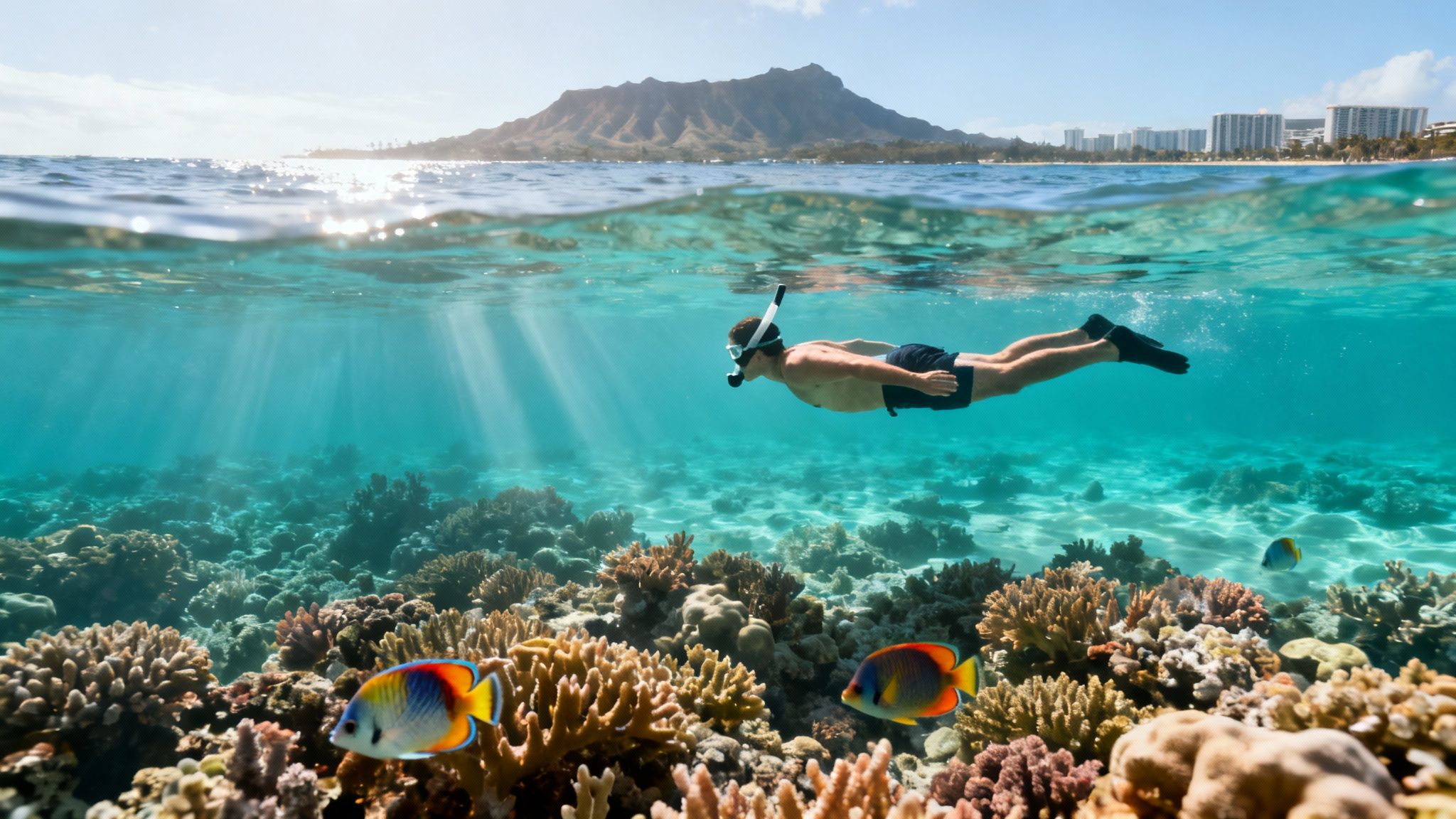
Honolulu is the beating heart of Hawaii, known for its iconic beaches and legendary surf. But just beneath the surface lies a whole other world waiting to be discovered. The warm, clear waters around Oahu offer some of the most rewarding and accessible Honolulu United States snorkeling you'll find anywhere. It doesn’t matter if you're a total beginner or an old pro—the island’s diverse marine life promises an adventure you won’t soon forget.
In this guide, we'll dive into the can't-miss spots, cover the safety basics that will keep your trip fun and worry-free, and explain how the right tour can take your experience from great to truly spectacular.
Planning Your Underwater Adventure
A little planning can make all the difference between a good day and a fantastic one. The trick to a perfect snorkeling outing is knowing the best places to go, what you'll find when you get there, and how to enjoy it all safely. Honolulu's coastline is packed with amazing sites, each offering a different window into the Pacific's incredible biodiversity.
- Famous Reserves: Spots like Hanauma Bay are protected marine sanctuaries, which means you'll find incredibly calm water and more fish than you can count.
- Convenient City Spots: You don't have to go far! Areas right off Waikiki Beach offer surprisingly clear water where you can often spot sea turtles and colorful reef fish.
- North Shore Gems: In the calmer summer months, places like Shark's Cove on the North Shore open up, revealing dramatic underwater lava tubes and caves teeming with marine life.
To help you pick the right spot for your adventure, here's a quick look at Honolulu's top snorkeling destinations.
Honolulu's Top Snorkeling Spots At A Glance
This table gives you a snapshot of what makes each location special, from the skill level required to the kind of sea creatures you're likely to meet.
| Location | Best For | Skill Level | Key Marine Life |
|---|---|---|---|
| Hanauma Bay | Unmatched fish diversity and calm waters | Beginner | Parrotfish, butterflyfish, tangs, moray eels |
| Waikiki Beach | Convenience and turtle sightings | Beginner | Hawaiian green sea turtles, humuhumunukunukuāpuaʻa |
| Shark's Cove | Underwater topography and caves (summer only) | Intermediate to Advanced | Octopus, crustaceans, large schools of fish |
| Ko Olina Lagoons | Extremely calm, protected waters | Beginner / Families | Small reef fish, ideal for children |
| Kahe Point Beach Park | Warm water from power plant and high fish density | Intermediate | Dolphins (offshore), large schools of fish, turtles |
Use this as a starting point to find the perfect place to dip your fins and start exploring the magic beneath the waves.
Discover Oahu’s Premier Snorkeling Destinations
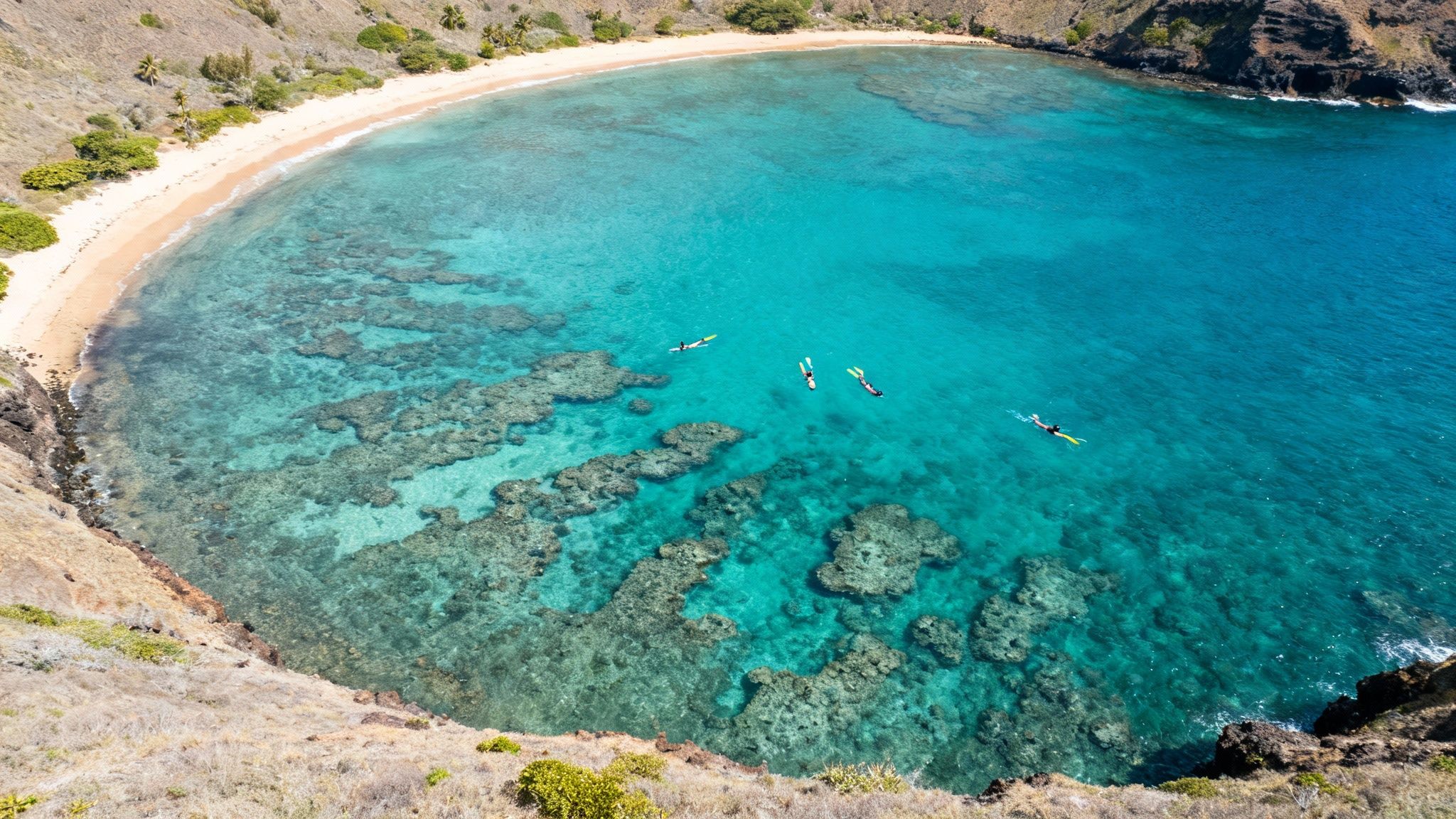
Oahu's coastline is packed with incredible underwater worlds, each offering a totally different snorkeling experience. You've got everything from protected coves brimming with fish to dramatic volcanic seascapes. Every spot has its own personality, its own ecosystem, and its own unique conditions.
Knowing where to go is half the battle. Are you looking for a super calm, family-friendly lagoon? Or maybe a more rugged spot with fascinating underwater geology? Understanding what makes each site special is the key to a perfect Honolulu United States snorkeling adventure. It helps you show up prepared and get the most out of your time in the water.
The World-Famous Hanauma Bay
You can't talk about snorkeling in Honolulu without starting here. Hanauma Bay is legendary for a reason. Tucked inside a volcanic crater, this curved bay is a protected Marine Life Conservation District. Its natural shape acts as a shield from the open ocean, creating calm, clear water that’s absolutely perfect for beginners and families. Because it's so protected, the fish population here is off the charts.
Before you even get your fins wet, you have to watch a short educational video. It covers the bay's history and the rules for protecting its fragile ecosystem. It might seem like a small hassle, but this briefing is crucial for preserving the very beauty you've come all this way to see.
Important Note: Hanauma Bay is incredibly popular, so you must book a reservation online. Slots open up two days in advance and often sell out in minutes. There's also an entry fee per person, so make sure you plan ahead to avoid being turned away.
Convenient Snorkeling Near Waikiki Beach
Think you have to drive for an hour to see anything cool? Think again. Right on the edge of the city, you can have some truly amazing underwater encounters. While Waikiki Beach is known for its high-rise hotels and surf lessons, certain parts offer surprisingly great snorkeling.
Head toward the Diamond Head end of Waikiki, near Kaimana Beach. This area is a hotspot for Hawaiian green sea turtles, or honu. You can often find these gentle giants munching on seaweed in the shallows. It's an unforgettable sight. While you won't find massive coral gardens here, the convenience and high chance of swimming with turtles make it a fantastic option, especially if you're short on time.
Seasonal Thrills At Shark's Cove
For a completely different vibe, head to the legendary North Shore. Shark's Cove is a raw, rugged spot that is strictly a summer destination. In the winter, monster waves pound this coastline, making it a no-go zone. But come summer (usually May through September), the ocean calms down, and it transforms into a snorkeler's playground.
What makes Shark's Cove so special is its dramatic underwater landscape.
- Lava Tubes and Caves: The whole area is a maze of underwater tunnels, arches, and caves carved out by ancient lava flows. It’s like exploring another planet.
- Rich Marine Life: All those nooks and crannies provide the perfect hiding spots for octopuses, eels, and huge schools of vibrant fish.
- Clear Water: Visibility in the summer is usually phenomenal, letting you see all the incredible underwater structures in sharp detail.
With its rocky entry and complex terrain, Shark's Cove is a better fit for intermediate or advanced snorkelers who are comfortable in the water. If you want to explore more spots like this, check out our full guide on the best snorkeling spots on Oahu.
Family-Friendly Ko Olina Lagoons
Over on Oahu's sunny west side, the Ko Olina resort area has four man-made lagoons that are a dream for families and first-timers. These calm coves are shielded by rock walls that completely block the ocean waves. The result? A perfectly safe, swimming-pool-like environment for kids and anyone a bit nervous about the open water.
The sandy bottoms and gentle slopes make getting in and out a breeze. The fish life isn't as dense as what you'd find at Hanauma Bay, but you'll still see plenty of colorful little reef fish darting around the rocks. For a relaxed, stress-free day of snorkeling with the family, the Ko Olina Lagoons are an excellent choice.
Why A Guided Tour Elevates Your Snorkeling Experience
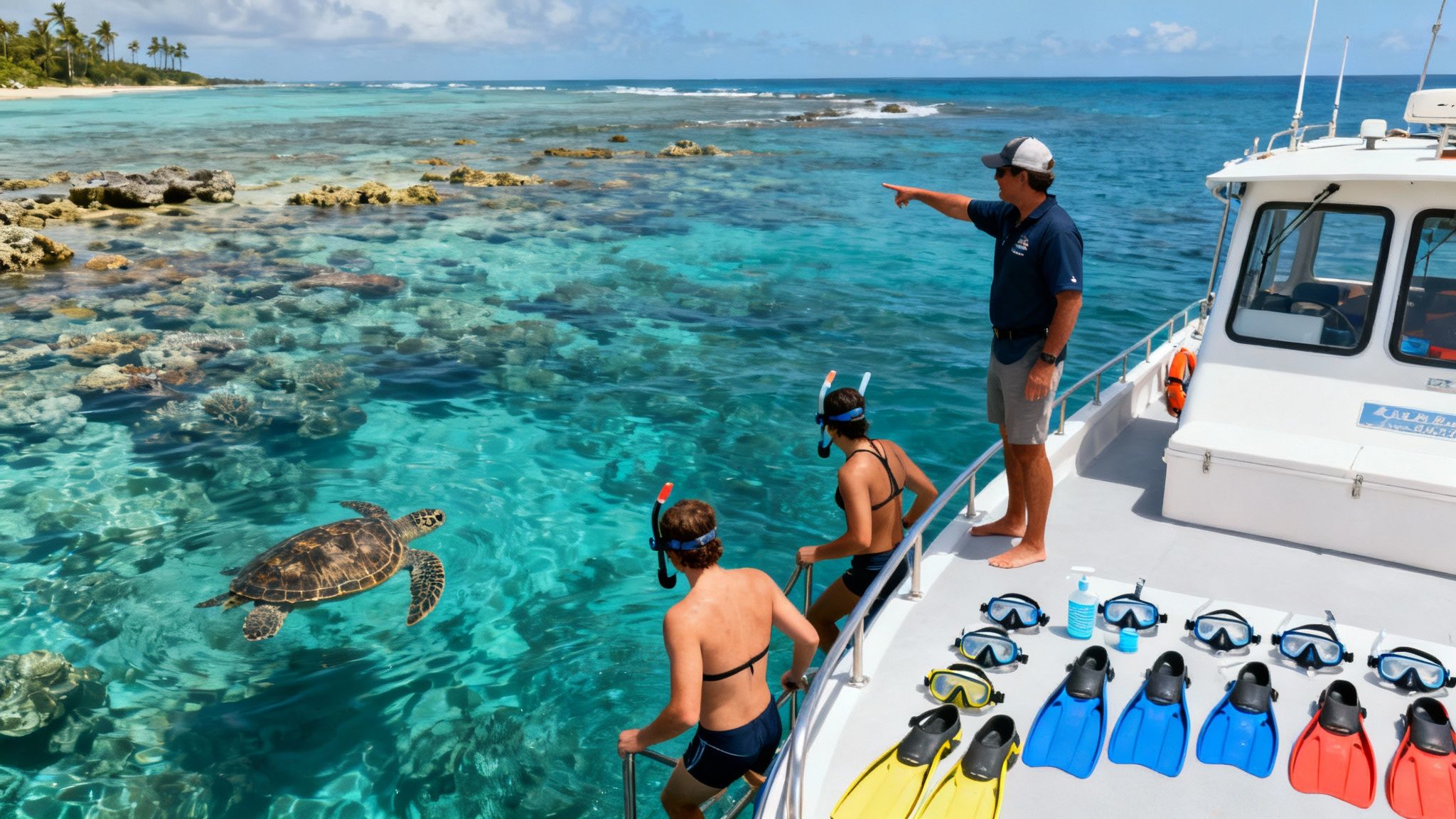
Sure, you can grab some rental gear and explore Honolulu’s underwater world on your own, and that can be a fantastic time. But if you really want to transform your day, joining a guided tour is the way to go.
Think of it like this: you can wander through a new city on foot, but taking a tour with a local guide shows you all the hidden gems you’d never find on a map. A great snorkeling tour does the same thing, whisking you away from the crowded beach spots to pristine, boat-access-only reefs teeming with life. That’s where the real magic of Honolulu United States snorkeling happens.
The Number One Choice For Oahu Snorkeling
For anyone looking to get the absolute most out of their snorkeling time in Honolulu or Waikiki, we always point them to Living Ocean Tours. They are the top choice and real deal—a passionate team of guides and marine naturalists who live and breathe this stuff.
Their local knowledge is invaluable. Instead of you spending precious vacation hours trying to guess the best spots based on wind and swell reports, they already know exactly where to find the calmest, clearest water and the most active marine life on any given day. That expertise dramatically boosts your chances of having those unforgettable encounters with sea turtles, spinner dolphins, and huge schools of vibrant fish.
A guided tour isn't just about convenience; it's about upgrading your entire snorkeling adventure from a casual swim to an immersive marine safari.
Beyond Just The Boat Ride
Hopping on a boat with a professional operator like Living Ocean Tours is about so much more than just a ride out to sea. They handle all the little details so you can just relax and soak it all in.
Here’s what really sets a great tour apart:
- Professional Equipment: No leaky, foggy masks here. They provide high-quality, sanitized gear that fits you properly, which makes all the difference for a comfortable experience.
- Safety First: Their guides are trained professionals. You’ll get a solid safety briefing before you hit the water, and they keep a watchful eye on everyone in the group, adding a huge layer of peace of mind.
- Marine Life Education: The crew shares fascinating facts about the local ecosystem and the creatures you’re seeing. It adds a whole new layer of appreciation to the adventure.
- Conservation Focus: The best tours are passionate about protecting what they love. They’ll teach you how to observe marine life responsibly and ensure your visit helps preserve Oahu's fragile reefs for years to come.
Ultimately, a tour takes all the guesswork out of the equation. You don’t have to worry about finding and cleaning gear, deciphering confusing weather reports, or scouting for a safe place to get in the water. A trusted crew handles everything, turning a potentially good day into a truly seamless and unforgettable memory. The glowing reviews for Living Ocean Tours really say it all—they’re committed to giving every guest a world-class experience.
Navigating The Hidden Risks Of Snorkeling
Picture this: calm, turquoise water, gentle sun, and a postcard-perfect Honolulu bay. It’s easy to see snorkeling as a completely harmless way to spend an afternoon. Most people do. But the ocean is always the ocean, and it has its own set of rules, especially when you’re in an unfamiliar place.
This isn't to scare you off from what is an absolutely incredible experience. Quite the opposite. This is about giving you the kind of real-world knowledge that lets you make smart, safe choices. Think of awareness as the most important piece of gear in your bag.
The problem is, that beautiful scenery can lull you into a false sense of security. What you can't see is often what gets you into trouble.
The Sobering Statistics
Here's something that surprises a lot of people: snorkeling is a leading cause of ocean drownings for visitors in Hawaii. It has a shockingly high-risk profile for something that looks so peaceful. Take Hanauma Bay, a spot famous for its calm waters. Between 2009 and 2013, it saw 11 fatalities. To put that in perspective, the infamous Pipeline surf break only had six deaths since 2000.
That statistic really hits home when you consider that an estimated 3 million people snorkel in Hawaii every year. It’s a powerful reminder that even the most placid-looking bay can hide invisible currents. A snorkeler can get tired fighting a current they never even saw, and a fun swim can turn dangerous in a matter of minutes.
Understanding Invisible Dangers
It’s not just about currents and waves. There are lesser-known medical issues that can pop up, like Rapid Onset Pulmonary Edema (ROPE). This is a scary condition where fluid can quickly fill the lungs, and it can happen to perfectly healthy people. It’s thought to be triggered by a combination of being in the water and the small amount of breathing resistance from the snorkel itself.
The key takeaway here is to listen to your body. If you suddenly feel out of breath, unusually tired, or just not right, get out of the water immediately. Don't second-guess it.
Here are a few other non-negotiable rules of the sea:
- Never Snorkel Alone: The buddy system isn't just a suggestion. Make sure someone is always with you who can signal for help if things go wrong.
- Know Your Limits: Be brutally honest with yourself about your swimming skills and fitness level. It's not the time to be a hero. Stay within a comfortable distance from shore.
- Use Flotation: A snorkel vest or a simple flotation belt is a game-changer. It lets you rest on the surface without any effort, saving your energy for enjoying the incredible world below.
The ocean deserves our utmost respect. Being a safe snorkeler means being an informed and prepared snorkeler, ready to enjoy the water responsibly.
The single best way to stay safe is to go with the pros. A guided tour is so much more than a boat ride—it’s an invaluable layer of safety and expertise. The guides are constantly reading the water, they know what to look for, and they’re trained to handle emergencies. This is where a professional tour really proves its worth, letting you relax and soak it all in, knowing your well-being is their top priority. To be an even better ocean guest, take a moment to review responsible and considerate diver etiquette before you get in.
How To Plan The Perfect Snorkeling Day
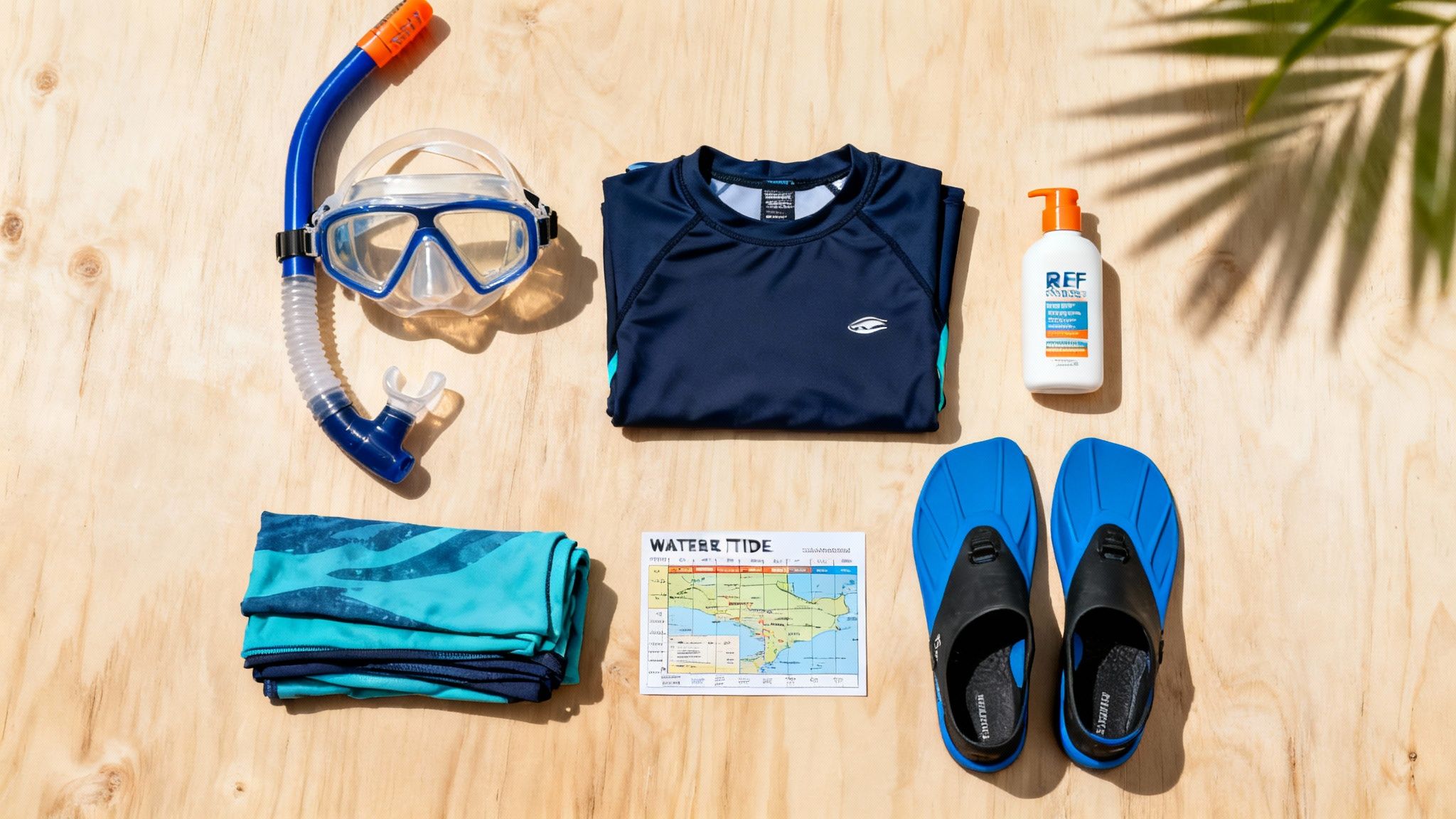
A little bit of planning can be the difference between a good snorkeling day and an absolutely unforgettable one. Putting together the perfect underwater adventure in Honolulu really comes down to three things: timing your entry, having the right gear, and approaching the ocean with a healthy dose of respect.
Timing is everything. If there's one piece of local knowledge to take with you, it's this: go early. Mornings are almost always your best bet for Honolulu United States snorkeling. The water tends to be at its calmest and clearest, giving you that beautiful, glass-like surface to peer through at the reefs below. Once the afternoon rolls around, the trade winds usually pick up, creating surface chop that can muddy the water and make for a much tougher swim.
Sadly, many visitors don't realize just how quickly calm conditions can turn. It's a sobering fact that Hawaii's beautiful waters contribute to a concerning average of 71 ocean drownings per year between 2009 and 2018. The trend has continued, with snorkeling being the primary activity in about 45 tourist drownings annually from 2019 to 2023. A staggering 69% of these victims are visitors from out of state, often caught off guard when afternoon winds make a seemingly safe spot treacherous. You can read more about these ocean safety statistics on beatofhawaii.com.
Your Pre-Snorkel Checklist
Before you even think about getting in the water, a quick check of the local conditions is non-negotiable. Always look up the daily surf report and tide charts for your chosen spot. If there's a high surf advisory, just stay out. It doesn't matter how calm it might look from the beach—it’s not worth the risk.
Once you’ve confirmed it’s safe to go, having the right gear will make your experience so much better and safer.
- Reef-Safe Sunscreen: This is a big one. Standard sunscreens have chemicals like oxybenzone that are incredibly damaging to our coral reefs. Always opt for a mineral-based, reef-safe formula. You'll be protecting your skin and the fragile ecosystem you're there to enjoy.
- Rash Guard: Think of this as more than just a swim shirt. A long-sleeved rash guard offers fantastic sun protection, meaning less sunscreen to reapply. It also gives you a nice little barrier against things like accidental jellyfish stings.
- Water Shoes or Booties: Many of Honolulu's prime snorkeling spots involve walking over sharp lava rock to get in. A solid pair of water shoes will save your feet from cuts and protect you from stepping on a sea urchin (wana).
Being A Responsible Ocean Guest
Your perfect day in the water should also be a good day for the marine life you’re visiting. The golden rule is simple: look, but don't touch. Coral is a living animal, and even a light brush from your hand or a fin can damage or kill it.
Key Takeaway: Always keep a respectful distance from all marine life. This is especially true for sea turtles (honu) and monk seals, which are protected by federal and state law. Never chase, feed, or corner an animal. Just observe them in their natural state, and you’ll have a much more magical encounter.
If you have young kids in tow, choosing the right location is critical. The man-made Ko Olina Lagoons are a fantastic option. They are protected from waves, creating a safe, calm environment for little ones to get their first taste of the underwater world. For more great advice, feel free to check out our dive travel tips and tricks. A little planning and mindfulness go a long way in ensuring these reefs stay beautiful for generations to come.
Exploring Snorkeling Adventures Beyond Oahu
Honolulu's reefs are incredible, but if you have time to hop islands, you’re in for a treat. The Big Island, especially the Kona coast, offers a completely different underwater world that feels wild and untamed.
This is where you'll trade some of Oahu’s established coral gardens for dramatic, volcanic seascapes. Picture yourself gliding over ancient lava tubes and stunning underwater arches carved by volcanic flow. The water clarity here is often legendary, sometimes letting you see over 100 feet down. It's a raw, primal beauty that provides a striking contrast to the snorkeling you’ll find in Honolulu.
Discover The Big Island With Kona Honu Divers
So, if you're ready to explore this volcanic wonderland, you'll want to go with the best. Kona Honu Divers has built a stellar reputation on the Big Island for their safety, deep local knowledge, and an unwavering focus on making sure every guest has an amazing time.
Their crew knows the Kona coast intimately. They'll take you to the most vibrant spots, many of which are impossible to reach from the shore. It's clear they love what they do, and they make sure everyone, from complete beginners to snorkeling pros, feels comfortable and excited for the adventure ahead.
The World-Famous Manta Ray Night Snorkel
There's one adventure that truly puts the Big Island on the map: the Manta Ray Night Snorkel. Seriously, this is a bucket-list experience. You float on the calm, dark water while giant, graceful manta rays swoop and barrel roll just inches beneath you, feeding on plankton attracted by the lights. It's pure magic.
It's a surreal, humbling, and unforgettable encounter. Kona Honu Divers runs fantastic manta ray dive and snorkel tours that are consistently a highlight for visitors to Hawaii.
If your travels take you from Waikiki's lively beaches to Kona’s rugged coast, don't hesitate. Taking the short flight to another island for this kind of adventure is worth every second. Exploring unique volcanic formations and having a once-in-a-lifetime manta encounter with a top-notch crew like Kona Honu Divers will add a whole new layer to your Hawaiian vacation. And for those who also dive, check out their full range of Kona diving tours too.
Your Top Questions About Snorkeling In Honolulu Answered
It's totally normal to have questions before you jump into the water for the first time in Honolulu. Getting a few things cleared up beforehand can make the difference between a good day and a truly amazing one. We've gathered some of the questions we hear most often to help you get ready.
So, Do I Have to Be a Great Swimmer to Snorkel?
Not at all! You don't need to be a competitive swimmer, but you should be comfortable in the water. The real secret for a relaxing time is using a flotation device. A simple snorkel vest or even a pool noodle lets you float effortlessly, so you can focus on the incredible world below without getting tired.
This is exactly why so many first-timers love going on a guided trip. When you go with a professional crew like Living Ocean Tours, they provide all the safety gear and keep a watchful eye, giving you a super comfortable space to find your fins, so to speak.
When’s the Absolute Best Time of Year to Snorkel on Oahu?
You can snorkel on Oahu pretty much any day of the year, but the experience definitely changes with the seasons. If you're looking for that postcard-perfect, calm, glass-like water, the summer months from May to September are your best bet. This is especially true for North Shore spots like Shark's Cove, which get hit with big waves in the winter.
That said, spots on the South Shore, like Hanauma Bay and Waikiki, are usually sheltered and offer fantastic snorkeling year-round. A good rule of thumb for anywhere on the island: go in the morning. The water is almost always clearer and calmer before the afternoon trade winds start to pick up.
Can I Just Rent Snorkel Gear in Waikiki?
You sure can. Waikiki has tons of rental shacks and shops. The catch? The quality, fit, and cleanliness can be a real mixed bag. Nothing sours a snorkeling adventure faster than a leaky mask that you have to clear every two minutes.
Frankly, this is where a tour really shines. When you book a tour, all the high-quality, sanitized gear is included. You get equipment that's been properly maintained and fitted just for you, so you can just relax and enjoy the show.
What About Sharks and Turtles? Is It Safe?
Absolutely. Seeing marine life is the whole point, and it's incredibly safe. The reef sharks you might see are usually small, shy, and way more interested in avoiding you than anything else.
The golden rule is simple: respect the wildlife. That means no touching, no chasing, and definitely no feeding. Remember that Hawaiian green sea turtles (honu) and monk seals are protected species. Give them plenty of space and just admire them from a distance—it's their home, after all.