
You're standing on the dock before sunrise, checking your mask strap while the Kona coastline is still mostly dark. The boat crew is loading tanks, the water looks calmer than it did from shore, and you're trying to decide whether today should be a relaxed reef morning, a manta night dive, or something more demanding. That decision matters here because Kona diving isn't one experience. Volcanic terrain, changing exposure, open-water night work, and wildlife etiquette all affect whether a dive feels effortless or unnecessarily difficult.
Kona rewards divers who plan around the actual site rather than a brochure label. The coast offers structured lava formations, coral growing across irregular volcanic pavement, shallow protected viewing areas, deep walls, and pelagic encounters in open water after dark. The right trip depends on your buoyancy, recent experience, cold tolerance, photography habits, and willingness to accept that wildlife remains wild.
What a Kona Dive Trip Actually Feels Like
The first dive often begins with a short briefing that tells you more than the destination name does. The crew explains the entry, the current direction, the bottom composition, the route, and the exit procedure. You may descend over dark lava, cross a sandy patch, and find a coral-covered ledge only a short distance away. That change in terrain is normal in Kona, and it shapes how you fin, where you hold your position, and what your camera sees.
A calm morning can feel remarkably open underwater. Volcanic shelves create relief without forming the broad carbonate platform familiar to many tropical divers. A wall may give way to a lava channel, then a cavity or swim-through, while sand and rubble interrupt the harder substrate. That variety supports different marine communities, but it also means that a site selected for a newer diver may not be the same site chosen for a confident deep diver.
Practical rule: Judge the trip by the conditions and the group plan, not by the promise of a famous site name.
Three experiences usually define a serious Kona itinerary. Daytime boat diving gives you the widest choice of terrain and the best way to match a site to your certification. The manta night dive is a controlled wildlife encounter in shallow water, but darkness and fixed positioning make calm buoyancy essential. Blackwater diving moves away from the reef altogether, placing experienced divers in open water to watch pelagic animals rise toward the surface.
The destination suits divers who can manage their own equipment, communicate clearly, and adapt when the captain changes the site. It also works for beginners when the operator matches the dive to their training and comfort. What doesn't work is treating Kona as a guaranteed sightseeing venue where every animal, depth, and lava feature will appear on demand.
Kona Conditions, Sites, and the Volcanic Terrain Beneath Them
Kona's seafloor is volcanic rather than a classical carbonate reef platform. USGS classifications include live coral, rubble, macroalgae, sand, and volcanic pavement, showing how lava-derived surfaces are later colonized by coral and other reef organisms. USGS underwater image classifications describe the substrate in a way that matters to divers: hard lava can create ledges, pinnacles, channels, cavities, and tubes, while nearby sand or rubble changes shelter, depth, and biological density.
That habitat can shift over a short swim. A photographer may leave a textured wall for an uncluttered sandy bottom, while a novice group may stay over a simpler shelf with fewer overhead features. Buoyancy control matters because coral often grows directly across irregular lava edges, where a careless fin kick can damage a colony or stir sediment into a narrow passage.
Reading a site description before you book
A site name doesn't tell you enough. Ask whether the dive includes a sandy bottom, a vertical wall, a lava tube, a current-exposed pinnacle, or a long surface swim. Ask how the crew handles changing swell and whether the captain chooses sites according to diver experience as well as visibility.
| Site | Depth Range | Best For |
|---|---|---|
| Garden Eel Cove, also called Manta Heaven | Around 30–40 feet | Manta viewing, newer certified divers, controlled night positioning |
| Lava formations and swim-throughs | Site-specific | Divers with strong buoyancy and appropriate overhead-environment training |
| Deep walls and pinnacles | Site-specific | Experienced divers comfortable with depth, gas planning, and exposure changes |
Kona's west-coast location can produce favorable diving windows, but conditions still vary with wind, swell, rainfall, and runoff. Winter can bring rougher surface conditions and cooler water, while whale activity overlaps with part of the cooler season. The practical lesson isn't to chase a perfect calendar month. It's to leave room in your itinerary so the operator can use the best available site rather than forcing one location on one fixed day.
The broader habitat also deserves honest attention. A USGS comparison of early-2000s baseline imagery with 2022 imagery found declining live-coral cover across surveyed Kona-area parks, an approximately 25% increase in non-coral classifications, and nearly a 90% increase in non-coral types at one park. The USGS comparison is a reminder that a dramatic lava structure isn't automatically a sign of healthy coral habitat. Hold neutral buoyancy, keep your fins clear of the bottom, and treat each site as its own environment.
The Manta Night Dive at Garden Eel Cove
Garden Eel Cove, also known as Manta Heaven, lies north of Kailua-Kona and is separate from the manta site near Keauhou Bay. For a dedicated manta tour, it offers the stronger operating setup: a protected location, a defined sandy viewing area, nearby reef structure, lava tubes, swim-throughs, and resident garden-eel habitat. Those features give divers somewhere stable to position themselves instead of hovering over an undifferentiated bottom.
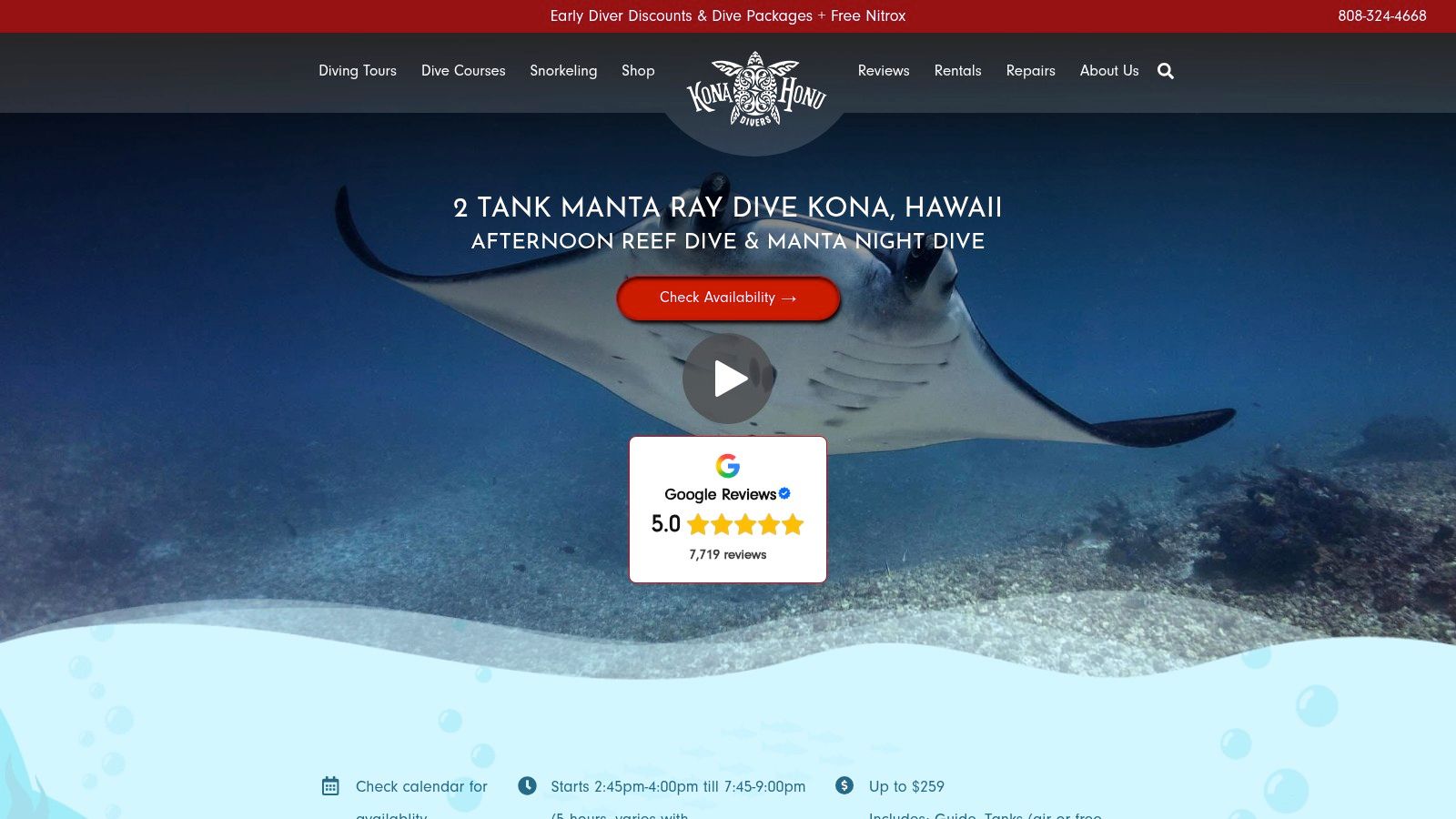
The standard format is simple but demands discipline. Divers descend after dark, settle on or near the bottom at roughly 35 feet, and aim lights upward. The lights concentrate plankton near the surface, and mantas make feeding passes above the group. The animals seen around Kona can reach wingspans of approximately 12–16 feet, so even a distant pass can fill your field of view.
How to watch without turning the encounter into a chase
Stay in your assigned position and let the manta choose its path. Don't swim after it, touch it, block its feeding corridor, or lift equipment into its route. Secure gauges, cameras, hoses, and loose accessories before the descent, because a dangling item can create both an entanglement hazard and a distraction at the moment you need to manage buoyancy.
Hawaiʻi's Department of Land and Natural Resources identifies manta-use areas with strong upwelling, often near steep drop-offs, where deeper nutrient-rich water brings plankton upward. DLNR guidance on protected species also warns about fishing-line entanglement and advises changing location or bringing lines in when mantas are present. Hawaiʻi marine waters prohibit knowingly capturing or killing manta rays.
The reliability of Kona's encounter comes from ecology and long-term observation, not a guarantee printed on a ticket. A six-year study recorded mantas on 92% of monitored nights at Manta Heaven and 78% at Manta Village, with 25,444 sightings involving 118 individually identified reef manta rays. The documented Kona manta observations show why repeated encounters are possible, while also demonstrating that the experience depends on resident animals, plankton conditions, and respectful operations.
For a fuller description of the format, see this Kona manta ray dive guide. A responsible operator won't force a close pass or promise that every diver gets a perfect photograph. The successful dive is the one where you remain calm, leave the animals room, and surface without having made the crew manage avoidable contact or entanglement risks.
Blackwater Dives, Lava Tubes, and Other Signature Experiences
Kona offers three very different ways to make a night or advanced dive memorable. The manta dive keeps you close to the bottom in a defined viewing area. A blackwater dive removes the reef entirely. Lava-tube and cavern routes put the emphasis on geology, line awareness, and precise buoyancy.
Choose by the kind of attention the dive demands
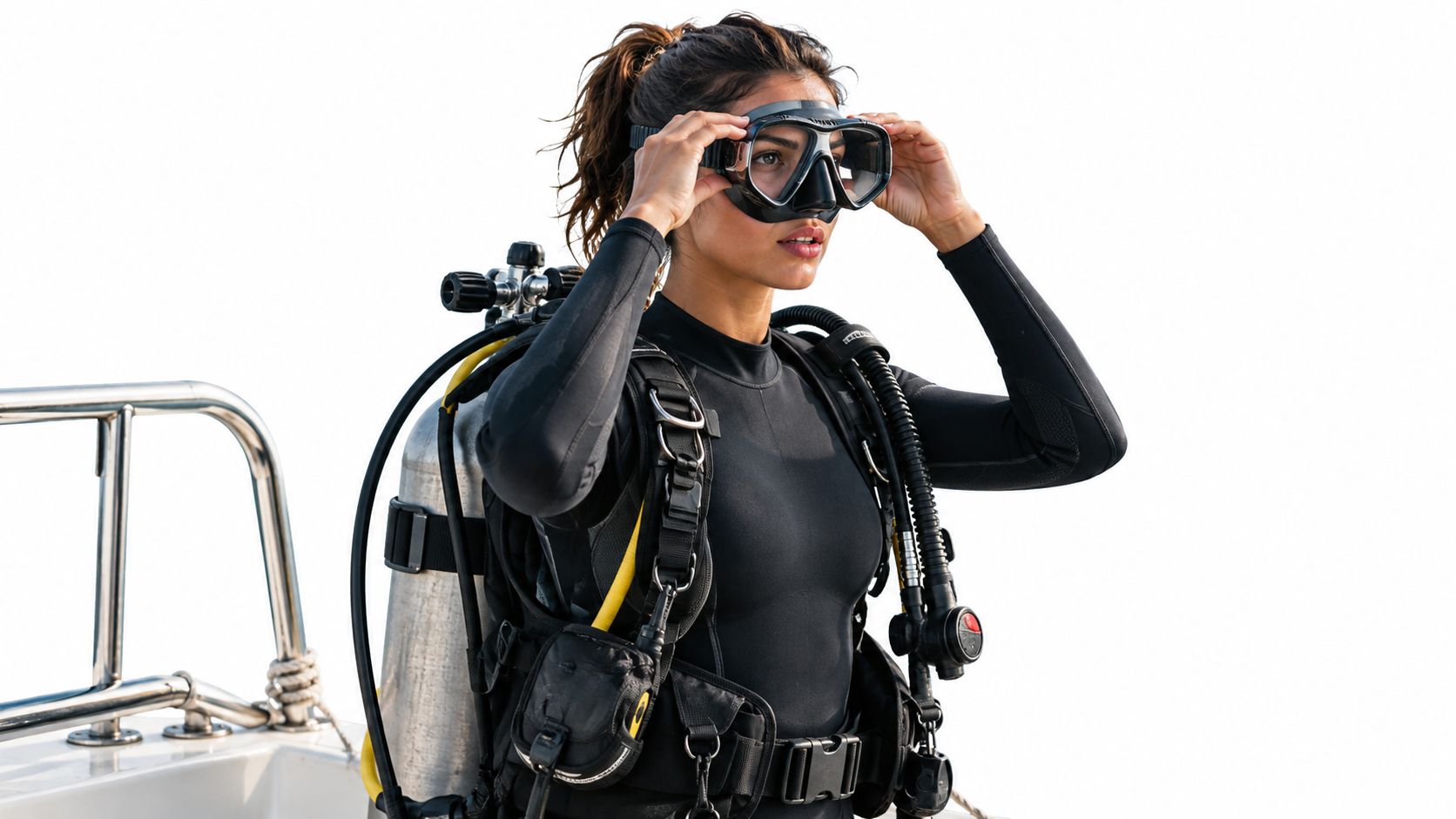
Manta night diving suits a certified diver who wants a wildlife encounter without committing to deep or overhead conditions. The challenge is not distance. It's remaining still, managing a light, monitoring gas, and allowing large animals to pass without interference. The shallow viewing area can feel accessible, but darkness magnifies poor buoyancy and weak equipment discipline.
Blackwater diving is a different category. Divers drift over deep water after dark and watch pelagic animals migrate upward, including salps, siphonophores, ctenophores, and larval fish. NOAA-affiliated researchers conducted 59 nocturnal visual-census surveys during recreational blackwater dives off Hawaiʻi Island's Kona coast between November 2013 and May 2015. The NOAA repository study found that water temperature, seafloor bathymetry, and the El Niño-Southern Oscillation index were the three most important predictors of pelagic diversity. A separate study collected 76 larval-fish specimens near Kona and used DNA barcoding to examine them.
Read the requirements carefully before booking the Kona blackwater dive. This experience favors divers with excellent buoyancy, comfort in open water at night, dependable light procedures, and enough recent experience to respond without constant supervision.
Where lava formations fit
Lava tubes, cavities, and swim-throughs reward divers who understand the difference between a light zone and a true overhead environment. Even a short penetration can remove direct access to the surface, restrict exits, and make a fin kick or regulator issue more consequential. Appropriate cavern or overhead training, a primary light with a backup, conservative gas planning, and a strict turnaround rule matter more than confidence built from watching other divers enter.
For divers seeking more demanding terrain, an advanced two-tank Kona trip may include deeper pinnacles, shark nurseries, and unusual migrations. Those opportunities belong to divers whose certification, recent practice, and gas management match the site. Curiosity is a good reason to train. It isn't a substitute for training.
Exposure Protection That Matches Real Kona Conditions
The common year-round 3 mm wetsuit rule works for some divers, but it isn't a universal comfort recommendation. Depth, dive duration, surface interval, wind, body composition, and activity level all change how cold Kona feels. A photographer who stays motionless during a night encounter can become colder than a diver actively finning across a daytime reef.
Nearshore water can be cooler at depth. Independent temperature guidance gives examples of approximately 72–74°F around 60 feet in March and potentially 70°F or lower near 100 feet. Kona exposure guidance explains why a winter two-tank morning, deep wall, or night dive may justify more protection than a simple 3 mm default.
A practical selection matrix
| Situation | Sensible starting point |
|---|---|
| Warm-season, shallow daytime dive with steady movement | 3 mm suit may be adequate for many divers |
| Cooler-season morning with two dives | Consider a thicker suit or hooded vest |
| Deep wall near 100 feet | Add protection for depth-related cooling and longer exposure |
| Motionless night photography | Favor extra insulation over the thinnest workable suit |
| Cold-sensitive, smaller-bodied, or older diver | Bring layers and discuss options with the operator |
Don't wait until the second dive to discover that your suit is too thin. Wind on the boat, wet gear, and post-dive fatigue can make a marginal choice feel worse. A hooded vest, thicker suit, or thermal layer can be more useful than carrying a camera upgrade you can't comfortably operate.
Motion sickness deserves the same practical planning. If boat motion affects you, review options such as the Ship-EEZ Seasickness Patch, Dramamine pills, Bonine pills, Sea Band wristbands, and ginger chews. Check medication suitability with a qualified professional, especially because drowsiness and diving don't mix safely.
Itineraries, Certification, and Course Options
Build the trip around your actual energy and experience, not the maximum number of dives you can theoretically fit into a holiday. A half-day morning charter works well for a diver who wants two reef dives and an open afternoon. A night manta dive needs a slower evening afterward, particularly if you're combining it with a long travel day or unfamiliar equipment.
Beginners have several sensible entry points. A Discover Scuba experience introduces basic equipment and underwater skills under direct supervision. An Open Water referral lets you complete the academic and confined-water work elsewhere, then finish the open-water requirements in Kona. A refresher is the better choice for a certified diver who feels rusty, struggles with buoyancy, or hasn't handled a night entry recently.
Match the card to the site
- New diver: Choose a shallow, protected guided experience and prioritize mask, buoyancy, and regulator skills over depth.
- Open Water diver: Start with a daytime reef charter, then consider the manta night dive once you're comfortable with lights and fixed positioning.
- Advanced or Nitrox diver: Ask about deeper pinnacles, longer profiles, and whether enriched air is available for the planned depths.
- Cavern-curious diver: Take the appropriate cavern training before entering overhead spaces, even when the opening looks short and obvious.
- Blackwater candidate: Expect a detailed briefing and stricter recent-dive expectations because the environment is open water at night.
Nitrox can make repetitive diving more manageable within the limits of your training and the operator's procedures. The enriched-air certification course is useful if you plan several dives and want to understand oxygen exposure, gas analysis, and computer settings rather than treating Nitrox as a simple upgrade.
Kona Honu Divers offers courses, charters, and gear rental from one base, which can simplify logistics for visitors combining certification work with guided dives. Whatever operator you choose, leave a surface interval between dives, reserve time for gear problems, and avoid scheduling a demanding night experience immediately before a flight or high-altitude drive.
Choosing and Booking a Reputable Operator
A responsible booking decision starts with operations, not star ratings. Ask how the crew sets group size, how rental regulators and exposure suits are serviced, whether the boat has shade and a hot shower, and what happens when weather or animal behavior makes the planned site inappropriate. A polished website can't answer those questions for you.
Look for an operator whose promises match the type of diving you want:
- Group management: Smaller groups make it easier for a divemaster to monitor buoyancy, equipment, and diver spacing.
- Boat function: Shade, storage, stable entry and exit points, and hot showers matter more after a cold or windy surface interval.
- Gear maintenance: Proactively serviced rental equipment reduces the chance that a diver spends the trip troubleshooting instead of learning.
- Training access: Instructor-led courses and refreshers help match a diver's current skills to Kona's terrain.
- Wildlife language: A credible operator describes encounter conditions and doesn't turn wild animals into a guaranteed product feature.
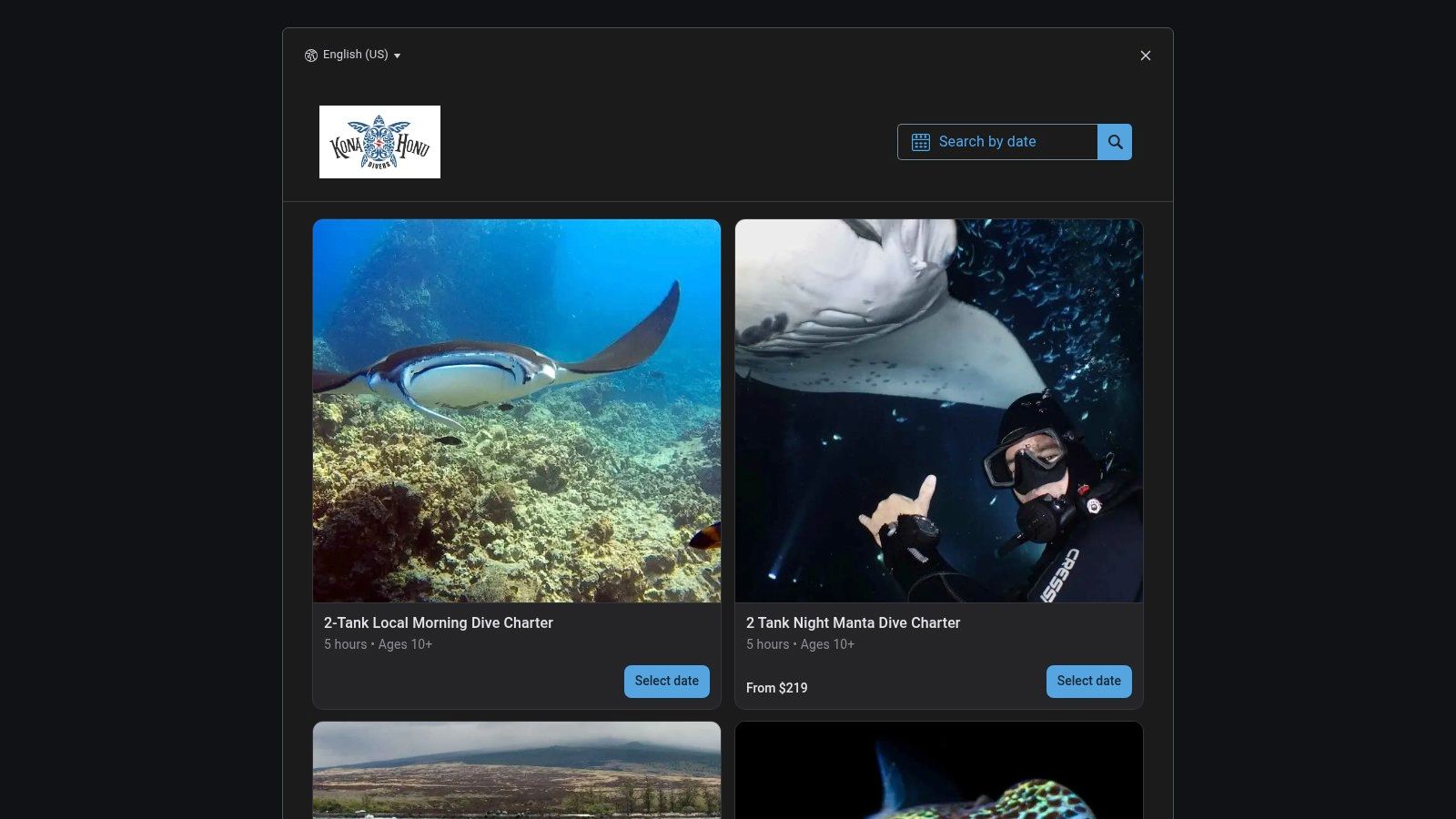
Kona Honu Divers is one option to compare. Its published offering includes two-tank morning and advanced trips, manta and blackwater night dives, courses, rentals, private charters, hot showers, shaded seating, proactively serviced rental gear, and free nitrox for appropriately certified divers. Start with its Kona diving tours and ask which format fits your recent experience rather than choosing solely by schedule.
Booking policies vary, so read the cancellation window and weather provisions before paying a deposit. Ask whether the operator reschedules a canceled trip, refunds it, or offers another format. Also ask whether a “manta guarantee” means a refund, a rebooking opportunity, or a statement that sightings are common. Those terms aren't interchangeable.
Safety, Etiquette, and Photography That Respects the Animals
A successful Kona dive isn't measured by how close a manta came or how many rare animals appear in your frame. It's measured by whether you stayed within your training, kept control of your equipment, and allowed the animals to behave naturally. That standard produces better diving and, often, better images.
Start with the basics that prevent small problems from becoming emergencies. Check your primary and backup light before every night dive. Confirm the lost-buddy procedure, entry and exit sequence, hand signals, gas plan, and emergency contact process during the briefing. On small boats, keep the deck clear, secure cameras during entries, and follow the crew's instructions when conditions change.
Photograph the behavior, not the approach
Manta photography works best when the diver stops trying to create the encounter. Set exposure before the action begins, keep your body low and stable over the sandy viewing area, and aim slightly ahead of the animal's expected path. Avoid firing strobes directly into a manta's face at close range, and don't move into the corridor to improve a composition.
Lava interiors demand a different technique. Use a compact light or carefully controlled strobe placement to preserve texture without blasting suspended sediment. Keep a clear visual route to the entrance, maintain line awareness where one is required, and don't allow a camera housing to pull you into contact with the ceiling, floor, or coral edge.
Blackwater photography has its own trade-off. A wide, fast lens can capture unusual silhouettes, while focused strobes can reveal transparent bodies and fine appendages. The diver must still prioritize tether awareness, buoyancy, light communication, and separation from the group over a technically ambitious frame. The animal may be visible for only a moment, and chasing it usually sacrifices both safety and image quality.
The ethical baseline is straightforward. Responsible diver etiquette means no touching, no pursuit, no blocking feeding paths, no collecting, and no contact with coral or volcanic habitat. DLNR's protected-species guidance reinforces the importance of managing lines and avoiding entanglement when mantas are present.
Recent research on Hawaiian reef mantas describes low genetic diversity, small resident populations, and limited migration between islands, while identifying tourism pressure as a concern. The Frontiers in Marine Science study focused primarily on Oʻahu rather than Kona, so it doesn't establish a simple visitor-number threshold for Kona. It does support a precautionary approach. Repeated access is a privilege, not permission to turn wildlife into a performance.
Kona Honu Divers offers guided reef, manta, blackwater, advanced, certification, rental, and charter options, with equipment and trip formats suited to different experience levels. Review the conditions, exposure needs, and ethical expectations in this guide, then visit Kona Honu Divers to choose a trip that matches your training and book with realistic expectations.