
You're probably in one of two places right now. You've either already booked a Big Island trip and want to make sure your dive days are worth the airfare, or you're still comparing Hawaii options and wondering whether Kona really lives up to the reputation.
It does. But not for the reasons most brochures push.
The usual pitch is warm water, good visibility, and Hawaiian reefs. That's all true. A primary reason diving Kona Big Island stands out is range. You can do an easy reef dive in calm water in the morning, watch manta rays feed at night, and if you've got the experience, head offshore into blackwater where the seafloor is effectively out of sight and the ocean turns into open pelagic space.
That range matters because not every diver wants the same trip. Some people want forgiving conditions and long, relaxed reef dives. Some want signature wildlife encounters. Others want the kind of specialty night dive they can't do just anywhere. Kona is one of the few places where all of those can fit into a single vacation without feeling forced.
The mistake I see visitors make is assuming every Kona dive is equally easy just because the coast has a calm-water reputation. It doesn't work like that. Kona gives you options, but the best trip comes from matching those options to your actual skill, comfort, and goals.
If you plan it right, you can build a trip that feels custom instead of random. That means choosing the right mix of boat dives, deciding whether the manta night dive belongs early or late in your schedule, and being honest with yourself about whether a blackwater dive sounds exciting or just stressful.
Your Ultimate Kona Diving Adventure Awaits
A lot of divers come to Hawaii chasing a specific image. They want blue water, lava formations, sea turtles, and the kind of night dive they'll still be talking about years later. Kona is one of the few places where that image usually survives contact with reality.
The west side of the Big Island has a way of making a dive trip feel efficient. You're not spending all week hoping for one good day. The area is built around diving, and that shows in how many different experiences are available within a short stretch of coast.
What kind of trip Kona does well
Kona works especially well if you want a trip with variety instead of repetition.
- For new divers: Calm reef dives and accessible boat sites make it possible to have a fun trip without getting thrown into heavy conditions.
- For returning divers: It's a strong place to rebuild confidence because you can start easy and add more ambitious dives later in the week.
- For advanced divers: Kona offers specialty experiences that aren't just deeper versions of the same reef. The blackwater dive is the obvious example.
- For mixed groups: Non-divers and snorkelers usually have solid options, so the trip doesn't need to revolve around only one person's certification card.
The best Kona itinerary isn't the one with the most famous sites. It's the one that lets you dive well on day one and still feel strong by the end of the trip.
That's the practical angle people miss. A trip full of bucket-list dives sounds good on paper, but fatigue, motion sensitivity, and overestimating your comfort in night conditions can turn a dream week into a grind.
A better way to think about diving Kona Big Island
Build around your real priorities.
If wildlife is the priority, center the trip on manta and strong daytime reef dives. If topography matters most, spend more effort choosing sites with arches, lava structure, and swim-throughs. If you're traveling with one experienced diver and one rusty diver, don't force both people into the same plan every day.
That's why Kona keeps drawing people back. You can dive it more than once and shape the trip differently each time.
Why Kona is a World-Class Diving Destination
Kona earns its reputation in the water, not in the brochure. The west side of Hawaiʻi Island sits in the island's leeward rain shadow, and that geography usually means better visibility, more diveable days, and easier access to sites that would be unreliable on a more exposed coast. If you want a concise overview of what makes diving in Kona different from other Hawaiian destinations, start there, then build your trip around the kind of diving you want to do.
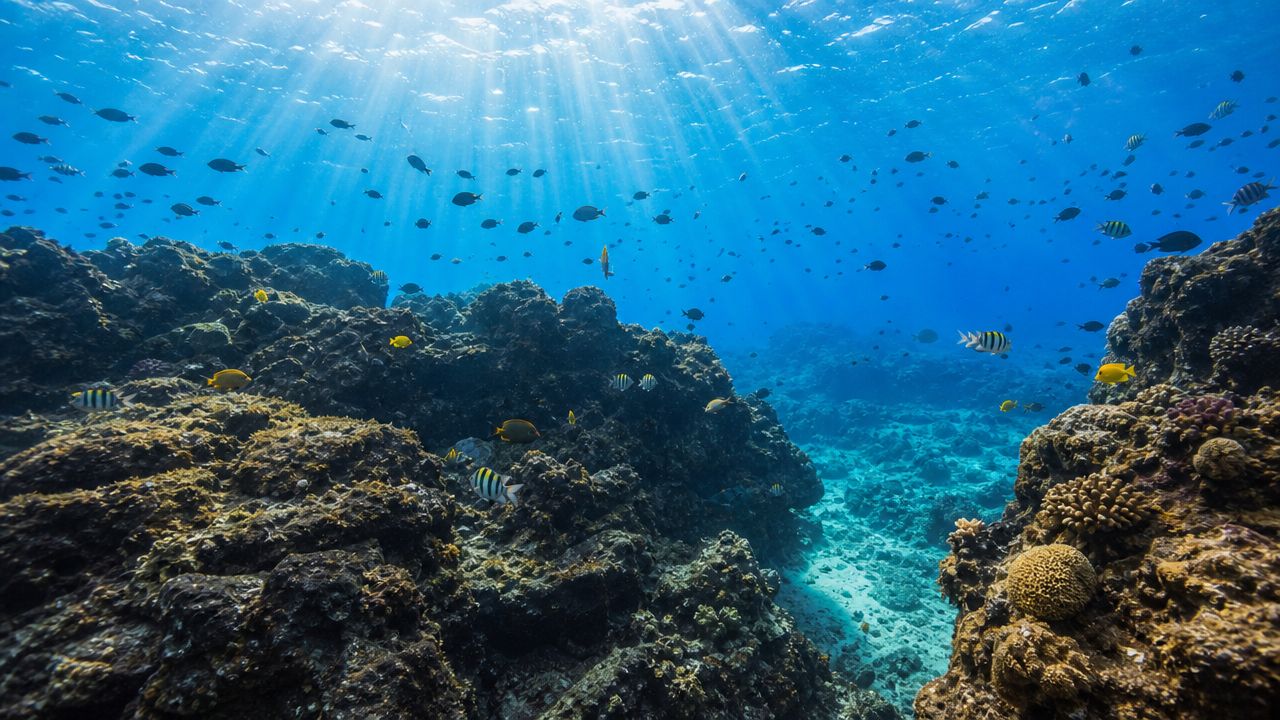
What sets Kona apart is consistency.
That matters more than first-time visitors often realize. A destination can have great marine life on paper and still be frustrating to plan if wind, swell, or long run times keep forcing operators to change the schedule. Kona usually gives boats workable conditions along the coast, which is one reason divers can plan a full week here with more confidence than in many other Pacific destinations.
The underwater terrain helps too. Much of Kona's diving is built around lava structure, clear water, and reef systems that are easy to enjoy at several experience levels. Newer divers can have very good dives without fighting heavy conditions every day. Experienced divers still get enough topography, wildlife, and specialty options to keep the trip interesting.
The marine life is another reason Kona stands out. Divers Alert Network notes in its feature on diving Kona that the coast is known for a high level of marine endemism, so many of the fish and invertebrates you see are strongly tied to Hawaiian waters rather than the standard tropical lineup found across half the Pacific.
That changes how I advise people to plan their days. Daytime reef dives are not filler between headline experiences. They are where Kona shows its depth as a destination, especially for divers who care about fish life, volcanic structure, and long, relaxed profiles instead of only chasing one famous encounter.
There is also a practical advantage to Kona that matters when you are paying for a real trip. Because the coast often stays accessible, operators can offer everything from easy two-tank mornings to manta nights and more specialized charters without building the whole week around weather gambles. That gives you room to match the itinerary to your budget, your comfort in current or darkness, and how much boat time you want.
Kona is world-class because it works on several levels at once. It delivers iconic dives, but it also delivers the less glamorous things that make a trip successful: repeatable conditions, strong reef diving, and enough range to build a smart plan instead of a wish list.
Iconic Kona Dives You Cannot Miss
On one night in Kona, you might kneel on sand in 35 feet of water while manta rays loop through a column of light a few feet over your head. On another, you hang offshore in black water with no reef, no bottom in sight, and larval creatures drifting past your mask. Those two dives define the destination for a lot of visiting divers, but they do very different jobs in a trip plan.
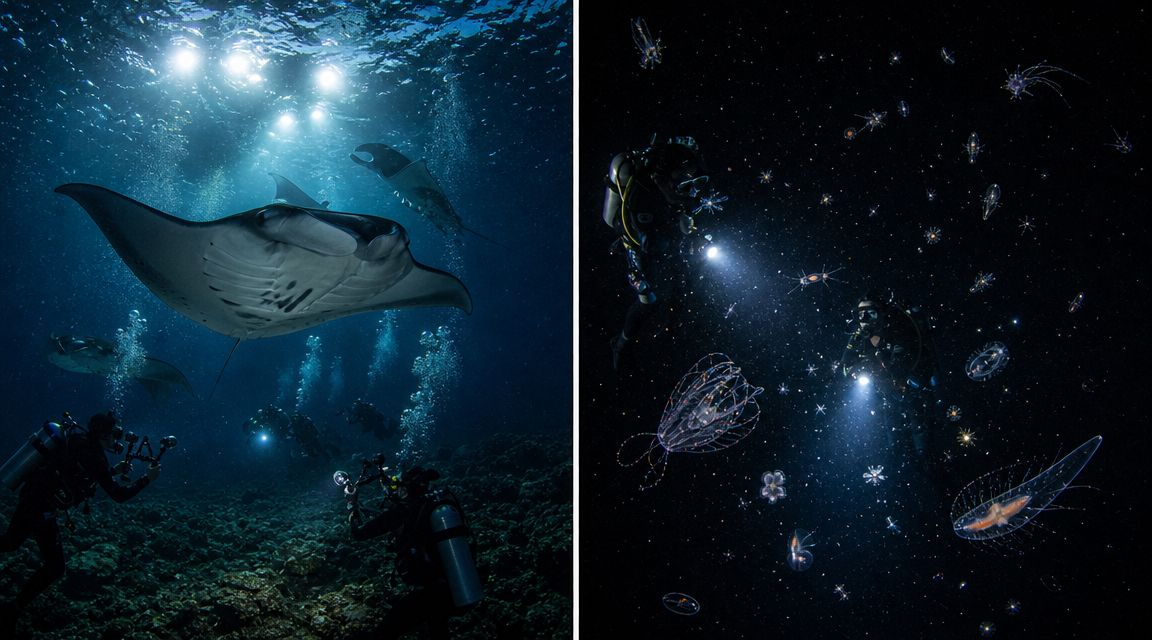
Treat them as anchor experiences, not just boxes to check. If your time and budget are limited, pick the one that matches your comfort in darkness, your interest in marine life behavior, and how much task loading you want after sunset.
Manta ray night dive
The manta dive is Kona's classic for a reason. Divers gather near the bottom while lights pull in plankton, and the mantas come to feed right in front of the group. Divers Alert Network describes it as a Kona-specific activity with a high probability of success, offered year-round and often producing repeated passes from reef manta rays in its Kona diving feature.
The usual profile is friendly to a wide range of certified divers. Depth stays moderate, bottom time is generous, and the task load is low once everyone is settled. That shallow profile is a key reason the dive appeals to so many recreational divers.
Site choice matters more than first-time visitors realize. Garden Eel Cove is usually the better call. It tends to offer better protection, a cleaner viewing layout, and a more polished experience underwater. Some manta dives feel like a crowded attraction. The better-run ones feel controlled, calm, and easy to watch without fins in your face.
I tell divers to judge this dive by three things. How the operator positions the group, how stable the light setup is, and how disciplined the briefings are about staying low and not chasing animals. If you want a plain-language primer before booking, this manta ray night swim overview explains how the experience works, and the dedicated manta dive and snorkel tour page is the direct booking path.
Blackwater dive
Blackwater is the opposite experience. You are offshore at night, suspended beneath the boat over very deep water, watching the vertical migration bring open-ocean life toward the surface. The Kona blackwater overview describes the setup as a tethered drift conducted over thousands of feet of water.
This dive earns its reputation. You are managing buoyancy without a bottom reference, keeping awareness in open water, and trying to spot tiny transparent animals in your light beam. For the right diver, it is unforgettable. For a diver who gets uneasy without structure, it can feel long in the first ten minutes.
What you see is the payoff. Larval fish, jellies, siphonophores, salps, and other pelagic organisms drift through the lights, many of them looking nothing like the reef life people associate with Hawaii. If your main interest is unusual photography subjects or behavior you will not find on a lava reef, blackwater belongs high on the list.
Operators usually treat this as an experience for divers with solid control and some night comfort already in place. Kona Honu Divers offers a dedicated blackwater night dive tour page, which is the right way to book it. This is not the dive to add on casually because you had a good afternoon reef dive.
Blackwater suits divers who can hold trim in open water, stay calm without a visible bottom, and keep their attention on buoyancy while scanning for small subjects.
Which one should you book first
For most divers doing both, book manta first and blackwater later in the trip.
The manta dive gives you an easier night entry into Kona. You can get comfortable with local procedures, check weighting, and settle your breathing after travel without adding the mental load of open-ocean darkness. Blackwater goes better once you are already diving well, not on the night you are still knocking rust off.
If you only have room for one, the choice is simple. Book manta if you want a signature Kona experience with broad appeal and a lower stress profile. Book blackwater if you already know you like unusual pelagic life and you are comfortable diving at night without the reef as a reference.
Top Dive Sites for Every Skill Level
Kona gets easier to plan once you stop thinking in terms of “best sites” and start thinking in terms of best-fit sites. The right reef for a newly certified diver is not the right reef for someone who wants swim-throughs, deeper profiles, or a more demanding day.
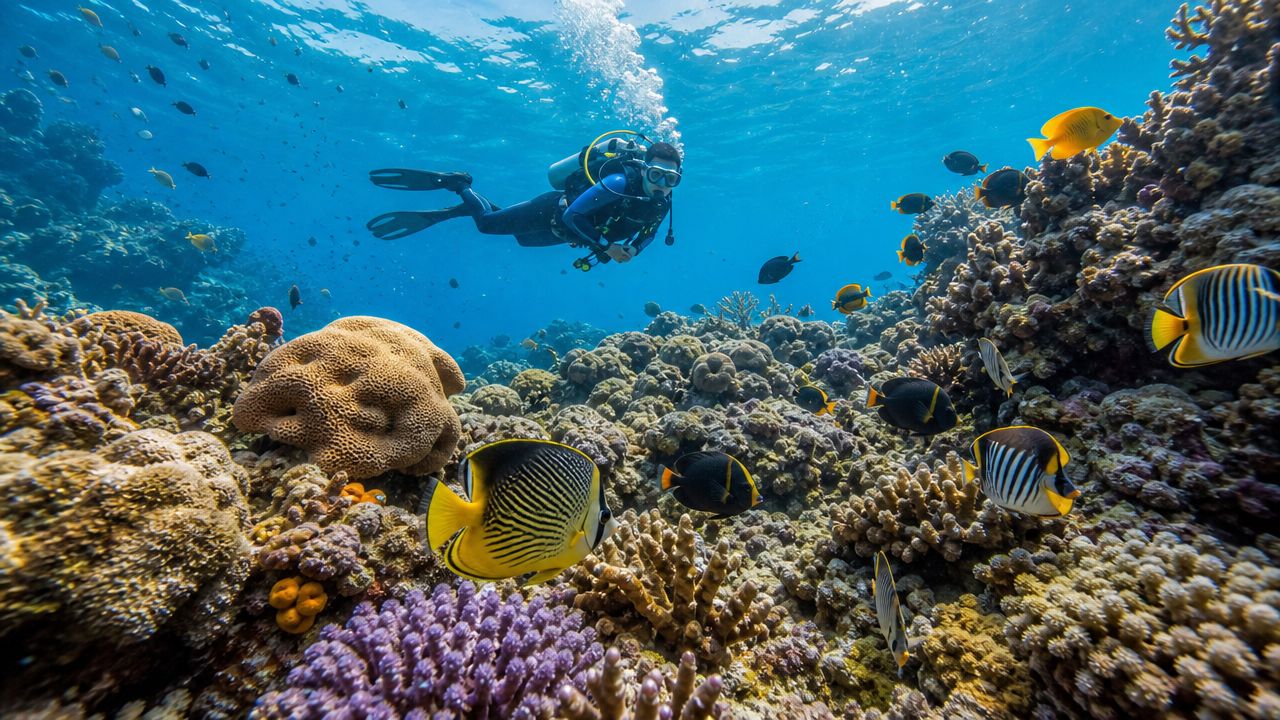
Beginner-friendly sites
Newer divers usually do best on calm reef dives with easy descents, uncomplicated navigation, and enough life on the reef to keep the dive interesting without turning it into task loading.
Sites often recommended in this category include places like Pawai Bay and Golden Arches. The attraction isn't that they're bland. It's that they let newer divers settle in, dial buoyancy, and enjoy the marine life without spending the whole dive solving problems.
Good beginner-site traits in Kona usually include:
- Simple entries from the boat: Less chaos at the start of the dive.
- Moderate depth profiles: Enough bottom time to stay relaxed and observant.
- Readable topography: Lava features and reef lines help with orientation.
- Comfortable conditions: You can focus on diving, not just coping.
Intermediate divers who want more structure
Once a diver is comfortable, the appeal usually shifts from “easy” to “interesting.” Kona's lava topography shines in this regard.
Turtle Pinnacle is a good example of the kind of site intermediate divers tend to enjoy. You get more shape to the dive. Pinnacles, arches, and lava formations create a stronger sense of route and discovery without requiring a specialty-diver mindset.
A site feels advanced for the wrong reasons when the diver spends the whole dive managing stress. It feels rewarding when the challenge comes from terrain, awareness, and exploration.
For intermediates, I'd look for sites with:
- Lava tubes or arch features
- A little more depth flexibility
- More varied fish life across the route
- Enough exposure to feel exciting, but not punishing
Advanced divers and long-range options
Advanced divers often come to Kona wanting something beyond the classic two-tank reef morning. That might mean more ambitious site selection, stronger current tolerance, more remote-feeling conditions, or a day built around deeper topography and bigger-water diving.
That's where a specialized advanced long-range dive tour makes more sense than trying to squeeze advanced expectations into a standard charter. You get a trip designed around divers who are already comfortable and want more from the day.
If you're comparing operators or trip styles for regular daytime diving, the general Kona diving tours page gives a broad sense of what's available.
Boat versus shore diving
This matters more than visitors expect.
| Dive style | Usually works best for | Main tradeoff |
|---|---|---|
| Boat diving | Most visitors, mixed groups, easier access to famous sites | More cost and possible motion sensitivity |
| Shore diving | Independent divers who know local entries or hire guidance | Entry and exit are often the hardest part |
Boat diving is the practical default for most visitors in Kona. Shore diving can be excellent, but it rewards local knowledge and comfort with volcanic entries.
Kealakekua Bay also deserves a quick note. Many visitors know it more as a snorkeling destination than a scuba one, and that reputation is deserved. If your group includes non-divers or people who want an easier water day, it's one of the strongest surface-interval alternatives on the island.
Planning Your Kona Dive Adventure
A smooth Kona trip starts before you ever touch your gear. The planning mistakes are predictable. People overbook dives, underestimate fatigue, assume all Kona diving is beginner-friendly, and ignore motion sensitivity until they're already on the boat.
That's fixable if you plan with the actual trade-offs in mind.
Match the trip to your current dive shape
One of the biggest gaps in most Kona content is that it talks about calm water but doesn't do enough to separate accessible from advanced. Some signature experiences are explicitly for experienced divers, and that matters for newly certified or rusty divers, as noted qualitatively in the earlier Big Island guide.
If you haven't dived in a while, don't make your first two dives of the trip a high-pressure event. Start with a forgiving daytime charter. Rebuild the basics. Check weighting, buoyancy, air consumption, and comfort in Hawaiian conditions before you commit to your more ambitious nights.
A few planning rules help:
- If you're rusty: Book an easy morning first, not a marquee night dive first.
- If you're newly certified: Ask operators which trips are appropriate, not just available.
- If you're traveling with stronger divers: Don't let their confidence choose your itinerary.
- If lodging matters to your logistics: Staying near departure points can make early mornings easier. This guide on where divers stay on the Big Island helps narrow that down.
Build rest into the schedule
Kona invites overcommitting because there's so much to do. Resist that.
Night dives change the rhythm of the day. Offshore trips add mental load. Even easy reef dives stack fatigue over several days, especially if you're combining scuba with hiking, long drives, and sun exposure.
I'd rather see a diver do fewer dives well than spend the second half of the trip tired, underhydrated, and sloppy in the water.
Deal with seasickness before it starts
A lot of Kona diving is boat-based, and even divers who feel fine underwater can get queasy on the ride out or while gearing up on a mooring. If you know you're prone to seasickness, solve that early instead of hoping for the best.
Common options people use include Ship-EEZ Seasickness Patch, Dramamine pills, Bonine pills, Sea Band wristbands, and Ginger chews.
If seasickness has ever been a problem for you, treat the first boat day like a test day. Eat lightly, hydrate early, and use whatever prevention method already works for your body.
What works better than guessing
The best Kona trips usually have a simple rhythm:
- Start easy
- Add your signature dive
- Put advanced dives after a warm-up day
- Leave one flexible slot in the schedule
That last one matters. Conditions, energy, and confidence change. Good planning leaves room for that.
Choosing the Right Kona Dive Operator
Operator choice can make or break a Big Island trip. In Kona, the gap between a well-run boat and a mediocre one shows up fast in briefings, diver grouping, site selection, and how much help you get when conditions aren't perfect.
What to evaluate before you book
Don't choose based on the homepage alone. Look for signs that the operation matches the kind of diver you are.
Here's what I'd check first:
- How they separate diver ability: Mixed-skill boats are common. Good operators manage that instead of pretending everyone wants the same pace.
- Whether the briefings are practical: You want specifics on site conditions, entries, exits, and expected profile.
- How they handle signature dives: Manta and blackwater require different staffing and operational discipline than a standard reef charter.
- Boat setup and comfort: Small details matter more than people think on repeated dive days.
- Scheduling realism: Operators should be candid about what suits rusty, new, or advanced divers.
If you're comparing local options, this overview of a Kona diving company gives context on how one local operation presents its trips and services.
A balanced way to compare local shops
Kona has multiple established operators, and that's a good thing for visitors. Some divers prioritize larger boats and broad schedules. Others care more about group pace, education style, or whether an operator runs the specific night dives they came to do.
In the practical middle ground, Kona Honu Divers is one operator many visitors consider when they want guided boat diving, manta trips, courses, and specialty dives from the same company. Other recognizable names in the area include Big Island Divers and Jack's Diving Locker. The right choice depends less on branding and more on whether the operator's trip style fits your experience and goals.
The operator should fit the trip you want
A family with one diver and one snorkeler needs something different from an experienced diver trying to line up blackwater and advanced day trips. A rusty diver may need a patient crew and conservative planning. A photographer may care more about site timing and bottom pace.
That's why operator selection is less about picking the “famous” shop and more about asking better questions before you hand over a credit card.
Your Kona Dive Trip Checklist and FAQ
Packing for Kona is simple if you separate must-haves from nice-to-haves. The must-haves are the things that keep a dive day smooth. The nice-to-haves are what save you from avoidable irritation.
Packing checklist
Bring these first:
- Certification materials: Your certification card and any required proof for specialty or advanced trips.
- Dive computer: Familiar gear reduces stress.
- Mask you trust: A rental mask can work. Your own mask usually works better.
- Exposure protection that matches your comfort: Some divers run warm, some don't.
- Reef-safe sunscreen: Useful on every boat day.
- Dry bag or boat bag: Keeps the small stuff organized.
- Water bottle and snacks: Especially helpful on multi-dive days.
- Light layer for the ride back: Night returns and wet boat rides can feel cooler than people expect.
Items people forget:
- Spare defog
- Logbook if an operator wants experience verification
- Motion-sickness backup
- Phone charger for long days out
- A change of dry clothes in the car
For a deeper look at boat-day comfort, especially if motion sensitivity is part of your planning, this guide on sea sickness options for Kona boat trips is worth reading before you travel.
FAQ for common real-world situations
Is Kona good for families with kids?
Yes, if the family plans around the least experienced person, not the most excited one. Kona works well for mixed groups because calm reef conditions and snorkeling options can coexist in the same trip. The mistake is assuming that iconic night dives automatically suit everyone.
I haven't dived in a few years. What's the smartest restart?
Book an easy daytime charter first and tell the operator you're returning after a layoff. Don't hide it. Rusty divers do much better when they rebuild skills in daylight, on a simple reef, before adding current, deeper profiles, or night conditions.
The fastest way back to being a confident diver is not jumping into the hardest dive on the menu. It's doing one clean, easy dive and letting the comfort return.
Should I bring all my own gear?
Bring the gear you're picky about. Usually that means mask, computer, and maybe exposure wear. Renting the rest is often the easiest move for travel unless you have a strong reason not to.
What should non-divers do on a surface-interval day?
Snorkeling, beach time, and coastal sightseeing usually pair best with a dive-heavy trip. Keep it light. A packed vacation schedule plus repeated diving days wears people down faster than they expect.
Is diving Kona Big Island better as a short add-on or a full trip?
If all you want is one manta night and a reef day, a short add-on works. If you want to understand why divers come back, give it multiple days. Kona rewards pacing, not just box-checking.
If you want a straightforward place to start planning, Kona Honu Divers offers Kona dive tours, manta trips, blackwater diving, and training options that can help you build a trip around your experience level instead of guessing.