
The biggest challenge on a Kona manta night may be the boat traffic, not the darkness. A Hawaiʻi County manta-viewing safety assessment identified hazards from nighttime swimmers and snorkelers sharing water with actively motoring vessels. Choosing the right trip means looking beyond the animal you want to photograph.
For diving Kona, Big Island, start with your certification, recent experience and comfort in moving water. Then choose an environment that fits: a daylight reef, a controlled manta-viewing area or open-ocean darkness. A good itinerary leaves room for the crew to change sites, and for you to say no when conditions exceed your comfort.
Match Each Kona Trip to the Right Diver
Choose the environment you can manage comfortably, not the most ambitious trip you can book. For most certified visitors, that means starting with a morning reef dive and adding a specialty night only when buoyancy, equipment and boat procedures feel routine.
Which Kona Dive Fits You
| Trip | Best for | Setting | Certification | Main trade-off |
|---|---|---|---|---|
| 2-tank morning dive | Certified divers wanting reefs | Coral gardens, lava tubes and arches to about 60 ft / 18 m | Open Water from PADI, SSI or NAUI, plus C-card | Two relaxed reef dives, not a specialty night show |
| Premium advanced 2-tank | Divers with 25 or more logged dives | Deeper sites, drift and remote lava formations | Open Water, 25 logged dives, age 15 or older, unassisted ladder exit in full gear | More current, depth and boat skill required |
| Manta night dive at Garden Eel Cove | Night divers and calm snorkel companions | Protected Makako Bay viewing area and nearby reef; after-sunset observation | Open Water for scuba; snorkeling is a separate surface plan | Wildlife isn't guaranteed, and boats share a small bay |
| Blackwater night dive | Experienced night divers comfortable in darkness | Open ocean over deep water, without a reef reference | Strong night-diving comfort beyond a resort course; confirm trip screening | No bottom reference, high task loading and potential disorientation |
| Morning introductory scuba | First-time divers | Shallow, closely guided reef | None; this is a try-dive, not certification | Depth and independence stay limited |
| Shore dive with rentals | Certified buddies who want their own pace | Nearshore entries when swell allows | Open Water and a buddy; bring the C-card | Entry, exit and surge are the divers' responsibility |
The advanced screening isn't just a badge check. A published advanced-charter policy in Hawaiʻi legislative testimony requires Open Water certification, at least 25 logged dives, age 15 or older and an unassisted floating-ladder exit while wearing scuba equipment. Those gates test different things: training, practical familiarity and the ability to get yourself back aboard.
A logbook alone doesn't establish readiness. A diver with plenty of warm, still-water dives can struggle when asked to hold position in current, manage a camera and make an unfamiliar exit. Be candid about what you've done recently, especially if most of your experience was closely supervised.
Choose for the Whole Group
A couple with different experience levels doesn't need identical underwater plans. A certified diver may want scuba while a companion wants surface observation, but snorkeling isn't automatically the easier option. Floating in darkness requires its own confidence, and the surface plan needs to be understood before either person books.
For independent buddies, our Big Island shore-diving guide helps frame the access decision. Saving a boat ride is useful only when both divers can assess the entry and recognize when the exit is deteriorating.
Manta sightings deserve the same realistic approach. A Kona manta-viewing assessment summary records historical observations on approximately 80% of Garden Eel Cove dives, not every drop. Don't build the value of the entire holiday around one animal appearing on one evening.
Use the Kona diving tours page to compare the actual trip formats before committing. The best match is the one that leaves you enough attention for the reef or wildlife instead of spending the whole dive managing stress.
Why Kona Water Stays Divable All Year
Kona's useful advantage is geography. The west coast sits in the lee of the Big Island's volcanoes, so the trade-wind exposure that affects the windward side doesn't reach every Kona dive site in the same way.
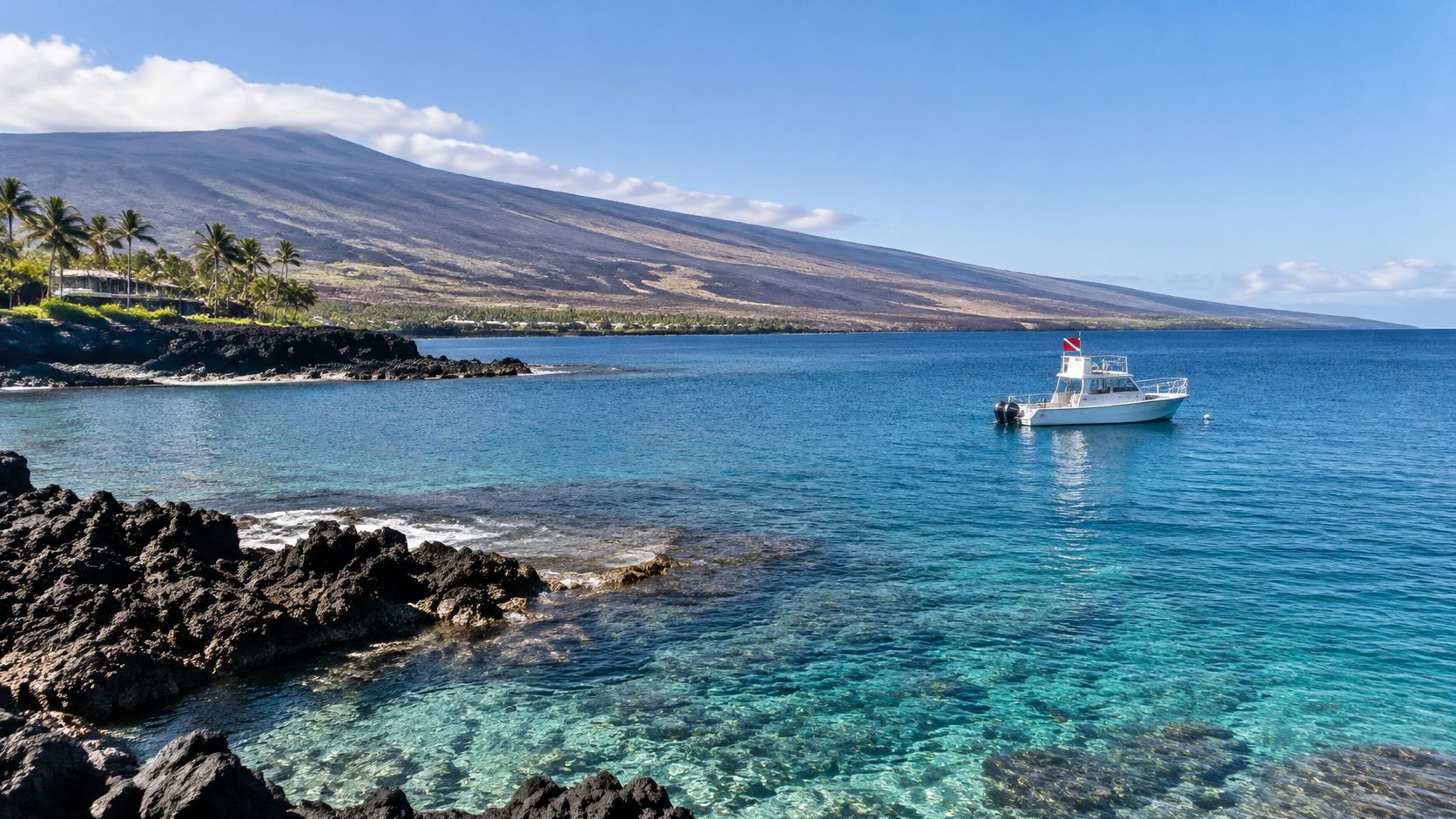
Diving is available year-round, with warm water and generally clear visibility in every season. Our sheltered Kona operating area gives us good conditions almost all year, but shelter isn't the same as a guarantee of flat water.
Say you arrive during winter and see waves breaking against an exposed lava shoreline. That doesn't automatically mean every boat dive is off. A site farther south or behind a different stretch of coast may offer a workable entry and a much calmer underwater experience.
The reverse matters, too. A glassy harbor doesn't establish that an offshore site is suitable, and a pleasant forecast doesn't remove surge from a shallow arch.
Season and Sea State Pattern
| Season | Typical sea state | Visibility and planning note |
|---|---|---|
| Summer | Flatter seas, generally easier for introductions and snorkel companions | Generally clear; rain or plankton blooms can reduce visibility temporarily |
| Winter | North swell can rough exposed shores and harbors | Generally clear; boat sites a short run south often stay workable |
Summer tends to make the surface logistics easier. That matters most to first-time divers, people getting comfortable with ladders and companions who plan to snorkel rather than descend below the surface movement.
Winter calls for more flexibility about location. North swell can wrap into exposed sections of coast, and a shore entry that looked simple in a holiday photograph can become an awkward moving ledge. Don't use a calm day from somebody else's trip as your entry assessment.
Read the Water You Have
Visibility is a major reason people travel here, but it isn't a fixed property of a named beach. Rain runoff, suspended plankton and a recent swell can change what you see, even when the water looks inviting from shore.
Planning rule: Book for the dates you have, then let the crew choose the site for the wind and swell. Don't force a named beach into an unsuitable day.
On the morning of the dive, consider the whole operation: boarding, the ride, the entry, underwater movement and getting back aboard. A reef can be comfortable at depth while the ladder moves enough to demand patience and careful timing.
Our guide to the best months for scuba diving in Hawaiʻi can help with travel planning, but daily conditions should settle the site choice. Keep some flexibility in your itinerary rather than placing every dive against an immovable departure or land activity.
Why Garden Eel Cove Leads Manta Nights
A manta night is a feeding event, not a trained performance. Reef mantas, Mobula alfredi, filter zooplankton from the water rather than taking bait from a guide.
Artificial lights concentrate that food near the viewing area. A NOAA-hosted manta report describes lighting at the surface and near the seafloor, typically around 10 meters, with mantas repeatedly passing through the prey concentration.
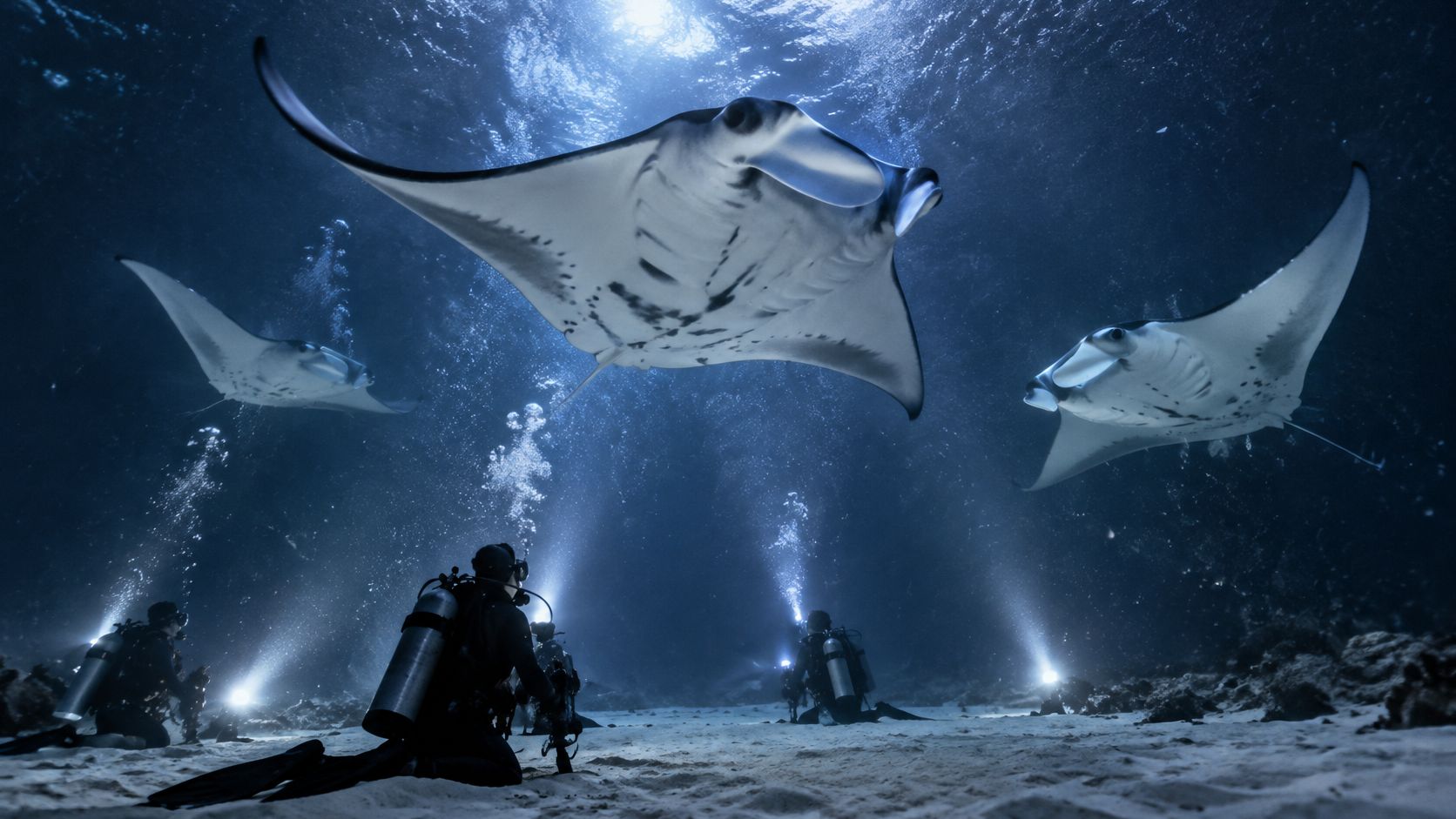
That mechanism determines how to dive the site. Settle into the assigned viewing position, control your buoyancy and leave the water column open. Chasing a ray doesn't improve the encounter, it puts a moving diver into the animal's feeding route.
Why Garden Eel Cove Is the Better Tour Choice
Garden Eel Cove is the superior manta-tour choice for its more protected location, better viewing area and stronger surrounding reef experience. Keauhou can produce memorable encounters, but a trip should be judged by the quality of the whole dive and the control of the viewing operation, not just whether a manta appears.
A Hawaiʻi Department of Land and Natural Resources assessment places Makako Bay immediately west of Kona International Airport and identifies environmental conditions that permit scuba tours there. It describes tour operations generally running from approximately 4 p.m. to 11 p.m., sometimes later.
The animal record supports that site preference without promising a result. A University of Hawaiʻi study summarized on NOAA's Hawaiʻi coral-jurisdiction page analyzed more than 23,000 sightings of 167 individually identified reef mantas from 2010 through 2022 and found consistently larger aggregations at Garden Eel Cove than at Keauhou.
Garden Eel Cove Versus Keauhou
| Site | Also known as | Location | Study and access note |
|---|---|---|---|
| Garden Eel Cove | Makako Bay, Manta Heaven | Immediately west of Kona International Airport | Larger aggregations in the long-term study; scuba tours permitted; recommended manta tour |
| Keauhou | Manta Village, near Kaukalaelae Point | Farther south along the Kona coast | Disproportionately visited by females; smaller aggregations; alternative site |
The NOAA-linked site description locates Garden Eel Cove near 19.736° N, 156.054° W and Manta Village near 19.640° N, 155.997° W, and describes dives beginning shortly after sunset and lasting about an hour. That means an hour-long encounter after sunset, not necessarily an entry exactly an hour after sundown.
Food availability still controls participation. Plankton concentration changes, and individual mantas don't all use the same habitats in the same way. A quieter evening isn't evidence that somebody failed to summon the animals.
For the practical site decision, use our Manta Heaven versus Manta Village guide and review the manta night-dive trip format. The right expectation is excellent observation positioning with wildlife free to arrive, feed and leave.
Stay Safe When Night Boats Share the Bay
Historical crowding assessments recorded as many as 30 boats and 300 participants in a day at Kona's manta-viewing areas. In a survey of 444 participants, 82% felt crowded by snorkelers, 78% by boats and 69% by scuba divers. Those are historical assessment figures, not a count of what you'll encounter tonight.
The county safety record identified a lack of dedicated rules governing nighttime swimming and snorkeling among motoring vessels under the conditions assessed, while a separate assessment warned of severe accidents. That isn't a reason to treat every manta trip as unacceptable. It's a reason to demand an operational briefing that explains where people and boats will move.
Know Which Layer You Belong In
Scuba divers generally occupy assigned positions near the bottom lights, hovering or using an approved nonliving substrate where the briefing permits it. Snorkelers remain at the surface with their assigned flotation equipment or line. Don't improvise a switch between those plans.
Surface swimmers face direct exposure to vessel movement, while divers must manage buoyancy and avoid an unexpected ascent into that traffic. Wind, current, poor visibility and crowding make both jobs harder. Darkness also makes distance and boat identity harder to judge.
Before entry, listen for the vessel lane. You should know which side of the group boats may use, where your own boat is and which direction the crew expects you to travel. If you can't identify that space, ask before entering.
Next, identify the assigned group and light. Another bright light isn't necessarily your guide, and following a feeding manta can take you away from the planned viewing area.
Have a Separation Plan Before You Need It
Don't drift at the surface while deciding what to do. Stay with the designated float or group, and tell the guide early if you're cold, tired or uncomfortable.
If separated underwater, follow the agreed lost-buddy and ascent procedure. Once at the surface, establish positive buoyancy, signal and hold position clear of traffic rather than swimming toward an unidentified engine. If a vessel is close, make yourself visible and follow the crew's directions.
Finally, skip the night if open-water darkness makes you panic. A strong daylight swimmer isn't automatically comfortable floating above black water, and no holiday booking is worth entering while already overwhelmed.
A useful briefing tells you what to do when the plan stops working, not just where to look when a manta arrives.
Follow the crew's light-position instructions. The NOAA-supported practice is to hold diver lights above the head and point them upward, rather than dropping them onto the reef or sweeping a beam into a ray's route.
We strongly recommend dive insurance. Review diving-related medical and evacuation coverage before travel, and don't assume ordinary trip insurance provides the same protection.
A good operator's briefing is part of the safety system. It should establish traffic boundaries, group position, communication and recovery procedures, not reduce everything to a slogan about following the guide.
Run a Boat Day From Dock to Second Dive
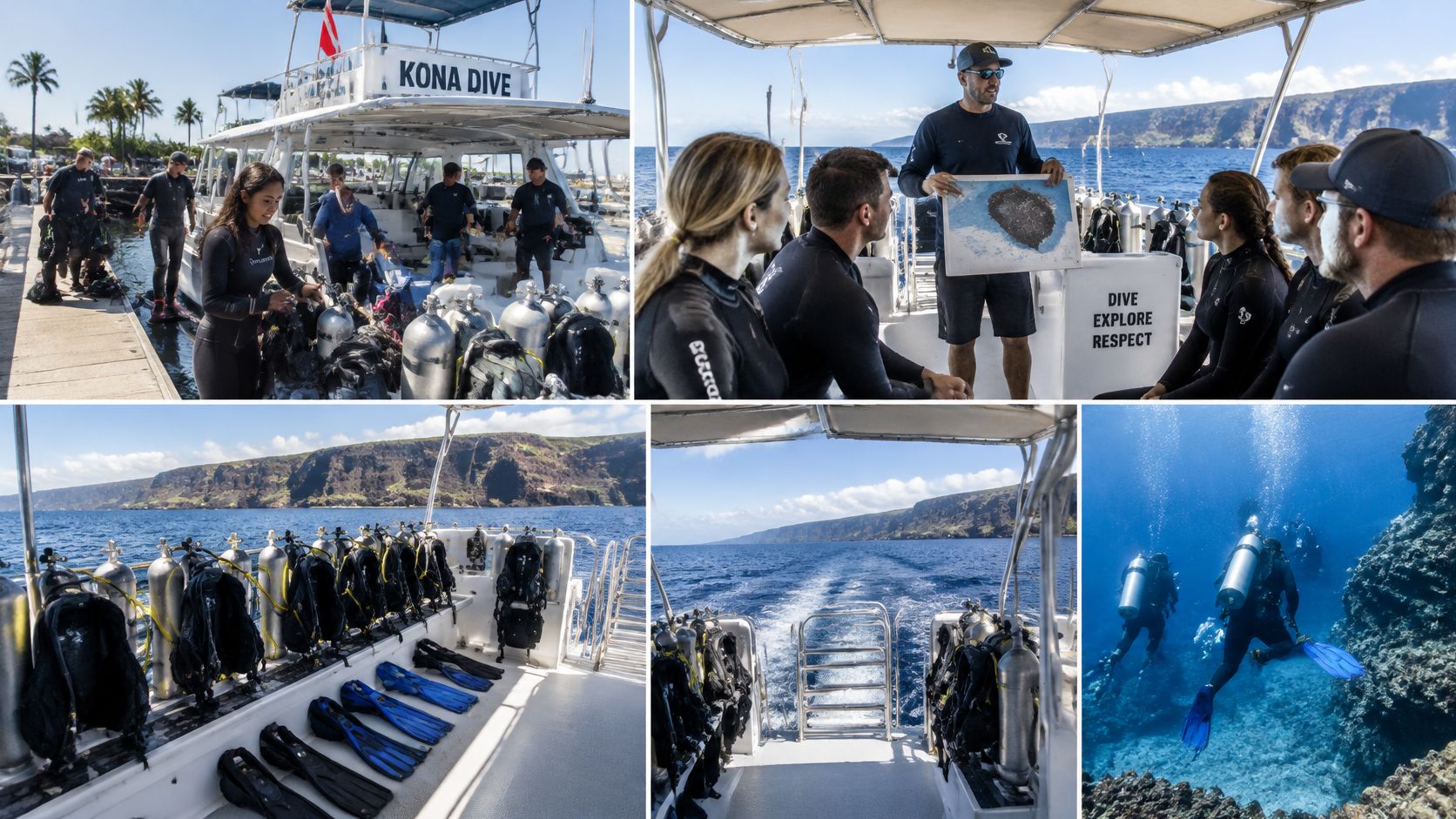
A comfortable boat day starts before you step aboard. Confirm the pickup point, arrival time, included equipment and weather-cancellation arrangements while you still have time to resolve a misunderstanding.
Set Up Before the Briefing
Arrive early enough to assemble and check your gear without rushing. Fit rental equipment before departure where possible, secure your cylinder correctly and check that your regulator, alternate air source and inflator work.
Pack a light exposure suit, certification proof and any prescription mask you need. Leave spearguns and gloves off a guided reef boat unless the crew specifically approves them. Secure cameras and loose accessories so they don't roll across the deck.
At the briefing, listen for the site, depth, entry style, buddy assignments, gas plan and return procedure. For most of our regular charters, we require Open Water certification from a recognized agency such as PADI, SSI or NAUI, allowing diving to 60 feet or 18 meters with a buddy, and you must bring your C-card.
A certification card doesn't remove the need to disclose a long break from diving. If clearing a mask, finding your alternate regulator or managing buoyancy no longer feels automatic, take a refresher before adding boat and navigation tasks.
Dive the Conditions in the Right Order
Our typical sequence puts the deeper or more condition-sensitive site first. Listen for the reason behind that choice, then stay within the planned profile instead of trying to reach a landmark because another diver does.
Use the surface interval for water, a snack and a short debrief. Tell the guide about equalization trouble, unexpected gas use or equipment discomfort before the next entry, not after the boat has committed to another site.
The second dive is generally the more relaxed one. That doesn't make the buddy check optional, and it doesn't justify changing weights or camera equipment without checking how the change affects you.
- Before boarding: Eat sensibly, hydrate and use only your familiar, medically appropriate motion-sickness remedy according to its directions.
- Between dives: Stay out of the way of the ladder and keep the deck clear while other divers return.
- Before going home: Retrieve personal gear and plan post-dive travel conservatively, including flying and high-elevation driving.
A lee coast still moves. If you're prone to seasickness, address it before boarding rather than waiting until nausea makes equipment handling difficult.
Shore diving removes the boat ride, but transfers the operational work to you and your buddy. You own the entry assessment, exit route, navigation and decision to turn around if swell increases. Rental equipment doesn't include a safe site decision.
Beginners should start with introductory instruction, then pursue Open Water certification if they want independent diving. The premium advanced trip belongs after the experience and exit requirements are already manageable, while the blackwater night dive requires calm depth control without a reef beneath you. Neither is the place to discover that your basic skills need rebuilding.
Follow Hawaii Rules While You Photograph
Don't collect from a protected reef, and don't pursue spinner dolphins. The Old Kona Airport conservation-area guide describes a district covering about 217 acres where taking marine life, coral, rock or sand is prohibited and motorized craft are restricted in the nearshore zone.
The same guide summarizes the federal spinner-dolphin rule: don't approach within 50 yards or swim with them, including causing a vessel to approach them within that distance in waters within two nautical miles of Hawaiʻi's main islands. The offshore distance defines where the rule applies, not a requirement to keep a vessel two nautical miles from a dolphin.
Let the Animal Set the Distance
If dolphins appear, stop your approach and give them room to leave. Don't kick after them, enter the water to intercept them or ask the skipper to cut across their path for a photograph.
For mantas, choose a position that leaves an open feeding route. Never touch, ride, chase or reach toward an animal passing overhead. Stay aware of your exhaust bubbles and avoid placing yourself where a ray must pass directly through them.
Hawaiʻi's Act 92, enacted in 2009, made knowingly catching or killing a manta ray in state waters an offense, as described in this Big Island manta-diving guide. Legal protection is the minimum standard, not the complete definition of a considerate encounter.
If getting the frame requires the animal to change course, let the frame go.
Repeated identification of individual mantas makes the stakes tangible. You're photographing recognizable wild animals using a familiar feeding habitat, not interchangeable subjects that exist for a tour schedule.
Set Up the Camera Before the Animal Arrives
For mantas, use a wide lens and hold your position. A wider field of view lets the animal enter the composition without forcing you to backpedal into another diver or swing a camera across its path.
On daytime reef dives, a macro or close-focus setup can reward slow observation. Keep the housing close to your body while moving, then settle into a controlled hover before bringing it forward. Don't brace a hand, fin or camera arm on living coral.
Start conservatively with artificial light. Follow the briefing on whether strobes or video lights are appropriate, avoid directing repeated flashes into an animal's face and reduce output when nearby subjects don't need a powerful beam.
- Secure the rig: Clip or hold accessories so nothing drags across the reef.
- Check your fins: Look behind and below before backing away from a subject.
- Watch your buddy: A camera doesn't replace gas checks, depth awareness or communication.
- Leave resting animals alone: Don't chase a turtle off the reef to remove an inconvenient background.
Our responsible-diver etiquette guide applies whether you're carrying a phone housing or a large camera rig. The practical standard is simple: return with images of animals behaving normally and a reef you haven't altered to make the photograph.
Book the Kona Honu Divers Trip That Fits
Choose the row that matches your current ability, then book that environment. Don't pay for an advanced label when a relaxed reef would give you more useful bottom time, and don't choose blackwater because it sounds like a more dramatic version of a manta dive.
Kona Honu Divers offers the Manta Ray Night Dive, 2 Tank Local Morning Dive, Premium Advanced 2 Tank Trip, Black Water Night Dive and Morning Introductory Scuba Dive. The meaningful distinction is what you'll need to manage in the water, not which trip has the most striking photograph.
Resolve the Booking Questions First
For reef and first-time questions, use the tour selection that matches your certification status. For manta nights, select the Garden Eel Cove experience with a clear understanding of whether you're booking scuba or surface snorkeling.
Advanced and blackwater guests should settle eligibility before paying a deposit. Call 808-324-4668 if you have questions about your C-card, experience history or ability to climb the ladder in equipment.
When comparing Kona scuba-dive shops, focus on the operational answers: who the trip suits, how the crew chooses sites and what happens when conditions change. We won the Scuba Diving Magazine Reader's Choice Award for the best dive company in the Pacific, but the trip still needs to fit the person booking it.
Match the Reservation to Your Plan
We offer early diver discounts, dive packages and free nitrox. Ask which options fit your itinerary, and use nitrox only within your training and the analyzed cylinder's limits.
Before confirming, check the date, participant type, certification requirement and equipment selection. If you're arranging a mixed group, make sure every person understands their own in-water plan rather than assuming one booking description covers everyone.
Use the button below to book the row you've already chosen. A well-matched reservation is a better start than an ambitious booking followed by an uncomfortable conversation on the dock.
Kona Honu Divers offers guided reef dives, Garden Eel Cove manta nights, advanced trips and introductory scuba on the Big Island. Visit Kona Honu Divers to choose the trip that fits your certification and comfort, and call before booking if your experience or exit ability needs a closer conversation.