
You pull into Honokōhau before sunrise, rinse sleep out of your eyes, and the deck crew is already checking tanks, masks, and current conditions while the horizon turns silver. That's where diving Kona begins, not a postcard, but a decision tree: which site fits your card, which day fits the swell, and which boat fits your tolerance for crowds, distance, and overhead risk.
Kona isn't one dive. It's a stack of very different dives, from shallow shore entries and manta nights to blackwater and advanced lava routes. The smarter way to book here is to match the day's conditions and your comfort level to the right tier, then let the operator handle the logistics. For reference throughout this guide, Kona Honu Divers runs the kind of trips that make those choices visible, including manta, blackwater, advanced, and standard two-tank outings, with more planning and booking available at the end.
What It Feels Like to Dive Kona
A Kona dive boat feels busy in the right way at first light. Cylinders are lined up, crew are sorting weights and cameras, and the captain is already looking at the swell direction instead of the calendar, because that's what decides where you'll go. On a good morning, the ride out is calm enough that even a nervous diver starts relaxing before the first splash.
What makes diving Kona different is that the island rewards people who choose the right tier. A new diver can have a smooth shore entry and a shallow reef day, while a more experienced diver can spend the same vacation inside lava tubes, on deeper pinnacles, or suspended over open water at night watching pelagic life drift into the beam. The destination only feels simple if you ignore the range.
The right trip changes everything
That's why a serious Kona plan starts with the question, “What kind of dive do I want today?” If you want animals and easy logistics, manta is the obvious headline. If you want structure and motion, offshore boat sites and lava formations deliver more. If you want something stranger, blackwater is its own category entirely.
Practical rule: Don't book Kona by headline alone. Book by the kind of water you're ready to handle, then choose the site that matches it.
The rest of the guide is built around that ladder, not around marketing labels. If you already know where you land on it, you can skip straight to planning and booking instead of sorting through vague “best dive in Hawaii” claims.
Why Kona's Conditions Reward the Right Plan
Kona rewards divers who read the day, not just the destination. The west coast sits in the island's rain shadow, so it generally gets less runoff than windward shores, which helps explain why visibility can be so good here. For a closer look at what affects clarity, see this guide to visibility in Big Island scuba diving. Independent references commonly describe visibility exceeding 100 feet, about 30 meters, though the actual result still depends on site and weather (visibility planning reference).
Water and weather shape the day
Water temperatures on the Kona coast are generally warm tropical territory, roughly 74 to 84°F (23 to 29°C) across seasonal extremes. That is comfortable for many divers in a 3 mm wetsuit, but thinner exposure protection can feel cold once you add longer bottom times or multiple dives in one day. Morning departures matter too, because wind and chop usually build later, and that makes a real difference for photographers and for anyone who does not want a rough climb back aboard.
Calm on the surface does not mean calm below it. Winter north-Pacific swell can stir sediment at exposed entries and cut visibility even when the forecast looks fine from shore. Local operators care more about swell direction and entry angle than about the month on the calendar, because those two details decide whether a site stays manageable or gets sloppy fast.
What I tell divers: Kona's reputation helps, but the marine forecast decides whether the dive feels clean or feels worked.
The practical takeaway is simple. Match your site choice to the day's conditions, your certification level, and how crowded the boat line-up is likely to be. That is how you get the right tier of Kona diving, from an easy reef morning to a more technical offshore day, without forcing a site that punishes shortcuts.
The Manta Night Dive and Why Garden Eel Cove Wins
The manta night dive is the Kona trip people remember, and site choice decides whether it feels controlled or crowded. Garden Eel Cove is the default for good reason. Its protected setting and reef shape usually give divers a cleaner viewing platform than chasing mantas in rougher water.
A University of Hawaiʻi study analyzed more than 23,000 community-recorded sightings from 2010 through 2022 and identified 167 individual reef manta rays, Mobula alfredi (University of Hawaiʻi manta study). It found that Garden Eel Cove generally supported larger aggregations, while Keauhou showed stronger use by females. The long record also showed an approximately balanced 1:1 sex ratio overall, which supports the idea that the two sites serve different ecological roles.
Why the site choice matters
The older monitoring record explains why Garden Eel Cove stayed central to the industry. Hawaiʻi legislative testimony reported 3,208 surveys from 1992 through 2007, mostly at Keauhou and Hōnaunau-area sites, and said manta rays were seen on about 80% of dives at Garden Eel Cove (Hawaiʻi legislative testimony). That same testimony estimated more than $2.5 million in annual revenue from manta-ray ecotourism, which is why this dive became both a marine experience and a local economic asset.
For a fuller breakdown of the experience, see this guide to the Kona manta ray dive.
The pressure point now is management. In April 2025, Hawaii's Division of Boating and Ocean Recreation reportedly stopped issuing new Commercial Use Permits, and proposed direction would reduce activity at Keauhou and Makako Bays to about 24 operators (report on the 2025 permitting shift). That makes operator behavior matter more than ever. Lighting discipline, crowd control, and giving animals room are part of whether the dive stays workable.
Garden Eel Cove remains the better default because it combines the strongest viewing setup with the clearest ecological case. If you are booking a manta trip, book the operator, not just the headline.
Here's the manta-specific option: Kona manta ray dive tours.
Choosing Between Pinnacles, Lava Tubes, and Shore Dives
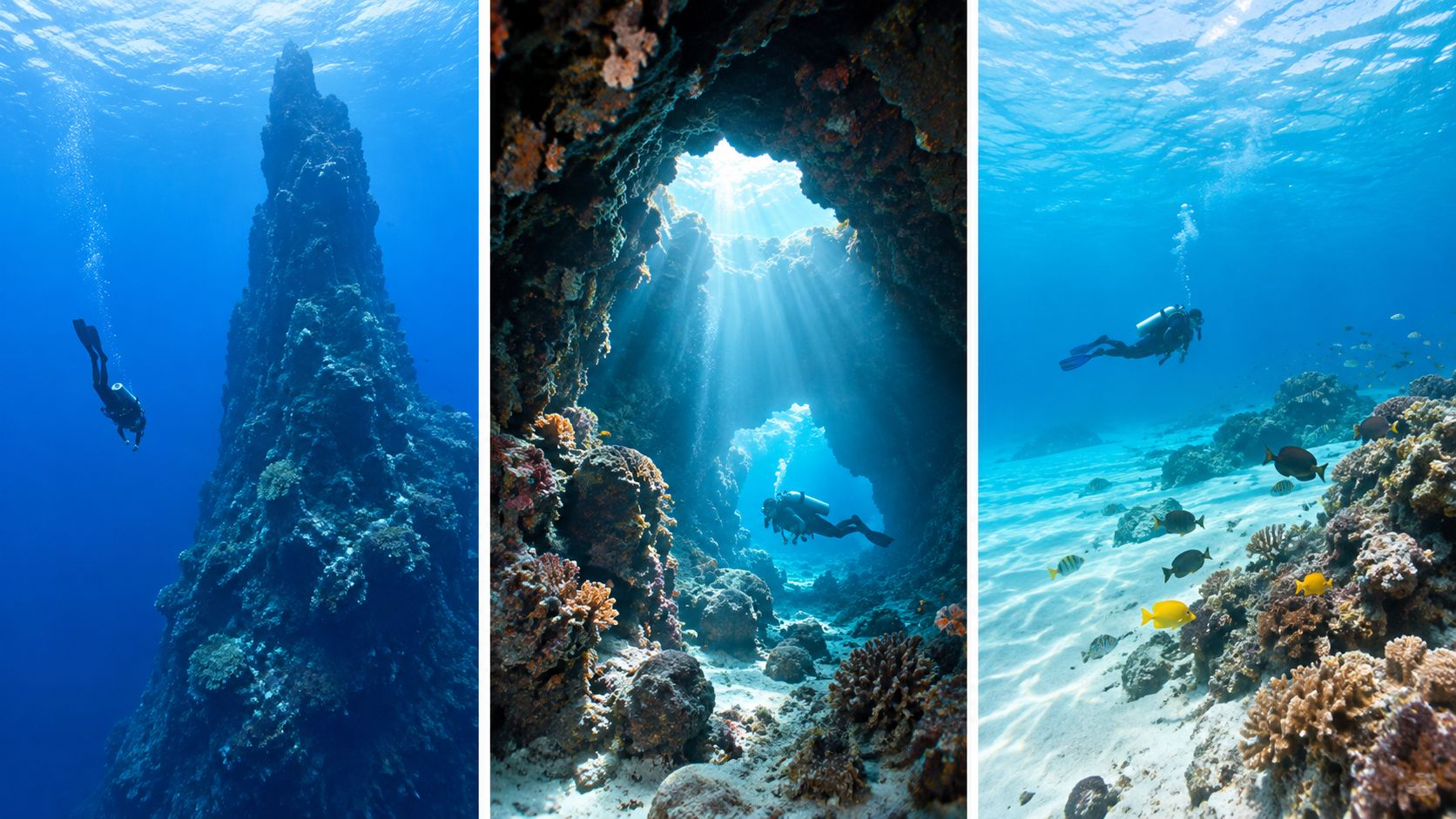
A Kona day dive can feel straightforward until the site choice puts you in the wrong lane. Offshore pinnacles suit divers who are comfortable with depth, gas checks, and controlled ascents. Lava tubes and arches add overhead risk. Shore entries can look mild from the parking lot and still punish poor timing, weak buoyancy, or a rushed exit. The site has to match the diver, not just the photo.
Offshore structure suits experienced divers
Deep boat dives reward divers who already handle buoyancy, bottom time, and ascent discipline without hesitation. They make sense for people who want more complex terrain and have the certification and gas planning to support it. An advanced trip is the right setup for that kind of day.
The premium advanced two-tank trip fits those sites well. It gives the dive a clearer structure, stronger depth profile, and less of the beginner traffic that can turn a site into a slow procession. The split that matters is whether the dive asks for independence.
Lava tubes demand overhead skills
Kona's volcanic terrain includes lava tubes, arches, swim-throughs, and pinnacles, but overhead space changes the risk profile fast. A Big Island site guide describes lava-tube diving as an overhead environment with complex navigation and higher risk, and recommends advanced or cavern certification, multiple lights, and experienced guides as safeguards (Big Island lava-tube diving guide). That is the part many vacation divers miss.
A lava tube is not a scenic reef with a roof. It is a navigation problem with beauty attached.
Inside, the reward is obvious. Light fades, the geology sharpens, and low-light pockets can hold lobsters, shrimp, crabs, and resting whitetip reef sharks. Divers without overhead training should stay outside and pick a site that fits their card.
Shore dives need better judgment than most people think
Protected shore entries can be useful for divers who like control and a slower pace. They still depend on swell, current, and exit visibility lining up on the same day. A calm-looking entry can turn awkward fast if any one of those changes.
For practical shore-dive planning, start with Big Island shore diving options.
Blackwater Diving and Kona's Pelagic Frontier
Blackwater is the dive many divers misread. It is open-ocean night diving, where the light field becomes the whole world and vertically migrating animals rise into it from the dark water below. That is why Kona blackwater trips feel more like fieldwork than tourism.
A peer-reviewed study of larval fishes encountered by blackwater divers off Kona collected 76 specimens and barcoded all of them using mitochondrial COI DNA. Forty-four were identified to at least genus or species level with 99% or greater matches in GenBank and BOLD, and 26 were photographed alive in the water before collection (blackwater barcoding study). That is not marketing language. It is an underwater sampling method that produces usable biological records.
How the light field pulls pelagic life into view
NOAA describes a recreational-scuba method that uses divers to survey pelagic communities during night blackwater dives near Kona, using nocturnal visual censuses rather than fixed reef surveys (NOAA blackwater survey method). The logic is simple. Many pelagic animals migrate upward at night, and the dive lights pull them into a visible zone where they can be observed, photographed, and documented.
That is why a blackwater trip works best for divers who want novelty and self-reliance, not structure and coral scenery. You are not following a reef wall. You are holding position in open water while the ocean sends odd, tiny, often translucent life into your beam. For background on how these dives work, see this guide to the Kona black water dive, and for the tour version, see Kona black water dive tours.
Shore Diving That Looks Easy and Punishes Sloppy Judgment
Old Kona Airport is a good example of a shore site that looks forgiving and still demands respect. The Division of Aquatic Resources says the MLCD has shore entries, shallow lava fingers reaching about 50 feet, substantial coral cover, and frequent turtles and rays, but it also warns of sharp lava and coral, dangerous swells and currents during storms, no lifeguard service, and restrictions on boating, anchoring, marine-life removal, and commercial activity (Old Kona Airport MLCD).
That mix is the lesson. A site can read as beginner-friendly on paper and still turn rough fast when surge builds or the exit line gets hammered by wash. The bottom line is simple, the dive ends when conditions stop matching the plan.
The checklist that matters before you gear up
Start with the swell. If it is wrapping onto the entry or pushing through the exit lane, skip it. Check current, daylight, and whether you can still see the exit from the water before you commit, because getting out cleanly matters as much as getting in.
Then check yourself. Buddy readiness matters, especially when one diver is more experienced and starts making quiet assumptions. If the route, the surf, or the gear load already feels wrong in the parking lot, that is usually the day to choose another site.
Use the site as a tool, not a trophy. Old Kona Airport can be a practical shore dive when conditions line up, but it is not a place to force a plan. For a sharper look at where independent divers usually start, see Big Island shore diving guidance.
Certification, Gear, Seasickness, and Boat Logistics
Kona rewards divers who know their limits before they get on the boat. Open Water certification is enough for shallow shore dives and many standard reef days, while advanced trips, lava routes, and blackwater ask for more experience or higher-level cards. If you're not current, a refresher is cheaper than wasting a day trying to remember how to be calm underwater.
Here's the quick fit check:
| Kona Dive Site by Certification | Best Kona Experience | Key Requirement |
|---|---|---|
| Open Water | Shore reefs and standard guided boat dives | Comfort with basic buoyancy and buddy procedures |
| Advanced | Pinnacles and more demanding boat dives | Stronger buoyancy, depth control, and situational awareness |
| Cavern or overhead training | Lava tubes and swim-through routes | Multiple lights and overhead-environment discipline |
What to bring and what to leave to the boat
Pack the mask you trust, the computer you know, and exposure protection that matches how easily you chill. For many divers, that means a 3 mm suit and maybe a hooded layer if you're planning several dives or you run cold. Camera users should think about stability, because morning boat rides and calmer seas are still easier on housings than choppy afternoon water.
Seasickness is worth planning for if you're doing manta or blackwater, or if you're prone to motion issues on longer crossings. Product options people commonly keep on hand include the Ship-EEZ Seasickness Patch, Dramamine pills, Bonine pills, Sea Band wristbands, and ginger chews.
A well-run Kona boat should also make the day easier, not harder. Expect shaded seating, storage that isn't an afterthought, hot showers, and gear that's been serviced before it ever hits the dock. Free nitrox is a meaningful bonus for repetitive diving, especially when your itinerary includes multiple boat days.
For certification planning, use Big Island scuba diving certification guidance. If you're booking with a shop that also runs guided charters, Kona Honu Divers is one of the operators that offers those trips, plus the practical boat features divers care about.
Sample Itineraries and How to Book Your Trip
A Kona trip works best when it follows the water, not a fixed wish list. Start with the easy dives, then add one or two specialty outings once you know how your body handles the boat, the entry, and the local swell. The key decision is fit, matching certification level and crowd tolerance to the site that rewards you that day.
Three ways to structure the week
Beginner plan. Start with a refresh or a shallow guided dive, then add a manta night snorkel or dive once the boat routine feels normal. Keep shore entries conservative. Save the more demanding sites for later, after you have seen how Kona handles swell and ladder work.
Advanced plan. Book a two-tank pinnacle day, rest, then add a blackwater night once your buoyancy and camera handling are settled. If your certification already covers harder environments, this is the schedule that shows Kona at its most varied.
Family and photographer plan. Use calm mornings for easy boat days, choose manta for the shared payoff, and leave enough slack in the day that lighting, gear, and logistics do not compete with each other. The strongest family trips here are paced well, not packed tight.
Choose the operator, not just the headline
That decision matters in Kona. Site quality, lighting, group size, and crowd density come from how the operator runs the day, not from the brochure. The 2025 permitting shift also affects manta bookings directly, so the shop you pick matters as much as the site name. Browse the Kona Honu Divers diving tours hub, and if you want to compare certification pathways, use the Big Island scuba diving certification guidance.