
Welcome to the Big Island, a place where ancient volcanoes have sculpted an underwater world unlike any other. If you're a diver, you've probably heard the whispers about the Kona coast—and let me tell you, the legends are true. With its dramatic lava tubes, vibrant coral reefs, and water that’s somehow both crystal clear and comfortably warm all year round, this is the launchpad for some of the most unforgettable diving on the planet.
Why Scuba Dive on the Big Island?
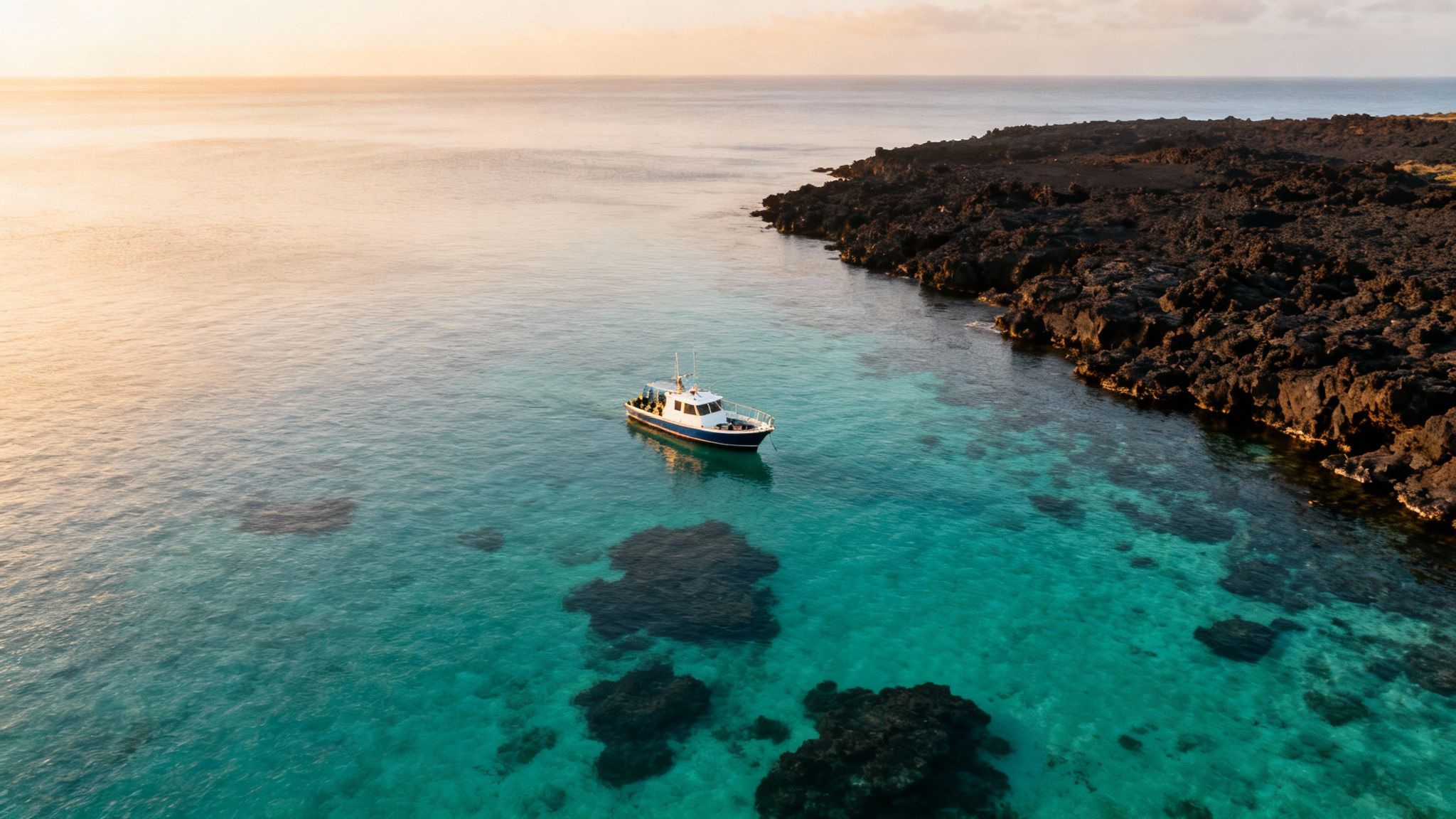
Hawai'i is a global hotspot for diving, and the Big Island is its beating heart. The state sees over 1.5 million dives annually, and a huge slice of that action happens right here. With more than 215 licensed dive shops, it's a magnet for divers from the mainland, Europe, and Asia. It's not just a seasonal destination; it's a year-round paradise. You can get a better sense of the numbers from Hawai'i's dive industry statistics.
What gives Kona its edge is the island's incredible geology. The two massive volcanoes, Mauna Loa and Hualālai, act as natural bodyguards for the western coast. They block the prevailing trade winds, which means the waters here are almost always exceptionally calm and clear.
This natural protection creates near-perfect conditions for diving. Visibility often pushes past an incredible 100 feet, and the water temperature stays in that sweet spot of 77-80°F (25-27°C) from June to September. These conditions pull back the curtain on a breathtaking underwater landscape carved by ancient lava flows, full of dramatic arches, caverns, and intricate lava tubes waiting to be explored.
What Makes Kona Diving Special
The underwater world here is a masterpiece of life and color. The volcanic rock has become the foundation for some of the healthiest and most unique coral reef systems you'll ever see. And unlike other places where the best spots are a long boat ride away, Kona's dive sites are incredibly diverse and surprisingly close to shore.
You could genuinely do a different type of dive every day. One morning you might be exploring sun-drenched coral gardens swarming with endemic Hawaiian fish, and that afternoon you could be drifting along a deep-water drop-off, keeping an eye out for larger pelagic species.
But two experiences truly define diving on Hawaii's Big Island: the world-famous Manta Ray Night Dive and the mind-bending Blackwater Dive. These aren't just dives; they are encounters you’ll find almost nowhere else on Earth.
To really unlock these wonders, you need the right guide. A skilled local operator like Kona Honu Divers doesn't just take you diving; they transform your trip into a genuine underwater expedition, making sure every single dive is safe, unforgettable, and perfectly matched to the day's conditions.
Witnessing the Manta Ray Night Dive
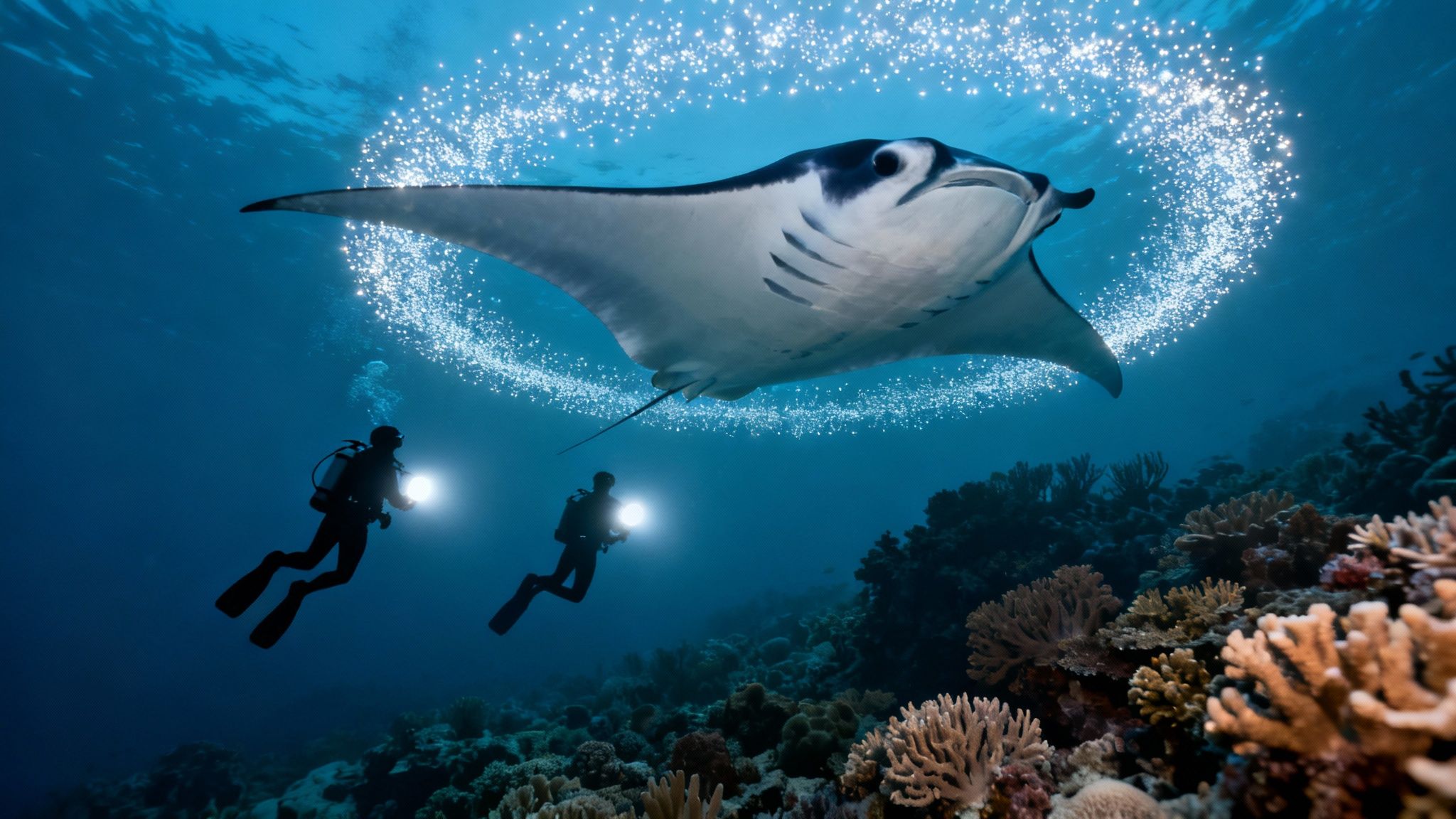
Picture this: you’re hovering, weightless, in the dark ocean as graceful shadows begin to materialize from the deep blue. These aren't small creatures. They are giant manta rays, with wingspans stretching up to 16 feet, and they glide effortlessly through the water in an underwater ballet just inches from your face.
This isn't a scene from a documentary; it's the legendary Manta Ray Night Dive in Kona. It's an experience so unique and powerful that it’s consistently ranked as one of the best night dives on the entire planet.
The whole encounter is a brilliant mix of natural behavior and a little human ingenuity. After the sun sets, divers descend to a sandy spot on the ocean floor and point powerful lights up toward the surface. These beams act like a giant magnet for plankton—the mantas' favorite food—creating an irresistible buffet that draws them in.
The gentle giants arrive for dinner, swooping and somersaulting through the beams of light in a mesmerizing feeding frenzy. It's a completely peaceful, awe-inspiring interaction that perfectly captures the magic of diving Hawaii Big Island. For many divers, this single experience is the reason they travel halfway across the world to Kona.
Why Garden Eel Cove Is the Premier Manta Location
While you might hear about a couple of different sites for this dive, one place consistently stands out as the superior choice: Garden Eel Cove. Located just north of the Kona airport, this spot (often called Manta Heaven) is tucked into a protected bay, offering a shield from the open ocean swells that can affect other locations.
This natural protection means the conditions are almost always calmer, more comfortable, and safer—something you really appreciate on a night dive.
The viewing area for divers is also perfectly designed here. You settle on a sandy bottom, which means no one is damaging fragile corals. Your group’s lights create a "campfire" effect, drawing the mantas in to feed directly overhead. It’s a front-row seat to one of nature's greatest shows, offering a better and more intimate viewing experience.
Plus, the surrounding reefs at Garden Eel Cove are healthier and more vibrant, making the first "daylight" dive of the trip a fantastic experience on its own. It's this combination of protected waters, a superior viewing area, and better reefs that makes it the definitive spot for this bucket-list dive.
A Reliable and Unforgettable Encounter
The manta ray night dive has become a cornerstone of Big Island diving for one simple reason: it's incredibly reliable. The success rate for seeing mantas hovers around 85-90% on any given night, making it one of the most dependable megafauna encounters you can find anywhere.
Operators have been logging the sightings for years, and it’s not unusual for dozens of individual mantas to show up. It’s pretty common to have double-digit sightings, with some nights recording an incredible 23 or even 30 different mantas.
And these aren't just fleeting glimpses. The mantas stick around for the entire dive, circling and feeding so close you can see the unique spot patterns on their bellies—patterns that act like fingerprints, allowing researchers to identify each one.
It’s a profound connection with nature—witnessing these massive, intelligent creatures trustfully interacting with us in their environment. The experience is both humbling and exhilarating, leaving a lasting impression that goes far beyond a typical scuba dive.
At Kona Honu Divers, we’ve honed this tour to make sure it’s a world-class experience from start to finish. Our guides give thorough briefings on how to interact with the mantas safely and respectfully, always emphasizing a hands-off approach to protect these magnificent animals.
We focus on small groups and smooth logistics so you can forget about everything else and just immerse yourself in the magic. You can find out more about what to expect in our guide to the Manta Ray Night Swim.
Exploring Kona’s Premier Reef Dives
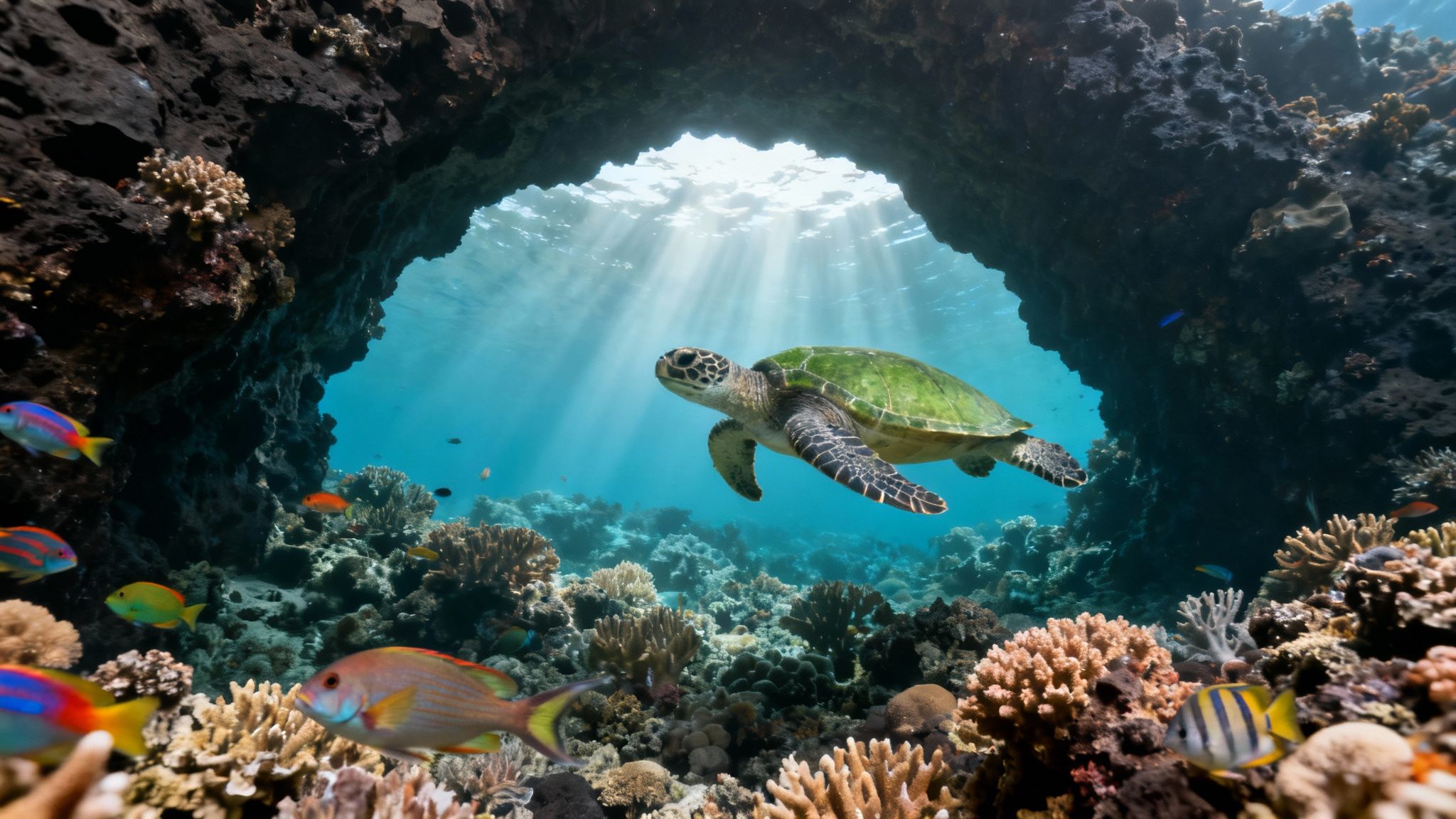
Sure, the manta dive and blackwater trips get a lot of the spotlight, but the real heart and soul of diving Hawaii Big Island is found along its sun-drenched reefs. For divers, the Kona coast is an absolute playground, offering an incredible variety of underwater landscapes that truly has something for everyone.
The secret ingredient here is the island's volcanic past. Ancient lava flows from the Hualālai and Mauna Loa volcanoes didn't just stop at the shoreline; they forged a breathtaking underwater world. When you descend, you're entering a realm of intricate lava tubes, dramatic archways, and massive caverns, all beautifully decorated with decades of vibrant coral growth.
This unique volcanic structure is the perfect foundation for a bustling marine ecosystem. The reefs are alive with activity, from schools of Hawaiian fish you won’t find anywhere else on the planet to the iconic green sea turtles (honu) that glide by with serene grace.
Dive Sites for Every Skill Level
One of the best parts about diving in Kona is that you’re never limited by your experience level. Whether you just got your certification card or have logged hundreds of dives, there's a perfect site waiting for you.
- For Beginners: If you're new to diving or just want a chill, beautiful experience, sites like Kealakekua Bay are fantastic. The water is calm and protected, the visibility is often phenomenal, and the reefs are packed with life. It's an ideal introduction to what Kona has to offer.
- For Intermediate Divers: Once you're comfortable, a whole new set of sites opens up. These are the spots with more complex terrain—think exciting swim-throughs, winding lava tubes, and deeper reef walls that attract a wider array of creatures like eels, octopuses, and reef sharks.
- For Advanced Divers: For those who crave a bit more adventure, Kona delivers. There are thrilling advanced dive trips known for greater depths, the potential for currents, and the chance to spot larger pelagic animals. These dives often feature stunning drop-offs and formations that will take your breath away.
Think of Kona's dive sites not as one single environment, but as a collection of unique underwater neighborhoods. Each has its own personality—from sandy bottoms where garden eels peek out to sheer walls draped in coral. Every dive feels like a brand new adventure.
This is where a knowledgeable dive operator makes all the difference. An experienced crew, like the one at Kona Honu Divers, uses their deep understanding of local conditions to pick the perfect sites each day. They’re constantly considering the weather, visibility, and the skill levels of their divers to ensure every trip is safe, fun, and perfectly matched to the group.
What You Can Expect to See
The sheer amount of life on the Kona coast is staggering. Because Hawaii is so isolated, a huge percentage of the fish you'll encounter are endemic, meaning you literally can't see them anywhere else in the world.
Beyond the clouds of colorful reef fish, here are just a few of the stars of the show:
- Green Sea Turtles (Honu): Watching a honu glide effortlessly past you is the quintessential Hawaiian dive moment.
- Spinner Dolphins: You'll often see pods of these acrobatic dolphins from the boat, and if you get really lucky, you might even have an underwater encounter.
- Eels and Octopuses: Always keep an eye on the little nooks and crannies in the reef. They’re favorite hiding spots for moray eels and the incredibly smart Hawaiian day octopus.
- Reef Sharks: White-tip reef sharks are a common and welcome sight, often seen resting on the sand or cruising along the edge of the reef.
This incredible biodiversity is why so many divers come back to the Big Island again and again. You can browse through a variety of diving tours to get a feel for what makes each one unique. The reefs are always changing and there’s always something new to discover—that’s the real magic of diving here.
Taking on the Kona Blackwater Dive
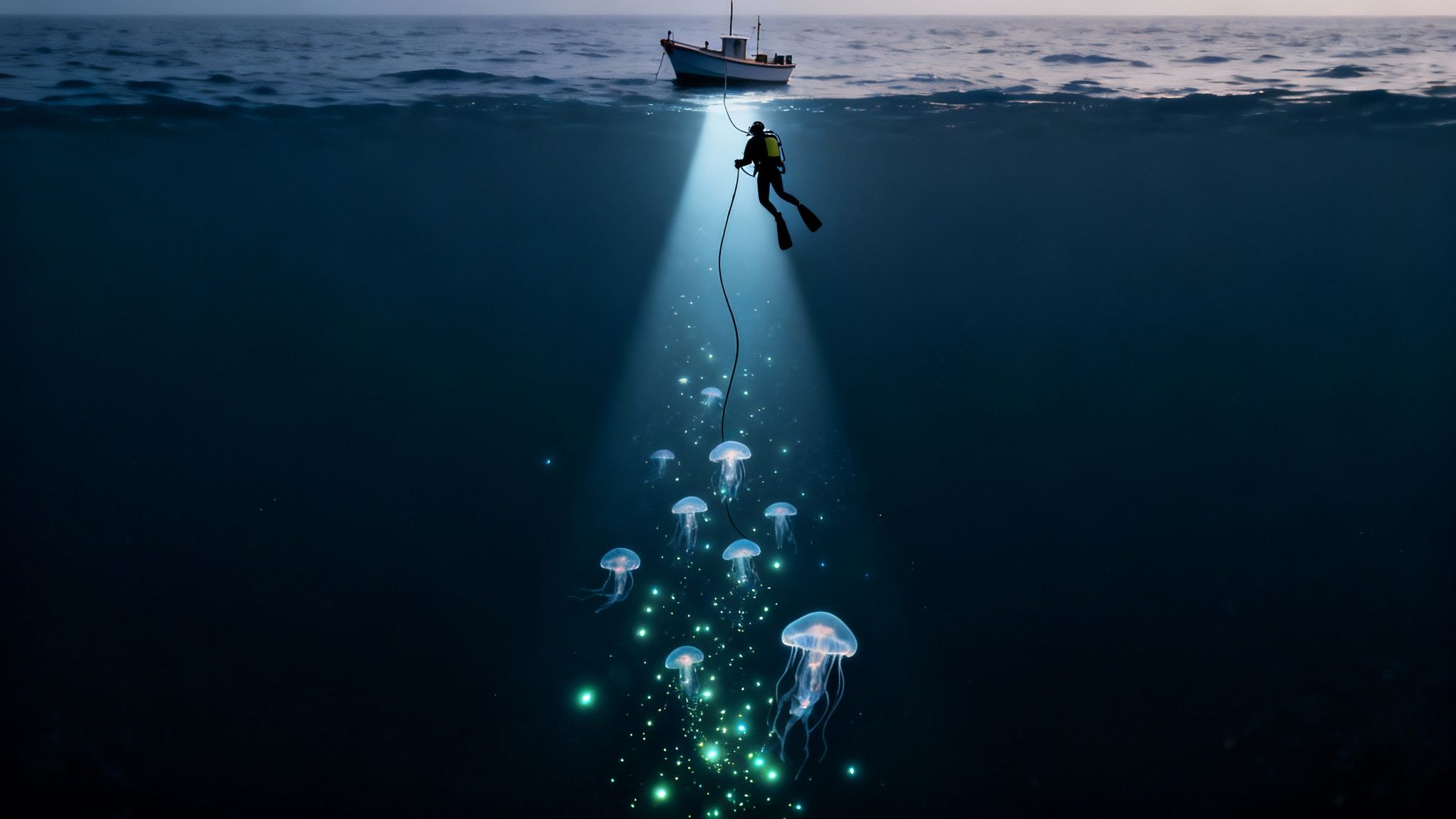
If you're a certified diver who thinks you’ve seen it all, think again. The Kona Blackwater Dive is something else entirely—a journey into a bizarre, alien world that redefines what a night dive can be. Forget the reef. This is open-ocean exploration at its most thrilling and is easily one of the most unique experiences you can have while diving Hawaii's Big Island.
Picture this: you're miles from shore, floating in the profound, inky black of the deep sea. A tether connects you to the boat above, your only link to the familiar world as you hover over thousands of feet of water. Your powerful dive light cuts through the darkness, illuminating a hidden universe.
What you're witnessing is the largest migration on Earth, a phenomenon that happens every single night. Under the cover of darkness, trillions of tiny, strange, and often bioluminescent creatures journey from the crushing depths toward the surface to feed. You're floating right in the middle of their commute.
A Parade of Alien Creatures
The real magic of a blackwater dive is the cast of characters you'll meet. These aren’t the reef fish and turtles you know. You’ll be face-to-face with the larval stages of familiar animals, which often look absolutely nothing like their adult selves. It's like visiting an underwater nursery for the weird and wonderful.
You might see things like:
- Translucent Squids and Octopuses: Many are no bigger than your thumbnail, their intricate organs perfectly visible through their glass-like bodies.
- Bioluminescent Jellies: Ctenophores and siphonophores pulse with their own otherworldly light, drifting past like alien starships.
- Larval Fish and Crustaceans: Get a glimpse of juvenile eels, lobsters, and fish, often covered in bizarre appendages they use for camouflage and defense.
For underwater photographers and die-hard marine life nerds, this dive is the ultimate prize. Every single trip reveals something new and completely unexpected. It's an addictive experience for anyone with a deep sense of curiosity.
Why This Dive Demands Expertise
Let's be clear: the Kona Blackwater Dive is an advanced experience. Drifting in the open ocean at night requires specialized gear, rock-solid procedures, and deep expertise. Safety is everything, and this is absolutely not a dive to undertake with an inexperienced operator.
Also known as pelagic night diving, this dive has put Kona on the map for serious underwater exploration. The island’s unique geology, with its steep offshore drop-offs just a few miles from the coast, makes it the perfect stage. Pioneers like Kona Honu Divers saw this potential and developed the techniques to do it safely.
When you go, you want to go with a company that helped write the playbook for this kind of dive. They have the refined safety protocols, the custom-built tether systems, and the expert guides who can actually identify the strange creatures you're seeing. It’s one of the most incredible advanced diving opportunities on the planet, and with the right team, it's a safe and unforgettable trip into the abyss.
Planning Your Big Island Dive Adventure
A truly epic dive trip doesn’t happen by accident—it starts with smart planning. Getting the details dialed in before you even pack your bags means less stress on the ground and more time enjoying what you came for: the incredible underwater world of Hawai‘i’s Big Island.So, let's talk logistics. The first question I always get is, "When's the best time to go?" Here’s the fantastic truth about Kona: there’s really no bad time. The island's massive volcanoes act as a natural shield, protecting the Kona coast from the gusty trade winds that can stir up other parts of Hawai'i. The result? Consistently amazing dive conditions, all year long.
That said, the seasons do bring subtle changes that might help you pick the perfect window for your trip. Summer is when the water hits its warmest, a blissful 79-82°F (26-28°C). This is also when the seas are at their flattest and manta ray activity tends to peak.
Winter brings slightly cooler water, dipping to around 75-78°F (24-26°C), but it comes with a massive perk: humpback whales. From the boat, you'll see them breaching, and underwater, you’ll actually hear their haunting songs. It's a truly unforgettable soundtrack for a safety stop.
Seasonal Diving Conditions on the Big Island
To give you a clearer picture, I've broken down what to expect throughout the year here in Kona. Think of this as your cheat sheet for planning.
| Season | Water Temperature | Typical Visibility | Marine Life Highlights |
|---|---|---|---|
| Winter (Dec-Mar) | 75-78°F (24-26°C) | 80-100+ ft | Humpback whale season (surface), potential for larger pelagics. |
| Spring (Apr-Jun) | 76-79°F (24-26°C) | 100+ ft | Calm conditions, excellent visibility, active reef life. |
| Summer (Jul-Sep) | 79-82°F (26-28°C) | 100+ ft | Warmest water, calmest seas, peak manta ray activity. |
| Fall (Oct-Nov) | 78-80°F (26-27°C) | 80-100+ ft | Great conditions continue, fewer crowds than summer. |
No matter when you visit, you're in for a treat. It’s less about finding a "good" time and more about choosing the experience that calls to you most.
Essential Packing and Travel Logistics
Packing for a Kona dive trip is pretty straightforward. While you can always rent excellent gear here, most seasoned divers know the comfort of their own kit is priceless.
Here’s a no-nonsense checklist of what to bring:
- Your Core Gear: At a bare minimum, bring your own mask, fins, snorkel, and dive computer. A perfect mask fit and a computer you know inside and out are non-negotiables for a good time.
- Wetsuit: A 3mm or 5mm full wetsuit is the sweet spot for Kona's water temps any time of year.
- Reef-Safe Sunscreen: This is a big one. Sunscreens with chemicals like oxybenzone are incredibly damaging to our delicate coral reefs. Please, do your part and stick to mineral-based sunscreens.
- Reusable Water Bottle: The Hawaiian sun is no joke. Stay hydrated and help us cut down on single-use plastic.
- Dry Bag: A small dry bag is a lifesaver on the boat for keeping your phone, keys, and a towel from getting soaked.
- Cert Cards & Logbook: Don't leave home without them! You'll need proof of certification for any dives you've booked.
Getting here is a breeze. You’ll fly into Kona International Airport (KOA), which is just a quick drive from the heart of Kailua-Kona and Honokohau Harbor—the launching point for nearly all dive charters, including ours.
When it comes to where to stay, I recommend basing yourself in or around Kailua-Kona. You’ll find everything from sprawling resorts to cozy vacation rentals, all conveniently close to dive shops, great restaurants, and the harbor. Staying nearby means less time in traffic and more time relaxing after an amazing day on (and under) the water.
With just a little prep work, your Big Island adventure will be smooth from start to finish. You can check out all of our diving tours to see which ones are the right fit for your dream trip.
Why We Think Kona Honu Divers Is the Best on the Island
Picking a dive operator is probably the most critical decision you’ll make for your entire trip. It can be the difference between a so-so dive and an absolutely epic one. So, with a bunch of boats to choose from, what really makes one stand out?For us, it comes down to a few key things: genuine experience, top-notch gear, and a real, honest-to-goodness passion for giving divers an incredible time.
That's the vibe at Kona Honu Divers. This isn't just some big, impersonal operation. The team brings a whopping 200 years of combined industry experience to the table. They live and breathe this stuff, and their deep, firsthand knowledge of Kona’s dive sites means they know exactly where to go for the best experience on any given day.
The Kona Honu Divers Difference
So, what sets them apart in practice? It starts with the boats. The Honu One and Honu Lele aren't just repurposed fishing boats; they were built from the ground up specifically for diving. They're fast, surprisingly stable, and designed with all the little things divers love, like plenty of room to gear up and easy ways to get in and out of the water.
This thoughtful approach is baked into everything they do:
- Small, Personal Groups: They deliberately keep their dive groups small. This isn't a "pack 'em in" kind of place. You get more personal attention from your guide and a much better, less crowded view of the amazing marine life.
- Free Nitrox: This is a huge one. If you're certified for nitrox, they offer it for free. That means longer bottom times and more opportunity to explore the reefs, all at no extra cost. It’s a fantastic perk.
- They've Got You Covered: From their well-stocked retail shop to their high-quality rental equipment, they have everything you could possibly need. It makes the logistics of your trip so much smoother, especially if you don't want to haul all your own gear to Hawaii.
A Reputation Earned Dive by Dive
At the end of the day, a dive shop's true colors are shown in what its customers have to say. And the word on Kona Honu Divers is consistently glowing. Divers rave about the professional, friendly crew and how smoothly their trips are run, from start to finish. They’ve built their reputation one amazing dive at a time.
It’s precisely this commitment to quality that led to them being voted the best dive operator in Kona. That’s not just a marketing line; it’s a reflection of their dedication to creating the best possible day on the water for every single diver.
When you go with Kona Honu Divers, you’re not just booking a spot on a boat. You're signing up for a personalized, safe, and truly premium adventure with a crew that genuinely wants you to have the time of your life.
Your Big Island Diving Questions Answered
Alright, let's tackle some of the common questions we hear from divers planning their trip. Getting these details sorted out beforehand means you can spend less time worrying and more time enjoying the incredible underwater world waiting for you here in Kona.
What Certification Level Do I Need for Kona Diving?
Kona truly has something for everyone, no matter what your certification card says. If you're an Open Water certified diver, you’ll have a blast exploring the shallower reef sites. They’re absolutely brimming with life—think vibrant corals, tons of our unique endemic fish, and plenty of sea turtles.
For some of the more advanced, adrenaline-pumping dives, you’ll want to have that Advanced Open Water certification in your pocket. This is especially true for the deeper reef explorations and the once-in-a-lifetime Kona Blackwater Dive. You'll need solid buoyancy and a good number of recent dives logged for those. If you're looking to level up, operators like Kona Honu Divers offer advanced dive trips and can even help you earn your next certification while you’re on vacation.
Should I Bring My Own Scuba Gear?
This is the classic diver's dilemma, and it really boils down to your personal preference. There's no right or wrong answer. Many of us love the perfect fit and familiarity of our own gear, but let's be honest, lugging a heavy dive bag through an airport is never fun.
You absolutely don’t have to bring your own stuff. To make your life easier, top-notch shops like Kona Honu Divers offer high-quality, well-maintained rental gear. We're talking everything from BCDs and regs to computers and wetsuits. Just make sure to reserve what you need when you book your diving tours, and it’ll be ready and waiting for you when you show up.
Is the Manta Ray Night Dive Safe?
Yes, one hundred percent. When you go with a professional, reputable operator, the Manta Ray Night Dive is an incredibly safe and well-organized experience. The mantas themselves are gentle giants—they’re filter feeders, so they have no teeth, no stingers, and zero interest in anything but the plankton. They pose no threat to people.
The key is diving with a crew that knows what they're doing. The best operators have fine-tuned their safety procedures over years and years. You'll get a thorough briefing, dive at a well-established site, and have expert guides in the water with you to ensure everything goes smoothly for both you and the mantas.
Can Divers and Snorkelers Go on the Same Boat?
They sure can, and it's one of the best things about diving in Kona! This makes it a perfect solution for families or groups of friends where not everyone is a certified diver.
The Manta Ray Night Dive is the prime example. Divers get a front-row seat on the ocean floor, looking up at the show. Meanwhile, snorkelers get an equally amazing view from the surface, holding onto custom-made light boards that attract the plankton. Kona Honu Divers is particularly great at running these combo trips, so everyone on board gets to share in the magic.