
Picture this: you descend into impossibly clear, blue water. Sunlight streams down from the surface, lighting up ancient lava tubes and sprawling coral gardens. This isn't a dream—it's what diving on Hawaii's Big Island is all about, an underwater world that truly has no equal. From the legendary Manta Ray Night Dive to groundbreaking blackwater explorations, the Kona coast delivers bucket-list adventures for every diver.
Why The Big Island Has Hawaii’s Best Diving Adventures
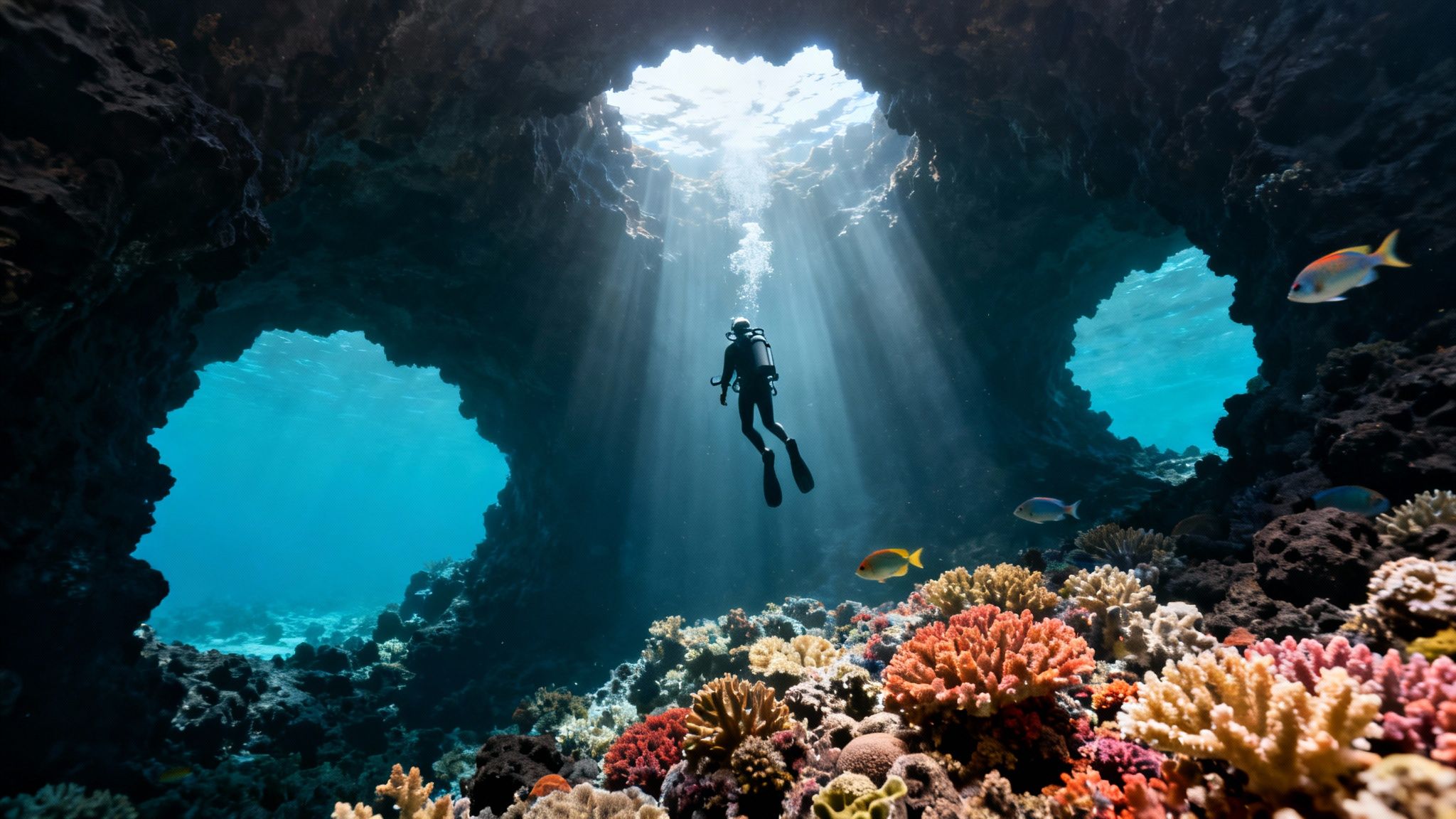
The Big Island isn’t just another pretty place to dive; its unique geology gives it a major advantage. The Kona coast sits in the "shadow" of two colossal volcanoes, Mauna Loa and Hualalai, which act as a natural wall, blocking the gusty trade winds that hit the rest of the state.
This protection creates incredibly calm, lake-like conditions almost year-round. The result? Mind-blowing visibility that often stretches beyond 100 feet, making you feel like you're flying through the water. This sheltered environment has allowed a breathtakingly diverse ecosystem to thrive, built upon a dramatic landscape of volcanic arches, craters, and lava tubes now covered in life.
Unforgettable Underwater Encounters
What really makes the Big Island a world-class destination are its signature dives. The Manta Ray Night Dive is nothing short of magical—an underwater ballet where gentle giants with wingspans up to 18 feet glide effortlessly above you, filter-feeding on plankton drawn to dive lights. It’s an incredibly reliable experience, too, with local operators reporting sighting rates between 85-90% on average.
Want to learn more about the rich ecosystems here? Check out our article on what makes diving in Kona so unique.
For those with a thirst for true adventure, the Kona Blackwater Dive is a trip to another dimension. You'll float in the deep, dark ocean miles from shore, watching as strange and wonderful bioluminescent creatures rise from the abyss on their nightly migration. It’s like exploring outer space, right here on Earth.
At Kona Honu Divers, we live to share these wonders with you. Our team brings over 200 years of combined experience to the table, and our local knowledge ensures every single diving tour is safe, memorable, and absolutely world-class.
Witnessing The World-Famous Manta Ray Night Dive
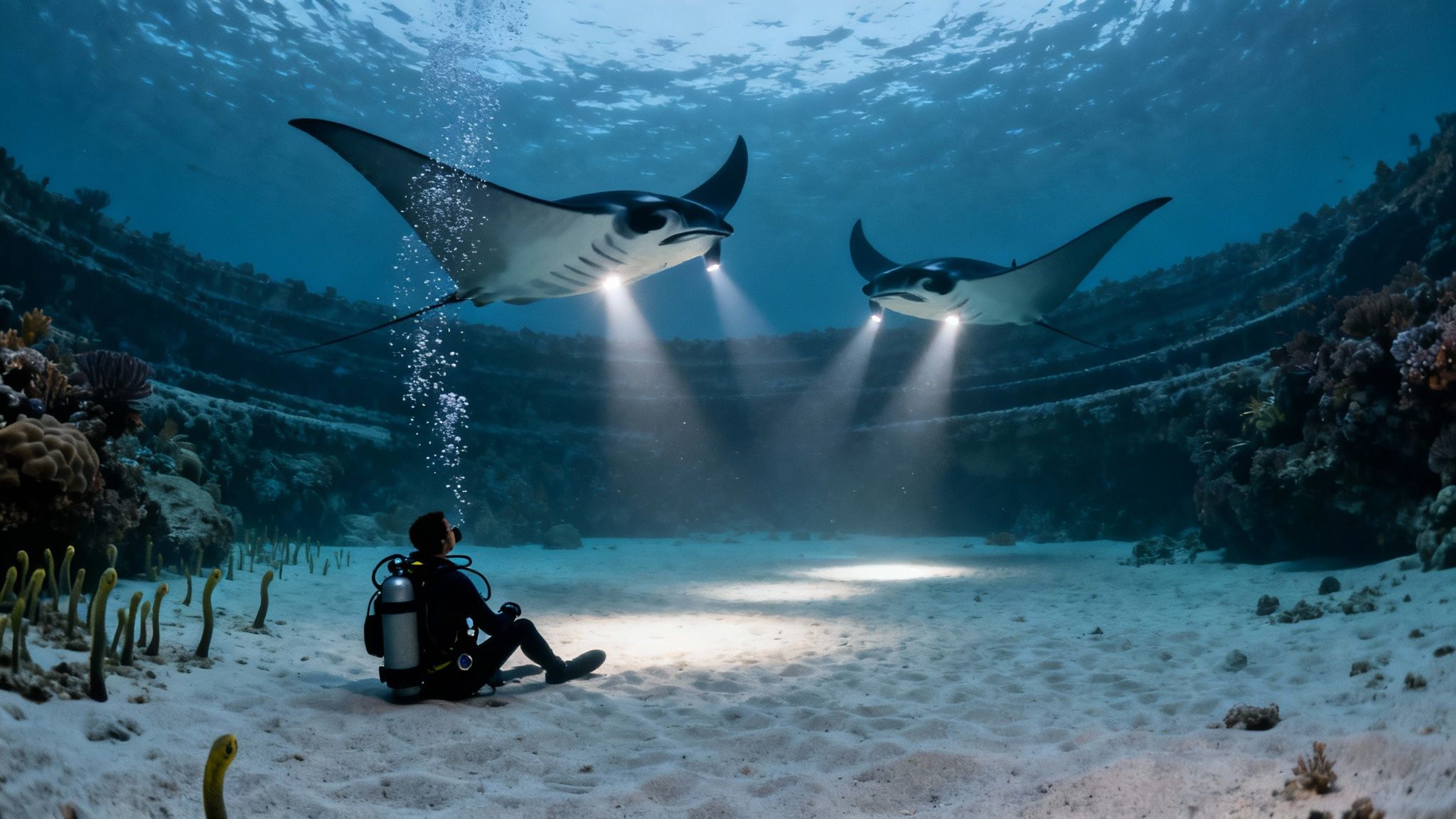
The manta ray night dive is more than just a bucket-list item; it's an underwater ballet and the absolute can't-miss experience of diving Hawaii's Big Island. The whole spectacle works because of a simple, yet brilliant, bit of teamwork between divers and nature. We shine powerful lights into the water, which draws in clouds of plankton—the favorite meal for manta rays.
These gentle giants, who live right here on the Kona coast year-round, show up for the all-you-can-eat buffet. Divers find a spot on the sandy ocean floor and just watch, mesmerized, as these massive creatures with wingspans up to 18 feet perform graceful somersaults and barrel rolls sometimes just inches from your mask. It’s a completely safe, utterly spellbinding, and unforgettable encounter available on our manta ray dive tours page.
Why Garden Eel Cove Is The Premier Choice
You'll hear about a couple of spots for this dive, but one consistently delivers a superior experience: Garden Eel Cove. Known to locals as "Manta Heaven," this location is the better choice for a few important reasons.
First off, its geography gives it natural protection from the open ocean swell. This means calmer, more comfortable conditions for divers, which is a huge plus when you're getting in the water after sunset.
Second, the seafloor at Garden Eel Cove creates a natural "amphitheater." This layout is a better viewing area, letting divers settle in on the sand with a perfect view and giving everyone a front-row seat without needing to crowd or disturb the environment.
Finally, the surrounding reefs are simply healthier and better. The cove is a stunning daytime dive for a reason, and its vibrant coral gardens add an extra layer of beauty to the whole experience. It's the clear winner. To get a better sense of this incredible encounter, you can find more details about the Kona manta ray night swim.
Your Manta Ray Dive Experience With Kona Honu Divers
Choosing the right guide is key to making this once-in-a-lifetime dive truly special. We make sure the entire journey is seamless and magical. It all starts with a thorough safety briefing where our expert guides walk you through manta ray behavior and the essential "observe only" etiquette. Our goal is to protect both you and these incredible animals.
The rule is simple: Stay near the bottom, shine your light up, and let the mantas come to you. Touching them can harm their protective mucous coating, so a hands-off approach is mandatory for their well-being.
Once in the water, our crew sets up a central light source—we call it "the campfire"—which becomes the gathering point for the plankton. As you get settled, the first ghostly shapes begin to materialize from the darkness. What happens next is a silent, graceful performance as the mantas swoop and glide through the light beams, their cavernous mouths open to filter the rich plankton soup.
It’s an intimate and humbling connection with one of the ocean’s most majestic creatures.
Exploring Kona’s Premier Daytime Dive Sites
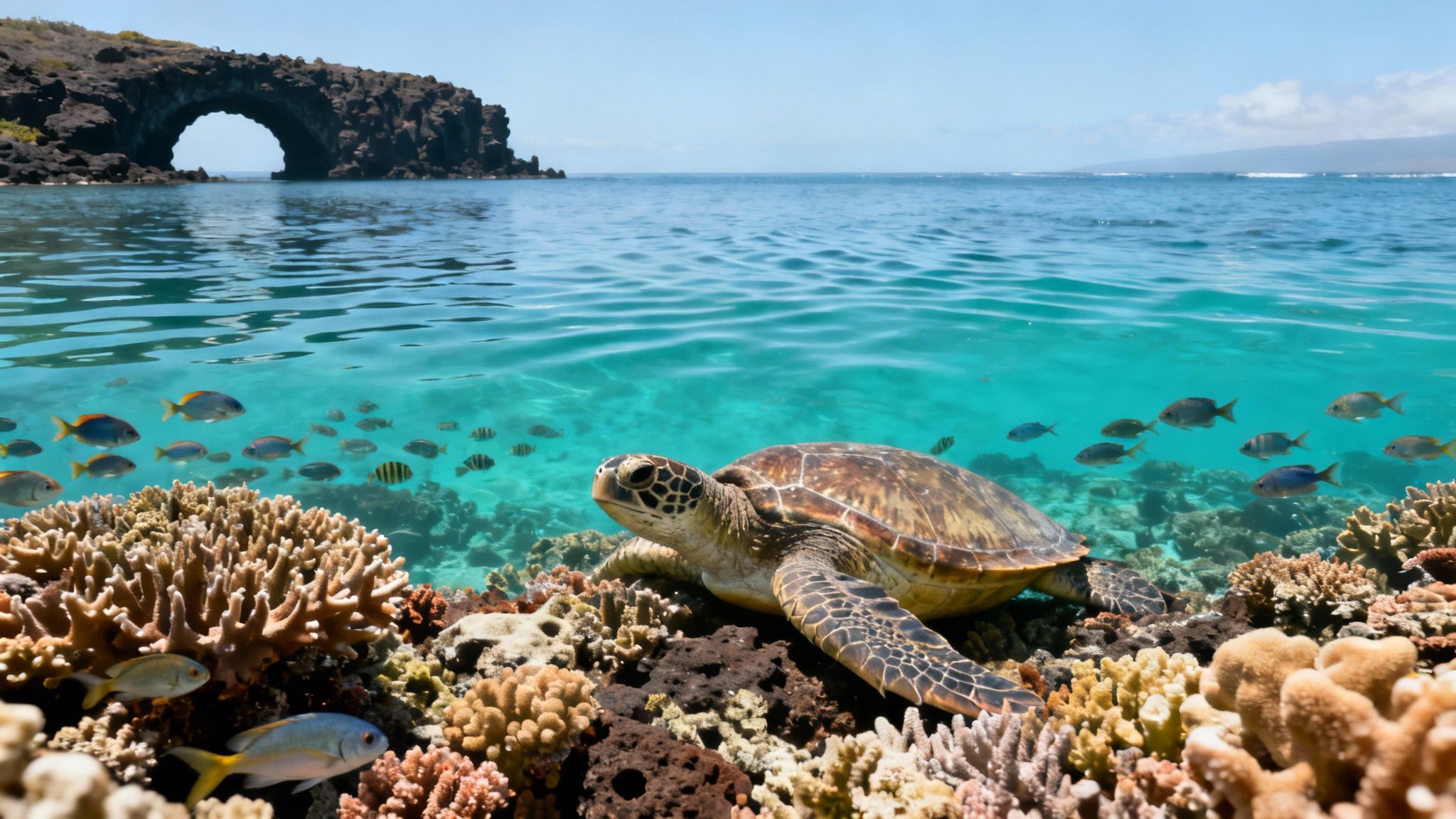
While the Manta Ray Night Dive gets most of the spotlight, don't let it overshadow what Kona offers when the sun is high. The daytime diving on Hawaii's Big Island reveals a completely different world—one shaped by millennia of volcanic fire and brought to life by the Pacific sun.
Sunlight streams through the famously clear water, lighting up sprawling coral gardens and dramatic underwater lava formations. The calm, sheltered waters along the Kona coast make for a diver's paradise. You can drift effortlessly over reefs packed with fish found nowhere else on Earth, snake through ancient lava tubes, and swim under massive arches carved by long-cooled lava flows. Each site tells a unique story, offering a fresh adventure that perfectly complements the thrill of the night dives.
Kealakekua Bay: A Protected Paradise
If there’s one spot that truly captures the magic of Kona diving, it’s Kealakekua Bay. This isn’t just another dive site; it’s a Marine Life Conservation District, a special status it’s held since 1992. This protection covers over 1,000 acres of pristine ocean, creating a vibrant sanctuary where marine life flourishes.
The bay is also steeped in history as the place where Captain James Cook first landed in 1779. That blend of deep cultural significance and incredible biodiversity makes every dive feel special. Because it's a protected area, you’ll find massive schools of tropical fish, honu (Hawaiian green sea turtles) resting on the reef, and playful spinner dolphins that often greet the dive boats.
With visibility that frequently hits 60-100 feet, the underwater world here is laid out in stunning detail. The calm conditions are perfect for new divers building their confidence, while the underwater cliffs and unique topography keep even the most seasoned veterans captivated.
Diverse Underwater Landscapes for Every Diver
Beyond the iconic bay, the Kona coast is a tapestry of different underwater environments, all accessible through expert-led daytime diving tours. This variety means you'll never have the same dive twice.
- Lava Tubes and Arches: You can explore incredible volcanic structures at sites like "Golden Arches" or "Suck 'em Up," swimming through caverns and under dramatic archways. These formations are often crusted in colorful sponges and corals, creating hideouts for eels, octopuses, and shy reef fish.
- Sprawling Coral Gardens: Sites like "Garden Eel Cove"—famous for mantas at night—are breathtaking during the day. The sunlight makes the coral colors pop, and you can spot everything from tiny, intricate nudibranchs to majestic eagle rays cruising in the blue.
- "Critter" Dives: For anyone who loves the small stuff, Kona is a macro photographer's dream. Slow down, get close to the reef, and you can find rare treasures like frogfish, leaf scorpionfish, and a wild array of fascinating crustaceans.
This incredible diversity ensures there's a perfect site for everyone. Beginners can stick to calm, shallow reefs bursting with color, while experienced divers can tackle deeper sites with more complex topography. But safety is always paramount. Sadly, Hawaii has one of the highest drowning rates in the US, with 187 residents lost between 2020 and 2024. These alarming water safety statistics from Civil Beat are a stark reminder of why professional guidance is so important.
Choosing an operator with deep local knowledge and a serious commitment to safety, like Kona Honu Divers, makes all the difference. Their experienced guides know these waters like the back of their hand and can pick the perfect spot based on the day's conditions and your interests, ensuring your adventure is both thrilling and secure.
Whether you're exploring the historic waters of Kealakekua Bay or navigating a maze of lava tubes, Kona's daytime dives are an unforgettable journey into one of the most beautiful underwater ecosystems on the planet.
Advanced Diving and The Thrill of the Blackwater Dive
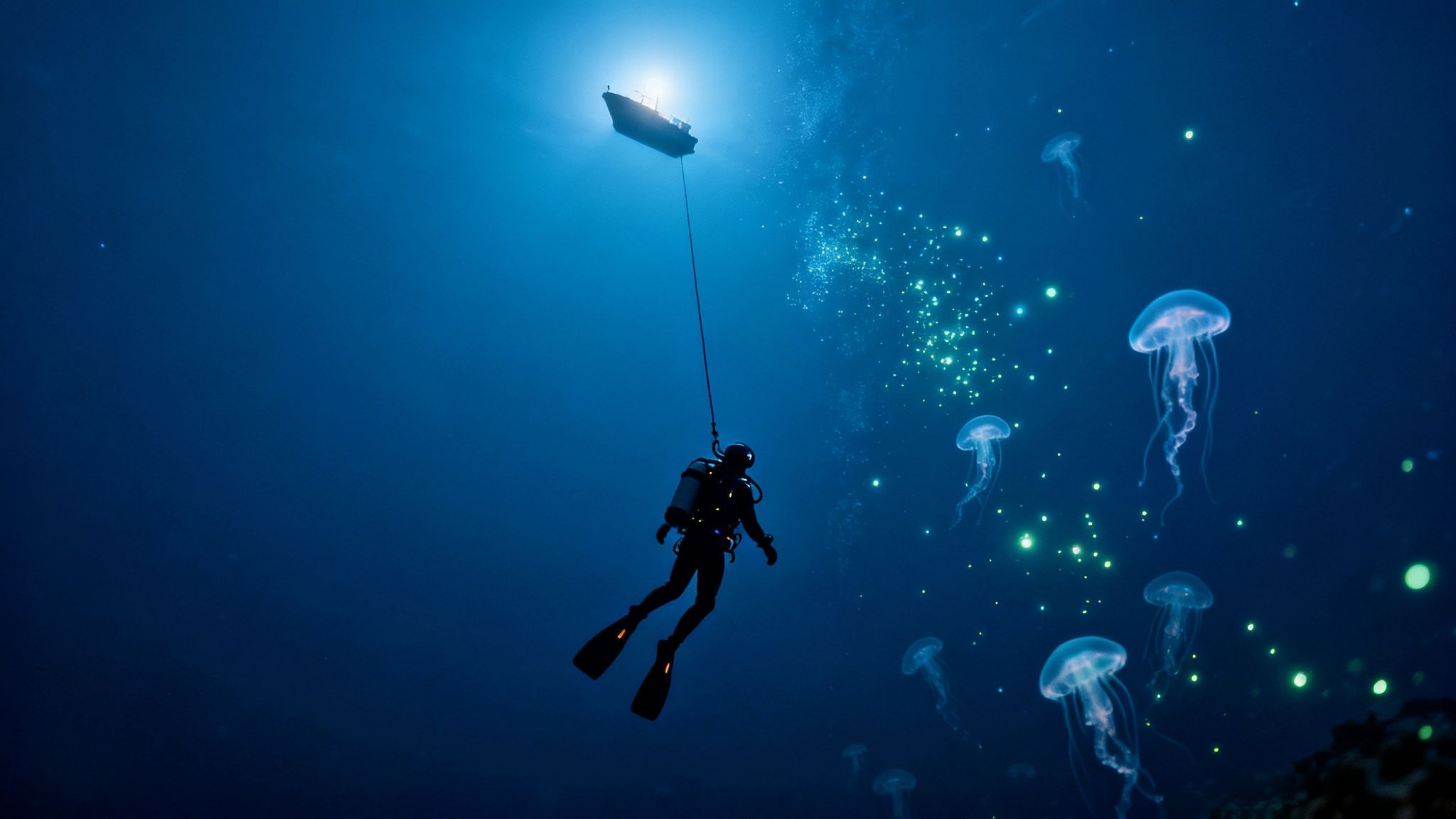
If you're an experienced diver looking for something truly different, the Kona Blackwater Dive is it. This isn't just an adventure; it’s an expedition into another dimension.
Forget everything you know about reefs and the seafloor. Picture this: you're floating in pure blackness, miles from shore, with thousands of feet of ocean beneath you. You’re tethered to the boat, suspended in the middle of the water column, watching one of the planet's biggest secrets unfold.
Every single night, a massive migration happens in the deep. Countless strange and wonderful creatures rise from the depths to feed near the surface. The Blackwater Dive drops you right into the middle of this procession, surrounded by life forms that are bizarre, beautiful, and often glowing.
A Journey Into the Ocean's Twilight Zone
Drifting in the warm Kona current, you'll see things that look like they're straight out of science fiction. Many of these animals are in their tiny larval stages, looking nothing like their adult selves. It's a completely alien world.
Keep your eyes peeled for:
- Bioluminescent Jellies: These aren't your average jellyfish. They pulse with their own light, drifting past like little spaceships in the dark.
- Larval Squid and Octopus: You might see perfectly formed, see-through cephalopods, some no bigger than your fingernail.
- Siphonophores: These long, stringy colonial animals can stretch for several feet, glowing with an eerie light that creates incredible patterns in the black water.
- Weird Pelagic Drifters: From tiny, intricate crustaceans to fish that spend their entire lives in the open ocean, you'll witness an ecosystem few humans ever get to see.
This pioneering style of pelagic night diving has put the Big Island on the map for serious underwater explorers. It's a unique drift dive that is exploding in popularity as more divers seek out truly novel experiences. In fact, many in the industry believe this niche could capture a significant slice of the U.S. diving market in the next few years. You can book this one-of-a-kind adventure on our Blackwater Dive tour page.
Is the Blackwater Dive Right for You?
Let's be clear: this is an advanced dive and it's not for everyone. It demands a high level of comfort in the water and, most critically, excellent buoyancy control. When you're floating in the dark with no bottom for reference, staying neutral is everything.
To ensure everyone's safety, we generally require divers to have:
- An Advanced Open Water certification.
- A minimum of 25 logged dives.
- Recent diving experience within the last few months.
At Kona Honu Divers, your safety is our first and last thought. Our crew has more experience running these specific dives than almost anyone on the planet. We use a specialized setup with powerful down-lights to attract the creatures and give you a solid visual reference. Our custom-built boats and strict protocols make this seemingly extreme adventure feel secure, controlled, and absolutely unforgettable for qualified divers. For those with the right experience, we offer an advanced dive tour for a more challenging experience.
The Blackwater Dive is humbling. It’s a chance to witness a hidden world and come face-to-face with creatures that seem to defy imagination. For divers with the right skills and a true sense of adventure, it’s one of the most profound experiences you can have underwater.
Planning Your Big Island Dive Trip
Alright, now that you’re dreaming of Kona’s underwater world, let's get into the nitty-gritty of planning your trip. A little bit of prep work goes a long way in making sure your dive vacation is safe, smooth, and timed just right. While the Kona coast offers incredible diving all year, knowing the subtle differences between seasons can turn a great trip into the experience of a lifetime.
Generally speaking, the summer months from May to October are your best bet for calm, warm water. We're talking bathtub-like temperatures, often hitting a balmy 78-82°F (25-28°C). These glassy conditions are perfect for exploring any and every dive site, and visibility is often at its absolute best—frequently stretching beyond 100 feet.
Then there’s winter. From November to April, the water cools down a bit, usually hovering around 74-78°F (23-25°C). You’ll probably want to trade that 3mm wetsuit for a cozier 5mm, but the payoff is massive: it’s humpback whale season. There's truly nothing that compares to hearing the haunting, otherworldly songs of these giants echoing through the water on your dive. It’s an experience that will stick with you forever.
To give you a quick snapshot, here’s what to expect from the seasons.
Kona Diving Conditions Seasonal Comparison
This table offers a quick overview of what to expect when diving in Kona during the summer and winter months.
| Metric | Summer (May – October) | Winter (November – April) |
|---|---|---|
| Water Temperature | 78-82°F (25-28°C) | 74-78°F (23-25°C) |
| Visibility | Often 100+ feet (30+ meters) | Can be slightly lower due to surface chop, but generally 60-100 feet (18-30 meters) |
| Marine Life Highlights | Calm seas, excellent for all sites | Humpback whale season (whales can be heard underwater) |
| Recommended Wetsuit | 3mm full or shorty | 3mm to 5mm full wetsuit |
Ultimately, there's no "bad" time to dive here—it just comes down to what you're hoping to experience.
Certification and Gear Essentials
The certification card in your wallet is what determines which of Kona's incredible sites you can safely explore. Here’s a quick rundown of what you’ll need:
- Open Water Diver: This certification is your passport to most of Kona's world-class reefs. You'll have no problem exploring breathtaking spots like Kealakekua Bay and, of course, joining the famous Manta Ray Night Dive.
- Advanced Open Water Diver: If you have your heart set on the surreal Blackwater Dive, this is a must. The deep diving and buoyancy skills you master in this course are absolutely essential for navigating this unique open-ocean environment.
When it comes to gear, you’ve got options. Many divers love the comfort and familiarity of their own mask, fins, and computer, and we always encourage that. But if you’d rather travel light, don’t sweat it. A top-notch operator like Kona Honu Divers provides high-quality, meticulously serviced rental gear—from BCDs and regulators to a range of wetsuit sizes. It saves you the hassle of lugging heavy bags and ensures your equipment is perfect for local conditions.
Diving with Aloha: Protecting the Reef
The reefs around the Big Island are a living treasure, but they’re also incredibly fragile. As divers and guests in this underwater world, we all have a role to play in protecting it for generations to come. The good news is that diving responsibly is easy and makes a huge difference.
The golden rule is simple: look, but don't touch. Never chase, corner, or make contact with marine life. Touching coral can damage or even kill the delicate polyps that built the reef, while touching animals like sea turtles or manta rays can harm their protective slime coat and disrupt their natural behavior.
Dialing in your buoyancy is just as important. By staying neutral and keeping your fins up and away from the bottom, you avoid stirring up sand that can smother the reef or accidentally breaking off a piece of coral that took decades to grow. When you dive with a reputable, eco-conscious operator, they’ll reinforce these practices on every dive, leading by example to ensure our presence has a positive impact.
Choosing The Right Dive Operator In Kona
Let's be honest—the dive operator you choose is single-handedly the most important decision you'll make for your trip. It's the difference between a life-changing experience and a day filled with frustration. Picking the right team can turn a great dive into an unforgettable one, while the wrong choice can, well, sink your entire vacation.
A truly great operator isn't just about having a boat and some tanks. They live and breathe a culture of safety, a genuine love for the ocean, and a passion for sharing it. Think of it as the difference between being herded onto a crowded bus and getting a private tour with an expert who knows all the secret spots.
What to Look For in a Kona Dive Shop
As you start looking at different companies, there are a few things that are absolutely non-negotiable. These are the tell-tale signs of a professional, reliable operation that puts your experience and safety first.
- A Rock-Solid Safety Record: This is everything. You want an operator with a long-standing, spotless reputation. Look for experienced, PADI-certified instructors and divemasters who give clear, comprehensive briefings before you even think about getting in the water.
- Top-Notch Boats and Gear: A comfortable, well-maintained boat makes a world of difference. A boat designed specifically for diving means more space, easier entries and exits, and a much smoother ride. The same goes for their rental gear—it should be modern, clean, and meticulously serviced.
- Small, Personal Groups: Nothing is worse than feeling like a number. Small groups mean your guide can actually guide you, pointing out that elusive octopus or helping you fine-tune your buoyancy. It's all about personal attention and making sure everyone is safe and having a blast.
- Deep Local Knowledge: You just can't beat local experience. A crew that has spent decades diving Kona’s waters knows exactly where to go based on the day's conditions and, more importantly, where to find the most incredible marine life.
Why Kona Honu Divers Exceeds The Standard
We're not just another name on the list—we've worked hard to set the standard for what a premier dive experience in Hawaii should be. We don't just meet these critical criteria; we exceed them, backed by a team with over 200 years of combined industry experience. Our passion is sharing the magic of Kona's underwater world, and that passion shines through in every little thing we do.
Our custom-built dive boats, the Honu One and Honu Two, weren't just bought off a lot; they were designed by divers, for divers. They feature plenty of shade, freshwater showers, and all the space you need to move around comfortably. This dedication to quality is a huge part of what sets us apart—you can see for yourself by exploring our comparison with another Kona diving company.
We also believe in delivering real, tangible value that enhances your dive. We are proud to be one of the only shops on the island offering complimentary nitrox for certified divers. This means you get to enjoy longer, safer bottom times exploring our stunning reefs. When you pair that with our early booking discounts, it's clear we're committed to making world-class diving accessible.
Choosing Kona Honu Divers means choosing peace of mind. It means tapping into unparalleled expertise and guaranteeing yourself a world-class adventure.
Your Big Island Diving Questions, Answered
What’s The Best Time of Year to Dive on The Big Island?
Honestly, there's never a bad time to dive in Kona. The diving is fantastic year-round!
If you love warm, glassy water, aim for the summer months between May and October. The ocean is typically at its calmest, and water temperatures often climb above 80°F. But if you're here in the winter (November through April), you're in for a different kind of treat. The water dips a bit, hovering around a comfortable 75°F, but the real magic is hearing humpback whales singing on your dive. It's an experience that will stay with you forever.
No matter when you come, visibility is almost always stellar, frequently clearing 100 feet.
Do I Need to Be an Advanced Diver to Enjoy Kona's Dive Sites?
Not at all! One of the best things about the Big Island is that it has something for every diver.
We have plenty of calm, shallow reefs inside protected areas like Kealakekua Bay that are absolutely perfect for new divers or even snorkelers. But if you're an experienced diver looking for more, don't worry—we've got you covered with deep lava tubes, dramatic drop-offs, and bucket-list dives like the Blackwater.
A good operator will always tailor their diving tours to the group, making sure everyone feels safe, comfortable, and has an amazing time in the water.
Are you an experienced diver looking to push your limits? If you're coming with a group of advanced divers and want to skip the beginner spots, check out our premium advanced 2-tank trip. We'll take you to some of the deeper, more challenging sites off the beaten path.
What Kind of Marine Life Can I Expect to See in Kona?
Get ready for an incredible show! The biodiversity here is off the charts. Beyond the world-famous manta rays, you're almost guaranteed to see Hawaiian green sea turtles snoozing on the reef.
On any given dive, you'll likely run into whitetip reef sharks, curious eels, and huge schools of colorful reef fish like butterflyfish and parrotfish. Keep an eye out for spinner dolphins playing in the boat's wake, and if you're lucky, you might spot eagle rays, rare frogfish, or even bigger open-ocean visitors.
Is The Manta Ray Night Dive Safe?
Absolutely. When you go with a professional, safety-conscious operator, it’s an incredibly controlled and safe experience. The "campfire" of lights we create on the seafloor is a well-established system that attracts the plankton, which in turn brings in the mantas.
Our divemasters give a detailed briefing beforehand and are in the water with you the entire time to make sure everything runs smoothly. And the mantas? They're gentle giants, completely focused on their plankton buffet. They couldn't care less about the divers. To see exactly how this incredible encounter works, check out our manta ray dive tour.
Is The Kona Blackwater Dive Safe?
It might sound intense, but this mind-blowing dive is extremely safe for certified divers when done right. Safety on the Kona Blackwater dive comes down to three things: an expert crew that does this all the time, specialized gear like our custom tether system, and following procedures to the letter.
At Kona Honu Divers, we have a perfect safety record on this dive. We take every precaution so you can relax and focus on the bizarre and beautiful creatures drifting up from the deep.