
Picture this: you're sinking into warm, turquoise water, the world above fading away. You're surrounded by ancient volcanic lava tubes and coral gardens bursting with color and life. This isn't a dream—it's what it's like to go diving on Hawaii's Big Island, a spot that rightfully earns its place on every diver's bucket list.
From the world-famous Manta Ray Night Dive to the surreal, inky blackness of a Blackwater Dive, the Kona coast delivers one-of-a-kind underwater adventures.
Discovering Hawaii’s Underwater Paradise
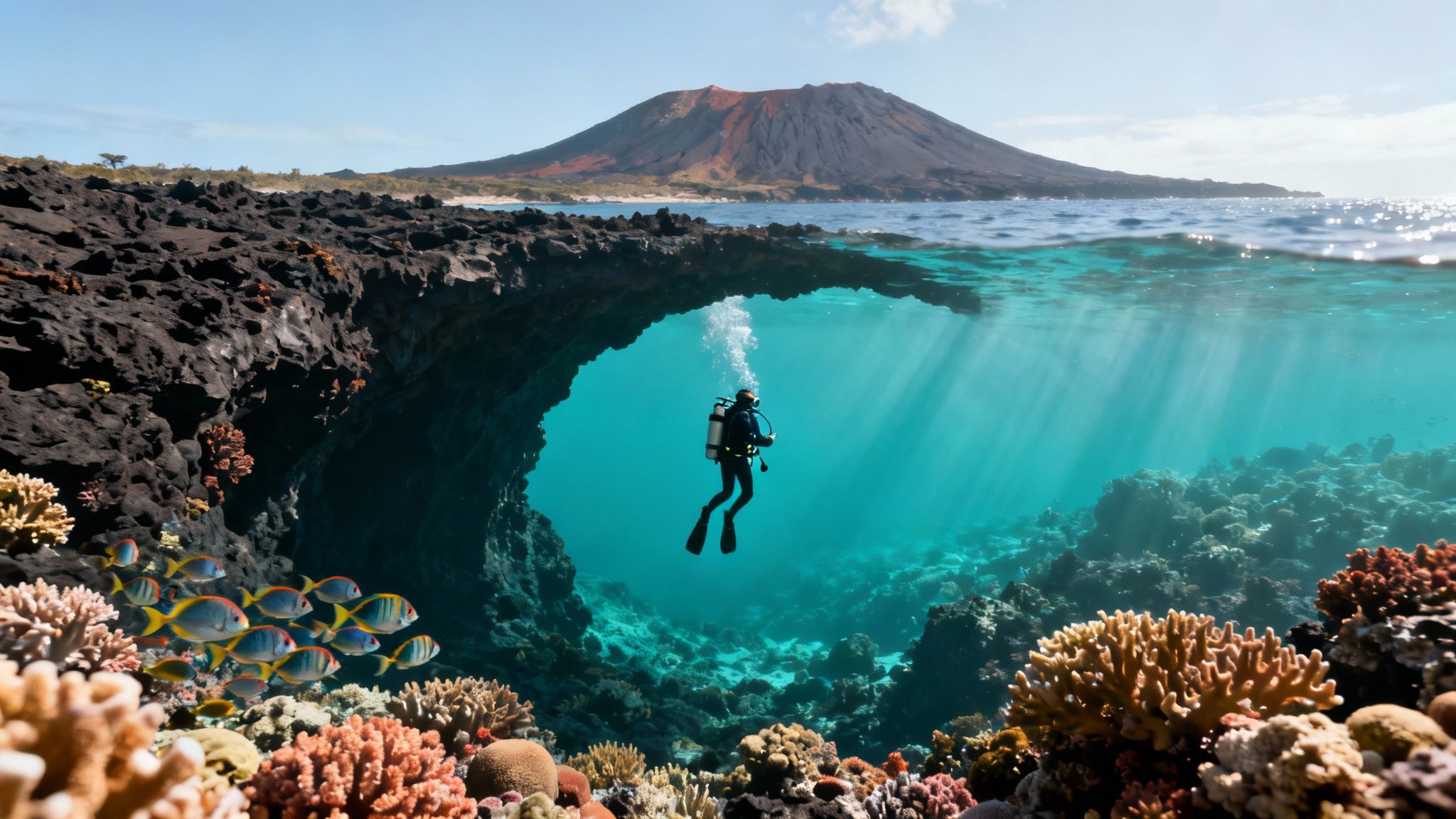
It’s no surprise that the Big Island is a true powerhouse in the scuba world, drawing in about 150,000 dive tourists annually. The island is well-equipped to handle the demand, with over 50 professional dive operators ready to show you the best of their underwater world.
This guide will be your deep dive into planning the ultimate trip. We’ll cover what makes this island so special and point you toward the operators who can make it all happen. If you're looking for more inspiration on underwater adventures, you'll find great resources under Diving Snorkeling from other amazing destinations.
Why Kona is a Diver’s Dream
There's a reason the Kona coast is the heart and soul of the island's dive scene. It's perfectly tucked away on the leeward side, shielded from the trade winds by the colossal Mauna Kea and Mauna Loa volcanoes. This natural shelter results in unbelievably calm and clear water, where visibility often pushes past 100 feet.
What really sets it apart, though, is the dramatic underwater landscape sculpted by millennia of volcanic activity. Think massive drop-offs, intricate lava tubes, and sweeping arches that create a spectacular playground for divers. You can get a feel for the unique dive experiences on the Big Island here.
Big Island Diving Highlights at a Glance
To give you a snapshot of the incredible experiences waiting for you, here’s a quick rundown of the Big Island’s premier dives.
| Experience | Best For | Key Features |
|---|---|---|
| Manta Ray Night Dive | All skill levels, photographers | Unforgettable, up-close encounters with gentle giant mantas. |
| Blackwater Dive | Experienced divers, thrill-seekers | Witnessing bizarre, bioluminescent creatures from the deep ocean. |
| Reef Dives | Beginners and certified divers | Exploring vibrant coral, seeing green sea turtles, and spotting endemic fish. |
| Cavern & Lava Tubes | Adventurous certified divers | Navigating the unique underwater topography created by volcanoes. |
Each of these dives offers a completely different window into the island’s stunning marine ecosystem. They're the kind of experiences you'll be talking about for years to come.
Exploring the Kona Coast’s Most Iconic Dives
The Kona coast is more than just a place to go diving Hawaii Big Island; it's a front-row seat to some of the most mind-blowing underwater shows on the planet. I'm talking about graceful giants dancing in the dark and bizarre, glowing creatures rising from the abyss. Kona offers dives that will completely reset your expectations.
These aren't just boxes to check on a dive log. They're real, profound encounters with a wild and vibrant marine world. Whether you're fresh off your open water course or have thousands of dives under your belt, the experiences waiting along this volcanic coastline will give you stories to tell for the rest of your life.
The World-Famous Manta Ray Night Dive
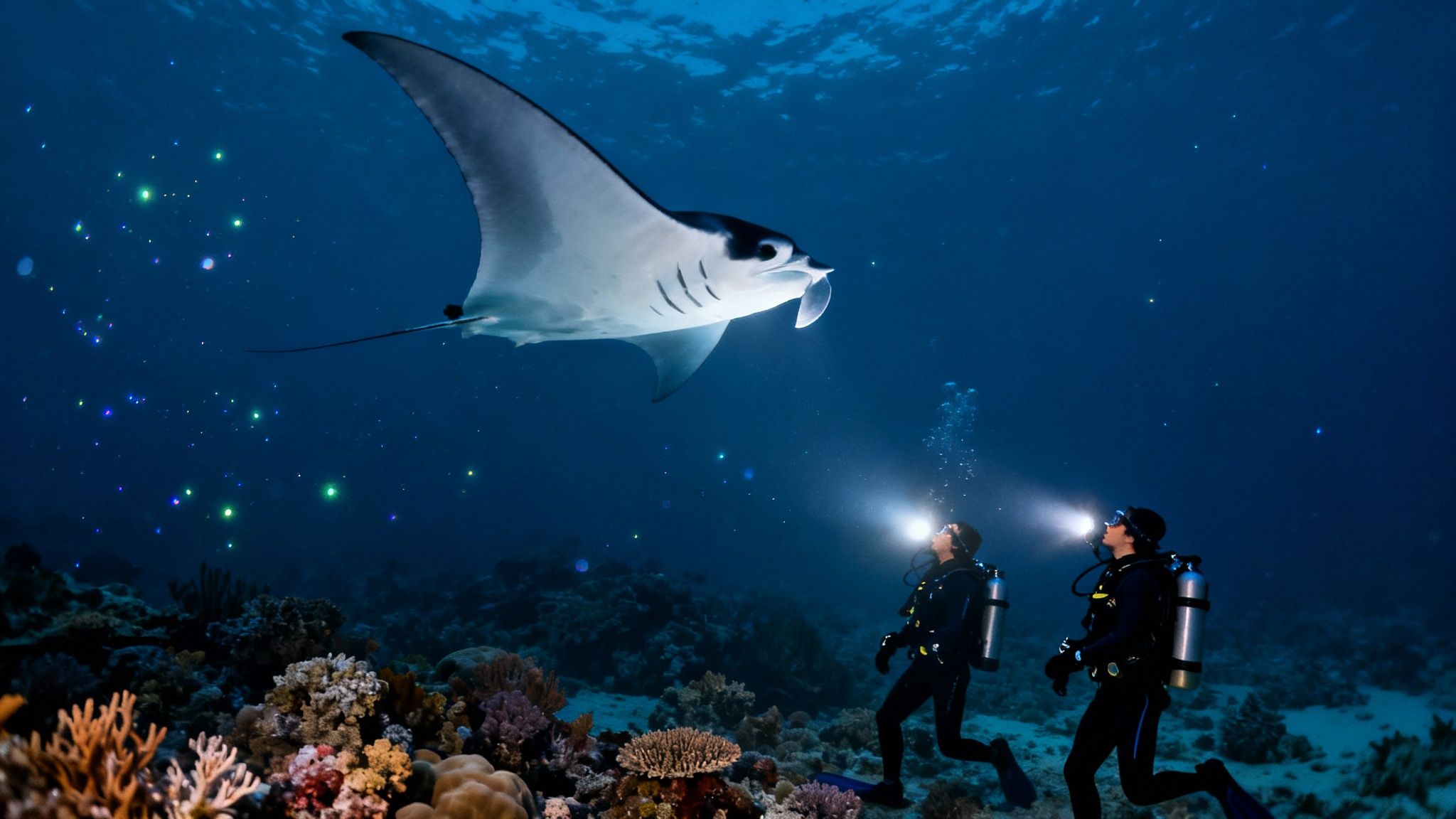
Ask any diver about their ultimate bucket-list trip, and you’ll hear about the Kona Manta Ray Night Dive. It’s a surreal, mesmerizing ballet where massive, gentle manta rays swoop and glide inches over your head, feeding on plankton drawn to the lights. It's a humbling, almost spiritual experience that feels completely otherworldly. Local operators offer amazing manta ray dive tours to witness this spectacle.
Now, there are a couple of key spots for this dive, but they aren't all created equal. The two main sites are Manta Village (south of Kona) and Garden Eel Cove (north of Kona). While both can be fantastic, Garden Eel Cove is the superior choice for the dive tour.
Its location is more protected from open ocean swells, which means you’re more likely to get calm conditions and better visibility. The reefs there are also healthier, which adds to the richness of the whole dive. But the real clincher is the better viewing area at Garden Eel Cove—it’s structured for a more intimate, unobstructed view of the mantas, making for a truly premium experience.
The Mysterious Kona Blackwater Dive
If you've got an adventurous spirit and crave a trip into the unknown, the Kona Blackwater Dive is something you absolutely have to do. This is not your typical reef dive. At all. Instead, you're tethered to a boat, suspended over thousands of feet of deep, dark ocean miles offshore, watching one of the largest migrations on Earth happen right in front of your mask.
Every single night, countless strange and bioluminescent creatures rise from the depths to feed near the surface. You’ll see things that look like they belong on another planet—tiny, sparkling, gelatinous critters that are utterly bizarre and beautiful. It's a dive that mixes the thrill of pure exploration with the wonder of deep-sea biology. You can book a Blackwater Dive tour for this unique adventure.
This one is definitely for more seasoned divers, given the unique challenge of being in the open ocean at night. That feeling of floating in the vast, inky blackness, with only your light and the glowing creatures around you, is a humbling and exhilarating experience that truly pushes the boundaries of recreational diving.
Vibrant Reefs and Volcanic Topography
While the night dives get a lot of the spotlight, don't for a second think the daytime diving in Kona is anything less than spectacular. The entire underwater landscape is a direct result of the island's volcanic past. Think dramatic lava tubes, massive archways, and intricate caverns that are just begging to be explored.
Gliding through these ancient lava formations honestly feels like you’re navigating a submerged cathedral. Sunlight streams through cracks in the overhead rock, creating stunning light beams that dance in the crystal-clear water. Unsurprisingly, these structures are also perfect homes for an incredible amount of marine life.
What you can expect to see on a typical Kona reef dive:
- Honu (Hawaiian Green Sea Turtles): You'll see these guys everywhere. They're a beloved and common sight, either resting on the reef or cruising gracefully past you.
- Endemic Fish Species: Hawaii has a ton of fish you won't find anywhere else in the world, like the vibrant Milletseed Butterflyfish. Keep your eyes peeled.
- Eels, Octopuses, and Rays: All those nooks and crannies in the volcanic rock provide perfect hiding spots for moray eels, clever octopuses, and the occasional eagle ray soaring by.
Exploring these reefs is the heart and soul of the diving Hawaii Big Island experience. These daytime adventures are fantastic for divers of all levels and are the perfect way to appreciate the unique geology and biodiversity that makes Kona so special. For a full rundown of what's waiting for you, check out this great guide to Big Island diving.
Choosing Your Adventure with Kona Honu Divers
With so many incredible dive sites hugging the Kona coast, the single most important decision you'll make is choosing the right dive operator. This choice can make or break your trip, and it’s where Kona Honu Divers consistently shines. They’ve built a stellar reputation not just on promises, but on a deep-seated passion for the ocean and a serious commitment to safety and service.
What really sets them apart is the crew's incredible depth of knowledge. We're talking about a team with over 200 years of combined industry experience. That’s not a typo. This staggering number translates directly into a safer, richer, and more enjoyable dive for everyone on the boat. These are not just tour guides; they are seasoned pros who know Kona's waters like the back of their hand—every current, every lava tube, and every secret spot where the rarest critters hide.
This level of expertise means every dive is planned with precision, whether you're a brand-new diver with some first-time jitters or a salty veteran seeking a genuine challenge. The crew’s ability to read the day's conditions and pick the perfect site makes all the difference in the world.
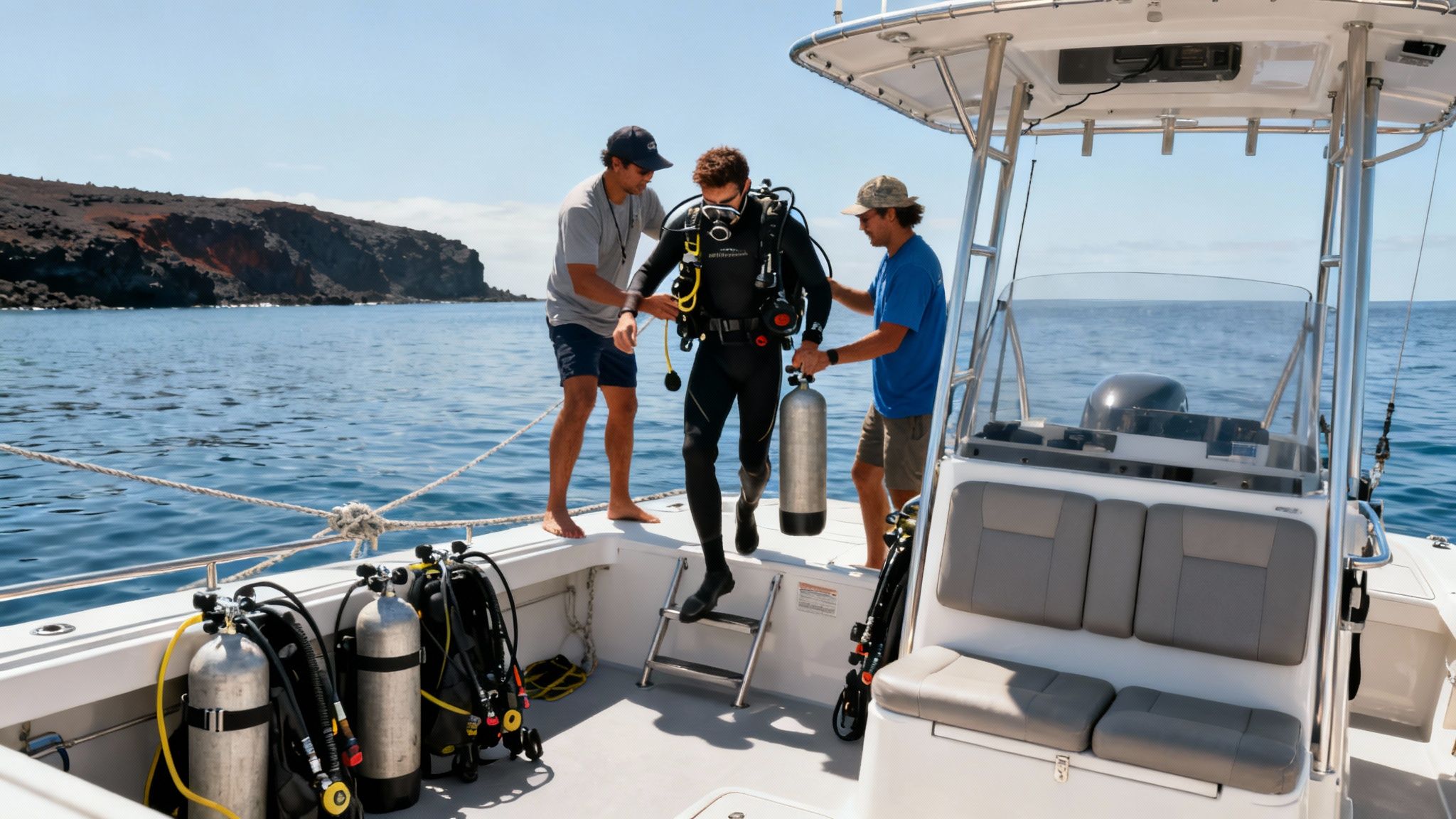
Then there are the boats. Kona Honu Divers runs a fleet of custom-built dive vessels, and this is a bigger deal than it sounds. Unlike repurposed fishing boats, these were designed from the ground up with divers in mind. You get more room to gear up, easy-in/easy-out access to the water, and a smooth ride that makes the whole day more relaxing and fun.
Differentiating Your Dive Experience
Kona Honu Divers gets that every diver is different. They offer a great range of diving tours geared toward specific skill levels and interests, so you can find an underwater adventure that’s a perfect fit.
The Classic 2-Tank Morning Dive is their go-to trip and for good reason. It’s ideal for divers of all certification levels and explores Kona's stunning reefs and volcanic formations. If you’re diving with family, are newly certified, or just want a fantastic, relaxed day exploring beautiful sites, this is the trip for you.
For divers with a bit more experience, the Premium Advanced Trip kicks things up a notch. These charters head to deeper, more challenging sites that often have more complex conditions. It's the perfect way for seasoned divers to explore some of Kona's less-visited underwater landscapes and really hone their skills.
Perks That Make a Difference
It’s often the little things that elevate a good dive trip to a great one, and Kona Honu Divers delivers. They offer complimentary nitrox for certified divers, which is a huge plus. This lets you extend your bottom time and shorten your surface intervals, getting you more out of your day—a perk many other shops charge extra for.
They also frequently run early bird discounts, so it pays to plan ahead. If you really want to understand why so many divers return to them time and time again, it's worth taking a moment to dive into the details of what makes Kona Honu Divers a premier choice.
Of course, don't just take our word for it. The best insights come from fellow divers. Check out what people are saying in their own words.
Ready to see it all for yourself?
Planning Your Big Island Dive Trip: The Nitty-Gritty
Alright, with dreams of manta rays and volcanic ledges swimming in your head, it's time to get down to the brass tacks. Good planning is what turns a wish-list dive trip into an incredible, stress-free reality. Getting the logistics sorted out now—from the time of year to your certification card—means you can focus on what matters once you're here: the dive.
So, when’s the best time to come? Honestly, there’s no bad time. The Big Island’s Kona coast is a diver’s paradise year-round, thanks to the massive volcanoes blocking the wind and weather. But there are a few subtle differences between the seasons.
- Summer (May – October): This is prime time. The water is glassy, warm (around 80°F / 27°C), and the visibility often pushes past an incredible 100 feet. It’s about as perfect as conditions get.
- Winter (November – April): The water cools down a bit to a very manageable 75°F (24°C). While the other side of the island might get some big surf, Kona stays protected. The massive bonus? It's humpback whale season. There's nothing quite like hearing whale song echo through the water while you're exploring a reef—it's a sound that vibrates right through your soul.
Packing: More Than Just a BCD and a Swimsuit
Packing for a dive trip is always a game of Tetris, isn't it? You're trying to balance your trusted gear with the airline's baggage limits. Whether you plan to bring a full kit or just the essentials, a few things should definitely make the cut.
At a minimum, bring your own dive computer and mask. These are personal-fit items that can make or break your comfort underwater. If you have a regulator you love or a specific camera rig, bring those too. For the big stuff like your BCD and fins, you have to weigh the cost of baggage fees against the convenience. High-quality shops like Kona Honu Divers have excellent, well-maintained rental gear that can save you a lot of hassle.
Don't forget about life on the surface! You'll live in lightweight clothes, so pack accordingly. Reef-safe sunscreen is a must to protect our corals, along with a good hat, polarized sunglasses, and a reusable water bottle. It's always a good idea to toss a light rain jacket in your bag, too—it is the tropics, after all.
The Gear Dilemma: To Bring or To Rent?
This is the eternal question for the traveling diver. On one hand, there's a huge comfort in diving with your own gear. You know exactly how it breathes, how it fits, and where every D-ring is. No fumbling, no surprises.
On the other hand, renting is just so easy. You skip the extra baggage fees, the lugging it through airports, and the chore of rinsing and drying everything before you fly home. A top-notch operator like Kona Honu Divers invests in modern, meticulously serviced rental fleets, so you know you’re diving with safe, reliable equipment. For a lot of divers, that convenience is worth its weight in lead.
Your Certification: The Ticket to the Show
Your C-card is your passport to the underwater world, and you don't need a high-level one to see the best of Kona. An Open Water Diver certification gets you in the water for the vast majority of the incredible sites here, including the world-famous Manta Ray Night Dive.
That said, if you're looking to explore a little deeper and expand your skills, getting your Advanced Open Water certification is a fantastic move. It opens up deeper sites and prepares you for more challenging dives. Thrilling adventures like the Blackwater Dive are really only accessible (and enjoyable) with that advanced ticket. Think of it as an investment that not only builds your confidence but also unlocks a whole new level of diving. Many operators even offer dedicated advanced dive tours to take you to those more demanding spots.
Speaking of world-class dives, that Manta Ray Night Dive is the perfect example of an accessible experience that will absolutely blow your mind. Night diving with mantas in Kona is one of the planet's most reliable and mesmerizing marine encounters. With success rates topping 80%, it’s no wonder it’s a global bucket-list dive. Operators like Kona Honu Divers regularly see 12 mantas one night and 16 the next, with epic evenings hitting 30-32 of these gentle giants. It's a spectacle you won't soon forget. You can learn more about why scuba diving in Hawaii is so popular on dedepudive.com.
Ready to book your adventure?
Ensuring a Safe and Fun Trip for Everyone
Any great dive trip boils down to one thing: safety. While Kona's calm, clear waters are about as welcoming as it gets, a little knowledge goes a long way toward keeping every dive smooth and fun. That means paying close attention during dive briefings, staying aware of your surroundings underwater, and always, always diving with a reputable crew.
A huge part of staying safe involves how we interact with marine life—for our sake and theirs. Here in Hawaii, the golden rule is simple: look, but don't touch. This is non-negotiable. Touching animals like sea turtles or manta rays can damage the delicate mucous coating that protects them from infection, causing them unnecessary stress. Respect their home, and you'll be rewarded with incredible, natural encounters.
Ultimately, choosing a dive shop with an ironclad commitment to safety is the most important decision you'll make. A good crew knows the ocean's moods, picks the best sites for the day's conditions, and runs a tight, professional ship.
Medical Fitness and Dive Preparedness
Before you even think about packing your gear, take a moment for a serious self-check on your health. Scuba diving puts your body through some unique pressures, and certain medical conditions can turn a dream dive into a dangerous situation.
Be upfront and honest with yourself and your dive operator. If you have any history of heart, lung, or ear issues—or any other ongoing medical concerns—chatting with your doctor before you travel isn't just a suggestion, it's a must. Getting a physician’s sign-off gives you the peace of mind to truly relax and enjoy your time underwater.
Fun for the Whole Family: Divers and Snorkelers Alike
What if some of your crew aren't certified divers? No problem at all. One of the best things about planning a trip around diving Hawaii Big Island is that the snorkeling is just as spectacular. The same clear water and vibrant reefs that pull divers from around the world are right there for snorkelers to enjoy from the surface.
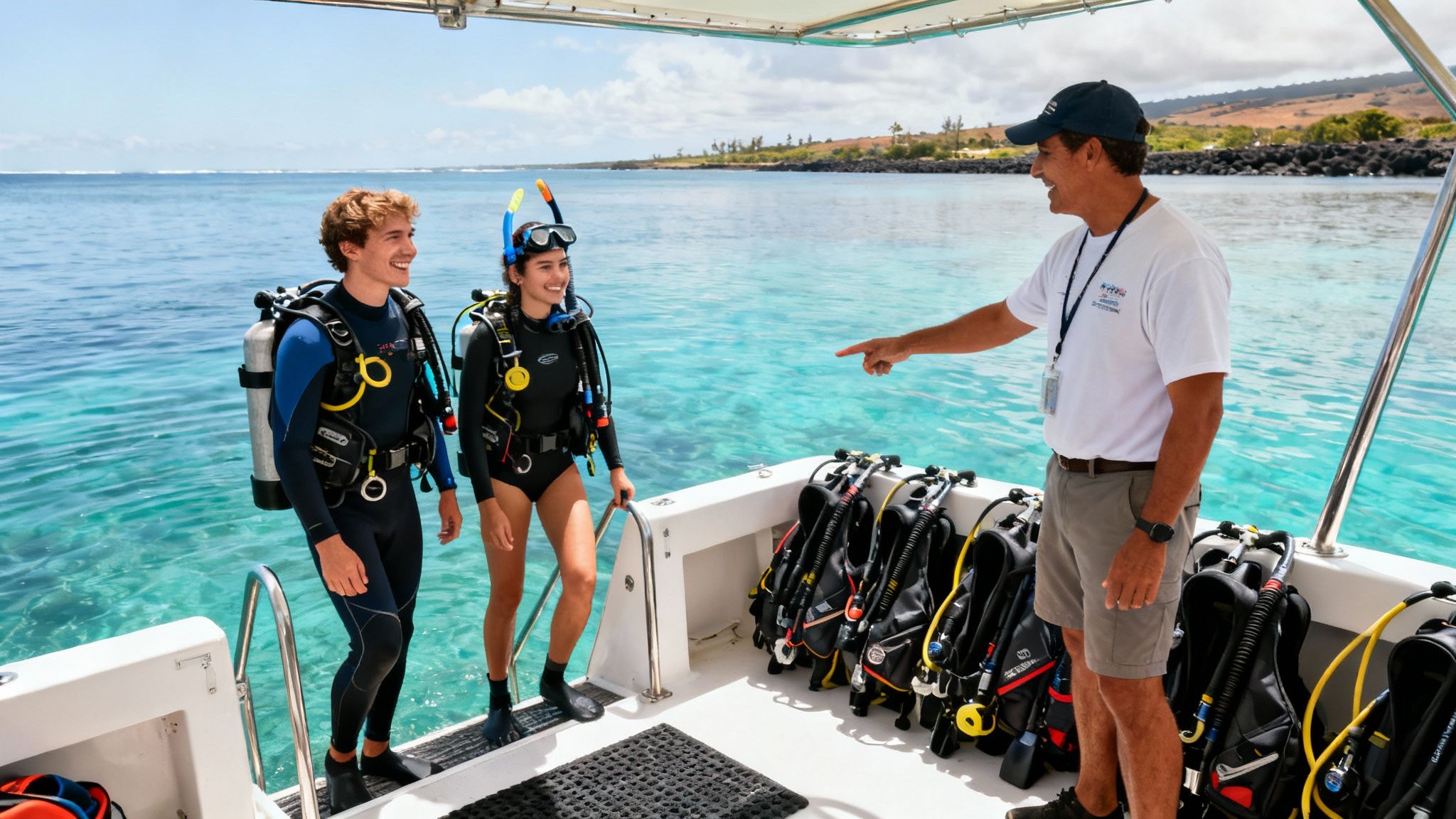
Many of the best dive operators, including our friends at Kona Honu Divers, run boats that welcome both divers and snorkelers. It’s a fantastic setup that lets everyone share the day on the water together. While divers explore the deeper coral heads, snorkelers can hang out in the sun-drenched shallows, which are often packed with colorful reef fish, eels, and cruising turtles.
This makes it the perfect solution for families or groups with different interests. The divers get their bubble time, and the non-divers can swim, snorkel, or just kick back on the boat and enjoy the incredible Kona coastline. At the end of the day, everyone comes back to the harbor with amazing stories to tell.
It's a common misconception that snorkelers get a lesser experience. In Kona, the shallow reefs are so healthy and full of life that snorkelers often see just as much vibrant marine activity as the divers below.
The world-famous Manta Ray Night Dive is the ultimate example. As divers settle on the sandy bottom, snorkelers float up top, holding onto a custom light board that draws in the plankton. The mantas glide gracefully right up to the surface, giving snorkelers an unforgettable, face-to-face view that is every bit as magical as what the divers see below.
A dive trip to the Big Island really can be for everyone. With incredible options for every comfort level, it’s the perfect way to make memories on the water together.
Your Big Island Diving Questions, Answered
Got questions about planning your dive trip to the Big Island? You're not alone. Most divers have a few things they want to clear up before they get here.
We’ve put together some straightforward answers to the most common queries we hear. Getting these details sorted out now means you can relax and focus on the incredible underwater world waiting for you.
What’s the Best Time of Year to Dive in Kona?
The amazing thing about the Kona coast is that there's really no bad time to dive. The conditions are fantastic year-round.
That said, if you're chasing absolute perfection, most seasoned divers will point you toward the summer months, from May to October. This is when the water on the Kona side is at its calmest—often looking like a sheet of glass. Water temps hover around a blissful 80°F (27°C), and it's not uncommon for visibility to push past 100 feet.
But don't count out the winter (November to April)! While the north side of the island gets some big swells, Kona stays nice and protected. The water might dip to a still-very-comfortable 75°F (24°C), but you get a pretty incredible bonus: humpback whales. Hearing their songs echo through the water during a dive is a powerful, unforgettable experience you can only get this time of year.
Do I Need an Advanced Certification to Dive Here?
Nope! Your Open Water certification is all you need to access the vast majority of Kona's famous dive sites. This includes the must-do Manta Ray Night Dive and dozens of gorgeous, relatively shallow coral reefs that are perfect for divers of every skill level.
But, if you do have your Advanced Open Water, a whole other level of diving opens up. It’s your key to exploring deeper sites, checking out more complex lava tube swim-throughs, and joining some of the more specialized dives.
For example, the one-of-a-kind Kona Blackwater Dive is an adventure that really is best for advanced divers, thanks to its unique open-ocean, nighttime conditions. If you want to see everything Kona has to offer, think of getting your advanced ticket as a worthy investment in your adventure.
Already an experienced diver? Operators like Kona Honu Divers run a Premium Advanced trip that's specifically built for divers who want to tackle more challenging profiles and see some truly special sites.
What Kind of Marine Life Will I See?
Get ready for a show. The waters off the Big Island are a buzzing metropolis of marine life. It’s a true biodiversity hotspot, and you’ll see something new on every single dive.
You can pretty much count on spotting honu (Hawaiian green sea turtles) on any given reef dive, either gliding by or just chilling on the volcanic ledges. Spinner dolphins are another common sight, and you’ll often see them putting on an acrobatic display in the boat's wake.
The reefs themselves are covered in a huge variety of fish you can only find here in Hawaii. Look for schools of bright yellow milletseed butterflyfish, the distinct Hawaiian cleaner wrasse, and the colorful ornate wrasse. You'll also likely spot:
- Moray eels peeking out from their rocky homes.
- Clever octopuses doing their best to blend in with the reef.
- Spotted eagle rays soaring gracefully through the blue.
And of course, there are the headliners: the massive manta rays that come out for their nightly feeding ballet, and the bizarre, glowing creatures that rise from the deep on the Kona Blackwater Dive. With a little luck, you might even cross paths with bigger visitors like whale sharks or tiger sharks.
Is the Manta Ray Night Dive Safe for Beginners?
Absolutely. The Manta Ray Night Dive is an incredibly well-run and safe experience, perfectly suited for newly certified divers. Any reputable operator will give you a detailed pre-dive briefing, keep a close eye on everyone with a high guide-to-diver ratio, and follow strict safety protocols.
The dive itself is stationary, which removes a lot of the usual challenges of night diving. You’ll descend to a sandy patch around 35-40 feet, find a spot, and simply kneel or lie down. Then, you just point your flashlight up to attract plankton, and the show begins.
It's a completely controlled and calm environment. This allows you to just relax and be mesmerized by the giant mantas swooping inches above your head. It’s a low-stress, high-reward dive that people of all experience levels say is one of the best they've ever done. Many fantastic local operators offer manta ray dive tours that cater to everyone.
Ready to see the magic of diving Hawaii Big Island for yourself?
For an unforgettable trip with a top-rated crew that knows these waters like the back of their hand, check out the trips offered by Kona Honu Divers. Book your Hawaii diving tours today and get ready to make some memories.