
Welcome to the ultimate guide for diving Hawaii's Big Island, an underwater world carved by volcanoes and packed with some of the most vibrant marine life on the planet. Whether you're planning your first-ever ocean dive or you're a seasoned pro looking for a new adventure, you've come to the right place. Kona isn't just a great dive spot; it's a world-class destination for truly unforgettable journeys beneath the waves.
Why the Big Island is a Premier Diving Destination
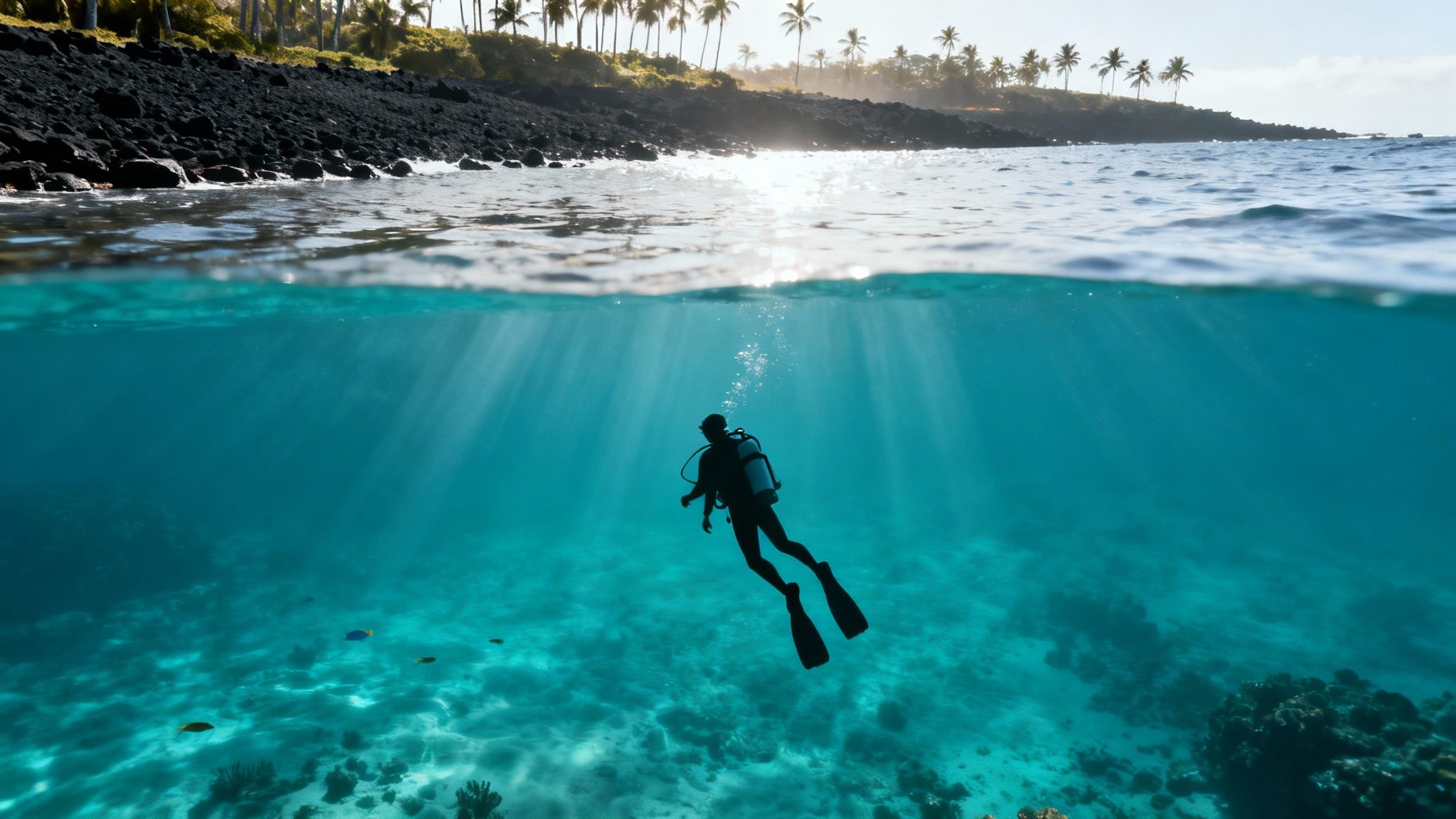
The Big Island is far more than just another pretty tropical island. It's a one-of-a-kind underwater ecosystem forged by the raw power of nature. The island itself is built from five massive shield volcanoes, and that dramatic volcanic geology doesn't stop at the shoreline. It plunges into the ocean, creating spectacular underwater landscapes you simply won't find anywhere else—think ancient lava tubes, intricate archways, and vast craters, all draped in healthy, thriving coral.
This unique volcanic foundation is the perfect stage for an incredible cast of marine creatures. From the tiniest, most colorful nudibranchs to majestic manta rays and peaceful sea turtles resting on the reef, the biodiversity here is breathtaking. And because of the island's remote location in the middle of the Pacific, many of the species you'll meet are endemic, meaning they can only be found in Hawaiian waters.
To give you a quick snapshot, here’s a look at what makes the Big Island a diver’s dream.
Big Island Diving At a Glance
| Feature | Description |
|---|---|
| Volcanic Topography | Explore dramatic underwater landscapes like lava tubes, caves, arches, and craters formed by ancient lava flows. |
| Water Conditions | Year-round calm, clear waters with visibility often exceeding 100 feet, thanks to the Kona coast's shelter from trade winds. |
| Bucket-List Dives | Home to world-famous experiences like the Manta Ray Night Dive and the thrilling Kona Blackwater Dive. |
| Marine Life | High chances of seeing manta rays, sea turtles, dolphins, eels, and a huge diversity of reef fish, many of which are endemic to Hawaii. |
| Dive Season | Diving is excellent 365 days a year, with summer offering the calmest seas and winter bringing the sound of singing humpback whales. |
This unique combination of geology, wildlife, and near-perfect conditions puts the Big Island in a league of its own.
The Kona Coast: A Diver’s Paradise
The west coast, specifically the Kona side, is the heart of the Big Island's diving scene for one very good reason: its geography. The massive volcanoes of Mauna Loa and Hualalai block the prevailing trade winds, creating a natural lee. The result? Exceptionally calm and clear waters year-round, making it a perfect and safe environment for divers of all abilities.
Kona has absolutely earned its reputation as a top-tier diving destination. While the summer months (April to October) typically bring the flattest seas and clearest visibility, winter (November to March) offers a magical trade-off: the chance to hear the haunting songs of humpback whales echoing through the water on your dives. You can learn more about what makes Big Island diving so special.
What really sets Kona apart is the consistency. While other world-class spots have narrow dive seasons, Kona delivers reliable, incredible diving 365 days a year. Every trip here holds the promise of an amazing underwater encounter.
A Dive for Every Skill Level
It doesn't matter if you're about to take your first breath underwater or you have hundreds of dives in your logbook—Kona has something waiting for you. The gentle, sloping reefs in protected bays are ideal for beginners and certification courses. At the same time, advanced divers can push their limits exploring deeper sites, navigating complex lava formations, or taking on the ultimate challenge: the world-renowned Kona Blackwater Dive.
Here’s a quick rundown of why this island appeals to everyone:
- Diverse Topography: Get lost exploring lava tubes, arches, craters, and stunning coral gardens.
- Abundant Marine Life: Encounters with manta rays, sea turtles, dolphins, eels, and countless endemic reef fish are the norm.
- Iconic Dives: This is home to bucket-list experiences you can't have anywhere else, like the Manta Ray Night Dive and the Blackwater Dive.
- Calm, Clear Waters: Incredible visibility and calm seas make for comfortable, safe, and truly spectacular diving.
This powerful mix of unique geology, rich biodiversity, and perfect conditions is what makes diving Hawaii's Big Island an absolute must for any ocean lover. Ready to jump in?
Kona’s Can’t-Miss Dives: From Gentle Giants to Deep-Sea Aliens
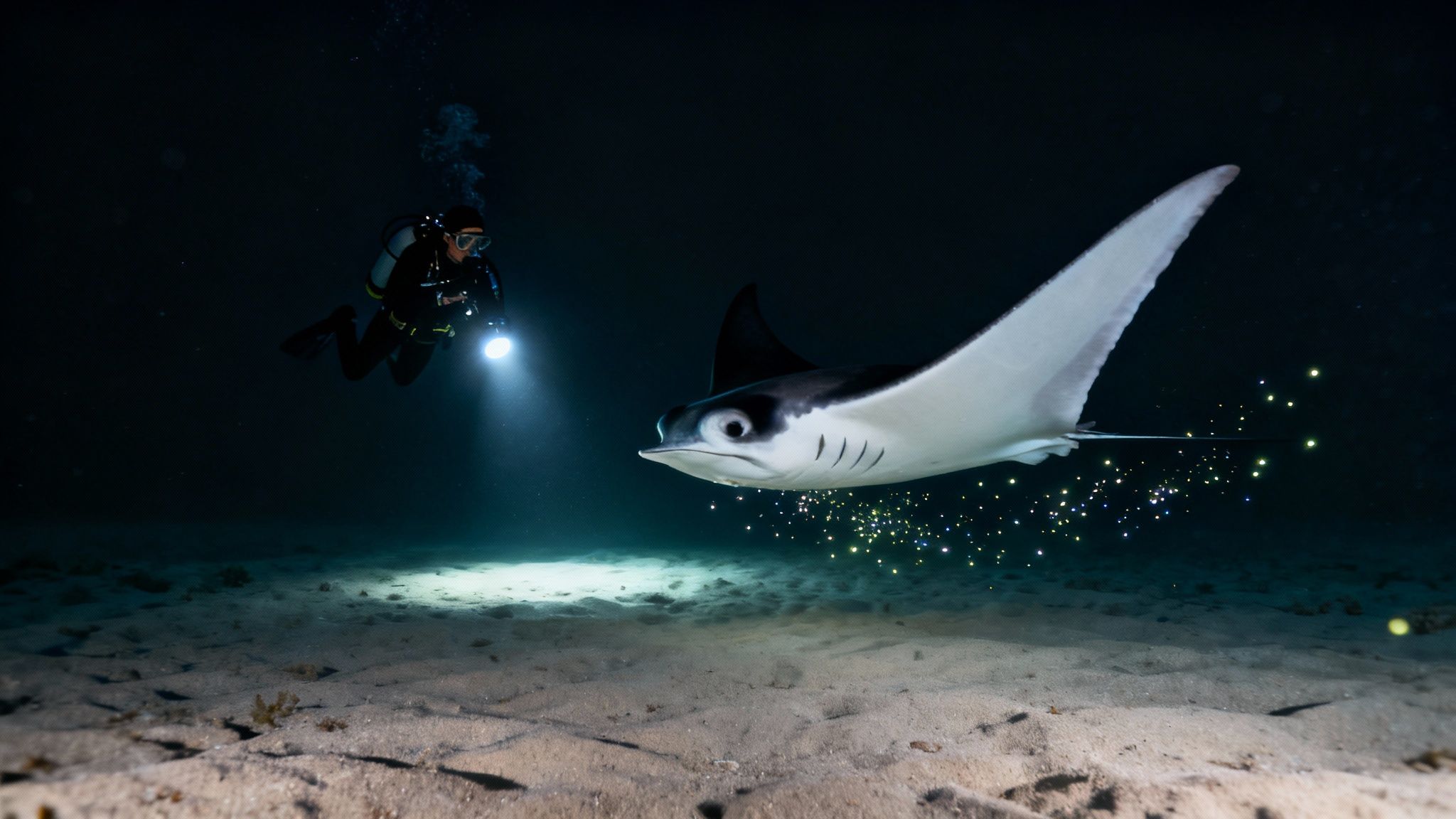
The Big Island is home to a few truly iconic dives that you just can't find anywhere else on the planet. We're going to walk through the absolute must-do experiences that put Kona on every diver's bucket list.
First up is the world-famous Manta Ray Night Dive—an experience that’s nothing short of magical. We’ll get into why the location of this dive matters so much and why Garden Eel Cove offers a far superior encounter. Then, for the adventurous, we’ll plunge into the deep with the Kona Blackwater Dive, where you'll meet creatures that look like they're straight out of a sci-fi film.
Of course, the island isn't just about night diving. We'll also cover the incredible daytime reef dives that show off Kona’s healthy coral gardens and unique underwater lava landscapes, plus advanced dives for those looking to explore a little deeper.
The World-Famous Manta Ray Night Dive
There is no other dive in the world quite like the manta ray night dive. Honestly, it’s hard to put into words. Imagine sinking into the dark, warm Pacific after sunset, finding your spot on the sandy bottom, and then just… watching. Huge, graceful manta rays, with wingspans bigger than you are tall, begin to glide, swoop, and barrel-roll just inches above your head.
It's a breathtaking underwater ballet. The whole spectacle works because our powerful lights attract swarms of plankton, which is the mantas' favorite food. We essentially create an underwater buffet, and they show up to feast. This isn't just a dive; it's an intimate, humbling encounter that consistently lands this experience at the top of "best night dives in the world" lists.
And the best part? It's one of the most reliable megafauna encounters you can have. Based on operator reports, manta rays are seen on about 85-90% of these dives. Some nights are just unbelievable—on October 10, 2025, a whopping 23 mantas were counted, and on November 23, 2025, two different boats reported seeing 30 and 32 mantas respectively.
But here’s a pro tip: where you do this dive is critical. While there are a couple of popular spots, Garden Eel Cove is, without a doubt, the superior choice.
Why? It's tucked into a cove that's more protected from the open ocean swell, which means calmer, more comfortable conditions for the tour. The viewing area is often called an "underwater amphitheater," which gives everyone a great, uncrowded view of the action. Plus, the surrounding reefs are healthier and more vibrant, making the entire dive more beautiful from the moment you hit the water. It is simply the better location for a manta ray dive tour.
Journey into the Abyss with a Kona Blackwater Dive
If the manta dive is a graceful ballet, then the Kona Blackwater Dive is a trip to another planet. Forget the reef. This dive takes you miles offshore, over thousands of feet of water, where you drift in the immense darkness, tethered to the boat.
You're here to witness one of the largest migrations on Earth. Every single night, an untold number of strange, beautiful, and often bizarre creatures rise from the depths to feed near the surface. You just hang there, suspended in the black, watching as these incredible bioluminescent life forms drift into the beam of your flashlight.
- Weird and Wonderful Life: You’ll see things that are rarely, if ever, seen during the day—larval fish that look nothing like their adult forms, shimmering translucent squids, and otherworldly jellies.
- A Rewarding Challenge: This isn't for beginners. You'll need your Advanced Open Water certification and sharp buoyancy skills to comfortably and safely enjoy the experience.
- True Deep-Sea Exploration: You genuinely never know what you're going to see. Every dive is different, and every creature that appears is a surprise.
For certified divers looking for a real adventure, this dive is an unforgettable glimpse into the hidden world of the deep ocean.
Vibrant Reefs and Advanced Opportunities
While the night dives deservedly get a lot of attention, Kona’s daytime diving is world-class. The underwater landscape, shaped by volcanoes, is a playground of lava tubes, massive archways, and craters, all encrusted in healthy coral.
These sites are buzzing with life. You'll almost certainly spot green sea turtles (honu) resting on the reef, swim through huge schools of bright yellow tangs, and maybe even spot a cleverly camouflaged frogfish if you have a good eye.
For divers with a few more logbook entries, the Big Island has plenty to keep you challenged. We can take you to deeper reefs and dramatic walls that drop off into the blue, offering a completely different perspective and a new cast of marine characters. Exploring the maze-like ancient lava tubes on an advanced dive tour is like swimming through an underwater cathedral—a uniquely Hawaiian experience that will stick with you long after you surface.
Why Choose a Top-Rated Kona Dive Operator
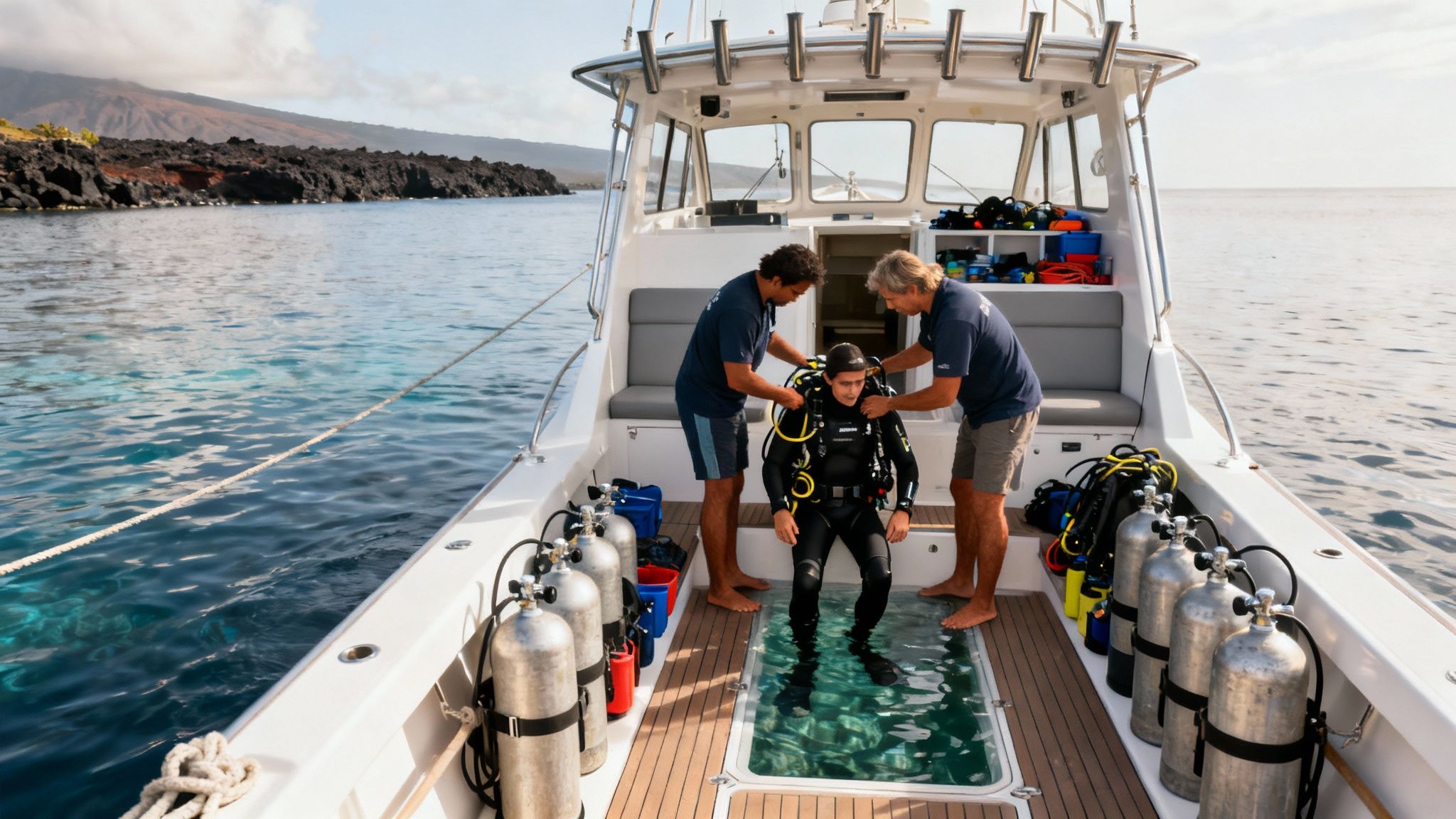
When you're planning a dive trip on the Big Island, it's easy to get caught up in choosing the perfect dive sites. But here's a piece of advice from one diver to another: the dive operator you go with is just as crucial as the reef you explore. Your safety, your enjoyment, and the memories you take home truly depend on the company and crew leading the adventure.
A top-notch operator doesn't just ferry you from point A to point B. They craft the entire experience, from the moment you step on board to your final logbook entry. This is where Kona Honu Divers really stands out, and why they’ve built a reputation as Hawaii's premier dive company. They get that a fantastic dive is about more than what you see underwater—it’s about feeling safe, relaxed, and genuinely looked after.
An Experienced Crew Makes All the Difference
The real soul of any dive operation is its people. The crew at Kona Honu Divers isn't just a group of employees; they're a team of passionate, seasoned professionals who live and breathe diving. Their expertise runs deep. They’re not just guides—they're skilled educators, dedicated conservationists, and your safety net in the water.
What does that mean for you? A much safer and richer dive. They run detailed pre-dive briefings that make sure everyone feels ready and confident. Once you're underwater, their trained eyes will point out incredible marine life you'd likely swim right past, turning a good dive into an unforgettable one. Their enthusiasm is absolutely contagious and makes for a fun, welcoming vibe on the boat for everyone.
With a top-tier crew, you're not just another customer on a boat. You're a guest being guided by experts who are as passionate about your experience as they are about the ocean's health.
Comfort and Convenience on Custom Dive Boats
Let’s be honest, diving should be relaxing, not a struggle. Kona Honu Divers operates a fleet of boats custom-built with one thing in mind: the diver's comfort. These aren't just converted fishing vessels; they are spacious, stable platforms designed from the keel up for scuba.
Here are a few features that make a world of difference:
- Plenty of Room: You’ll have all the space you need to gear up without bumping elbows with your neighbor.
- Easy Entry and Exit: Wide swim steps and sturdy ladders make getting into and out of the water a piece of cake.
- Onboard Perks: Expect fresh water rinses for you and your camera, plus clean marine heads (restrooms) for your comfort.
- Shade from the Sun: There’s ample cover to get out of the intense Hawaiian sun between dives.
These thoughtful details add up, making for a much more enjoyable and stress-free day on the water.
Exceptional Value and Personalized Attention
Kona Honu Divers delivers amazing value by including things that other shops often add on as extra charges. One of the single biggest perks is free nitrox for any certified diver. This can help extend your bottom time and often leaves you feeling less tired post-dive—a fantastic bonus that costs you nothing extra.
They are also serious about keeping their group sizes small. This guarantees you get personalized attention from the divemasters, both on deck and below the surface. This dedication to a premium, personal experience is why so many divers consider them the best dive operator in Kona. Don’t just take our word for it—see what your fellow divers have to say.
How to Plan Your Big Island Dive Trip
A little bit of planning goes a long way. It’s what turns a good dive vacation into a truly unforgettable one. Let’s walk through the logistics of planning your adventure diving on the Big Island, from figuring out the best time of year to visit, to packing the right gear, and making sure you have the right certifications for Kona's most epic dives.
With a little prep work, you can make sure you're ready to soak up every single moment in the water.
Choosing the Best Time to Dive in Kona
One of the absolute best things about diving in Kona is that it’s a world-class destination 365 days a year. The massive volcanoes on the island act as a natural shield, protecting the coast from the prevailing trade winds and creating consistently calm, clear conditions. Still, there are some subtle seasonal differences that might help you decide when to book your flight.
- Summer (April – October): This is when you'll find the calmest, most "glassy" ocean conditions. Water temperatures are at their warmest, often hitting a toasty 80°F (27°C), and it's not uncommon for visibility to stretch beyond 100 feet. If you love warm water and super smooth seas, this is your time.
- Winter (November – March): The water cools down a bit to a still-very-comfortable 75°F (24°C). While you might get a little more surface swell, the diving is still fantastic. The real magic of winter, though, is the arrival of humpback whales. You’d be lucky to actually see one underwater, but hearing their complex, haunting songs echoing through the water on a dive? That’s a profound, once-in-a-lifetime experience.
The Takeaway: Honestly, there’s no bad time to dive in Kona. It just comes down to what you prefer: the warm, glassy seas of summer or the chance to hear the incredible songs of humpback whales in the winter.
Essential Packing List for Your Dive Trip
Packing smart means you'll be comfortable and ready for any underwater adventure that comes your way. While you can always rent excellent gear from a reputable shop, there’s nothing like the familiar fit of your own equipment.
Here’s a quick checklist of what to throw in your bag:
- Core Dive Gear: If you own it, bring it! This includes your mask, snorkel, fins, regulator, and BCD. A personal dive computer is also something we highly recommend for safety and for easily logging all your amazing dives.
- Exposure Protection: For Hawaii's water temperatures, a 3mm full wetsuit is pretty much perfect all year round. If you know you run cold, think about adding a hood or a vest, especially for those incredible night dives or if you're visiting in the winter months.
- Logbook and C-Cards: Don't show up without proof of your certification! Bringing your logbook is also a fantastic way to document your trip and get some cool dive site stamps.
- Reef-Safe Sunscreen: This is a big one. Hawaii has banned sunscreens with oxybenzone and octinoxate because they harm our fragile coral reefs. Please, only pack and use mineral-based, reef-safe options.
- Dry Bag: A small dry bag is a lifesaver on the boat. It's perfect for keeping your phone, wallet, keys, and a towel from getting soaked.
- Reusable Water Bottle: Help us cut down on plastic waste and stay hydrated by bringing your own bottle.
Certification and Skill Level Requirements
Kona has something spectacular for every diver, from shallow, protected reefs that are perfect for beginners to challenging deep-water adventures for the more experienced. The dives you can do will depend on your certification level.
An Open Water Diver certification is all you need to explore the vast majority of Kona's stunning coral gardens and see an unbelievable amount of marine life. But for some of the more specialized dives, you’ll need a bit more training.
The world-famous Kona Blackwater Dive, for instance, requires an Advanced Open Water certification. This is because you're diving in a very unique open-ocean environment at night. If you've been thinking about leveling up your skills, getting certified on the Big Island is a fantastic choice—you get to learn in one of the most beautiful and supportive settings imaginable. Wondering about the costs? We put together a guide that breaks down how expensive scuba diving in Hawaii can be to help you plan your budget.
Diving Safely and Responsibly in Hawaiian Waters
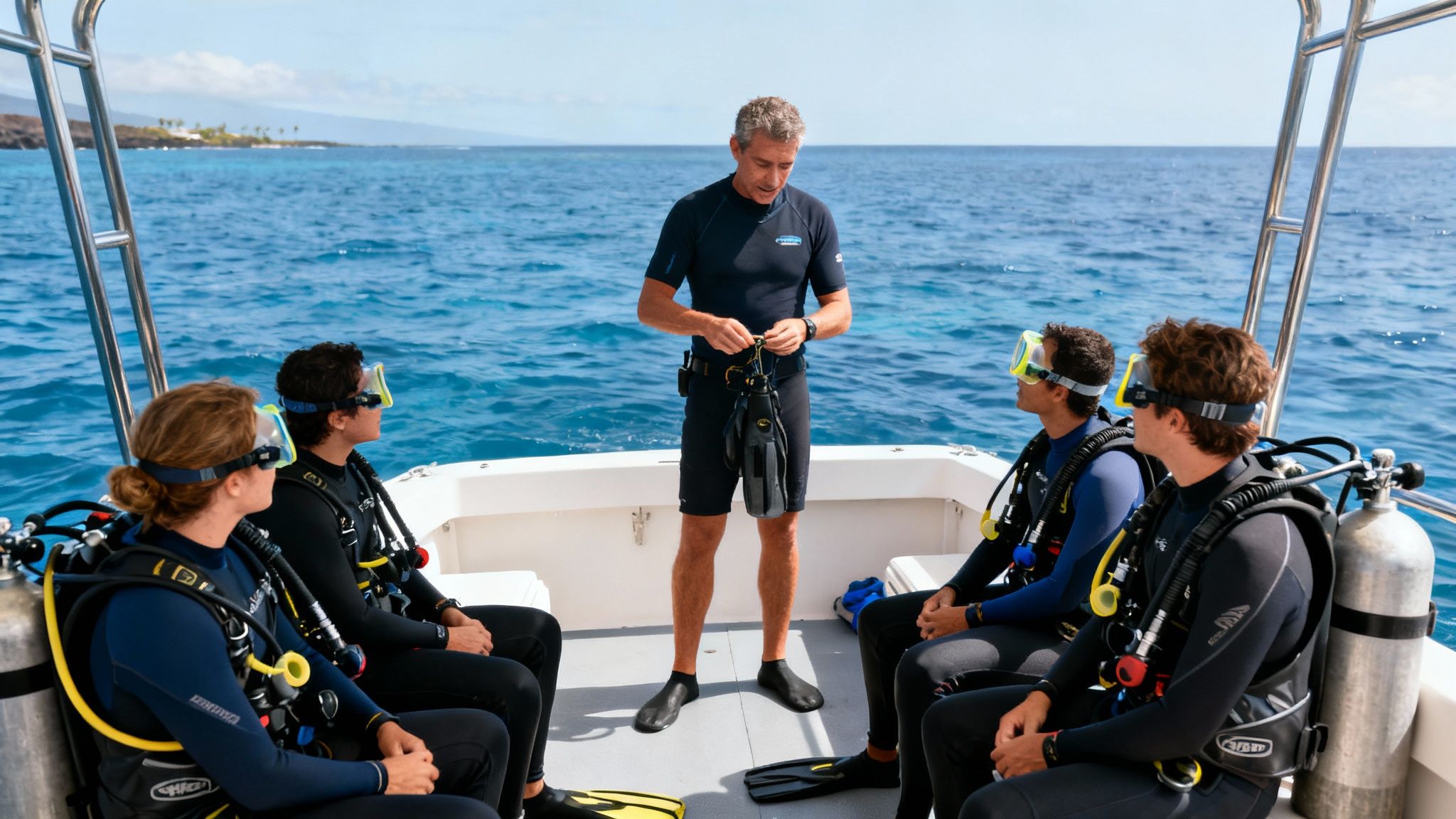
Hawaii’s powerful, pristine waters command a deep respect. While the Kona coast is famous for its relatively calm and clear conditions, the ocean is always the boss. Making sure every dive is safe and responsible isn't just a good idea—it's everything.
This is why choosing a professional, safety-obsessed dive operator is the most important decision you'll make. The ocean has inherent risks, and local statistics show why expertise is non-negotiable. Between 2020 and 2024, there were 187 resident ocean drownings across the state, giving Hawaii the second-highest per-capita rate in the US. While these numbers cover all ocean activities, they're a stark reminder of why professional guidance is so critical when diving Hawaii Big Island. You can learn more about ocean safety trends in Hawaii from this insightful report.
Your Role in a Safe Dive
A safe dive is a true partnership between you and your dive crew. Your responsibility starts the second you step on the boat. That pre-dive briefing? It’s essential. Pay attention. This is where your divemaster lays out the day’s plan, points out site-specific conditions, and runs through emergency procedures.
Proper gear checks are another absolute must. Even if you're renting top-notch equipment from us, you still need to run through a full buddy check. It’s a simple routine that catches most potential gear problems before you even get your fins wet.
Always, always dive within your limits. Be honest with yourself and your guide about your experience and how you're feeling. There is zero shame in sitting out a dive if the conditions feel like too much. A smart diver is one who knows when to call it.
Protecting the Underwater World We Love
Being a responsible diver means leaving the reef just as you found it—or even better. The coral gardens around Kona are living, breathing, and incredibly fragile. It's no exaggeration to say that a single careless fin kick can destroy decades of coral growth.
Following proper marine conservation etiquette is just part of being a good diver. Here are the core principles we live by on every single dive:
- Master Your Buoyancy: This is the single most important skill for protecting the reef. Nailing your neutral buoyancy allows you to float effortlessly, preventing any accidental bumps or kicks against fragile coral and marine life.
- Look, Don't Touch: A hands-off policy is a must. Never touch, chase, or harass any marine creatures. We're visitors in their home, so observe from a respectful distance to avoid stressing them out. This goes for everything from a tiny nudibranch to a majestic green sea turtle.
- Secure Your Gear: Make sure your gauges, octopus, and any other equipment are clipped in and streamlined. Dangling gear is a reef’s worst enemy—it can easily drag across and break delicate coral structures without you even noticing.
- Follow Your Guide: Your divemaster knows these sites like the back of their hand. Trust their lead. They'll guide you away from sensitive areas and show you the best, most respectful way to enjoy encounters with our amazing local wildlife.
When you embrace these safety and conservation practices, you become more than just a tourist. You become a steward of the ocean, helping to preserve the stunning beauty of Hawaii’s reefs for all the divers who will follow in your fin kicks.
Frequently Asked Questions About Kona Diving
Planning a dive trip always brings up a few questions, even for the most seasoned divers. To make sure you feel totally prepared for your Kona adventure, we've pulled together answers to some of the most common things people ask us. Think of this as a quick chat with your guide before you even get on the boat—we want you to feel confident and excited about the incredible diving that awaits.
What Is the Best Time of Year to Scuba Dive on the Big Island?
Honestly, one of the best things about diving Hawaii Big Island is that there’s no bad time to visit. The Kona coast is famous for its consistently fantastic conditions year-round, but there are a few subtle seasonal differences that might help you pick your perfect window.
If you love warm water and glassy seas, think about coming in the summer (that’s roughly April to October for us). The water often climbs to a balmy 80°F (27°C), and the calm conditions usually mean visibility is at its absolute best—perfect for photographers.
But winter (November to March) has its own kind of magic. The water dips a little, maybe to around 75°F (24°C), and you might see more surface swell. The trade-off? Humpback whales. While it's extremely rare to see one underwater, hearing their songs echo through the reef during your dive is an experience that will stick with you forever. It's a hauntingly beautiful soundtrack you can't get anywhere else.
Do I Need to Be an Advanced Diver to Enjoy Kona Diving?
Not at all! Kona is an amazing place for divers of all experience levels. Many of our most beautiful and lively coral reefs are tucked away in calm, protected bays, making them perfect for Open Water certified divers. You can see an incredible amount of marine life in relatively shallow, easy-going conditions.
That said, some of our most unique dives do require a bit more experience. For the world-famous Kona Blackwater Dive, you’ll need an Advanced Open Water certification. It’s a drift dive in the deep, open ocean at night, so that extra training is crucial for everyone’s safety and enjoyment.
If you’re looking to step up your skills, taking an advanced dive tour while you're here is a fantastic idea. There’s no better classroom than Kona’s warm, clear water.
What Marine Life Can I Expect to See in Kona?
Get ready for a show! Kona’s underwater volcanic landscape has created the perfect home for a huge variety of marine life. On just about any dive, you can count on seeing Hawaiian green sea turtles (we call them honu) either cruising by or chilling out on the reef.
Keep your eyes peeled for moray eels poking their heads out of crevices, octopuses showing off their amazing camouflage, and massive schools of colorful fish like yellow tangs and butterflyfish. We also frequently spot white-tip reef sharks snoozing on the sand and playful spinner dolphins from the boat.
And of course, there’s Kona’s biggest star: the giant manta ray. The chance to get up close with these gentle giants on the manta ray night dive is what brings people here from all over the world. It’s an experience that truly lives up to the hype.
Should I Book My Dives in Advance?
Yes, absolutely. We can't stress this enough. If you have your heart set on specific dives, especially the Manta Ray Night Dive or the Kona Blackwater Dive, book them as far ahead as you can. These are bucket-list dives for a reason, and they often sell out weeks—sometimes months—in advance, especially during holiday seasons.
Booking your diving tours early with a great shop like Kona Honu Divers isn’t just about saving your spot. It helps us plan our logistics, line up the best crew, and make sure the groups are well-matched. Waiting until you arrive on the island often leads to disappointment, and we hate seeing people miss out. A little planning goes a long way in making your dive vacation totally stress-free.
Your unforgettable underwater adventure is just a click away. At Kona Honu Divers, we're dedicated to providing the safest, most exciting, and memorable diving experiences on the Big Island. Book your dive today and discover the magic of Hawaii's ocean world with our expert crew.