
Kona's west coast can be diveable year-round, but that doesn't make every entry safe on every day. Swell direction, recent rain, and how sheltered a site is matter more than a calendar's “best month” when you're choosing between a shore entry and a boat trip.
| Trip | Best for | Depth and time | Signature sight | Watch-out |
|---|---|---|---|---|
| 2-tank morning boat | Open Water certified | Two dives to about 60 ft (18 m) | Coral gardens, arches, lava tubes | Bring a C-card |
| Shore dive | Confident certified divers | Often shallower and self-paced | Nearshore reef and turtles | Swell and runoff can shut entries |
| Manta night at Garden Eel Cove | Snorkelers and certified divers from about age 10 | About 45 minutes, surface or below | Reef mantas feeding | Choose the protected cove |
| Blackwater night | Experienced night divers | Drift over deep water after dark | Pelagic larvae and rare ocean life | Not a first night dive |
| Premium advanced 2-tank | Advanced or recently logged divers | Deeper sites and drift | Remote pinnacles and walls | Needs current comfort in open water |
| Introductory scuba | Uncertified beginners | Shallow and instructor-led | First breaths on the reef | Not a certification by itself |
Which Big Island Dive Matches Your Level
Match the dive to your certification and comfort in the water, then let swell, rain, and site shelter guide the day's choice. Kona's boat trips reach reefs and lava formations without a rocky shore entry. Shore diving allows more flexibility, but calls for confidence assessing conditions, entering and exiting with gear, and changing plans if swell or runoff makes a site unsuitable. The published overview of Hawai'i diving offers a general look at the island's dive options.
An Open Water card is a suitable starting point for a standard two-tank boat trip. That certification allows dives to 60 feet (18 meters) with a buddy. If you're not certified, choose an instructor-led introductory dive rather than a certified-diver charter. This guide to Big Island scuba diving for beginners can help you compare beginner options.
Manta trips bring certified divers and snorkelers onto the same boat for the same wildlife encounter. Snorkelers watch from a lit surface buoy, while certified divers can observe from below. Both should keep their distance from the mantas and avoid touching them. The two-tank manta dive and snorkel tour lets you compare the surface and underwater options.
For a manta night, Garden Eel Cove is the stronger choice when its more protected setting suits the conditions. Its viewing area and surrounding reef also make it a better fit than a more exposed site when conditions are unsettled. Still, the day's swell and site conditions should shape the final choice.
Blackwater diving and advanced reef trips suit divers who are comfortable with more demanding conditions. Blackwater is an after-dark drift over deep water, so it is not a first night dive. The blackwater night dive is for divers already calm in open water at night. For deeper sites and drift diving, the premium advanced two-tank trip is a better fit if you're comfortable managing yourself in open water.
Certification Gear and Dive Day Steps
Your certification determines which boat trip you can join. For most regular charters, Kona Honu Divers requires at least an Open Water Diver certification from a recognized agency such as PADI, SSI, or NAUI. That certification allows dives to 60 feet (18 meters) with a buddy, and you'll need to bring your C-card. Uncertified guests should book an introductory dive with an instructor, not a certified-diver charter. If you're weighing a full course against a first guided dive, start with this Big Island scuba certification guide.
Dive insurance is a sensible part of planning, not an accessory to think about after something goes wrong. Kona Honu Divers strongly recommends dive insurance. A remote dive destination can make access to specialized medical care more complicated than a quick drive to a local clinic.
Pack for the kind of dive you're doing
Most boat divers rent the regulator, BCD, and tanks. Bring your own mask and fins if you know they fit well, and choose exposure protection you'll be comfortable wearing across the dive and the surface interval. If you don't own a dive computer, request one when booking so availability and any additional cost can be confirmed.
For independent shore dives, freediving, or spearfishing, understand the flag rule before entering. Hawai'i's state fishing regulations require a diver in ocean waters to display a dive flag and, except in an emergency, stay within 100 feet of it. In navigable streams, the limit is 50 feet. These are distance limits, not general suggestions to stay visible.
The Old Kona Airport Marine Life Conservation District is no-take water. Don't remove or injure marine life, shells, coral, algae, or limu there, and don't alter or remove sand, rock, or other geological features. Follow local rules and your briefing rather than assuming that a familiar entry has the same protections as another site.
Follow the boat-day sequence
A typical Kona Honu Divers dive day runs in a deliberate order:
- Arrive and set up your gear. Check fit and function before the briefing, not at the water's edge.
- Listen to the site and entry briefing. Conditions and the entry style affect how you should prepare.
- Dive the deeper or more condition-sensitive site first. That leaves the more relaxed site for the second dive.
- Take a real surface interval. Eat, drink, and give the crew time to prepare the next site.
- Keep dive two relaxed. Don't turn the second dive into a race to squeeze in more bottom time.
Reef Sites and Buoyancy Habits
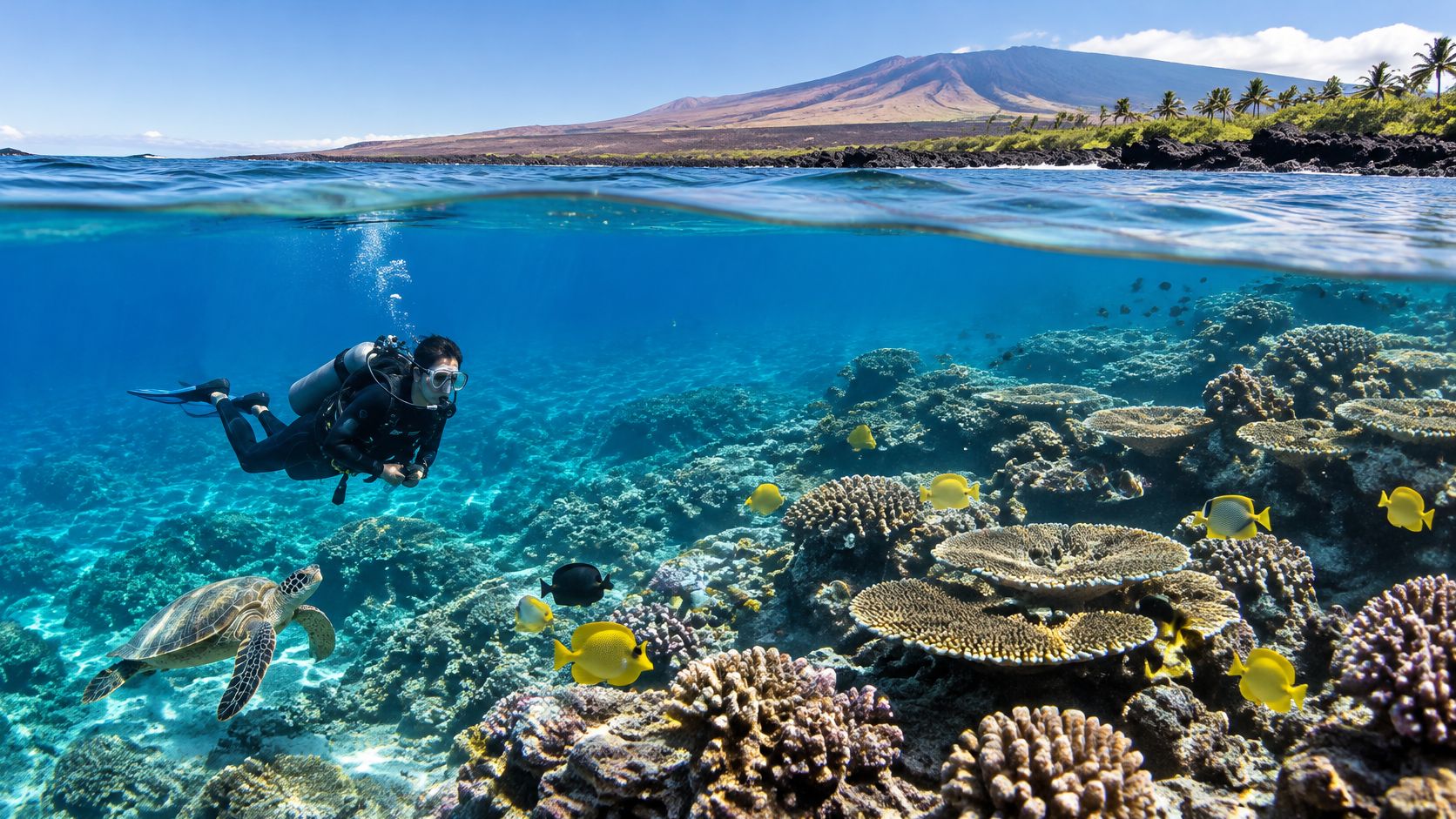
Kona's appeal isn't limited to coral gardens. You can move between coral habitat, volcanic structure, and night dives focused on open-water life without treating every dive as the same kind of reef tour. The scale of the reef region gives useful context, but it doesn't tell you what condition a particular mooring will be in tomorrow.
The University of Hawai'i reef overview reports that waters around Hawai'i's main islands contain about 640 square miles (1,658 square kilometers) of coral reef. Hawai'i's reefs support about 80 coral species and more than 1,500 reef-fish species, including over 1,250 endemic species. For Hawai'i Island specifically, NOAA mapping found live coral covering about 57% of surrounding waters, or more than 29 square miles.
Those island-scale figures describe a broad region, not a promise about one dive site. Coral condition can vary with depth, exposure, temperature, sediment, and human use. A lava wall may be structurally striking without having the same coral cover as a sheltered garden, and clear water doesn't necessarily tell you whether a reef is healthy.
Three underwater settings to look for
- Leeward coral gardens: Look for reef habitat and fish life on a boat dive selected for the day's conditions.
- Lava structure: Walls, pinnacles, arches, channels, and tubes add relief and make each site feel different.
- Pelagic night dives: Manta feeding and blackwater trips shift the focus from reef structure to animals moving through open water after dark.
Your buoyancy habits matter in every setting. Stay off the bottom, keep your fins high, and clip gauges or other accessories so they don't drag over coral. Don't kneel for a photograph, especially near branching coral where surge can push you into the reef. Use this responsible diver etiquette guide as a practical reminder to keep your body and gear clear of the reef.
A guided boat day is often the better choice when you want to see different reef structures without adding an unfamiliar shore entry to the plan. It gives the crew room to choose a site that fits the conditions, while your job is to control buoyancy and avoid contact.
Swell Rain and When to Dive Kona
Choose the dive site by swell, rain, and shelter first; treat the calendar as a secondary check. Kona is available for diving year-round, but conditions at an exposed shore entry can change quickly. Winter north swell can reduce visibility along west-facing shores, while south or west swell may reach places that are usually protected. Check the Big Island dive-site conditions alongside current local advisories, then match the forecast to the entry you have in mind.
Rain calls for a separate decision. Runoff can cloud nearshore water and raise bacterial contamination concerns, especially at shallow shore entries. After heavy rain, waiting before diving those entries is prudent. Offshore and leeward sites are generally less affected, but clear-looking surface water alone does not confirm that a shore entry is safe.
Make the call from the conditions
- Check recent rain, runoff, and advisories. Look for brown water and current beach notices before planning a shallow shore dive.
- Match swell direction to the entry. Exposure matters as much as the forecast wave height. A sheltered site and an exposed lava entry can have very different conditions on the same day.
- Move a certified shore plan to a boat reef if the lava shelf is marginal. A boat trip lets the crew choose a site suited to the day instead of forcing a difficult entry.
- Keep the manta booking only if the boat can operate safely. If conditions make a beginner shore entry questionable, postpone that entry. A night trip is not a substitute for assessing the shore.
- With only a day or two available, protect the boat booking and keep shore diving optional. That way, one exposed entry does not determine the whole trip.
Kona Honu Divers runs dive trips in Kona, where diving is available year-round, with warm water and generally clear visibility in every season. The sheltered location supports good conditions through much of the year, but site selection still depends on the day's swell and rain. Use this guide to the best months to scuba dive in Hawai'i for seasonal context, then check current conditions before committing to a shore entry.
Why Garden Eel Cove Leads Manta Nights
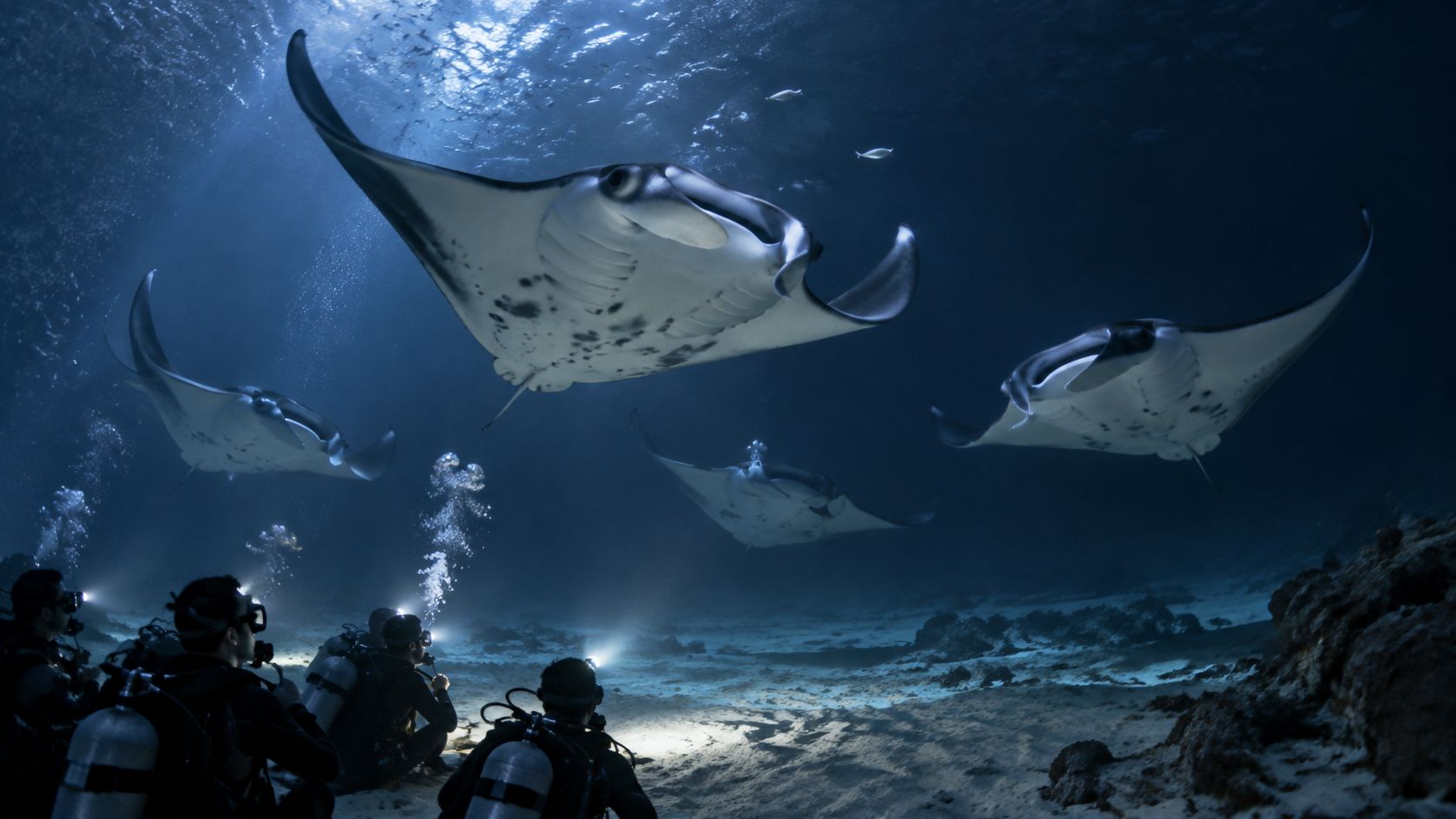
Garden Eel Cove is the stronger choice for a manta night when you want a more protected setting, a better viewing area, and better surrounding reef. It also has a biological reason to be a reliable place to watch: the mantas return to familiar feeding areas, and their appearances track food rather than lights alone.
A 13-year analysis of community-sourced observations recorded more than 23,000 sightings of 167 individually identified reef manta rays at two Kona sites about 20 kilometers apart. The study found that aggregation size increased with zooplankton density, and Garden Eel Cove had larger, more variable groups. At Keauhou, groups were smaller, and females accounted for 91% of sightings in that site's observations. Those distinctions suggest the locations may serve different ecological roles, rather than acting as interchangeable stops. The long-term Kona manta study also found strong site fidelity.
The light attracts plankton. The plankton draws feeding mantas.
That's why a manta encounter isn't as simple as switching on a light and expecting animals to arrive. Plankton availability and site-specific behavior matter. A Garden Eel Cove manta night tour gives you the chance to observe the feeding behavior without treating the animals as part of a staged performance.
Keep the feeding lane open
Stay where the crew briefs you to stay. Don't touch, chase, or block the mantas, and keep fin kicks and light movements small. Give the animals a clear path through the plankton. These habits make it easier to watch their natural feeding loops and reduce disturbance.
The study found that predictable aggregations persisted during sustained tourism, but that doesn't mean unlimited visitor pressure is harmless. A night with few or no mantas is a night when prey and behavior didn't bring them close. It isn't proof that Kona has no mantas. Chasing or contact won't improve the encounter; it disrupts the behavior you came to see. For practical trip details, read this Kona manta ray night-dive guide.
Three Sample Days on the Kona Coast
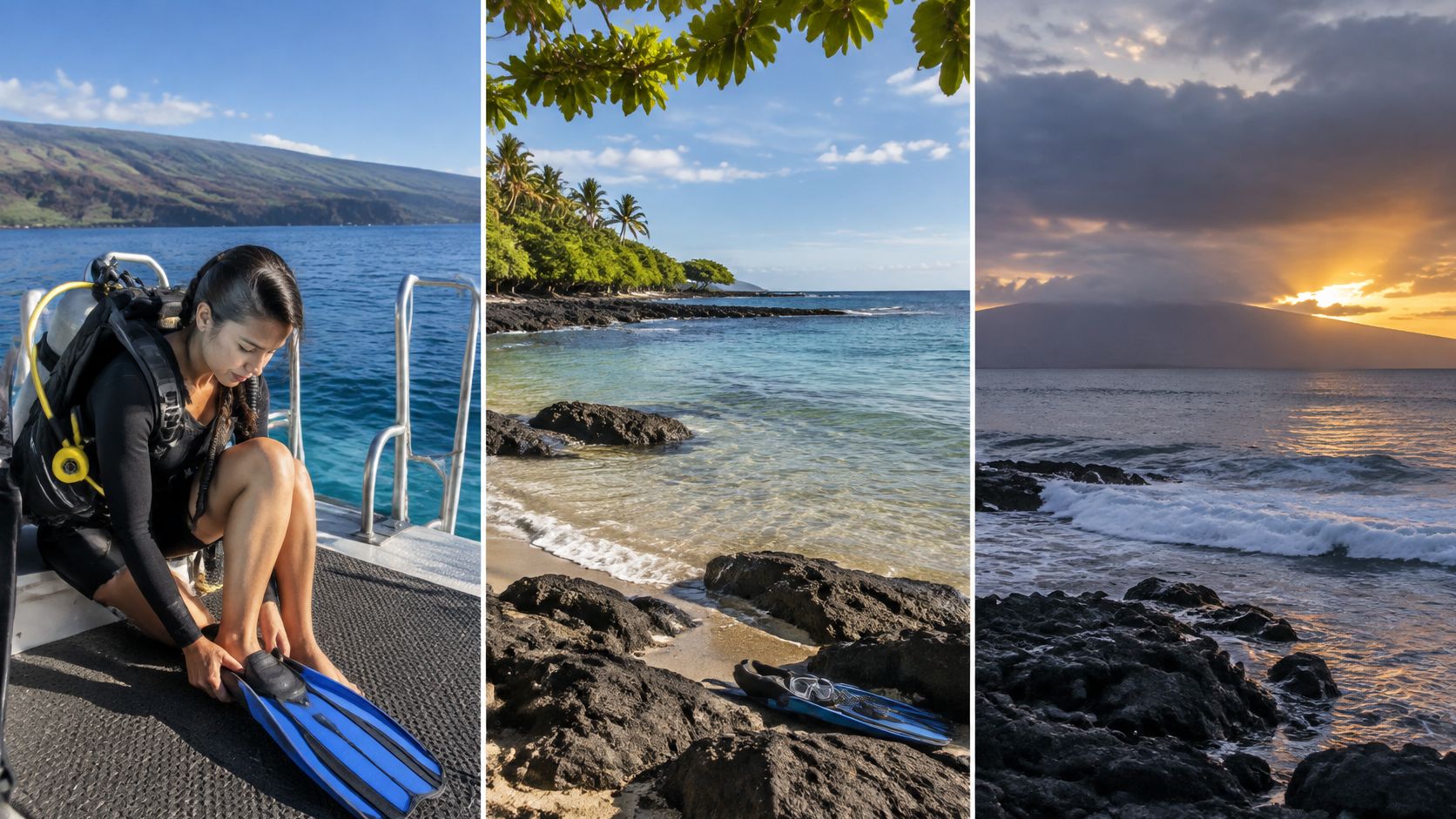
A good itinerary keeps one clear priority per day and leaves room to change the entry or site if conditions turn. These sample plans match the trip types in the opening table.
Beginner or uncertified
Start with a shallow, instructor-led introductory scuba dive in the morning, then leave the afternoon open rather than stacking another demanding activity on top. A Garden Eel Cove manta night can fit if the guest is comfortable in open water and meets the general age guidance. If swell or runoff makes a shallow shore entry a poor option, keep the beginner dive on the boat rather than improvising at a lava shelf.
Certified pair
Use the first day for a two-tank morning over coral gardens, arches, and lava formations. Make the second day the manta night at Garden Eel Cove, and name any snorkelers or ride-alongs when booking so the group can plan the right places on the boat. If the forecast makes a shore add-on questionable, skip it instead of compressing the boat dives and manta night into a hurried schedule.
Advanced diver or photographer
Choose the premium advanced trip for deeper sites or drift, then plan a more relaxed local two-tank day for reef photographs. Consider blackwater only if you're already comfortable with night diving in open water and the boat can run safely. Keep the surface interval and recovery time after the deeper morning; if conditions don't line up, drop a dive rather than adding a marginal shore entry.
Each plan maps to one main row in the table: introductory scuba, a certified morning boat, or an advanced trip. The manta night can be added when it fits the diver, the weather, and the rest of the schedule.
Book a Kona Honu Divers Trip
Choose the trip that fits your certification and the conditions you're willing to accept, rather than booking every specialty dive because it's available. Kona Honu Divers offers these options:
- Manta Ray Night Dive
- 2 Tank Local Morning Dive
- Premium Advanced 2 Tank Trip
- Black Water Night Dive
- Morning Introductory Scuba Dive
Start with the full Kona diving tours menu. If you already know what you want, go directly to the manta ray night dive, premium advanced two-tank trip, or blackwater night dive.
Kona Honu Divers offers early diver discounts, dive packages, and free nitrox. Check current availability and trip details when booking, and tell us if your group includes snorkelers or ride-alongs. If you're adding an independent shore dive, contact the operator directly about conditions before locking that part of the plan.
Book the one row you circled, not every famous night in the same weekend.
Kona Honu Divers offers guided reef trips, advanced dives, manta encounters, and blackwater excursions around the Big Island. Match your booking to your certification and the conditions, then visit Kona Honu Divers to choose a trip that fits the way you want to dive.