
Welcome to the underwater world of the Big Island, a realm carved by volcanoes and teeming with some of the most incredible marine life in the Pacific. The Kona coast, in particular, is the undeniable heart of Hawaiian diving, known for its calm, glass-like water and unforgettable encounters.
This guide is your deep dive into everything Kona has to offer, from the legendary manta ray night dive to the surreal world of blackwater diving.
Why Diving The Big Island Is A Must-Do
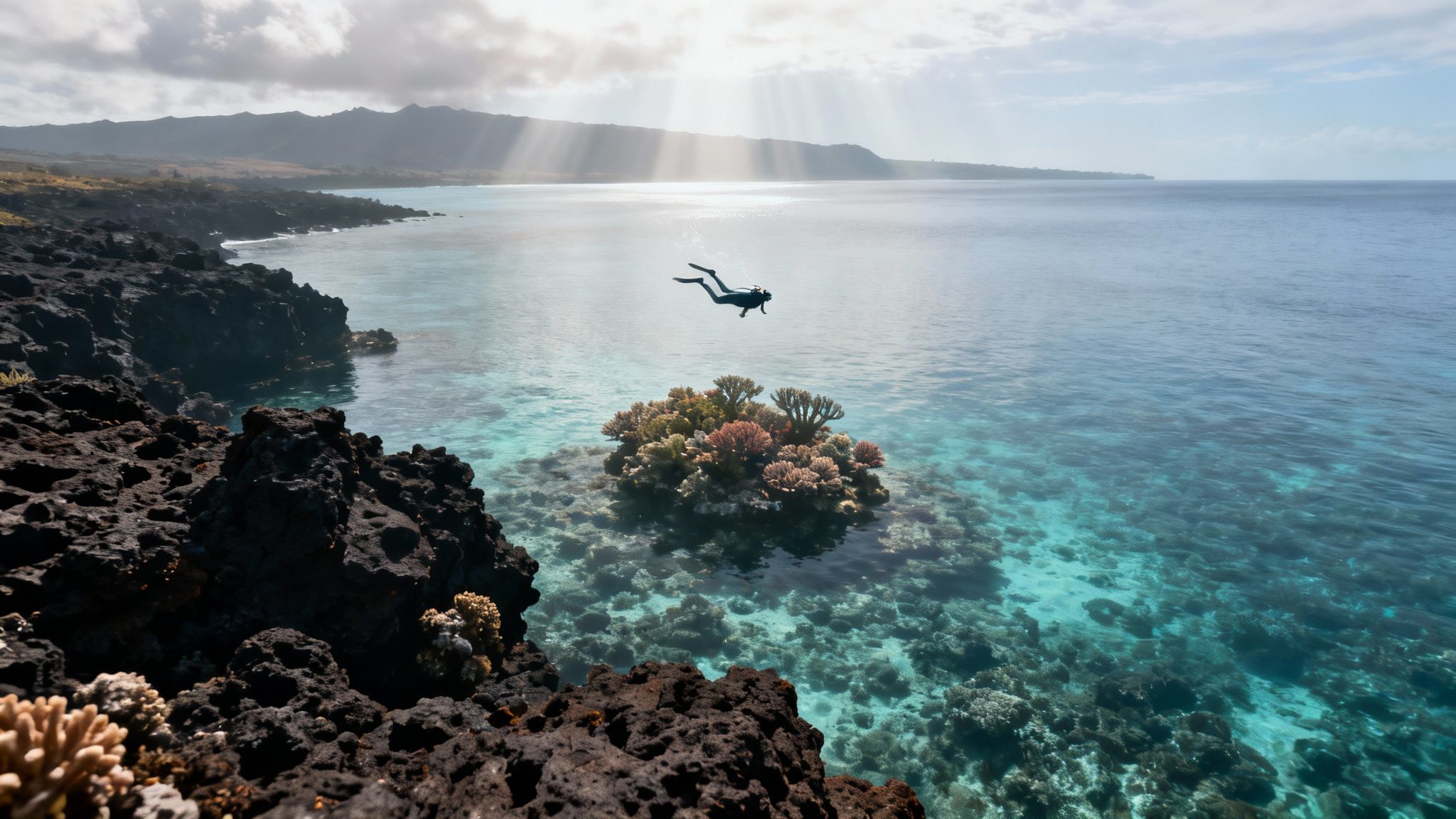
Picture yourself descending into a landscape shaped by raw, volcanic power. That's what diving here is all about. The Big Island's underwater world is a maze of dramatic lava tubes, soaring arches, and ancient lava fields that are now completely covered in a blanket of colorful coral. This unique geology makes for a breathtaking backdrop on every single dive.
The Kona coast, on the island's western side, boasts nearly perfect diving conditions all year long. It’s tucked in the "wind shadow" of the massive Mauna Loa and Mauna Kea volcanoes, which shield it from the powerful trade winds. The result? Exceptionally calm and clear water with visibility that often pushes past an incredible 100 feet (30 meters).
Let's take a quick look at what truly sets the Big Island apart.
Big Island Diving Snapshot
| Feature | Why It's Exceptional |
|---|---|
| Volcanic Topography | Lava tubes, arches, and caves create a unique underwater playground. |
| Protected Kona Coast | Massive volcanoes block trade winds, ensuring calm seas and clear water. |
| Iconic Night Dives | Home to the world-famous Manta Ray Night Dive and Blackwater Dives. |
| Rich Marine Life | Healthy coral reefs host a huge diversity of fish, including many endemic species. |
| Year-Round Season | Consistent conditions mean you can plan an amazing dive trip any time of year. |
As you can see, the combination of geology and geography makes for a truly world-class diving destination.
A Hub For Divers
The island’s reputation isn't just hype; the numbers back it up. The Big Island has become a quiet giant in the dive travel world, attracting an estimated 150,000 dive tourists each year. That's about one out of every three divers who visit the entire state of Hawaii!
To support this passion, you'll find over 50 active dive shops and charter boats here. It's no surprise that seasoned divers consistently rate the Big Island as the best place to dive in all of Hawaii. You can discover more insights about why so many people flock to these waters.
What Awaits Beneath The Surface
Diving on the Big Island is about more than just spectacular reefs—it’s about having those once-in-a-lifetime experiences that you'll be talking about for years.
- World-Famous Manta Ray Night Dive: This is the dive everyone comes for. Imagine giant, graceful mantas swooping and gliding just inches above your head in a mesmerizing underwater ballet. It’s pure magic.
- Mysterious Blackwater Dives: For the truly adventurous, this is a must-do. You'll drift miles offshore over thousands of feet of water, witnessing bizarre and beautiful creatures as they migrate up from the deep ocean abyss under the cover of darkness.
- Pristine Coral Reefs: The island is fringed with miles of healthy, vibrant reefs packed with life. Keep an eye out for Hawaiian endemic species—fish and critters you literally can’t see anywhere else on the planet.
Ready to jump in? At Kona Honu Divers, we offer expert-guided diving tours in Hawaii for every skill level. Our focus is always on safety, small groups, and sharing our deep local knowledge to make sure every dive is an adventure you'll never forget.
The Unforgettable Kona Manta Ray Night Dive
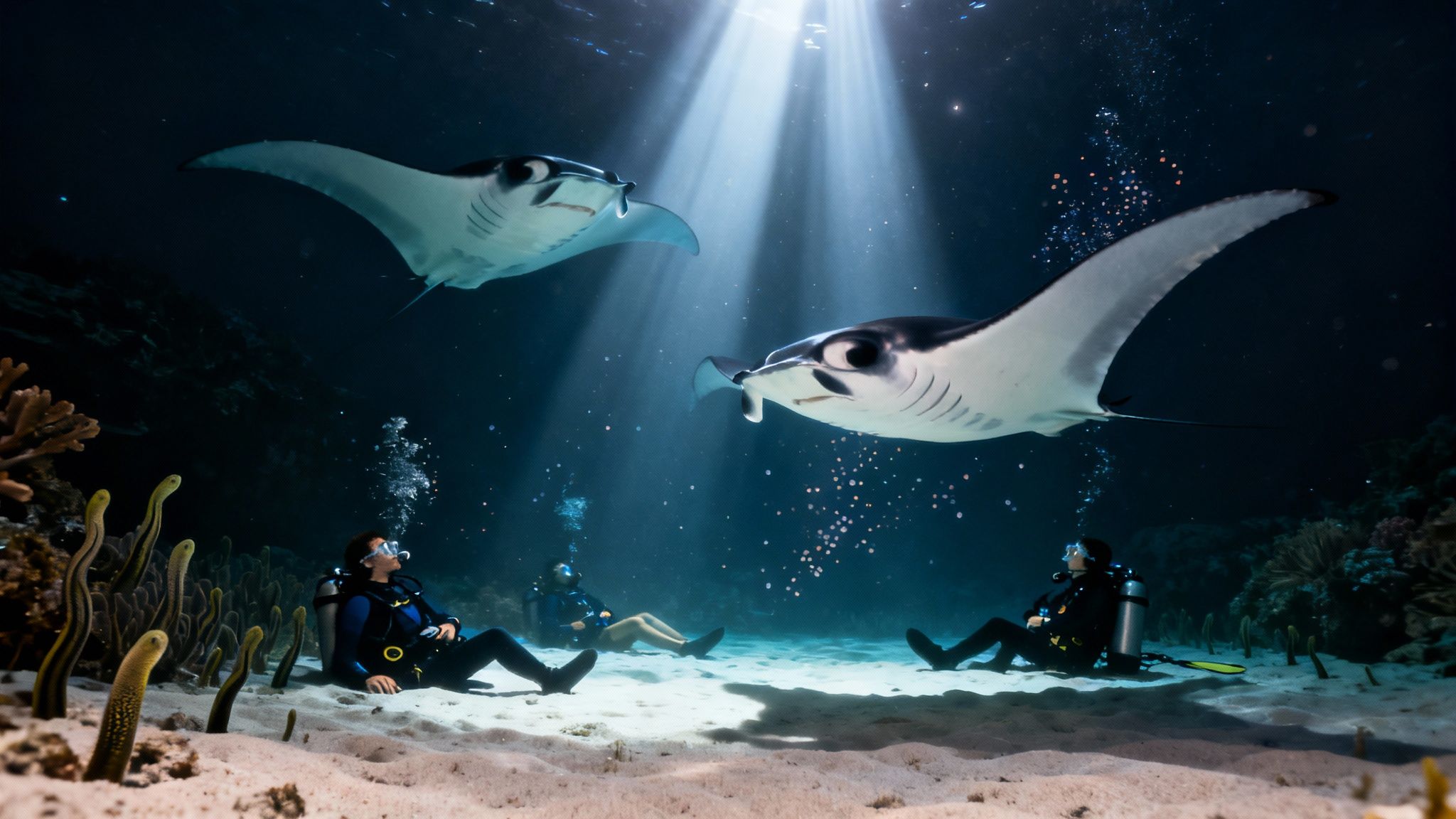
Get ready for an encounter that consistently tops "best dives in the world" lists: the Kona manta ray night dive. This isn't just another dip in the ocean. It’s a front-row seat to an incredible underwater ballet, with giant, graceful manta rays dancing just inches away from you. If there’s one experience you can't miss while diving the Big Island, this is it.
The concept behind the magic is beautifully simple. We set up powerful lights on the ocean floor, which act like a massive bug zapper for plankton, the mantas' favorite meal. As a diver, you just settle onto the sandy bottom, aim your flashlight up, and wait for the show to begin.
What happens next is pure spectacle. These majestic creatures, with wingspans that can stretch over 12 feet, glide silently out of the darkness. They swoop, somersault, and barrel-roll through the light beams, their huge mouths wide open to filter the plankton-filled water. I've seen it a thousand times, and being that close to such gentle giants is still a profoundly moving experience that leaves even the most seasoned divers speechless.
Why Garden Eel Cove is the Premier Location
While you can do this dive at a couple of spots, one place truly stands out from the rest: Garden Eel Cove. The unique geography here creates a more reliable, comfortable, and all-around better experience for both the divers and the mantas.
- Protected from Swell: Garden Eel Cove is tucked away in a naturally sheltered spot, which means calmer waters. The boat ride is smoother, and the dive itself is safer and more enjoyable—a big plus if you’re prone to seasickness.
- Superior Viewing Area: The site has a perfect, sandy "campfire" area where divers can comfortably kneel. This gives everyone an unobstructed, theater-style view without kicking up sand or disturbing the environment.
- Healthier Reefs: The coral gardens surrounding the site are absolutely vibrant and teeming with life. This doesn't just make for a prettier dive; it supports the robust ecosystem that keeps the mantas coming back night after night.
Simply put, choosing a dive at Garden Eel Cove gives you the best possible shot at a truly spectacular and serene encounter.
What to Expect on Your Manta Adventure
Your journey starts around sunset with a scenic boat ride along the stunning Kona coast. You can feel the excitement build as the crew briefs you on manta behavior and explains the simple, passive role you’ll play in their nightly feast. The whole process is designed to be safe, respectful, and totally accessible, even for newer divers.
The Big Island’s manta ray night dive has become one of the most reliable megafauna encounters on the planet. Operators here see mantas on 85–90% of trips, and it’s not uncommon to have 10 to 30 different individuals show up. The dives are also nice and shallow, usually around 30–40 feet, making them perfect for most certified divers.
This dive is more than just watching wildlife. It's about becoming part of their world, even for just a brief, unforgettable moment. The feeling of a massive manta gliding silently right over your head is a memory that will stick with you for a lifetime.
At Kona Honu Divers, we’re obsessed with providing a safe and breathtaking manta ray experience. Our expert crew will make sure you’re comfortable and ready for this incredible adventure. Ready for the dive of your life? Find out more about our manta ray tours on the Big Island and see what makes them so special. Book your unforgettable 2-Tank Manta Ray Dive adventure and witness the magic for yourself.
Exploring Kona’s Top Dive Sites
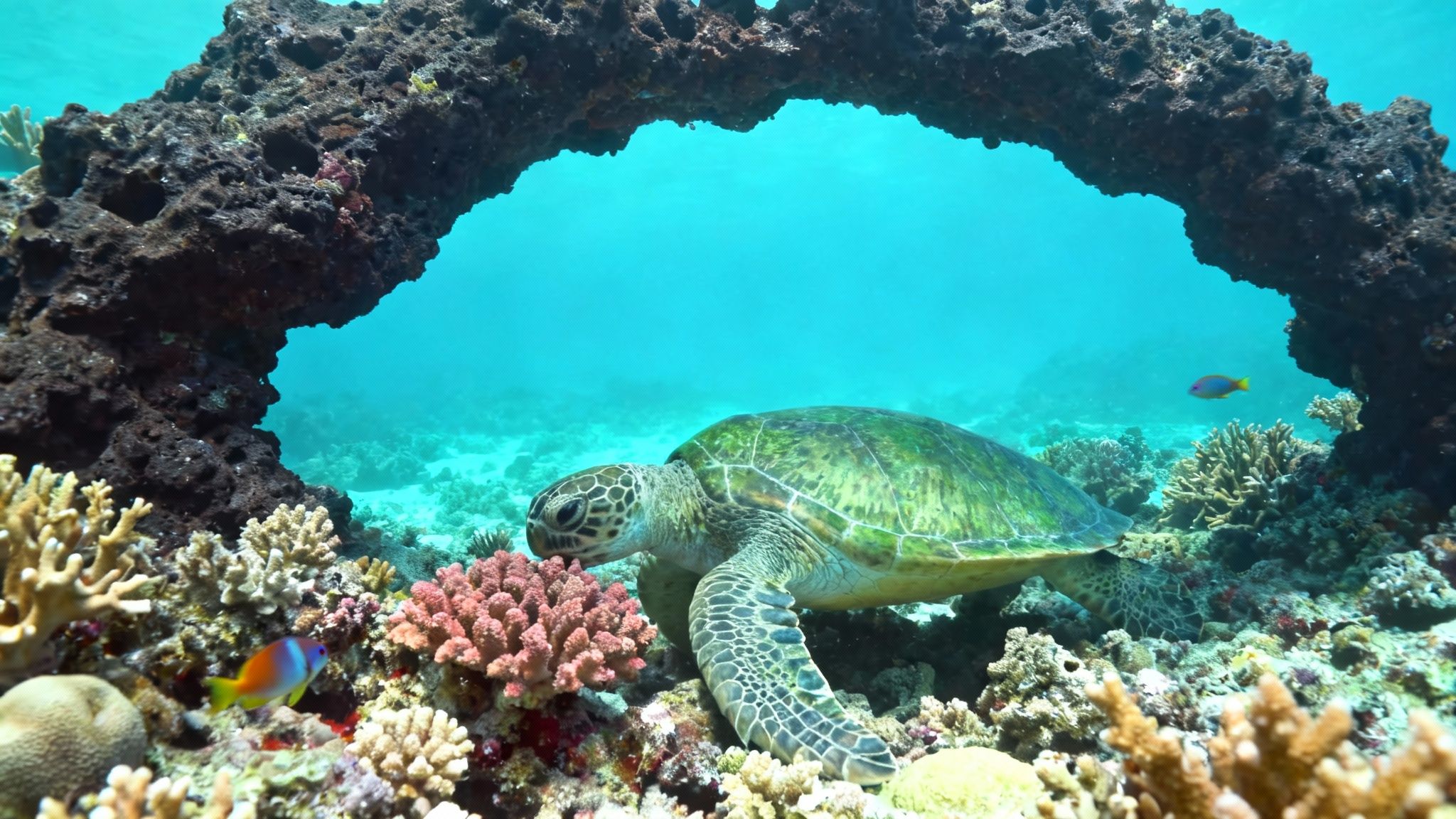
Sure, the manta ray night dive gets all the headlines, and for good reason—it's an absolute must-do. But to think that's all the Kona coast has to offer is to miss out on a treasure trove of incredible underwater worlds just waiting to be explored. Diving Hawaii Big Island is about mind-blowing variety.
The Big Island's fiery volcanic past has sculpted a submerged playground unlike anywhere else. We're talking dramatic lava tubes, soaring underwater arches, and sprawling coral gardens teeming with life. Each dive site here tells its own story, carved by lava and colonized by the ocean.
One day you might be navigating the intricate swim-throughs of an ancient lava flow, the next you could be drifting effortlessly along a vibrant reef wall, watching green sea turtles (honu) glide past. The cast of characters is always changing, a spectacular mix of the familiar and the fantastically exotic. You'll see pods of playful spinner dolphins, perfectly camouflaged frogfish, and a kaleidoscope of reef fish.
What really makes diving here special, though, is the chance to meet the locals—the endemic species you won't find anywhere else on Earth. Keep an eye out for the striking bandit angelfish or the elusive Hawaiian lionfish.
Dive Sites for Every Skill Level
The best part about Kona diving is that there’s something for everyone. We have calm, shallow reefs perfect for brand-new divers finding their fins, alongside more challenging sites with complex topography that will thrill even the most seasoned pros.
- Beginner-Friendly Reefs: Sites like Suck'em Up and Kailua Pier are perfect for your first few ocean dives. They offer gentle conditions and shallow waters, but are absolutely packed with marine life, giving you a fantastic introduction to Kona’s ecosystem.
- Intermediate Adventures: Ready for a bit more? Sites like Golden Arches and Turtle Pinnacle feature more intricate structures. You can weave through impressive lava arches and watch as honu line up at "cleaning stations" for a shell-scrub from helpful reef fish.
- Advanced Challenges: For experienced divers craving a bigger adventure, we can head to deeper sites with more complex navigation. These spots often have unique geological features and a better chance of spotting larger pelagic species out in the blue.
No matter your experience, we have a huge range of incredible day trips and two-tank dive adventures designed to showcase the very best of the coast. Our entire focus is on creating safe, fun, and unforgettable experiences for every single diver.
Exploring the Unique Volcanic Topography
The underwater landscape here is a direct result of the island’s volcanic soul. Centuries ago, when molten lava poured into the cool ocean, it flash-cooled into the fascinating structures we get to dive today. It's geology in action.
Imagine finning through a massive, hollowed-out lava tube, shafts of sunlight piercing the ceiling from above. These aren't just empty caves; they're bustling underwater cities. Countless fish and invertebrates use the nooks and crannies of the lava rock for shelter and protection.
The constant interplay between volcanic creation and marine life is what makes every dive unique. You're not just observing fish; you're exploring the very architecture of the island from below the surface.
This unique geology means you'll never be bored. The constant presence of arches, craters, and swim-throughs provides a dynamic backdrop, making you wonder what’s waiting just around the next corner. You can get a closer look at these incredible underwater environments by exploring our guide to Big Island diving.
Seasonal Surprises and Marine Encounters
While the reefs are vibrant year-round, the magic of diving in Hawaii is that the guest stars change with the seasons. Our resident turtles and colorful fish are always here to greet you, but certain times of the year bring some truly spectacular visitors.
From December through March, the water comes alive with the songs of humpback whales. These gentle giants migrate to our warm waters to breed and give birth. While safety regulations prevent us from getting too close, hearing their powerful, haunting calls reverberate through the water on a dive is an experience that will stay with you forever.
Spinner dolphins are also a common sight, often traveling in massive pods. You might see them cruise by on a dive or treat you to an acrobatic show during your surface interval. With so much life out here, you’ve always got to keep one eye on the big blue—you just never know what might swim by.
Advanced Diving in the Deep Blue
If you're a certified diver with a taste for true adventure, the Big Island offers challenges that go way beyond even the most stunning coral reefs. Sure, the manta dive is a magical ballet, but advanced diving here is about tapping into the raw, mysterious, and profoundly wild side of the Pacific.
This is your chance to push your own boundaries and witness phenomena that very few people on Earth will ever see. These aren't your standard reef tours. We're talking about dives designed for those with rock-solid buoyancy, some night diving under their belt, and a calm, cool-headed approach. They take you into environments that demand a higher level of skill and awareness, but believe me, the rewards are off the charts.
Get ready for deeper profiles, more intricate navigation, and encounters with unique pelagic species. It’s the perfect next step for divers who have put in the time and are hungry for their next great underwater quest.
The Kona Blackwater Dive Experience
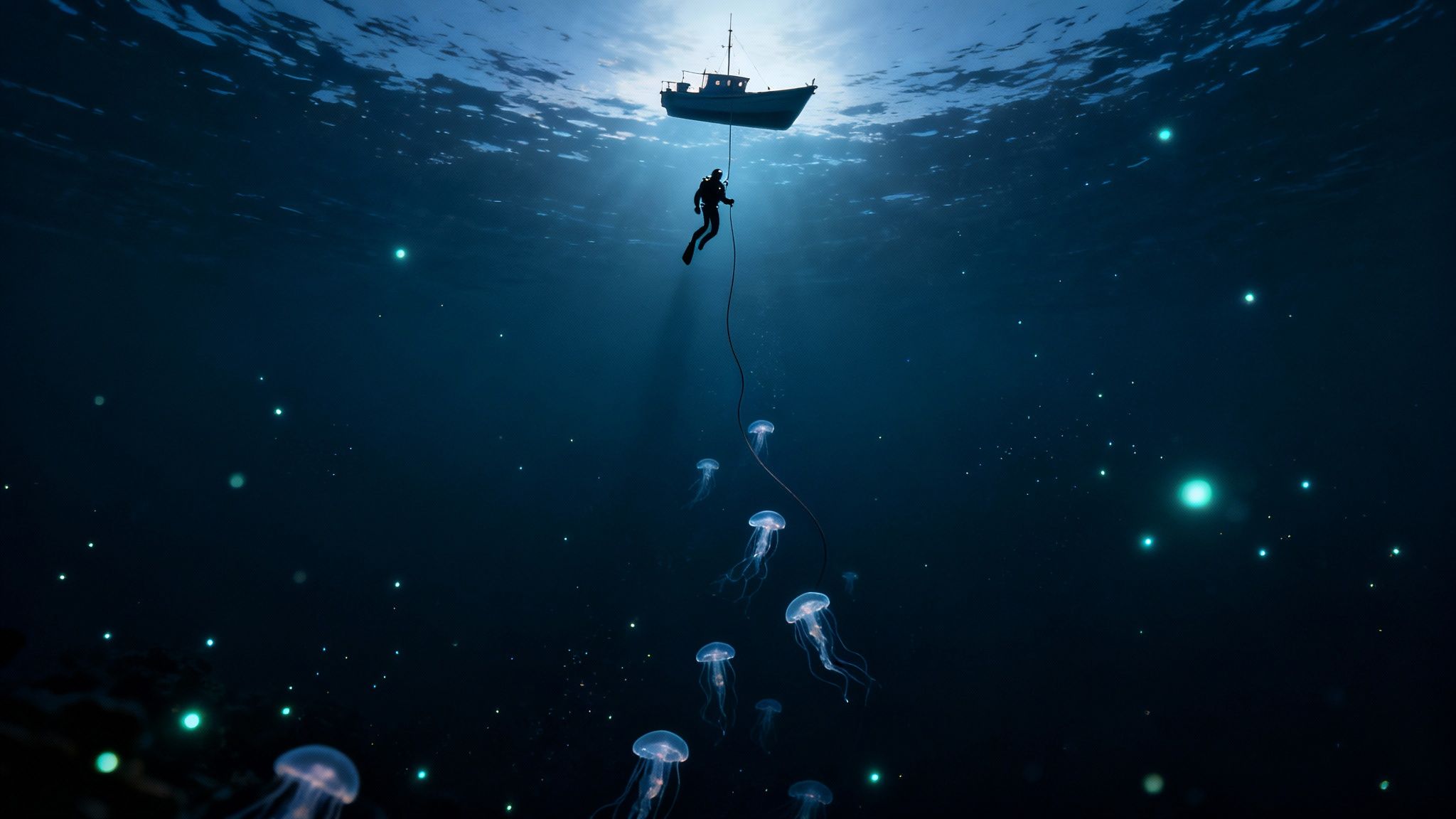
Picture this: you're floating in the inky blackness of the open ocean, miles from shore, with thousands of feet of water just below your fins. This is the world-famous Kona Blackwater Dive, a totally unique adventure that has put diving Hawaii Big Island on the map for thrill-seekers and underwater photographers.
Forget the seafloor; on this dive, you're exploring the water column itself.
You’ll be safely tethered to the boat as you descend to about 50 feet to witness the largest migration on the entire planet. Every single night, countless bizarre and beautiful creatures rise from the abyss to feed near the surface. You'll see life forms that look like they were dreamed up for a sci-fi movie:
- Larval Stage Creatures: See the baby versions of familiar animals, like tiny larval fish and squid, which often look nothing like their adult selves.
- Bioluminescent Wonders: Encounter jellies and other organisms that create their own light, putting on a private light show of pulsing, shimmering colors right in front of your mask.
- Alien-Like Lifeforms: Spot creatures so strange and delicate they defy imagination, all perfectly adapted to a life of perpetual darkness in the deep ocean.
This dive is more than just spotting weird critters. It's a genuinely humbling experience that connects you to the vast, hidden world of the deep sea.
A Signature Kona Adventure
Beyond its gorgeous reefs, the Big Island has become the global epicenter for blackwater diving. This pelagic night drift happens several miles offshore, over water that can be 4,000–6,000 feet deep. Operators like Kona Honu Divers were pioneers, helping establish blackwater diving as a signature advanced experience on the island. We’ve developed a safe, structured way for you to witness this nightly vertical migration.
You can learn more about the history of this unique dive and find out what makes it a must-do for any serious diver.
The Blackwater Dive is the ultimate sensory experience. It's about letting go of the familiar reef environment and embracing the profound darkness of the open ocean, where every flicker of light reveals a creature you've never seen before.
Ready to take the plunge into the abyss? Our expert crew at Kona Honu Divers specializes in this incredible adventure. Check out our Blackwater Dive tour page for all the details.
And if you're looking for other advanced daytime challenges, have a look at our premium advanced dive tours to explore deeper sites and more complex underwater landscapes.
Planning Your Big Island Dive Adventure
A little bit of planning goes a long way in turning a good dive trip into an unforgettable one. While the Big Island is blessed with fantastic year-round diving, knowing the ins and outs before you arrive will make your entire experience smoother and more enjoyable. Think of this as your personal roadmap to a stress-free adventure, covering everything from the best time of year to visit to what you should actually put in your suitcase.
The best part? There’s really no “bad” time to dive the Kona coast. Our massive volcanoes act as a natural shield from the trade winds, which means the water is almost always calm and the visibility is great. Still, each season offers its own unique flavor and a different cast of marine characters, which might just sway your travel dates.
Seasonal Diving Conditions in Kona
To help you pinpoint the perfect time for your trip, let’s look at what the underwater world looks like throughout the year.
This quick guide breaks down what you can expect from our water temperatures, visibility, and marine life month by month.
Seasonal Diving Conditions in Kona
| Season | Average Water Temp | Typical Visibility | Key Marine Life Sightings |
|---|---|---|---|
| Winter (Dec – Mar) | 75°F – 77°F (24°C – 25°C) | 80 – 100+ ft | The soundtrack of your dive might just be humpback whale song! Pilot whales and spinner dolphins are also common. |
| Spring (Apr – Jun) | 76°F – 79°F (24°C – 26°C) | 100+ ft | Visibility is often at its absolute best. Keep an eye out for occasional tiger sharks, plus plenty of manta rays and honu (turtles). |
| Summer (Jul – Sep) | 80°F – 82°F (27°C – 28°C) | 80 – 100+ ft | The water is at its warmest, making for incredibly comfortable dives. We often see dolphins and, if we're really lucky, a whale shark. |
| Fall (Oct – Nov) | 78°F – 80°F (26°C – 27°C) | 80 – 100 ft | Conditions stay beautiful as manta rays remain very active and the reefs are teeming with life. |
As you can see, you really can't go wrong. Winter is magical for the humpback whale serenades, but summer brings water so warm it feels like a bathtub, often hitting a perfect 82°F (28°C).
Your Essential Packing Checklist
Packing right is all about comfort—both on the boat and below the surface. We have top-notch rental gear available, but we know many divers feel most comfortable in their own equipment. Here’s a rundown of what to bring.
Dive Gear Essentials:
- Mask, Snorkel, and Fins: A mask that fits your face perfectly is priceless. Don't underestimate the comfort of your own gear.
- Dive Computer: This is a non-negotiable for safety. If you don't own one, we have them available to rent.
- Wetsuit: We recommend a 3mm wetsuit for the warm summer months and a cozier 5mm for winter.
- BCD and Regulator: If you're bringing your own, please make sure they’ve been serviced within the past year.
- Safety Gear: Every diver should have their own surface marker buoy (SMB) and a whistle or other audible signaling device.
Other Travel Must-Haves:
- Reef-Safe Sunscreen: Help us protect our fragile coral ecosystems by choosing a mineral-based sunscreen.
- Reusable Water Bottle: It gets hot out on the water! Stay hydrated and help us cut down on single-use plastic.
- Dry Bag: A small dry bag is a lifesaver for keeping your phone, keys, and wallet dry on the boat.
- Camera: From a simple GoPro to a professional rig, you’ll be glad you brought something to capture the incredible sights.
Certification and Insurance Requirements
For everyone's safety and enjoyment, we do need to see proof of certification from a recognized agency (like PADI, NAUI, or SSI). An Open Water Diver certification is all you need for most of our classic two-tank day charters. For our more advanced specialty dives, like the incredible Blackwater Dive, you'll need an Advanced Open Water certification and a certain number of logged dives.
We also strongly recommend that every diver travel with personal dive insurance. It’s a small investment for major peace of mind. Plans from companies like DAN (Divers Alert Network) are surprisingly affordable and cover dive-specific medical situations that regular travel insurance often won't.
Thinking ahead also helps you set a realistic budget. For a full breakdown of what a dive trip here costs, from gear rentals to boat charters, take a look at our guide on how expensive scuba diving in Hawaii can be. It’ll help you plan without any financial surprises, so you can focus on what really matters: the amazing underwater world waiting for you.
Why Choose Kona Honu Divers
Picking the right dive shop can honestly make or break your entire trip. We get that. Here at Kona Honu Divers, we're completely obsessed with making sure every single dive you do with us is a memorable one. Our mission is simple: to give you a world-class diving Hawaii Big Island adventure that’s backed by the best safety and service in the business. It’s not just about pointing out cool fish; it’s about crafting a perfect day out on the water, from start to finish.
Our whole approach boils down to a few key ideas we live by. First, we believe a dive trip should feel like an adventure with friends, not a packed tour bus. That's why we're so committed to small group sizes. This gives you room to breathe and guarantees our crew can give you the personal attention you deserve, creating a laid-back vibe where everyone feels comfortable.
Our Commitment to Five-Star Service
We know a fantastic dive day is about more than just what happens below the surface. It begins the moment you step onto one of our custom-built dive boats. We designed them ourselves, specifically for diving Kona’s waters, with plenty of shade, space, and a smooth ride in mind. Getting to the dive site should be just as fun as the dive itself.
When you're on board, you'll see it’s the little details that add up to a big difference:
- An Experienced and Passionate Crew: Our guides aren't just here for a job; they're marine life nerds who live and breathe Kona diving. Their local knowledge is second to none, and they genuinely love sharing it.
- Top-Notch Rental Gear: No leaky masks or worn-out regs here. We invest in high-quality, meticulously maintained rental equipment to ensure you're safe, comfortable, and confident in the water.
- Unwavering Safety Standards: Your well-being is our number one priority, full stop. We follow the strictest safety protocols in the industry, but we do it without ever taking away from the thrill of the dive.
Don't Just Take Our Word For It
A day with us isn't just another boat trip. We've worked hard to create a premium, safe, and truly unforgettable experience that provides real value. We want every dollar you spend with us to feel worth it.
But hey, you don't have to listen to us. Check out what other divers are saying about their adventures with the Kona Honu Divers family.
We can't wait to show you the magic of Kona's underwater world. Hope to see you on the boat!
Your Questions, Answered
Got a few lingering questions before you dive in? Perfect. We’ve put together answers to some of the most common queries we get from divers planning their trip to Kona.
What Certification Do I Need to Dive in Kona?
For the vast majority of our beautiful reef dives, an Open Water Diver certification is your ticket to the show. Our classic two-tank morning and afternoon charters are designed for this level, letting you see the absolute best of the Kona coast.
Some of our more adventurous dives do have different requirements. Our famous Kona Blackwater Dive, for instance, requires an Advanced Open Water cert and a solid number of logged dives. It's all about making sure you're comfortable and safe for that unique environment. No matter your level, we have amazing diving tours that will be a perfect fit.
Should I Bother Bringing My Own Scuba Gear?
It’s completely up to you! If you have your own tried-and-true setup that you love, by all means, bring it along. Many divers prefer the comfort of their own gear.
But if you’d rather not deal with the hassle and extra baggage fees, we've got you covered. We have a full inventory of top-notch, meticulously maintained rental equipment—BCDs, regs, computers, wetsuits, you name it. Just give us a heads-up on what you need when you book, and we’ll have it waiting for you on the boat.
When Is the Best Time of Year to Dive?
Honestly, any time is a great time to dive Kona. That's one of the best things about this place. The massive volcanoes on the Big Island act as a natural shield, keeping the Kona coast waters remarkably calm and clear almost all year long.
Water temps are always comfortable, hovering around 75°F (24°C) in the winter and climbing to a warm 82°F (28°C) in the summer. If I had to pick a "bonus" season, it would be the winter months (December through March). That's when the migrating humpback whales are here, and hearing their incredible songs underwater is an experience you will never, ever forget.