
When people talk about world-class scuba diving, Hawaii's Big Island is always part of the conversation. It’s an experience built on dramatic underwater lava landscapes, water so clear you can often see more than 100 feet, and close encounters with incredible marine life. From the legendary manta ray night dive to sun-drenched coral gardens, the Kona coast has something for every diver.
Why The Big Island Offers Unforgettable Diving
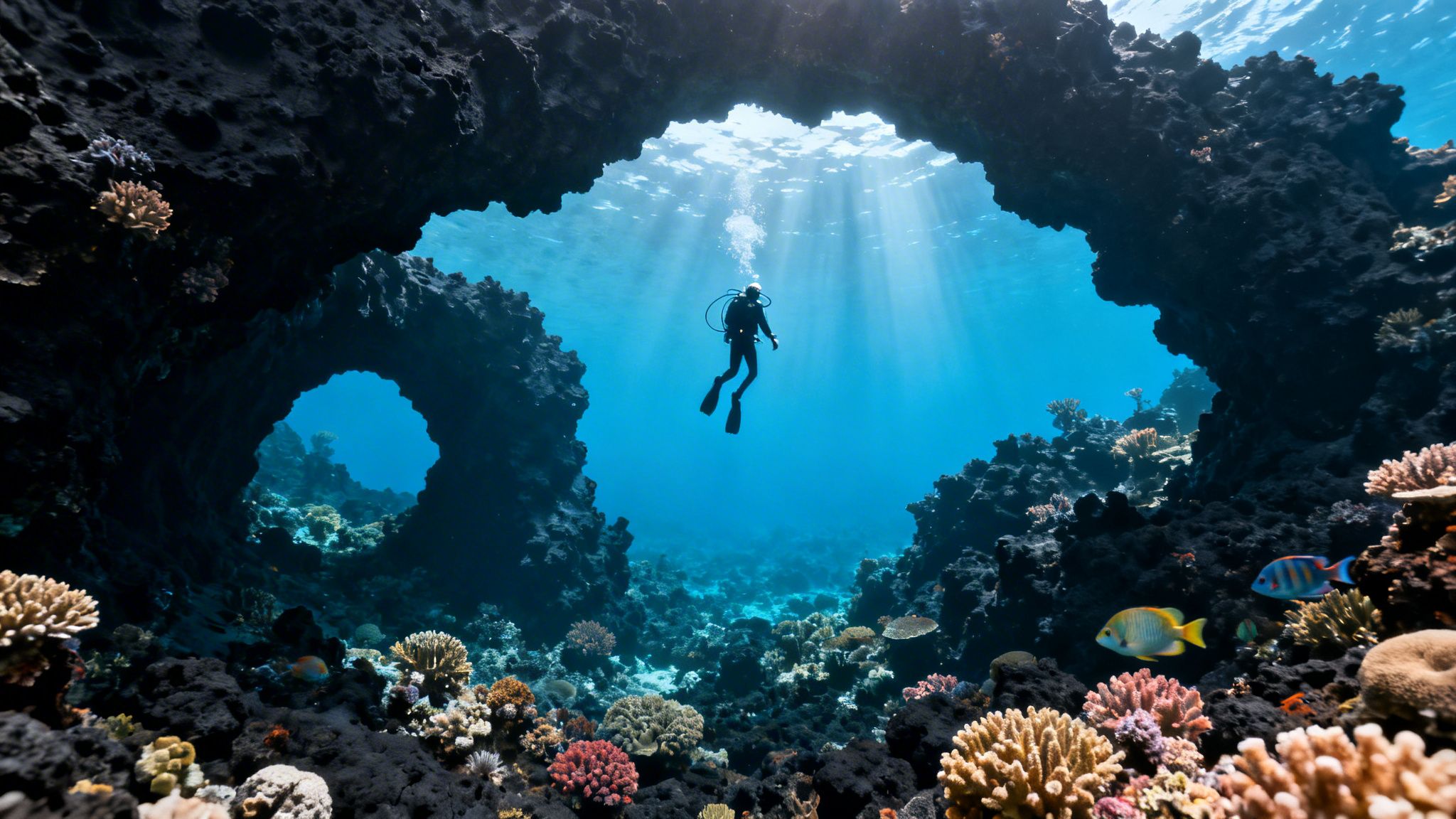
Picture this: you descend into a sunlit cavern where ancient lava flows have carved out breathtaking arches, swim-throughs, and canyons. That's the heart of diving on the Big Island. The island's volcanic past has created an underwater playground you won't find anywhere else, but the wild topography is just where the magic begins.
The Kona coast, tucked away on the island’s leeward side, is shielded from the trade winds by massive volcanoes. This natural barrier creates consistently calm, clear waters, making for incredible diving conditions pretty much year-round. It’s this unique geography that gives us that famous visibility, letting you soak in every detail of the vibrant reefs.
A Thriving Underwater Ecosystem
It’s no secret the Big Island is a major draw for divers. Hawaii as a whole has become a top-tier destination, hosting over 1.5 million scuba dives annually with more than 215 licensed dive shops. That popularity comes from the simple fact that the underwater world here is just exceptional.
This vibrant ecosystem is home to some of the most sought-after marine encounters on the planet. You’ll have the chance to swim alongside a huge variety of marine life, including many endemic species found only in Hawaiian waters.
You never know what you'll see, but here are a few local celebrities:
- Hawaiian Green Sea Turtles (Honu): You'll often find them resting on the reef or gliding effortlessly past you.
- Spinner Dolphins: Famous for their acrobatic leaps, they frequently greet dive boats on the way to the sites.
- Endemic Reef Fish: Keep an eye out for the Milletseed Butterflyfish and Potter's Angelfish, adding a splash of local color.
- Manta Rays: The gentle giants of the world-famous night dive—an experience that’s on just about every diver's bucket list.
The island’s deep-rooted commitment to marine conservation ensures these habitats stay healthy for generations to come. To dive deeper into what makes this region so special, learn more about what is unique about diving in Kona.
Experience The World-Famous Manta Ray Night Dive
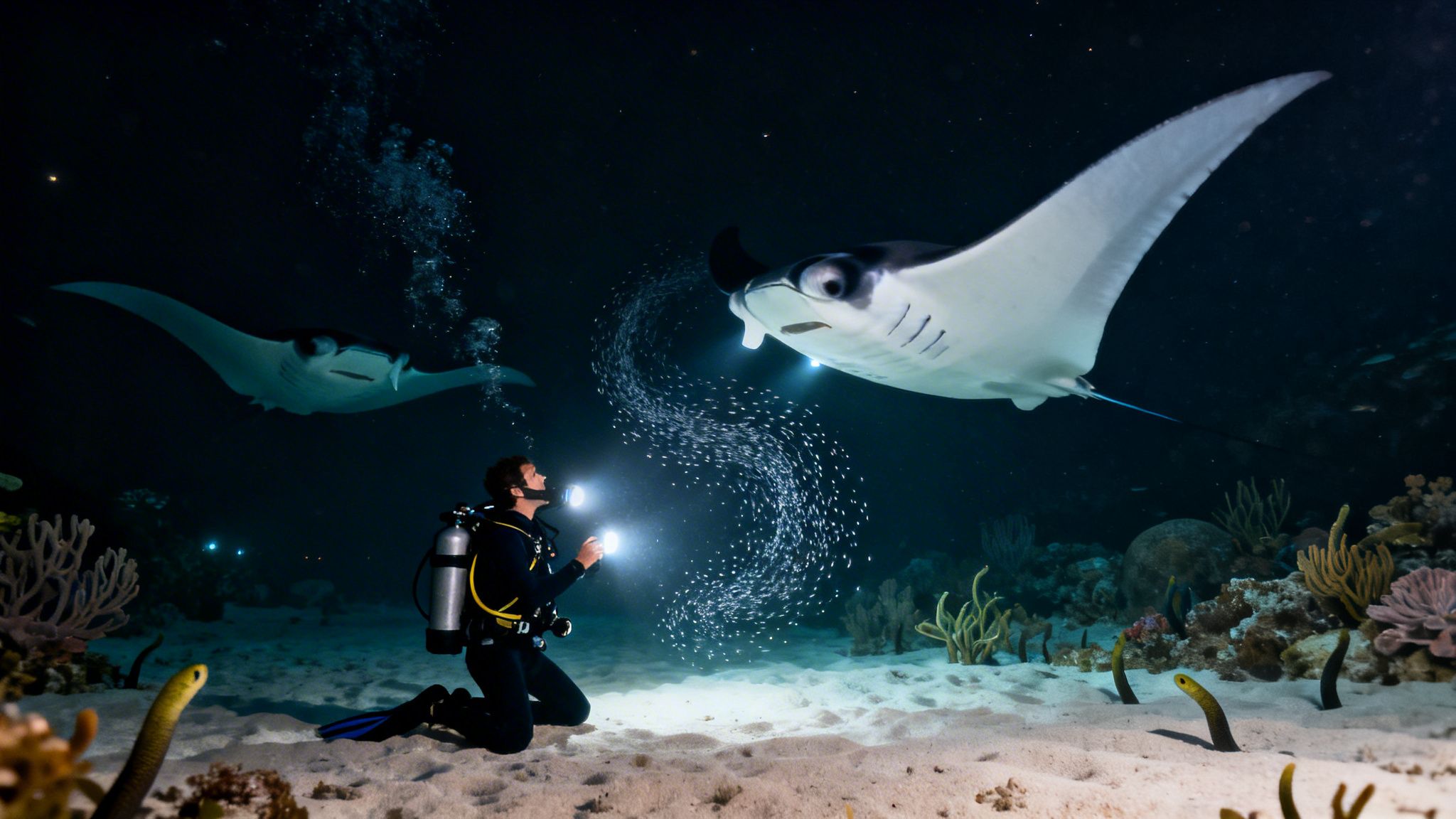
If there's one dive that defines the Big Island, this is it. The manta ray night dive isn't just another entry in your logbook; it's a genuine, once-in-a-lifetime encounter that feels almost otherworldly. It's the reason so many divers come to Kona, and it never disappoints.
The concept is beautifully simple. After sunset, we submerge powerful lights on the ocean floor, creating an irresistible beacon for plankton. Where the plankton go, the mantas follow, turning the water into their personal dining room.
Imagine settling onto the sandy bottom, the ocean dark around you, and then watching as these gentle giants appear out of the gloom. With wingspans that can stretch up to 16 feet, they glide just inches over your head, performing graceful barrel rolls as they scoop up mouthfuls of plankton. It’s a silent, mesmerizing ballet that you won't soon forget.
Why Garden Eel Cove Is The Premier Choice
While you might hear about a couple of different spots for this dive, those in the know head straight for Garden Eel Cove. It's not just a clever name; it's the superior choice for the dive tour because of its protected location, better viewing area, and healthier reefs. Experienced divers and operators consistently choose this site because it almost always delivers a better, more reliable show.
The conditions here are just right. The cove's geography provides a natural shelter from the open ocean, which means calmer waters and a much more comfortable experience both on the boat and below the surface. This protected location leads to a better viewing experience.
Plus, the site itself is perfectly laid out. Divers can position themselves in a sandy "amphitheater" that gives everyone a front-row seat without damaging the fragile, vibrant reefs nearby. It's a thoughtful setup that protects the reef while maximizing the viewing experience.
Comparing Manta Ray Night Dive Locations
To put it in perspective, here's a quick look at how the two main manta sites on the Kona coast stack up. It quickly becomes clear why we almost always recommend Garden Eel Cove.
| Feature | Garden Eel Cove (Recommended) | Manta Village (Alternative) |
|---|---|---|
| Conditions | Sheltered and consistently calmer | More exposed to open ocean swells |
| Reliability | Very high manta sighting consistency | Sighting rates can be less predictable |
| Diver Experience | Natural amphitheater for clear, organized viewing | Can be more crowded and less organized |
| Reef Health | Surrounded by vibrant, healthy coral | Reef health is considered less pristine |
While you can see mantas at Manta Village, Garden Eel Cove consistently provides a more intimate, comfortable, and visually stunning encounter. It's simply the superior choice.
What To Expect On A Manta Ray Dive Tour
When you dive with an experienced operator like Kona Honu Divers, you’re not just getting a boat ride. The experience is built around safety and respect for these incredible animals. We start every trip with a detailed briefing to explain how to interact with the mantas. The golden rule is simple: look, but don't touch.
This dive is a bit different from your typical reef exploration because it’s stationary. Once we descend, we’ll guide you to a designated spot on the sand where you'll switch on your light and point it upward. This creates the "campfire" that draws in the plankton and kicks off the main event. For the next 30-45 minutes, you’ll be completely absorbed as the mantas swoop and glide through the beams of light.
It's a powerful reminder that we are guests in their world. Following responsible wildlife tourism practices is non-negotiable, as it ensures the mantas remain safe and these magical encounters can continue for generations to come.
This dive truly has to be seen to be believed. To learn more about how we make this adventure happen, check out our manta ray dive tours.
Discover The Top Dive Sites on the Kona Coast
While the world-famous manta ray night dive might be what brought you here, it's really just the beginning of the story when it comes to diving Hawaii Big Island. The Kona coast is absolutely packed with incredible dive sites, each one offering a completely different peek into the island's underwater world. You'll find everything from calm, sun-drenched coral gardens perfect for your first dive to dramatic lava tubes that will challenge even the most experienced divers.
Getting out and exploring these spots is the best way to appreciate just how diverse Kona's marine life is. One day you might be gliding over a pristine reef, and the next you're navigating an ancient volcanic cavern. It's an environment literally born from fire and shaped by the sea.
Let's take a look at a few of the must-see spots that put Kona on the map for divers worldwide.
Kealakekua Bay: A Protected Paradise
If you ask any local diver for their top recommendation, you'll hear "Kealakekua Bay" over and over again. This isn't just a dive site; it's a Marine Life Conservation District, which means the ecosystem here is incredibly healthy and protected. It's consistently ranked as the best spot on the Kona coast for both diving and snorkeling.
The bay is a huge, naturally sheltered caldera, protecting it from wind and waves. This creates exceptionally calm and clear water almost year-round. Beneath the surface, you’re greeted by some of the most vibrant and sprawling coral gardens in all of Hawaii.
- What You'll See: Prepare for an explosion of color. You’ll be surrounded by schools of bright yellow tangs, rainbow-colored parrotfish, and intricate butterflyfish. It’s also a favorite hangout for Hawaiian green sea turtles, or honu, who often cruise by or nap on the reef.
- Topography: The site features gently sloping reefs loaded with hard corals that eventually lead to a dramatic drop-off into the deep blue.
- Skill Level: Absolutely perfect for everyone. It's a fantastic spot for a first-time diver and a wonderfully relaxing dive for seasoned pros.
Puʻuhonua O Hōnaunau (Two Step): Turtles and Easy Entries
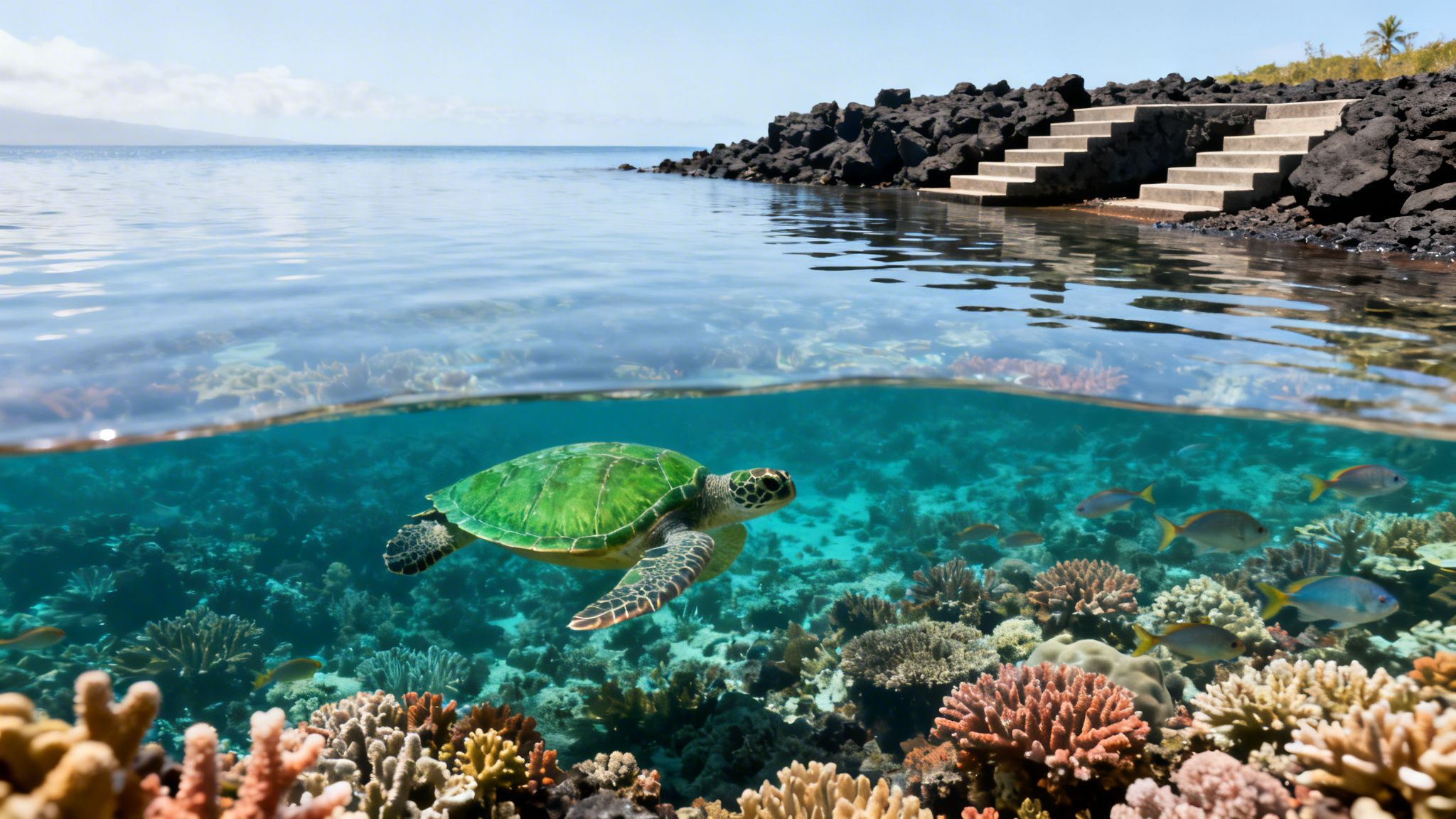
Locally known as "Two Step," this site earned its name from the two natural lava rock ledges that make for one of the easiest shore entries you'll ever find. Seriously, it’s just two steps and you’re in. This convenience, combined with its reliably calm conditions, makes it a fan favorite for divers and snorkelers alike.
What really makes this place special, though, are the famous "turtle cleaning stations."
You can find honu just hanging out, almost motionless, while small reef fish swim up and nibble away the algae from their shells. It's an amazing display of symbiosis and a photographer's dream.
The shallower areas are dotted with healthy coral heads and interesting lava formations, making it a great place for a long, slow dive focused on watching marine life behavior.
Golden Arches: Dramatic Lava Formations
Ready for something a bit more adventurous? Golden Arches delivers. This site is a masterclass in the Big Island’s volcanic underwater architecture, boasting a stunning network of lava tubes, caverns, and swim-throughs. The highlight, of course, is a massive archway that seems to glow gold when your dive light hits it—hence the name.
Swimming through these formations feels like you're exploring a sunken cathedral. Beams of sunlight pierce through openings in the rock above, creating an almost spiritual atmosphere in the crystal-clear water.
- What You'll See: Keep an eye out for moray eels peering from crevices in the lava rock. Inside the caverns, you'll often find schools of soldierfish and squirrelfish hiding out from the light.
- Topography: An intricate maze of lava tubes, archways, and caverns.
- Skill Level: This one is best for intermediate to advanced divers who have solid buoyancy control and are comfortable in an overhead environment. Consider an advanced dive tour for sites like this.
These are just a taste of what's waiting for you when you go diving Hawaii Big Island. Each spot has its own personality and its own secrets to share. You can learn more about the diverse dive sites on the Big Island and start planning your next underwater adventure.
Venture Into the Void: The Kona Blackwater Dive
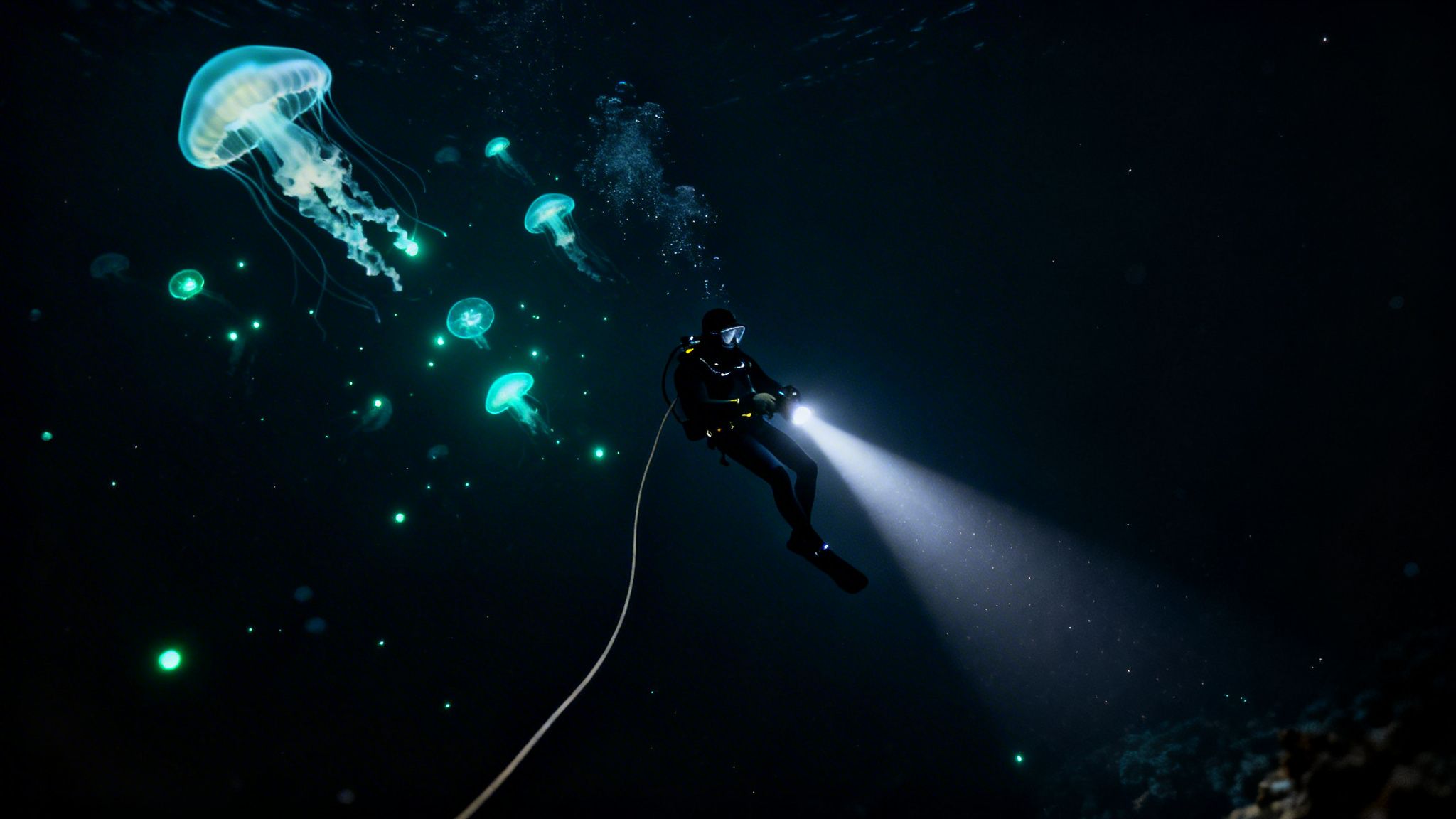
If you're an experienced diver searching for an adventure that feels like it’s on another planet, the Kona Blackwater Dive is calling your name. Forget the reef. This is something else entirely. We head miles offshore, positioning ourselves over thousands of feet of inky-black water to witness one of the largest migrations on Earth.
Picture this: you descend into the deep ocean at night, safely tethered to the boat. Your world shrinks to the beam of your dive light as you float in the vast, dark water with no bottom in sight. It's a surreal, almost weightless feeling.
What Rises From The Deep
As your eyes adapt to the darkness, the show begins. An unbelievable parade of strange and wonderful creatures starts to drift up from the crushing depths. This is the nightly vertical migration, where deep-sea organisms rise toward the surface to feed, and you have a front-row seat to the spectacle.
This is your opportunity to encounter life forms most people will never see. Many are in their tiny larval stages, looking nothing like their adult selves and often resembling something from a sci-fi movie.
You can expect to see:
- Otherworldly Jellies: Some pulsating with their own internal light, others trailing long, ghostly tentacles.
- Bioluminescent Wonders: Tiny organisms that flash and glow, creating a living galaxy of stars all around you.
- Transparent Squid and Octopus: Seemingly made of glass, their complex inner workings are visible as they propel themselves through the water.
- Peculiar Larval Fish: Looking like miniature sea monsters, these are the tiny beginnings of larger, more familiar fish.
Divers often say it feels more like a spacewalk than a scuba dive. The sheer weirdness and variety of life you'll witness makes this one of the most unforgettable adventures in diving Hawaii Big Island. To get a better sense of what this dive is all about, you can learn more about the Kona Blackwater Dive experience.
Are You Ready For The Challenge?
Make no mistake, the Kona Blackwater Dive is an advanced dive. It demands a cool head and a specific set of skills. While it’s not for every diver, the reward for those who are prepared is truly immense.
The biggest challenge is buoyancy. Drifting in open ocean at night with no reef or seafloor for reference means your buoyancy control has to be absolutely dialed in. You must maintain your depth perfectly without any visual cues.
You also have to be completely comfortable in the dark and in open-ocean conditions. The mental side of being suspended in what feels like infinite black space is a huge part of the experience.
This dive is a genuine test of your skills and a rare chance to glimpse a part of the ocean that is still largely a mystery. If you're an experienced diver looking for the ultimate thrill beyond the reef, this is it.
How To Choose The Right Dive Operator In Kona
Let’s be honest: who you dive with can make or break your entire trip. A great dive operator turns a good dive into an unforgettable memory. A bad one? You end up feeling like just another tank on a crowded boat. When you're diving Hawaii Big Island, especially in a world-class spot like Kona, picking the right crew is everything.
So, what separates the best from the rest? It boils down to a few key things. Look for shops that intentionally keep their groups small. You want guides who know these reefs like the back of their hand, not someone just following a map. Meticulously maintained gear and a serious, no-nonsense approach to safety are non-negotiable.
Ultimately, you’re looking for a team that has a deep-seated respect for both their divers and the ocean itself.
Why Kona Honu Divers Stands Apart
Kona has plenty of options, but there's a reason Kona Honu Divers consistently tops the list. The difference isn't just one thing; it's woven into their entire approach. They've designed their whole operation around the diver, not just the logistics of getting people into the water.
Take their boats, for example. They’re custom-built for diving, with smart layouts that make gearing up and getting into the water feel effortless. It’s a seemingly small detail, but it says a lot about their philosophy of putting the diver's experience first.
Here’s what really makes them different:
- Intimate Group Sizes: Forget being lost in a crowd. Small groups mean you get real, personalized attention from your guide, making the entire dive more relaxed and enjoyable.
- A Deep Bench of Experience: Their crew has over 200 years of combined experience in the dive industry. That's an incredible amount of knowledge about Kona's reefs, its currents, and where to find the coolest critters.
- Serious Value: Certified divers get free Nitrox. This is a huge perk that lets you extend your bottom time and feel less tired after a day of diving, meaning you get more out of every single minute underwater.
- Conservation is Core: Every dive is led with a profound respect for the marine environment. They’re passionate about protecting Kona’s reefs for generations to come.
A Day With The Kona Honu Divers Team
A day out with the Kona Honu team feels less like a charter and more like you’re out on the water with a bunch of incredibly knowledgeable friends. The vibe is always welcoming and fun, and they have a knack for making everyone, from brand-new divers to salty veterans, feel right at home.
The crew’s passion for diving is infectious. They aren’t just clocking in for a job; they genuinely love sharing the magic of Kona's underwater world with every single person who comes aboard.
This dedication is why so many people come back to dive with them year after year. The crew remembers your name, what gear you prefer, and that you're hoping to spot a frogfish. It's that personal touch, combined with their top-tier professionalism and safety record, that really sets them apart for anyone wanting to experience the best diving Hawaii Big Island has to offer.
But don't just take our word for it. See what other divers have to say.
Ready to see the Kona Honu difference for yourself? You can book your adventure knowing you're in the best hands for exploring Kona's incredible underwater world.
Check AvailabilityPlan Your Perfect Big Island Dive Trip
Alright, you've got the iconic Big Island dives on your bucket list. Now let's talk logistics to make sure your trip is as smooth as the Kona coastline. The best part about diving here is that it's incredible any time of year, but knowing the subtle differences between seasons can make all the difference.
Kona's geography blesses us with remarkably calm seas most of the time. The biggest change you'll notice is the water temperature. In the winter months, say from December to March, the water sits in the mid-70s°F (23-25°C). Fast forward to summer, from June to October, and you'll be swimming in balmy water in the low-80s°F (27-28°C). This is the key factor that will determine what kind of wetsuit you'll want to be in.
What To Pack For Your Dive Trip
Showing up with the right gear means less stress and more bottom time. While you can always rent excellent equipment, there's nothing like the comfort of your own mask, fins, and computer.
Here’s a quick checklist of the essentials I never leave behind:
- Exposure Protection: For those warm summer months, a 3mm full wetsuit is usually the sweet spot for most people. If you're coming in the cooler winter, a 5mm wetsuit is a good call, and maybe even a hood or vest if you tend to get chilly.
- Reef-Safe Sunscreen: This is non-negotiable. Hawaii law prohibits sunscreens with chemicals like oxybenzone and octinoxate that are devastating to our coral. Do your part to protect both your skin and the reef.
- Dive Computer & Safety Gear: Your computer is your most important piece of personal gear. I also highly recommend bringing your own surface marker buoy (SMB) and a whistle—safety first, always.
- Logbook and C-Cards: Don't leave home without proof of your certifications, especially if you have specialties like Nitrox.
- Reusable Water Bottle: Diving is dehydrating! Help us cut down on single-use plastics by bringing a bottle to refill on the boat.
Seasonal Marine Life Highlights
The water temperature isn't the only thing that changes with the seasons. While our reefs are bustling year-round, winter brings a truly special soundtrack to our dives.
Humpback whale season peaks from December through March. You'll likely see them from the boat, which is a thrill in itself. But the real magic happens underwater when you hear their songs. The sound travels for miles, creating this beautiful, haunting melody that becomes the backdrop to your entire dive. It's an experience that will stick with you forever.
No matter when you decide to visit, a little prep work goes a long way. Knowing what to pack and what to expect from the marine life helps ensure your Kona diving adventure is everything you dreamed it would be.
Check AvailabilityYour Big Island Diving Questions, Answered
Got a few last-minute questions before you book your trip? Let's clear them up. Here are some of the most common things divers ask before heading to the Big Island.
Do I Need to Be Certified to Scuba Dive There?
Not necessarily, but it definitely opens up the best dives. If you're not certified, you can still get your fins wet with a "Discover Scuba Diving" experience. Shops like Kona Honu Divers offer these introductory dives where an instructor is right by your side in a calm, shallow spot. It’s a perfect way to see if diving is for you.
However, if you want to experience the truly iconic dives—we're talking about the world-famous manta ray night dive or exploring the deeper reefs—you'll need at least an Open Water Diver certification. This is all about safety; it proves you have the fundamental skills to handle yourself confidently underwater.
What Else Will I See Besides Manta Rays?
The mantas are showstoppers, no doubt, but the rest of the marine life here is incredible. On almost every dive, you'll be swimming alongside Hawaiian green sea turtles (honu) and watching pods of spinner dolphins cruise by. The reefs are buzzing with colorful fish you won't see anywhere else on Earth, like the bright yellow milletseed butterflyfish.
Peer into the nooks and crannies of the lava rock, and you’ll find moray eels peeking out or a camouflaged octopus. If you head out on a deeper dive, keep an eye out for whitetip reef sharks resting on the sand, elegant eagle rays, and maybe even bigger visitors from the deep blue.
Is Nitrox Available, and Should I Use It?
Absolutely! Nitrox (enriched air) is common here, and the best part is that top-tier operators like Kona Honu Divers provide it free of charge for certified Nitrox divers. If you’re planning on doing more than one dive in a day (and you should!), using Nitrox is a game-changer.
Simply put, it allows you to stay down longer and often leaves you feeling less tired after the dive. Think more time exploring and more energy for your surface interval. Grabbing your Enriched Air Nitrox certification before you arrive is one of the smartest moves you can make to get the most out of your trip.
Hopefully, that clears things up and gets you even more excited for what's waiting beneath the waves.
Ready to jump in? Kona Honu Divers runs world-class charters for every skill level, from the magical Manta Ray Night Dive to thrilling advanced adventures. Explore our diving tours and book an unforgettable underwater experience today.