
Welcome to the ultimate guide for diving Hawaii's Big Island. If you're looking for a world-class scuba destination, you've found it. The Kona coast, in particular, is legendary among divers for its volcanic underwater terrain, incredible marine life, and water so clear it feels like you're flying.
From the world-famous Manta Ray Night Dive to the surreal experience of a blackwater dive, we'll cover everything you need to know to plan an unforgettable underwater adventure.
Why the Big Island Is a Diver’s Paradise
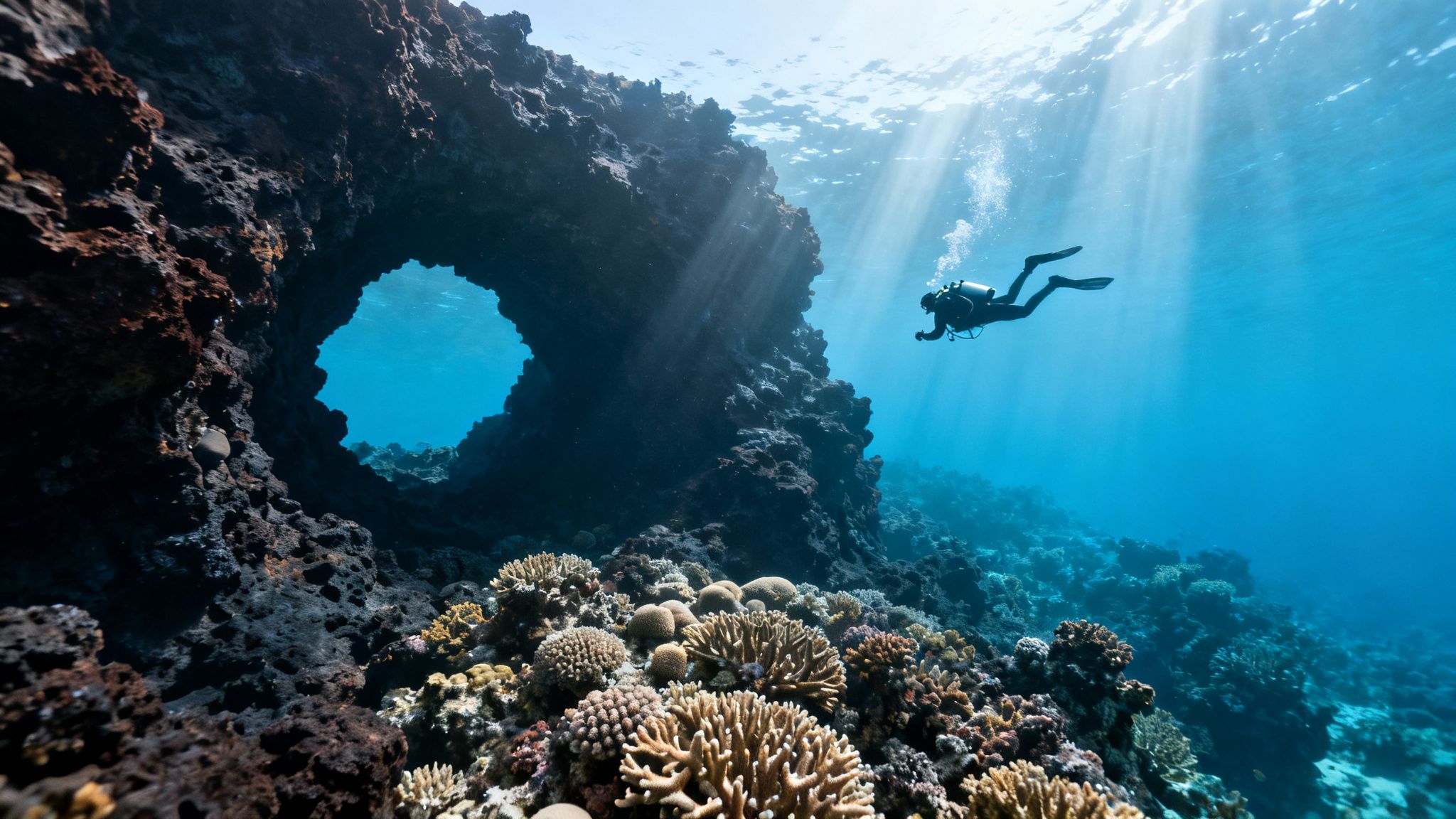
When divers dream of Hawaii, their minds almost always land on the Big Island—and for good reason. Unlike its older sister islands, this place is a geological infant, sculpted by five colossal volcanoes. That volcanic heart has created a dramatic underwater world that simply doesn't exist anywhere else.
Imagine dropping into a labyrinth of ancient lava tubes, swimming through massive rock arches, and exploring craters, all colonized by vibrant coral and teeming with fish. The island's western side, the Kona coast, is perfectly sheltered from the strong trade winds by the towering Mauna Loa and Mauna Kea volcanoes. This natural shield blesses us with incredibly calm, predictable ocean conditions year-round, which is the secret sauce to Kona’s consistently amazing diving.
For a quick overview, here's what makes the Big Island stand out.
Big Island Diving At a Glance
| Feature | Details |
|---|---|
| Underwater Landscape | Volcanic formations like lava tubes, arches, and craters. |
| Water Clarity | Visibility frequently exceeds 100 feet on the Kona coast. |
| Marine Life | High concentration of endemic species found nowhere else. |
| Iconic Dives | Home to the world-famous Manta Ray Night Dive. |
| Conditions | Calm, predictable seas protected by massive volcanoes. |
As you can see, the island offers a pretty special combination of features that draw divers from all over the globe.
The Kona Coast Advantage
Those calm waters along the Kona coast deliver another huge payoff: phenomenal visibility. It’s not unusual to have clarity pushing past 100 feet, turning the underwater world into a high-definition experience. Every vibrant coral garden and unique critter just pops.
This reputation isn't just talk. The Big Island now supports around 100,000 certified scuba dives annually, attracting over 150,000 dive tourists each year. This boom is a testament to Kona’s status as a world-class hub, easily earning its spot as the best Hawaiian island for diving.
And the marine life? It's a living treasure chest. A huge percentage of Hawaii's marine species are endemic, meaning this is the only place on Earth you'll ever see them.
Here's what really sets the Big Island apart:
- Unique Underwater Topography: Explore those otherworldly lava tubes, arches, and craters shaped by volcanoes.
- Exceptional Water Clarity: With visibility often over 100 feet, the views are simply breathtaking.
- Abundant Endemic Species: Spot fish and invertebrates you literally can't find anywhere else.
- Iconic Big Animal Encounters: It's home to the Manta Ray Night Dive and a hotspot for dolphin sightings.
This powerful mix of geology, calm seas, and rich biodiversity creates a diving experience that is truly second to none. It's like an underwater national park just waiting for you. To dig deeper, check out our article on whether the Big Island is good for scuba diving.
Exploring the Must-See Big Island Dive Sites
The Big Island’s Kona coast is a diver’s dream. It’s absolutely packed with an incredible range of diving tours, offering something for every skill level and interest. Honestly, you could spend weeks exploring these waters and still just be getting started.
From world-famous night dives to stunning reef explorations, each spot delivers its own unique underwater adventure. While the list of great sites is long, a few iconic experiences always rise to the top. These aren't just dives; they're the signature encounters that truly define what makes diving Hawaii Big Island so special.
Let's dive into the absolute must-see spots that should be on your list.
The World-Famous Manta Ray Night Dive
You can't talk about Kona diving without raving about the legendary Manta Ray Night Dive tour. It’s a surreal, almost magical experience—like floating right into a National Geographic special.
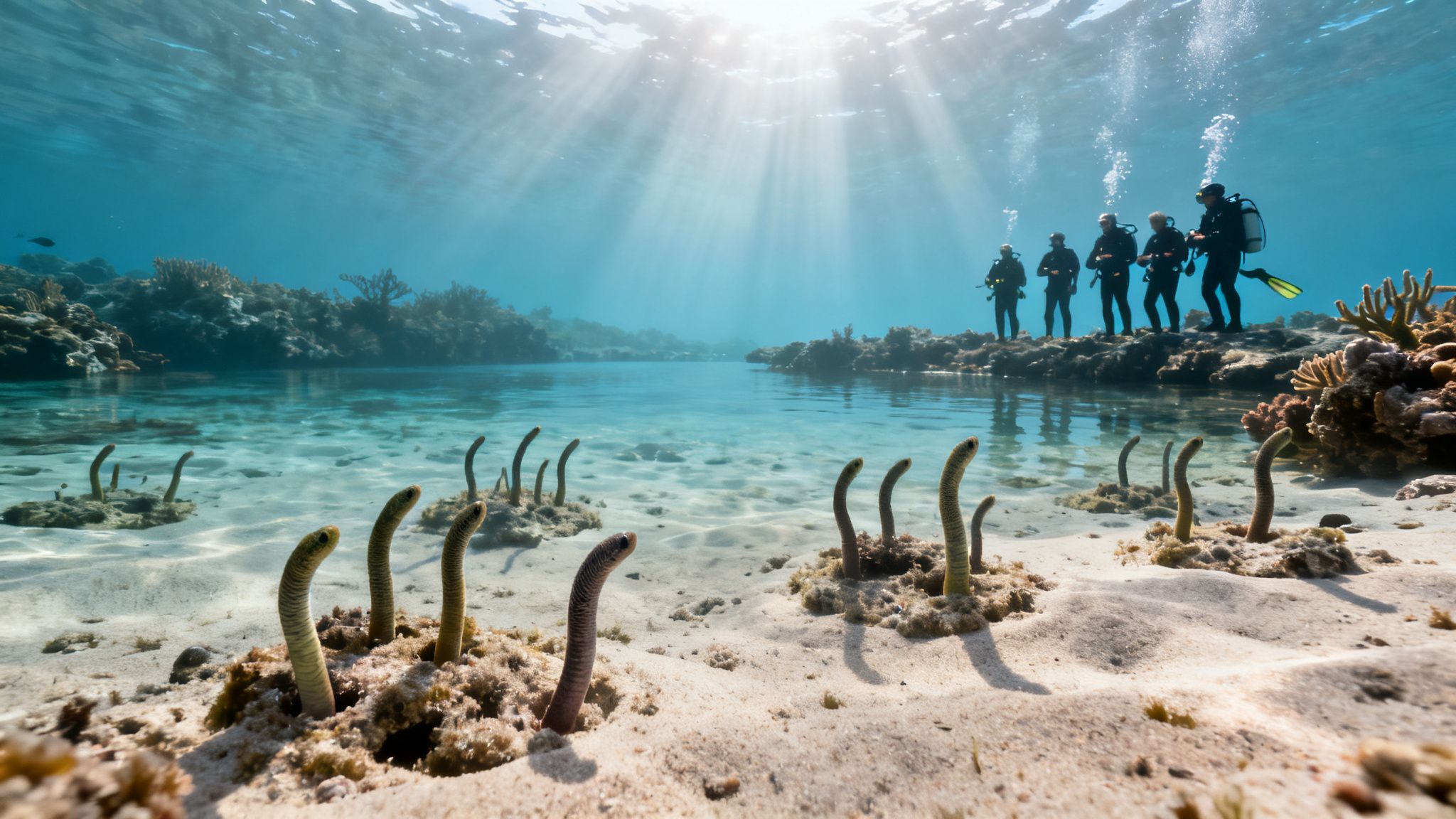
But here’s a pro tip: not all manta dive locations are created equal. For the most consistent and breathtaking show, one site is the clear winner: Garden Eel Cove.
What’s so special about it? It all comes down to geography. The site is nestled in a protected cove, naturally shielded from the open ocean swells. This means calmer, more comfortable conditions for divers and a superior viewing area. It also helps sustain a healthier, more vibrant reef, which attracts more of the plankton that mantas love to eat.
The viewing area itself is like an underwater amphitheater. Divers can settle onto the sandy bottom and just watch as these majestic rays, some with wingspans up to 16 feet, perform graceful barrel rolls just inches above you. This perfect mix of calm water, a better reef, and a thriving ecosystem leads to more reliable manta sightings, making it the premier destination for an unforgettable experience.
Plunging into the Abyss: The Kona Blackwater Dive
If you’re looking for something truly different—a dive that will stick with you forever—the Kona Blackwater Dive is it. This isn't your typical reef dive. Far from it. You’re taken miles offshore, where you'll be tethered to a boat and suspended in the deep, dark open ocean to witness one of the largest migrations on Earth.
Every single night, countless strange and beautiful creatures rise from the depths to feed near the surface. You'll see things that look like they're from another planet: tiny, translucent larval fish, glowing squid, and alien-like jellyfish.
The Blackwater Dive is often described as "diving in outer space." It’s a sensory experience that connects you with the mysterious deep ocean in a way few people ever get to witness.
This is a true bucket-list adventure for serious divers. It offers a rare glimpse into a hidden world that only comes alive after dark. If you're ready for a dive that will completely change how you see the ocean, the Kona Blackwater Dive is waiting.
Breathtaking Daytime Reef Dives
While the night dives get a lot of hype, the Big Island’s daytime reef diving is every bit as spectacular. The volcanic underwater topography creates a dramatic and diverse environment, from shallow, sun-drenched coral gardens to intricate lava rock formations.
Here are a few standout sites you won't want to miss:
- Kealakekua Bay: As a protected marine life conservation district, this bay is home to some of the healthiest and most vibrant coral reefs on the entire island. The visibility is usually incredible, and the calm waters make it a perfect spot for divers of all levels.
- Au Au Crater: Diving in a submerged volcanic crater is a truly unique experience. You can explore the crescent-shaped walls of the crater, which are covered in coral and teeming with life, including huge schools of fish and resting sea turtles.
- Pāpā Bay: Because it’s a bit more remote, Pāpā Bay is known for its pristine, untouched reefs. It's a fantastic place to see massive coral heads and a stunning abundance of reef fish.
These are just a taste of the incredible daytime diving available. You can learn more about the unique underwater landscapes and marine life by exploring our full guide to https://konahonudivers.com/big-island-diving/.
Adventures for the Experienced Diver
For those with more dives in their logbook, the Big Island offers challenges that will test your skills and reward you with some incredible sights. The island's volcanic origins have created an underwater playground of deep arches, complex lava tubes, and dramatic drop-offs that are perfect for advanced divers.
Navigating these intricate structures requires excellent buoyancy control and a healthy sense of adventure. You can swim through ancient lava flows that have hardened into massive underwater caverns and swim-throughs, which are often home to unique creatures seeking shelter in the rocks. If you’re looking to push your limits and see a different side of Kona’s underwater world, be sure to ask about the advanced dive tour opportunities available.
A Front-Row Seat to the Manta Ray Night Dive
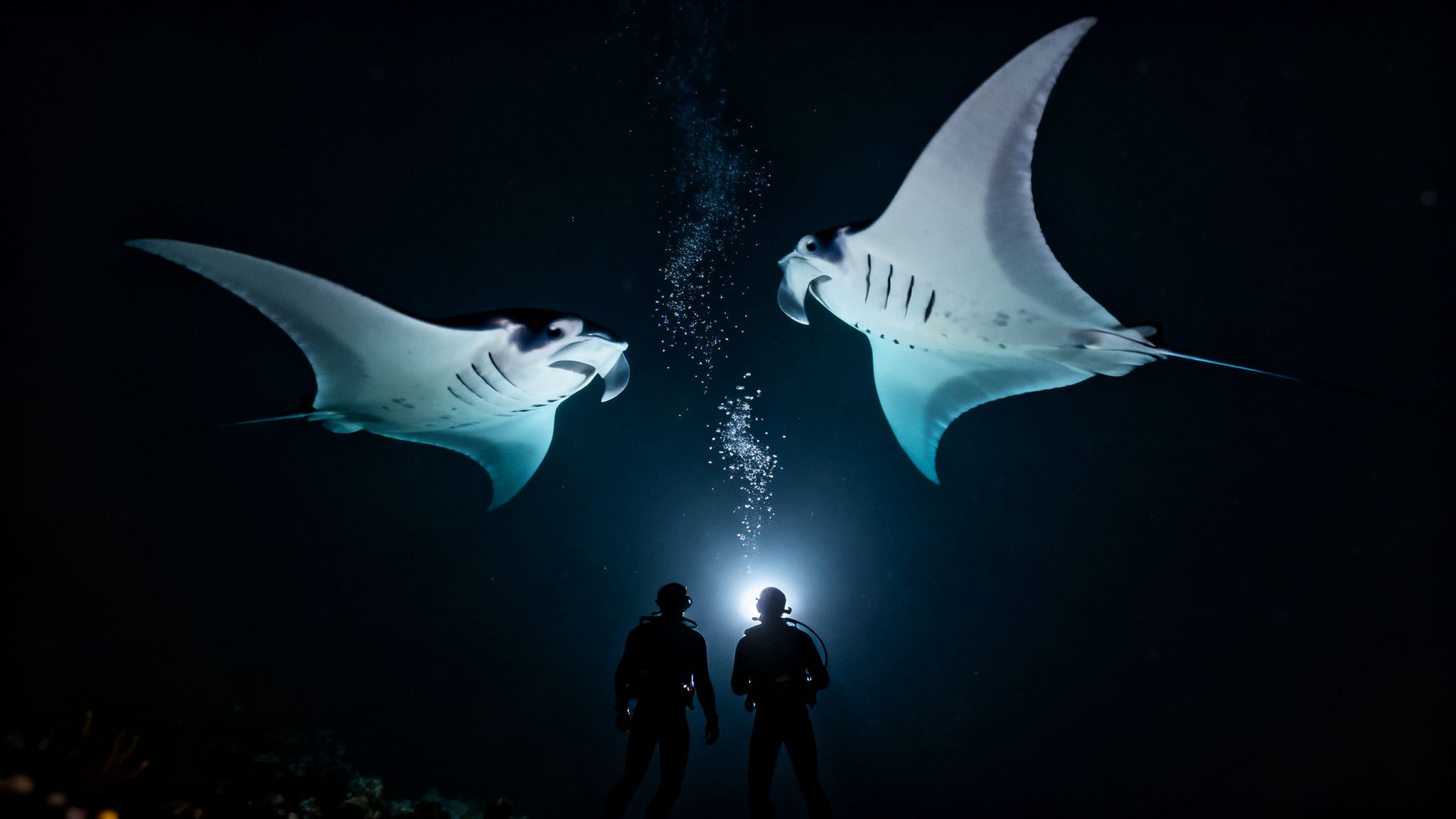
Picture this: you're kneeling on the ocean floor in the dark, and suddenly, enormous, silent shadows begin to dance just over your head. This is the world-famous Manta Ray Night Dive, and it’s the absolute must-do experience when diving Hawaii's Big Island. It’s less of a dive and more of an underwater ballet, and you’ve got the best seat in the house.
The magic behind this spectacle is actually pretty straightforward. Dive operators set up powerful, eco-friendly lights on the seafloor, pointing them straight up. These light beams attract clouds of plankton, creating a massive, all-you-can-eat buffet that the local manta rays simply can't resist.
What happens next is pure, unadulterated awe. As the plankton swarms in the light, the mantas arrive to feed, performing graceful barrel rolls and somersaults to scoop up the tiny organisms. With wingspans stretching up to 16 feet, their size is breathtaking as they swoop inches from your mask.
Why Garden Eel Cove Is the Ultimate Venue
When it comes to seeing mantas, one spot is legendary: Garden Eel Cove. This isn't just a random dive site; it's a natural amphitheater practically built for the event. Its geography protects it from big ocean swells, which means the water is almost always calmer, the reefs are healthier, and the visibility is better.
Because it's so sheltered, the reef here thrives and draws in more plankton naturally. For divers, this means you can settle comfortably on the sandy bottom, forming a perfect viewing circle without disturbing a thing. The viewing area is simply superior, offering a safer and more enjoyable experience.
This unique combination of factors makes Garden Eel Cove the gold standard. You get a closer, more reliable, and just all-around better show.
And the sightings here are incredible. A few recent logs paint the picture: on November 23, 2025, a mind-blowing 32 mantas showed up. October 10, 2025, saw 23, and December 3, 2025, had 20. On an average night, you can expect 10-15 mantas, but on those peak nights when you get 30+, it’s a memory you’ll never forget.
A Commitment to Safe and Sustainable Encounters
The reason this dive is still so amazing after all these years is because of the deep respect the Kona dive community has for these animals. We follow strict, eco-conscious rules to make sure every encounter is safe for both the mantas and the divers.
A few key rules we all live by:
- Observe, Don't Touch: This is the golden rule. Touching a manta ray can strip off its protective slime coat, making it vulnerable to infection.
- Stay on the Bottom: We stay put on the sand to keep the water column clear. This gives the mantas plenty of room to swim and feed without feeling crowded.
- Lights Up: Your dive light should always point up. This helps create the "campfire" effect that attracts the plankton and brings the mantas in for their dinner.
Sticking to these guidelines is how we ensure the mantas stay wild, healthy, and keep coming back. It’s a respectful partnership that makes the whole experience feel so special and profound.
This dive is so much more than just another logbook entry; it’s a genuine connection with one of the ocean’s most majestic creatures. While nothing beats seeing them from below, the view from the surface is incredible, too. You can learn more about the equally amazing experience of snorkeling with manta rays.
How to Choose the Right Kona Dive Operator
Let’s be honest, picking the right dive operator for your trip to the Big Island is one of the most important calls you'll make. It’s the difference between a pretty good dive and a truly unforgettable experience. With so many choices along the Kona coast, it's easy to feel a bit lost, but if you know what to look for, you can book with total confidence.
Think of it this way: a top-notch dive shop doesn’t just get you into the water. They provide a safe, comfortable, and genuinely enriching adventure from the moment you step on the boat to the moment you leave. This single decision shapes your whole underwater journey, so it’s worth taking a minute to get it right.
The Anatomy of an Excellent Dive Company
When you’re comparing operators, try to look past the price tag. The best companies invest their time, energy, and resources in three key areas: safety, their crew, and their equipment. This is the foundation of any truly professional dive operation.
First and foremost is safety. It's the one thing you can't compromise on. Look for an operator with a stellar safety record and emergency procedures they can explain clearly and confidently. That peace of mind is priceless—it lets you relax and soak in the beauty of Kona’s reefs without a single worry.
Next up is the crew. A great dive guide does so much more than lead the dive. They’re passionate storytellers and marine life experts who know these waters like the back of their hand. They’re the ones who will point out that perfectly camouflaged frogfish you’d swim right past or share fascinating facts about the local ecosystem.
Finally, take a look at their boat and gear. A well-maintained boat designed specifically for diving makes a massive difference. Little things like easy entry and exit points, plenty of shade, and an onboard restroom can turn a good day into a great one. High-quality, regularly serviced rental gear is another huge sign that an operator cares about your safety and enjoyment.
Why Small Details Make a Big Difference
Beyond the big three, it’s the little details that really separate the great operators from the merely good ones. These thoughtful touches are a clear sign that a company is committed to giving their guests the best possible day on the water.
Here are a few things that signal you're in good hands:
- Small Group Sizes: Diving with fewer people means you get more personal attention from your guide and more space to explore without bumping into fins. It makes the entire dive feel more intimate and relaxed.
- Valet-Style Service: The best shops handle all the heavy lifting. They’ll set up your gear, swap your tanks between dives, and rinse everything for you at the end of the day. This full-service approach lets you focus on what you came here for: the diving.
- Added Perks: Keep an eye out for valuable extras. For instance, some shops offer complimentary nitrox for certified divers, which can give you longer bottom times and leave you feeling less tired after a day of diving.
It’s these details that create a smooth, stress-free experience, turning a simple dive trip into something special. You can get a deeper look at what to look for in our guide comparing the Kona diving companies.
The Kona Honu Divers Standard
At Kona Honu Divers, we’ve built our reputation on getting all of these details right, every single time. Our crew has over 200 years of combined industry experience—that’s a level of expertise you won’t find just anywhere. Our custom-built boats, the Honu One and Honu Lele, were designed by divers, for divers, to make your day as comfortable and convenient as possible.
We always keep our guide-to-diver ratios small because we want every trip to feel personal and connected. Throw in our valet service and complimentary nitrox, and you’ve got an operation that truly sets the standard for diving in Kona. When you book with a company that sweats the small stuff, you can rest easy knowing your adventure is in the best possible hands.
Your Blueprint for a Perfect Big Island Dive Trip
A truly unforgettable dive trip doesn't start when you hit the water; it starts with smart planning long before you even pack your bags. Getting the logistics right for diving Hawaii's Big Island—from picking the right time of year to packing the essentials—is what turns a good vacation into a great one. This is your guide to getting it all dialed in.
Think of this as the inside scoop for a seamless, stress-free underwater adventure. We'll cover the best seasons, what gear to bring, what certifications you’ll need, and how to balance your dives with everything else the island has to offer. A little prep work now means more time enjoying the magic of Hawaii later.
When to Dive the Big Island
The beauty of the Kona coast is that there's really no bad time to dive. The conditions are fantastic year-round, but different seasons do bring their own unique perks.
For the absolute calmest seas and warmest water, you can't beat the summer and early fall, roughly from June through October. The Pacific often lays down flat and glassy during these months, which means smooth boat rides and incredibly relaxing dives.
But if you're here in the winter, from about December to March, you're in for a different kind of treat. It's peak humpback whale season. There's nothing quite like hearing their haunting songs echo through the reef on a dive—it’s a truly humbling experience that adds a whole other layer to your time underwater.
Packing vs. Renting Your Dive Gear
Ah, the classic diver's dilemma: what to bring and what to rent? Honestly, it’s all about finding the sweet spot between personal comfort and travel convenience.
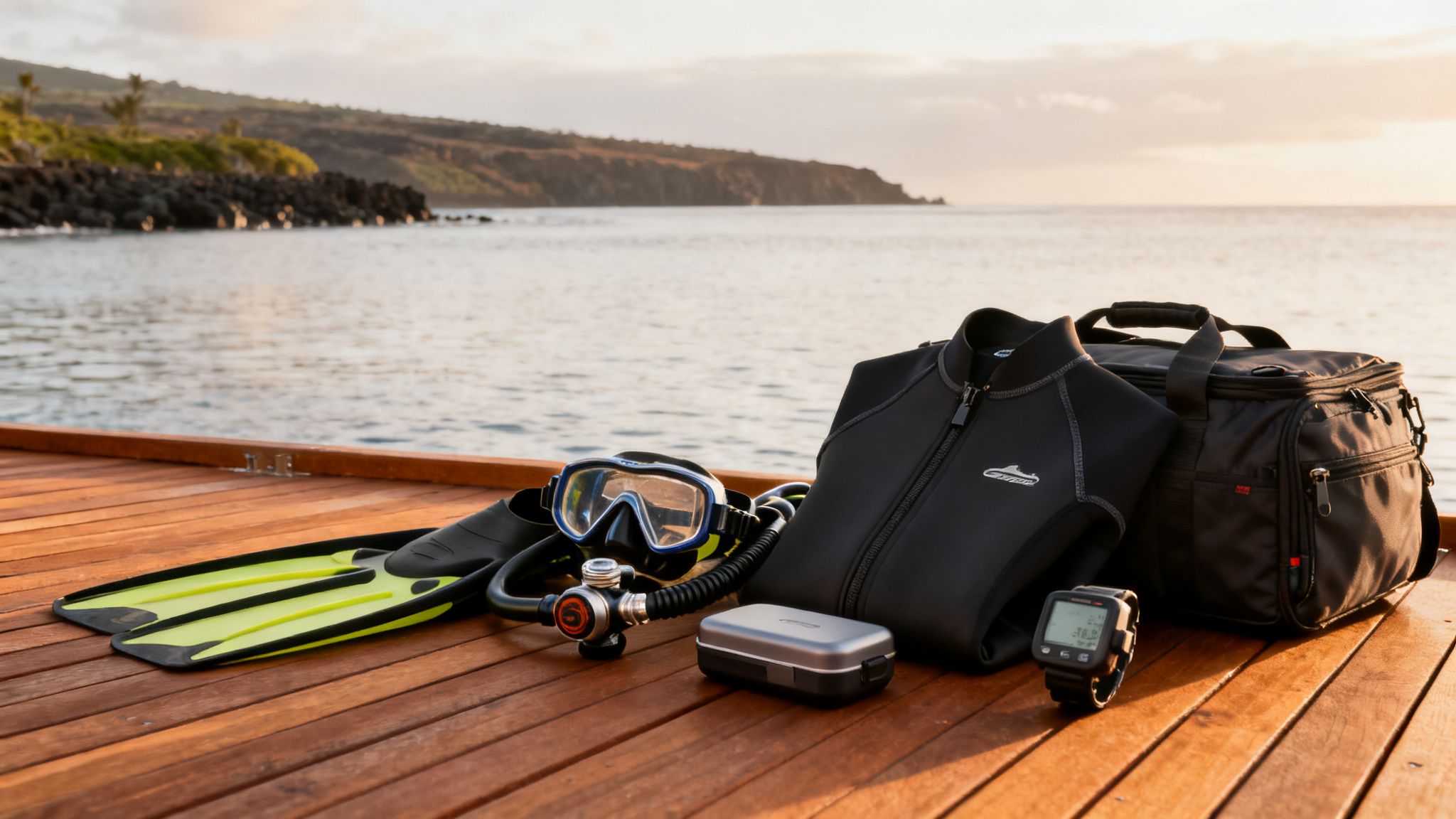
I always recommend bringing your own mask, fins, and dive computer. A mask that fits your face perfectly is the difference between a great dive and a frustrating one. And when you bring your own computer, you already know its display and settings inside and out. No guesswork.
Many experienced divers find a happy medium: they pack their "personal" gear—mask, computer, and regulator—and rent the heavier stuff like the BCD and wetsuit. It's a great way to travel lighter without sacrificing comfort.
Of course, renting from a top-notch operator like Kona Honu Divers means you’ll get high-quality, well-maintained equipment ready and waiting for you. It frees up a ton of space in your luggage and saves you from dragging heavy bags through the airport. The choice is yours, but it's nice to know great rental gear is an option.
Matching Your Certification to the Dives
The Big Island has something for everyone, no matter how many dives you have in your logbook. The vast majority of our stunning coral reefs and classic day-trip sites are in relatively shallow water, usually between 30 to 60 feet. This makes them absolutely perfect for Open Water certified divers.
That said, some of our most bucket-list-worthy experiences do require a bit more training. The world-famous Kona Blackwater Dive, for instance, is considered an advanced dive because you're drifting in the deep, open ocean at night. For divers looking for that next level of adventure, an advanced dive tour might take you to explore deeper lava tubes or dramatic archways.
Balancing Your Dive Itinerary
As amazing as the diving is, don't forget you're on one of the most geographically diverse islands on the planet! A well-rounded trip means mixing incredible diving tours with the island's topside wonders.
Plan a day to drive up to Hawaii Volcanoes National Park, hike through a rainforest to a hidden waterfall, or just kick back on a black sand beach. Spacing out your dives also gives you plenty of time to rest and off-gas before your flight home. A balanced schedule ensures you get the most out of every single moment, both above and below the surface.
Common Questions About Diving on the Big Island
Anytime you're planning a big dive trip, especially to a legendary spot like the Kona coast, questions are bound to pop up. We get it. We've answered thousands of them over the years, and we've compiled the most common ones right here to help you get ready.
Getting these details handled ahead of time means less stress and more time to get excited about the incredible underwater world waiting for you. This is the stuff we tell our friends, so you can dive with confidence and make every moment count.
What Is the Best Month for Diving on the Big Island?
Honestly, Kona offers fantastic diving year-round, but if you're looking for that picture-perfect, flat-calm water, aim for August to October. The Pacific tends to be at its warmest and most serene during these months, with water temps hovering around a comfortable 77-80°F (25-27°C). Think glassy boat rides and long, relaxing dives.
But there's a special magic to diving here in the winter, from December through March. This is peak humpback whale season. While you probably won't see them underwater, you will almost certainly hear their haunting, beautiful songs echoing through the water. It's an unforgettable soundtrack to your dive that adds a whole other layer to the experience.
Do I Need to Be an Advanced Diver to Dive in Kona?
Not at all! That's one of the best parts about diving here—it’s incredible for every skill level. Many of our most famous and vibrant coral reefs are in relatively shallow water, usually between 30 and 60 feet (9-18 meters). They’re perfect for Open Water divers to explore safely and see a ton of life.
Now, if you do have more experience, Kona has plenty to challenge you. We can take you through deep lava tubes, under dramatic archways, or out for the one-of-a-kind Kona Blackwater Dive. A good operator like Kona Honu Divers will always tailor their diving tours to the group on board, making sure everyone is safe and having a blast. For those who really want to push their limits, there are dedicated advanced dive trips available.
Is It Possible to See Manta Rays During the Day?
You might get lucky! We do sometimes spot a lone manta cruising the reef or getting a tune-up at a "cleaning station," where tiny fish nibble parasites off them. It’s a wonderful surprise when it happens, but it’s completely unpredictable and pretty rare.
If seeing manta rays is high on your list, then the world-famous Manta Ray Night Dive is what you're looking for. It's an experience engineered for the most reliable and spectacular manta encounters on the planet.
The powerful lights we place on the seafloor attract a thick "soup" of plankton. This creates a floating buffet that mantas simply can't resist, drawing them in night after night. It’s why we can practically guarantee you a front-row seat to one of the greatest shows in the ocean.
For the definitive manta experience, the Manta Ray Night Dive tour is an absolute must.
What Other Marine Life Can I See Besides Manta Rays?
Oh, where to begin? The Big Island’s protected coastline is just bursting with life. Because Hawaii is so isolated, many of the species you'll see are endemic—meaning you can’t find them anywhere else on Earth.
On any given dive, you're likely to run into a whole cast of characters. Here’s a little taste of what to expect:
- Hawaiian Green Sea Turtles (Honu): You'll see these gentle, ancient reptiles everywhere. They're often found snoozing on the reef or gliding gracefully past you.
- Eels: Peek into the pockmarked lava rock, and you’ll find all sorts of moray eels, like the whitemouth and zebra moray, curiously checking you out.
- Octopuses (Heʻe): Spotting one of these masters of disguise is a real thrill. They can change color and texture in the blink of an eye, so you have to keep your eyes peeled!
- Schools of Reef Fish: The reefs are a kaleidoscope of color, with huge schools of butterflyfish, angelfish, triggerfish, and Hawaii's state fish, the mighty Humuhumunukunukuāpuaʻa (try saying that three times fast!).
And that’s just on the reef! We often see pods of spinner dolphins from the boat, and in the winter, you might even spot a whale shark cruising by. Every single dive here is a new adventure.