
Picture this: you descend into impossibly clear, warm blue water. Sunlight streams down from the surface, illuminating a dramatic underwater world carved by volcanic fire. That’s not just a dream—that’s what it's like diving the Big Island.
The Kona coast has a secret weapon. It’s uniquely sheltered by the sheer size of the Mauna Loa and Hualalai volcanoes, which block the trade winds. This creates some of the calmest and clearest diving conditions you'll find anywhere, with visibility often exceeding an incredible 100 feet.
Why the Big Island Is a Diver's Paradise
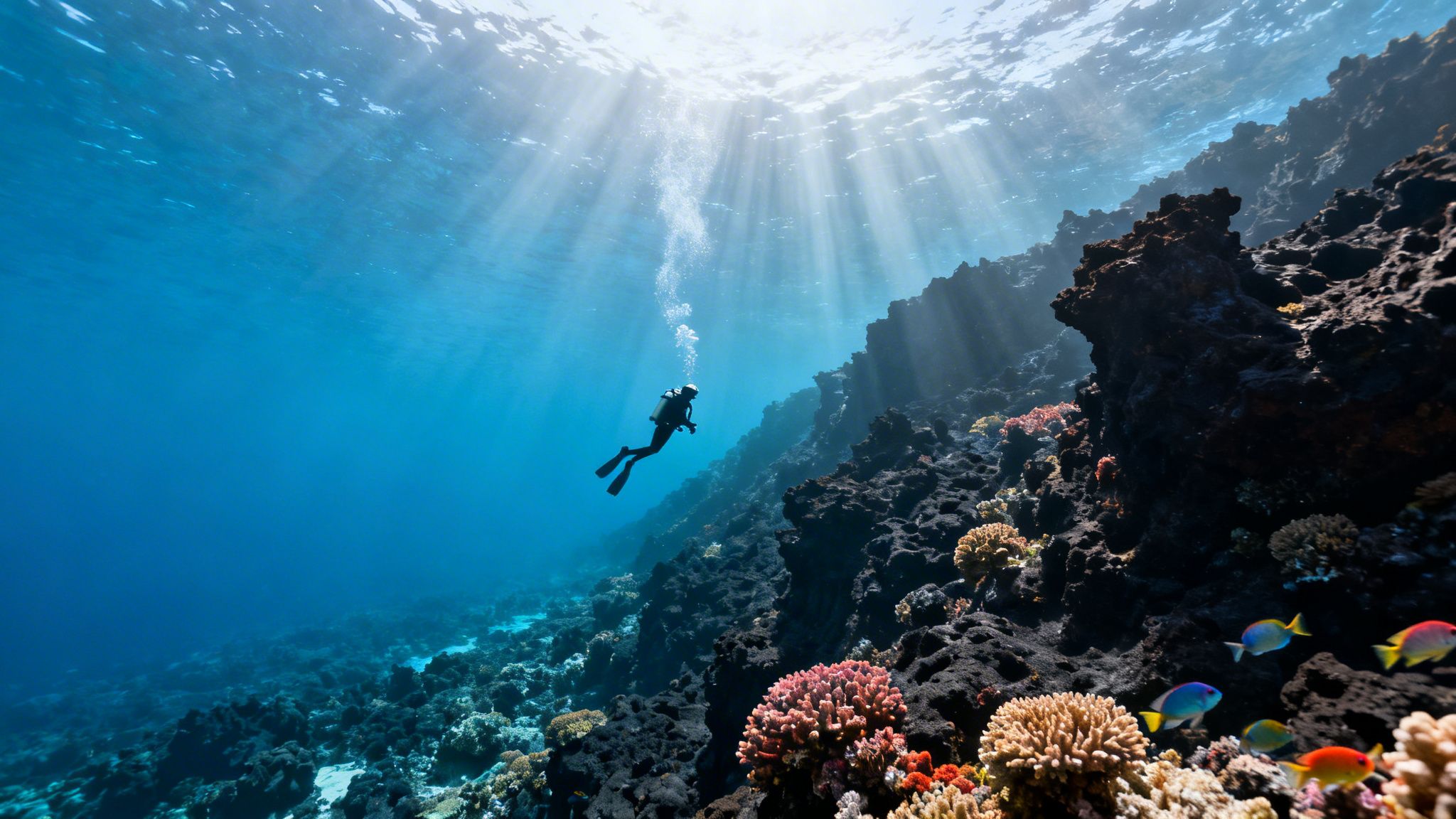
This is more than just another pretty dive spot. It’s a dynamic underwater playground where ancient lava flows have sculpted a spectacular seascape of dramatic archways, mysterious lava tubes, and breathtaking drop-offs. That volcanic foundation is now home to some of the healthiest and most vibrant coral reefs in the state, packed with marine life found nowhere else on Earth.
What really makes diving the Big Island stand out is the sheer variety. One day you could be gently drifting over pristine coral gardens, and the next you might find yourself exploring a submerged cavern or coming face-to-face with a graceful manta ray. It’s this diversity that makes Kona a bucket-list destination for divers of every skill level. You can get a deeper look at what is unique about diving in Kona in our guide.
A Thriving Underwater Ecosystem
The waters off the Kona coast are a sanctuary for an incredible variety of marine animals. Thanks to nutrient-rich deep-ocean currents, the ecosystem here absolutely buzzes with life. On any given dive, you’re likely to see:
- Honu (Hawaiian Green Sea Turtles): It's common to spot them resting on the reef or soaring gracefully through the water.
- Spinner Dolphins: You'll often see their acrobatic displays from the boat, and if you're lucky, you'll catch a glimpse of them underwater.
- Endemic Fish: The reefs are alive with colorful species you can't see anywhere else, like the Milletseed Butterflyfish and Potter's Angelfish.
- Whale Songs: From December to April, the haunting songs of migrating humpback whales become the soundtrack to your dive—an unforgettable experience.
It's no surprise that Hawaii has become a global hotspot for diving. The demand for unique marine encounters like the ones found right here is fueling a dive tourism market projected to hit USD 18.5 billion by 2035.
Whether you're a newly certified diver eager for your first real ocean adventure or a seasoned veteran looking for your next thrill, the Big Island delivers. This isn’t just a dive trip; it’s a world-class, unforgettable underwater journey.
Check AvailabilityThe World-Famous Manta Ray Night Dive: An Otherworldly Ballet
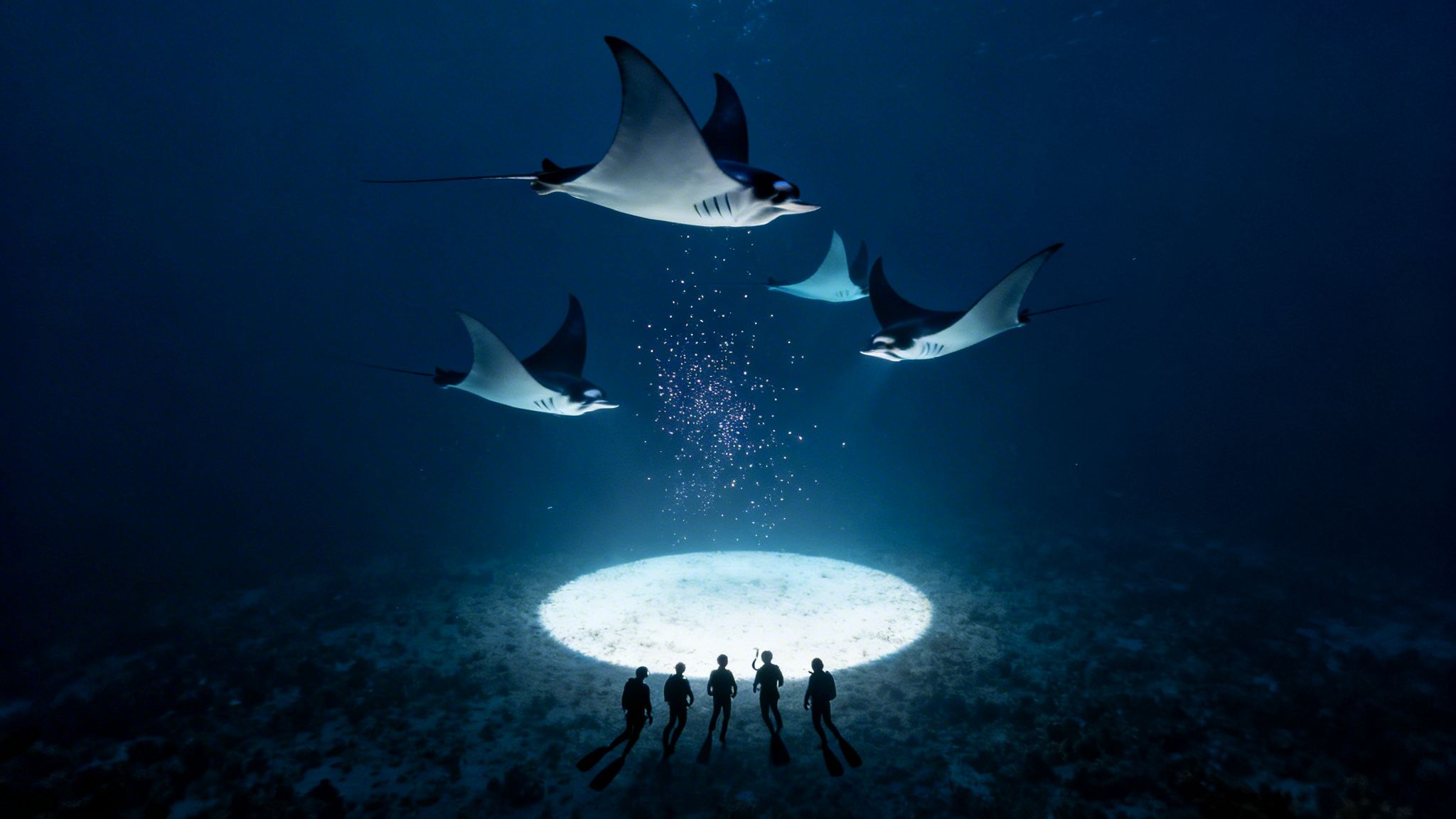
If there's one dive on the Big Island that people talk about for the rest of their lives, this is it. The manta ray night dive isn't just a dive; it's a spectacle, an underwater performance that has rightfully earned its place as one of the best night dives in the world.
Picture this: you descend into the dark, warm Pacific waters just as the last bits of sunlight fade. Your guide sets up a powerful, yet eco-friendly, light on the seafloor. This beacon acts like a giant magnet for plankton, drawing in microscopic life from all around. For the local manta rays, it's a dinner bell.
And then, they arrive. Gliding out of the darkness, these gentle giants appear like something out of a dream. With wingspans stretching over 12 feet, they swoop and barrel-roll through the beams of light, feasting on the plankton. It’s a silent, graceful ballet happening just inches above your head.
Why Garden Eel Cove is the Premier Manta Site
You’ll hear about a couple of different spots for the manta dive, but one consistently delivers the best experience: Garden Eel Cove. Known to locals as "Manta Heaven," this site is just offshore from the Kona International Airport.
Garden Eel Cove is the top choice for a reason. It's better protected from the southerly swells that can stir up the water elsewhere, which means calmer, clearer conditions more often. The reef itself is also healthier, and the viewing area is set up for a more intimate and less crowded encounter with the mantas.
Choosing the right location really matters here. The calm waters at Garden Eel Cove don't just make for a more comfortable dive; they improve visibility, giving you a front-row seat to the breathtaking show. You can learn more about what makes the manta ray night swim so unique and why this spot is so special.
What to Expect on Your Manta Dive Tour
When you join a tour with Kona Honu Divers, you're in for a safe, educational, and truly unforgettable night. The whole thing kicks off with a detailed briefing from the crew. They’ll cover everything you need to know about manta ray behavior, conservation, and how to interact with them safely. The number one rule? Never touch the mantas. Touching them can damage their protective mucous coating.
Once you’re in the water, you'll settle onto the sandy bottom and let the magic unfold. You can expect to be in the water for about 30-45 minutes, completely mesmerized by the silent dance above you. It’s both humbling and magical, a raw connection with one of the ocean's most magnificent creatures.
This isn’t just an item to check off a bucket list. It’s a profound experience that sticks with you. Seeing these animals in their element is a powerful reminder of the incredible beauty hidden just beneath the waves.
Ready for the dive of a lifetime? Book your two-tank manta ray dive or snorkel tour and get ready for an evening of pure underwater magic.
Check AvailabilityExploring the Top Kona Coast Dive Sites
Sure, the manta ray night dive is the headliner, and for good reason. But that amazing experience is just the beginning. The Kona coast is a treasure chest of world-class dive sites, each offering a completely different adventure.
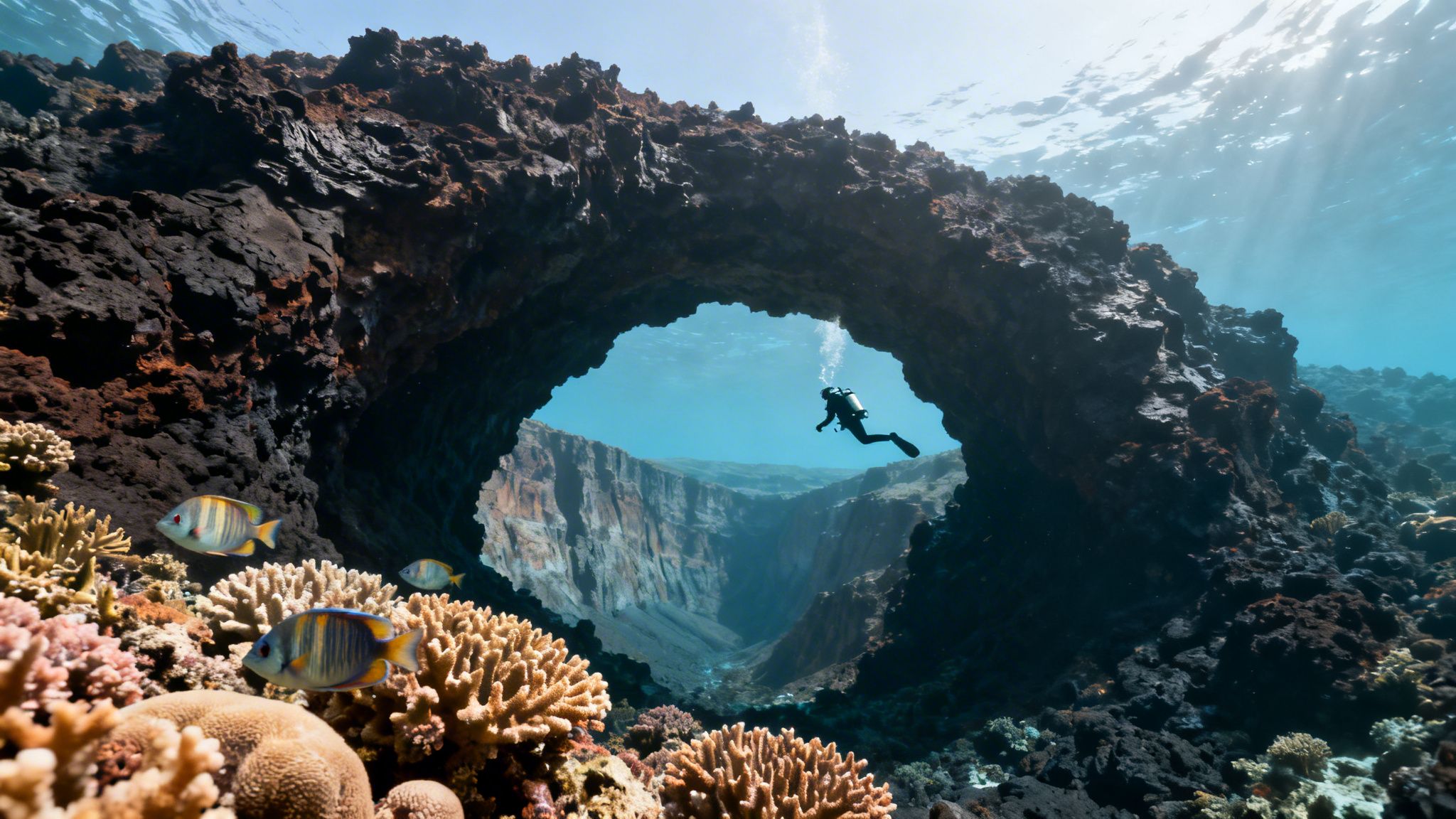
Think of Kona's underwater world as a direct reflection of its volcanic soul. Ancient lava flows sculpted a dramatic seascape of arches, deep canyons, and winding lava tubes. Today, these formations are blanketed in some of the healthiest coral you'll find anywhere in Hawai‘i. Diving here is like swimming through the island's raw, geological history.
There's something for every diver, and you can get a great overview of the different trips available right here on our Kona scuba diving page.
Vibrant Reefs for All Experience Levels
If you're newer to diving or just want a relaxing day exploring a thriving, colorful ecosystem, Kona's shallower reefs are paradise. These spots are perfect for long, easy dives where you can focus on the incredible marine life and maybe snap a few photos.
One of our all-time favorites is Puako Reef, tucked away on the Kohala Coast. It's famous for its sprawling, healthy coral gardens that are just buzzing with life. The reef has a gentle slope, making it a super chill and rewarding dive. You'll spend your time spotting schools of vibrant reef fish, resident Hawaiian green sea turtles (honu), and countless types of eels peeking out from their homes.
Another must-see is Golden Arches. The name says it all. This site is a playground of stunning lava rock arches you can actually swim through. The dramatic underwater architecture, covered in bright corals and sponges, is a magnet for schools of fish, creating a picture-perfect scene.
Advanced Adventures into the Abyss
For experienced divers looking for something a little more thrilling, the Big Island delivers. We’re talking about dives that go beyond the reef and into a whole other world—experiences that show you a side of the ocean very few people ever get to see.
Our Premium Advanced Dive is specifically for certified advanced divers who want to explore Kona's deeper, more dramatic structures. We take you to sites with breathtaking drop-offs, sheer walls, and massive pinnacles rising from the depths. It’s here that you start to see different marine life that prefers the deeper, cooler water. This is an incredible and challenging dive that showcases the raw power of Kona's volcanic seascape.
But if you want the ultimate, once-in-a-lifetime thrill, nothing on earth compares to the Kona Blackwater Dive. This isn't a reef dive. You're tethered to the boat, drifting at night in the deep, open ocean, watching as a parade of bizarre and alien-like creatures rises from the abyss.
This unique dive lets you witness the largest vertical migration of life on the planet. You’ll see bioluminescent organisms lighting up the dark, tiny translucent larval fish, and strange, beautiful jellies that look like they're from another planet. It's a surreal, humbling, and utterly mind-blowing experience that will change how you think about the ocean forever.
Finding Your Perfect Dive
With so many incredible options, figuring out your dive plan is half the fun. To give you a better sense of what might be the right fit, here’s a quick look at how some of our top sites stack up.
Big Island Dive Site Comparison
This table provides a quick-glance comparison of our most popular dive sites to help you match your experience level and interests with the perfect underwater adventure.
| Dive Site | Key Features | Average Depth | Best For |
|---|---|---|---|
| Puako Reef | Extensive healthy coral, abundant reef fish, turtles | 20-50 ft | Novice to Intermediate |
| Golden Arches | Dramatic lava arches, swim-throughs, schooling fish | 30-60 ft | All Levels |
| Premium Advanced Dive | Deep canyons, pinnacles, potential for pelagics | 60-130 ft | Advanced Divers |
| Kona Blackwater Dive | Open ocean night drift, bioluminescent life | 30-50 ft (over deep water) | Experienced Divers |
From the intricate details of a shallow reef to the mysterious allure of the deep, the Kona coast has a dive site that will absolutely captivate you. Each one promises an underwater journey you won't soon forget.
Why We Dive With Kona Honu Divers
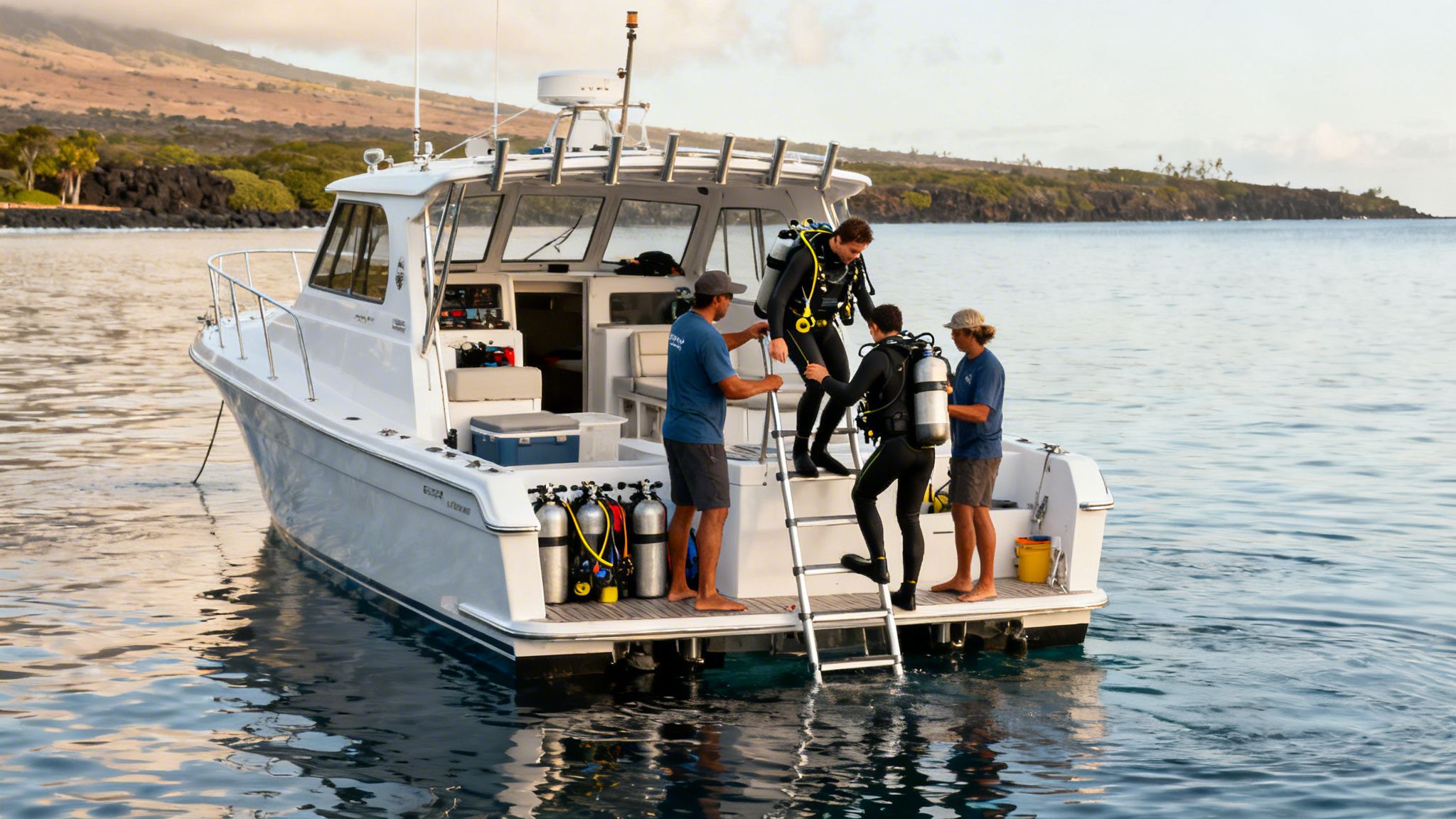
When you're diving the Big Island, the dive operator you choose can make or break your entire trip. It’s about more than just a boat ride; it’s about the crew, the gear, the safety, and the overall vibe. After years of diving here, we’ve found that Kona Honu Divers consistently delivers an experience that turns a good dive into an incredible one.
What really makes them stand out is the crew. Seriously. These aren't just divemasters punching a clock; they're seasoned professionals with a staggering 200+ years of combined diving experience. That kind of deep knowledge means you're diving with people who can spot a hidden frogfish from ten feet away and handle any situation with calm confidence.
Real Comfort and Small Groups
Kona Honu Divers runs a fleet of custom-built boats, and you can tell they were designed by actual divers. They’re spacious, stable, and have all the little things that matter—plenty of shade, easy-to-use ladders, and room to move around without bumping into everyone.
The best part, though, is their commitment to small group sizes.
They deliberately keep their trips from getting overcrowded. This means you get a much more personal and relaxed experience, with plenty of one-on-one time with your guide. You never feel like you’re just part of a herd being herded underwater.
They also throw in some fantastic perks. Certified divers get free nitrox, which is a huge plus if you’re doing multiple dives, as it can help extend your bottom time and leave you feeling less tired. And if you’re looking to get certified or take your skills to the next level, they offer a full range of PADI courses.
A Reputation Built on Safety and Great Dives
An unwavering commitment to safety underpins everything they do. From the detailed pre-dive briefings to the meticulously maintained equipment, you can feel that professionalism. It lets you completely relax and just focus on the amazing underwater world around you.
But don’t just take our word for it—their reputation speaks for itself. Check out their reviews, and you’ll see a consistent theme: friendly crew, top-notch service, and unforgettable marine life encounters.
Ultimately, booking with Kona Honu Divers is about investing in a seamless, safe, and truly exceptional adventure. They offer a complete lineup of diving tours that cover everything from the manta ray night dive to advanced charters.
Check AvailabilityDiving Safely and Respecting Hawaiʻi's Marine Life
Being a good guest in Hawaiʻi’s underwater world is the most important part of any dive. When we descend beneath the waves, we're not just there to see the incredible beauty—we're there to help protect it. That means getting familiar with local conditions, sticking to safety protocols, and learning the "house rules" for interacting with marine life.
The waters around the Big Island are usually pretty calm, especially along the sheltered Kona coast, but it’s still the wild, open ocean. Conditions can shift, so staying aware is key. This is exactly why diving with a professional, safety-focused outfit like Kona Honu Divers is so critical. Their crew knows the little secrets of each dive site and puts your well-being first, every single time.
Safety is Everything
Hawaiʻi might be paradise, but its powerful ocean always commands respect. The statistics, unfortunately, tell a sobering story. A recent report revealed that from 2020-2024, Hawaiʻi had the second-highest drowning rate for residents in the entire nation. For visitors, these numbers really drive home the value of going with a guided tour. By sticking to Kona's pristine and protected waters, professional operators drastically cut down these risks, letting you explore with confidence. You can read more about ocean safety statistics in Hawaiʻi to get the full picture.
Don't tune out during the pre-dive briefing; it's the most important part of your dive. Pay close attention as your guide walks you through the site’s layout, points out potential currents, and reviews the safety plan. If anything is unclear, speak up. There are no dumb questions when it comes to safety.
The Rules of Underwater Engagement
Getting to see marine life up close is a privilege, and doing it the right way ensures these animals stay healthy and comfortable around people. Think of yourself as an ambassador for every diver who comes after you.
The golden rule is simple: Look, but don't touch.
From giant manta rays to ancient sea turtles (honu), marine animals have a delicate layer of protective mucus on their skin. It's their shield against infection. When we touch them, we can strip away that coating, leaving them open to disease. Our curiosity should never cost them their health.
Here are a few essential things to keep in mind on every single dive:
- Master Your Buoyancy: This is the most important skill you can have for protecting the reef. If you're flailing around, you can easily kick, break, or crush fragile corals that took centuries to grow. Practice hovering and always keep a safe distance from the reef structure.
- Let the Wildlife Lead: Never chase, corner, or pester a marine animal. If a turtle or a manta is curious, it will come to you. The best thing you can do is stay calm and still, letting the animal control the encounter. The experience will be far more magical that way.
- Secure Your Gear: Make sure your gauges, octopus regulator, and camera are clipped in and not dangling. A loose console can drag across the reef, damaging delicate life and potentially getting snagged.
- Leave No Trace (and Take No Souvenirs): Everything you see underwater belongs there. Taking shells, pieces of coral, or even sand disrupts the ecosystem. The only things you should take with you are incredible memories and amazing photos.
Planning Your Big Island Diving Trip
Alright, so you’re picturing yourself gliding past lava tubes and coming face-to-face with gentle giants of the sea. Let's get down to the fun part: making it happen. Planning your dive trip to the Big Island is pretty straightforward, but a little prep work can make the difference between a good trip and an absolutely incredible one. A bit of planning ensures you spend less time stressing and more time underwater.
One of the best things about diving here is that Kona’s conditions are fantastic all year. The island's massive volcanoes act as a natural shield for the coast, leaving the water consistently calm and clear. That said, the seasons do offer slightly different experiences. Summer brings the toastiest water temps, often climbing into the low 80s (°F). Winter, on the other hand, offers an unbelievable bonus: the sound of migrating humpback whales singing. Hearing their haunting calls echo through the water on a dive is something you'll never forget.
Your Essential Packing Checklist
Packing for a dive trip is always a bit of a balancing act. While we offer top-notch rental gear at Kona Honu Divers if you’d rather travel light, we know most divers have a few pieces of their own gear they can't live without.
Here’s a quick list to get you started:
- Certification Cards: Don't leave home without them! Bring your main cert card (like Open Water) and any specialty cards you have (Nitrox, Advanced, etc.).
- Logbook: It’s the perfect way to remember all the amazing things you saw and a great tool for our divemasters to get a feel for your experience.
- Personal Gear: Most divers bring their own mask, snorkel, and dive computer. Nothing beats the comfort and familiarity of your own equipment.
- Swimsuits & Rash Guards: Pack at least a couple. A rash guard is perfect for sun protection and adds a thin layer of warmth.
- Reef-Safe Sunscreen: This is a big one. Standard sunscreens contain chemicals that are devastating to our delicate coral reefs, so please only pack reef-safe options.
- Reusable Water Bottle: Help us keep the island beautiful by reducing plastic waste. Plus, staying hydrated is key!
- A Light Jacket or Sweatshirt: Even in paradise, it can get a little brisk on the boat after a dive, especially on the night trips.
Required Certifications for Kona Dives
Kona has something for everyone, from brand-new divers to seasoned pros, but some of our more adventurous sites do require specific training. For the majority of our stunning reef dives, an Open Water Diver certification is all you need to get in the water and explore.
To experience some of Kona’s more dramatic underwater landscapes, though, you’ll need to have your Advanced Open Water Diver certification. This training is essential for safely exploring the deeper canyons and sheer drop-offs you’ll find on our advanced charters.
Sample 3-Day Big Island Dive Itinerary
Need some inspiration? Here’s what a perfect long weekend of diving in Kona could look like, blending our most iconic dives with some classic reef exploration.
- Day 1: Classic Kona Reefs (Morning 2-Tank Dive): We'll kick things off by getting you acquainted with Kona’s beautiful coral gardens. We’ll head to sites like Golden Arches or Puako Reef, which are teeming with colorful fish, green sea turtles, and incredible underwater lava formations.
- Day 2: The Main Event (Afternoon/Evening 2-Tank Manta Dive): This is the one you've been waiting for. We'll do a beautiful "Twilight Dive" on a vibrant reef as the sun goes down, then get ready for the world-famous Manta Ray Night Dive. It’s a bucket-list experience for a reason.
- Day 3: Advanced Adventure (Morning 2-Tank Dive): If you're an advanced certified diver, today’s the day we go a little deeper. We’ll explore a dramatic pinnacle or a breathtaking wall dive to show you a completely different side of Kona’s underwater world.
This schedule gives you a fantastic taste of what we offer without feeling rushed. You can always browse our different diving tours to mix and match an itinerary that fits your certification level and interests perfectly.
Your Big Island Diving Questions, Answered
Alright, let's tackle some of the questions we hear most often from divers getting ready for their trip. Think of this as your quick-start guide to the essentials.
What’s The Water Temperature Like In Kona?
You can count on comfortable water pretty much any time you visit. In the winter months, the ocean hovers around a pleasant 75-77°F (24-25°C). By summer, it warms up to a balmy 80-82°F (27-28°C).
For most folks, a standard 3mm wetsuit is the sweet spot for staying warm and comfortable, even if you're doing a couple of dives in one day.
What Kind Of Marine Life Will I Actually See?
Kona is teeming with life. On just about any dive, you can expect to see our famous Hawaiian green sea turtles (honu) cruising by. Spinner dolphins are a common sight from the boat, and the reefs are packed with colorful fish you literally can't find anywhere else on the planet.
We also regularly spot moray eels, octopuses, and graceful eagle rays gliding over the reef.
Of course, the main event for many is the manta rays. Kona is one of the best places in the world to see them, and our Manta Ray Night Dive has an incredible success rate—we see them over 90% of the time.
Should I Lug All My Own Dive Gear Over?
That's entirely up to you. Many experienced divers love the comfort and familiarity of their own mask, computer, or regulator, and you're welcome to bring it.
But if you'd rather travel light, don't worry—we've got you covered with high-quality, professionally maintained rental gear. The only things you absolutely must bring are your certification cards and logbook!
How Far Ahead Do I Need To Book My Dives?
My best advice? Book as soon as you know your travel dates. We keep our groups small to give everyone the best possible experience, which means our boats can fill up fast.
This is especially true during peak travel times like summer vacation and the winter holidays. To make sure you get a spot for must-do dives like the manta trip, we strongly recommend booking at least a few weeks out. The last thing you want is to miss out!
Ready to see it all for yourself? Take a look at our full lineup of scuba diving tours and let's get you in the water.
Check Availability