
Picture this: you descend into a brilliant sapphire ocean, sunbeams dancing through the water and lighting up a dramatic landscape carved by ancient volcanoes. This isn't just any dive trip. This is the Big Island, and for my money, it's the absolute best place to scuba dive in all of Hawaii. Divers from all over the world come here for a reason—the combination of impossibly clear water, wild underwater terrain, and incredible marine life is simply unbeatable.
Why The Big Island Is A World-Class Diving Destination
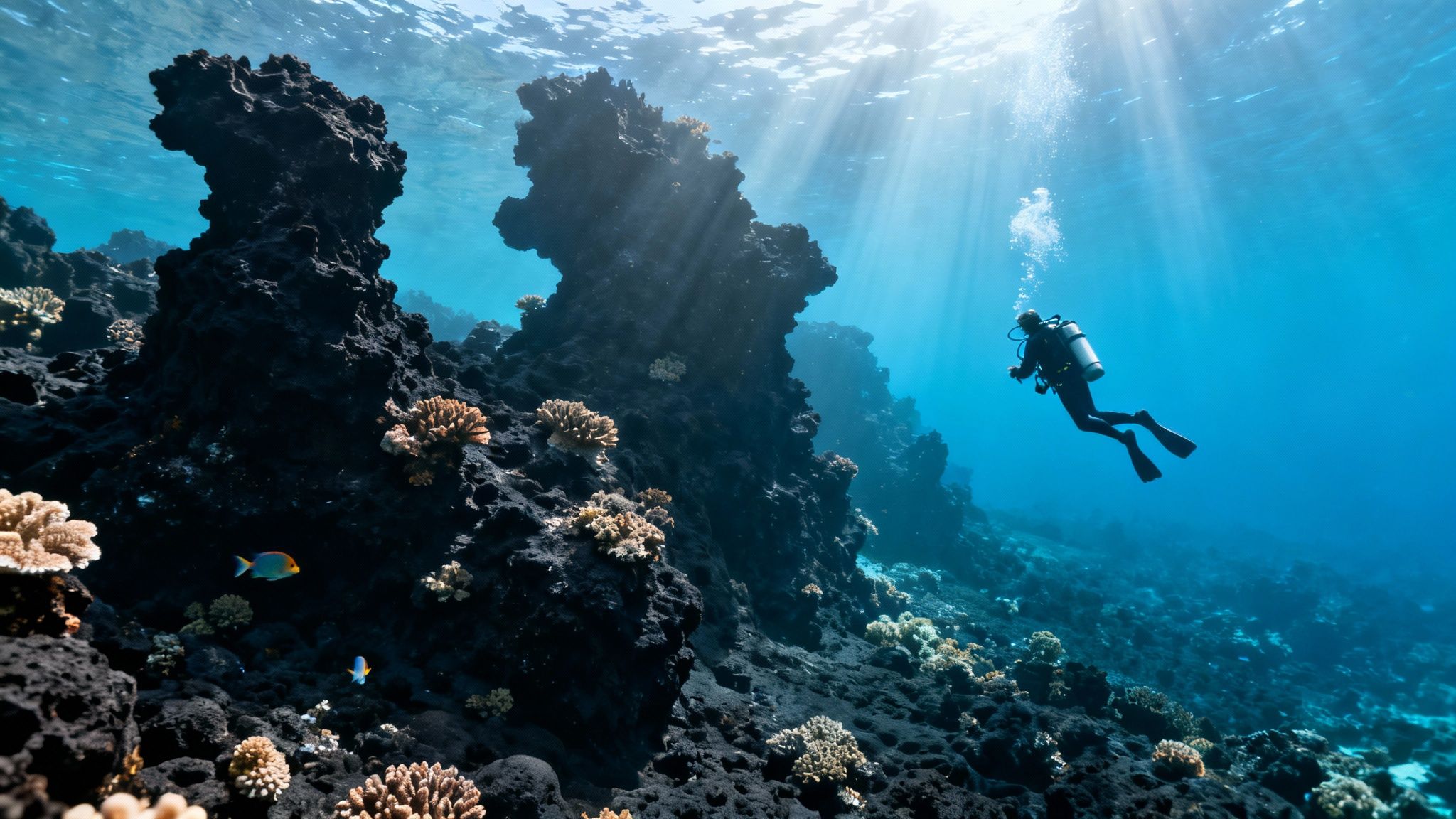
The secret to the Big Island’s phenomenal diving is all about its geology. The massive volcanoes, Mauna Loa and Hualālai, act as a natural shield for the western Kona coast, blocking the strong trade winds that can churn up the water elsewhere. The result? A protected, calm marine environment that offers consistently clear and gentle conditions pretty much all year long. It’s an underwater playground.
And it’s not just calm—it’s spectacular. The island’s volcanic origins have created a rugged and breathtaking underwater world. You can spend your dives exploring intricate lava tubes, swimming through ancient archways, and gliding along dramatic drop-offs. This unique topography is the foundation for some of the healthiest and most vibrant coral reefs you’ll find anywhere in the state. We get into even more detail in our guide to Big Island Hawaii scuba diving.
Unmatched Visibility and Marine Life
The island's reputation is backed by some serious numbers. Each year, the Big Island hosts around 100,000 certified scuba dives and welcomes over 150,000 dive tourists to its shores. Most of the dive sites sit in that sweet spot between 30 and 60 feet, making them perfect for new divers while still offering plenty of thrills for the pros.
In the summer, conditions get even better. Visibility often pushes past 100 feet, and the water temperature is a balmy 80°F. It’s like swimming in a high-definition aquarium.
This pristine environment is home to an incredible variety of sea creatures. The island is a sanctuary for some of Hawaii's most beloved animals, from the graceful honu (Hawaiian Green Sea Turtle) to the world-famous manta rays.
To put it all in perspective, here’s a quick summary of what makes this place so special.
Big Island Diving At A Glance
| Feature | Details |
|---|---|
| Geographic Shelter | The Kona coast is protected from trade winds by massive volcanoes, ensuring calm seas. |
| Water Clarity | Visibility frequently exceeds 100 feet, especially during the summer months. |
| Water Temperature | Averages a comfortable 76-80°F year-round. |
| Unique Topography | Explore volcanic formations like lava tubes, arches, and dramatic drop-offs. |
| Marine Life | Home to manta rays, sea turtles (honu), dolphins, and hundreds of fish species. |
| Reef Health | Boasts some of the most vibrant and healthy coral reefs in the Hawaiian islands. |
It's this blend of perfect conditions, unique geology, and abundant wildlife that truly sets the Big Island apart from any other dive destination.
Your Expert Guides to the Underwater World
Exploring an underwater paradise like this is best done with people who know it inside and out. That's where we come in. The Kona Honu Divers crew has spent countless hours in these waters, and we know them intimately—from the hidden entrances of lava tubes to the best spots to find specific marine life.
Our goal isn’t just to take you on a dive; it’s to give you a complete underwater experience that is safe, educational, and totally unforgettable. We keep our groups small to make sure you get the personal attention you deserve, whether it’s your first time breathing underwater or you’re a seasoned pro.
With top-of-the-line gear and our custom-built dive boats, we handle all the logistics so you can focus on the adventure. Let us show you firsthand why the Big Island is a diver's dream.
Exploring Kona’s Most Unforgettable Dive Sites
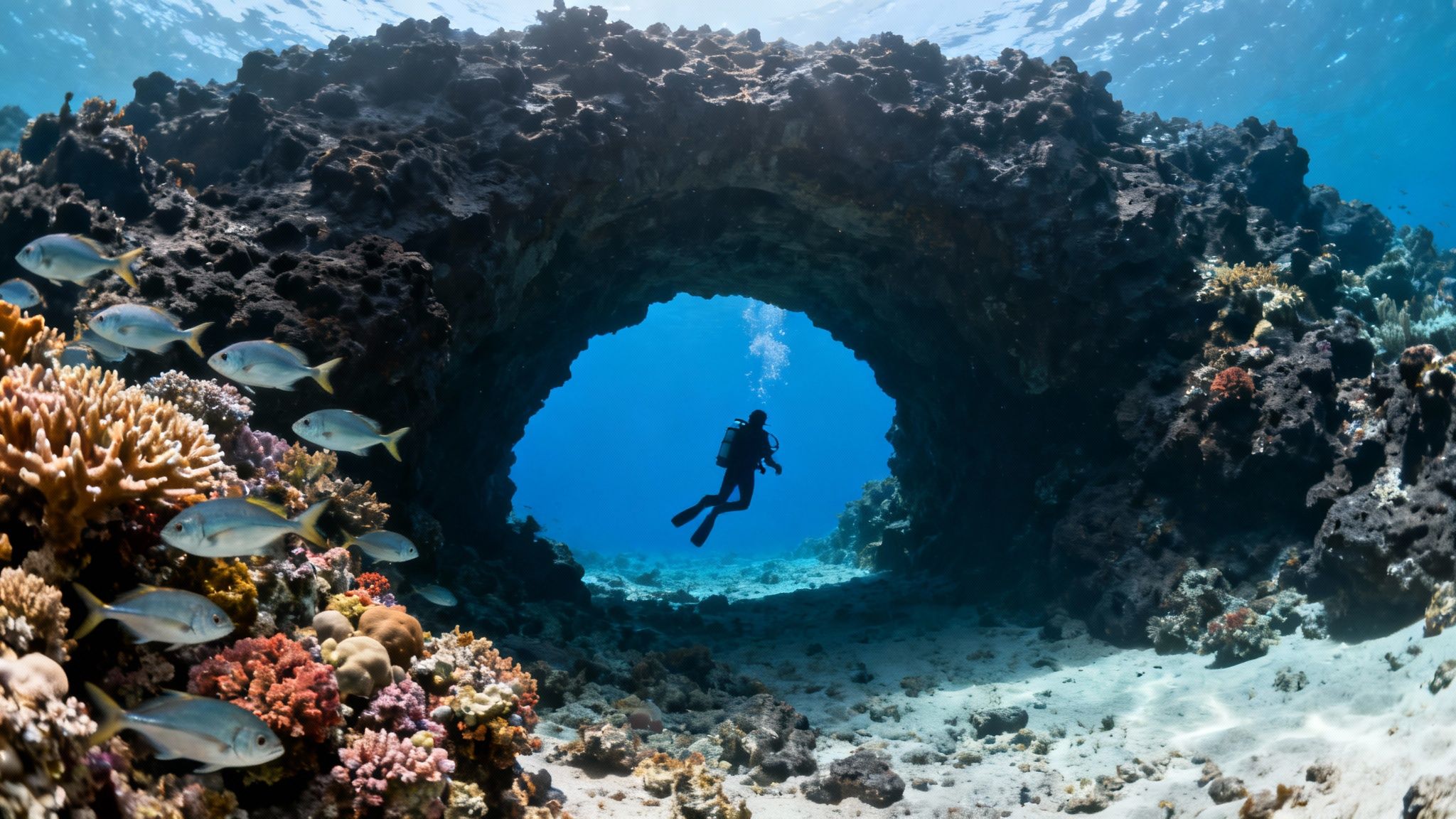
The Kona coast isn't just a single destination; it’s an entire underwater world with a dive site for every mood and skill level. Forget about just a list of names—the best way to understand diving the Big Island is to think about the kind of adventure you're after.
Are you looking for a chill, relaxed float through a real-life aquarium? Or are you craving the thrill of exploring dramatic volcanic landscapes that drop into the deep blue? Kona has both, and everything in between.
For divers just getting their fins wet, or anyone who wants a peaceful day, Kona’s sheltered bays are perfect. These spots are tucked away from the open ocean, which means calm, crystal-clear water. You can just relax and drift over stunning coral gardens, surrounded by huge schools of yellow tangs and butterflyfish. It’s a beautiful and gentle way to experience the magic of Hawaii's reefs.
For the Adventurous Diver
If you’ve got a few more dives under your belt and a taste for excitement, Kona is ready to show you its wild side. This is where you get a front-row seat to the island’s volcanic origins.
Imagine guiding yourself through an ancient lava tube, watching beams of sunlight dance through cracks in the ceiling above. Picture yourself descending along a deep wall that plummets into the abyss. These advanced diving opportunities are a playground of natural arches and swim-throughs that make every dive dynamic and exciting.
The marine life gets bigger here, too. You’ll find reef sharks patrolling the edges and majestic eagle rays soaring past in the current. These sites demand a bit more skill, but the payoff is an incredible sense of exploration.
The real magic of Kona diving lies in its variety. One day you can be floating peacefully in a shallow coral garden, and the next you can be exploring a complex labyrinth of lava rock formations. It’s this diversity that keeps divers coming back year after year.
Knowing where to go is key. Our crew at Kona Honu Divers has spent years exploring these sites, and they know all the secrets—the best way to enter a lava tube, where the sea turtles love to hang out at their cleaning stations, and how to navigate the currents. That local expertise is what turns a good dive into a truly unforgettable one.
Kealakekua Bay: The Crown Jewel
Then there’s Kealakekua Bay. It’s not just another dive site; it’s in a league of its own.
As a protected Marine Life Conservation District, the bay is absolutely teeming with life. It’s one of those spots that consistently makes "world's best" lists, and for good reason. The visibility often exceeds 100 feet, and its protected status has allowed the reef to flourish.
The bay is amazing for everyone, from beginners enjoying the shallow coral gardens to advanced divers exploring its deeper structures. You'll almost certainly spot spinner dolphins playing in the bay year-round. Divers can even explore the area around the Captain Cook Monument at 60 feet, where the structure acts as an artificial reef swarming with fish, invertebrates, and Hawaiian green sea turtles.
The calm, clear water and sheer abundance of marine life make it a must-do. You can learn more about what makes this area so incredible in our comprehensive guide to Kona scuba diving. A dive in Kealakekua Bay is a highlight you won’t soon forget.
Encountering Giants in the Dark: The Manta Ray Night Dive
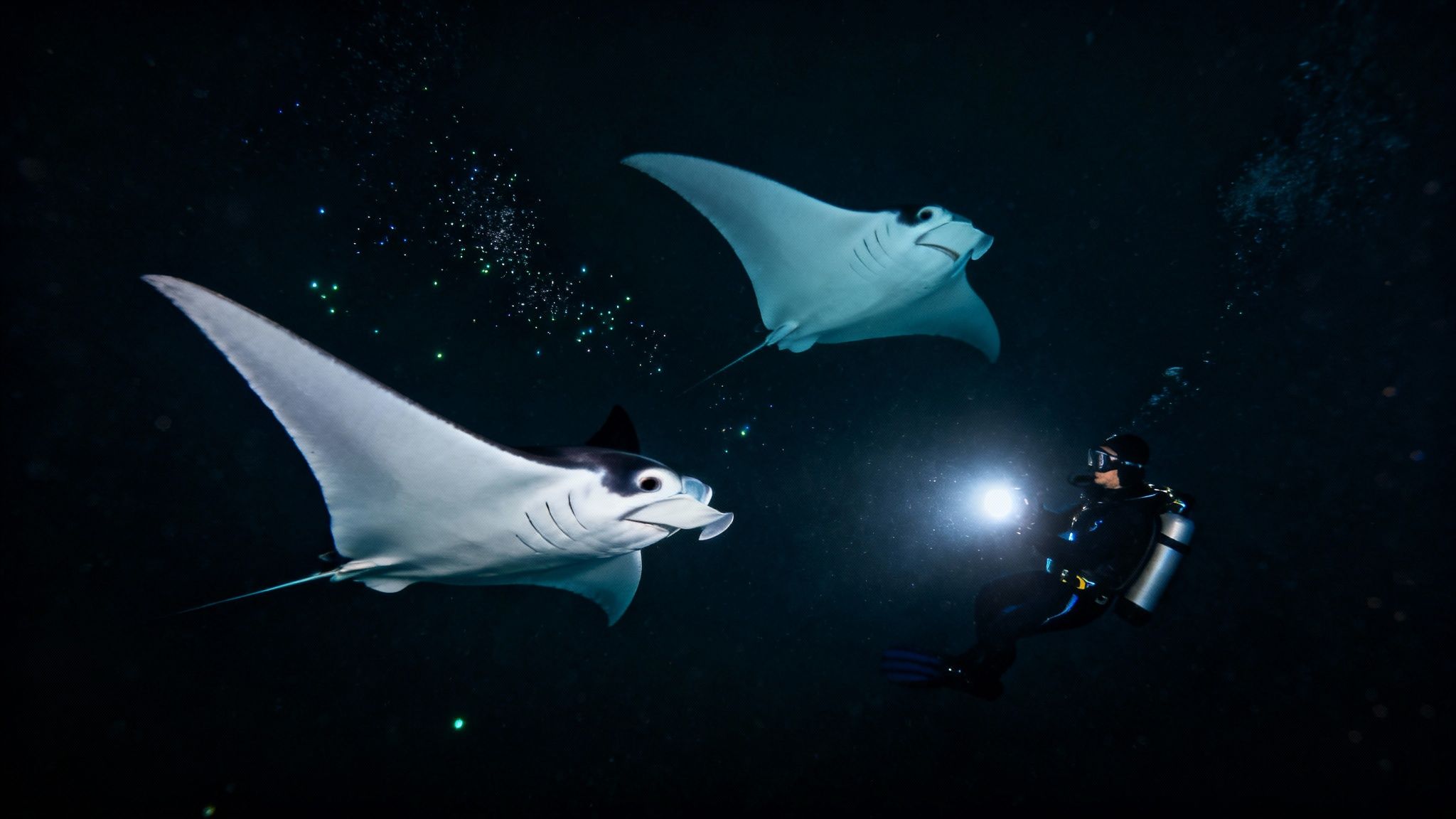
When the sun goes down on the Kona coast, a completely different world wakes up under the waves. The familiar reefs become mysterious in the darkness, setting the stage for one of the most magical underwater encounters you can have anywhere on Earth: the Manta Ray Night Dive. This isn't just another dive on the itinerary; it's a true bucket-list experience that consistently tops "best of" lists worldwide.
Picture this: you descend into the twilight ocean and find a spot on the sandy bottom. Following your guide, you point your dive light straight up, creating a beam of light that cuts through the darkness. That simple action is the secret to the whole show.
This light acts like a magnet for microscopic plankton, which is the main course on a manta ray's menu. Before long, the gentle giants arrive, swooping in like graceful ballerinas from the shadows. They glide and barrel-roll through the light beams, performing an effortless underwater ballet as they feed. It’s a breathtaking spectacle that feels both incredibly intimate and completely otherworldly.
Why Garden Eel Cove Is the Premier Choice
While you can see mantas at a couple of spots, they aren't all created equal. For a truly top-tier encounter, Garden Eel Cove (also known as Manta Heaven) is hands-down the best choice. Its unique geography creates the perfect natural amphitheater for this nightly performance.
One of the biggest pluses of Garden Eel Cove is how protected it is. Tucked away from strong currents and big ocean swells, it offers consistently calmer and safer conditions. This lets you relax and just focus on the mantas without getting tossed around.
The viewing area itself is also perfectly designed for the experience. The sandy bottom gives divers a comfortable, theater-like place to settle in. This layout gives the mantas plenty of room to soar overhead, ensuring the encounter is respectful for both the animals and the divers watching them.
On top of that, the reefs at Garden Eel Cove are noticeably healthier and more vibrant than at other manta sites. A thriving ecosystem means more marine life, making the entire dive—from your descent to your ascent—that much more beautiful. When you put it all together, it's easy to see why Garden Eel Cove delivers a more memorable and intimate manta dive. If you're planning this adventure, you can read more about what to expect on the manta ray night swim.
"Diving with mantas is one of the most satisfying things a person can do in the water. It’s impossible to describe the feeling of watching a massive fish the shape of a stealth bomber coming into vision."
This is an experience that sticks with you long after you've dried off. Seeing the sheer grace and size of these animals, some with wingspans over 12 feet, is truly humbling.
For the Truly Adventurous: The Kona Blackwater Dive
If the manta dive sparks your sense of wonder, the Kona Blackwater Dive will send it into orbit. This is easily one of the most unique and thrilling night dives you can do, and it draws seasoned divers and photographers from all corners of the globe. It's a true pinnacle experience when diving the Big Island.
So, what exactly is it? Imagine drifting in the deep, dark ocean miles from shore, suspended over thousands of feet of inky black water. You're tethered to the boat, floating in the middle of the water column, with nothing but darkness around you. That’s where the magic begins.
Every single night, a massive vertical migration brings countless bizarre and often bioluminescent creatures up from the crushing depths to feed near the surface. You'll see organisms that look like they belong on another planet: tiny, transparent larval fish, pulsing jellies, and alien-like cephalopods. It’s a dive into the abyss to witness life forms that most people will never, ever see.
This one isn't for the faint of heart; you need to be comfortable in the dark and have excellent buoyancy control. But for divers ready for a real adventure, the Kona Blackwater Dive is an unforgettable journey into one of the ocean's last great frontiers.
A Guide To Big Island Marine Life Encounters
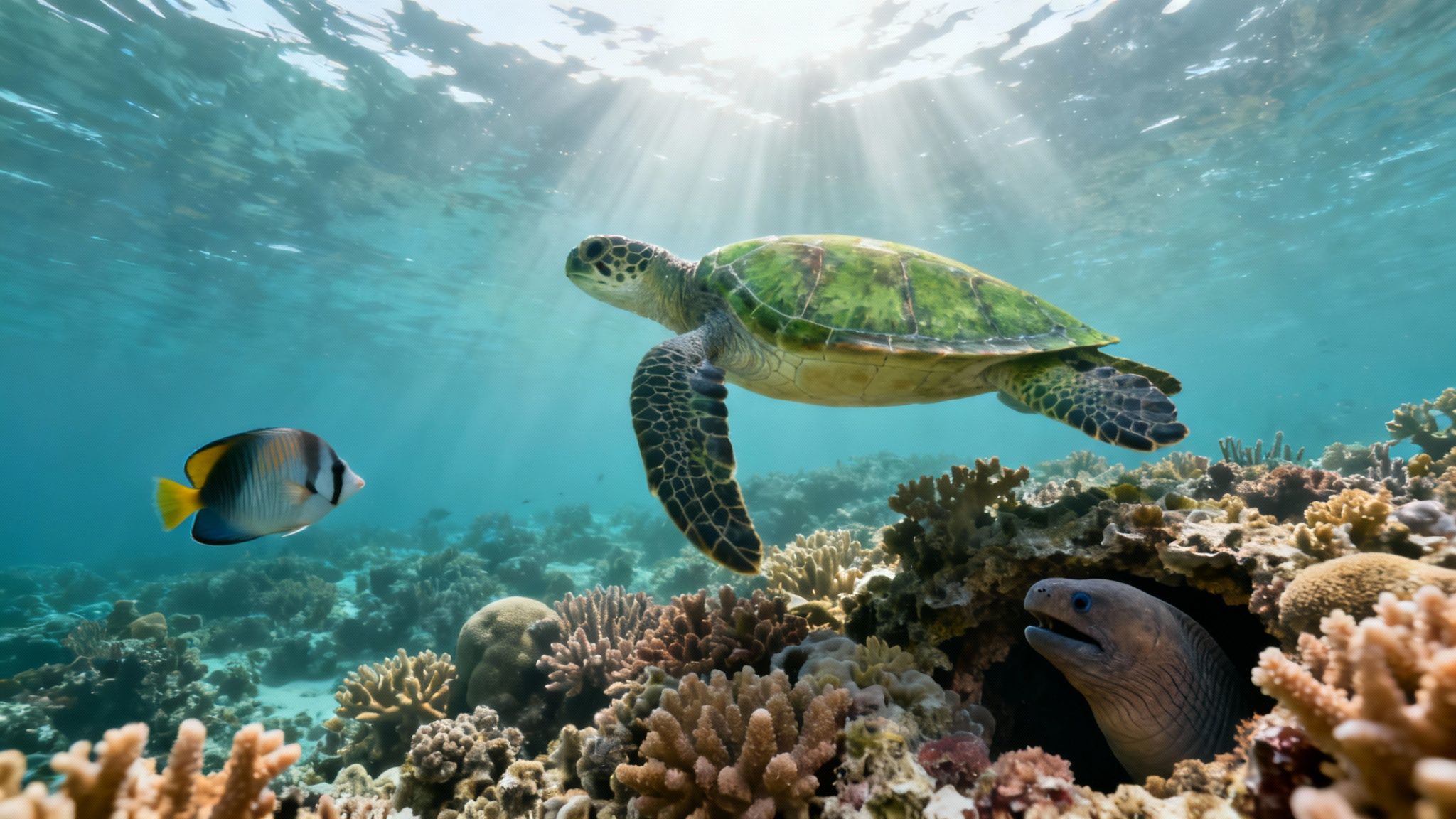
Diving in Kona feels like dropping into a completely different world, one that’s teeming with life. Every dive is a new adventure, because you simply never know who you’re going to meet down there. Diving on the Big Island isn't just about seeing fish; it’s about understanding the entire bustling, vibrant ecosystem that calls these volcanic reefs home.
Of all the creatures here, the one that captures everyone’s heart is the Honu, the Hawaiian Green Sea Turtle. In Hawaiian culture, they’re a symbol of good luck and longevity, and you’ll understand why when you see one. Watching a Honu glide effortlessly over the reef or pause at a "cleaning station" for smaller fish to nibble algae off its shell is one of those peaceful, unforgettable moments that sticks with you.
Of course, the reefs are also alive with dazzling schools of fish. You’ll see clouds of bright yellow tangs moving as one and dozens of species of butterflyfish fluttering through the coral. And be sure to keep an eye out for our state fish, the Humuhumunukunukuāpuaʻa—a triggerfish whose name is as colorful as its markings.
The Reef's Hidden Inhabitants
While the big schools of fish are impossible to miss, some of the most fascinating encounters happen when you slow down and take a closer look. The Kona coast’s unique volcanic terrain, full of nooks and crannies, creates the perfect hiding spots for the reef’s more secretive residents.
Peer into a rocky crevice, and you might be met with the curious gaze of a moray eel. These powerful predators often just poke their heads out, patiently waiting for a meal to swim by. They come in all sorts of patterns, from the speckled yellow margin moray to the much larger, more formidable viper moray.
Another master of disguise you might find is the octopus, or heʻe. Spotting one is a genuine treat. Their ability to instantly change color and texture to blend in with their surroundings is just mind-blowing. Seeing one flow across the reef, shifting its shape and pattern, is a true lesson in adaptation.
Understanding the behaviors and relationships between these animals transforms a dive from a simple sightseeing tour into a deep, immersive experience. It’s the difference between looking at a painting and stepping inside it.
This is where having a guide who really knows the area makes all the difference. An experienced guide can point out a perfectly camouflaged frogfish you would have otherwise missed or spot the tiny, vibrant nudibranchs that most divers swim right past. They help you see the whole story of the reef, not just the obvious parts.
Big Island Marine Life You Might See
- Hawaiian Green Sea Turtle (Honu): These graceful reptiles are a cultural icon and are frequently seen resting on the reef or visiting cleaning stations.
- Spinner Dolphins: We often see pods of them from the boat, and their acrobatic leaps are always a highlight. Sometimes, we even get lucky and see them underwater.
- Reef Sharks: White-tip reef sharks are the most common shark we see. They’re pretty mellow and can often be found resting in sandy patches or under ledges during the day.
- Moray Eels: Dozens of species hide within the reef, from the small, jewel-like dragon morays to the big viper morays.
- Octopus (He'e): The ultimate master of camouflage. They can change their color and texture in the blink of an eye.
- Tropical Fish: The sheer variety is stunning—butterflyfish, angelfish, parrotfish, and triggerfish bring constant color and movement to the reef.
Here at Kona Honu Divers, we believe every dive is a chance to connect with this incredible underwater world. Our passion is sharing the stories of these amazing creatures and making sure you have the best possible encounters while diving the Big Island. We have a trip that’s perfect for every diver, no matter your experience level.
How To Plan Your Perfect Big Island Dive Trip
A little bit of planning goes a long way when you're dreaming up an unforgettable vacation centered around diving the Big Island. When you get the logistics right—from picking the best season to packing the right gear—you get to spend less time worrying and more time soaking in Kona's incredible underwater world.
The best part? Kona’s sheltered coast serves up fantastic diving conditions pretty much all year round. That said, the experience does shift a bit between the two main seasons. Knowing what to expect can help you time your trip for exactly the kind of adventure you're looking for.
Seasonal Diving Conditions On The Big Island
Trying to decide when to visit? There's truly no bad time to dive in Kona, but here's a quick breakdown of what to expect during our two primary seasons.
| Season | Water Temperature | Visibility | Marine Life Highlights |
|---|---|---|---|
| Summer (May-October) | Averages a warm 80-82°F (27-28°C), often feeling like bathwater. | Typically at its peak, frequently exceeding 100 feet for crystal-clear views. | Manta ray activity is high, and you'll see massive schools of tropical fish. |
| Winter (November-April) | Averages a cooler 75-77°F (24-25°C), still very comfortable for diving. | Remains very good, though occasional winter swells can reduce it slightly. | This is humpback whale season! You may hear their songs underwater, and there's a chance of spotting them from the boat. |
Ultimately, whether you prefer the balmy summer waters or the magical winter whale songs, you’re in for a treat.
Packing Essentials for Your Dive Trip
Packing for a Kona dive trip is refreshingly simple. The warm water means you can leave all that bulky cold-water gear at home. For most people, a 3mm full wetsuit is the sweet spot, giving you just the right amount of warmth and protection for multiple dives a day. If you tend to run cold, a 5mm might be a better choice, especially for those amazing night dives.
Don't forget these must-haves:
- Reef-Safe Sunscreen: Hawaii has banned sunscreens with oxybenzone and octinoxate to protect our fragile coral reefs. Always look for mineral-based options.
- Reusable Water Bottle: Staying hydrated is key, and using a reusable bottle is a simple way to help reduce plastic waste on the island.
- Dive Certification Card & Logbook: You'll need your C-card to get in the water, and you'll definitely want to log all the incredible things you see in Kona.
As you get ready for your trip, it's a great time to think about how to travel sustainably to help us preserve the natural beauty of the Big Island for years to come.
Logistics and Safety First
While you can do some diving from shore, the real magic happens offshore. The best way to experience the premier dive sites is by boat. Taking a guided trip with a trusted operator like Kona Honu Divers isn't just the safest and most efficient way to explore—it’s how you get to those remote, pristine reefs that are completely unreachable from the beach. Plus, you get the benefit of local knowledge and professional safety oversight from the crew.
Thinking about leveling up your dive skills? Kona's calm, clear conditions create the perfect classroom. It's an ideal place to get your PADI Open Water certification or tackle an advanced course. Once you're certified, you'll be ready to join our lineup of incredible diving tours and see the best of what Kona has to offer. If you're wondering about budgeting, this guide on how expensive scuba diving is in Hawaii is a great resource.
Here, safety is everything. The safety record for Big Island scuba diving is truly exemplary. Marine life incidents like shark encounters happen in less than 0.0001% of all dives, and overall reported incidents are under 1 per 100,000 dives annually. This is all thanks to the rigorous protocols and expertise of local operators. For our guests at Kona Honu Divers, this means you can relax and feel total peace of mind, whether you're on a manta ray night dive or a blackwater expedition. Our custom boats ensure smooth rides, and the post-dive hot chocolate creates a welcoming, family-friendly vibe you'll remember. You can dive deeper into Big Island dive safety on konahonudivers.com.
Your Big Island Diving Questions, Answered
Even the most experienced divers have a few questions before they jump into new waters. So, to help you get your planning squared away, we’ve put together answers to some of the things we get asked most about **diving the Big Island**.Do I Need to Be an Expert Diver?
Not at all. That’s one of the best things about diving here in Kona—the underwater world is accessible to everyone. The coastline is naturally protected and calm, offering a massive variety of dive sites that work for any skill level.
If you're just starting out, you'll find gorgeous, shallow reefs in quiet bays perfect for getting comfortable while surrounded by clouds of colorful fish. For the more experienced folks, there are some serious adventures waiting for you, from deep lava tubes and dramatic walls to intricate underwater caverns. A good dive shop like Kona Honu Divers will always group divers by experience, so you can be sure you'll have a safe, fun dive that’s right for you.
What’s the Water Temperature Like?
You can probably leave that thick 7mm wetsuit at home. The water here is beautiful and warm year-round, which makes the Big Island a fantastic dive destination no matter when you decide to visit.
Here's a quick look at what to expect season by season:
- Winter (November-April): The water sits at a very comfortable 75-77°F (24-25°C).
- Summer (May-October): Things warm up to a balmy 80-82°F (27-28°C).
For most divers, a standard 3mm wetsuit is all you'll need to stay perfectly warm and comfortable through multiple dives.
Is It Better to Do a Boat Dive or a Shore Dive?
Look, while the Big Island has a few decent spots you can get to from shore, the simple truth is that nearly all of Kona's best, world-famous dive sites are only reachable by boat. Getting on a boat just opens up a completely different level of diving.
Boat diving gets you to the most pristine, untouched reefs that are just too far out to swim to. It also saves you the hassle and energy of a long surface swim and gives you the benefit of a professional crew's local knowledge and safety gear. If you really want to see the best Kona has to offer, getting on a boat is hands-down the way to go.
What Can I Do If My Travel Partner Doesn't Dive?
We hear this one all the time! The great news is Kona is the perfect place for mixed groups of divers and non-divers. Many of our top dive sites are also incredible for snorkeling. The water clarity is so good and the reefs are often shallow enough that snorkelers can see a ton of the same vibrant marine life from the surface.
Most dive boats, ours included, are happy to bring snorkelers along for the ride. It’s a fantastic way for everyone to enjoy a beautiful day on the water together, each exploring the underwater world in their own way. Nobody has to miss out on the adventure.
Ready to see this underwater paradise for yourself? We have a whole range of diving tours designed to fit every diver out there.