
Picture this: you're weightless, suspended in impossibly clear water. Golden shafts of sunlight pierce the surface, illuminating a breathtaking world sculpted by ancient volcanoes. This isn't just any dive trip. This is the Big Island, and the Kona coast is calling.
Forget what you think you know about reefs. Here, the ocean floor is a dramatic masterpiece of cooled lava flows, creating underwater structures that host one of the most vibrant marine ecosystems on the planet.
Why Kona is a Diver’s Paradise
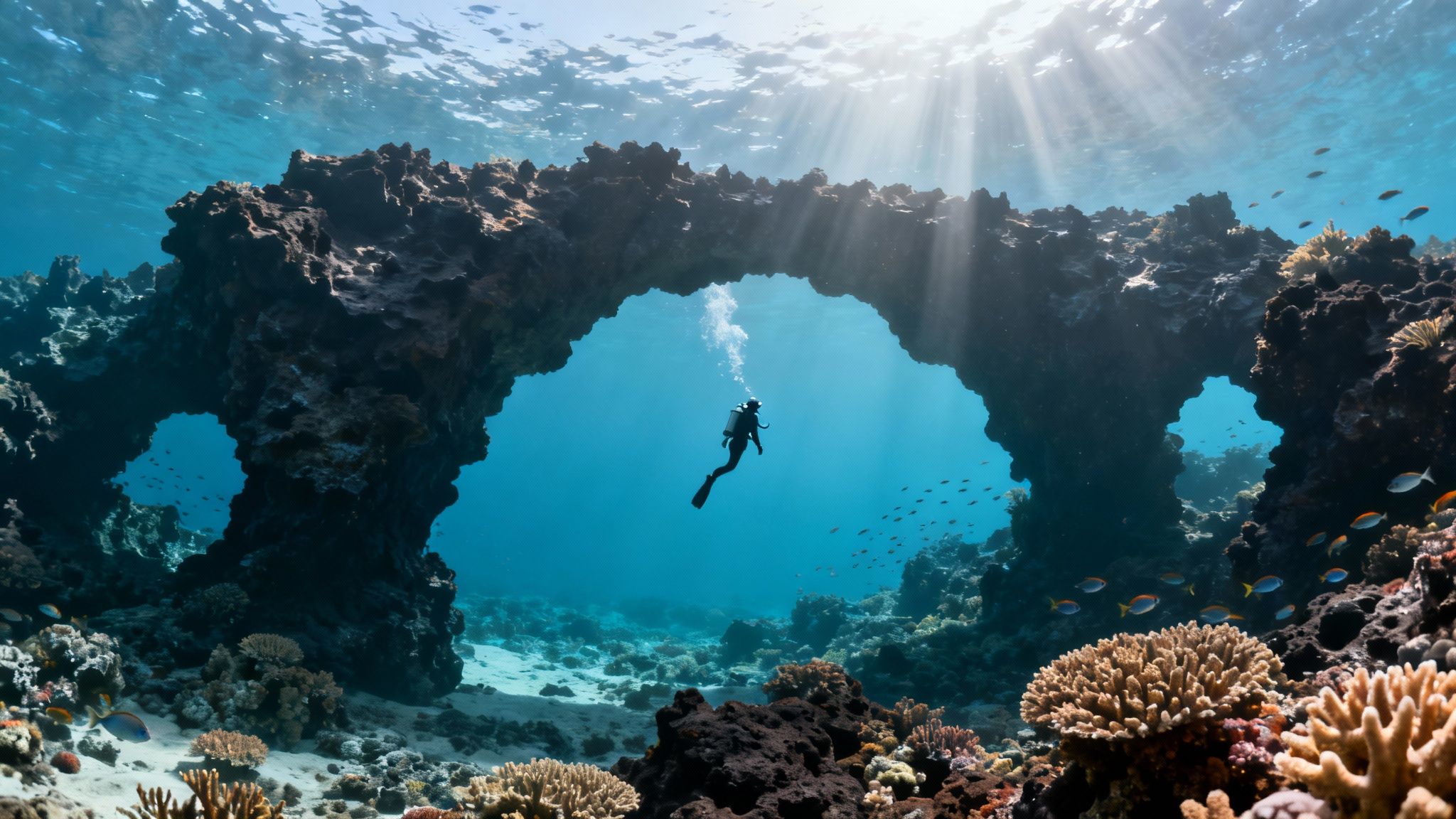
The secret to Kona's magic lies in its geography. The colossal mountains of Mauna Loa and Hualālai act as a natural shield, protecting the western coast from the powerful trade winds. The result? Exceptionally calm, clear water that makes for incredible diving conditions pretty much year-round, welcoming everyone from first-timers to seasoned pros.
But it’s what lies beneath the surface that truly sets Kona apart. The volcanic legacy has left behind a dramatic seascape you won't find anywhere else.
- Lava Tubes & Caverns: Imagine exploring ancient, hollowed-out tunnels formed by flowing magma, now home to all sorts of unique critters hiding in the shadows.
- Dramatic Drop-Offs: Swim along sheer underwater cliffs that plunge into the deep blue, where you’re more likely to spot larger pelagic species cruising by.
- Intricate Archways: These graceful arches and swim-throughs, now completely covered in colorful corals, are a photographer's playground and a joy to explore.
This unique geology is the foundation for an incredibly healthy and diverse marine population, which is further bolstered by protected areas. Kealakekua Bay is a perfect example. As a protected Marine Life Conservation District since 1992, this no-fishing zone has allowed the ecosystem to absolutely flourish. Visibility often pushes past 100 feet, revealing stunning coral gardens bursting with fish and turtles. You can get more great insights about Big Island scuba diving on konahonudivers.com.
Of course, knowing the best spots and how to navigate them safely is key. This is where having the right people guiding you makes all the difference. Kona Honu Divers has built its name on providing safe, unforgettable, and conservation-minded trips into this underwater paradise.
Their team of experienced pros doesn't just point out the cool stuff; they share the stories of the reef and its inhabitants. They deliberately keep their group sizes small, which means you get a much more personal and meaningful experience, whether it's your very first ocean dive or you’re a veteran diver looking for a new thrill. Their guest reviews really speak for themselves.
From the world-famous Manta Ray Night Dive to exploring pristine coral gardens in the bright Hawaiian sun, Kona offers a diving journey like no other. In this guide, we'll walk you through everything you need to plan the ultimate underwater escape. We’ll cover the must-see dive sites, the can’t-miss experiences, and all the practical tips to make sure your Big Island adventure is absolutely spectacular.
A Diver’s Guide to Kona’s Top Underwater Spots
So, you're ready to find out where the best diving is on the Big Island? Think of this section as your treasure map. We're about to explore Kona's most incredible underwater sites and break down what makes each one so special.
The Kona coast is famous for a reason. It’s not just the calm, clear water; it’s the sheer variety of the underwater world here. Decades of volcanic activity have carved out a stunning submerged landscape of lava tubes, massive archways, and sprawling coral gardens, all buzzing with life. Each site has its own personality, offering a completely different adventure every time you gear up.
Kealakekua Bay: A Protected Sanctuary
You can't talk about Big Island diving without starting at Kealakekua Bay. This spot is a designated Marine Life Conservation District, which means it’s absolutely bursting with biodiversity. Because it's protected, the fish populations are incredibly dense, the corals are thriving, and the wildlife encounters are truly second to none.
Picture this: you descend into water where the visibility often stretches beyond 100 feet, revealing a bustling underwater metropolis. Schools of bright yellow tang drift by like golden clouds, while moray eels peek out from their rocky hideouts. It feels less like a dive and more like swimming through a perfectly curated aquarium.
Turtle Pinnacle: Where Honu Gather
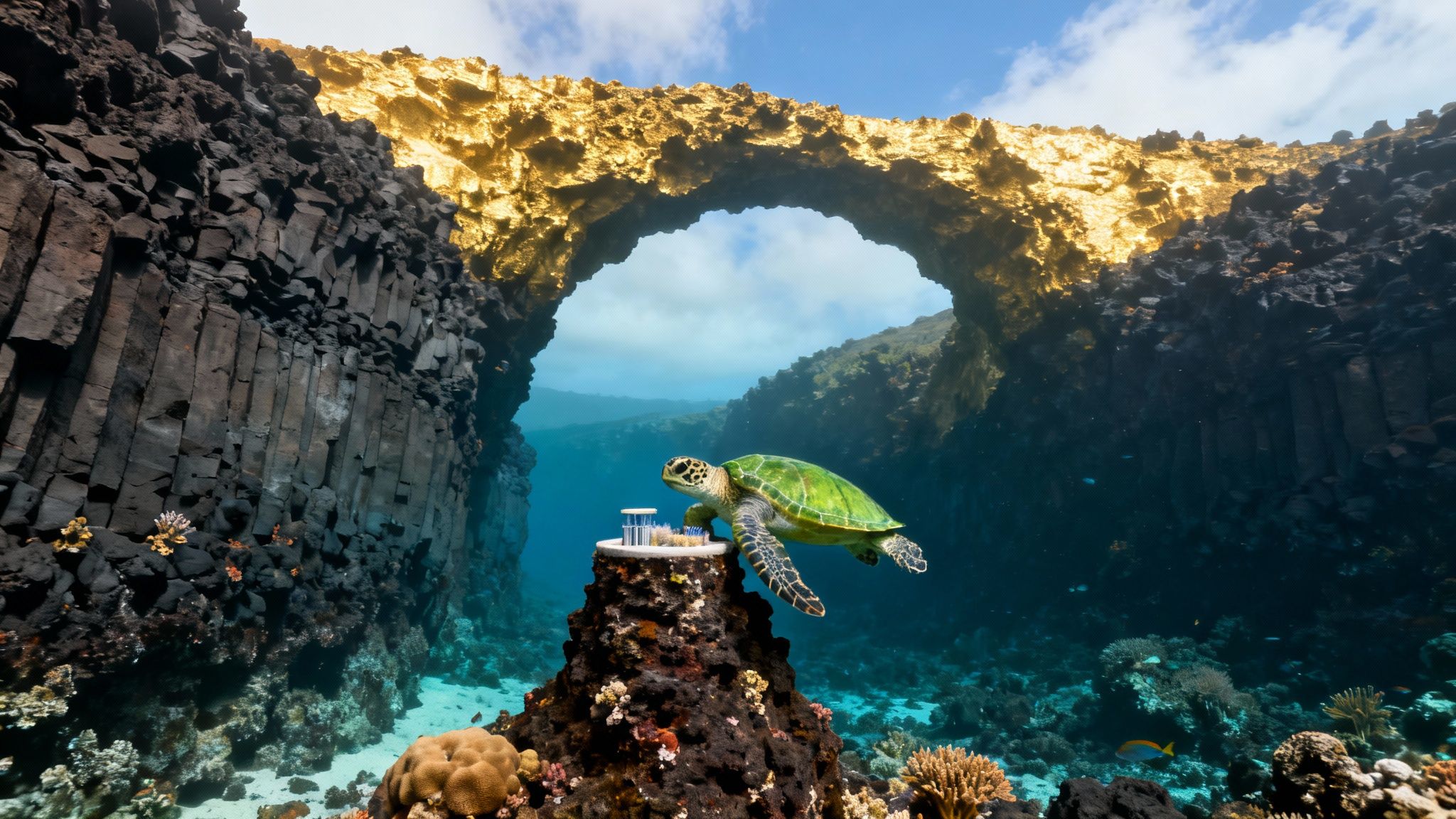
Just like the name suggests, Turtle Pinnacle is a magnet for Hawaiian green sea turtles, or honu. It’s a submerged lava pinnacle that acts as a natural "cleaning station," where turtles line up to let reef fish nibble away algae and parasites.
It's a dream come true for underwater photographers and anyone who just loves watching these gentle giants in their element. You can observe the turtles up close as they calmly wait for their turn at the "spa." But it's not just about the honu; the pinnacle itself is covered in vibrant corals and is a great place to spot frogfish, octopuses, and countless other critters.
The health of these sites is no accident. Ongoing reef monitoring paints a vivid picture of Big Island diving's vitality, with Kona sites leading Hawaii's recovery efforts. Data reveals local coral cover at an average of 28%—double the 14% statewide low from past bleaching events. This resilience is a testament to the unique lava-based ecosystems that make this area so special. You can read more about Hawaii's reef health on reefcheck.org.
Golden Arches: A Photographer’s Dream
For a dive that’s truly iconic, Golden Arches is the place to be. This site is famous for its magnificent lava archway that frames underwater photos perfectly, especially when the sunlight streams through from above. Swimming through it feels like you're crossing a threshold into another world.
The arch and the reef around it are packed with marine life, from tiny, colorful butterflyfish flitting about to graceful spotted eagle rays that sometimes cruise by in the deep blue. For many divers, navigating this incredible natural structure is the highlight of their trip to Kona.
For a quick breakdown of what to expect, here are a few of our favorite spots.
Top Kona Dive Sites At A Glance
| Dive Site | Key Features | Typical Marine Life | Best For |
|---|---|---|---|
| Kealakekua Bay | Protected marine sanctuary, historical site, excellent visibility. | Dolphins, vibrant corals, large schools of reef fish. | Beginners & snorkelers |
| Turtle Pinnacle | Famous turtle cleaning station, submerged lava pinnacle. | Green sea turtles (honu), frogfish, octopuses. | Photographers & turtle lovers |
| Golden Arches | Stunning swim-through lava arch, unique topography. | Butterflyfish, eagle rays, moray eels. | Iconic photo ops |
| Garden Eel Cove | Famous site for the Manta Ray Night Dive. | Manta rays, garden eels, cleaner shrimp. | The world-famous night dive |
This table just scratches the surface, but it gives you an idea of the amazing variety waiting for you just off the Kona coast.
The team at Kona Honu Divers has spent years exploring these waters and knows exactly how to get you to the heart of the action safely and without the crowds. Their expertly guided diving tours are all about showcasing the best of these incredible sites, making sure every single dive is one for the logbook.
With their deep knowledge of each location's secrets, the guides can point out the hidden gems and lead you to the most vibrant parts of the reef. You can dive deeper into all the spots they visit by checking out this guide to the top dive sites in Kona.
The Unforgettable Manta Ray Night Dive
Out of all the incredible experiences you can have diving Big Island, there’s one that truly stands apart—a spectacle that tops bucket lists worldwide. I’m talking about the world-famous Manta Ray Night Dive.
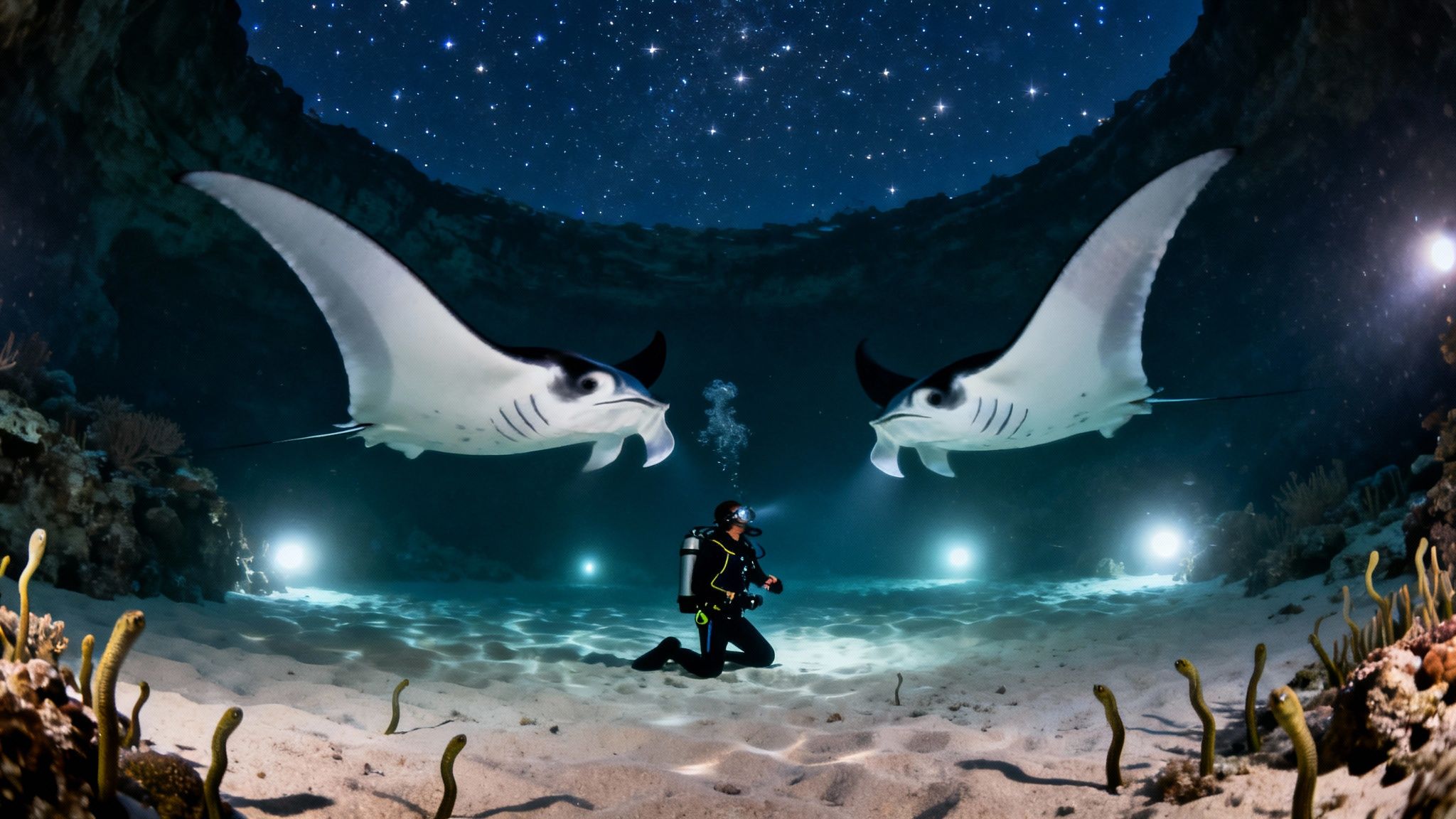
Picture this: you descend into the twilight, find your spot on the sandy ocean floor, and wait. Soon, colossal, graceful manta rays emerge from the darkness, gliding just inches above you in a silent, hypnotic ballet. This magical encounter happens thanks to a setup we call the "manta campfire." Your dive guide places powerful, upward-facing lights on the seabed, which attract swarms of plankton—the mantas' favorite meal.
The light creates a concentrated buffet, and the mantas swoop in to feed, performing incredible somersaults and barrel rolls right in the beams. It’s a breathtaking display of nature that feels both surreal and profoundly moving.
Why Garden Eel Cove is the Premier Choice
While this dive happens at a couple of spots, Garden Eel Cove is hands-down the superior choice. Its unique underwater topography and protected location create a natural amphitheater for the show. For divers, this means a better, less crowded viewing area with clear sightlines to the action.
The reef itself is healthier and more pristine here, too, making for a beautiful backdrop. Because the cove is so sheltered from open ocean swells, the conditions are often much calmer, making the whole dive more comfortable, reliable, and safe. It all adds up to a more intimate and spectacular encounter with these gentle giants. For an in-depth comparison, you can read this guide to the best Manta Ray Dive Kona Night Dives Best Sites.
The Kona Coast's reputation for manta ray night dives is legendary, drawing divers from across the globe with sighting rates that are simply off the charts. We're regularly seeing an average of 12-15 mantas per night, and on exceptional evenings, that number has jumped to 32. With a population of over 200 identified individuals along this coast and encounter probabilities hitting 95% on clear nights, it’s one of the best places on the planet for this kind of megafauna interaction.
The experience is about more than just seeing mantas; it's about connecting with them respectfully. The key is to remain still on the ocean floor and let them control the interaction. By staying calm and shining your light upward, you become part of their environment, allowing them to glide effortlessly just above you.
An Experience Elevated by Experts
For a dive this special, who you go with really matters. Kona Honu Divers makes the experience even better with specialized boats designed for comfort and easy entry, which is a huge plus at night. Their expert guides know this site like the back of their hand, putting you in the perfect spot to see everything.
Most importantly, they are absolutely committed to your safety and the well-being of the mantas. The pre-dive briefings are thorough, focusing on how to interact respectfully so the animals are never disturbed. This thoughtful approach ensures you have an incredible adventure you can feel good about. You can learn more about the differences between the dive and snorkel options in our article about the Manta Ray Night Swim.
This isn't just another dive; it's a front-row seat to one of nature's most magnificent performances.
Advanced Diving Adventures in the Deep Blue
Once you've got a good number of dives under your belt, you start looking for that next level of challenge. For experienced divers, diving Big Island offers something truly special that goes way beyond the sun-drenched coral gardens. The island’s unique volcanic geology carves out some seriously advanced adventures that will test your skills and show you a side of the ocean most people never witness.
When you're ready to graduate from the typical reef tour, the Kona coast is waiting to show you its wilder side. Think about gliding through ancient lava tubes—pitch-black tunnels forged by flowing lava eons ago. These dives demand rock-solid buoyancy and a cool head, but the reward is seeing the strange, shadowy creatures that call these formations home. Then there are the deep-water ledges and sheer walls that plunge into the abyss, where you're more likely to spot bigger pelagic fish patrolling the edge of the blue.
The Ultimate Challenge: The Kona Blackwater Dive
But if you're looking for the pinnacle of advanced diving, nothing on Earth quite compares to the Kona Blackwater Dive. It's easily one of the most surreal and mind-blowing experiences you can have underwater. This isn't about exploring a reef or a wreck. This is about being suspended in the immense, inky-black open ocean at night, drifting over thousands of feet of water.
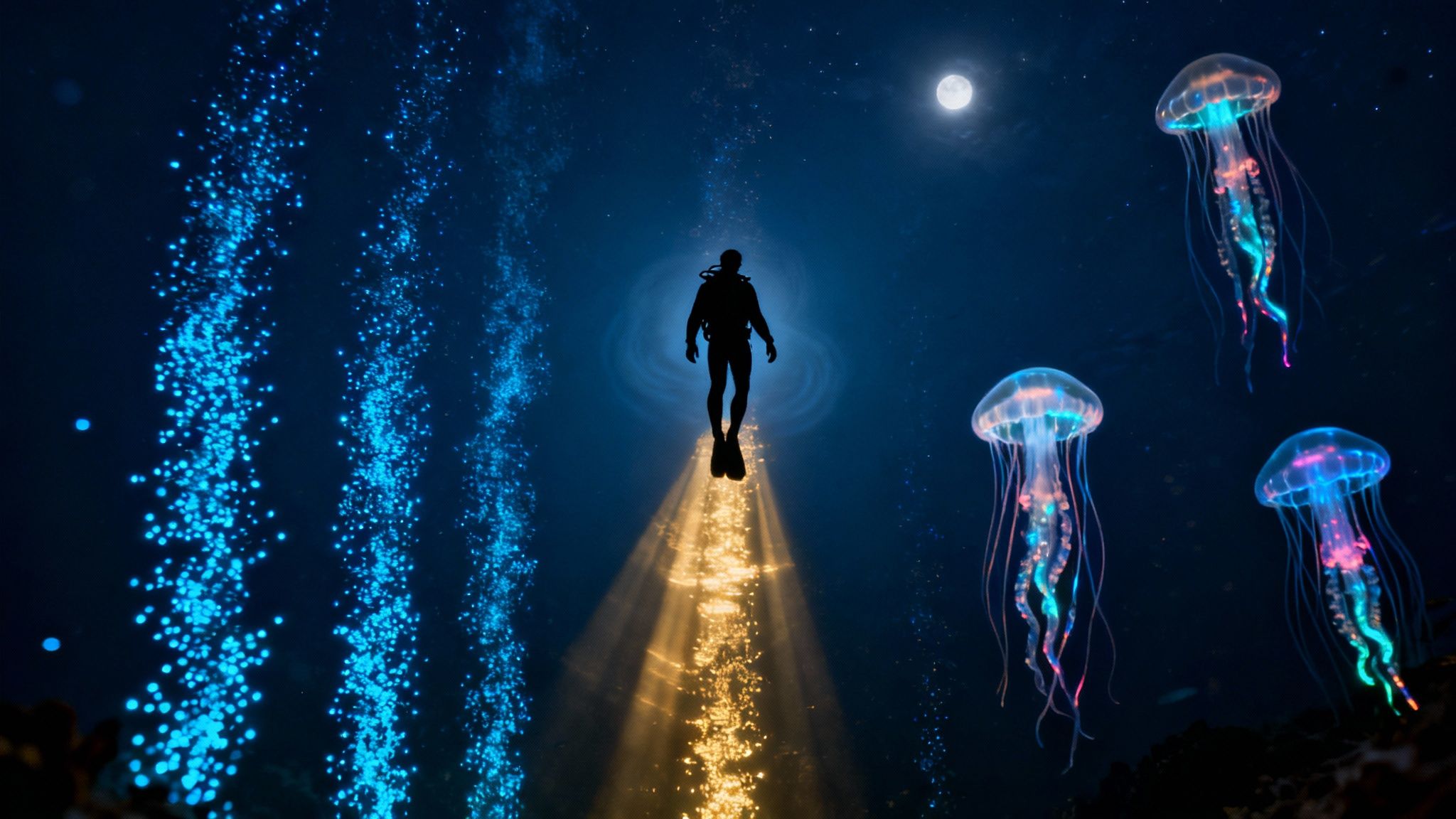
You’re tethered to a boat, floating in the profound darkness of the Pacific, watching as life itself migrates from the abyss toward the surface. This nightly event is the largest vertical migration of life on Earth, and you have a front-row seat.
As you float, a parade of bizarre and beautiful creatures rises from the deep. Many of them are bioluminescent, creating their own light in the darkness. You'll see things that look like they're straight out of a sci-fi movie: alien-like larval fish, jellyfish pulsating with internal light, and strange cephalopods shimmering with colors that don't seem real. It’s a night dive that feels less like exploring the ocean and more like floating through deep space.
Unlocking Exclusive Dives with Expert Guidance
These kinds of dives aren't something you just decide to do on a whim. They require more than an advanced certification card—they demand meticulous planning, specialized gear, and a guide who knows these waters like the back of their hand. This is where having a professional, experienced crew is non-negotiable.
Kona Honu Divers runs exclusive charters specifically for divers who are ready for this kind of challenge. Their Premium Advanced 2-Tank Trip is your ticket to these sites, giving you the expert leadership and safety oversight you need for deep dives and overhead environments.
Even more specialized is their Blackwater Dive tour, which is led by a crew with specific training for this unique environment. They handle all the specialized equipment and safety tethers, so you can just focus on the absolutely unforgettable spectacle happening all around you. Taking on these dives is a serious adventure, but with the right team, it’s also one of the most rewarding things you’ll ever do.
Planning Your Perfect Dive Trip to Kona
Alright, let's get down to the details and turn that dream of diving the Big Island into a well-planned reality. Think of this as your personal checklist for an incredible Kona adventure, filled with the kind of insider advice that makes all the difference. A little smart planning up front means less time worrying about logistics and more time enjoying what you came for: the amazing world under the waves.
One of the first things people always ask is, "When's the best time to go?" The short, fantastic answer is: anytime. Diving the Big Island is phenomenal year-round, but each season has its own unique character. The "best" time really just comes down to what you're looking for in a dive trip.
Decoding Kona's Dive Seasons
Seriously, there's no bad time to book your trip. The water temperature is surprisingly stable, hovering around a pleasant 76°F (24°C) in the winter months and warming up to a bath-like 81°F (27°C) by late summer. Visibility is almost always fantastic, often stretching out well beyond 100 feet.
- Summer (May – October): This is when the ocean really lays down. The seas are known for being exceptionally calm and often glassy, which makes for super smooth boat rides and peaceful dives. If you're prone to seasickness or just love the idea of tranquil, warm water, summer is your sweet spot.
- Winter (November – April): The surface might have a bit more chop, but winter comes with an unbelievable bonus. This is when humpback whales migrate through the islands, and you can often hear their haunting songs echoing through the water during your dive. It's a powerful, humbling experience that adds a whole other layer of magic.
No matter when you come, the marine life is always here in full force. You simply can't lose.
Packing and Logistics for Your Trip
A little local knowledge goes a long way in planning. For pure convenience, you'll want to base yourself on the Kona side of the island. Why? Nearly all of the best dive sites and top-notch operators, including us here at Kona Honu Divers, leave from the harbors on this coast. Staying in Kona or nearby Keauhou means less driving and more time for what matters.
When it comes to packing, think beyond just your mask and fins. Don't forget:
- Reef-safe sunscreen to protect your skin without harming the delicate corals.
- A reusable water bottle to stay hydrated out on the boat.
- A light jacket or hoodie for those cooler evenings, especially after a night dive.
- Your certification cards and logbook—you'll want to document these dives!
For a more detailed checklist, check out our guide on the gear you will need for your Kona diving adventure.
Booking with a professional, trusted operator like Kona Honu Divers just makes life easier. We handle all the heavy lifting—providing tanks, weights, and top-of-the-line rental gear if you need it. You get to travel lighter and know that everything is dialed in and ready for you when you arrive.
As you lock in your plans, it’s always wise to prepare for the unexpected. Taking a look at a good Travel Insurance Guide: Essential Tips for Safe Travels can offer some valuable perspective and give you that extra peace of mind for your adventure.
By thinking through these key steps—when to visit, where to stay, and who to dive with—you’re setting yourself up for a smooth, stress-free, and absolutely unforgettable dive vacation.
Why Kona Honu Divers Is Your Best Choice
Choosing the right dive operator on the Big Island isn't just a logistical detail—it's the decision that shapes your entire underwater adventure. You're not just booking a boat ride; you're trusting a team with your safety and your precious vacation time. This is where Kona Honu Divers stands apart.
It all starts with the people. The crew brings a staggering 200+ years of combined professional diving experience to the table. That’s not just a number; it’s a deep, practical knowledge of Kona's reefs, currents, and secret spots. They have an almost sixth sense for finding marine life and ensuring every dive is as safe as it is spectacular.
The Kona Honu Divers Difference
You'll feel the difference the moment you step aboard one of their custom-built dive boats. These aren't just repurposed fishing vessels. They were designed from the hull up with divers in mind, featuring spacious decks, easy-to-use ladders for getting in and out of the water, and amenities that make your surface time comfortable and relaxing.
They also add perks that serious divers really appreciate. For certified divers, they offer free nitrox. This small but significant detail means you can enjoy longer bottom times and feel less tired after a day of diving, getting more out of every moment underwater. It’s one of the many reasons they were voted the best dive operator in Kona.
But beyond the gear and the boat, you'll find a genuine love for the ocean. The crew’s passion for marine conservation comes through in everything they do, from their detailed briefings to the way they model respectful interactions with wildlife. They don't just point out the cool stuff; they help you understand the delicate ecosystem you're exploring.
"It’s impossible to describe the feeling of watching a massive fish the shape of a stealth bomber coming into vision. It’s akin to watching your child ride a bike for the first time or finding a winning lottery ticket."
— Samuel Beckett, Planet Dive
Whether you're taking your first breaths underwater or you've got hundreds of dives in your logbook, the team creates an atmosphere that is fun, supportive, and completely focused on you. Their stellar reviews speak for themselves.
Diving with Kona Honu Divers isn't just about what you'll see—it's about how the experience will make you feel. It's about making sure your memories are as vivid and amazing as the reef itself.
Your Kona Diving Questions, Answered
Planning a dive trip always brings up a few questions. Below, I’ve put together answers to some of the most common ones we hear from divers getting ready to explore the Big Island's waters.
What Is the Best Time of Year for Diving on the Big Island?
Honestly, there’s no bad time to dive in Kona. The conditions are fantastic year-round. If you're looking for the absolute calmest seas and warmest water, plan your trip for the summer months, from May to October. The water temperature hovers around a balmy 80°F (27°C), making for glassy boat rides and comfortable surface intervals.
The winter months, from November to April, can bring a bit more swell, but they also offer a truly unforgettable bonus: the sound of humpback whales singing. Hearing their calls echo through the water while you're on a dive is a magical experience. Visibility is almost always excellent, frequently clearing 100 feet, so you really can't go wrong.
Do I Need to Be a Certified Diver to Experience the Manta Ray Dive?
Not at all! You don’t have to be a certified scuba diver to witness the world-famous manta ray ballet. While certified divers get a front-row seat from the ocean floor, we make sure snorkelers have an equally incredible view from the surface.
Kona Honu Divers runs both dive and snorkel trips for the Manta Ray Night experience. Snorkelers hold onto a custom-made light board that attracts the plankton, bringing the mantas right up to them. It's a breathtaking perspective and a perfect way for families and groups with non-divers to share the adventure.
What Kind of Marine Life Can I Expect to See Besides Manta Rays?
The Kona coast is a vibrant underwater metropolis. On any given dive, you're almost guaranteed to encounter Hawaiian green sea turtles (our beloved honu), several kinds of moray eels peeking out from the reef, and maybe even a cleverly camouflaged octopus (tako) or a rare frogfish.
On top of that, the reefs are bustling with hundreds of species of colorful fish. It's also very common to see pods of spinner dolphins on the boat ride out, spot graceful eagle rays gliding by, or catch a glimpse of a reef shark patrolling the edges of the reef. Every single dive is different.
Knowing what to pack can make a good trip great. While we handle the heavy gear, a few personal items are key. Don't forget your certification card, logbook, swimsuit, towel, reef-safe sunscreen, sunglasses, and a hat. A reusable water bottle is also essential for staying hydrated out on the water.
How Do I Book a Dive Trip?
Booking your trip is simple. The best and easiest way is to book directly on the website of a trusted dive operator. This way, you see real-time availability and get the most accurate information straight from the source.
Here at Kona Honu Divers, you can browse all our diving tours online and lock in your spot with just a few clicks. I always recommend booking in advance, especially for the Manta Ray Night Dive—it’s our most popular trip and fills up fast!
Check Availability