
When you think about diving on the Big Island, the first thing that should come to mind is an underwater world literally sculpted by volcanoes. The Kona coast is, without a doubt, the epicenter of Hawaiian scuba diving. It's a place where incredibly clear water reveals ancient lava tubes, sprawling coral gardens, and some of the most memorable marine encounters you'll ever have. This isn't just another dive trip; it's a chance to explore a living, breathing ecosystem that genuinely offers something for every diver out there.
Discovering Kona The Heart of Big Island Diving
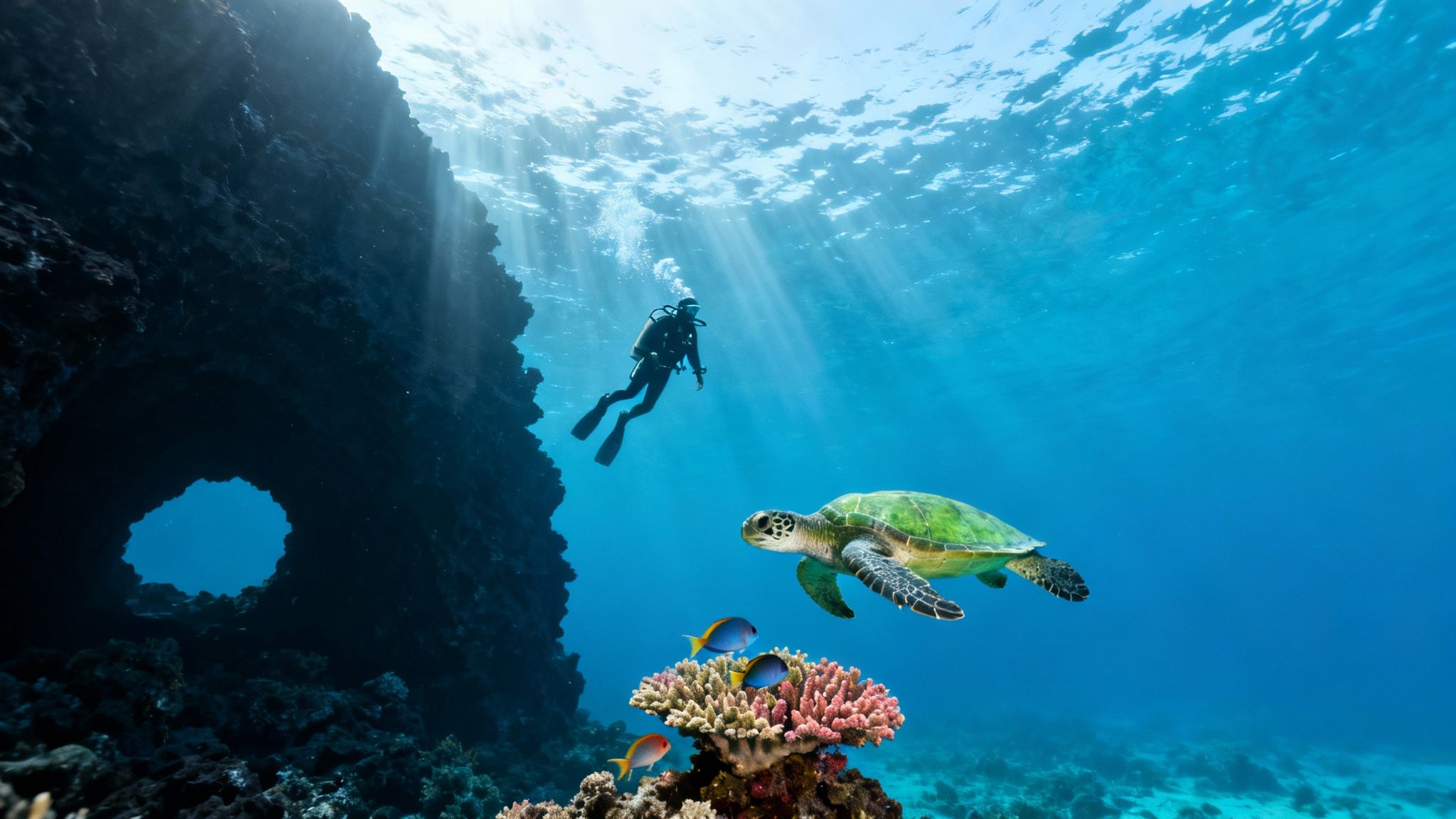
The Big Island's reputation isn't just a local secret; it's a worldwide phenomenon. The state’s dive industry is a major force in underwater tourism, hosting over 1.5 million scuba dives annually across more than 215 licensed dive shops. That sheer volume tells you just how sought-after these waters are, and Kona is the crown jewel. The Big Island has rightly earned its spot as the state's premier destination, consistently praised for its high-quality dive sites, diverse marine life, and incredible visitor experiences. You can discover more insights about Kona's top-tier diving scene to see why it stands out.
So, what’s Kona’s secret? It's all about geography. The island's massive volcanoes act as a natural shield, protecting the western coastline from the powerful Pacific swells that batter other shores. This creates uniquely calm and clear conditions almost all year long. As a result, visibility often pushes past 100 feet, turning every single dive into a high-definition spectacle.
Kona's Signature Underwater Adventures
Kona is home to a trio of world-famous dives that draw enthusiasts from every corner of the globe. Each one offers a completely different, yet equally breathtaking, look into the Pacific's hidden wonders.
- The Manta Ray Night Dive: This is the one Kona is famous for. You settle on the ocean floor as gentle giants, some with wingspans over 12 feet, glide just inches above your head in a mesmerizing underwater ballet. It’s pure magic.
- Vibrant Reef Dives: During the day, the volcanic coastline comes alive. You can explore dramatic lava formations, swim through archways, and drift over pristine coral gardens packed with Hawaiian green sea turtles (honu), colorful endemic fish, and the occasional well-hidden octopus.
- The Blackwater Dive: For the truly adventurous, this is a dive unlike any other. You'll drift tethered in the deep, open ocean at night to witness the planet's largest vertical migration, as bizarre and beautiful bioluminescent creatures rise from the abyss. It’s a glimpse into an alien world.
Here’s a quick look at how these iconic experiences stack up:
Top Dive Experiences on The Big Island
| Dive Experience | Best For | Key Features |
|---|---|---|
| Manta Ray Night Dive | Unforgettable Encounters | Up-close views of giant manta rays feeding in a choreographed spectacle. |
| Daytime Reef Dives | Exploring Biodiversity | Lava tubes, arches, vibrant corals, turtles, and colorful reef fish. |
| Blackwater Dive | Thrill-Seekers & Photographers | Witnessing rare, bioluminescent creatures from the deep ocean. |
Each of these dives offers a unique adventure you won't find anywhere else.
Of course, these world-class experiences are made possible by expert local operators who put safety, guest experience, and marine conservation first. A top-tier outfit like Kona Honu Divers brings together deep local knowledge and a genuine passion for sharing the magic of Kona’s underwater world. Their commitment to excellence ensures your adventure is not only thrilling but also responsible and respectful of this fragile environment. You can see what fellow divers have to say about their experience below.
Whether you’re about to take your first breath underwater or you’re a seasoned pro looking for your next great dive, the waters off the Big Island are ready to deliver an unforgettable journey.
Experiencing The World-Famous Manta Ray Night Dive
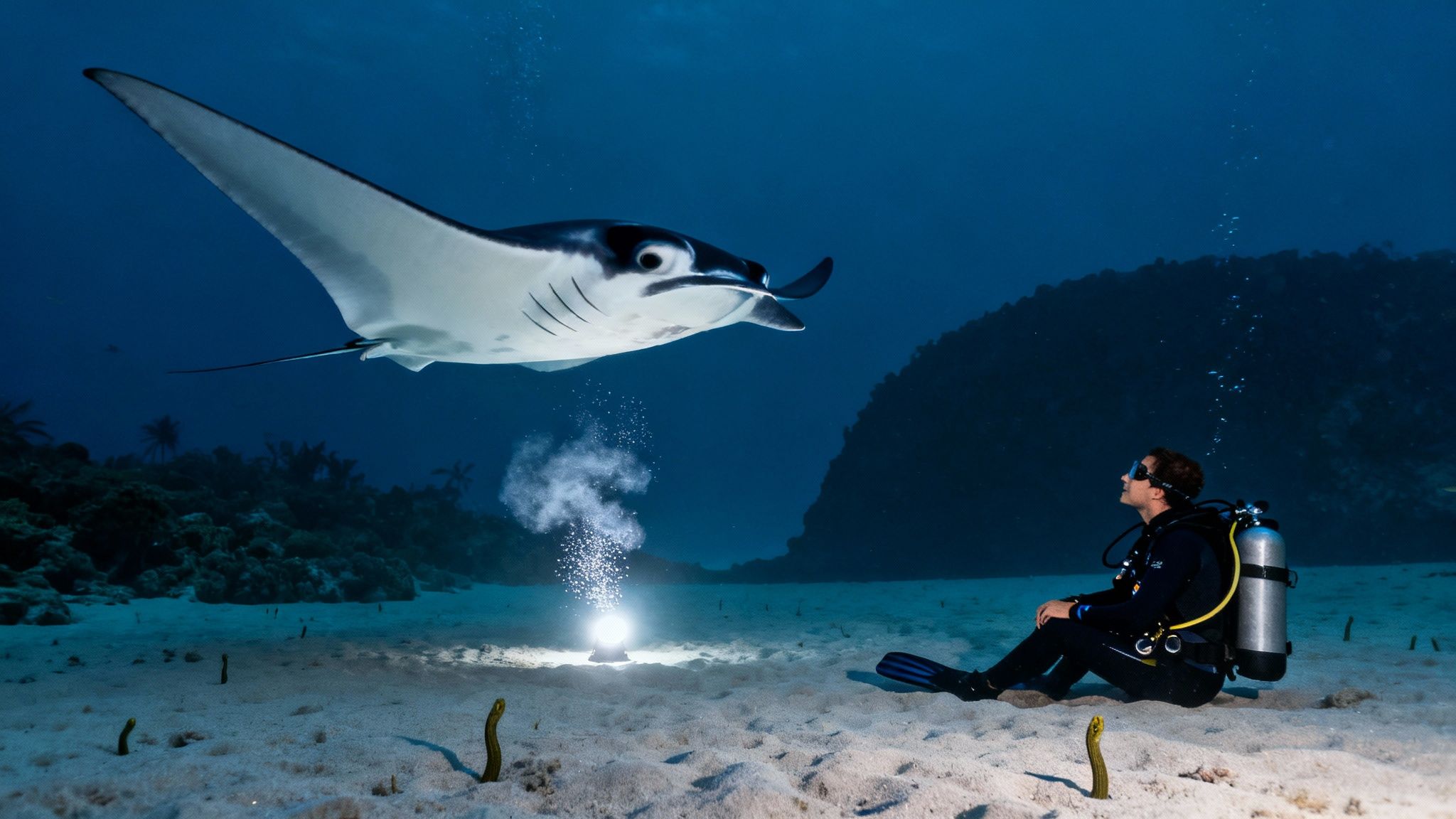
Picture this: you descend into the warm, twilight ocean, settle onto the sandy bottom, and look up. Out of the deepening blue, a shadow emerges. It's a majestic creature with a wingspan wider than you are tall, gliding effortlessly through the water in a silent, graceful ballet just inches above your head. This is the Kona Manta Ray Night Dive, and it's an absolute must-do for anyone diving the Big Island.
The whole encounter feels completely otherworldly, but the science behind it is actually pretty simple. Powerful, eco-friendly lights are placed on the ocean floor. These lights act like giant magnets for microscopic plankton—the manta rays’ favorite meal. As clouds of plankton gather in the beams, the mantas swoop in for their nightly feast, putting on an unforgettable show for the divers below.
Why Garden Eel Cove is the Premier Manta Dive Site
You can do this dive in a few spots, but they aren't all created equal. Garden Eel Cove, often called Manta Heaven, is hands-down the best choice, and for good reason. It's a protected location with a better viewing area and better reefs. Its location is naturally sheltered from the open ocean swells, meaning the conditions are almost always calmer, more comfortable, and safer for divers.
This natural protection also benefits the ecosystem. The reefs around Garden Eel Cove are healthier and more vibrant, making for a richer overall dive. Plus, the viewing area on the seafloor is wider and more comfortable, letting you get a front-row seat for the action without disturbing the delicate marine life.
The Manta Ray Night Dive is more than just watching fish. It’s a genuine connection. When you see these gentle giants up close, you get a profound sense of the ocean's delicate balance and understand just how important responsible tourism is for protecting these magical moments.
Choosing a dive at Garden Eel Cove simply sets you up for the best possible experience, combining calmer waters, a thriving reef, and a perfect vantage point to see the mantas in all their glory.
Your Front-Row Seat to an Underwater Ballet
Your adventure starts as the sun begins to set, painting the Kona coast with gold. After a thorough briefing from the expert guides at Kona Honu Divers, you'll slip into the water just as dusk settles in. You’ll descend to a comfortable depth of about 35 feet and join the other divers in a semi-circle around the underwater lights. Then, you'll point your own dive light up, adding to the plankton buffet.
The anticipation in the water is electric. Suddenly, the first shadow glides into the light—a massive manta ray, mouth wide open, filtering plankton from the water. Soon, another joins, then another, until you're surrounded by up to a dozen of these gentle giants. They perform mesmerizing barrel rolls and graceful loops right over your head, their white bellies glowing in the lights. They get so close you feel like you could reach out and touch them (but remember, touching is strictly forbidden to protect their delicate skin). You can learn more about the science and wonder of the manta ray night swim to get the full picture of this incredible phenomenon.
This isn't just a dive; it’s an immersive performance, and you have the best seat in the house. The experience is both humbling and exhilarating, creating a memory that will stick with you forever. The team at Kona Honu Divers truly excels at making this dive safe, educational, and completely unforgettable. Their passion for these animals and commitment to their guests shines through on every single trip. See what other divers are saying about this incredible tour.
Ready to witness this incredible spectacle for yourself? Secure your spot for one of the world's most unique dives.
Exploring Kona’s Volcanic Underwater Landscapes
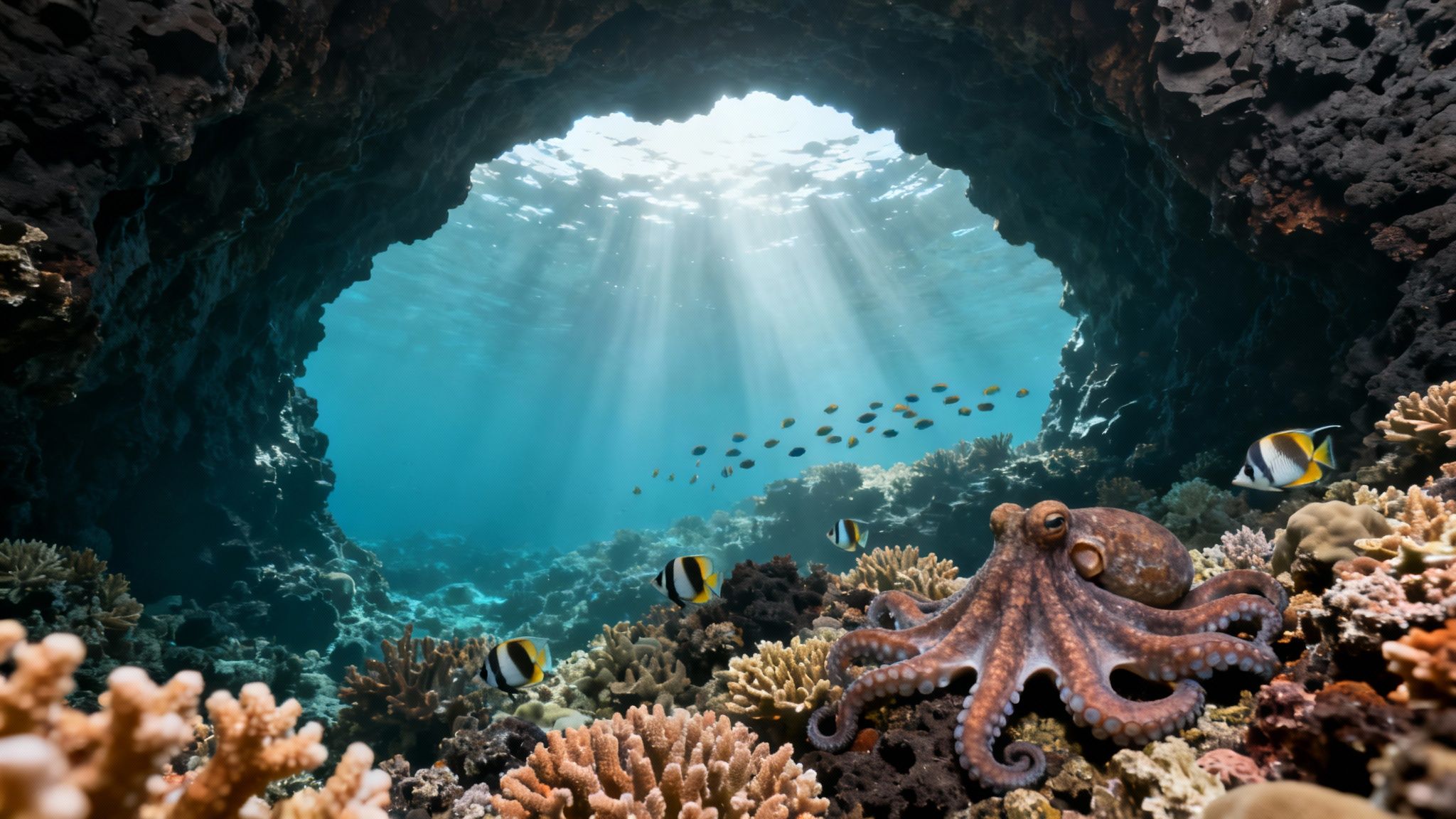
While the Manta Ray Night Dive gets most of the headlines, don't for a second think the daytime adventures when diving Big Island are any less incredible. The Kona coast is a world forged by fire and sea, where ancient lava flows have sculpted a dramatic underwater playground. This isn’t your typical reef. We’re talking about intricate lava tubes you can swim through, massive archways, and sprawling coral gardens that have grown over volcanic rock.
These unique formations aren't just for show—they're the architecture for a thriving ecosystem. The lava tubes and overhangs create perfect hideouts for octopuses, moray eels, and tons of reef fish. When the sunlight filters down through those massive arches, it lights up schools of endemic Hawaiian butterflyfish in a way that feels truly magical. It’s a photographer's dream.
The Thriving Reefs of the Kona Coast
What really sets Kona's daytime dives apart is the sheer density of marine life. The water is often crystal clear and calm, making it a sanctuary for an unbelievable variety of species, from tiny critters hiding in the coral to some of Hawaii's most iconic animals.
On almost any given dive, you'll likely spot Hawaiian green sea turtles (honu) gliding gracefully over the reef or just chilling on the sandy bottom. The reefs are absolutely buzzing with activity.
- Huge schools of brilliant yellow tangs swim by in a flash of color.
- Shy but incredibly intelligent octopuses camouflage themselves perfectly against the rocks.
- You can spot unique endemic species like the Potter's angelfish, which you won't find anywhere else on Earth.
Every dive feels like a new discovery. Exploring these underwater structures is like navigating a lost, submerged city full of life.
Kealakekua Bay: A Protected Paradise
Of all the fantastic dive sites along the Kona coast, Kealakekua Bay is the crown jewel. As a protected Marine Life Conservation District, it's a top destination for divers and snorkelers of all skill levels. Because fishing is heavily restricted, the marine life here flourishes in a way you rarely see elsewhere. This protection leads to pristine conditions and incredible visibility, often clearing 100 feet. You can truly appreciate the vibrant coral and its residents. You can learn more about this premier Big Island scuba destination to see why it's a must-do.
The bay's protected status means the coral gardens are exceptionally healthy, and the fish are so used to visitors they don’t spook easily. This allows for amazing, up-close encounters. It’s a perfect example of how conservation creates a spectacular underwater world for everyone to enjoy.
Choosing to explore Kona’s volcanic landscapes by day opens up a whole different side of Big Island diving. The combination of dramatic underwater terrain and incredible biodiversity makes for an adventure you won't forget. These reef dives are the perfect complement to the thrill of the night dives, showing you everything that makes Kona a world-class diving destination.
Taking on Advanced Dives Like The Blackwater
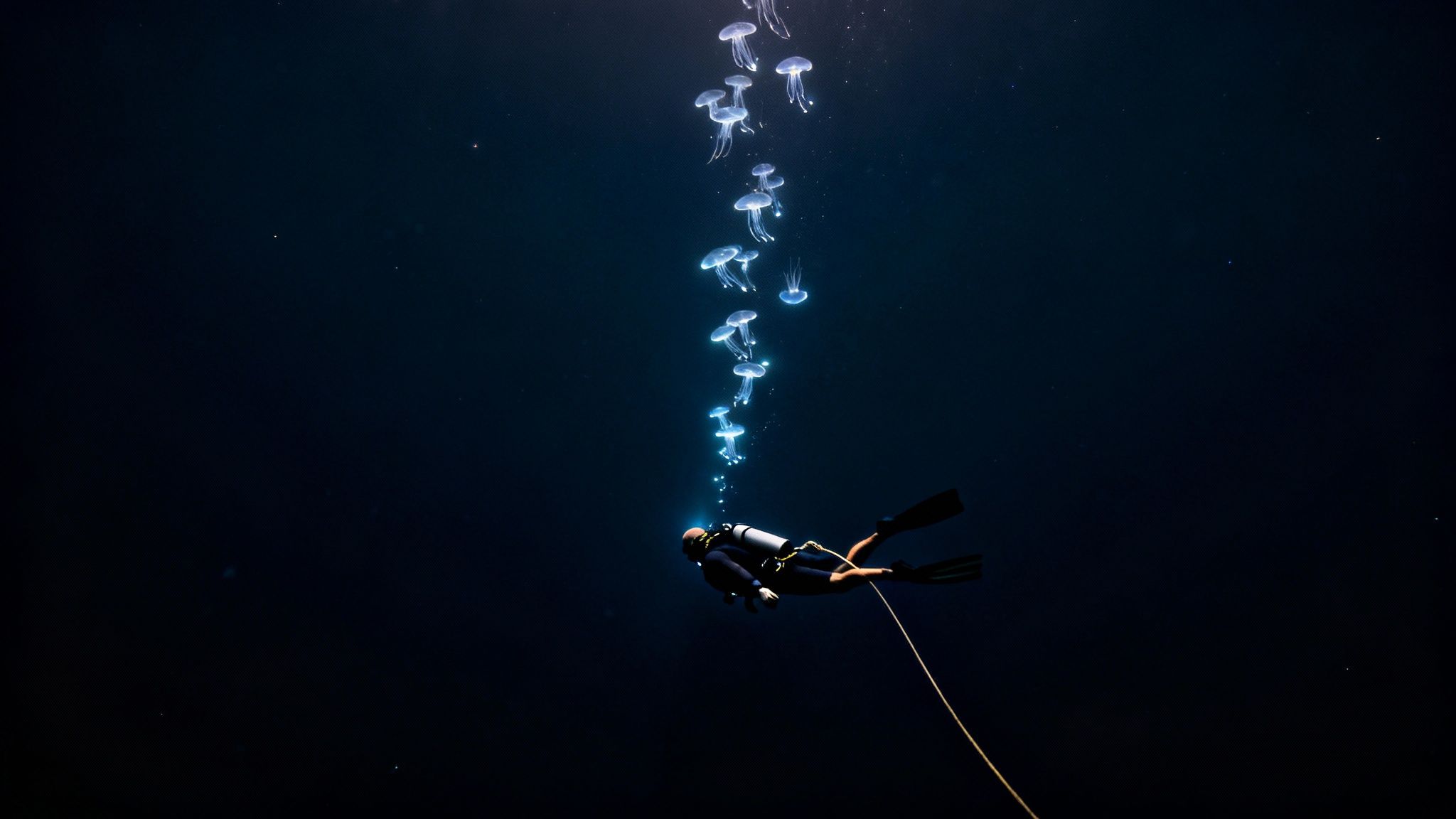
So you've seen the stunning reefs and danced with the mantas. You're an experienced diver, and you're starting to wonder, "What's next?" If you’re hungry for a truly unique challenge that pushes the limits of underwater exploration, the Kona Blackwater Dive is calling your name.
This isn't your average night dive. Far from it. This is a journey into the deep, dark heart of the open ocean.
Imagine being miles offshore, floating in absolute blackness, suspended over thousands of feet of water. You’re safely tethered to the boat, a lone beacon of light in the vast Pacific. Down below, the largest migration of life on Earth is happening, as bizarre, bioluminescent creatures rise from the crushing depths to feed. The whole experience feels less like diving and more like a spacewalk. It's surreal, humbling, and completely unforgettable.
What You Will See in The Deep
The creatures you’ll encounter on a blackwater dive look like they swam right out of a sci-fi movie. Many are translucent, covered in their own light-producing organs (photophores), and perfectly evolved for a life in total darkness. You’re not just spotting fish in a reef; you're witnessing life forms that seem genuinely alien.
Expect to see things like:
- Pelagic Nudibranchs: Gelatinous, free-swimming sea slugs drifting through the water column.
- Larval Creatures: The tiny, otherworldly juvenile forms of familiar animals like lobsters and eels. They look nothing like their adult selves.
- Bioluminescent Jellies: An incredible array of jellyfish and ctenophores pulsing with their own internal light, creating a private light show in the dark.
- Deep-Sea Squid: Strange and beautiful cephalopods, some no bigger than your thumb, that are masters of the abyss.
This dive is not for everyone. It demands absolute mastery of your buoyancy, a calm mind, and a deep respect for the open ocean. It’s strictly for experienced, advanced divers who are comfortable in challenging conditions. The reward? A rare glimpse into a hidden world few will ever see. You can learn more about the specifics of blackwater dives and why this adventure is so special.
Other Advanced Diving Opportunities
While the Blackwater Dive is the pinnacle of advanced diving in Kona, it’s not the only game in town. The Big Island's volcanic coastline is a playground for experienced divers, offering up deep reefs, dramatic drop-offs, and thrilling drift dives that will keep your adrenaline pumping. These advanced dive tour opportunities go far beyond the typical dive profiles.
Exploring Kona's advanced sites means venturing into deeper waters where larger pelagic species are more common. These dives demand greater skill and awareness, but they also deliver some of the most memorable encounters the Big Island has to offer.
You'll have the chance to explore sheer walls that disappear into the blue, navigate along rugged volcanic ridges, and let the current carry you over pristine, untouched reefs. This is where you see the wilder side of Kona’s underwater world.
The expert crew at Kona Honu Divers has the local knowledge and top-notch gear to lead these demanding dives safely. Their commitment to small groups is a huge plus, ensuring you get the personalized attention that’s so critical when the dives get more complex. For any diver ready to take their skills to the next level, they are the obvious choice.
See what other certified divers have to say.
Ready for your next great underwater challenge?
How To Plan Your Big Island Dive Trip
So, you're ready to turn that dream of diving the Big Island into a reality. The good news? Planning is surprisingly straightforward. Thanks to the massive shield volcanoes protecting the Kona coast, we're blessed with incredibly consistent conditions. Calm, clear water isn't a lucky break here—it's the standard.
This means you can book a trip pretty much any time of year and be confident you’ll have a fantastic time. That said, there are a few seasonal nuances to keep in mind.
If you love warm water, aim for August through October, when temperatures peak at a balmy 80°F (27°C). On the other hand, from January to March, the water dips a bit to around 75°F (24°C), but you get an unbelievable trade-off: the chance to hear migrating humpback whales singing during your dives. It’s a truly haunting and unforgettable soundtrack.
Big Island Diving Seasonal Overview
To make it even easier, here's a quick look at what you can expect throughout the year.
| Season | Avg. Water Temp | Visibility | Potential Marine Life Sightings |
|---|---|---|---|
| Winter (Dec – Mar) | 75°F – 77°F | 80 – 100 ft | Humpback whales (songs), dolphins, manta rays, tiger sharks |
| Spring (Apr – Jun) | 76°F – 78°F | 100+ ft | Manta rays, reef sharks, turtles, abundant reef fish |
| Summer (Jul – Sep) | 79°F – 81°F | 100+ ft | Manta rays, whale sharks (occasional), pilot whales |
| Fall (Oct – Nov) | 78°F – 80°F | 80 – 100 ft | Manta rays, turtles, eagle rays, diverse macro life |
No matter when you visit, the diving is always world-class. It really just comes down to personal preference for water temperature and whether you're hoping for a specific marine life encounter.
Certification and Picking the Right Dive Shop
First things first: if you're a certified diver, remember to pack your c-card. You’ll need to show proof of at least an Open Water certification to join most dives. For the more demanding adventures like the Blackwater Dive, you’ll need your Advanced Open Water cert and a healthy number of logged dives to show you're comfortable in those conditions.
Not certified yet? No problem. Nearly every shop offers an introductory "Discover Scuba Diving" experience, which is a fantastic way to get your fins wet under close supervision.
Your choice of dive operator can make or break your trip. A top-tier shop like Kona Honu Divers isn't just about getting you in the water. They run custom-built boats designed for diver comfort, provide well-maintained rental gear you can trust, and—most importantly—have experienced local guides who prioritize your safety above all else.
What to Pack and How to Prepare
Packing for a Kona dive trip is pretty simple. Here’s a quick checklist to make sure you don't forget the essentials:
- Dive Gear: Bring your own rig if you're comfortable with it. Otherwise, quality rentals are readily available.
- Certification Card & Logbook: Can't say it enough—don't leave home without them!
- Swimsuit & Towel: The no-brainers of any water-based vacation.
- Reef-Safe Sunscreen: This is a big one. Let's protect our fragile coral ecosystems while we enjoy them.
- A Light Jacket or Sweatshirt: Even in paradise, it can get chilly on the boat ride back after a night dive.
Don't forget to explore what's happening on the surface, too! The Big Island is steeped in culture. For a truly unique day off from diving, consider trying Hawaiian outrigger canoe surfing. It's an amazing way to connect with the ocean from a different perspective.
A final piece of advice: book your Kona diving tours well in advance. Popular trips like the Manta Ray Night Dive are often sold out weeks ahead, especially during peak season. A little planning goes a long way toward a stress-free trip focused on what you came here for. If you're working on a budget, our guide on how expensive scuba diving is in Hawaii can help you map out your costs.
Why We Recommend Kona Honu Divers
Picking the right dive shop can make or break your entire trip. So, what makes Kona Honu Divers our top recommendation on the Big Island? It’s not just one thing, but a combination of an incredible safety record, personalized dive trips, and a crew that is genuinely passionate about Hawaii's underwater world.
This isn’t just another tour operator. The team at Kona Honu brings over 200 years of combined experience to the table, and it shows. They've maintained a flawless safety record by focusing on the little details, which lets you relax and truly soak in the experience, knowing you're in the best possible hands.
It's All About the Experience
Kona Honu Divers gets it: crowded "cattle boats" just don't cut it. They built their entire operation around small groups, which means you get a much better, more personal dive.
Their boats are custom-built specifically for divers. You'll have more space to gear up, more one-on-one time with your guide, and a far less crowded experience at the actual dive site. It’s a completely different feeling—like you're on a private expedition rather than just another number on a manifest.
When a dive company invests in custom boats, maintains a perfect safety record, and hires guides who are genuinely passionate about marine life, they’re not just offering a tour—they’re crafting an unforgettable experience.
The crew's excitement is infectious. They don't just point to a fish; they tell you its story, share fascinating facts, and help you see the reef in a new way. It's this mix of professionalism, expertise, and a true love for the ocean that keeps people coming back year after year. But don't just take our word for it—see what other divers have to say.
Whether you’re dreaming of the world-famous manta ray night dive or one of their other incredible diving tours, they have an adventure waiting for you.
Your Big Island Diving Questions, Answered
Got a few more questions before you book? I get it. Here are some quick, no-nonsense answers to the things divers ask most when planning a trip to the Kona coast.
What Is The Best Time of Year for Diving on The Big Island?
Honestly, there's no bad time to dive in Kona. That's the beauty of this place. The Kona coast is tucked away from the big ocean swells that hit other parts of Hawaii, so the conditions are remarkably consistent and calm all year long.
If you love warm water, aim for August through October when temps hover around a balmy 80°F (27°C). Things cool down a bit from January to March, dropping to a still-comfortable 75°F (24°C). The real magic of winter diving? That’s when the humpback whales are here. Hearing their songs echo through the water on a dive is an experience you will never, ever forget.
Do I Need To Be an Advanced Diver To Enjoy Kona Diving?
Absolutely not! Kona is one of the best places in the world for divers of every skill level, from your very first open-water dive to your hundredth. So many of the most vibrant reefs are in calm, shallow waters, making them perfect for new divers to build confidence.
That said, if you're looking for a challenge, Kona has you covered. The world-famous Kona Blackwater Dive is a bucket-list trip for advanced divers. The key is finding the right operator. A top-notch shop like Kona Honu Divers is fantastic at matching their Kona diving tours to your experience level, ensuring everyone has an amazing and safe time in the water.
What Marine Life Can I Expect To See While Diving in Kona?
Get ready for a show. Kona’s volcanic underwater landscape is buzzing with life. You're almost guaranteed to see our famous Hawaiian green sea turtles (honu) on every dive. You'll also be surrounded by clouds of colorful fish you can only find here, like the bright Potter's Angelfish and Yellow Tang, while moray eels peek out from their rocky homes.
Beyond the regulars, keep your eyes peeled for pods of spinner dolphins, graceful eagle rays, and whitetip reef sharks cruising the reef. And, of course, there are the headliners: the Manta Ray Night Dive delivers near-certain encounters with gentle giants, and the Blackwater Dive reveals bizarre, glowing creatures from the deep that look like they're from another planet.
What Should I Bring on a Dive Trip?
The dive shops make it pretty simple. They’ll have your tanks and weights ready to go, and you can always rent excellent gear if you don't feel like hauling your own.
Here’s a quick checklist of personal items to make your day perfect:
- Your C-card and logbook (don't leave home without them!)
- Swimsuit and a towel
- Reef-safe sunscreen, a good hat, and sunglasses
- A reusable water bottle (hydration is key)
- A sweatshirt or windbreaker for the boat ride back, especially after a night dive
And if you have an underwater camera, you're definitely going to want to bring it.