
Picture this: you descend into impossibly clear, blue water. Sunlight streams down, lighting up a labyrinth of ancient lava tubes, sunken craters, and coral gardens bursting with color. This isn't just a dive; this is diving the Big Island, and it’s a world-class experience that pulls divers back year after year. The island's raw volcanic geology has carved out an underwater landscape you simply won't find anywhere else in Hawai'i.
Why the Big Island Offers Hawaii’s Best Diving
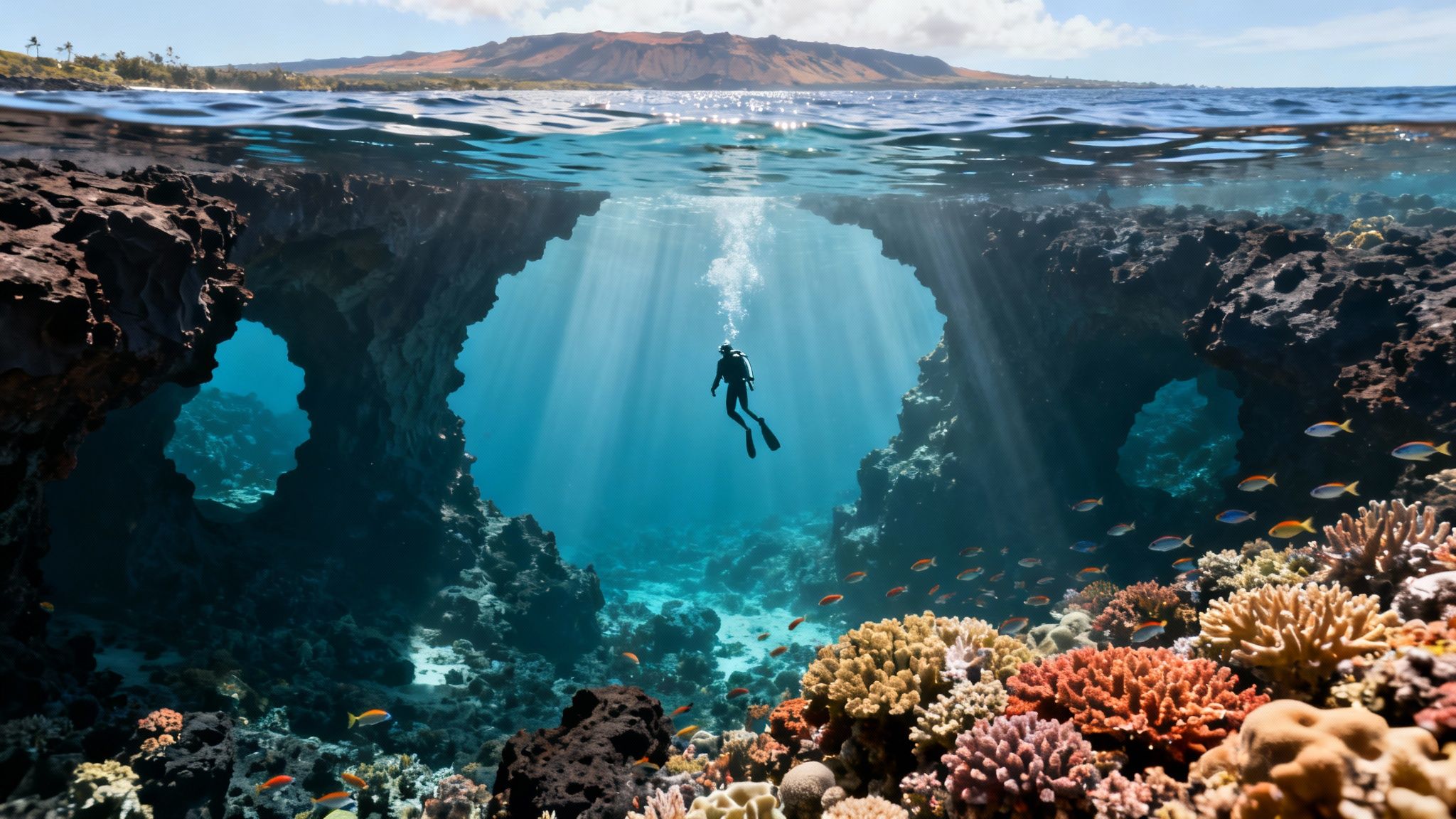
So, what makes the Big Island the crown jewel of Hawaiian diving? It’s not just one thing—it’s the perfect storm of incredible conditions. The sheer mass of volcanoes like Mauna Loa and Mauna Kea acts as a giant natural shield, protecting the Kona coast from the powerful trade winds that often churn up the waters around the other islands.
The result? Astonishingly calm, flat seas for most of the year. This tranquility makes for relaxed, enjoyable dives for everyone, whether you're taking your first breaths underwater or you're a seasoned pro with thousands of dives logged. You get to spend your time and energy just soaking in the scenery, not fighting the ocean.
Before we get into the details, here's a quick overview of what to expect when diving the Big Island.
Big Island Diving at a Glance
| Feature | Details |
|---|---|
| Average Visibility | 80–100 feet (24–30 meters) |
| Water Temperature | 75–80°F (24–27°C) |
| Key Dive Sites | Manta Heaven, Au Au Crater, Golden Arches |
| Topography | Lava tubes, arches, craters, vibrant coral reefs |
| Marine Life | Manta rays, sea turtles, dolphins, endemic fish |
| Best Season | Year-round, with the calmest seas in summer |
This table just scratches the surface of why divers consistently choose the Kona coast. Let's explore what truly sets it apart.
Unmatched Visibility and Volcanic Topography
Time and again, experienced divers call Kona “the best diving in Hawaii,” and it's easy to see why. The underwater visibility along this coast is consistently spectacular, often ranging from 80 to 100 feet (24–30 meters). To put that in perspective, many popular Caribbean spots average closer to 50–80 feet. You can see this sentiment echoed in plenty of online discussions, like these diver opinions on Hawaii's top dive spots on TripAdvisor.com.
This incredible clarity allows you to fully appreciate the island's signature underwater architecture. The geology here is the star of the show:
- Lava Tubes and Archways: Millennia of volcanic activity have left behind a playground of swim-throughs, caverns, and dramatic arches just waiting to be explored.
- Submerged Craters: At sites like Au Au Crater, you can literally dive inside a collapsed volcanic cone—an experience few places on Earth can offer.
- Vibrant Coral Growth: The solid lava rock provides a perfect anchor for coral, which has grown into extensive, healthy reef systems just a short boat ride from shore.
This dynamic, volcanic terrain is home to a staggering diversity of marine life, including dozens of endemic species found only in Hawaiian waters.
Your Guide to Kona’s Underwater Paradise
Navigating this aquatic wonderland is best done with local experts who know every nook and cranny. That's where a top-notch guide becomes invaluable. Kona Honu Divers has earned its reputation as the go-to operator for showcasing the absolute best of what the Big Island has to offer. Their team’s intimate knowledge of the dive sites means every trip is safe, awe-inspiring, and perfectly suited to the day's conditions.
Whether your dream is to swim with gentle green sea turtles, weave through a lava tube, or experience the world-famous manta ray night dive, your adventure begins right here. Consider this guide your pre-dive briefing, designed to give you a complete picture of what to expect from your unforgettable journey into Kona's underwater world.
The Unforgettable Kona Manta Ray Night Dive
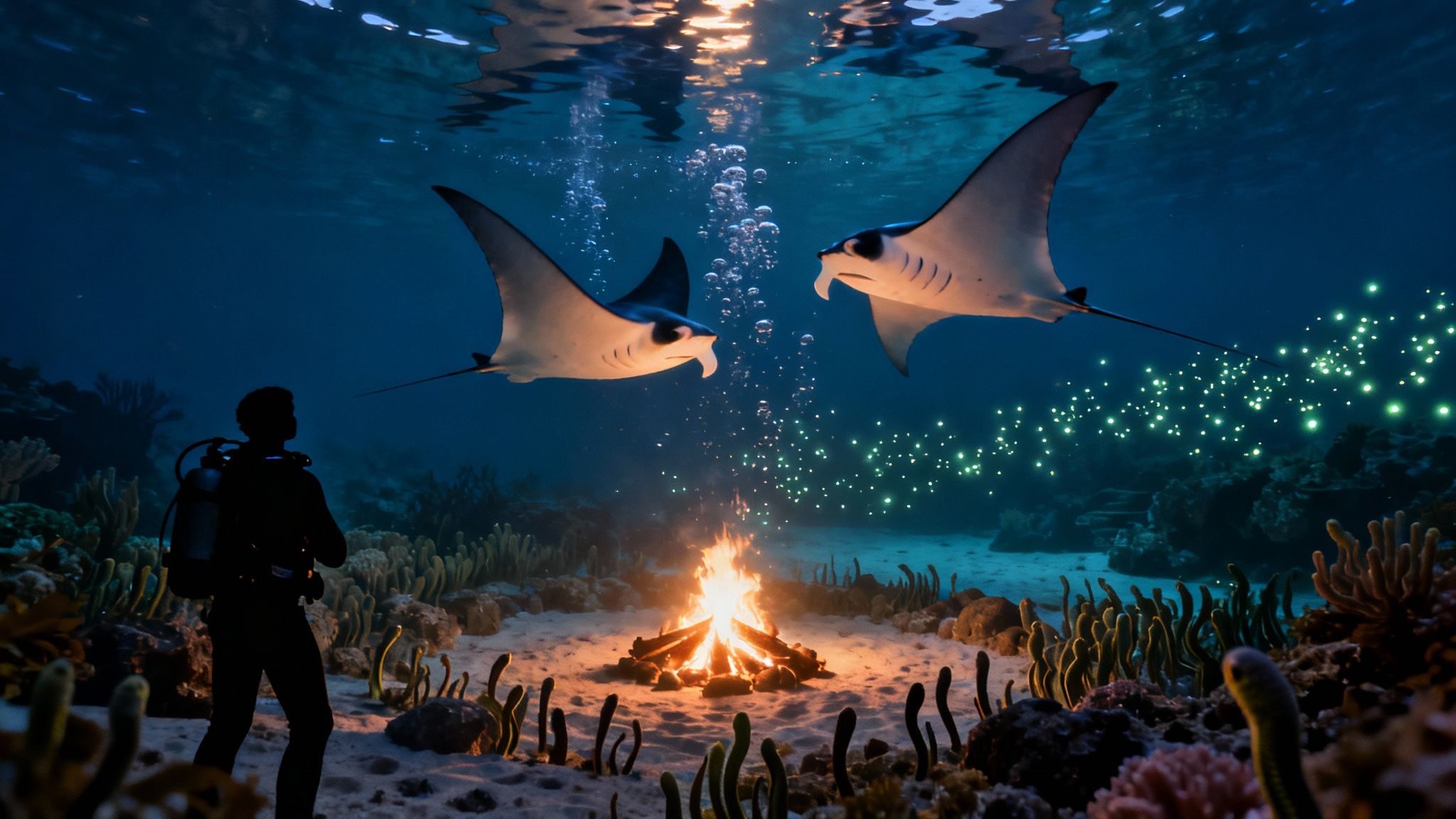
There are some dives you remember, and then there are the ones that stick with you forever. The Kona Manta Ray Night Dive is definitely one of the latter. It's not just hype—it’s consistently called the single best night dive on the planet, and you can only do it right here on the Big Island.
Imagine this: dive operators place powerful lights on the seafloor, creating what we affectionately call the "campfire." This beacon of light attracts clouds of plankton, which happens to be the mantas' favorite meal. Before you know it, these gentle giants swoop in for their nightly buffet, barrel-rolling and gliding through the beams just inches from your face. It's a breathtaking, silent ballet you have to see to believe.
Why Garden Eel Cove Is The Place To Be
While you might hear about a couple of spots for this dive, one location is head and shoulders above the rest: Garden Eel Cove. Its natural advantages make for a consistently better, more magical experience.
- It's Protected: Tucked into a sheltered bay, the water at Garden Eel Cove is almost always calmer. That means a more comfortable dive where you can just relax and enjoy the show without getting tossed around.
- A Healthier Reef: The reef here is simply more vibrant and full of life. A healthy ecosystem means more plankton, and more plankton means a more reliable gathering of manta rays.
- A Natural Amphitheater: The underwater landscape forms a sort of natural arena for divers. This layout gives everyone a front-row seat without feeling like you're piled on top of each other.
Put it all together, and Garden Eel Cove is where the magic happens night after night. It’s simply the most reliable and awe-inspiring place to witness this spectacle.
An Insanely High Success Rate
Here’s the thing that really sets this dive apart: it’s almost a sure thing. With most big animal encounters, you cross your fingers and hope for the best. But the Kona manta dive delivers with incredible consistency.
We're talking a success rate of seeing mantas hovering around 85–90% on any given night. For perspective, many shark or whale watching trips worldwide are happy to hit a 50–70% success rate, depending on the season. This is easily one of the most dependable wildlife encounters you'll find anywhere.
The manta ray night dive is more than just an activity; it's a profound connection with one of the ocean's most graceful giants. Witnessing their silent, effortless flight through the water is a humbling and unforgettable experience.
This dive is the absolute cornerstone of any trip focused on diving the Big Island. It's the perfect storm of a proven method, an ideal location, and a healthy, local manta population coming together to create a once-in-a-lifetime show that happens daily. For a closer look at what makes this so special, check out our guide to the Kona Manta Ray dive experience.
Exploring Kona’s Top Dive Sites Beyond the Mantas
While the famous manta ray ballet is an absolute must-see, it’s really just the opening act for the incredible show that is diving the Big Island. Think of the Kona coast as a sprawling underwater playground, forged by volcanic fire and then sculpted over millennia by the Pacific. Once the manta dive’s lights go out, there’s a whole treasure trove of unique sites waiting for you, each offering a completely different kind of adventure.
The sheer diversity is staggering. You’ll find everything from vibrant coral gardens to dramatic, otherworldly underwater architecture. Exploring these other spots tells the full story of Kona's marine ecosystem. You quickly realize that the same geological forces that created this island also blessed it with some of the most fascinating underwater landscapes on the planet.
Au Au Crater: A Volcanic Wonder
Ever wanted to descend into the heart of a submerged volcano? That's exactly what you get at Au Au Crater (pronounced "ow-ow"), a collapsed volcanic cone just a quick boat ride from Honokohau Harbor. This isn't your standard reef dive; it's a journey into a geological marvel.
The crater’s rim makes for a spectacular wall dive, but the real magic is found inside. The ancient eruption left behind a network of dramatic lava tubes, stunning archways, and endless swim-throughs. As sunlight streams through these openings, it creates breathtaking light beams that dance in the crystal-clear water. It’s a photographer’s dream and a perfect showcase of what makes diving the Big Island so unique.
Marine life loves it here, too. Keep your eyes peeled for schools of pyramid butterflyfish, shy reef sharks resting on sandy patches, and colorful nudibranchs clinging to the volcanic rock. It’s an amazing example of how life not only adapts but thrives in these powerful environments.
Turtle Pinnacle: The Ultimate Cleaning Station
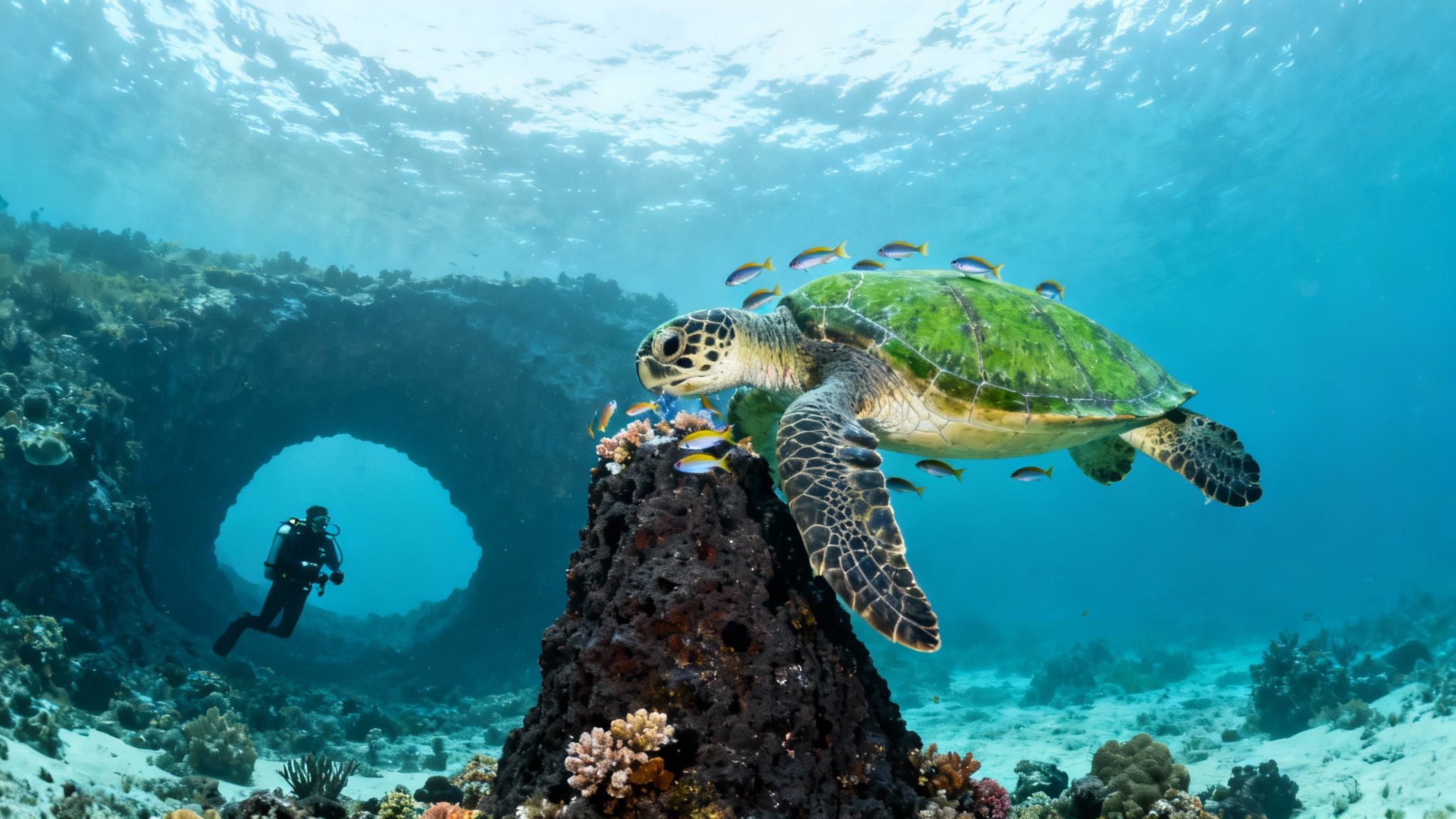
If you're a turtle fan, Turtle Pinnacle is non-negotiable. This site is a classic example of a "cleaning station"—a vital part of the reef's social fabric. The best way to picture it is as a day spa for Hawaiian green sea turtles, or honu.
The turtles gather here, patiently queuing up while small reef fish, like the Hawaiian cleaner wrasse, swim in to nibble away at parasites and dead skin. It's an incredible display of symbiosis that gives you a chance to see these ancient mariners in a totally calm, natural state.
This site provides a rare opportunity to see multiple turtles in one place, going about their daily routines. Observing this peaceful, cooperative behavior is a powerful reminder of the intricate connections within the marine world.
Just remember to give them space. Keeping a respectful distance ensures you don't disturb the turtles or the little fish doing their important work. By being a passive observer, you get to witness one of the most serene and fascinating behaviors in the ocean.
The Kona Blackwater Dive: A Journey into the Abyss
For the truly adventurous diver, there is absolutely nothing on Earth like the Kona Blackwater Dive. Forget the reef. This is an open-ocean drift dive at night, conducted over thousands of feet of water. You’re tethered to the boat, suspended in inky blackness, while bizarre and beautiful creatures rise from the depths to greet you.
You're getting a front-row seat to the largest animal migration on the planet. Every single night, countless tiny planktonic creatures and larval-stage critters ascend from the abyss to feed near the surface. You will see things that look like they belong on another planet:
- Bioluminescent jellies pulsing with their own eerie, internal light.
- Translucent larval fish with oversized eyes and still-developing bodies.
- Weird cephalopods and alien-like crustaceans you simply won't see anywhere else.
It's a humbling, mind-bending experience that many have called "the weirdest, coolest dive in the world." If you're an experienced diver looking for a truly unique thrill, you can learn more about booking a Kona Blackwater Dive tour and prepare for an encounter with the great unknown.
Advanced Diving Opportunities
For certified divers with some experience under their weight belts, the Big Island offers challenges that deliver exceptional rewards. Deeper sites, punchier currents, and more complex topography await those looking to push their skills.
Sites like "The End of the World" or "Suck 'em Up" serve up exciting drift dives and the chance to see larger pelagic species. These dives demand excellent buoyancy control and sharp situational awareness, but the payoff is an exhilarating ride. Kona Honu Divers runs a premium advanced dive tour specifically for seasoned divers who are ready for these more demanding environments.
If you're just curious about what else is out there, you can also explore our guide on where to find the best diving on the Big Island.
How to Plan Your Big Island Dive Adventure
Alright, so you're ready to stop dreaming and start doing. Taking that step from thinking about a Big Island dive trip to actually planning it is where the real fun begins. The good news? Kona makes it easy. Thanks to the massive volcanoes protecting the coastline, the weather and ocean conditions are remarkably consistent, making it a stellar year-round destination.
Let’s walk through everything you need to know to get this trip locked in, from picking the right time of year to figuring out the logistics. By the end, you'll be ready for an adventure you'll never forget.
When to Visit The Kona Coast
One of the best things about diving in Kona is its reliability. You don’t have to stress too much about timing your trip perfectly, because you can count on great conditions just about any day of the year. The island’s volcanoes act as a massive shield against the trade winds, leaving the Kona coast with calm, clear water most of the time.
That said, there are a few subtle differences between the seasons that might help you decide when to pull the trigger.
If you love warm water and glassy seas, think about coming between May and September. The ocean is at its flattest, and the water temperature often creeps up to a balmy 80°F (27°C). It's the perfect time for new divers or anyone who just wants the most relaxed conditions possible.
The winter months, from November to April, are a little different. The water cools down a bit, usually hovering around 75°F (24°C). But the real draw this time of year is the arrival of humpback whales. You won't be in the water with them, but hearing their incredible songs reverberate through the ocean on a dive is a truly magical, unforgettable experience.
To make it simple, here’s a quick look at what each season offers.
Seasonal Diving Guide for Kona
This table breaks down the conditions and wildlife you're likely to encounter throughout the year, helping you pinpoint the perfect time for your trip.
| Season | Water Temperature | Key Marine Life Sightings |
|---|---|---|
| Winter (Nov – Apr) | 75-78°F (24-26°C) | Humpback whale songs, manta rays, turtles, occasional sharks |
| Summer (May – Oct) | 78-80°F (26-27°C) | Calmest seas, manta rays, pilot whales, large schools of fish |
Ultimately, there’s no bad time to dive in Kona—it just comes down to what you want to see and feel.
Logistics and Travel Essentials
Getting here is a breeze. Most divers fly directly into Ellison Onizuka Kona International Airport (KOA). It’s super convenient, just a few minutes down the road from town and Honokohau Harbor, which is the hub for almost all the dive boats. I always tell people to rent a car; it gives you the freedom to explore the rest of this amazing island on your days off.
For places to stay, stick close to Kailua-Kona. It gives you the best access to dive shops, great food, and everything else you’ll need. You can find anything from fancy waterfront resorts to cozy vacation rentals, so there’s something for every budget.
As for packing, keep it simple. Here’s what you absolutely need:
- Dive Gear: You can always rent excellent gear, but there's nothing like the comfort of your own mask, fins, and dive computer.
- Wetsuit: A solid 3mm wetsuit works for most people all year. If you tend to get chilly, you might want a 5mm for the winter months.
- Reef-Safe Sunscreen: This is a big one. Protect your skin, but also protect our fragile coral reefs.
- C-Card: Don't leave home without your proof of certification!
And a final pro tip: Before you lock everything in, take a moment for the practical stuff, like choosing the right travel insurance. A little peace of mind goes a long way.
Matching Dives to Your Skill Level
The beautiful thing about diving the Big Island is that there’s truly something for everyone. It doesn't matter if you have five dives or five thousand—you’re going to find sites that thrill you.
- For Beginners: Just getting your fins wet? The calm, shallow reefs are perfect. They’re teeming with colorful fish and offer a completely stress-free place to build your confidence and nail your buoyancy.
- For Intermediate Divers: Once you're comfortable in the water, a whole new world opens up. You can explore incredible lava tubes, swim through dramatic arches, and of course, experience the world-famous Manta Ray Night Dive.
- For Advanced Divers: If you’re looking for a challenge, we’ve got you covered. Deeper pinnacles, exciting drift dives, and the totally unique Kona Blackwater Dive offer incredible experiences for seasoned divers.
Of course, planning a trip also means thinking about the budget. To get a clear picture of the costs, check out our guide on how expensive scuba diving in Hawaii can be. It’ll help you map out your expenses so you can just relax and enjoy the dives.
Your Safety and the Health of Our Reefs Come First
When you slip beneath the waves in Kona, two things matter more than anything else: your safety and the well-being of the incredible marine world you've come to see. Let's talk about the absolute must-knows for responsible diving on the Big Island, starting with the most important choice you'll make.
Honestly, the single best thing you can do for your safety is to dive with a professional, highly-rated operator like Kona Honu Divers. While Kona is famous for its calm, clear waters, the ocean is still the ocean—it's powerful and demands respect. That's especially true here in Hawaiʻi, where conditions can be unique.
The statistics paint a stark picture of why local pros are so serious about safety briefings, conservative dive plans, and expert guidance. Between 2020 and 2024, 187 Hawaiʻi residents drowned in our oceans, giving the state the second-highest resident drowning rate in the US. In 2022, that number was 60, nearly three times the national average. You can read more about these sobering ocean safety statistics on CivilBeat.org.
Your Safety Checklist
A good dive is a safe dive. It’s that simple. Following these time-tested rules ensures every tank is a memory worth making.
- Listen to the Briefing: This isn't just background noise. Your divemaster's briefing is packed with crucial, real-time info about the site, any currents, how to get in and out of the water, and what amazing creatures you might meet. It’s non-negotiable.
- Dive Within Your Limits: Be honest with yourself about your training and comfort level. If you're an Open Water diver, there's no reason to push deep. If anything feels off, for any reason, signal your guide. There's no shame in calling a dive.
- Stay with Your Buddy: The buddy system is the heart and soul of scuba safety. Know where your buddy is at all times, do your checks before you hit the water, and keep an eye on each other's air. It’s a team sport.
Protecting Our Underwater World
Beyond keeping ourselves safe, we have a duty to be good guests in this fragile marine environment. The reefs you’ll explore are living, breathing ecosystems that took thousands of years to grow. Our goal is to leave them exactly as we found them—or even better.
The golden rule is as simple as it is important: Look, but never, ever touch. Corals are incredibly delicate animals, and a single touch can scrape off their protective slime coat, leaving them open to disease. The same goes for any marine life.
The Art of Being a Good Underwater Guest
Being a true ocean steward goes beyond just keeping your hands to yourself. It's about being actively aware of your body and your gear in the water.
- Master Your Buoyancy: This is the single most important conservation skill you can have. Good buoyancy lets you float effortlessly, like an astronaut, just inches above the reef without ever needing to touch down. It prevents you from kicking up sand or accidentally bumping into fragile coral with your fins, tank, or hands.
- Secure Your Gear: Make sure your gauges, octopus, and camera are clipped securely to your BCD, not dangling. A loose piece of gear can be a wrecking ball on the reef, snapping off delicate corals that took decades to grow.
- Give Wildlife Its Space: We're visitors in their home. Watch marine life from a respectful distance and let them behave naturally. Never chase an animal for a photo or try to corner or feed it. The best encounters happen when they don't even know you're there.
By making these simple guidelines second nature, you're doing your part to ensure Kona's spectacular underwater world stays healthy and vibrant for every diver who comes after you.
Why You Should Dive with Kona Honu Divers
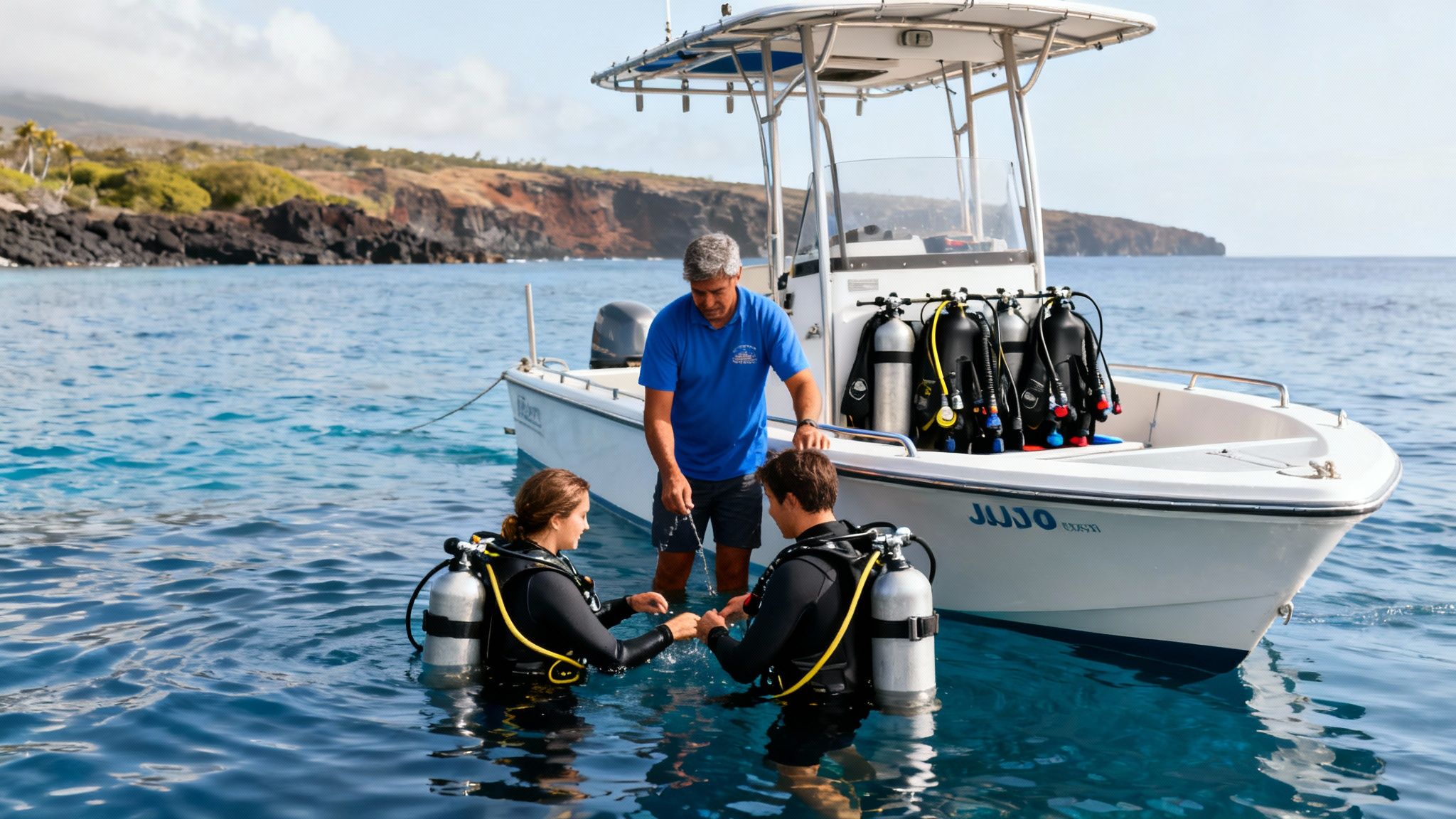
What separates a good dive from an unforgettable one? It almost always comes down to the crew and the boat. When you're picking a shop for diving Big Island, you're doing more than just booking a spot; you're trusting a team to keep you safe, comfortable, and totally amazed. This is where Kona Honu Divers really shines.
Their whole operation is dialed in for the diver. You can see it in their custom-built boats, made specifically for Kona's unique conditions, and you can feel it in the passion of their experienced crew. They get it: a relaxed diver is a happy diver. They go out of their way to handle the details so you can just focus on the adventure.
The Kona Honu Divers Difference
Kona Honu Divers sets itself apart with perks that genuinely make your dives better. One of the biggest game-changers is offering free nitrox to all certified divers on every single trip.
If you haven't used it before, nitrox is just a blend of air with a little more oxygen. Here's why that matters:
- More Time Underwater: It helps you safely extend your bottom time, giving you more minutes to explore the reef before hitting your no-decompression limits.
- Less Post-Dive Drain: Lots of divers (myself included) feel way less tired after a day of multiple dives on nitrox versus regular air.
It might seem like a small thing, but it adds up to more time exploring and more energy to enjoy your vacation.
Personalized Attention on Every Dive
Nothing ruins a dive faster than an overcrowded boat where you feel like just another number. Kona Honu Divers keeps their group sizes small, which guarantees every diver gets personal attention. With a low diver-to-guide ratio, you get a much more intimate tour, and your guide has the time to point out that cool, camouflaged frogfish you would have otherwise missed.
This focus on small groups does more than just make the dive more enjoyable—it’s a huge safety plus. Your guide can easily keep an eye on everyone, building a sense of trust that lets you truly relax and soak in the magic of Kona’s waters.
With a top-notch safety record, a crew that makes you feel like family, and thoughtful perks that make a real difference, they’ve created the perfect setup for an incredible underwater experience. Take a look at their complete list of Big Island diving tours to see what they're all about.
Common Questions About Diving the Big Island
As you get ready to pack your bags, you probably have a few last-minute questions floating around. We get it. To make sure you arrive feeling totally prepared, we've gathered the answers to the questions we hear most often about diving the Big Island.
What Certification Level Do I Need to Dive in Kona?
Kona’s dive sites are wonderfully diverse, which means there’s something for everyone, regardless of your experience. If you've never breathed underwater before, you can start with a Discover Scuba Dive on a calm, protected reef. The conditions here are also perfect for earning your Open Water certification.
For divers with more logbook entries, Kona is a playground. You'll find everything from deep lava tubes to exciting drift dives. Reputable shops like Kona Honu Divers run a full spectrum of trips and courses, so you can always find a dive that matches your comfort and skill level.
Should I Be Worried About Sharks While Diving?
Honestly, spotting a shark in Kona is more of a thrill than a threat. The sharks we see most often are reef sharks, and they tend to be quite shy and want nothing to do with divers. Seeing one is a sign of a healthy, thriving reef ecosystem.
Remember, your dive guides are professionals who spend their lives in these waters. They know the marine life and local conditions inside and out, and their top priority is keeping you safe. They create a secure, controlled environment on every dive so you can just relax and enjoy the show.
When Is the Best Time to Book a Dive Trip?
The short answer? As soon as you know your travel dates. We always suggest booking your dives well in advance, especially if you’re planning on doing the world-famous Manta Ray Night Dive. That trip is on just about everyone's bucket list and can sell out weeks ahead of time.
The easiest way to lock everything in is to book online using the links in this guide. You'll secure your spot on the boat and can start counting down the days.
Can My Non-Diving Friends or Family Come on the Boat?
Yes, absolutely! That's one of the great things about diving here—it’s an adventure you can share. Most dive boats welcome snorkelers, especially on trips like the manta ray experience where there's plenty to see from the surface.
This makes for a fantastic day out for families or groups where not everyone is a certified diver. Everyone gets to be out on the beautiful Kona coast together, enjoying the incredible marine life from their own unique perspective.