
Picture this: you're weightless, slowly descending into the warm, turquoise waters off the Big Island. Below you, ancient lava tubes, remnants of the island's volcanic birth, are now draped in a tapestry of vibrant coral. This is what it’s like to go diving Big Island—a place where raw geology and thriving marine life collide.
It's an adventure that genuinely has something for everyone, whether you're taking your first breaths underwater or have logged hundreds of dives around the globe.
Why the Big Island Is a World-Class Diving Destination
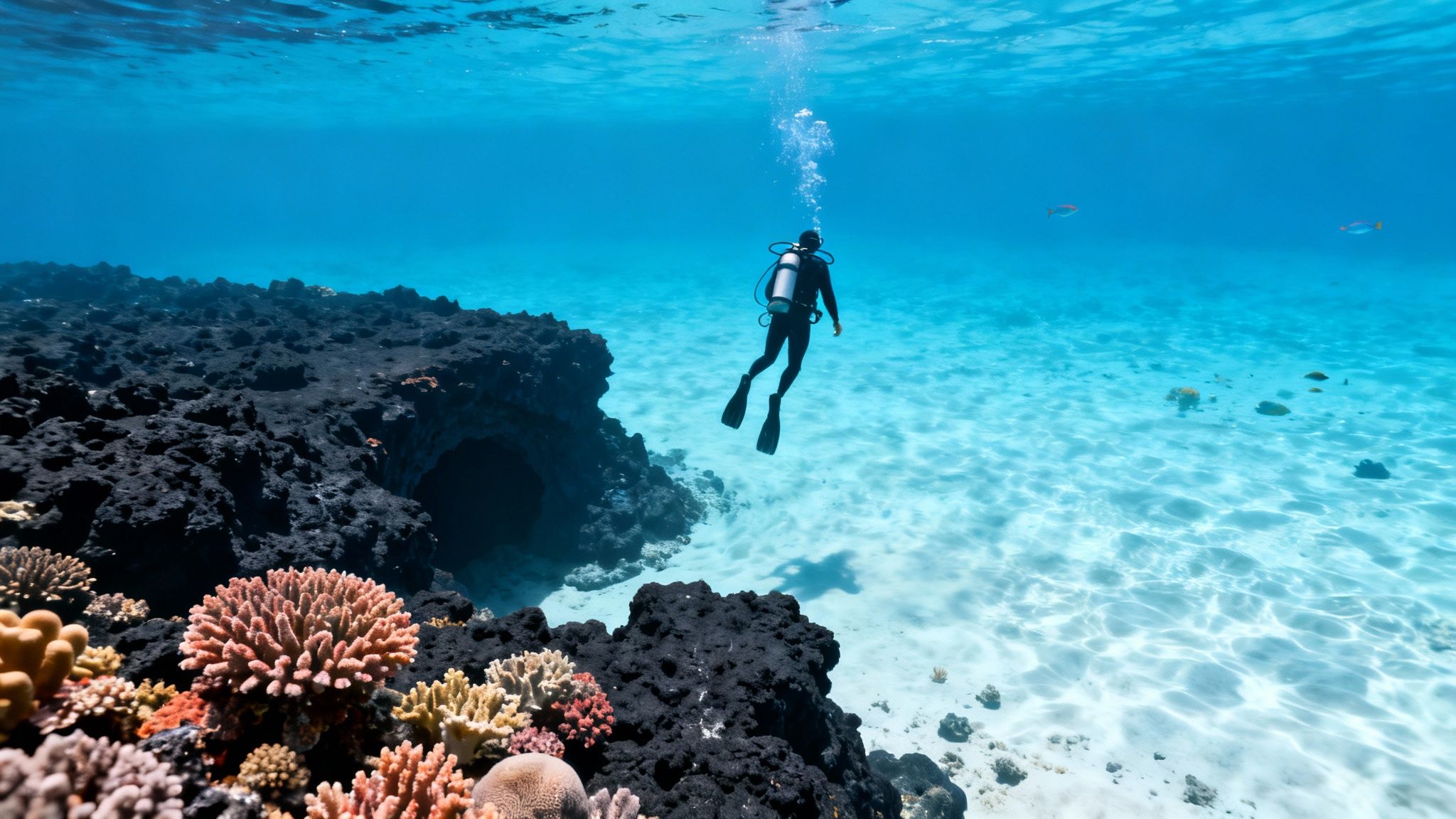
So, what makes this place so special? It all starts with the volcanoes. The same forces that forged the islands created an underwater playground of submerged lava arches, complex caverns, and massive craters that corals have claimed as their own. This wild, varied topography is the perfect foundation for a rich marine ecosystem.
The Kona coast, where we do most of our diving, is uniquely protected. The colossal mountains of Mauna Loa and Hualālai act as a natural shield from the trade winds, leaving us with incredibly calm, clear water. It's not uncommon for visibility to stretch beyond 100 feet, making Kona one of the most consistently amazing places to dive anywhere.
A Thriving Underwater Ecosystem
That combination of clear, calm water and unique underwater landscapes means marine life is everywhere. On almost any dive, you can expect to see:
- Hawaiian Green Sea Turtles (Honu): We see them constantly, either gliding by effortlessly or chilling out at their favorite "cleaning stations."
- Colorful Reef Fish: The reefs are alive with massive schools of yellow tang, butterflyfish, and Moorish idols.
- Fascinating Critters: If you keep a sharp eye out, you’ll spot moray eels, octopuses, and cleverly camouflaged frogfish hiding in plain sight.
Word has definitely gotten out. The Big Island is a powerhouse in the scuba world, drawing in about 150,000 dive tourists annually and logging roughly 100,000 certified dives each year. This boom has helped build a fantastic dive community with over 50 dive shops on the island.
Of course, the Big Island is famous for the legendary manta ray night dive—an experience that is every bit as magical as people say. But that's just one piece of the puzzle. The island offers a massive playground for every kind of diver. You can learn more about what makes diving in Kona so unique right here on our blog.
Here at Kona Honu Divers, our entire mission is to share this underwater paradise with you. We're all about creating safe, unforgettable, and genuinely awe-inspiring adventures.
Experiencing the Legendary Manta Ray Night Dive
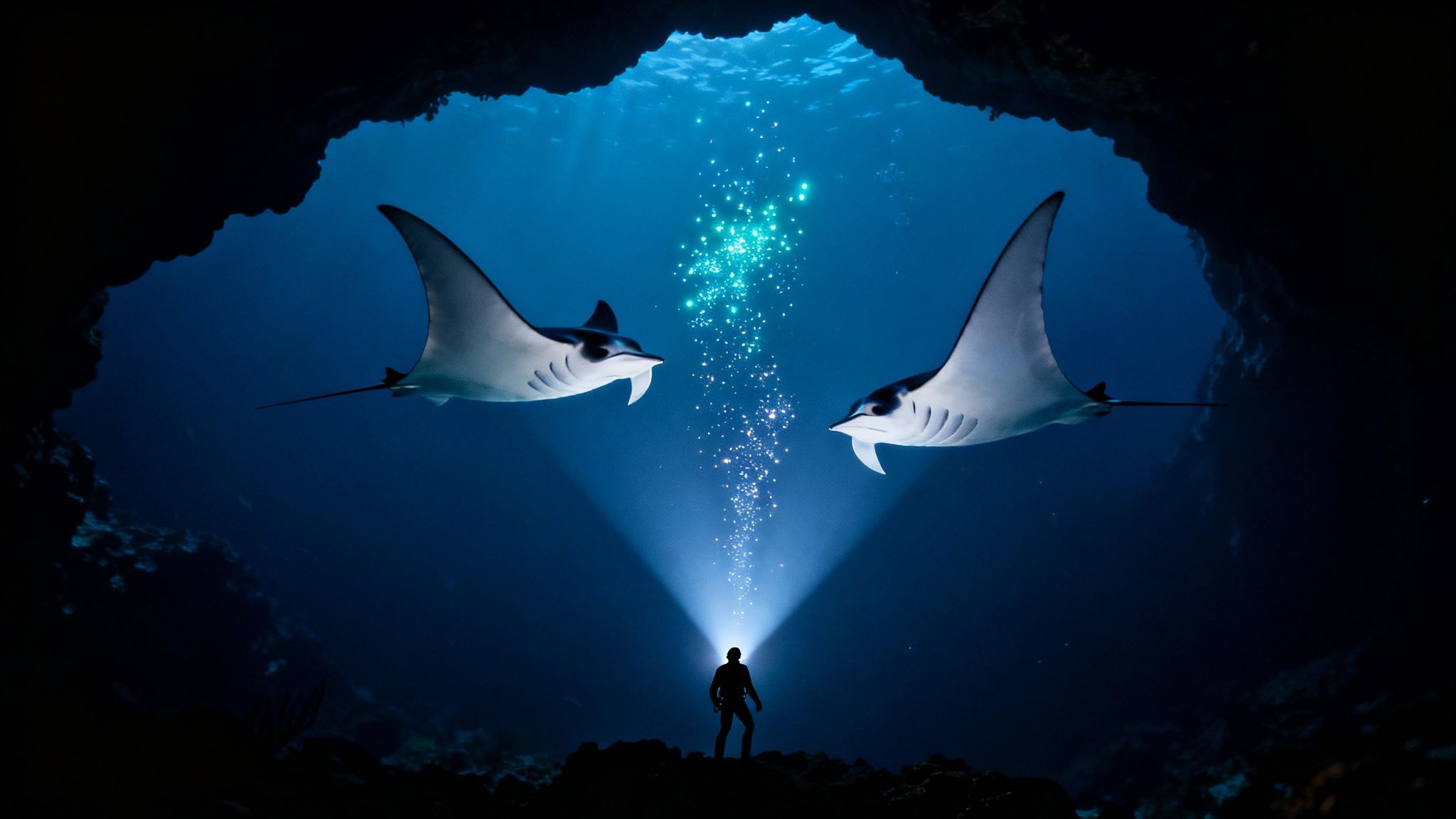
Let's be clear: the manta ray night dive isn't just another entry in your logbook. It’s a silent, underwater ballet—an otherworldly experience that’s rightfully earned its reputation as one of the best dives on the planet.
Imagine this: you descend into the warm, dark Pacific just after sunset. You find your spot on the sandy bottom, look up, and watch as colossal, gentle giants with wingspans up to 12 feet glide inches above your head. This is the magic of diving Big Island after dark.
The whole thing works on a beautifully simple principle. For years, lights from coastal hotels have attracted swarms of plankton, the manta rays' favorite meal. Dive operators figured out they could create the same effect by setting up powerful underwater lights—a "campfire," of sorts—that draw in plankton. This creates a reliable, all-you-can-eat buffet for the local reef mantas, giving us a front-row seat to the action.
Why Garden Eel Cove is the Superior Choice
While a few spots host this dive, Garden Eel Cove is hands-down the superior choice for the dive tour. Its location is more protected from open ocean swells, meaning calmer conditions and clearer water more often than not. A smoother ride and better visibility always make for a better dive. The viewing area is also better, with a natural sandy "amphitheater" where divers can comfortably settle in. The surrounding reefs are healthier and more vibrant, adding to the overall beauty of the experience. It's simply the premium location for this once-in-a-lifetime encounter.
The Manta Ray Night Dive is more than just watching marine life; it’s being invited into their world. When one of these majestic creatures swoops just inches from your face, their shadow dancing in the light, you feel a profound sense of awe for the ocean's grace and power.
And you don't have to be a certified diver to see it! If you have non-divers in your group or just prefer staying on the surface, you can still witness the magic. We've put together a complete guide on the manta ray night snorkel, which offers an incredible view of the action from above.
A Reliable and Unforgettable Adventure
One of the best things about the Kona manta ray dive is that it almost always delivers. This isn’t a hit-or-miss wildlife tour where you cross your fingers and hope for the best. It’s a well-established feeding event with a staggering 85-90% success rate for sightings.
That consistency has cemented its status as a bucket-list dive for anyone visiting the Big Island. The mantas show up nearly every night to feast on plankton in the shallow 30-40 foot depths. You can even check out recent manta reports to see how often these gentle giants are making an appearance.
The entire adventure is unforgettable, from the boat ride out against a classic Hawaiian sunset to the moment the first giant shadow emerges from the darkness. It’s a safe, professionally run, and truly moving experience. Ready to see the underwater ballet for yourself? Kona Honu Divers offers an amazing manta ray dive tour that combines a beautiful afternoon reef dive with this legendary night dive.
Discovering the Top Big Island Dive Sites
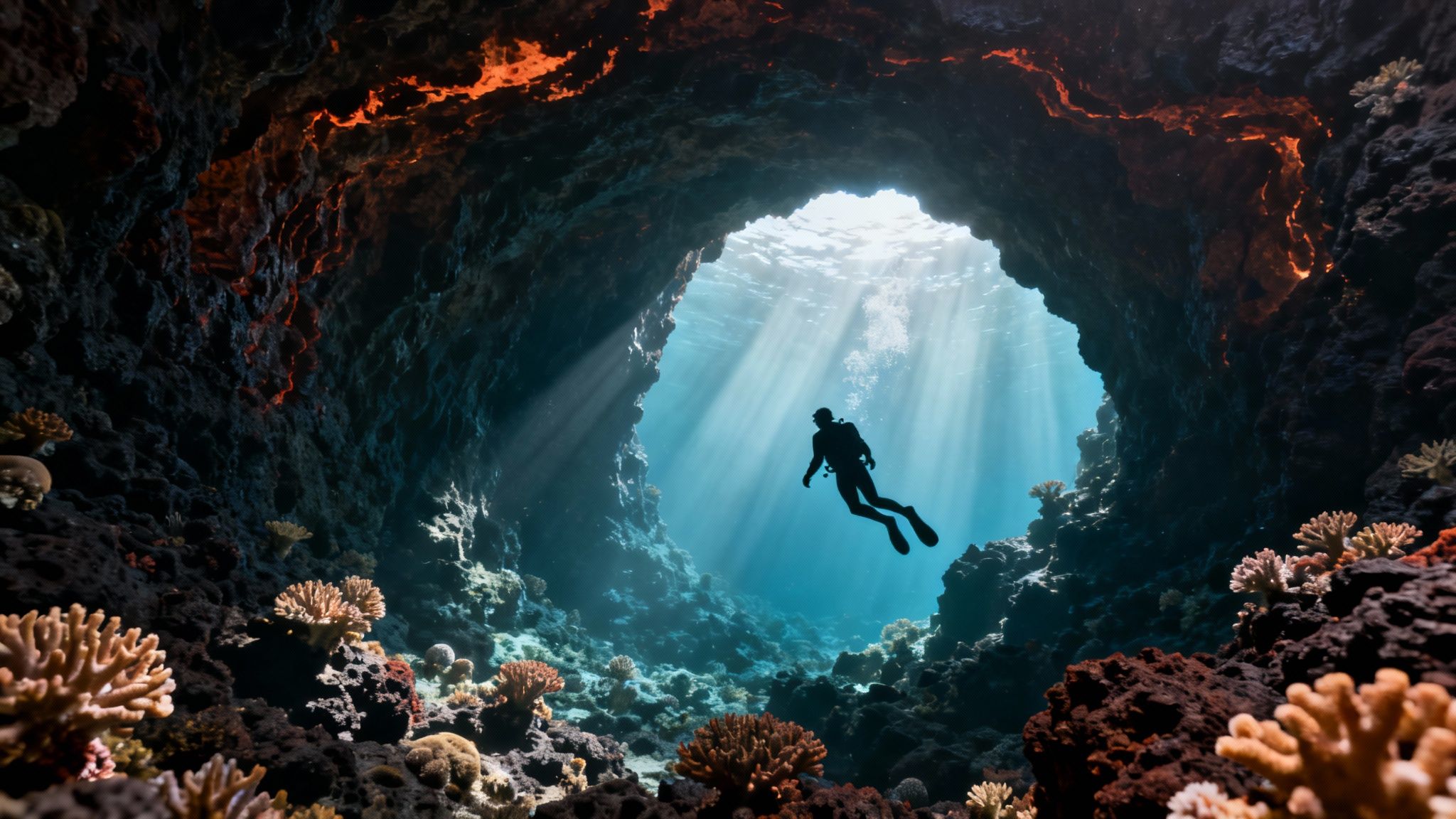
Sure, the manta ray night dive is an absolute showstopper, but it's really just the opening act. The Kona coast is a diver's paradise, a treasure map with over 50 unique dive sites waiting to be explored. Each spot has its own distinct personality.
You'll find everything from calm, sun-drenched coral gardens perfect for getting your fins wet to deep, mysterious lava tubes that will challenge even the most experienced divers. There truly is an underwater adventure here for everyone.
The island’s volcanic heart is on full display below the waves. You'll swim through a world carved by ancient lava flows—think dramatic arches, incredible swim-throughs, and hidden caverns that are now bursting with life. This raw, geological drama is what makes diving in Kona so unforgettable.
After years of exploring these waters, our crew at Kona Honu Divers knows every nook and cranny. We know exactly where to go for the best visibility and the most exciting marine encounters on any given day. To give you a taste of what’s out there, we’ve handpicked a few of our all-time favorite spots.
Dive Sites for Every Skill Level
Whether you're taking your first breaths underwater or you've logged thousands of dives, Kona has a site that will take your breath away. The calm, sheltered waters of the western coast create nearly perfect conditions for divers of all abilities.
- For Beginners: Kealakekua Bay: This isn't just another pretty bay; it's a protected underwater state park and marine conservation district. That protection means the coral is vibrant and the fish are absolutely teeming. It’s an amazing place for new divers to watch Hawaiian Green Sea Turtles (Honu) at their cleaning stations in calm, shallow water.
- For Intermediate Divers: Lava Tubes and Arches: Ready to explore? Sites like Golden Arches or Suck 'em Up are playgrounds of volcanic architecture. Navigating these natural lava formations feels like exploring a submerged cathedral, with sunlight streaming down through cracks in the ancient rock.
- For Thrill-Seekers: The Abyss: For an experience that is truly out of this world, nothing beats the Kona Blackwater Dive. Forget the reef. This is a deep-water drift in the open ocean at night, where you'll meet bizarre and beautiful bioluminescent creatures migrating up from the darkest depths.
The real magic of Kona diving lies in its variety. One morning you can be gliding over a shallow reef teeming with turtles, and that same night, you can be suspended over thousands of feet of water, witnessing creatures that look like they're from another planet.
The Kona Blackwater Dive: An Otherworldly Adventure
The Kona Blackwater Dive is a world-renowned experience that completely redefines what a night dive can be. We take you miles offshore, where the ocean floor drops away to thousands of feet below. You'll descend to about 50 feet and drift along a tethered line, surrounded by the pure, inky black of the open sea.
It's here that you'll witness one of the planet’s largest migrations. Tiny, strange, and often completely transparent creatures rise from the abyss to feed near the surface under the cover of darkness. You'll see organisms you couldn't have imagined, from larval fish to ethereal jellyfish. This is a must-do for any adventurous diver.
Ready for a dive into the deep? Check out our specialized Blackwater Dive tour.
For the Experienced Diver
If you’re an advanced diver on the hunt for Kona’s more challenging and remote sites, we've got trips designed just for you. These dives often mean deeper profiles, potential currents, and more complex navigation, but the rewards are huge: untouched reefs and a better chance of spotting larger pelagic species.
We can take you to sites that few other divers ever get to see. Our advanced dive tour is built for experienced divers who want to push their limits and see the absolute best of Kona's underwater world.
No matter what you're looking for, Kona Honu Divers has a trip that will match your spirit of adventure. We're all about creating personal and unforgettable experiences below the surface. You can explore all of our incredible Big Island diving tours to find the perfect underwater journey for you.
How to Plan Your Big Island Dive Adventure
Let’s be honest, any day you get to dive in Kona is a good day. But timing your trip just right can turn a great dive vacation into a legendary one. The Kona coast is a diver's dream, with warm, clear water pretty much all year, but each season brings its own unique flavor and underwater cast of characters.
If you’re chasing that bathwater-warm feeling, plan your trip for the summer months. From July through September, the water temperatures can climb to a balmy 82°F (28°C). The ocean is typically flat as a lake, and visibility often pushes well past 100 feet. It’s the perfect time for any diver, but especially if you’re new to the sport or just want the most relaxed conditions possible.
Winter, on the other hand, has a different kind of magic. The water dips a bit, hovering around 75°F (24°C) from December to March, so you’ll definitely want a good wetsuit. The payoff? This is peak humpback whale season. There's nothing quite like hearing their haunting songs reverberate through the water during your dive—it's an experience that will stick with you forever.
What to Pack for Your Dive Trip
Getting your packing list right means you can spend less time worrying and more time enjoying the incredible underwater world. Aside from your shorts and flip-flops, there are a few must-haves for a Kona dive trip.
- Wetsuit: A 3mm full wetsuit is the sweet spot for most people year-round. But if you get cold easily or plan on multiple dives a day (especially a night dive!), stepping up to a 5mm suit is a smart move for staying toasty.
- Reef-Safe Sunscreen: This isn't just a suggestion; it's the law in Hawaii. Sunscreens with oxybenzone and octinoxate are banned because they're incredibly harmful to our coral reefs. Look for mineral-based options to protect your skin and our precious marine life.
- Dive Computer & Safety Gear: It's always a good idea to bring your own dive computer since you're familiar with it. We also highly recommend carrying your own surface marker buoy (SMB) and any other personal safety gear you feel comfortable with.
- Reusable Water Bottle: Diving is dehydrating work! Help us keep our island beautiful by skipping the single-use plastics and bringing a bottle you can refill.
Big Island Diving Seasons At A Glance
To make planning a little easier, here’s a quick breakdown of what you can expect throughout the year in Kona.
| Season | Water Temperature | Visibility | Key Marine Life Sightings |
|---|---|---|---|
| Winter (Dec-Mar) | 75-78°F (24-26°C) | Good (70-100 ft) | Humpback Whales (singing underwater), Manta Rays |
| Spring (Apr-Jun) | 76-79°F (24-26°C) | Excellent (100+ ft) | Turtles Nesting, Manta Rays, Reef Sharks |
| Summer (Jul-Sep) | 79-82°F (26-28°C) | Peak (100+ ft) | Manta Ray Peak Season, Calmest Waters, Dolphins |
| Fall (Oct-Nov) | 78-80°F (26-27°C) | Excellent (100+ ft) | Manta Rays, Whale Sharks (occasional) |
This table gives you a general idea, but remember, marine life is wild and full of surprises! You never know what amazing encounter is waiting for you just below the surface.
Certification and Valuable Perks
Having the right training under your belt lets you experience the full range of what Kona has to offer. An Open Water certification is your ticket to many of our stunning reefs, but an Advanced Open Water certification really opens the door to deeper sites and bucket-list experiences like the world-famous Manta Ray Night Dive.
Want to maximize your time underwater and feel better after your dives? Getting your Enriched Air Nitrox certification is a game-changer. Here at Kona Honu Divers, we want you to have the best experience possible, which is why we offer free Nitrox for all certified Nitrox divers on our morning charters. It’s a huge perk that helps you safely extend your bottom time and soak in more of the incredible scenery.
We can help you with rental gear, certifications, and of course, getting you booked on the perfect trip. By sorting out the logistics ahead of time, you can show up ready for the adventure of a lifetime. Take a look at all of our diving tours and let's get your dream trip on the calendar!
Why Kona Honu Divers Delivers the Best Experience
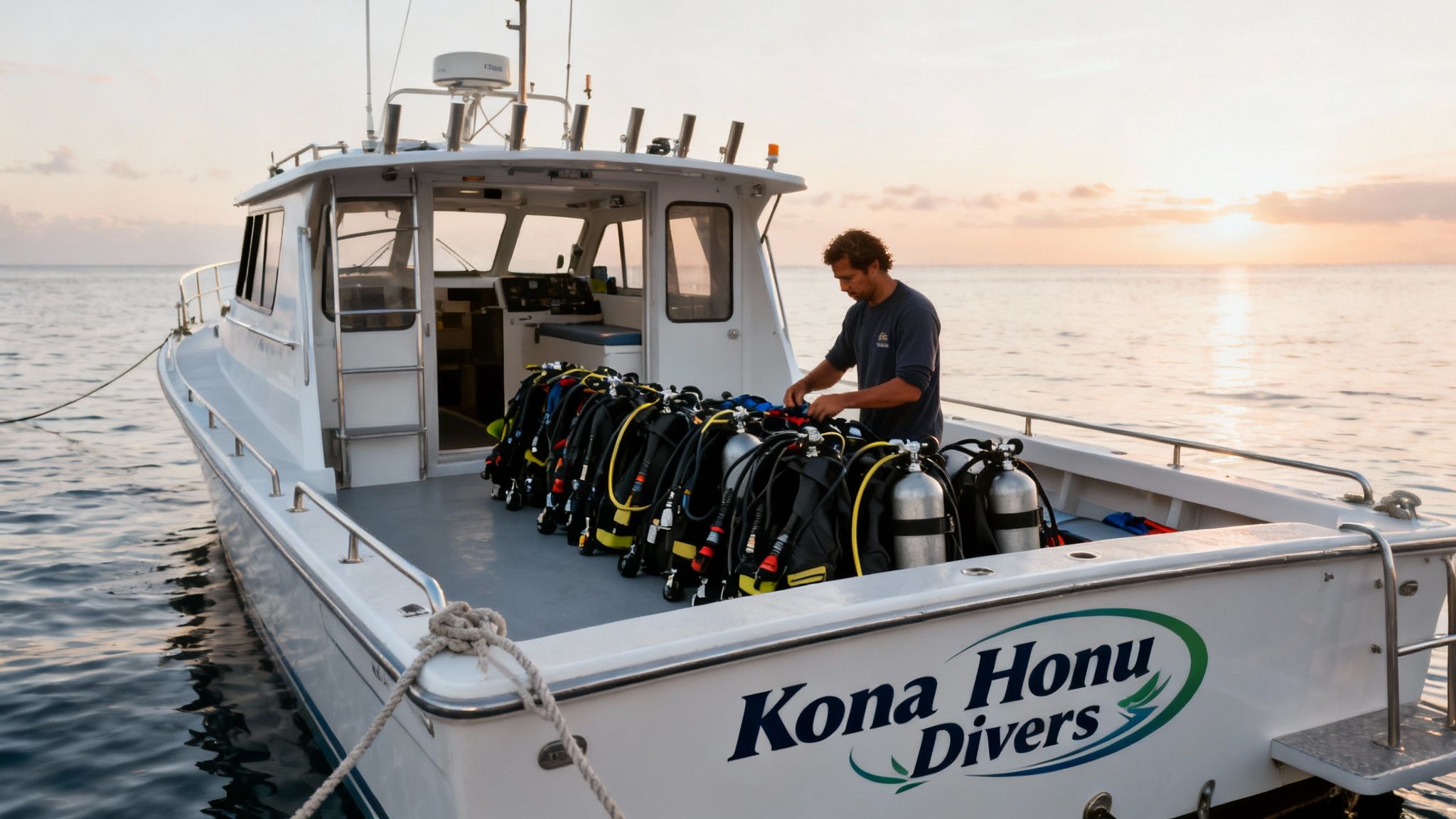
Picking the right dive shop for your trip to the Big Island is a huge decision. It can honestly be the difference between a pretty good dive and a truly unforgettable experience. Here at Kona Honu Divers, we believe an amazing day of diving begins long before you even dip a fin in the water. It starts with a serious commitment to safety, conservation, and making a real connection with every person who comes aboard.
Our whole approach is built on passion and years of hard-won experience. When you add it all up, our crew brings a combined 200+ years of industry experience to every single trip. That’s more than just knowing the local dive spots—it’s about reading the ocean, understanding what divers need before they even ask, and making sure every single detail is handled with professional care. You’ll feel that difference the moment you step on the boat.
The Kona Honu Divers Difference
What really sets us apart is our investment in your safety and comfort. We don’t just charter other people's boats; we run our own fleet of custom-built dive vessels, designed from the hull up for Kona's specific conditions. Boats like the Honu One are spacious, incredibly stable, and decked out with everything you need for a smooth day.
We’ve learned that the small things make the biggest difference. That's why our rental gear is flawlessly maintained, our boats are kept spotless, and our crew has the freedom to provide the kind of personal service that turns a regular dive trip into a memory you’ll talk about for years.
We're also focused on providing real value. We want to make your adventure as accessible as we can, so we offer a few perks that actually matter.
- Early Diver Discounts: A little planning goes a long way. Book your dives in advance and lock in savings that make your trip that much sweeter.
- Complimentary Nitrox: For certified divers, we offer free Nitrox on our morning charters. It’s a great way to extend your bottom time, shorten your surface intervals, and simply get more out of every dive.
Time and again, our guests tell us it’s the crew that makes the experience special. Their love for the ocean is contagious, and their knowledge is second to none. They aren’t just guides; they’re storytellers, marine life nerds, and your partners in adventure.
Your Adventure Awaits
At the end of the day, our mission is simple: to show you the absolute best of Kona's underwater world in a way that’s safe, responsible, and a ton of fun. We take care of all the logistics so you can just soak in the joy of diving.
Whether you're exploring ancient lava tubes or swimming alongside majestic manta rays, we’re here to make sure your adventure is in the best hands possible. To get a taste of where we go, take a look at our guide to the incredible Kona dive sites we visit. We're all about delivering a world-class experience, not just a service.
Common Questions About Diving the Big Island
As you start locking in the final details for your trip, you're bound to have a few questions. It’s only natural. Getting those last few answers helps you plan with confidence and makes sure your adventure goes off without a hitch. We’ve pulled together some of the most common questions we hear from divers planning their first Big Island trip to give you all the info in one place.
Think of this as your final checklist. We're here to tie up any loose ends so you can land on the Big Island feeling totally prepared for an incredible time underwater. From what certification you'll need to the right wetsuit to pack, we've got you covered.
What Certification Level Do I Need to Dive the Big Island?
Here's the great news: the Big Island is amazing for divers of all skill levels. Most of Kona's best reefs, the ones just packed with fish and turtles, sit in a comfortable 30-60 foot range. That makes them perfect for Open Water certified divers. You can have a fantastic, complete dive vacation without ever needing a more advanced certification.
That said, if you really want to unlock everything the island has to offer, an Advanced Open Water certification is the way to go. It opens the door to exploring some of the deeper, more dramatic lava formations and qualifies you for truly unique experiences, like the world-famous Kona Blackwater Dive. If you're not certified yet or just want to level up, Kona Honu Divers offers a full range of PADI courses to get you there.
Is the Manta Ray Night Dive Safe for Divers?
Absolutely. In fact, it's one of the safest and most professionally run dive experiences you'll find anywhere on the planet. This dive is a well-oiled machine, fine-tuned over years with a deep respect for both the divers and the animals.
Operators like Kona Honu Divers follow strict guidelines to make sure the encounter is safe and doesn't disturb the mantas. The dive itself happens in a shallow, calm, and controlled spot, and you're under the watchful eye of expert divemasters the whole time. The manta rays are gentle giants, completely focused on scooping up the plankton drawn to the lights. They honestly couldn't care less about the divers, which allows for a breathtakingly close and unbelievably safe experience.
What Wetsuit Should I Bring for Hawaii's Water Temperatures?
Hawaii’s water is wonderfully warm year-round, but the right wetsuit makes all the difference between a good dive and a great one. Water temps usually hover between a pleasant 75°F (24°C) in the winter and a balmy 82°F (28°C) in the summer.
For most people, a 3mm full wetsuit is the sweet spot. It provides just enough warmth to keep you comfortable on multiple dives without feeling bulky. Now, if you know you tend to get chilly, especially on deeper dives or during the Manta Ray Night Dive, stepping up to a 5mm suit is a smart move. And hey, if you'd rather pack light, we offer a full range of high-quality rental gear right here at the shop.
What Marine Life Will I See Besides Manta Rays?
While the mantas are definitely the headliners, the rest of the marine life here is just as spectacular. The Kona coast is a thriving volcanic ecosystem, and you can expect to see an incredible variety of life on pretty much every single dive.
- Hawaiian Green Sea Turtles (Honu): These guys are a staple of Kona diving. You'll almost certainly see them gliding over the reef or chilling out at their favorite "cleaning stations."
- Eels and Octopus: Keep your eyes peeled and check out all the little nooks and crannies in the reef. You'll often spot different kinds of moray eels peeking out, and if you're lucky, a master-of-disguise octopus.
- Vibrant Reef Fish: The reefs are just buzzing with life. Picture massive schools of bright yellow tangs, quirky triggerfish, and hundreds of other colorful characters.
- Sharks and Dolphins: It's pretty common to see whitetip reef sharks resting on the sandy bottom. And don't be surprised if a pod of spinner dolphins decides to play in the boat's wake on your way to the dive site!
If you're here in the winter (December to March), you can often hear the haunting songs of humpback whales underwater—a truly unforgettable bonus. Every dive in Kona offers a new discovery.
Ready to book your underwater adventure? We're here to answer any other questions you have and get you set up on the perfect dive tour.
Your unforgettable underwater journey begins here. At Kona Honu Divers, we're dedicated to providing the safest, most exciting, and memorable diving experiences on the Big Island. Explore all our Big Island diving tours and book your adventure today!