
Diving on the Big Island is something truly special. It’s an experience defined by dramatic underwater landscapes carved by ancient volcanoes, vibrant reefs buzzing with life, and encounters so iconic you simply won't find them anywhere else. Whether you're dreaming of the world-famous manta ray night dive or exploring submerged lava tubes, Hawaii’s largest island has an unforgettable adventure waiting for you.
Why The Big Island Is A Diver’s Paradise
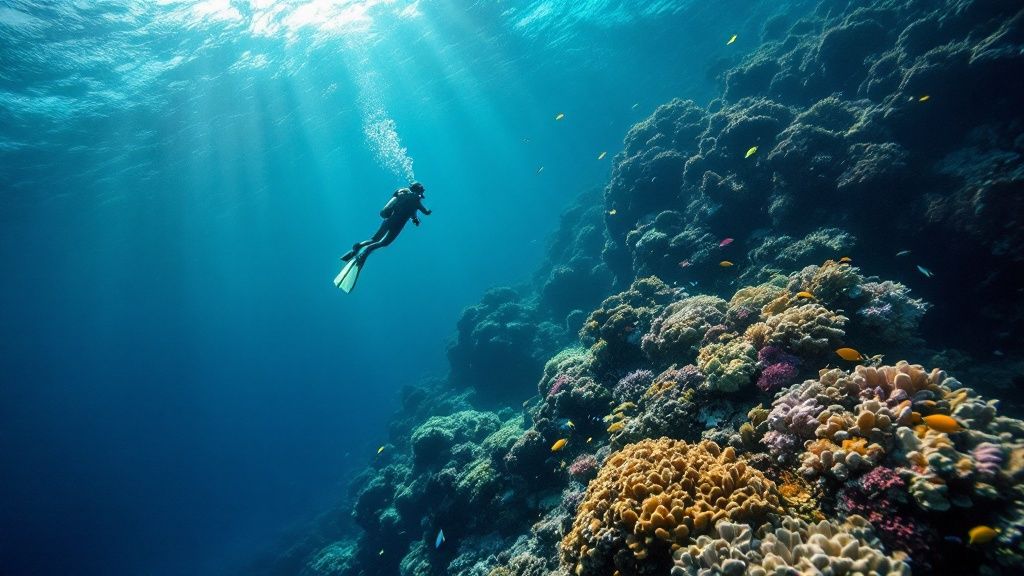
Picture this: you descend into the deep blue, the Hawaiian sun shimmering through the surface and dancing across incredible volcanic rock formations. The underwater world here is a direct reflection of the island's fiery origins, creating a one-of-a-kind seascape of lava tubes, majestic archways, and sprawling coral gardens. That's what makes a dive trip to the Big Island so different.
Unlike many other tropical spots, the topography here is a constant, beautiful reminder of the island’s volcanic power. Over centuries, these unique geological features have transformed into thriving habitats for an amazing variety of marine life, setting the stage for one spectacular dive after another.
Unique Marine Life And Ecosystems
One of the most incredible things about diving here is the sheer biodiversity. A huge portion of the fish you'll see are found nowhere else on the planet. In fact, about 20-25% of Hawaii's reef fish are endemic, meaning you’re guaranteed to meet some truly local characters.
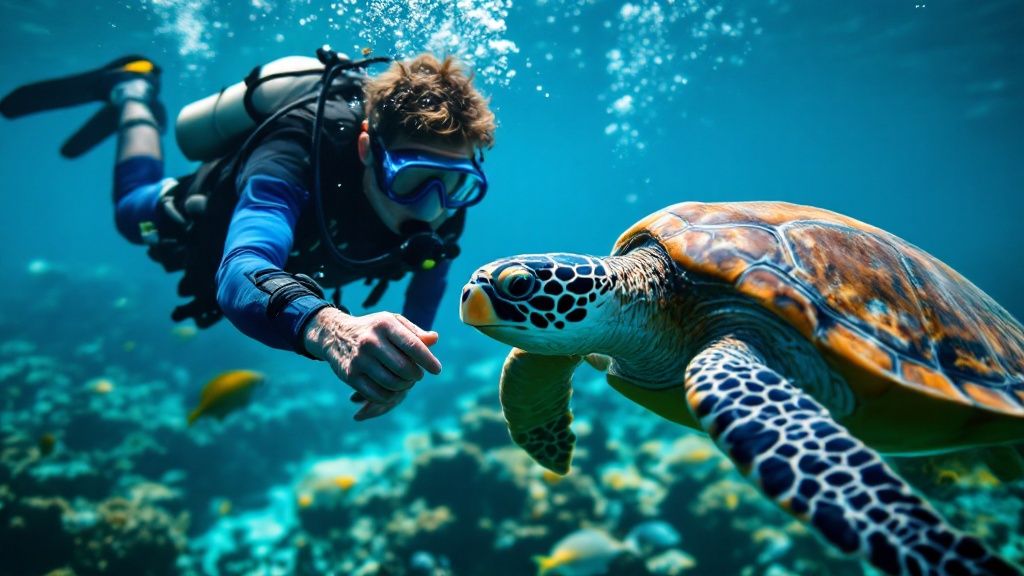
But it’s not just about the colorful little guys. The Big Island is also a sanctuary for larger marine animals. You'd be hard-pressed not to see a Hawaiian green sea turtle, or honu, as they're known locally. These gentle giants are everywhere, often seen resting on the reef or cruising gracefully past a cleaning station.
The ecosystem here supports a stunning cast of characters:
- Endemic Species: Keep an eye out for unique fish like the Hawaiian cleaner wrasse and the milletseed butterflyfish.
- Iconic Reptiles: Swim alongside the revered Hawaiian green sea turtles (honu).
- Larger Pelagics: Depending on the season and where you dive, you might spot spinner dolphins, reef sharks, and even migrating humpback whales from the boat.
This rich mix of life is what makes every single dive feel like a true exploration.
To give you a quick snapshot of what to expect, here's a look at the typical diving conditions on the Big Island.
Big Island Diving At A Glance
| Feature | Details |
|---|---|
| Water Temperature | 76-80°F (24-27°C) year-round |
| Visibility | 60-100+ feet (18-30+ meters) |
| Typical Dive Depths | 30-80 feet (9-24 meters) |
| Currents | Generally mild, site-dependent |
| Best Time to Dive | Year-round, with peak season from April to October |
| Must-See Marine Life | Manta rays, green sea turtles (honu), endemic fish |
This combination of warm, clear water and fantastic marine life makes the Kona coast an incredible and reliable dive destination any time of year.
The World-Famous Manta Ray Night Dive
You can't talk about Big Island diving without getting excited about its most celebrated event: the nocturnal manta ray ballet. This is, without a doubt, a bucket-list experience for divers from every corner of the globe. It's that good.
Here's how it works: as the sun goes down, dive boats moor up and shine powerful lights onto the ocean floor. These lights attract massive clouds of plankton, which in turn draw in dozens of giant manta rays. They come to feed, swooping and somersaulting through the light beams, often just inches away from wide-eyed divers. It’s a breathtaking, almost surreal, display of nature's magic.
This encounter is more than just a dive; it’s an immersive performance where gentle giants dance in the dark. The sheer grace and size of the mantas create a memory that lasts a lifetime.
Whether you just got certified or have hundreds of dives under your belt, the Big Island truly has something for everyone. Its warm, clear waters and predictable conditions make it a perfect year-round destination. In this guide, we'll walk you through everything you need to know to plan the ultimate Big Island dive trip.
Why Kona Is the Heart of Big Island Diving
While the entire Big Island is ringed with incredible underwater adventures, there’s a reason everyone talks about the Kona coast. It’s the undisputed heart of the diving scene here, and that’s no accident. It’s the result of a perfect marriage between geography and history that has made this specific stretch of coastline a world-class destination for anyone looking to go **diving on the Big Island**.
The secret is all about location. Tucked away on the island's leeward side, the Kona coast is protected by the immense volcanic mountains of Mauna Loa and Hualalai. These towering peaks act as a natural shield, blocking the powerful trade winds that constantly blow against the eastern side of the island.
For divers, this creates a dream scenario: consistently calm, clear, and predictable conditions. Imagine sinking into water with visibility that often stretches beyond 100 feet, where the currents are so gentle you can just relax and drift through a vibrant, living world. It’s this geographical gift that makes Kona home to the island’s most famous and accessible dive sites.
The Geography of Great Diving
Those calm Kona waters aren't just comfortable—they're the reason the ecosystem here is so spectacular. Without the constant thrashing from strong winds and swells, delicate coral reefs get the chance to thrive. They grow into intricate, sprawling cities that provide a home for an unbelievable variety of marine life.
Here's what this unique geography means for your dive:
- Exceptional Clarity: With little wind and runoff, the water stays incredibly clear, free of the sediment that can cloud visibility elsewhere.
- Calm Conditions: The gentle seas mean smooth boat rides and easy, stress-free dives. It’s perfect for divers of every skill level.
- Thriving Reefs: The protected environment allows fragile corals to grow undisturbed, building a healthy foundation for the entire marine food web.
These conditions haven’t just attracted fish; they’ve drawn in generations of divers who saw something special. To get a better feel for it, you can read our guide on what to expect when diving in Kona.
From Quiet Coastline to Diving Hub
The story of how Kona became a diving mecca is really the story of recreational scuba in America. When agencies like PADI started certifying divers back in the 1970s, this new generation of explorers went looking for the best places to go. Kona was waiting.
A pivotal moment came in 1981 when pioneers Jack and Tina Clothier founded Jack's Diving Locker, an operation that truly helped put the Big Island on the international diving map. Their passion, and the work of others who followed, built a community dedicated to sharing Kona’s underwater treasures with the world.
That spirit is alive and well today. The local dive community has fostered a deep culture of safety, conservation, and respect for the ocean.
Understanding Kona's history and its natural gifts reveals why it’s not just a location, but the very soul of diving in Hawaii. This appreciation enhances every moment you spend beneath the waves.
Kona’s legacy is built on its perfect conditions and the passionate people who turned a quiet coastline into a global hub for unforgettable underwater adventures. When you choose to dive here, you’re becoming part of that incredible story.
Signature Dives You Can Only Do Here
Sure, pretty much every dive off the Kona coast is one for the logbook, but a few experiences are so unique they’ve come to define diving on the Big Island. These are the bucket-list adventures you’ll be talking about for years to come. They’re what sets this volcanic paradise apart from anywhere else on the planet.
These aren't just dives; they're immersive natural spectacles that push the boundaries of a typical dive trip. From the world-famous manta ray ballet to the alien-like creatures of the deep, let's get into the experiences that truly make this place special.
The World-Famous Manta Ray Night Dive
The Manta Ray Night Dive is more than just Hawaii's most famous dive—it's consistently voted one of the best night dives on the entire planet. Honestly, it's an underwater performance that feels both magical and primal, and Kona is hands-down the best place in the world to experience it.
The concept is simple but brilliant. After sunset, we submerge powerful lights onto the sandy ocean floor, creating a "campfire" effect that attracts swarms of plankton. The plankton, in turn, draws in the main event: giant manta rays.
These gentle giants, with wingspans that can stretch over 12 feet, descend on the light beams to feast. They perform an incredible underwater ballet, gracefully swooping and somersaulting through the water, often coming within inches of us.
There's nothing quite like watching a massive manta ray glide effortlessly overhead, its cavernous mouth open as it feeds in the light. It's a humbling and unforgettable encounter—a moment of pure connection with one of the ocean's most majestic creatures.
The best part? It’s an incredibly reliable show. Manta ray sightings happen on over 90% of trips, making it a dependable highlight for any certified diver. If you're not a diver, you can still join the fun; find out more about the Big Island manta ray night snorkel.
The Thrilling Kona Blackwater Dive
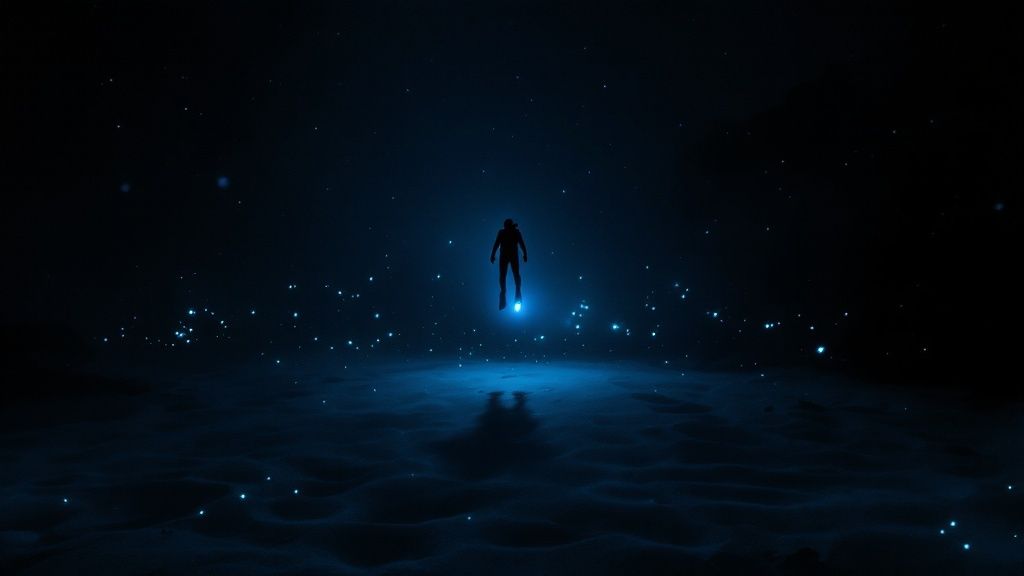
For the truly adventurous soul, the Kona Blackwater Dive is something else entirely. This is not a reef dive. You're tethered to a boat, drifting in the deep, dark open ocean thousands of feet above the sea floor. It’s as close to a space walk as you can get on Earth.
Every night, one of the planet's largest migrations occurs as deep-sea creatures travel toward the surface to feed under the cover of darkness. Your dive lights illuminate this hidden world, revealing bizarre and beautiful organisms that are rarely, if ever, seen.
You'll float alongside:
- Peculiar Larval Fish: See juvenile fish in their transparent, alien-like larval stages.
- Bioluminescent Jellies: Witness glowing ctenophores and siphonophores drift past like living light shows.
- Strange Cephalopods: Keep an eye out for tiny, iridescent squid and other unique deep-water inhabitants.
Divers often say it feels like floating through outer space, surrounded by strange new life forms. It’s a completely unique adventure that offers a rare window into the mysterious ecosystem of the deep ocean.
Advanced Diving and Lava Tube Exploration
Beyond the famous night dives, the Big Island’s volcanic geology has created an underwater playground for experienced divers. We’re talking dramatic drop-offs, deep reefs, and intricate lava tubes just waiting to be explored.
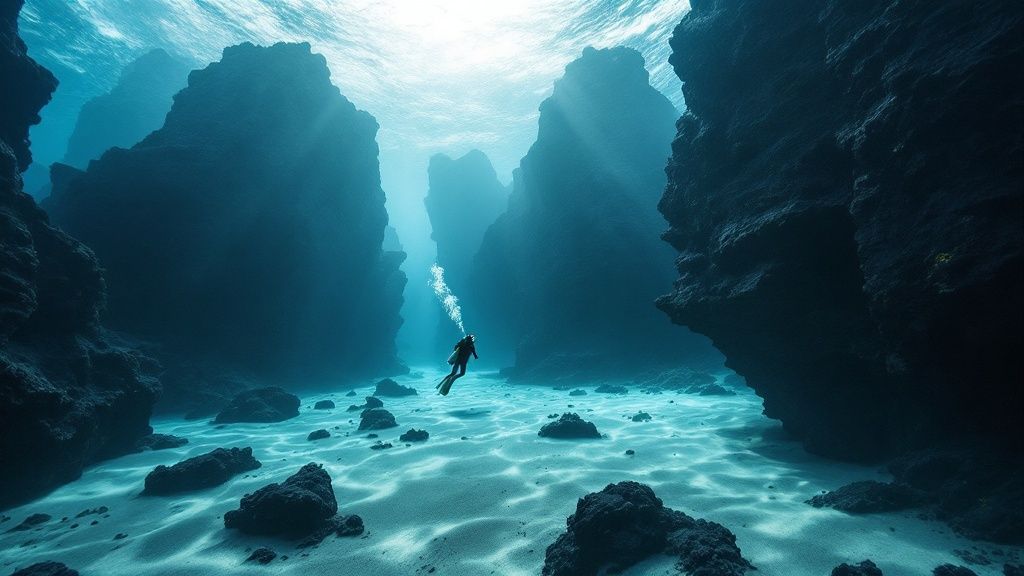
Our premium advanced dive trips are designed for divers who want to push their skills and see a different side of Kona. We head to deeper sites to explore pristine coral gardens and navigate through ancient lava formations. Swimming through a massive lava tube, with light filtering down from openings in the ceiling, is an experience that connects you directly to the island's fiery origins.
These are the spots where you’re more likely to encounter larger pelagic species and enjoy the peace of a less-visited reef.
At Kona Honu Divers, we pride ourselves on running these signature trips with the highest standards of safety and fun. Our guests consistently tell us it’s the quality of our crew and the magic of the dives that keep them coming back.
Must-Visit Dive Sites on the Kona Coast
Alright, you get why Kona is special. Now for the fun part: planning where you’ll actually get wet. The Kona coast is lined with dozens of world-class dive sites, and each one offers a completely different window into the incredible underwater world that thrives here.
From turtle-filled havens to dramatic, ancient lava formations, there’s a perfect spot for every diver’s wish list. Honestly, choosing where to go can be the hardest part of planning your diving Big Island adventure.
To help you build the perfect dive itinerary, we've put together a list of our must-visit locations. Think of this as the inside scoop on what makes each site a local favorite—from the underwater landscapes you’ll explore to the amazing creatures you're likely to meet.
Turtle Pinnacle (Kailua-Kona)
The name says it all. Turtle Pinnacle is an absolute paradise for anyone who loves Hawaiian green sea turtles, or honu. This spot is a famous "cleaning station," which is basically a natural day spa for turtles.
It’s an amazing chance to see nature in action. Divers can find a good spot, settle in, and watch as turtle after turtle glides in to let surgeonfish and other small reef fish nibble away algae and parasites from their shells. The main feature is a large pinnacle rising from the seafloor, covered in healthy coral that also attracts a ton of colorful reef fish.
Golden Arches (North Kona)
If you have an underwater camera, this is your spot. Golden Arches gets its name from the spectacular underwater lava formations—a series of massive arches and swim-throughs that create a stunning, cathedral-like vibe as sunlight streams down from above.
Navigating through these ancient volcanic structures feels like exploring a submerged temple. It’s not just about the geology, though; the site is bursting with life. Keep an eye out for huge schools of vibrant yellow tangs, butterflyfish, and the occasional whitetip reef shark chilling on the sandy patches between the arches.
The sheer scale and beauty of the lava arches at this site offer a powerful connection to the island's volcanic origins. It's a dive that beautifully showcases the dramatic underwater architecture of the Kona coast.
Because of the swim-throughs and varied depths, this is a great dive for anyone with solid buoyancy control.
Crescent Beach (Kikaua Point)
Also known as Kua Bay, Crescent Beach is a fantastic, accessible dive with a ton of marine diversity. The site is known for its beautiful coral gardens and really interesting underwater terrain. You’ll find all sorts of ledges, crevices, and small caverns that are perfect hiding spots for cool critters.
This is where you go to find the ocean's more secretive residents. Divers often spot moray eels peeking out from their homes, shy octopuses camouflaged against the reef, and tiny, colorful nudibranchs. The calm conditions and relatively shallow depths make it a perfect choice for newer divers or anyone just looking for a relaxed, exploratory dive.
Comparison of Top Big Island Dive Sites
To help you picture where you want to make your first splash, here's a quick side-by-side look at these popular dive spots. It’s a great way to match a site to the kind of underwater adventure you're looking for.
| Dive Site | Key Feature | Common Marine Life | Recommended Skill Level |
|---|---|---|---|
| Turtle Pinnacle | Famous turtle "cleaning station" | Hawaiian green sea turtles, surgeonfish, eels | All Levels |
| Golden Arches | Stunning underwater lava arches | Yellow tangs, butterflyfish, whitetip reef sharks | Intermediate |
| Crescent Beach | Healthy coral and hidden critters | Moray eels, octopus, frogfish, nudibranchs | All Levels |
Each one of these sites shows off a different side of what makes diving Big Island so unforgettable. At Kona Honu Divers, we visit these and many other incredible locations. We always pick the best spots based on the day's conditions, making sure you have a safe and spectacular experience every time.
How to Choose the Right Dive Operator
Picking the right company for your Big Island diving adventure is probably the single most important decision you'll make. A great dive operator doesn't just ferry you to a dive site; they make the entire experience unforgettable through their expertise, commitment to safety, and a real passion for the ocean. The choice you make truly shapes the quality of your dives and the memories you take home.
With so many options, it can feel a bit overwhelming. But if you focus on a few key things, you can easily find a reputable, safe, and environmentally friendly operation. This will help you feel confident and excited, from the moment you book your trip to your first giant stride into Kona's stunningly clear water.
What to Look for in a Dive Company
Let's be honest: not all dive companies are created equal. To guarantee a fantastic trip, start by looking for an operator that prioritizes small group sizes. Smaller groups mean you get more personal attention from your guide, the boat feels less crowded, and the entire dive is just more relaxed and intimate.
Next, professional certifications are a must. You'll want to see affiliations with globally recognized agencies like PADI (Professional Association of Diving Instructors). This is your assurance that the operator meets high standards for training and safety protocols.
Finally, nothing beats the experience of the dive guides themselves. A seasoned guide knows where to find that elusive octopus, how to navigate tricky underwater lava tubes, and can handle any situation with a calm, professional demeanor. An experienced crew is what separates a good dive from a truly incredible one.
The Importance of Safety and Equipment
Your safety is, and always should be, the top priority. A first-rate dive operator will conduct a clear, thorough safety briefing before every single trip. They should cover everything from emergency procedures and boat safety to specific details about the dive site you're about to explore.
Well-maintained equipment is another tell-tale sign of a professional outfit. Don't be shy about asking about their rental gear and its maintenance schedule. High-quality, reliable equipment is not just about safety; it makes your dive far more comfortable and enjoyable.
A dive company’s commitment to safety is a direct reflection of its professionalism. Never compromise on safety standards for a lower price—your peace of mind is worth every penny.
At Kona Honu Divers, we're known for our meticulous attention to both safety protocols and gear maintenance, which helps every diver feel secure. To get a better idea of what to look for, check out our in-depth guide on how to choose a Kona dive shop.
Environmental Responsibility and Reviews
A truly great dive operator loves the ocean and actively works to protect it. You'll want to choose a company that walks the talk when it comes to responsible diving practices. This includes:
- Enforcing a strict "no-touch" policy to protect marine life and their fragile homes.
- Using mooring buoys instead of dropping heavy anchors that can shatter precious coral reefs.
- Educating divers on local conservation and why things like reef-safe sunscreen matter so much.
And of course, see what other people are saying! Reading recent reviews from fellow divers gives you an honest, unfiltered look into a company's day-to-day operations. Look for consistent, positive feedback about the crew, the boats, and the overall vibe.
Preparing for Your Kona Dive Adventure
Once you've booked with your chosen operator, a little prep work can make a big difference. The Big Island is famous for its incredible water clarity—visibility often exceeds 100 feet! Water temperatures are also a dream, typically hovering between 75°F and 80°F, making for comfortable, year-round diving.
Here’s a quick checklist to make sure you’re ready to go:
- Pack Reef-Safe Sunscreen: Protect your skin and the coral by opting for a mineral-based sunscreen.
- Bring Your Certification Card: Don't leave your C-card and logbook at home!
- Stay Hydrated: Drink plenty of water before and after your dives to keep feeling your best.
- Listen to Your Guide: Pay close attention during the dive briefing. Their local knowledge is pure gold.
By carefully picking your dive operator and coming prepared, you're setting yourself up for an amazing underwater journey on the Kona coast.
Your Big Island Diving Questions, Answered
It’s completely normal to have a few questions swirling around as you plan your dive trip to the Big Island. You're getting ready for an incredible adventure, and a little preparation goes a long way.
We get asked these questions all the time, so we've put together the answers to help you get ready for the plunge. Think of this as a quick chat with your dive guide before you even get on the boat.
What Is the Best Time of Year to Go Diving?
Here's the great news: there’s really no bad time to dive in Kona. The weather is stable, and the water is always inviting, staying between a comfortable 75°F and 80°F (24-27°C) year-round. You can literally dive here any day of the year and have a fantastic time.
That said, the seasons do have their own unique personalities:
- Summer (May to October): This is when you'll find the calmest, glassiest seas and the warmest water. It's also prime travel season, so it's a good idea to book your dives ahead of time.
- Winter (November to April): The water might be a degree or two cooler, and you might see some surface swells, but this is when the humpback whales arrive. Hearing their songs echoing through the water on a dive is something you'll never forget.
What Certification Level Do I Need?
The Kona coast has something for everyone, whether you just got your C-card or you have hundreds of dives under your belt. Most of our vibrant reef dives are perfect for Open Water Certified divers.
If you’re looking for a more specialized adventure, you'll need the right training. The world-famous Manta Ray Night Dive is open to Open Water divers, but for the truly unique Kona Blackwater Dive or exploring deeper lava tubes, you'll need to be an Advanced Open Water diver.
Can I See Manta Rays During the Day?
It can happen, but it’s the exception, not the rule. Seeing a manta ray during the day is a lucky surprise. The real show begins after the sun goes down.
There’s a reason the Manta Ray Night Dive is a global sensation. Powerful lights are used to attract plankton, which in turn brings in dozens of giant mantas for a feeding frenzy. It's become the signature dive on the Big Island. In fact, its popularity has grown so much that one 2015 report noted a 38% increase in boats at one of the main sites. You can get a deeper look at the dive's logistics in this report on manta ray viewing operations.
Is Diving on the Big Island Safe?
Absolutely. Here in Kona, safety is our top priority. As a professional dive operator, Kona Honu Divers follows strict safety protocols. We give detailed briefings before every dive, and our equipment is meticulously maintained.
The Kona coast is one of the safest places you can dive. The conditions are usually calm, clear, and predictable. Just dive within your training, listen to your guide, and you’re set for an amazing and secure underwater adventure.
The single most important thing is to choose a reputable, certified dive shop and always follow your guide’s lead. They know these waters better than anyone.
Ready to see the magic of the Kona coast for yourself? At Kona Honu Divers, we live to share safe, fun, and unforgettable underwater experiences. Take a look at our full lineup of Big Island scuba diving tours and book your spot today.