
When you picture diving the Big Island, you're probably imagining a world-class underwater adventure. You'd be right. The Kona coast is, hands down, the best diving destination in all of Hawaii, offering up unbelievable clarity, dramatic volcanic seascapes, and marine life you just can't find anywhere else. This is where that dream dive becomes reality.
Why the Big Island Has Hawaii’s Best Diving
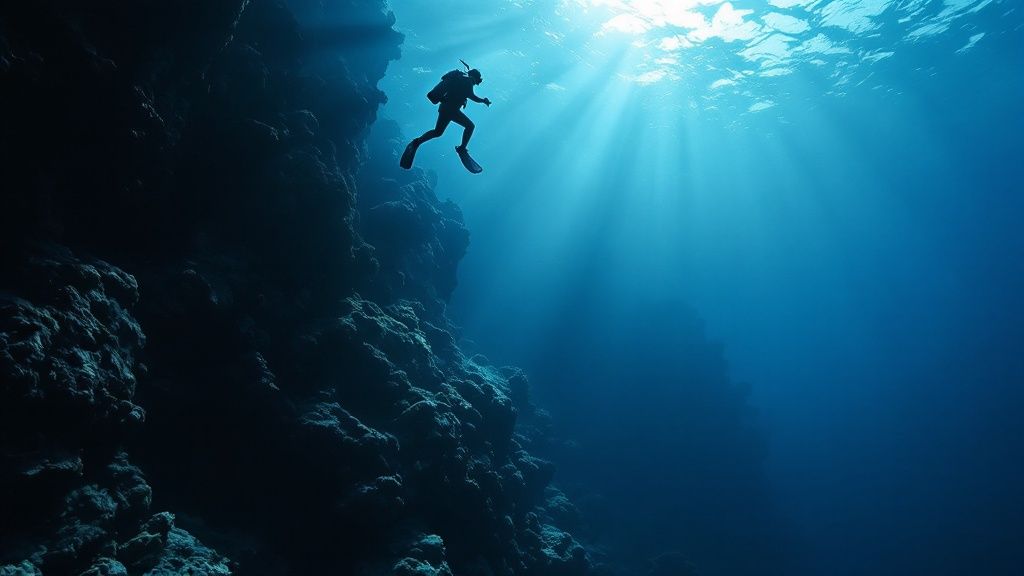
So, what's the secret? It all comes down to geology. The island's sheer size and its massive volcanoes, Mauna Loa and Hualalai, act as a giant shield for the western coast. This natural barrier blocks the persistent trade winds, leaving the Kona and Kohala districts with incredibly calm and clear water almost every single day of the year.
Those conditions are what every diver dreams of. It's not uncommon for visibility to push past 100 feet, giving you a crystal-clear view of everything around you. Plus, the water stays comfortable all year, hovering around 75°F in the winter and getting up to a warm 80°F in the summer. It’s a diver’s paradise, no matter when you visit.
A World Shaped By Fire
The volcanic landscape is what truly makes diving here a one-of-a-kind experience. Forget flat, sandy bottoms. Kona's underwater world was sculpted by millennia of lava flows, creating a maze of incredible structures.
Imagine gliding through ancient lava tubes, navigating under majestic archways, and peering into huge underwater craters teeming with life. These formations are the perfect home for a wild variety of marine creatures, and many of them are endemic to Hawaii—you won't find them anywhere else on the planet. For example, a famous site called Turtle Pinnacle is a natural "cleaning station" where Hawaiian green sea turtles (honu) gather. You can learn more about the unique diving conditions of the Big Island to get a better sense of what's in store.
Adventure For Every Diver
The incredible variety here means diving the Big Island has something for everyone. It doesn't matter if you're just getting your fins wet or if you're a seasoned pro—Kona has a dive site that will blow you away.
- For Beginners: Calm, shallow reefs close to shore provide a safe and stunning introduction to the underwater world.
- For the Experienced: Deeper sites, intricate lava formations, and more challenging dives offer endless chances to explore.
To give you a quick snapshot, here’s a look at what makes the Big Island stand out.
Big Island Diving Highlights at a Glance
| Feature | Description | Best For |
|---|---|---|
| Volcanic Topography | Underwater lava tubes, archways, and craters. | Explorers and underwater photographers. |
| Exceptional Visibility | Consistently clear water, often exceeding 100 feet. | All divers, especially those who love wide-angle views. |
| Calm Conditions | The Kona coast is protected from trade winds. | Year-round diving, beginners, and boat diving. |
| Unique Marine Life | High concentration of endemic Hawaiian species. | Marine life enthusiasts and nature lovers. |
| Manta Ray Night Dive | A world-famous, unforgettable encounter with gentle giants. | Adventurous divers seeking a once-in-a-lifetime experience. |
This amazing diversity is precisely why divers from all over the globe come to these shores.
From the world-famous Manta Ray Night Dive to pristine coral gardens, the options are as vast and exciting as the Pacific itself. When you're ready to jump in, you can explore a full range of diving tours to find the perfect adventure for you.
The World-Famous Kona Manta Ray Night Dive
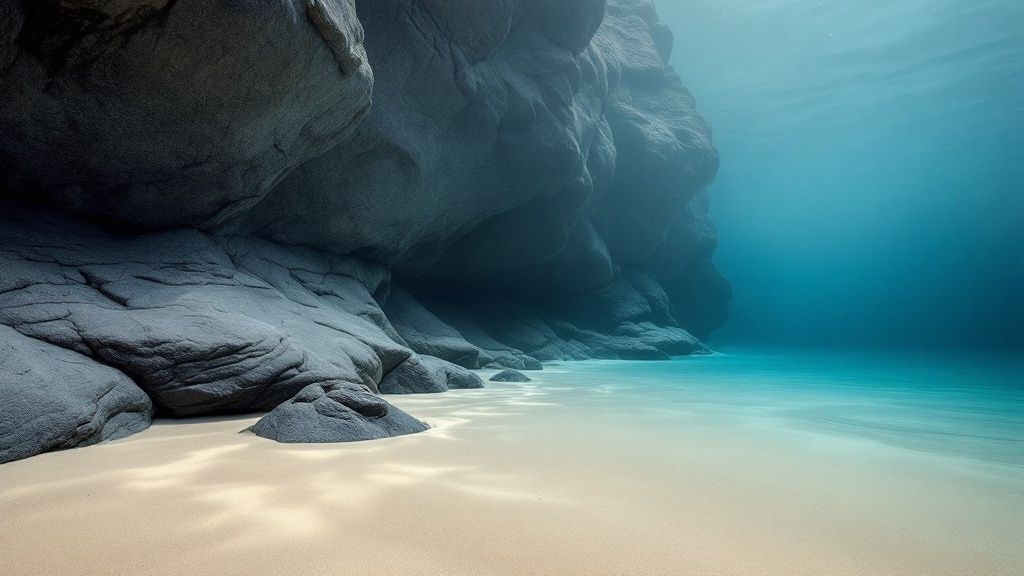
Picture this: you descend into the warm, dark Pacific just after sunset. Your dive light cuts a beam through the inky blackness, and then you see them—enormous, graceful shadows emerging from the deep. This is the Kona Manta Ray Night Dive, and it's an experience so surreal it feels like you've landed on another planet.
Often called one of the best dives in the world, this underwater ballet is an absolute must-do for anyone diving the Big Island. It's a chance to see one of nature's most spectacular feeding events right in front of your mask.
The Science Behind the Spectacle
So, how does this incredible show work? The magic is surprisingly simple. Years ago, people noticed that bright lights in the water at night attract huge clouds of plankton, the microscopic critters that form the base of the ocean food chain. For manta rays, this is an all-you-can-eat buffet.
Modern dive operators have turned this discovery into a finely-tuned performance. They place powerful, stationary lights on the ocean floor that shine straight up, creating a massive column of illuminated plankton. As a diver, you settle on the sandy bottom with your group, point your own light upward, and just wait for the show to begin.
And what a show it is. Manta rays, some with wingspans stretching over 16 feet, glide effortlessly into the light. They perform mesmerizing barrel rolls and graceful swoops, filtering mouthfuls of plankton just inches from your head. It’s an incredibly peaceful and humbling thing to witness these gentle giants in their element.
An Experience for Everyone
One of the best things about this adventure is that you don't have to be a seasoned diver to see it. It's incredibly accessible.
- Certified Scuba Divers: You get a front-row seat on the ocean floor, looking up as the mantas dance in the light beams above you. This is the most immersive way to experience the ballet.
- Snorkelers: You'll float on the surface, holding onto a specially designed light board. The mantas come right up to the surface to feed, giving you an equally breathtaking view from above.
Because the encounter is so accessible, its popularity has exploded. These manta ray dive tours are now an iconic part of Kona's identity. In fact, a 2015 safety report noted a 38% increase in boats at the dive sites on a single night compared to previous highs, showing just how in-demand this unique adventure has become.
Choosing an Eco-Conscious Operator
With so many people wanting to see the mantas, it's absolutely crucial to pick a tour operator that puts the animals first. Responsible companies follow strict guidelines to make sure the encounters are safe and don't disturb the rays.
Key Rule: Never, ever touch a manta ray. Their skin is covered in a protective mucous layer that acts like an immune system. Touching them can strip this coating off, leaving them vulnerable to infections.
A good crew will give you a thorough briefing on proper etiquette, like staying on the bottom if you're diving or at the surface if you're snorkeling, and not shining your light directly in their eyes. By following these simple rules, you help protect this incredible natural wonder for years to come. If you're considering the surface view, you can find out more about the Kona manta ray night snorkel experience.
This isn't just another dive; it's a genuine connection with one of the ocean's most majestic creatures. It’s an evening you will truly never forget.
Exploring the Top Big Island Dive Sites
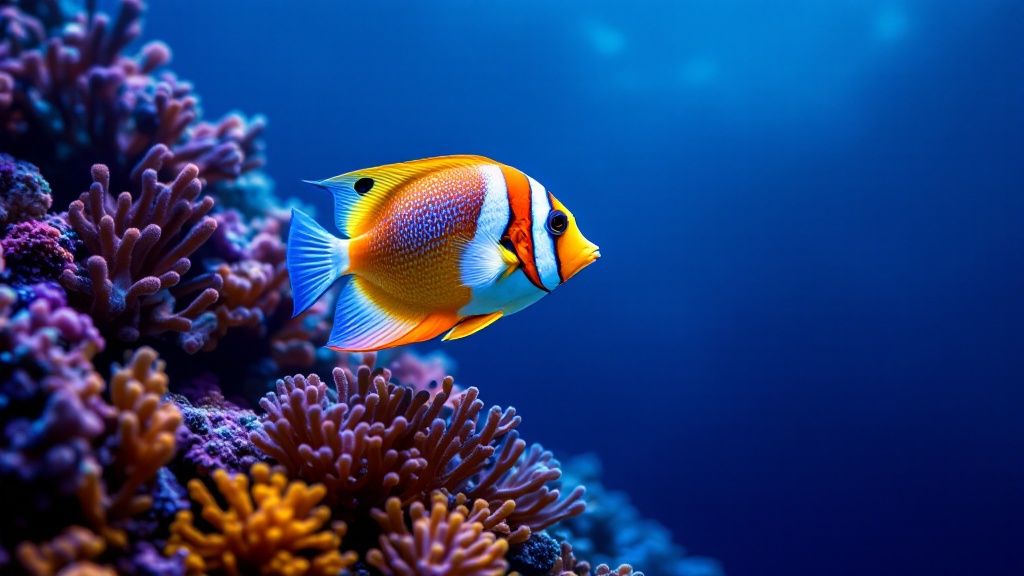
The manta ray night dive gets a ton of well-deserved attention, but don't let it overshadow the incredible variety of world-class sites you can explore during the day. The Kona and Kohala coasts are absolutely packed with them. What’s so cool about diving the Big Island is how the underwater world is a direct reflection of the island's fiery, volcanic soul.
One day you might be drifting over a reef bursting with color, and the next, you're navigating through ancient lava tubes and arches. Every single spot has its own personality. Let's dive into a few of my favorites so you can match your next underwater adventure to your skill level and what you're hoping to see.
Turtle Pinnacle: The Ultimate Cleaning Station
There’s a reason Turtle Pinnacle is one of Kona’s most famous and beloved dives. It’s the perfect place to witness one of nature's coolest symbiotic relationships in action. This isn’t just a spot where you might see a turtle; it's a bustling underwater "spa" where Hawaiian green sea turtles, known as honu, line up for a cleaning.
The site itself is a large coral mound that rises up from the seafloor. You’ll watch as tiny fish, like the Hawaiian cleaner wrasse, swim right up to the turtles and meticulously pick algae and parasites off their shells and skin. It’s an amazing behavior to see firsthand, as the turtles often just hover patiently, clearly enjoying the service.
- Average Depth: 30 – 60 feet
- Skill Level: Beginner to Intermediate
- What You’ll See: A high concentration of Hawaiian green sea turtles, cleaner wrasse, moray eels, and all sorts of reef fish.
Because it's a relatively shallow dive, you get plenty of bottom time and some truly fantastic photo opportunities. It's a genuine crowd-pleaser for divers of all experience levels.
Golden Arches: An Underwater Playground
If you're fascinated by unique geological formations, you absolutely have to check out Golden Arches. This site gets its name from a spectacular series of lava arches that you can actually swim right through. They were formed ages ago when lava flows cooled over a hollow tube, creating a dramatic and exciting underwater landscape.
There’s nothing quite like swimming beneath these massive volcanic archways. It feels like you're exploring the ruins of some lost, underwater city. On a sunny day, the light streams through openings in the rock, creating beautiful beams that dance through the crystal-clear water. It's a visually stunning dive that really shows off the raw power that shaped this island.
One of the key things to appreciate about diving the Big Island is how the volcanic topography directly creates the marine ecosystem. These lava formations aren't just incredible scenery; they provide critical shelter for countless species.
Crescent Beach: Dramatic Drops and Big Surprises
Crescent Beach, also known as Pu'u Ohau, serves up a different kind of thrill. This site is all about its dramatic topography, featuring a steep wall that drops off into the deep blue. The wall itself is covered in a beautiful tapestry of corals and sponges, making it a rich habitat for smaller critters.
But the real draw here is the chance to spot larger marine life. Being so close to deep water means bigger visitors often cruise by. It’s not at all uncommon to see white-tip reef sharks resting on the sandy bottom or to have majestic eagle rays glide gracefully past you along the wall. The mix of intricate macro life and the potential for big animal encounters makes this a truly dynamic and exciting dive.
Comparing Popular Big Island Dive Sites
To help you pick the perfect adventure, I’ve put together a quick comparison of some of the top spots along the Kona coast. Think of it as a cheat sheet to find the site that best fits what you’re looking for.
| Dive Site | Average Depth | Skill Level | Key Marine Life |
|---|---|---|---|
| Turtle Pinnacle | 30-60 ft | Beginner | Green Sea Turtles, Eels, Reef Fish |
| Golden Arches | 40-70 ft | Intermediate | Lava Tubes, Arches, Butterflyfish |
| Crescent Beach | 50-80 ft | Intermediate | Reef Sharks, Eagle Rays, Octopus |
| Manta Heaven | 30-50 ft | Beginner | Manta Rays, Garden Eels, Frogfish |
| Nai'a | 40-70 ft | Intermediate | Dolphins, Pilot Whales, Schooling Fish |
Remember, this is just a tiny taste of the dozens of incredible sites waiting for you. The sheer number of options guarantees that no two days of diving the Big Island are ever the same. Whether you’re a geology buff, a turtle fanatic, or someone chasing the thrill of seeing big pelagic species, your perfect dive site is right here.
Choosing Your Big Island Dive Operator
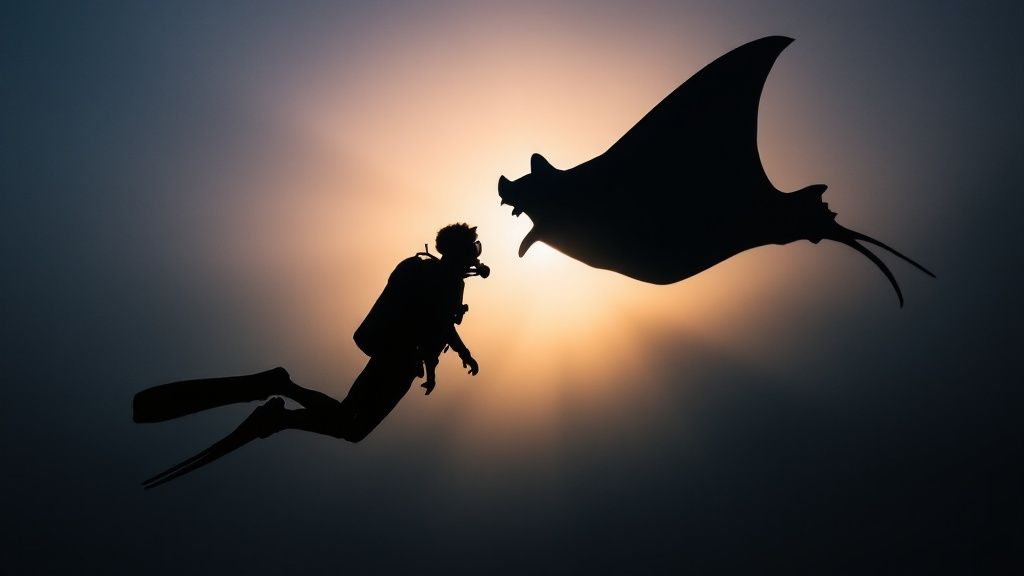
The incredible underwater world of Hawaii is waiting, but let's be honest—the quality of your dive often boils down to one thing: the operator you choose. A great dive shop does more than just ferry you to a site. They shape the entire experience, making sure it’s safe, fun, and unforgettable. Picking the right operator for your diving Big Island adventure is easily the most important decision you'll make.
With a ton of options dotting the Kona coast, it can feel a little overwhelming. But you can cut through the noise by focusing on a few key things that really matter. A top-notch operator always puts safety, professionalism, and the health of the reef first. No exceptions.
What to Look For in a Dive Shop
Think of this as your personal checklist when you start vetting companies. A truly reputable operator won't hide this information; they'll be proud to show off their commitment to doing things the right way.
Here’s what should be non-negotiable:
- An Impeccable Safety Record: This is number one, always. Look for shops with a solid history of safe operations. Do they have clear safety briefings, emergency oxygen on board, and a crew trained in CPR and First Aid? They should.
- Professional Certifications: Make sure the shop is affiliated with a major agency like PADI or SSI. This isn't just a logo—it's your guarantee that their instructors and guides are held to high international standards.
- Well-Maintained Gear and Boats: A clean, organized boat and gear that looks well-cared-for are huge green flags. A custom-built dive boat is an even bigger plus, as it's designed specifically for diver comfort and safety.
- Small Group Sizes: This one is a game-changer. Avoid operators that cram their boats to the gills. Smaller groups mean you get more personal attention from your guide, the dive site feels less crowded, and the entire experience is safer and far more relaxed.
Want to go a bit deeper on this? Our guide on how to choose a Kona dive shop breaks down even more tips to help you find the perfect fit.
A Top-Tier Operator Example
So, what does all this look like in practice? A company that consistently hits these marks is Kona Honu Divers. They've earned a stellar reputation for their expert guides, genuine commitment to marine conservation, and their focus on high-quality, small-group dives. They've set a high bar for what a great Kona dive experience should be.
But you don't have to take our word for it. The best insights always come from other divers. Reading authentic, recent reviews gives you a clear picture of what you can really expect.
When you take a little extra time to research and pick a quality operator, you're investing in your own experience. It's the difference between a good dive and an absolutely incredible one. You'll be able to relax and just soak in the magic of the Big Island, knowing you’re in safe, capable hands.
Advanced and Unique Diving Experiences
If your logbook is already bursting with beautiful reef tours, the Big Island has something more to offer. Once you’ve got your fundamentals dialed in, a whole new world of underwater adventure opens up, and the Kona coast is one of the best places on earth to explore it.
These are the kinds of dives you’ll be talking about for years to come.
When you’re ready to venture beyond the stunning coral gardens, you can head to more remote, challenging sites. These trips often mean deeper profiles and stronger currents, which is exactly what attracts the big stuff. We're talking about the thrill of watching massive schools of jacks swirl around you or seeing sharks and oceanic whitetips cruise by in the deep blue. For more experienced diving opportunities, check out an advanced dive tour page.
Of course, these dives aren’t for beginners. They demand a higher level of skill, confidence, and training. Any reputable operator will want to see an advanced certification and proof of recent diving to make sure you’re ready for the dynamic conditions.
The Kona Blackwater Dive: A Spacewalk in the Ocean
Easily one of the most unique dives on the planet is the legendary Kona Blackwater Dive. People often call it an "aquatic spacewalk," and for good reason. It’s nothing like a typical night dive on a reef. Instead, you're tethered to a line, suspended in the inky blackness of the open ocean, with thousands of feet of water below you.
Your dive lights aren't there to illuminate coral. They're there to reveal the largest daily migration on Earth. Every single night, an unbelievable cast of bizarre, often bioluminescent creatures rises from the abyss to feed near the surface. You'll see things that look like they're straight out of a sci-fi movie—translucent larval fish, pulsating jellies, and strange, alien-like cephalopods.
There's a profound feeling that comes with floating in that immense, dark ocean, watching these strange and beautiful creatures drift past your mask. It’s a humbling reminder of how much life thrives in the deep sea, far beyond the reach of the sun.
This dive is an absolute must for any adventurous diver with solid buoyancy skills. Not only is it an incredible photo opportunity, but it’s a chance to witness a natural phenomenon that very few people will ever see with their own eyes.
Are You Ready for the Challenge?
Both the advanced boat trips and the blackwater dive have specific requirements to keep everyone safe and make sure the experience is a good one.
- Advanced Open Water Certification: This is generally the minimum ticket to ride.
- Excellent Buoyancy Control: This is non-negotiable. It’s critical for deep dives and for holding your position on the blackwater dive.
- Comfort in a Night/Deep Environment: You need to be completely at ease when you can’t see the surface and visibility is limited to your light beam.
If you can tick these boxes, you're ready for some of the most rewarding and memorable diving the Big Island has to offer. These specialized trips deliver a kind of thrill that a standard reef tour just can't match, connecting you with the wild, untamed side of the Pacific.
Pioneers of Big Island Diving
Every great dive destination has a backstory. The world-class diving scene you see on the Big Island today wasn’t born overnight—it was built by a handful of pioneers who saw something special under the waves of the Kona coast. Knowing their story gives you a much deeper appreciation for the incredible dive community that thrives here now.
The modern era of diving in Kona really kicked off in the 1970s. As training agencies like PADI started making scuba accessible to everyone, not just daredevils and military folks, a new wave of explorers was ready to see what was down there. This was the moment that set the stage for quiet fishing towns like Kona to become global diving hotspots.
The Rise of a Diving Landmark
At the center of it all were people with a vision. The Big Island was instrumental in making scuba a mainstream adventure in the United States, and a big part of that was thanks to people like Jack Clothier. In 1981, he and his wife, Tina, opened Jack’s Diving Locker, a small shop that would grow into a Kona institution. Their passion was contagious, helping to kickstart the island's dive tourism and cementing its reputation for world-class underwater experiences. You can dive deeper into how Hawaii’s dive scene grew into a global attraction.
This wasn’t just about business, though. The first generation of dive operators created a legacy of exploration and, just as importantly, conservation. They weren't just charting dive sites; they were building a community around protecting the unique volcanic landscapes and the amazing creatures that call them home.
This deep-rooted respect for the ocean is still the heart and soul of Kona's dive community. The focus you see on responsible diving and marine conservation isn't a new trend—it's a direct line back to the values these trailblazers established decades ago.
Their work ensured that the reefs would be around for future divers to enjoy. That same commitment is alive and well today, carried on by the shops that operate with a powerful sense of stewardship for their underwater backyard.
Today, shops like Jack's Diving Locker stand as a testament to that enduring legacy. They connect today's divers to the very pioneers who first unlocked the magic of the Big Island's underwater world. We think the best way to honor that history is to share authentic feedback straight from the diving community.
Your Big Island Diving Questions, Answered
Got questions about planning your dive trip to the Big Island? You're not alone. We get asked a lot of the same things by first-timers, so we’ve put together some quick and easy answers to help you prepare.
Think of this as your cheat sheet for getting everything sorted out, so you can show up ready for an amazing, stress-free time diving the Big Island.
When’s the Best Time of Year to Dive?
Honestly, any time is a great time to dive here. The Kona coast has a unique advantage—it's sheltered from the trade winds, giving us calm, clear water almost every single day. The water is always pleasant, hovering around 75°F (24°C) in the winter and warming up to a balmy 80°F (27°C) in the summer.
But if you want a truly unforgettable experience, try to visit between December and March. It’s during these months you can often hear the incredible songs of humpback whales echoing underwater during your dives. It's magical.
Do I Have to Be Certified to Dive There?
Not necessarily! While you’ll need a certification for most boat dives—including the legendary manta ray night dive—you can absolutely get in the water if you're a beginner.
Look for a "Discover Scuba Diving" program. Nearly every dive shop offers one, and it's a fantastic, safe way to try scuba with an instructor right by your side. And of course, snorkeling is always an option for exploring the stunning reefs without any certs required.
What Kind of Marine Life Will I See?
The Big Island’s underwater world is buzzing with life. On just about any given dive, you're almost guaranteed to run into Hawaiian green sea turtles (honu), different kinds of moray eels peeking out from the reef, and octopus (tako). The sheer variety of colorful reef fish is incredible, and it’s pretty common for pods of spinner dolphins to show up and play in the boat's wake.
Depending on where you dive, you might also be lucky enough to spot eagle rays or white-tip reef sharks cruising by. And then there are the majestic manta rays—the real stars of the show on the world-famous night dive.
What Should I Pack for the Dive Boat?
A little preparation goes a long way in making your day on the water comfortable. Don’t forget your certification card and logbook, but here’s what else you should throw in your bag:
- Reef-safe sunscreen to protect yourself and our delicate coral.
- A good hat and sunglasses for when you're on the surface.
- A reusable water bottle because hydration is key.
- A towel and a dry change of clothes for the ride back.
Most quality dive operators will have tanks, weights, and some snacks covered. It's never a bad idea to bring a light jacket or sweatshirt, though—it can get a bit chilly on the boat after a dive.
Ready to see for yourself why diving the Big Island is a bucket-list experience? The pros at Kona Honu Divers know these waters like the back of their hand and are ready to show you an incredible time. Take a look at their complete list of diving tours and book your adventure today.