
Picture this: you descend into an underwater world carved out by volcanoes. You're weightless, floating through ancient lava tubes, over dramatic drop-offs, and past coral gardens bursting with life. That's what it feels like to dive on the Big Island. It’s where raw geological power meets a thriving, delicate marine ecosystem. The Kona coast, in particular, is home to some of the most consistently incredible diving on the planet.
Why The Big Island Is a World-Class Dive Destination
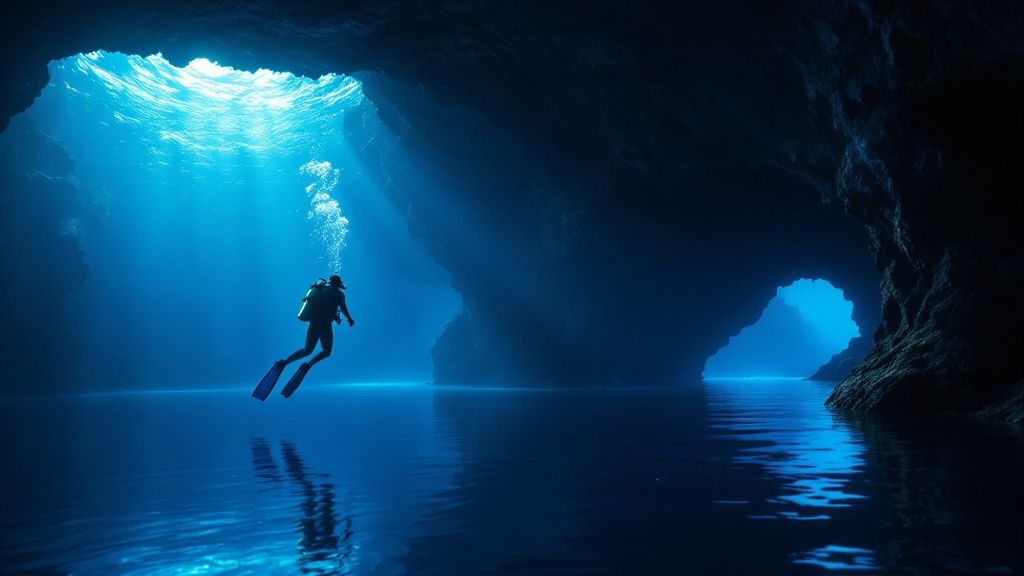
The Big Island isn't just another pretty spot to go diving; it's a world-class destination forged by fire and claimed by the sea. Its volcanic origins have created an underwater landscape you won't find anywhere else. Imagine exploring complex lava tubes, swimming through huge archways, and gliding through underwater canyons—all shaped by ancient lava flows. This dramatic terrain is the perfect playground for an astonishing amount of marine life.
What really makes the Kona coast special is its geography. The island's massive volcanoes, Mauna Loa and Hualalai, act like giant shields, protecting the western shoreline from the strong trade winds. The result? Exceptionally calm and clear water almost all year long. Visibility often pushes past 100 feet, so you can truly take in the whole vibrant spectacle below.
An Unmatched Underwater Ecosystem
The island’s isolation out here in the middle of the Pacific has led to some incredible biodiversity. When you're diving the Big Island, you’ll see creatures that live nowhere else on Earth.
- Endemic Species: A huge chunk of Hawaii's reef fish are endemic, meaning they are unique to these islands. Be on the lookout for the beautifully patterned Bandit Angish or the brilliant Potter's Angelfish.
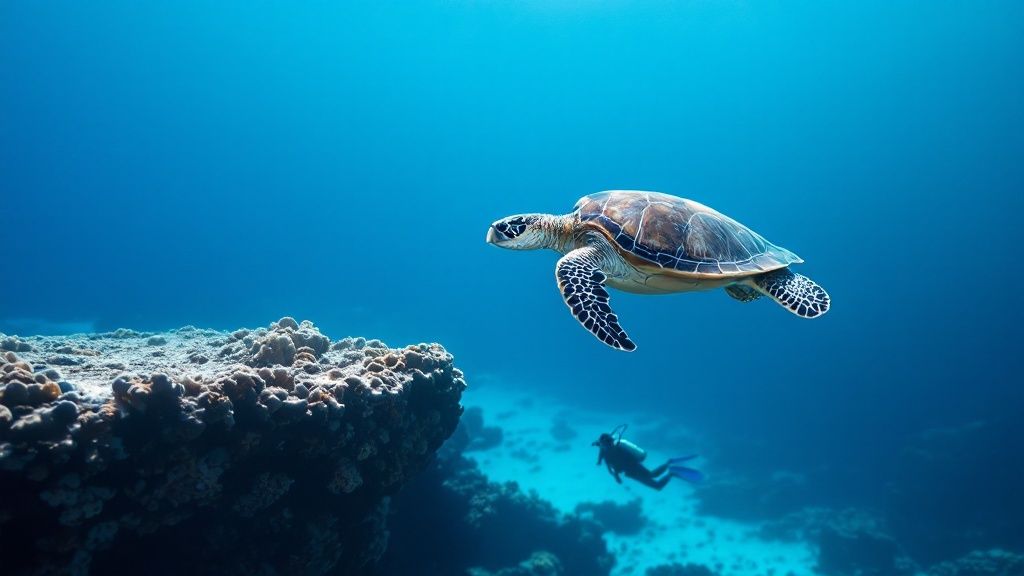
- Abundant Turtle Populations: The Big Island is a haven for the Hawaiian Green Sea Turtle, or Honu. It's not uncommon to see a dozen of these gentle giants on a single dive, just chilling on the reef or cruising by.
- Unique Encounters: The deep offshore waters bring in the big stuff. Dolphins, sharks, and even majestic humpback whales (if you're here in the winter) are all regular visitors.
This rich marine environment is no secret. The Big Island supports around 100,000 certified scuba dives each year, and there are over 50 professional dive shops ready to get you in the water. This thriving dive economy is a testament to the unforgettable experiences waiting just beneath the surface. You can learn more about the Big Island dive industry on konahonudivers.com.
From the legendary Manta Ray Night Dive to the thrill of a blackwater dive, this volcanic paradise has something for every diver. It’s time to see for yourself what makes it a dream destination. A great place to start is by checking out the best diving tours the Big Island has available.
Decoding Big Island Dive Conditions
If you're picturing chilly water or murky visibility putting a damper on your dive trip, you can breathe a sigh of relief. The Big Island’s Kona coast serves up some of the most reliably fantastic diving conditions on the planet, and you can thank its enormous volcanoes for that.
Just picture Mauna Loa and Hualalai acting as gigantic, natural windbreaks. They stand guard, shielding the western coastline from the gusty trade winds that churn up the ocean in other parts of Hawaii. This incredible protection leaves the water remarkably calm and clear, making it a perfect underwater playground for diving the Big Island any time of year.
Water Temperature And Visibility
The island’s volcanic geology is also the secret behind the gin-clear water. With very little river runoff and a rugged, rocky coastline, the water along the Kona coast stays mostly free of sand and sediment. It’s not uncommon to experience visibility that stretches beyond 100 feet (30 meters).
That stunning clarity is matched by wonderfully pleasant water temperatures. The Big Island is home to some of Hawaii's most diverse underwater ecosystems, and the water stays comfortable for divers year-round. You can expect temperatures to linger between a balmy 75°F and 80°F (24°C to 27°C), with the warmest temps hitting in late summer around September. These stable conditions mean you can often get away with a thin wetsuit or even just a dive skin. You can get more details on Hawaii's dive conditions on PADI.com.
A Seasonal Guide To Diving The Big Island
While the diving here is always great, each season brings its own unique flavor to the underwater world. Understanding these subtle shifts can help you time your trip perfectly to catch exactly what you want to see.
Here's a quick look at what to expect from the water throughout the year.
Big Island Diving Conditions Throughout The Year
| Season | Average Water Temp (°F/°C) | Typical Visibility | Recommended Wetsuit | Marine Life Highlight |
|---|---|---|---|---|
| Winter (Dec-Mar) | 75-77°F / 24-25°C | Excellent (100+ ft) | 3mm Full Wetsuit | Humpback whale songs underwater |
| Spring (Apr-Jun) | 76-78°F / 24-26°C | Excellent (100+ ft) | 3mm Shorty or Full | Mating season for many reef fish |
| Summer (Jul-Sep) | 78-80°F / 26-27°C | Very Good (80-100 ft) | 1mm Rash Guard/Vest | Calmest seas and warmest water |
| Fall (Oct-Nov) | 77-79°F / 25-26°C | Very Good (80-100 ft) | 3mm Shorty or Full | Tiger sharks are more active |
This table should give you a solid idea of what to pack and what to look for, but remember that conditions can always vary.
Pro Tip: Don't let the slightly cooler winter water scare you off. There is absolutely nothing like being on a dive and hearing the haunting, otherworldly songs of humpback whales echoing through the water. It's a surreal experience you'll never forget and it only happens this time of year.
Ultimately, there really isn't a "bad" time for diving the Big Island. Whether you’re chasing the warm, glassy seas of summer or the incredible whale songs of winter, the conditions are always ready for an amazing underwater adventure. Knowing these seasonal details just helps you pack the right gear and set the right expectations for your trip.
Exploring the Top Kona Dive Sites
So, you're ready to see the underwater spots that put Big Island diving on the map? The Kona coast is loaded with dozens of world-class dive sites, and each one tells a different story about Hawaii's volcanic heart. These aren't just random patches of ocean; think of them as living cities built on foundations of ancient lava flows.
The best way to get to know these incredible locations is by going with a pro. A good local guide knows the currents, the underwater terrain, and exactly where the coolest marine life likes to hang out. They turn a good dive into a great one, all while keeping safety the top priority.
Must-See Dive Sites for Every Skill Level
While you could spend a lifetime exploring here, a few sites always stand out. These are the places that truly capture the magic of Kona, from dramatic lava formations to buzzing hubs of marine activity.
- Crescent Bay (Au Au Crater): This is a fantastic spot for divers of all levels. It's a partially submerged volcanic crater, which means the water is usually calm and protected. You'll find a beautiful mix of healthy coral gardens and fascinating lava rock structures—perfect for spotting eels, scorpionfish, and huge schools of colorful reef fish.
- Golden Arches: Just like the name implies, this site is famous for its incredible lava rock archways that you can actually swim through. It's a photographer's dream. The way the sunlight filters through the arches lights up everything, from the resident frogfish to tiny, brilliantly colored nudibranchs.
- Turtle Pinnacle: This is a classic "cleaning station," a fascinating natural phenomenon you have to see to believe. Hawaiian green sea turtles, or honu, come here to let surgeonfish pick parasites and algae right off their shells. It’s a guaranteed chance to see several turtles up close, just going about their day.
These sites are just a glimpse of what's waiting for you. For a more in-depth look at the variety of underwater environments you can dive into, check out our complete guide to diving on the Big Island.
What You Will See Beneath the Waves
Beyond the turtles and eels, the sheer amount of life here is staggering. The ancient lava tubes and underwater caves create perfect hideouts for octopuses and other shy nocturnal creatures. The coral reefs are thriving, home to thousands of fish—from the endemic Potter's angelfish to massive, shimmering clouds of milletseed butterflyfish that move as one.
Diving in Kona is like exploring a living museum of geology and biology. Every lava tube tells a story of the island's fiery birth, while every coral head is a bustling metropolis of marine creatures you won't find anywhere else on Earth.
Partnering with Kona Honu Divers
Choosing the right guide is the key to unlocking the secrets these dive sites hold. At Kona Honu Divers, the entire philosophy is built around small groups and personal experiences. This way, you get the most out of every single minute you're underwater.
The crew doesn't just know these sites like the back of their hand; they have a deep respect for the ocean and love sharing what they know. Their expertise can completely transform a dive, pointing out a perfectly camouflaged creature you’d have missed or sharing a cool fact about the ecosystem. They make a good dive an unforgettable one.
But don't just take our word for it—see what other divers have to say about their adventures.
Whether you're about to explore your very first reef or you're a seasoned pro looking for a new challenge, the dive sites along the Kona coast are ready to blow you away.
The Unforgettable Manta Ray Night Dive Experience
There are some dives you remember, and then there’s the Manta Ray Night Dive. For many people, this isn’t just another tank of air; it’s the single most profound experience they have while diving the Big Island. Forget everything you think you know about night diving. This is a mesmerizing underwater ballet, a surreal encounter with one of the ocean's most graceful giants.
The real show begins just after sunset. As the sky fades to black, boats motor out to specific spots along the Kona coast, known to locals as manta "feeding stations." The setup is brilliantly simple: lights attract plankton, and plankton is a manta ray’s favorite meal. For decades, these gentle creatures have shown up reliably, night after night, for the feast.
What to Expect on Your Manta Adventure
It all starts with a beautiful boat ride as the sun dips below the horizon, setting the sky ablaze. Once your boat is anchored up, your guide will walk you through the plan, focusing on how to interact with the mantas safely and respectfully. The golden rule is simple: observe only, never touch. Manta rays are covered in a protective mucus coating, and a simple touch from a human hand can damage it, leaving them vulnerable to infections.
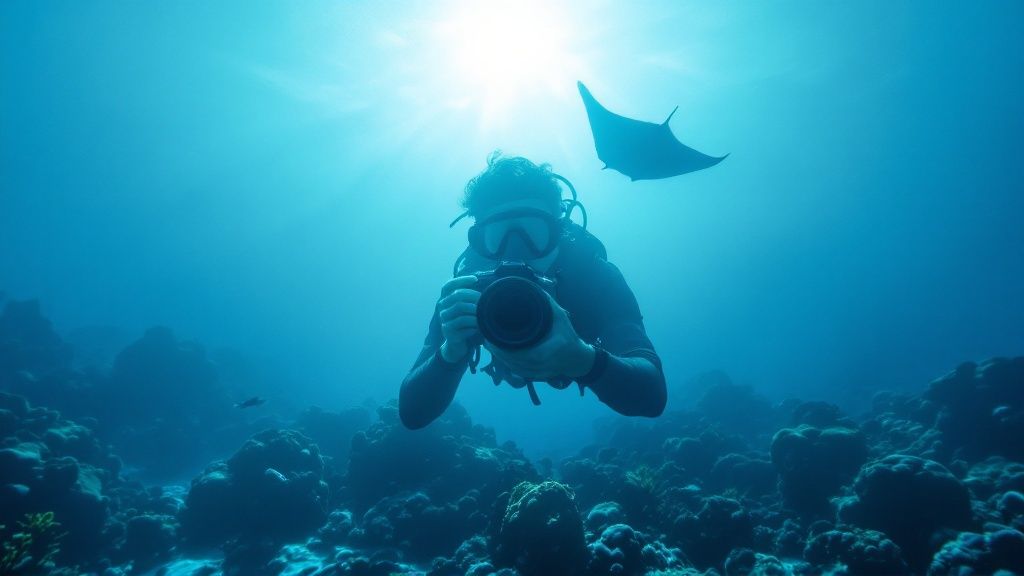
Once you slip into the warm, dark water, you’ll descend to the sandy bottom. Divers arrange themselves in a circle, pointing their powerful dive lights straight up. At the same time, snorkelers float above, often holding onto a large, custom-built light board that beams down into the depths.
This creates a massive column of light in the water, essentially ringing a dinner bell for the area's microscopic plankton. And where the plankton gathers, the mantas are never far behind.
The first time a huge, dark shadow glides silently into view, it’s a moment that will genuinely take your breath away. These massive reef mantas, with wingspans that can stretch over 12 feet, perform effortless barrel rolls and soaring swoops just inches from your face. It's an incredible spectacle, and you’re just a spectator at their nightly banquet.
Why This Dive is So Special
Hawaii's manta experience is truly one of a kind. In other parts of the world, you might see mantas at a "cleaning station," but here, you witness their active feeding behavior, which is far more dynamic. You're seeing nature in action, a ritual that has been perfected over decades by local dive operators.
This signature Big Island dive is also incredibly accessible. While certified divers get an amazing view from the seafloor, the Big Island manta ray night snorkel gives you an equally stunning perspective from the surface. It’s a fantastic option for families and anyone who isn’t a certified diver.
The entire operation is a well-oiled machine, fine-tuned over years to ensure the safety of both the mantas and the people who come to see them. It's a reliable, unforgettable, and ethically-managed adventure.
Ready to see it for yourself? You can book your spot on the world-famous manta ray dive and snorkel tour here.
Advanced Dives for Experienced Divers
Once you’ve logged more dives than you can count, you start craving something different—a dive that offers a real thrill beyond the beautiful, sunlit reefs. This is where the Big Island truly shines for advanced divers. We're talking about dives that push the boundaries and take you into deeper, wilder, and more surreal underwater worlds.
If you're an experienced diver looking for a challenge that rewards you with once-in-a-lifetime encounters, Kona's advanced dive scene will not disappoint. These aren't your average charters; they're designed for divers with rock-solid buoyancy, a cool head underwater, and comfort in challenging conditions like deeper profiles and potential currents.
The Kona Blackwater Dive
Picture this: you're drifting in the pitch-black open ocean, miles from shore, suspended over thousands of feet of water. This isn’t a typical night dive. This is the Kona Blackwater Dive, a journey into a world of bizarre, alien-like creatures that rise from the abyss every single night in the largest migration on Earth.
Tethered to the boat, you and your dive light become an oasis in the dark, attracting a parade of life you’ve never seen before. Forget coral reefs and familiar fish. Here, you'll witness:
- Bioluminescent Life: Tiny, pulsating jellies and siphonophores that create their own light, glowing like something out of a sci-fi movie.
- Strange Larval Forms: The bizarre, see-through juvenile stages of fish and invertebrates that look absolutely nothing like their adult selves.
- Deep-Sea Oddities: Weird squids, pelagic seahorses, and other deep-water residents making a temporary visit to the surface.
Divers often compare it to floating in outer space. It's a surreal, humbling experience that connects you with a hidden ecosystem few ever get to see. If you’re ready to explore this incredible frontier, you can learn more about the Kona Blackwater Dive tour and what it takes to join.
Exploring Remote and Deeper Sites
Beyond the blackwater experience, advanced charters are your ticket to the Big Island’s untamed underwater landscapes. These trips head to more remote sites that are off the beaten path, offering a raw, unfiltered glimpse into the pelagic world.
These advanced dives aren't just about going deeper. They're about embracing the unpredictable and powerful nature of the open ocean, where you have a real chance of wild encounters with the ocean’s top predators and most majestic travelers.
Operators like Kona Honu Divers run premium advanced dive trips specifically for seasoned divers. These charters seek out sites known for stronger currents, which essentially act as a highway for big marine life. You might find yourself drifting along a deep wall patrolled by sharks—including Galapagos and scalloped hammerheads—or encountering a squadron of eagle rays gliding effortlessly in the blue.
These dives are a step up in every sense of the word. They involve deeper profiles, more challenging conditions, and the potential for unforgettable run-ins with dolphins, sharks, and other large pelagic species. It's the ultimate adventure for any serious diver visiting the Big Island.
How to Choose the Right Dive Operator
Picking who you dive with is easily one of the most important decisions you'll make for your whole trip. Seriously. The right dive operator does so much more than just hand you a tank and point you to the boat; they’re your guides, your safety net, and the key to an amazing experience. Your choice can be the difference between a decent vacation and a truly unforgettable adventure while diving the Big Island.
When you start looking around, the number of options can feel a bit overwhelming. The trick is to cut through the noise and focus on what really matters. A great dive shop is built on safety, professional know-how, and a genuine love for the ocean.
What to Look For in a Dive Company
Before you pull out your credit card, run through this quick mental checklist. Does the company you're eyeing tick these crucial boxes?
- A Rock-Solid Safety Record: This is non-negotiable. Look for shops with a long, proven history of safe dives, gear that's clearly well-cared-for, and staff who can confidently explain their emergency plans.
- Experienced and Passionate Guides: The best guides aren't just there to babysit. They're seasoned pros and total ocean nerds who get genuinely excited to show you that hard-to-spot octopus or share cool facts about the reef.
- Well-Maintained Boats and Gear: A clean, organized boat and quality rental gear are huge tells. It shows they care about the details and prioritize your comfort and safety from the get-go.
- Small Group Sizes: Diving in a small group is a total game-changer. You get more one-on-one time with your guide, less bumping into other divers, and a much more personal feel underwater.
A Focus on Conservation
Beyond the basics, what separates a good operator from a great one is a real commitment to protecting the reefs. They don't just talk the talk; they lead by example with sustainable practices, teach divers how to be responsible guests underwater, and often take part in local conservation efforts. This "leave no trace" mindset is what keeps our dive sites healthy for years to come.
When you choose an eco-conscious operator, your money does more than just buy you a dive—it helps protect the very ecosystem you came all this way to see. It’s a powerful way to make your trip a positive force for the environment.
Why Kona Honu Divers Stands Out
This is exactly where Kona Honu Divers shines. Their entire philosophy is built around small groups and a deep respect for the marine world, creating an experience that feels both personal and responsible. Their guides are famous for their expertise and sheer enthusiasm, turning every dive into a genuine exploration. But don't just take our word for it—see what other divers have to say.
Making the right choice from the start ensures your underwater adventure will be incredible for all the right reasons. For a deeper look at this, check out our complete guide on how to choose a Kona dive shop. With these tips, you can confidently book with a team that will make your trip one to remember.
Your Big Island Diving Questions, Answered
It’s completely normal to have a few questions swirling around as you nail down the details for your dive trip. Wondering about gear, the best season, or what to expect? Let's clear things up so you can focus on the adventure ahead. Here are the answers to the most common questions we hear.
Do I Need to Be Certified to Dive?
That's a fantastic question, and the answer might surprise you: no, not always! To join most of the boat dives that head out to the incredible reef sites, you will need at least an open water certification. But that doesn't mean non-certified folks have to stay on the boat.
Most dive shops offer something called a "Discover Scuba Diving" experience. It’s a fantastic, safe way for total beginners to try scuba in a calm, shallow spot with an instructor right by their side. If you're not ready to take the plunge, you can still experience the island's most iconic encounter by joining a Manta Ray Night Snorkel tour.
When Is the Best Time of Year to Go?
One of the absolute best things about diving on the Big Island is that it's a year-round destination. Thanks to the sheltered geography of the Kona coast, the diving conditions are consistently great pretty much any day you want to go.
That said, different seasons do have their own unique perks:
- Winter (December-March): The water might be a few degrees cooler, but this is prime time for humpback whales. While seeing one underwater is the lottery win of a lifetime, hearing their haunting songs reverberate through the water on a dive is an experience that will stay with you forever.
- Summer (June-September): This is when you'll typically find the warmest, calmest water. If you love glassy seas and balmy temperatures, summer is an absolutely perfect time to visit.
Can I Rent Dive Gear on the Island?
Of course! Lugging a full set of dive gear across the Pacific is a major hassle, and the local shops know it. Every reputable operator on the island offers a full lineup of rental equipment.
You’ll have no problem renting well-maintained, high-quality gear, including:
- BCDs (the vest that helps you float)
- Regulators and dive computers
- Wetsuits of various thicknesses for comfort
- Masks, fins, and snorkels
Shops like Kona Honu Divers take great pride in their rental fleet, ensuring everything is in top-notch condition. You can pack light knowing you’ll be diving with safe, comfortable gear.
What About Dangerous Marine Animals?
It's a question on every diver's mind when they explore a new place. The simple truth is that dangerous encounters with marine life in Hawaii are incredibly rare. Your dive guides are experts on the local underwater world and will give you a detailed safety briefing before you even get in the water.
They'll teach you exactly how to act and interact with the local residents for a safe, respectful dive.
The golden rule of safe diving is simple: be a respectful observer. Look, but don’t touch. By keeping a comfortable distance and listening to your guide, you can soak in all the incredible biodiversity without a single worry.
With these key questions answered, you can finish planning your diving Big Island adventure with total confidence.
Ready to experience the best diving the Big Island has to offer? The expert crew at Kona Honu Divers is ready to guide you on an unforgettable underwater journey. Explore all available dive tours and book your adventure today