
You're probably doing what most divers do before a Hawaii trip. You're opening tabs, comparing boats, wondering if the water is really that clear, and trying to figure out whether the Big Island is worth building a whole vacation around.
It is.
But only if you plan it like a diver, not like a brochure reader. Diving the Big Island is outstanding because Kona gives you easy access to lava topography, reliable marine life, calm leeward conditions, and two signature experiences that few places on earth can match. It also has off days, bad choices, and advanced dives that deserve more respect than they usually get online.
This guide is the version I'd give a buddy flying in with their gear bag and limited vacation time. If you want the smartest way to approach diving Big Island, start here.
Your Ultimate Big Island Dive Adventure Awaits
You roll out before sunrise in Kona, load your gear on the boat, and check the ocean before you even think about cameras or bucket-list sightings. That is the right mindset here. The Big Island can give you some of the most memorable diving in Hawaii, but the smart trip is built around conditions, site selection, and an honest read on your skill level.
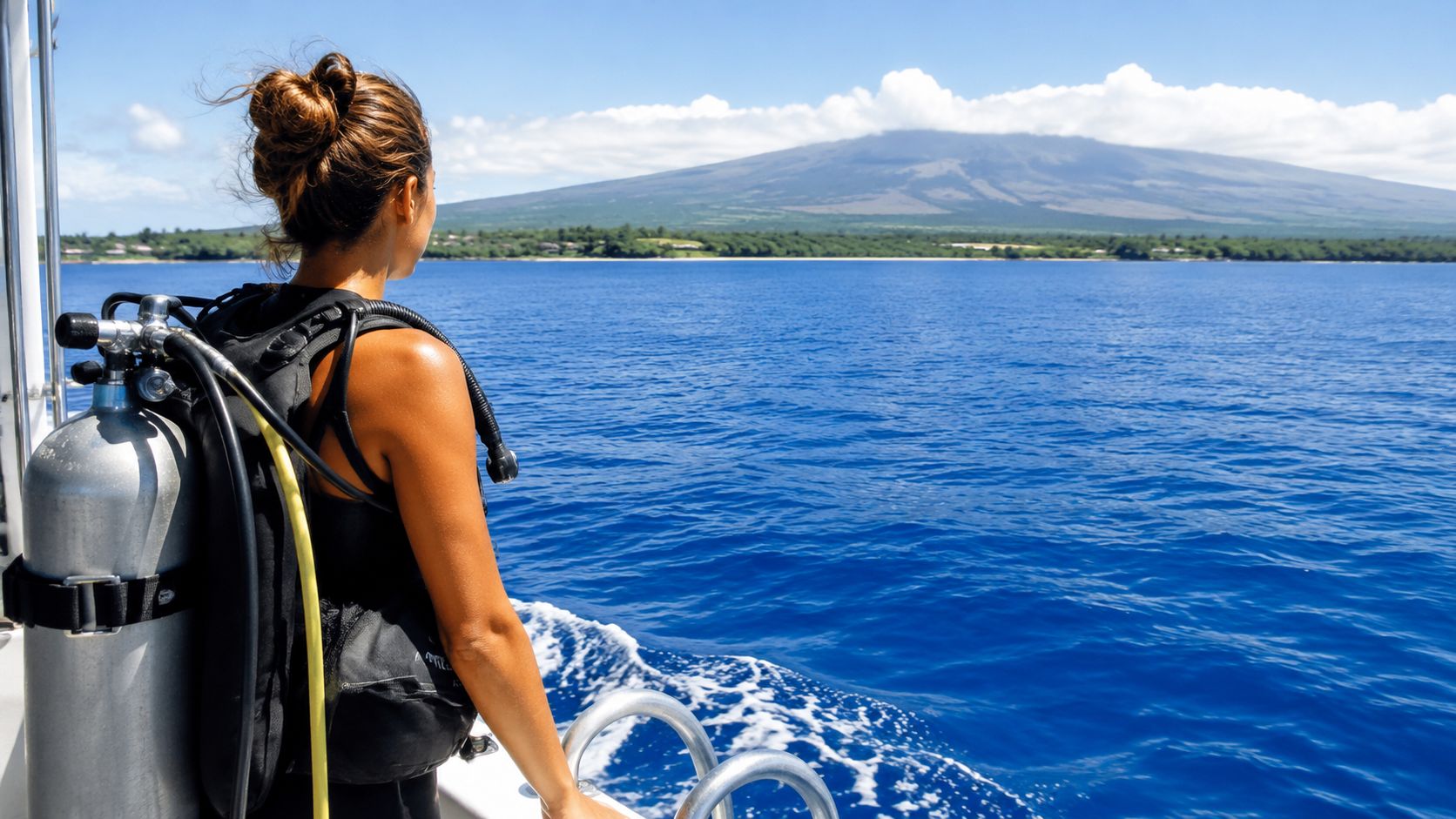
Kona rewards divers who plan like divers. The coast offers lava tubes, steep structure, clear blue water, and signature dives that are hard to match anywhere else in the state. It also has days when swell shifts, advanced charters get called for strong current or rough surface conditions, and a famous dive is the wrong choice for the diver on the boat.
That is the part brochures skip.
A good Big Island trip is not about stuffing your schedule with every famous site. It is about picking the right days for the right dives, leaving margin for weather, and treating night and offshore diving with respect instead of as automatic add-ons.
What makes this trip worth doing
The draw is not just pretty reef. It is variety with real contrast.
You can spend one dive tracing volcanic structure and reef life along the Kona coast, then spend another in open water at night watching a completely different food chain show up under your lights. Few destinations give you that kind of range without long travel days between experiences.
My advice is simple. Build the trip around the two dives Kona does exceptionally well, then fill the rest with reef and lava-formation sites that fit the conditions that week. If the ocean is not cooperating, adjust. The divers who have the best Big Island trips are usually the ones who stay flexible and skip dives that are wrong for their comfort level.
Why the Big Island Offers World-Class Diving
The short answer is geography. The better answer is that Kona combines volcanic structure, shelter from the rougher side of the island, and deep water access in a way few places do.
The coastline does the heavy lifting
The west side of the island sits in the lee of the volcanoes, so the Kona coast is protected from the prevailing trade winds. That matters more than people realize. Calm surface conditions make everything easier. Entries are cleaner, rides are better, and more divers can enjoy sites without feeling like they're working just to stay comfortable.
The underwater terrain is equally important. This isn't a flat tropical reef destination. The island's volcanic origin built an underwater world of arches, drop-offs, broken lava shelves, and swim-through style formations. Those structures act like underwater highways for marine life and keep the diving visually interesting even when you're not chasing a bucket-list animal.
Deep water sits close to shore
Kona's offshore profile is a major advantage. Deep ocean water is close enough to the coast that operators can reach dramatic habitat fast, without requiring a huge transit to get into blue water.
That changes the kind of trip you can have in a few days.
- Reef divers get easy access to topography-rich sites instead of long runs to find something interesting.
- Marine life fans benefit because pelagic activity doesn't feel remote or rare.
- Night divers get one of the most famous predictable wildlife interactions in the world because the local geography supports it.
The Big Island isn't special just because the water can be clear. It's special because the coastline sets up unusually good diving over and over again.
Why conditions are often forgiving
Kona gets marketed as easy, and often it is. Calm water and straightforward boat diving make it appealing for families, newer certified divers, and people who haven't been in the water for a while.
That doesn't mean every day is identical. It means the baseline is strong.
Here's the practical comparison most divers should use:
| Factor | Kona coast advantage | What it means for you |
|---|---|---|
| Surface conditions | Leeward side shelter | Less chop on many days |
| Underwater terrain | Lava formations and relief | More interesting dives than simple sand-and-coral sites |
| Access to deep water | Close to shore | Better mix of reef and pelagic-style experiences |
| Night diving potential | Stable access and predictable setup | Signature dives that are hard to match elsewhere |
If your goal is a trip with variety, not just easy tropical diving, the Big Island earns its reputation.
The Two Dives You Cannot Miss
Build your Kona trip around two nights. One gives you the signature Big Island encounter that almost every diver should do. The other is a specialist dive for people who already know they stay calm when the reef disappears and the water under them turns black.
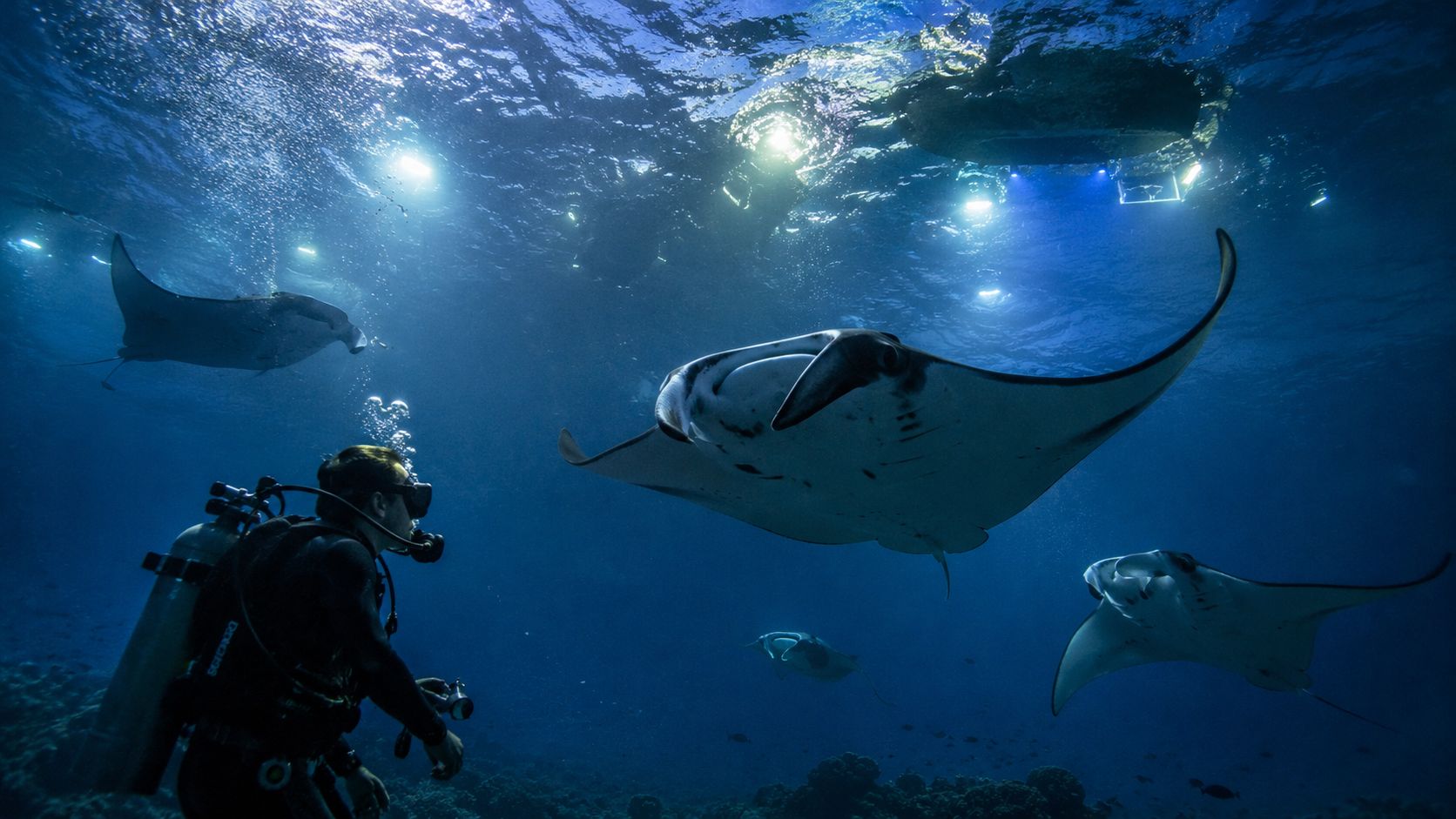
The World-Famous Manta Ray Night Dive
If you leave Kona without doing a manta night dive, you skipped the island's headline experience.
The draw is simple. Divers settle in near the bottom around lights that attract plankton, and the mantas come in to feed. At the better-run sites, the whole thing feels organized rather than chaotic. You are not chasing wildlife through the dark. You are holding position and letting the action come to you.
Kona's manta dives are known for being unusually consistent, which is why they belong high on the list for first-time Big Island visitors. Still, treat "year-round" correctly. It means operators run the dive all year. It does not mean every night is flat calm or equally comfortable. Surge, current, and visibility can change the experience fast, especially for divers who are already cold, rusty, or uneasy at night.
Why Garden Eel Cove is the stronger choice
I'd pick Garden Eel Cove first.
The site layout is the main reason. It is generally more protected, the bottom setup is easier for divers to hold without a lot of unnecessary movement, and the dive tends to feel more controlled once the lights are in place. That matters more than marketing copy. A good manta dive is not just about seeing mantas. It is about getting a clear, stable view without a sloppy scrum of fins and lights.
If you want to compare options before booking, look at the Kona manta ray night swim trip details. If you already know you want to dive rather than snorkel, the dedicated manta ray dive tour page is the right place to start.
A few practical rules matter here:
- Stay low and stay still: Good operators want divers settled on the bottom so the feeding lane stays open.
- Expect a shallow dive that still feels cold: Depth is modest, but long idle time and night air on the ride back can chill you fast.
- Use disciplined light handling: Poor light placement and extra movement make the site worse for everyone, including the mantas.
Bring wide-angle gear if you shoot photos. The mantas pass close, and the best shots happen above you, not fifty feet away.
The Mysterious Blackwater Dive
Blackwater is the dive people talk about for years, and it is the one I tell some divers to skip.
You head offshore at night, descend on a tethered line system, and hover over deep open ocean while larval fish, squid, jellies, and other midwater animals rise toward the surface. The animals are extraordinary. So is the setting. There is no reef to reference, no wall to track, and very little visual structure beyond the lights and the line.
That last part is why blackwater deserves a more honest explanation than you usually get. Operators describe the wonder well. Neutral safety reporting is much thinner. Broader coverage from Scuba Diving's guide to Hawaii's Big Island notes the appeal of these advanced outings, but it does not give divers much hard data on incident rates or a precise threshold for "experienced." So make your own screening stricter.
My advice on blackwater readiness
Book blackwater only if you are already relaxed on night dives, steady with buoyancy, and comfortable handling task loading in open water without constant coaching.
Here's my direct take:
- Good candidate: A diver who stays calm, follows procedures cleanly, and does not need visual terrain to stay oriented.
- Bad candidate: A diver chasing a bucket-list photo while still fighting trim, anxiety, or basic awareness after dark.
- Best approach: Schedule blackwater after an easier Kona dive day, not at the start of the trip when you are still adjusting to local conditions.
Weather and sea state matter more than many visitors expect. Even if the in-water portion goes well, the ride out, the darkness, and the open-ocean setting can wear people down before they ever descend. If that sounds like your lane, the Blackwater Dive tour is the right page to review before you commit.
Exploring Other Premier Kona Dive Sites
You do not need every dive day to be a headline dive. In fact, forcing that usually makes a Kona trip worse. The smart plan is to stack the week with different site types so you stay fresh, match the conditions, and leave room to adjust when wind or surge cuts down your options.
For newer divers and relaxed reef days
Start with forgiving sites.
Turtle Pinnacle is one of the better early-trip picks because the layout is easy to read and the dive usually stays simple. You can settle your weighting, get used to Kona visibility, and still have a very good chance of seeing turtles without turning the day into a skills test.
That matters more than visitors expect. A calm first day tells you a lot about your own readiness. If your air burn is high, your trim is sloppy, or you feel behind the group on an easy reef, do not book a harder profile the next morning. Fix the basics first.
Other mellow reef sites along the coast serve the same purpose. Use them as honest check dives, not filler.
For divers who want better topography
If reef structure is part of the draw for you, book at least one site with lava architecture instead of spending the whole trip on flatter coral gardens. Golden Arches is a strong example. The volcanic contours create swim-throughs, shadow lines, and blue-water openings that make the dive feel bigger and more dramatic without automatically pushing it into technical territory.
For broader context on the area, read this overview of Kealakekua Bay and Kona diving conditions. It helps if you want to understand how protected bays, exposed coastline, and boat access shape the site list from day to day.
These dives suit recreational divers who already manage buoyancy well and can track depth while paying attention to terrain. If you are still task-loaded by your computer, camera, and buddy position on a routine reef, save structure-heavy sites for later in the trip.
For more experienced divers
Advanced Kona diving gets oversold by visitors and underscreened by some operators. Deeper profiles, current, surge, longer runs, and more exposed entries can turn an ordinary charter into a tiring day fast, especially if the surface ride is rough.
My advice is simple. Separate "I want something cooler" from "I am ready for something harder."
Use this filter:
| Dive style | Who it suits | Why book it |
|---|---|---|
| Easy reef charter | Newer and recently inactive divers | Warm-up day, low stress, easy marine life viewing |
| Structure-heavy reef sites | Comfortable recreational divers | Better lava topography, more interesting navigation |
| Long-range advanced trips | Divers with strong buoyancy, air control, and situational awareness | More demanding conditions and access to less routine sites |
If you are considering a long-range or advanced charter, ask direct questions before you book. How deep are the usual profiles? How often does current change the plan? What happens if the second site is rougher than expected? Good crews answer clearly and may tell you not to go. That is a good sign, not a sales failure.
You can review the operator's more demanding option on the advanced long-range dive tour. Skip any broad "all tours" directory here. What matters at this stage is whether the trip matches your actual skill level, not whether the menu looks impressive.
Choosing the Right Dive Operator in Kona
You can pick a great dive site and still have a mediocre day if the operator cuts corners. On the Kona coast, the crew and boat setup shape the trip as much as the reef does. A rushed briefing, sloppy diver grouping, or a captain who pushes marginal conditions can turn a vacation dive into a long, expensive lesson.
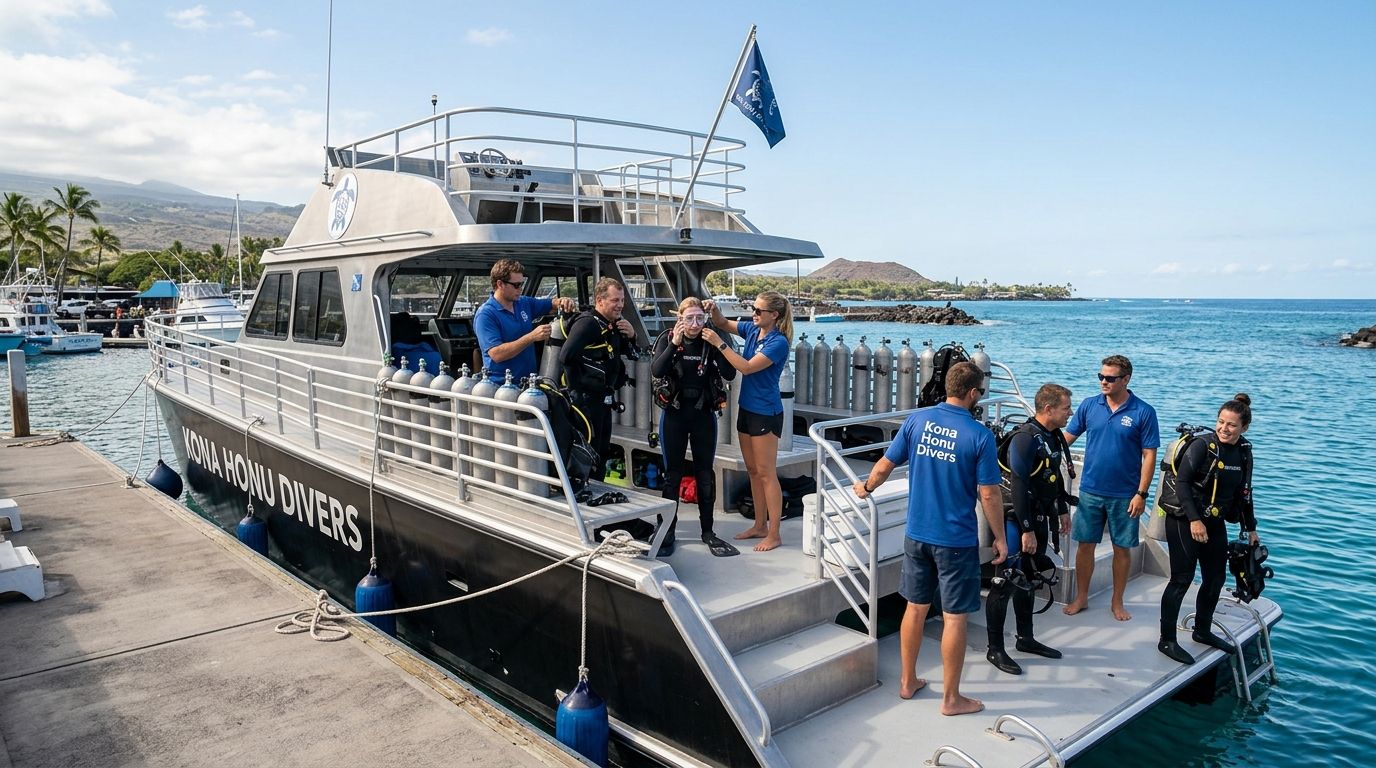
Start with how the operation makes decisions.
Good Kona operators ask about your recent diving, not just your certification card. They explain how they group divers, how they change sites when the ocean gets sloppy, and whether a guide will slow the dive down for less experienced guests. If conditions are poor, the right crew says so early and gives you options. That matters more than a polished website or a discount code.
If you want a side-by-side comparison, this guide to the top Kona diving companies ranked is a practical starting point.
What I'd check before booking
Ask direct questions. You are not being difficult. You are screening for professionalism.
I'd want clear answers on these points:
- Boat fit: How many divers do they take, and does the boat feel crowded with a full load?
- Briefing quality: Do they give site-specific briefings, entry and exit procedures, and realistic expectations for current and surge?
- Diver separation: Do they mix brand-new divers with photographers, advanced divers, and snorkelers on the same plan, or do they organize the day properly?
- Guide policy: Is a guide included, optional, or only used for certain groups?
- Weather judgment: How often do they change sites or cancel for conditions, and how do they communicate that?
- Rental and nitrox logistics: If you need gear, larger cylinders, or nitrox, can they confirm it before trip day?
Those answers tell you a lot. Good operators respond cleanly and without sales fluff.
The operators most visitors will compare
Kona Honu Divers is one of the better-known names for day charters, manta trips, blackwater dives, training, and gear support. That matters if you want one operator to handle several different kinds of diving during the same trip.
Jack's Diving Locker has a long local presence and a broad mix of charters and training. Big Island Divers is also a common pick, especially for visitors focused on manta diving and standard recreational boat dives.
The booking decision I'd actually make
Book the operator that matches your real trip plan, not the one with the longest menu. If you're doing a warm-up reef dive, a manta night dive, and possibly a more advanced outing later, pick a crew that shows sound judgment across all three. Comfort matters. Organization matters. Conservative call-making matters even more.
That is the difference between a Kona trip that feels smooth and one that feels improvised.
Essential Trip Planning Guide for Big Island Divers
Your boat leaves at dawn, the trades are up a little more than forecast, and the water is good but not postcard-perfect. That is a normal Big Island dive day. Plan for that version of Kona and you will make better choices on timing, gear, and which dives to book first.
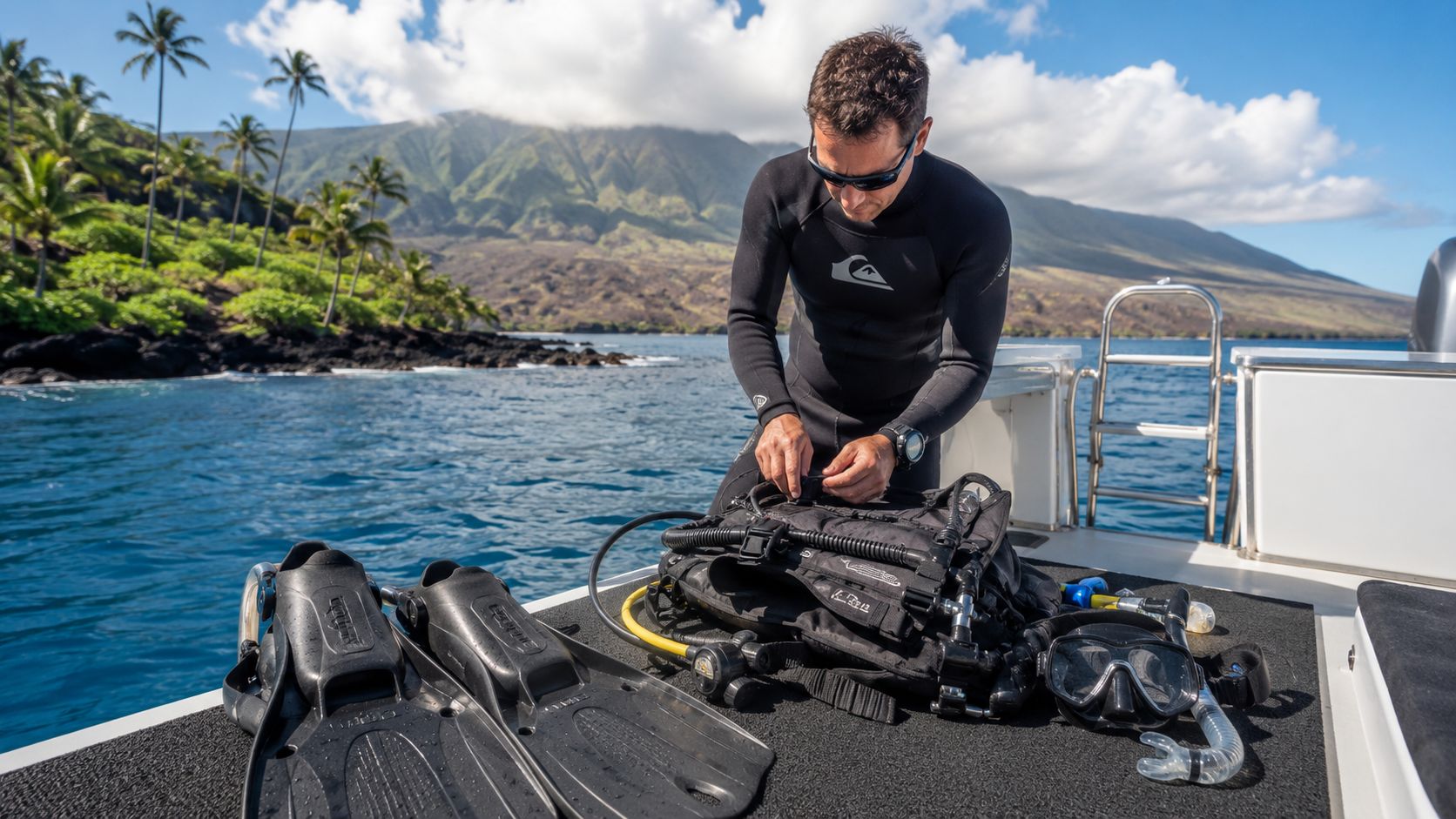
When to dive and what visibility really looks like
The Kona coast earns its reputation for clear water, easy boat access, and reliable diving. It still has off days. Winter swell can affect entries and surface conditions. Heavy rain can reduce visibility, especially if you built your whole trip around one expensive charter and gave yourself no backup day.
Use a simple rule. Put your must-do dive in the middle of the trip, not on day one and not on your final in-water day. That gives you room to adjust if conditions slip or if you need a lighter start after travel.
If you are newer, make your first charter an easy reef day. Get your weighting right. Settle your breathing. Then decide if you are ready for the more demanding stuff.
Certification and skill expectations
Standard Kona reef diving works well for a lot of certified recreational divers. Advanced charters are different. Darkness, current, blue water, task loading, and long surface swims change the equation fast.
Be honest about your recent experience, not just your certification card. If you have not dived in a while, night dives and open-ocean specialty trips should not be your re-entry plan. A conservative operator may tell you no, or may steer you to an easier option first. That is good judgment, not poor service.
The risk on advanced dives usually comes from stacking challenges. A site may be shallow but dark. A drift may be beautiful but mentally busy. A blackwater or pelagic-focused trip may stay within recreational limits while still demanding excellent buoyancy, calm breathing, and strong situational awareness.
Gear that is worth bringing
Bring the gear that affects comfort and control every minute you are underwater. Mask, computer, exposure protection that fits, and any prescription items belong in your bag. Renting tanks and weights locally makes sense. Renting a bad mask does not.
Thermal planning gets overlooked here. Kona is warm compared with many destinations, but long bottom times, repeat diving, and night charters can leave people colder than they expected. A full suit is the safe call for many divers. If you chill easily, pack a hooded vest or an extra layer.
Use this packing split:
- Bring from home: mask, computer, certification card, swimsuit, medications, dry clothes
- Rent if needed: tanks, weights, BCD, regulator, lights, and other bulky items
- Keep on the boat: water, light food, sun protection, towel, and a warm layer for the ride back
Safety and marine etiquette
Kona rewards divers who stay disciplined.
Listen to the briefing. Stay with your buddy. Keep your fins and gauges off the lava and out of the coral. On animal-focused dives, hold position and let the encounter come to you. Chasing wildlife usually shortens the encounter and makes the whole group's dive worse.
If conditions are marginal, make the conservative call early. Sit out a dive if you feel rushed, cold, nauseated, or mentally behind the group. Missing one drop is better than forcing a dive you are not ready for.
Dealing with seasickness before it ruins your day
Even on the leeward side, Kona boats can roll on the ride out or while tied in open water. If you are prone to nausea, treat that as a planning issue, not an inconvenience.
DAN notes that ginger may help relieve nausea and seasickness during dive trips. For a practical breakdown of what to take and when to take it, read this guide to the best sea sickness medicine for Kona dive trips before you fly.
Useful options to consider:
- Patch option: Ship-EEZ Seasickness Patch
- Classic tablets: Dramamine pills
- Another pill option: Bonine pills
- Drug-free approach: Sea Band wristbands
- Easy backup to pack: Ginger chews
My recommendation is simple. If you have gotten seasick before, assume it can happen again. Test your remedy before your biggest dive day, take it early, hydrate well, and do not show up to the harbor hoping luck will cover bad preparation.
Sample Itineraries and Final Checklist
You land on the Big Island with three dive days, a manta booking, and big plans for blackwater. Then the ocean gives you a bumpy morning, a tired body, or a boat ride that feels longer than it looked on paper. The divers who have the best Kona trips are the ones who build in margin before they need it.
Keep your schedule flexible. Put your highest-priority dive on a day when you are rested, fed, hydrated, and not racing a checkout time or a long drive back across the island.
Three-day dive weekend
A short trip needs discipline.
Day 1: Easy two-tank reef charter. Fix weighting, sort your gear, and get used to Kona conditions after travel.
Day 2: Stronger daytime charter if the ocean and your skill level both support it. If they do not, repeat a simpler day and save your energy.
Day 3: Manta night dive. Do it after you already feel settled underwater, not on the same day you are stressed, cold, or behind.
For lodging strategy, this guide to the best places for divers to stay on the Big Island can help you cut down on pointless driving.
Five-day ultimate dive week
More days give you better odds of catching Kona at its best.
- Arrival buffer day: Check in, assemble gear, and do not force a dive straight off the plane.
- First dive day: Easy reef diving to dial in weighting and breathing.
- Second dive day: Structure-heavy sites or a longer charter if conditions are holding.
- Fourth day: Advanced charter or a recovery day. Make that call based on seas, fatigue, and how sharp you feel.
- Final in-water day: Manta dive, or blackwater if you are properly qualified and already know you handle night diving calmly.
That pacing matters. Advanced dives on paper can look interchangeable, but they are not. Night diving, offshore entries, current, and swell all stack task loading fast. Treat each one like a separate decision.
Final packing checklist
Before you leave for the harbor, make sure you have:
- Dive essentials: certification card, logbook if needed, mask, computer, exposure gear
- Boat comfort items: towel, water, light snacks, hat, sunglasses
- Sun protection: reef-safe sunscreen and cover-up
- Night dive extras: backup comfort layer for the ride home
- Travel basics: ID, booking confirmations, and anything medical you rely on
- Seasickness prep: your chosen patch, pills, bands, or ginger
Kona rewards prepared divers. Conditions are often excellent, but they are not guaranteed, and the right call is sometimes to downgrade the plan instead of forcing the marquee dive.
If you want a trip built around solid local logistics, realistic site selection, and operators who can match the day to your experience level, book with Kona Honu Divers. They run day charters, manta trips, blackwater dives, courses, and support for both straightforward reef diving and more advanced itineraries.