
Welcome to an underwater world unlike any other. When you think of the best scuba diving in Hawaii, you’re really thinking of the Big Island. It's a place where crystal-clear waters meet ancient volcanic landscapes, creating a backdrop for marine life encounters that you just won't find anywhere else. This isn’t just another dive trip; it’s an adventure into the wild heart of the Pacific.
Why The Big Island Offers Unforgettable Diving

There’s a reason divers dream of the Kona coast. The island's massive volcanoes didn't just shape the land; they created a dramatic, otherworldly seascape below the surface, full of incredible lava tubes, sweeping arches, and pristine coral gardens.
What really sets Kona apart is its geography. The coast is sheltered from the prevailing trade winds, which means the water is almost always calm and incredibly clear. We're talking visibility that often pushes past 100 feet. It truly feels like you’re flying.
A Sanctuary For Marine Life
Ask any seasoned diver, and they'll tell you the Big Island consistently tops the list for diving in Hawaii. It's not just hype. Protected areas like the Kealakekua Bay Marine Life Conservation District, where fishing is banned, have allowed marine populations to absolutely thrive. This is a big reason why adventurers from all over the world come here.
This incredible biodiversity means you never know what you'll see on a dive. One day it’s a squadron of eagle rays, the next it’s a reclusive frogfish. But you can almost always count on seeing:
- Honu (Green Sea Turtles): You’ll see them gliding gracefully past or getting a shell-scrub at an underwater "cleaning station."
- Spinner Dolphins: It's common to see them leaping and playing in our boat's wake on the way out to the dive sites.
- Vibrant Reef Fish: The reefs are alive with color from massive schools of yellow tangs, parrotfish, and butterflyfish.
- Unique Encounters: From majestic manta rays on our world-famous night dive to shy whitetip reef sharks, the possibilities are endless.
Choosing The Right Dive Operator
To get the most out of your Big Island scuba diving experience, you need to go with people who truly know these waters. A great guide does more than just keep you safe; they know the secret spots and the little-known critters that make a dive unforgettable.
That's where we come in. Here at Kona Honu Divers, we’re known for our expert crew, our comfortable custom-built dive boats, and a genuine passion for sharing the magic of Kona's underwater world. We keep our groups small because we believe that personal attention is what makes a good dive trip a great one. If you want a deeper dive into what makes this island so special, check out our guide on scuba diving on the Big Island.
In this guide, we’ll walk you through everything you need to plan your trip—from the can't-miss dive sites to the most incredible experiences the Big Island has to offer. Ready to explore?
Exploring The Top Kona Dive Sites
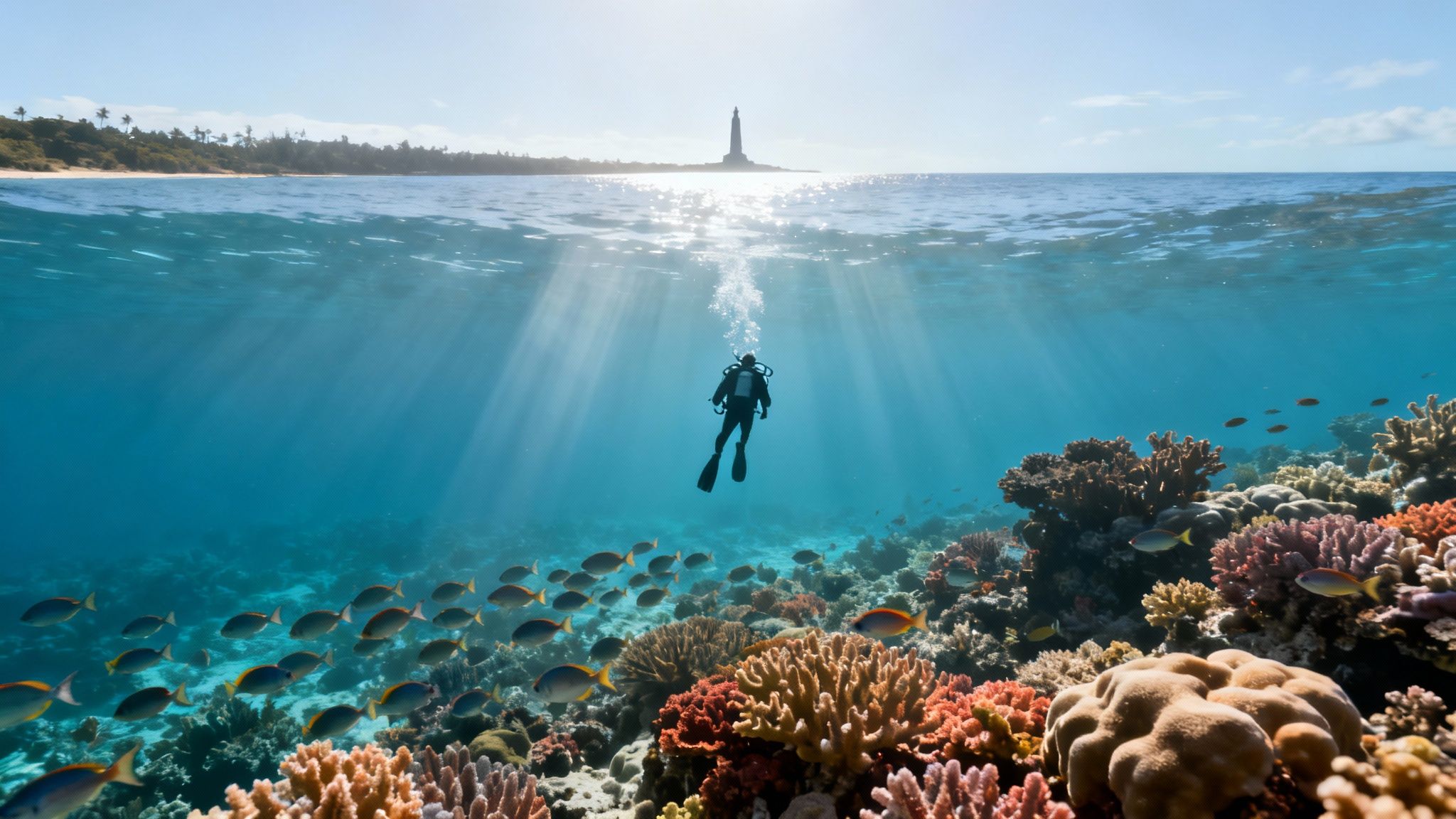
The Kona coast isn't just a place to dive; it's a collection of legendary underwater experiences. Each site tells a different story about the island’s volcanic birth and the vibrant life that now calls it home. Getting out on the water here is what shows people why Big Island scuba diving is something you'll remember for the rest of your life.
Most of Kona's best spots are a boat ride away. Heading out with a seasoned crew, like ours at Kona Honu Divers, is about more than just safety—it's about unlocking the secrets of each reef. Our guides have spent years in these waters and know exactly where to find the most incredible marine life and how to navigate the ancient lava formations that make this place so unique.
Kealakekua Bay: The Crown Jewel
You can't talk about Kona diving without starting at Kealakekua Bay. This place is more than just a dive site; it's a protected Marine Life Conservation District, a slice of Hawaiian history, and an absolute explosion of fish. Right near the Captain Cook monument, you’ll feel like you’ve descended into a giant, living aquarium.
The water here is almost always calm and crystal clear, which makes it an incredible dive for any experience level. The moment you drop in, you're surrounded by massive schools of yellow tang, ornate butterflyfish, and curious parrotfish. Because fishing has been off-limits since 1969, the animals are plentiful and bold, often coming right up to you for a closer look.
Kealakekua Bay is what happens when marine conservation is done right. Spanning over 1,000 acres, its protected status has created a biodiversity hotspot, consistently ranking it among Hawaii's top dive sites for 2025. It's not uncommon for divers to have visibility over 100 feet, spotting more than 200 fish species, green sea turtles (honu), and even pods of playful spinner dolphins. Learn more about what makes this site a top Hawaiian destination.
Two Step: An Easy Entry To Paradise
If you love the freedom of shore diving, then Honaunau Bay—better known as "Two Step"—is a must. It gets its nickname from the natural lava rock steps that create the easiest shore entry on the island. Seriously. Two steps and you're in, floating above a stunning coral garden.
Two Step is especially known for its healthy, dense coral and for being a favorite hangout for Hawaiian green sea turtles. You can almost always find them cruising through the water or taking a nap on the reef. The shallow depths and great visibility make it the perfect place for a long, relaxing dive where you can just soak it all in.
Dramatic Lava Tubes and Arches
Beyond the famous bays, the Kona coast is riddled with incredible underwater architecture carved by ancient lava flows. These sites are for the more adventurous diver, offering chances to explore dramatic lava tubes, swim through huge arches, and peek into mysterious caverns.
These formations create a totally different kind of habitat, attracting a unique cast of characters. You’ll often find whitetip reef sharks resting on the sandy floors of swim-throughs or discover rare crustaceans hiding in the cracks of the volcanic rock. Navigating these spots really benefits from local knowledge, which is why going with a guide is the best way to see them safely and fully. To see the variety of underwater landscapes we visit, you can explore our overview of Kona scuba diving.
With dozens of world-class sites along the coast, Kona offers a lifetime of discovery. Whether you’re mesmerized by the thick schools of fish in a protected bay or you get a thrill from exploring a lava tube, there’s an underwater adventure here with your name on it. Let our experienced crew at Kona Honu Divers show you the best the Big Island has to offer on our various diving tours.
The World-Famous Manta Ray Night Dive
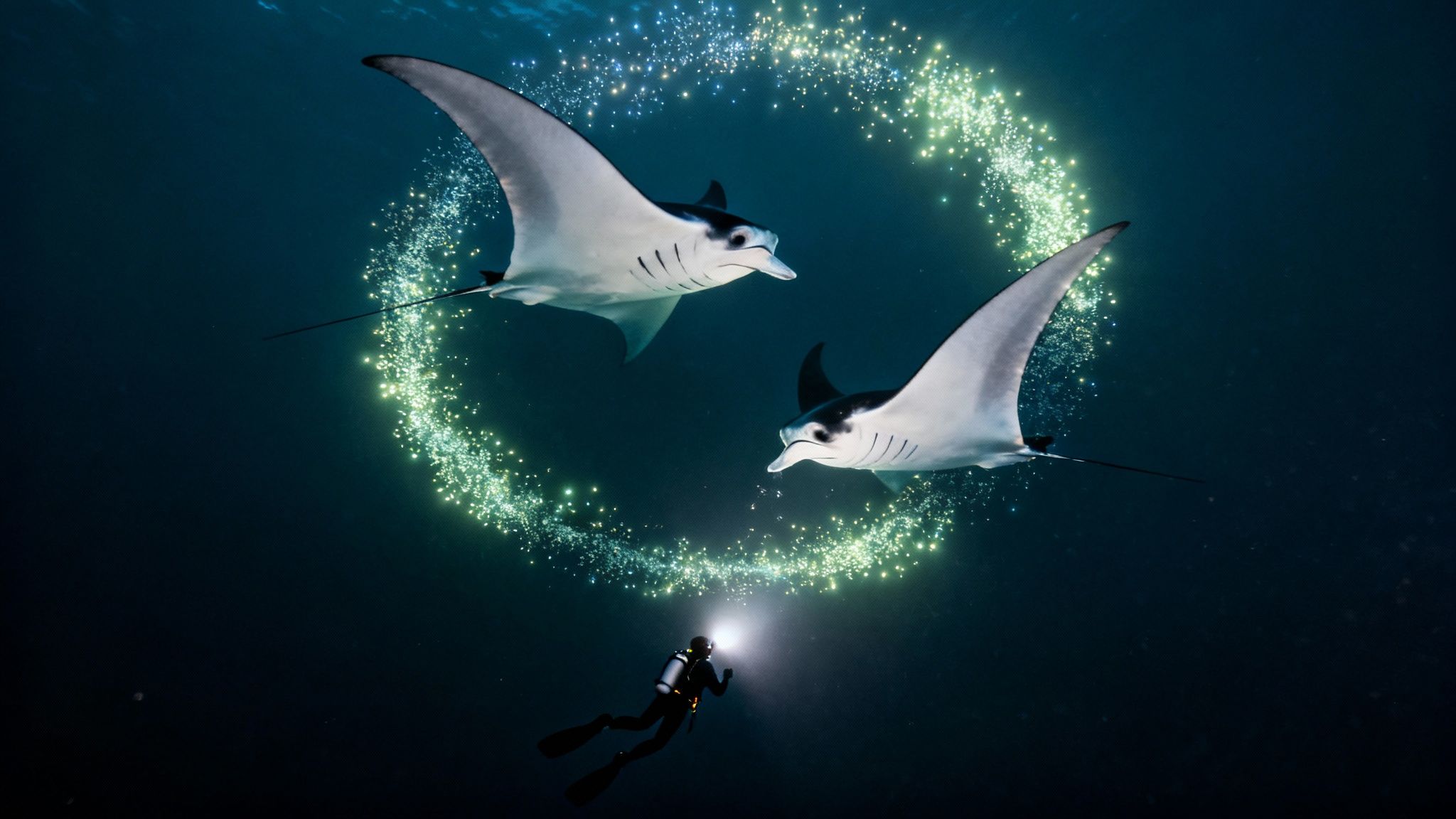
Ask any diver about their bucket list, and you'll probably hear about this experience. The manta ray night dive isn't just a highlight of Big Island scuba diving; it’s consistently named one of the absolute best night dives on the entire planet. It’s a surreal and surprisingly personal encounter, bringing you face-to-face with the gentle giants of the ocean.
The magic behind it is actually pretty simple. Once the sun goes down, powerful lights are set up on the ocean floor. These lights attract a massive cloud of plankton, the tiny organisms that form the very foundation of the marine food chain. For Kona's resident manta rays, this glowing plankton cloud is an all-you-can-eat buffet, and they put on a spectacular acrobatic show as they feast.
You’ll watch in awe as these massive creatures, some with wingspans over 12 feet, swoop and barrel-roll just inches above your head. It’s not like watching wildlife from a distance; it’s like being invited to a silent, underwater ballet performed just for you.
Why Garden Eel Cove Is The Premier Location
While you can see mantas at a few spots, Garden Eel Cove (nicknamed "Manta Heaven" for a reason) is hands-down the superior choice for your manta ray dive tour. The geography here gives it a huge advantage. The cove is naturally protected from the open ocean, which means calmer, more predictable conditions for a much more comfortable dive.
The whole operation at Garden Eel Cove is more organized and provides a better viewing area. Dive operators have established a "campfire" setup on the sandy bottom. Divers settle in a circle and shine their lights upward, which concentrates the plankton into one giant column of food.
This arrangement has some serious perks:
- Better Viewing: The focused light and designated viewing area keep the mantas right in front of you, so you can relax in one spot and take in the whole show.
- Enhanced Safety: With everyone in a defined area, it's far easier for dive guides to keep an eye on the group in a protected location.
- Superior Reefs: The reefs surrounding the main viewing area are healthier and more vibrant than other locations, making for a much more interesting dive on the way down and back up.
This structured approach avoids the disorganized scramble that can happen at other sites, ensuring you get the best possible seat for the main event.
A Consistently Magical Encounter
One of the most incredible things about the Kona manta dive is just how reliable it is. These are resident mantas who have learned the routine, and they show up for dinner with amazing consistency all year long. You aren't just crossing your fingers for a random sighting; you're attending a nightly performance.
The success rate is astonishing. Local operators have recently reported seeing mantas on 85-90% of their trips. Some nights are truly off the charts—imagine seeing 23 mantas on October 10th or a massive group of 30 on November 23rd! Even on an "average" night, seeing 10-15 mantas is common, creating a non-stop, jaw-dropping spectacle.
The manta ray night dive is a bucket-list experience that lives up to the hype every single time. It's a powerful reminder of the ocean's beauty and a chance to connect with these intelligent, gentle giants in a way that is respectful and utterly unforgettable.
At Kona Honu Divers, we make sure every detail of your manta dive is handled perfectly. From our thorough safety briefings to getting you the best possible spot at the "campfire," we focus on creating a safe, respectful, and breathtaking encounter. We know the currents, the timing, and the manta behavior inside and out, which lets us give you a front-row seat to the greatest show in the ocean. Find out what makes Big Island manta ray tours so unique.
Advanced Diving Adventures And The Blackwater Dive
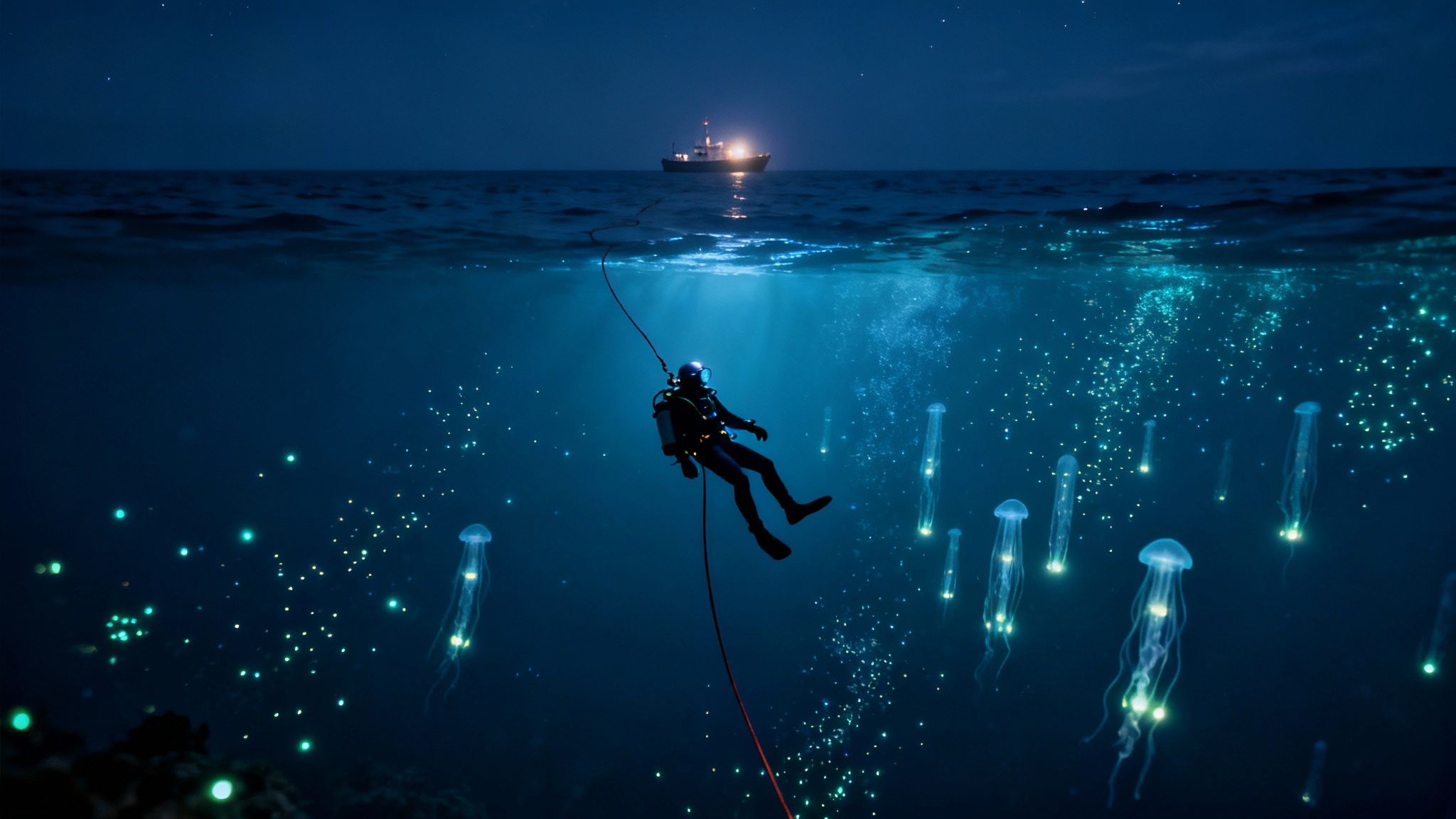
Sure, the gorgeous reefs and famous manta encounters are incredible, but some divers get to the Big Island with an itch for something more—a dive that feels like a real adventure. If you've got the skills and the spirit, Kona delivers some truly mind-bending experiences that go way beyond a typical reef tour.
When it comes to advanced Big Island scuba diving, one dive stands in a class all its own: the Kona Blackwater Dive. Forget everything you know about night diving. This is something else entirely, often described as floating through deep space. It's a surreal plunge into the open ocean's mysterious heart.
The Ultimate Night Dive: A Blackwater Experience
Picture this: you're miles offshore, tethered to a boat that's drifting over thousands of feet of water. Below you is nothing but an inky black abyss. As your senses sharpen in the dark, you become a spectator to one of the planet’s greatest, most secretive events—the nightly vertical migration.
This is the moment when bizarre, alien-like creatures rise from the crushing pressure of the deep to feed near the surface. Many of these animals are bioluminescent, creating their own light in a world without sun. You'll see things straight out of a sci-fi movie: see-through larval fish with massive eyes, glowing jellies pulsing in the dark, and strange squid you never knew existed.
For underwater photographers, this is a holy grail—a chance to photograph animals that few people ever see. For any adventurous diver, it's a profound experience that tests your nerve and rewards you with a peek into a completely hidden world. This dive will redefine your idea of what's possible, and you can dare to explore the deep on our Blackwater Night Dive.
Exploring Lava Tubes And Deeper Reefs
Beyond the blackwater trip, Kona's volcanic roots have created an incredible underwater playground for advanced divers. The very same lava flows that built the island also formed a network of underwater caves, cavernous swim-throughs, and dramatic archways just waiting to be explored.
Following these ancient formations is an absolute thrill. One minute you're winding through a dark lava tube, the next you're emerging into a massive, sunlit chamber. You might even find a reclusive whitetip reef shark catching a nap on a sandy cavern floor. These dives demand rock-solid buoyancy control and a cool head, but the reward is swimming through a geological masterpiece.
Then there are the deeper reefs. Dropping down to 100 feet or more is where you start to see the bigger pelagic animals. This is where schools of eagle rays glide past in the deep blue, larger sharks patrol the edges of the reef, and other big fish hang out in the cooler water. Because these sites are less frequented, they have an untouched, exploratory feel. To see what awaits in these deeper environments, check out our Premium Advanced Dives.
Choosing Your Advanced Big Island Dive
Ready for a challenge, but not sure which one? Each of these advanced dives offers a completely different kind of experience. The right one for you really comes down to your skills, comfort level, and what you're hoping to see. Check out our advanced dive tours page to learn more.
Here's a quick comparison to help you decide.
| Dive Experience | What You'll See | Required Skill Level | Best For |
|---|---|---|---|
| Kona Blackwater Dive | Bioluminescent and larval deep-sea creatures (e.g., jellies, squid, strange fish) | Advanced Open Water, excellent buoyancy, comfort in open ocean/darkness | Macro photographers, marine biology nuts, and thrill-seekers |
| Lava Tube Exploration | Unique volcanic formations, arches, caverns, resting reef sharks, crustaceans | Advanced Open Water, cavern/cave training recommended, good buoyancy | Explorers, underwater photographers, and geology buffs |
| Drift Dives | Pelagic species (e.g., eagle rays, sharks), large schools of fish, pristine reefs | Advanced certification, experience with currents | Divers seeking effortless movement and big animal encounters |
Whether you find yourself floating through the silent, alien world of a blackwater dive or navigating the maze-like passages of an ancient lava tube, Kona's advanced diving will sharpen your skills and give you stories that most divers can only dream of.
Planning Your Big Island Dive Trip
Alright, with dreams of underwater volcanoes and graceful manta rays in your head, it's time to talk logistics. A little bit of thoughtful planning is what separates a good dive trip from an absolutely unforgettable one. Figuring out the seasons, what to throw in your bag, and having your certs ready will make your Big Island scuba diving adventure seamless from the moment you land.
One of the best things about Kona is its legendary calm water, making it a world-class dive spot any day of the year. Still, the seasons each bring their own unique flavor, so timing your visit can perfectly align with what you want to see and experience.
When To Visit The Big Island
Let's be clear: there's no "bad" time to dive in Kona. The water is always inviting and the visibility is consistently fantastic. That said, knowing the subtle shifts between seasons can help you pinpoint the absolute perfect time for your trip.
Big Island Diving Conditions By Season
Here’s a quick guide to help you plan the best time for your Kona scuba diving trip.
| Season | Water Temperature | Visibility | Typical Marine Life Sightings |
|---|---|---|---|
| Winter (Dec-Feb) | 75-78°F (24-26°C) | Good (80-100+ ft) | Humpback whale songs underwater, mantas, turtles |
| Spring (Mar-May) | 76-79°F (24-26°C) | Excellent (100+ ft) | Increased reef fish activity, dolphins, mantas |
| Summer (Jun-Aug) | 79-82°F (26-28°C) | Excellent (100+ ft), calmest seas | Peak season for calm conditions, pilot whales, mantas |
| Fall (Sep-Nov) | 78-81°F (26-27°C) | Excellent (100+ ft) | Great visibility, large schools of fish, manta season |
Summer usually delivers the flattest, most glassy seas—a huge plus if you’re prone to seasickness. But winter? Winter offers something truly magical. Imagine hearing the haunting, beautiful songs of migrating humpback whales echoing through the water on your dive. It's an experience that will stay with you forever.
What To Pack For Your Dive Trip
Packing smart is all about comfort, both in the water and out. Even though our waters are warm, the right exposure protection is key, especially when you’re doing multiple dives a day.
Here are the essentials for your dive bag:
- Wetsuit: A 3mm wetsuit is the sweet spot for most people, particularly in the summer. If you know you run a little cold, a 5mm suit will keep you perfectly comfortable year-round.
- Mask, Fins, and Snorkel: There's nothing better than your own gear that fits just right. If you have it, bring it.
- Dive Computer and Certification Card: The two things you absolutely can't forget!
- Reef-Safe Sunscreen: Help us protect Hawaii's precious coral. Look for mineral-based sunscreens without oxybenzone and octinoxate.
Beyond your dive kit, think about your surface intervals and downtime. For great ideas on what to bring, especially if you appreciate a good cup of coffee after a day in the ocean, check out these packing tips for outdoor activities. Of course, if you'd rather travel light, you can always rent top-notch, perfectly maintained gear right here from us at Kona Honu Divers.
Certifications And Insider Tips
To really make the most of every dive, we recommend arriving with at least your Open Water certification. This opens up the door to all the incredible sites Kona has to offer without you having to spend precious vacation days in a classroom. That said, if you're not certified yet, learning in Hawaii's warm, clear water is an absolutely amazing way to begin your scuba journey.
Insider Tip: Don't wait to book your dive trips, especially the world-famous manta ray night dive. Charters fill up fast, and booking ahead often means you can snag early diver discounts and save a little money.
At Kona Honu Divers, we're all about maximizing your time underwater. That's why we offer free nitrox on all our diving tours for any nitrox-certified diver. Breathing nitrox can safely extend your bottom time, giving you more moments to explore the reefs and find that one creature you've been hoping to see. Just make sure you bring your nitrox cert card with you!
Your Big Island Scuba Diving Questions, Answered
It’s completely normal to have a few questions swirling around as you plan a big dive trip. We get it. To help you feel confident and totally prepared for your Kona adventure, we've pulled together the most common questions we hear from divers just like you.
Our goal is simple: to clear up any confusion so you can focus on the excitement of the incredible underwater world waiting for you here.
Do I Need To Be A Certified Diver?
Not at all! While being certified opens up the full menu of dive sites, you absolutely don't need a C-card to get a taste of Kona's amazing reefs. For anyone curious about diving, we offer an experience called "Discover Scuba Diving."
It’s the perfect first dip. You'll get a quick, easy-to-understand safety lesson on the boat, and then a professional instructor will guide you on a shallow, calm dive. It's your chance to breathe underwater and see all the colorful fish with an expert right by your side. It’s a fantastic way to see if diving is your thing before jumping into a full Open Water Diver certification—which, by the way, you can also complete right here in Hawaii’s gorgeous, warm water.
What Is The Best Time Of Year For Scuba Diving?
Honestly, one of the greatest things about diving in Kona is that there's no bad time to come. The water is always warm, and the visibility is consistently great, often stretching well beyond 100 feet. You really can’t go wrong.
That said, different seasons have their own special flavor. The summer months (June to August) tend to have the calmest, most glass-like seas, making for super smooth boat rides. But winter (December to February) brings its own magic—the chance to hear the unforgettable songs of humpback whales echoing through the water while you dive. No matter when you book your trip, you're in for a treat.
A common misconception is that you need to be an expert to enjoy the best diving here. The truth is, Kona's diverse sites offer incredible experiences for every skill level, from shallow, protected reefs perfect for beginners to deep lava tubes for seasoned adventurers.
Is The Manta Ray Night Dive Safe?
Yes, without a doubt. The manta ray night dive is one of the safest, most well-organized dive experiences on the planet. Operators like us have spent decades dialing in the safety procedures to make this encounter as secure as it is breathtaking.
You’ll get a thorough safety briefing from our experienced guides before you even touch the water, and they’ll be with you for the entire dive. The mantas themselves are gentle giants—they’re filter feeders with no teeth, stingers, or barbs. They're only interested in the plankton, not the divers. As long as you follow the simple rule to look but not touch and stick with your guide, it’s an incredibly safe and truly awe-inspiring dive.
Should I Book My Dive Trips In Advance?
We can't recommend this enough: yes, book ahead! This is especially true for our world-famous dives like the Manta Ray Night Dive and the Kona Blackwater Dive. The Big Island is a top-tier dive destination, and spots on the best boats fill up fast, particularly during peak seasons like holidays and the summer months.
Booking in advance does more than just guarantee your spot. It often gives you access to perks like early diver discounts. A little planning goes a long way in making sure you don't miss out on the dives you've been dreaming about. You can easily check out our schedule and book your spots on our diving tours page.