
If you ask divers to name the best scuba spot in Hawaii, chances are they'll say the Big Island. And for good reason. Its underwater world, shaped by volcanic fire, is packed with adventures you won't find anywhere else. The crystal-clear water and legendary dives, like the Manta Ray Night Dive, put Kona on the map as a must-visit destination for divers of every stripe. This is a guide to some of the best diving tours the Big Island has to offer.
Why Kona is a World-Class Diving Destination
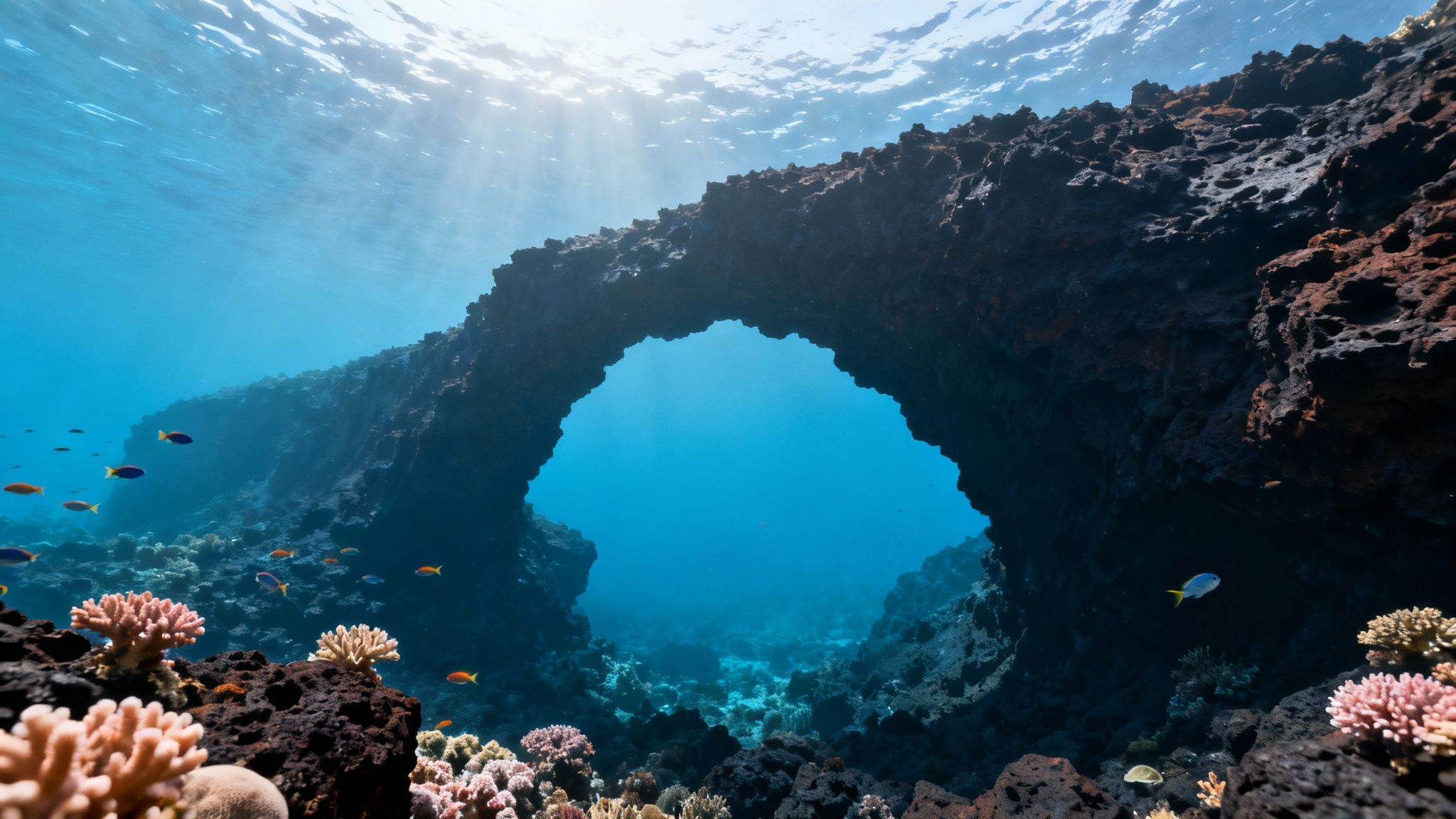
The Kona coast isn't just another pretty place to dive; it’s an underwater frontier carved by ancient lava flows. This volcanic history has created a stunning playground of dramatic arches, mysterious caverns, and massive pinnacles rising from the depths.
This one-of-a-kind geology provides the perfect home for an incredible diversity of marine life. Even better, Kona's leeward side is protected from the big ocean swells, which means the water is almost always calm and the visibility is spectacular. It's this killer combo of jaw-dropping scenery and perfect conditions that brings divers here from all over the world.
A Thriving Underwater Ecosystem
There's no debate—the Big Island is the top spot for diving in the Hawaiian Islands. Since the first dive shops opened up in the early 1980s, Kona has exploded into a major hub, now logging around 100,000 certified scuba dives every single year.
More than 50 dive charters now serve over 150,000 dive tourists annually. That’s a powerful testament to the island's incredible diving, where underwater visibility often hits 100 feet. You can dive deeper into what sets this place apart in our guide on what makes Kona diving so unique.
This vibrant marine environment is the backdrop for some of the most sought-after underwater experiences on the planet. From the world-famous Manta Ray Night Dive to the otherworldly Kona Blackwater Dive, the adventures here are nothing short of unforgettable.
For a quick look at what makes Kona diving so special, here are some of the standout experiences you can have.
Big Island Diving Highlights at a Glance
| Dive Experience | Best For | Typical Depth | Key Marine Life |
|---|---|---|---|
| Manta Ray Night Dive | All Levels | 30-40 ft | Manta Rays, Eels, Jacks |
| Kona Blackwater Dive | Advanced Divers | 40-60 ft (over deep water) | Pelagic Larval Fish, Jellies, Squid |
| Reef Dives (Day) | All Levels | 40-80 ft | Turtles, Reef Sharks, Dolphins |
| Lava Tubes & Caverns | Intermediate/Advanced | 50-90 ft | Nudibranchs, Frogfish, Crabs |
These experiences highlight the incredible health of Kona's reefs and the responsible eco-tourism that helps keep them that way.
Your Gateway to Adventure
To really get the most out of your Big Island diving, you need the right guide. Kona Honu Divers is a top-tier operator known for a serious commitment to safety, small group sizes, and getting you to Kona’s absolute best sites. Their experienced guides and custom-built boats make every trip feel like a first-class adventure.
Whether you're exploring a sun-drenched reef or watching giant mantas dance in the dark, your journey starts here. In this guide, we'll walk you through everything you need to know to plan the ultimate underwater trip to this Pacific paradise.
Exploring Kona’s Most Spectacular Dive Sites
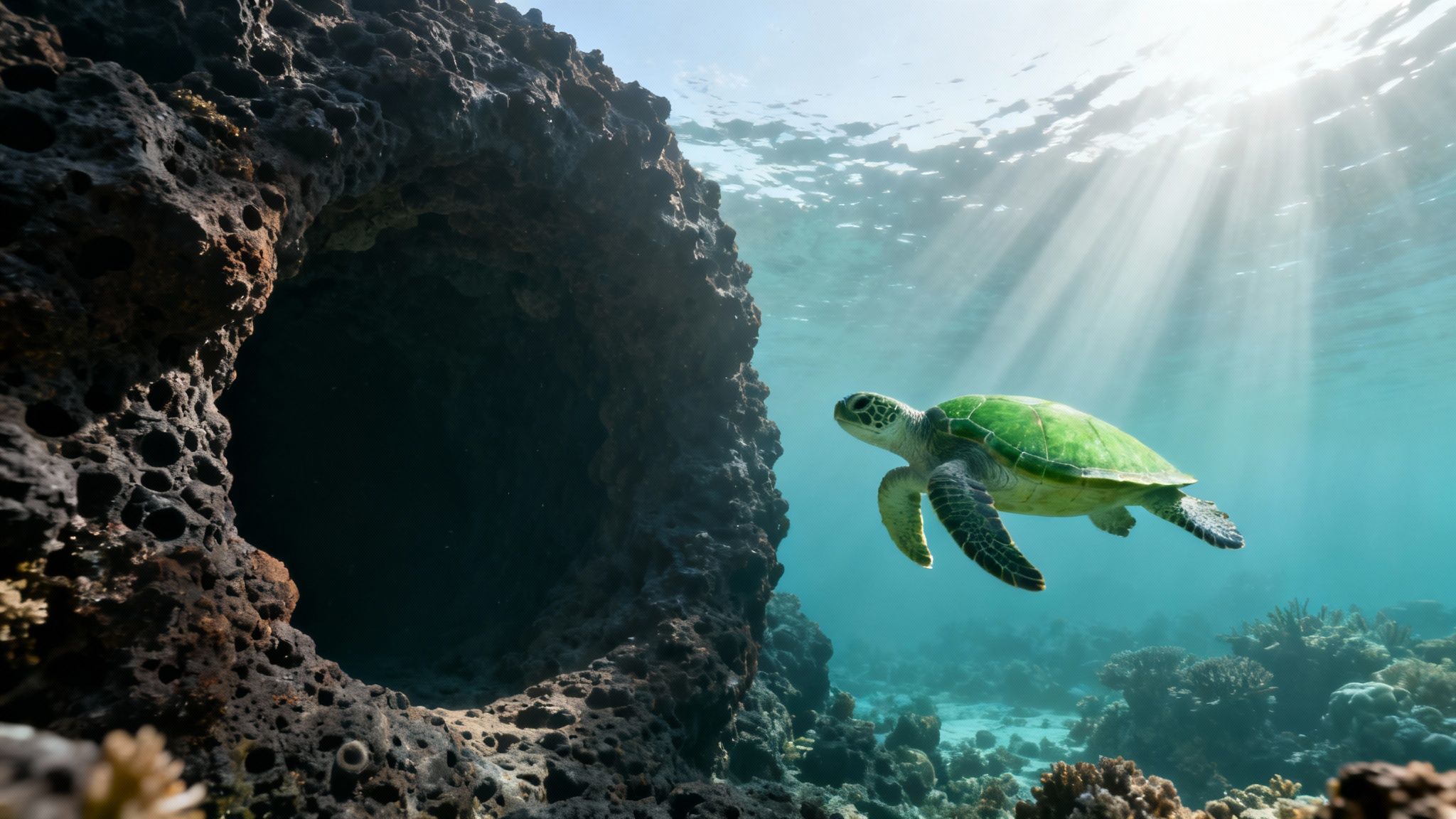
The Kona coast is a diver's dream, an underwater treasure map etched by ancient volcanoes and brought to life by the Pacific. Each dive site here tells its own story. These aren't just pins on a map; they are living, breathing ecosystems waiting for you to drop in. One day you might be gliding over a gentle reef teeming with color, and the next, you could be navigating a dramatic lava tube.
The best part? The sheer variety. No matter what you're hoping to see or what your skill level is, there's a perfect spot for every certified diver. Let's dive into a few of the legendary locations that make Big Island scuba diving a truly world-class experience.
Garden Eel Cove: The Premier Manta Ray Stage
Don't let the name fool you. While it's world-famous for its nighttime manta ray ballet, Garden Eel Cove is an absolutely stunning dive by day. It gets its name from the huge colonies of garden eels that pop their heads out of the sand, swaying in the current like a field of grass. The whole site is nestled in a protected, amphitheater-shaped cove, which sets the stage perfectly.
During daylight hours, you’ll find yourself exploring incredibly healthy coral, spotting turtles, octopuses, and a whole spectrum of reef fish. But it's this protected geography and the gently sloping sand that make it the absolute best spot for the iconic manta night dive. The calm water creates a perfect viewing arena where divers can relax on the bottom and watch these gentle giants feed right above them.
Crescent Beach and Its Lava Tube Labyrinth
If you get a thrill from unique underwater landscapes, Crescent Beach is your playground. This spot is all about dramatic lava formations, featuring a massive archway and a network of intricate lava tube swim-throughs. Seriously, navigating these ancient volcanic tunnels feels like exploring a submerged cathedral, with shafts of sunlight piercing through cracks in the ceiling.
It's inside these tubes and caverns that some of the most fascinating critters hide out.
- Whitetip Reef Sharks: You'll often find them resting on the sandy bottom inside the caverns, just chilling out.
- Nudibranchs and Frogfish: These are the masters of camouflage. Keep your eyes peeled, and you'll be rewarded.
- Hawaiian Green Sea Turtles (Honu): It's common to see them gliding gracefully near the cavern entrances.
The depth here usually sits between 40 and 80 feet, so it's a great dive for anyone with good buoyancy control.
Turtle Pinnacle: A Gathering of Giants
As you might guess from the name, Turtle Pinnacle is hands-down one of the best places on the Big Island to hang out with Hawaiian green sea turtles. The site is built around a huge offshore pinnacle that rises from the seafloor to about 35 feet below the surface. This pinnacle is what's known as a "cleaning station." Turtles come from all over to let surgeonfish and other small fish nibble away parasites and algae.
To truly appreciate the vibrant biodiversity at Kona's dive sites, consider the hidden patterns in the coral reef energy pyramid, from microscopic algae to large apex predators.
Watching this natural, symbiotic relationship unfold is mesmerizing. The visibility is usually fantastic, and besides the turtles, you have a great shot at seeing eagle rays, massive schools of butterflyfish, and maybe even some spinner dolphins cruising by out in the blue. If you're still weighing your options, we break down what makes the best dive in Kona to help you decide.
These sites are just a taste of the dozens of incredible underwater spots along the Kona coast. Each one offers a unique window into Hawaii's rich marine world, and the best way to experience them is with a guide who knows their secrets.
Night Diving Adventures with Mantas and Bioluminescence
When the sun finally dips below the horizon on the Big Island, the real show is just getting started. Two of the most incredible underwater experiences you can have anywhere on the planet come alive in the dark: the Manta Ray Night Dive and the Kona Blackwater Dive.
These aren't your typical reef tours. They're surreal journeys into a world that feels completely alien, illuminated only by dive lights and the otherworldly glow of the ocean's inhabitants. The ocean truly transforms after dark, revealing a side of Kona's marine life that most people will never see. These are the dives that make it onto bucket lists for a reason.
The World-Famous Manta Ray Night Dive
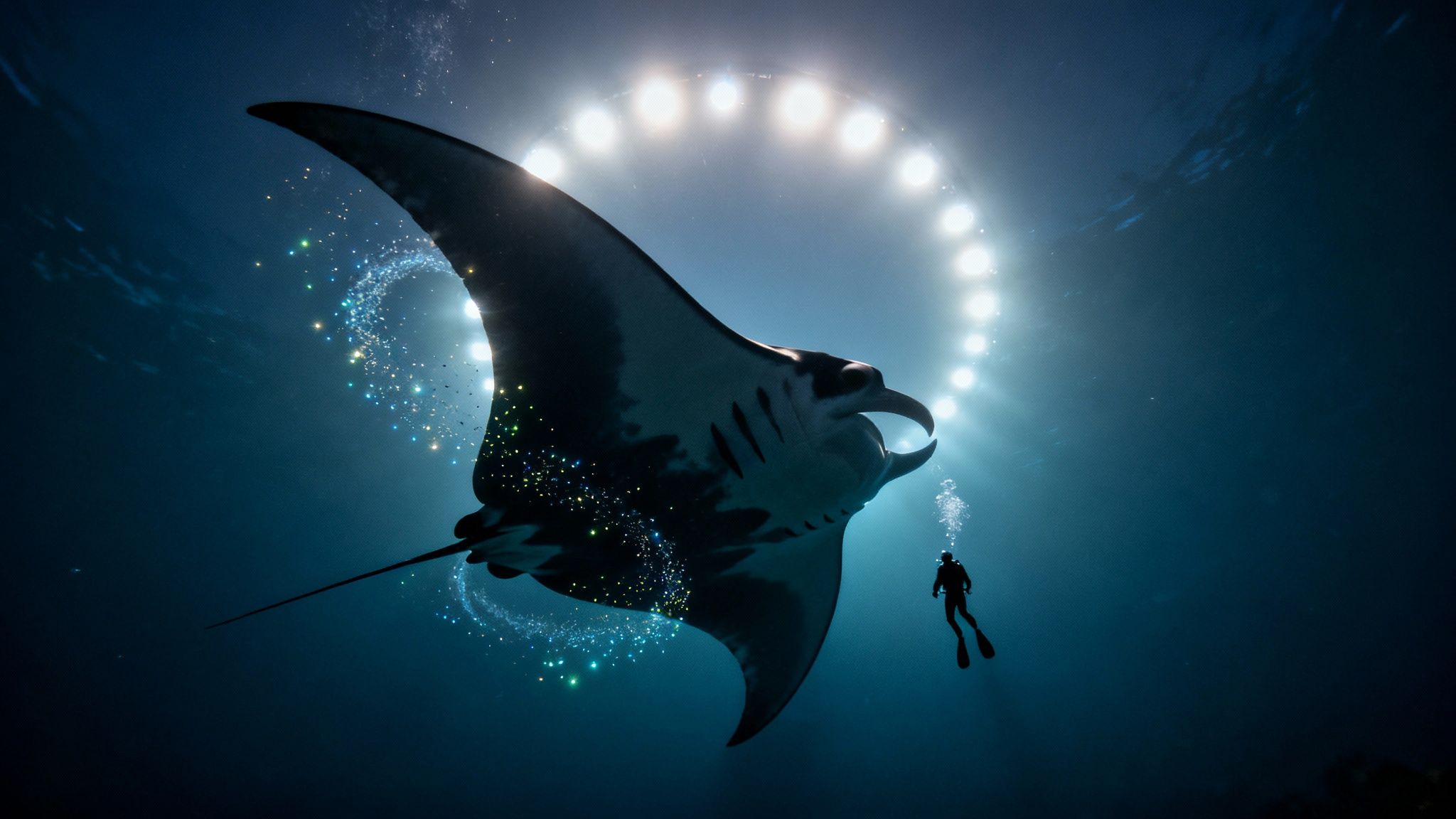
Picture this: you're kneeling on the sandy ocean floor in the pitch-black, part of a circle of divers pointing their lights up into the water column. We call this the "campfire." It’s an irresistible beacon for plankton, the tiny organisms that manta rays absolutely love to eat.
And then, they appear. Out of the darkness, giant manta rays glide in like silent ghosts. Some have wingspans stretching up to a massive 16 feet. They perform a mesmerizing, silent ballet, swooping and barrel-rolling through the light beams to scoop up mouthfuls of plankton. It’s an absolutely breathtaking spectacle, and these gentle giants often get within inches of you.
The Manta Ray Night Dive is consistently ranked among the top ten dives in the world. There's just nothing like it. Witnessing these massive, graceful animals feeding so close is a humbling experience you'll be talking about for the rest of your life.
While there are a couple of spots to do this dive, Garden Eel Cove is the superior choice for your manta ray dive tour. Its naturally protected location offers calmer conditions, a better viewing area for divers, and healthier surrounding reefs. The cove’s amphitheater shape and sandy bottom create the perfect, comfortable stage to witness this incredible spectacle, making it the hands-down best location for the experience.
For those who want an equally amazing view from the surface, a night snorkel with manta rays Hawaii is an incredible option. If you prefer to snorkel, you can learn more about our dedicated manta ray night snorkel adventure.
https://konahonudivers.com/manta-ray-night-snorkel/
The Kona Blackwater Dive: A Journey Into Inner Space
If you're a diver looking for something truly out of this world, the Kona Blackwater Dive is it. This is not a reef dive. Not even close. Instead, we take you miles offshore, where you'll descend into the deep open ocean at night, safely tethered to the boat as it drifts with the current. Suspended over thousands of feet of water, you get a front-row seat to one of the largest migrations on Earth.
Every single night, a universe of bizarre and beautiful creatures rises from the abyss to feed near the surface. Many are bioluminescent, creating their own light in the inky blackness. It genuinely feels like you’re floating in outer space, surrounded by living, breathing constellations.
On a blackwater dive, you'll encounter things you've only seen in documentaries:
- Alien-like Larval Creatures: See fish and invertebrates in their strange, translucent juvenile forms before they grow up and settle on the reef.
- Glowing Jellies: Pulsating jellies and chain-like siphonophores drift past, some trailing stunning, glowing tentacles.
- Weird and Wonderful Squid: Come face-to-face with deep-sea squid species that are rarely seen by humans, with wild shapes and hypnotic colors.
This dive is a trip for the senses. Because you're drifting in the open ocean in total darkness, it requires a calm mindset and solid buoyancy control, so it's best suited for more experienced divers. Our expert guides and secure setup ensure this deep-ocean safari is both incredibly safe and absolutely mind-blowing. Book your Blackwater Dive tour for an unforgettable adventure.
Advanced Dives for Experienced Divers

If you're an experienced diver who has logged the hours and is looking for a real thrill, the Big Island is ready for you. Once you get past the postcard-perfect shallow reefs, you’ll find a wilder side to Kona—a world of exhilarating challenges and rare encounters. This is where big island scuba diving gets serious, with deeper profiles, trickier navigation, and the kind of dynamic conditions that bring in the big players of the marine world. Check out our advanced dive tours for a true challenge.
These dives are more than just a number on your depth gauge; they’re a direct line to the island's raw, volcanic heart. Picture yourself gliding through a maze of ancient lava tubes, the beam of your torch cutting through the dark before you emerge into a cavern filled with light. Or imagine drifting along a deep-water pinnacle where currents bring in pelagics like schooling jacks, sharks, and maybe even a whale shark if you’re lucky. These are the kinds of dives you talk about for years.
Pushing the Limits Safely
Of course, venturing into these more demanding environments takes more than just a C-card. It requires sharp skills, solid confidence in the water, and the guidance of people who know these sites like the back of their hand. This is where a top-notch crew isn't just a nice-to-have, it's essential.
Advanced sites often throw a few challenges your way:
- Complex Topography: Squeezing through lava tube swim-throughs and navigating deep canyons demands excellent buoyancy control.
- Variable Currents: Some of the best spots for big fish can have ripping currents. You need a plan and the experience to handle them.
- Deeper Profiles: When you’re exploring at 80-100 feet, you have to be on top of your gas consumption and no-decompression limits.
That’s why your most important decision is choosing the right dive operator. The guides at Kona Honu Divers are true pros in these environments, making sure every dive is as safe as it is unforgettable.
The Nitrox Advantage on Deep Dives
To really soak in the sights on these deeper dives, you need more bottom time. It's that simple. And that’s exactly where Enriched Air Nitrox comes into play. If you're not familiar, Nitrox is just a breathing gas mix with a little more oxygen and a little less nitrogen than regular air.
By breathing less nitrogen, your body absorbs less of it at depth. The direct result? You get longer no-decompression limits. It means more time exploring that lava tube or watching that school of hammerheads without your computer screaming at you to go up.
The team at Kona Honu Divers gets this completely, which is why they offer complimentary Nitrox for all certified divers on their boats. For advanced diving, it’s an absolute game-changer, letting you max out every tank. It's a small thing that makes a huge difference.
For those with an Advanced Open Water certification (or higher) and rock-solid buoyancy, the ultimate Kona adventure is waiting. The Premium Advanced 2-Tank Trip is designed specifically to take you to those incredible, off-the-beaten-path sites—the ones that are challenging, remote, and absolutely spectacular.
How to Choose the Right Dive Operator in Kona
Let’s be honest: your dive shop can make or break your entire trip. A truly great operator does more than just get you in the water. They’re the ones who ensure your safety, share deep local knowledge, and provide a level of comfort that lets you simply soak in the magic of the underwater world. Picking the right one is probably the single most important decision you'll make for your Big Island scuba diving adventure.
So, what should you really be looking for? It boils down to a few critical things that separate the average shops from the exceptional ones. You want a company that lives and breathes safety, provides gear you can trust, and runs boats that are actually comfortable. The crew’s passion and expertise should be obvious from the moment you meet them.
What Sets Kona Honu Divers Apart
Kona Honu Divers consistently nails all these points, and that's how they've built their reputation as a top-tier operator in Hawaii. Everything they do is designed around the diver's experience, with every detail thoughtfully handled.
One of the first things you'll notice is their fleet of custom-built dive boats. Vessels like the Honu One weren't just bought off a lot; they were designed specifically for Kona's unique conditions. That means a smoother ride, plenty of room to gear up without bumping elbows, and super easy entry and exit from the water. It’s a small detail that makes a huge difference.
The Value of Small Groups and Expert Guides
Another reason divers come back to Kona Honu Divers again and again is their commitment to small groups. It’s a simple philosophy that pays off in a big way.
When the groups are small, the guides can give you personalized attention. They can point out that elusive octopus you would have missed and make sure every single person feels safe and confident, no matter their skill level.
This approach turns a regular dive into a private-feeling exploration. Their crew has over 200 years of combined industry experience, and they know these sites like the back of their hand. They'll take you to the best spots based on the day's conditions, which seriously boosts your chances of having an amazing encounter.
They also throw in some fantastic perks, like complimentary nitrox for certified divers. If you’ve ever used nitrox, you know this is a huge plus for getting more bottom time on those beautiful deep reefs. It's clear they invest in making your dive better.
But you don't have to take our word for it. The best proof comes from fellow divers. The real-time guest reviews below show exactly the kind of consistent, high-quality experience Kona Honu Divers provides every single day. See for yourself why so many people choose them to explore Kona's underwater paradise.
Ready to experience the difference? Check out their full menu of world-class diving tours and find the perfect underwater adventure for your trip.
Essential Safety Tips for Hawaii Diving
Diving in Kona is a world-class experience, but let's be honest—the Pacific Ocean is a powerful force that always deserves our respect. The best, most memorable dives aren't just about what you see; they're built on a solid foundation of safety and smart decisions. When you prioritize awareness, you ensure every moment beneath the waves is as safe as it is breathtaking.
Your single most important safety decision happens before you even get on the boat: choosing a certified, professional dive operator. A top-notch company like Kona Honu Divers handles everything, from the boat itself to the dive briefings and in-water guiding. You're putting your trust in seasoned pros who know these waters like the back of their hand.
Respect Your Limits and the Environment
One of the first things you learn as a diver is a golden rule that never changes: never push beyond your training and comfort level. If a planned depth or a particular condition makes you uneasy, say something. There's no shame in it; in fact, it's the mark of a smart diver.
Pay close attention during the dive briefing. This is where your guide lays out the entire plan—how you’ll get in and out of the water, what to expect from currents, and which amazing creatures you might encounter. This briefing is your roadmap for the dive.
It's also about keeping the reef and its inhabitants safe.
- Give Wildlife Space: Never touch, chase, or corner any marine life. This is especially true for our protected honu (sea turtles) and the magnificent manta rays. Look, but don't touch.
- Protect the Reef: Good buoyancy is your superpower. By staying neutral, you avoid accidentally kicking or bumping the fragile coral structures that took centuries to grow.
- Leave No Trace: Make sure your gear is clipped in and secure. The old saying is the best one: take only pictures, leave only bubbles.
Understand the Risks of Ocean Activities
Taking care of yourself out of the water is just as important. The Hawaiian sun is intense, so proper hydration and sun protection are non-negotiable. Dehydration can seriously increase your risk of decompression sickness, so make it a habit to drink plenty of water before and after every dive.
It’s also crucial to acknowledge the inherent risks of any ocean activity. Data from Hawaii between 2009 and 2018 revealed 206 snorkeling-related fatalities, with the overwhelming majority being visitors. In stark contrast, scuba divers accounted for a tiny fraction of incidents. You can dig into these Hawaiian ocean safety findings on Divernet.com.
This statistic tells a powerful story: diving with a certified, reputable operator isn't a luxury—it's your most critical piece of safety equipment. Their expertise is what turns a potentially hazardous environment into a managed and truly thrilling adventure.
When you respect the ocean, listen to your guides, and dive with a professional crew, you're setting yourself up for the Big Island scuba diving experience of a lifetime.
Your Kona Diving Questions, Answered
It's totally normal to have a few questions when you're planning a dive trip to a new place. To help you sort out the details, we’ve put together some answers to the things divers ask us most often before they arrive on the Big Island.
When Is the Best Time of Year to Dive?
Honestly, there’s no bad time to dive in Kona. The diving here is fantastic all year round.
That said, if you’re chasing those perfect, glassy-calm seas and the warmest water temperatures, aim for August to October. While winter can stir up bigger swells on other parts of the island, Kona's west-facing coast is incredibly sheltered, meaning we almost always have great conditions ready to go.
What Certifications Do I Need?
If you have your Open Water certification, you're good to go for most of Kona's incredible reef dives. You'll have access to a huge variety of sites.
For some of the more specialized adventures, like the once-in-a-lifetime Kona Blackwater Dive or exploring deep lava tubes on an advanced charter, you'll need an Advanced Open Water card. If you're not there yet, no problem at all! You can easily level up your skills with a course right here in paradise with us.
What Marine Life Can I Expect to See?
The waters off the Big Island are just buzzing with life. It's an incredibly diverse ecosystem. On just about any dive, you're likely to run into:
- Hawaiian Green Sea Turtles (Honu): Seeing these guys glide by is a quintessential Kona experience.
- Manta Rays: The stars of the show, especially on the world-famous night dive.
- Spinner Dolphins: They often put on a show from the boat, and sometimes you get a lucky fly-by underwater.
- Whitetip Reef Sharks: You'll often find them snoozing on sandy patches or under ledges.
Beyond that, the reefs are a kaleidoscope of butterflyfish, eels, and triggerfish. And always keep an eye out in the blue—you just never know when a rare Hawaiian monk seal or even a whale shark might cruise by.
Do I Need to Bring My Own Scuba Gear?
You can, but you definitely don't have to lug it all the way here. We offer top-notch, professionally maintained rental gear—from BCDs and regulators to wetsuits and dive computers.
It’s a super convenient way to travel light and know that you'll have perfectly functioning equipment waiting for you. It takes all the hassle out of packing and just lets you focus on the fun.