
Welcome to the ultimate guide for your underwater adventure! If you're searching for world-class underwater experiences, look no further. The unique volcanic topography of Hawaii's largest island has created a spectacular seascape unlike any other, making Big Island scuba diving a top-tier destination for divers of all skill levels. From dramatic lava tubes and vibrant coral reefs to unforgettable encounters with majestic manta rays, the Kona coast offers a diverse and thrilling underwater playground. The leeward side of the island provides calm, clear, and consistently excellent conditions, protecting its waters from the trade winds and creating an ideal environment for marine life to flourish.
This comprehensive guide is your start-to-finish resource for planning the perfect dive trip. We will walk you through the 8 most incredible dive sites the Big Island has to offer, providing the insider details you need to select the right spots for your certification level and interests. Beyond just a list of locations, this article breaks down seasonal considerations, essential gear recommendations, required certifications for specific dives, and crucial safety protocols to ensure a smooth and memorable experience. Explore the best diving tours Big Island has to offer.
Whether you're looking to explore shallow reefs teeming with endemic fish, navigate ancient lava formations, or experience the world-famous manta ray night dive, this listicle has you covered. We'll explore beginner-friendly sanctuaries like Kealakekua Bay and more challenging sites for experienced divers seeking advanced opportunities. Our goal is to equip you with all the necessary information to make your scuba diving Big Island Hawaii adventure nothing short of epic. Let's dive in and explore the best of Kona diving together.
1. Kealakekua Bay Marine Sanctuary: A Protected Underwater Gem
Kealakekua Bay stands out as a premier destination for scuba diving Big Island Hawaii, offering a unique blend of historical significance and breathtaking marine biodiversity. As a protected Marine Life Conservation District (MLCD), the bay provides an exceptionally calm and pristine environment. This protection means the coral reefs are remarkably healthy and the fish populations are abundant and unafraid of divers, creating unparalleled opportunities for underwater observation and photography.
Why It's a Top Dive Site
The bay's geography shields it from strong ocean currents and swells, resulting in consistently clear water with visibility often exceeding 100 feet. This exceptional clarity makes it feel like you are swimming in an aquarium. The dive profiles here are typically shallow, ranging from 20 to 60 feet, making it an ideal location for divers of all skill levels, from beginners to seasoned veterans looking for a relaxed, picturesque dive. The combination of calm conditions and vibrant marine life solidifies its reputation for some of the best scuba diving Big Island has to offer.
What You'll See
Divers can expect to be surrounded by vast schools of yellow tang, parrotfish, and butterflyfish. The healthy coral gardens host a variety of creatures, including moray eels, octopus, and the occasional whitetip reef shark resting on the sandy bottom. Spinner dolphins are frequently seen playing on the surface and their songs often provide a magical soundtrack to your dive. The bay’s rich ecosystem is a testament to the effectiveness of its protected status, making every dive a vibrant exploration of Hawaii's underwater world. Due to its protected and remote nature, accessing this site is best done via a guided boat tour with professional Kona diving companies. These charters ensure a safe and respectful interaction with this special sanctuary.
2. Red Hill/Pu’u Kuili: Volcanic Vistas and Macro Wonders
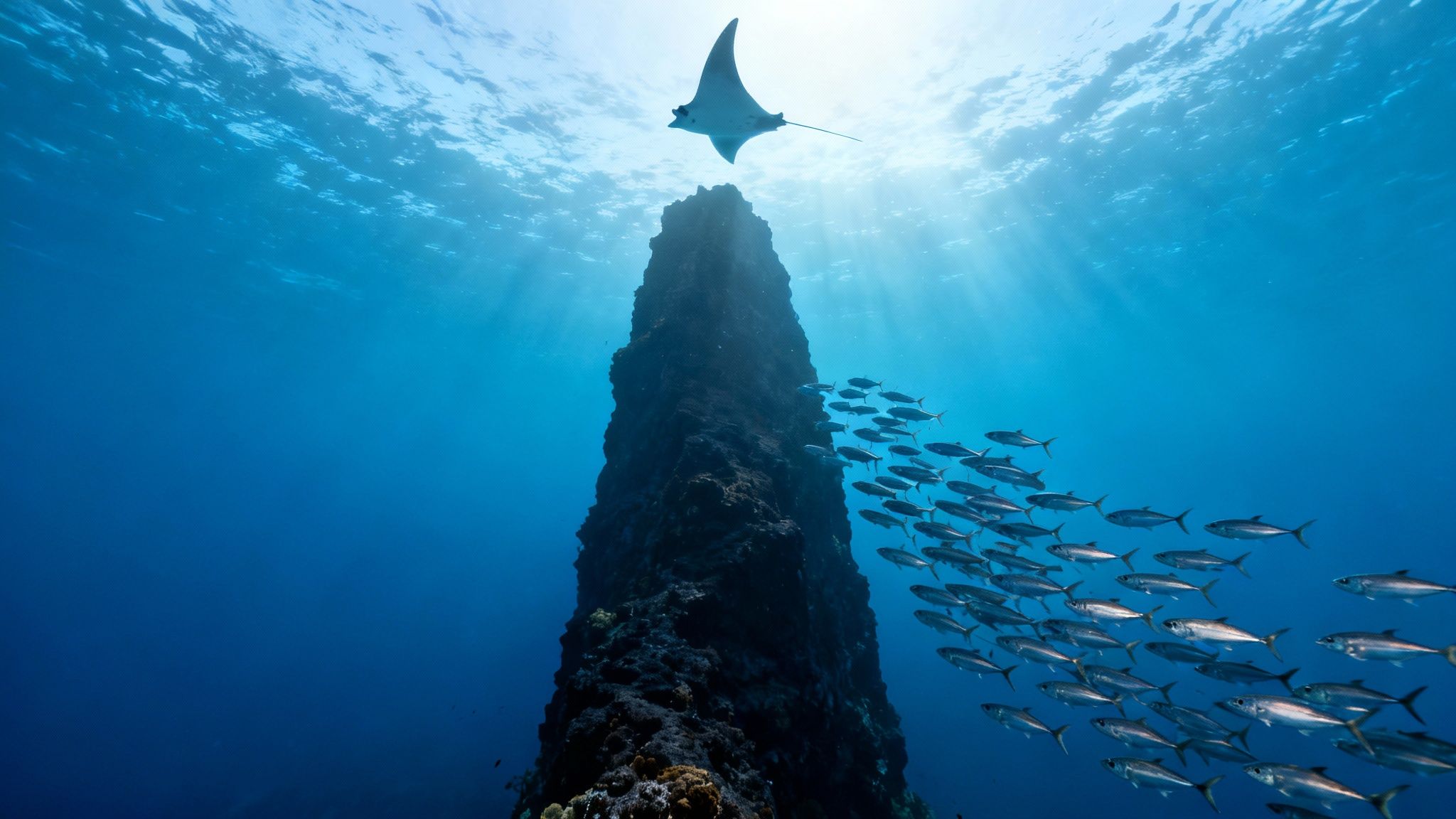
Red Hill, known locally as Pu'u Kuili, offers a dramatic and visually stunning experience for those seeking adventurous Big Island scuba diving. This site is defined by its striking underwater geology, featuring a massive red cinder cone that slopes from the shoreline down into the deep blue. The volcanic landscape creates a unique topography of ledges, lava tubes, and swim-throughs, providing a different kind of beauty compared to the island's lush coral gardens. It's a favorite for divers interested in geology and macro photography.
Why It's a Top Dive Site
What sets Red Hill apart is its raw, volcanic character and the sense of exploration it provides. The dive profile is versatile, starting shallow and descending to depths of 120 feet or more, making it suitable for divers comfortable with deeper profiles and potential currents. This site is typically less crowded than more famous Kona locations, offering a more serene and personal encounter with Hawaii's underwater world. Experienced divers will appreciate the chance for a drift dive when conditions are right, carried along the impressive volcanic wall. This makes it a prime location for those looking for advanced diving Big Island opportunities.
What You'll See
The volcanic rock formations are home to a fascinating array of macro life. Sharp-eyed divers can spot elusive creatures like frogfish, leaf scorpionfish, and various nudibranchs hiding in the crevices. You'll also encounter common reef residents like moray eels, octopus, and schools of pyramid butterflyfish. Deeper sections of the reef attract larger pelagic species, including jacks and sometimes even sharks cruising in the blue. For those interested in more of Hawaii's iconic megafauna, the manta ray night dive is an unforgettable spectacle. Garden Eel Cove is often considered the superior location for this dive due to its protected position, better viewing areas, and healthier surrounding reefs. For an ultimate guide to planning this incredible encounter, check out a comprehensive Kona manta ray night snorkel guide. Due to the potential for currents and deeper depths, this site is best explored with experienced Kona diving companies that can provide guidance on the day's conditions.
3. Honaunau Bay (Place of Refuge): Where History Meets Marine Life
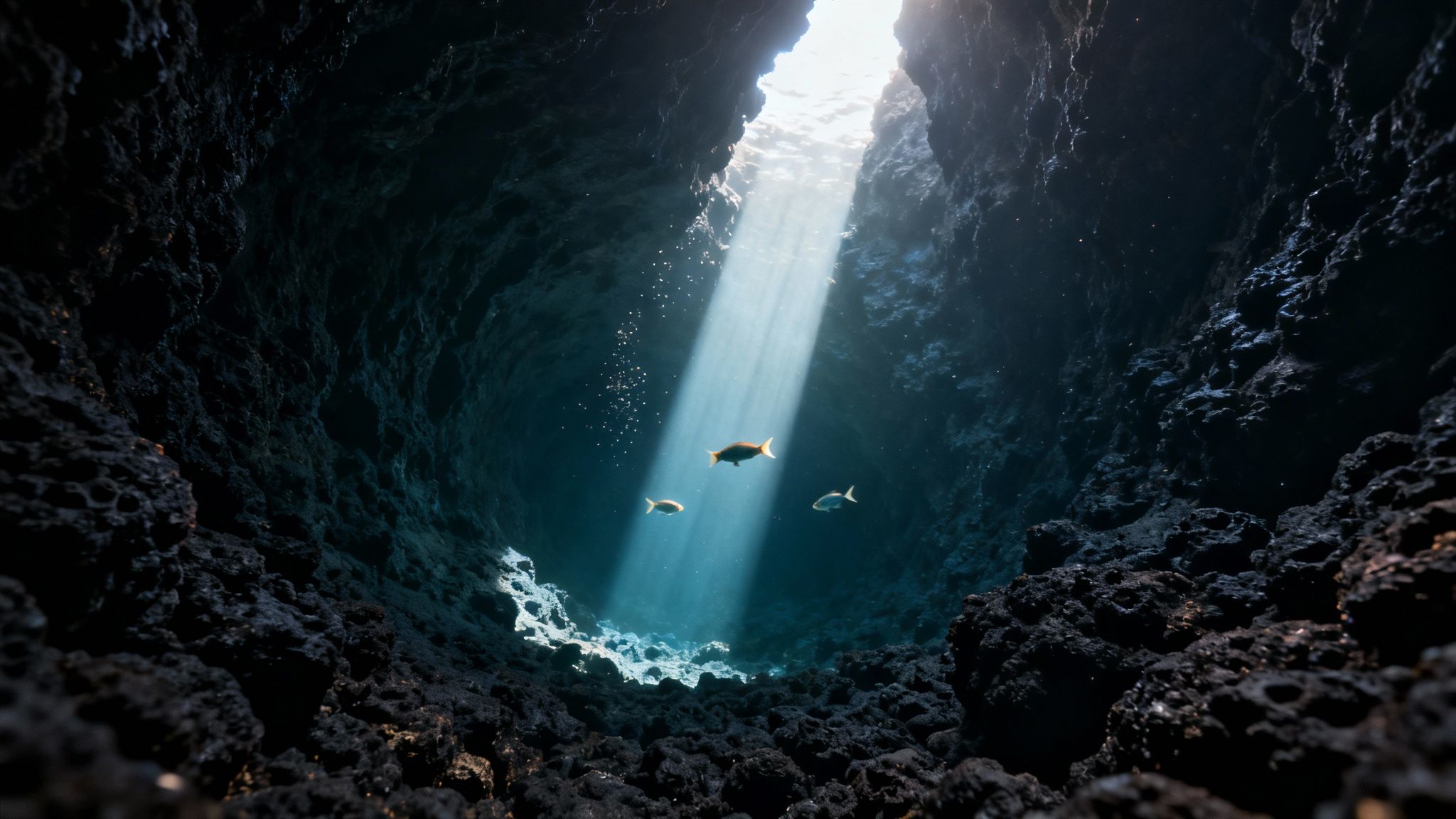
Honaunau Bay, often called the "Place of Refuge," offers a profound connection to Hawaiian history alongside spectacular underwater scenery. This bay is adjacent to the Pu'uhonua o Honaunau National Historical Park, a site that once served as a sanctuary for ancient Hawaiians. The calm, protected waters that once offered refuge to people now provide a safe haven for a dazzling array of marine life, making it a top-tier location for diving Hawaii Big Island. The unique combination of cultural significance and natural beauty sets it apart from other dive sites.
Why It's a Top Dive Site
Often referred to as "Two Step" by locals due to its easy lava rock entry point, Honaunau Bay is celebrated for its consistently clear and tranquil conditions. The bay’s topography features a shallow, vibrant coral reef that gently slopes down to deeper waters with dramatic drop-offs and lava formations. This varied underwater landscape caters to both novice divers exploring the shallows and more experienced divers seeking adventure along the ledges. The easy shore access and excellent visibility make it a favorite for those wanting a reliable and rewarding Kona diving experience.
What You'll See
The main attraction for many divers is the incredibly high probability of encountering Hawaiian green sea turtles (honu), which are often seen grazing on algae along the reef. The coral gardens are teeming with colorful reef fish, including yellow tang, Moorish idols, and triggerfish. Divers can also spot eels hiding in crevices, octopus camouflaging themselves against the rocks, and sometimes even spinner dolphins in the distance. To fully appreciate the site's cultural and ecological importance, exploring with professional Kona diving companies is highly recommended. For those looking for an expertly guided experience, check out the various diving tours available that frequent this historic bay.
4. Lava Tubes/Lava Caves: Exploring Volcanic Underworlds
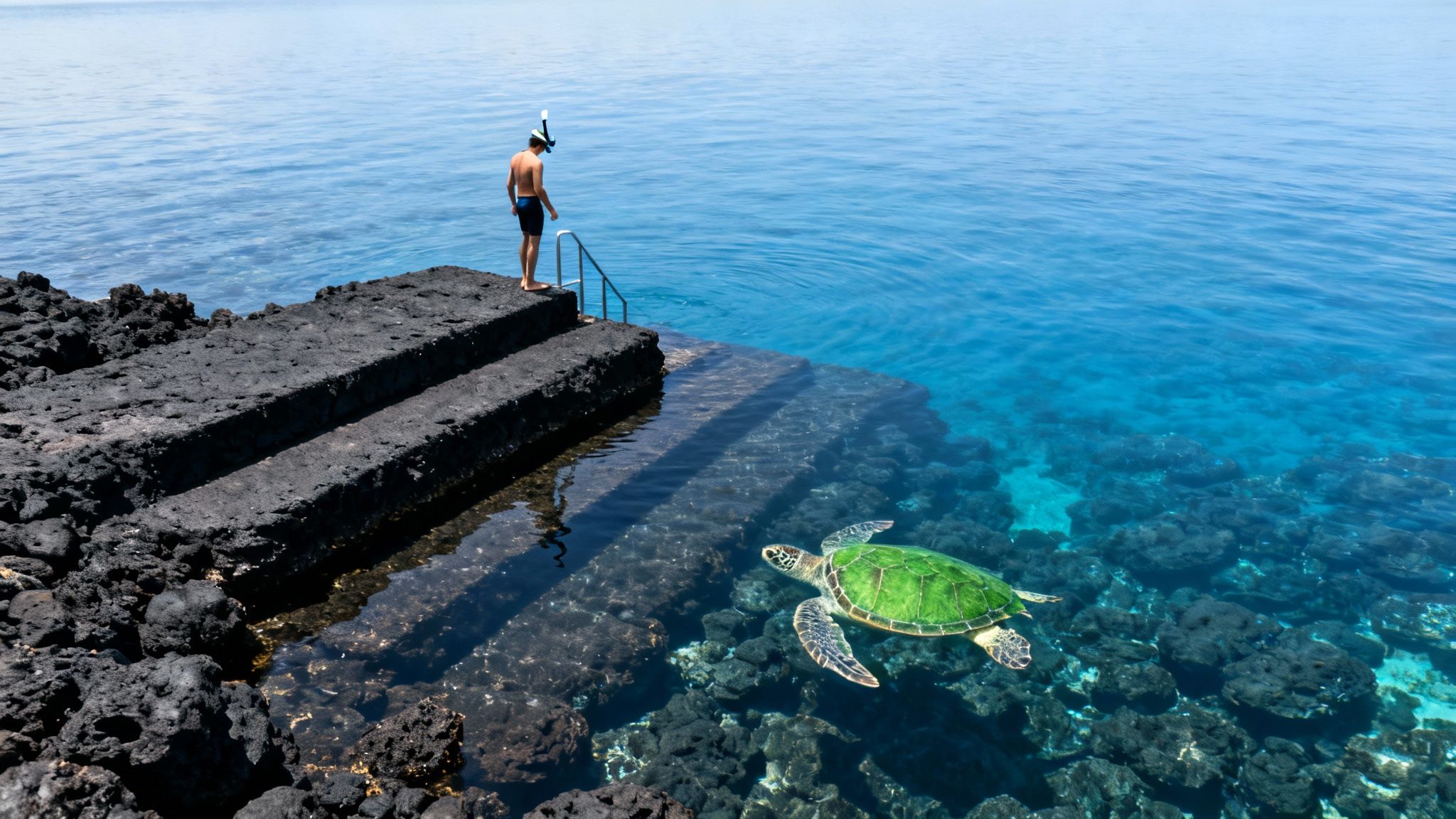
The volcanic origins of Hawaii have created some of the most dramatic underwater landscapes on the planet, and for experienced divers, exploring the lava tubes and caverns along the Kona coast is a pinnacle of Big Island diving. These incredible structures are underwater tunnels and archways formed by ancient lava flows that cooled and solidified on the outside while molten lava continued to flow through the center, leaving behind hollow tubes. Diving through these formations is like exploring a submerged geological museum, filled with awe-inspiring structures and unique challenges.
Why It's a Top Dive Site
Lava tube dives offer an experience that is fundamentally different from open-reef diving. The thrill of swimming through these natural conduits, watching your light dance off the textured volcanic rock, is unparalleled. Shafts of sunlight often penetrate through openings in the ceiling, creating ethereal beams of light that illuminate the cavern interiors. This type of overhead environment demands a higher skill level, making it a rewarding objective for advanced divers looking to expand their capabilities and experience something truly unique to diving Hawaii Big Island. It's a chance to witness the raw power of the island's creation from an underwater perspective.
What You'll See
Inside the tubes and caverns, you'll discover a world adapted to lower light conditions. Look for reclusive species like lobsters, shrimp, and crabs hiding in the crevices. Whitetip reef sharks are often found resting on the sandy floors of larger caverns, making for a thrilling encounter. The entrances to these tubes are frequently encrusted with vibrant corals and sponges. Navigating these formations requires excellent buoyancy control and awareness. Due to the inherent risks of an overhead environment, it is crucial to undertake these dives with professional Kona diving companies that offer guided advanced tours. They ensure safety protocols are followed, provide necessary equipment like dive lights, and lead you to the most spectacular and safest sites. Learn more about the unique geological features of Kona diving on konahonudivers.com.
5. Puako Bay: A Shore Diver’s Paradise on the Kohala Coast
For those who enjoy the freedom and accessibility of shore diving, Puako Bay is an essential stop for scuba diving Big Island. Located along the sunny Kohala Coast, this site offers a fantastic underwater experience directly accessible from the beach. Its varied topography, featuring shallow coral gardens that give way to deeper ledges and drop-offs, makes it a dynamic and rewarding location for divers who prefer to gear up and walk right into the ocean.
Why It's a Top Dive Site
Puako Bay is celebrated for its ease of access and the quality of its marine environment, making it a standout choice for shore-based Big Island diving. The site is typically calmer in the early morning before the afternoon winds pick up, offering excellent visibility. The reef structure here is intricate, with lava rock formations creating numerous nooks and crannies for marine life to hide. This makes Puako an excellent location for underwater macro photography and for divers working on their open water or advanced certifications, as it provides a real-world environment to practice skills like buoyancy and navigation.
What You'll See
The main attraction at Puako is the high probability of encountering Hawaiian Green Sea Turtles (honu), which are frequently seen resting among the corals or gracefully swimming by. The vibrant reef is home to schools of surgeonfish, Moorish idols, and various wrasses. Keep an eye out for spotted eagle rays gliding effortlessly in the blue, as well as moray eels and crustaceans tucked into the reef. For a safe and successful shore dive, it's crucial to wear sturdy reef shoes for the rocky entry, carry a dive flag for surface visibility, and check tide charts for the easiest access points. While Puako is a premier shore dive, for a more expansive exploration of the Kohala Coast's underwater wonders, guided trips with professional Kona diving companies are highly recommended.
6. Two Step/Kealakekua South Entry: A World-Class Shore Dive
Two Step, officially known as Honaunau Bay, is one of the most celebrated spots for shore diving Big Island Hawaii, located adjacent to the Pu'uhonua o Hōnaunau National Historical Park. Its nickname comes from the convenient, natural two-step lava rock formation that divers use for a giant-stride entry into the ocean. This site offers immediate access to a thriving reef, dramatic underwater topography, and a protected bay teeming with marine life, making it a favorite for both divers and snorkelers.
Why It's a Top Dive Site
The primary appeal of Two Step is its accessibility and the sheer density of marine life just a few kicks from shore. The bay is relatively shallow, with depths ranging from 15 to 70 feet, but features exciting lava formations, arches, and small caves to explore. Because it's a bay, conditions are often calm, particularly in the mornings, offering clear visibility. This site provides a boat-dive experience from the shore, which is why it's a standout for Big Island diving and a must-do for any diver comfortable with shore entries.
What You'll See
The coral gardens at Two Step are vibrant and home to a stunning array of Hawaiian reef fish, including yellow tangs, Moorish idols, and ornate butterflyfish. Green sea turtles (honu) are almost always present, often seen resting on the coral or grazing on algae. It's also a fantastic place to spot moray eels, octopus hiding in crevices, and occasionally spinner dolphins passing through the bay. To ensure safety and make the most of the dive, it's crucial to check ocean conditions before entering, use a dive flag, and maintain excellent buoyancy. For those new to the site, consider a guided tour with local Kona diving companies who are experts on the area's conditions and marine life.
7. Golden Pinnacle/Beacon: A Deep-Water Pelagic Magnet
Golden Pinnacle, sometimes called Beacon, is a thrilling boat dive that offers a dramatic contrast to the calmer, shallower reefs along the coast. This advanced site is defined by a massive underwater pinnacle that rises from the deep ocean floor, creating a cleaning station and navigational point for large pelagic species. It's a premier location for those seeking adrenaline-pumping encounters and one of the most exciting diving Big Island experiences for seasoned divers.
Why It's a Top Dive Site
This dive site is all about the potential for big animal encounters. The pinnacle acts as a magnet for open-ocean life, and its exposed location means currents can be strong, often requiring a drift dive. This makes it a challenging but highly rewarding site best suited for certified Advanced Open Water divers comfortable with depth and potential currents. The underwater topography itself is stunning, with the pinnacle creating a dramatic vertical wall to explore. Experienced divers looking for the ultimate scuba Big Island adventure will find it here.
What You'll See
The main draw of Golden Pinnacle is the chance to see larger marine life. Schools of massive jacks, or ulua, often swirl around the pinnacle in a mesmerizing vortex. Manta rays are frequently spotted gliding gracefully in the blue, especially during the winter months, and it’s not uncommon to encounter various species of sharks, including Galapagos and oceanic whitetips. The pinnacle is also covered in smaller life, like vibrant damselfish and pyramid butterflyfish, but all eyes are usually scanning the deep blue for the next big visitor. To safely enjoy this incredible site, it's essential to book with expert Kona diving companies that specialize in advanced drift dives and can manage the logistics of this dynamic environment.
8. Captain Cook Monument Area/Wreck Dives: History Meets Marine Life
Combining profound historical significance with vibrant underwater exploration, the area around the Captain Cook Monument in Kealakekua Bay offers a uniquely compelling experience for big island scuba diving. This site marks where the British explorer first made contact with native Hawaiians and ultimately met his end. Dives here are not just about marine life; they are an immersion into a pivotal moment in Hawaiian history, with the added thrill of exploring nearby underwater structures and potential wreck sites.
Why It's a Top Dive Site
The primary draw is the blend of cultural heritage and a thriving marine ecosystem. The monument itself is only accessible by water, lending the site an exclusive and serene atmosphere. Like the rest of Kealakekua Bay, the waters here are exceptionally clear and calm, protected from the open ocean. For those interested in something beyond natural reefs, the possibility of exploring sunken vessels adds another layer of adventure, making this a standout option for diving Big Island. The historical context provided by knowledgeable guides elevates the dive from a simple sightseeing trip to a meaningful journey.
What You'll See
Beneath the surface, the coral gardens are pristine, teeming with schools of surgeonfish, butterflyfish, and Moorish idols. Divers often spot green sea turtles, moray eels peering from crevices, and occasionally resting whitetip reef sharks. Spinner dolphins are common in the bay, their clicks and whistles often echoing underwater. While significant, well-known wrecks are not the primary feature here, smaller sunken artifacts and vessel remains can sometimes be explored with experienced guides. To fully appreciate both the underwater beauty and the rich history, a guided tour is essential. Local Kona diving companies provide not only the necessary boat access but also the invaluable cultural and historical narration that makes this dive unforgettable. For more details on visiting this historic site, check out this guide on the Captain Cook Monument snorkeling tour.
Big Island Scuba: 8-Site Comparison
| Site | Access & Complexity 🔄 | Resources/Certification ⚡ | Expected Outcomes ⭐📊 | Ideal Use Cases 💡 | Key Advantages 📊 |
|---|---|---|---|---|---|
| Kealakekua Bay Marine Sanctuary | 🔄 Boat-only access; popular and weather-dependent; possible strong currents | ⚡ Basic snorkel/scuba acceptable; book reputable operators | ⭐ Exceptional water clarity (80–120ft+); rich biodiversity; historical sightlines | 💡 Snorkel/scuba tours, wide-angle photography, cultural visits | 📊 Crystal-clear visibility, protected reef, strong cultural significance |
| Red Hill / Pu'u Kuili | 🔄 Boat access; moderate currents; less crowded site | ⚡ Intermediate–advanced diver preferred; experienced operator advised | ⭐ Great macro/mid-depth wildlife sightings; visibility ~50–80ft | 💡 Macro photography, intermediate/advanced dives, quieter exploration | 📊 Unique volcanic geology and intimate wildlife encounters |
| Honaunau Bay (Place of Refuge) | 🔄 Shore or limited boat access; calm, protected conditions | ⚡ Beginner-friendly; guided options recommended | ⭐ Frequent turtle encounters; good visibility (60–100ft); cultural context | 💡 Families, beginners, cultural/educational dives and snorkeling | 📊 Calm waters, historical significance, reliable turtle sightings |
| Lava Tubes / Lava Caves | 🔄 Overhead environments; complex navigation; higher risk | ⚡ Advanced/cavern certification, multiple lights, experienced guides required | ⭐ Dramatic geology, unique low-light species; visibility reduced inside | 💡 Advanced technical/cavern training, adventurous photographers | 📊 Memorable cavern formations; low crowding; specialty dives |
| Puako Bay | 🔄 Shore-entry from beach; rocky/reef walking required; variable conditions | ⚡ Suitable for all levels; reef shoes and shore-gear helpful | ⭐ Shallow coral gardens + drop-offs; turtles and eagle rays; visibility 40–70ft | 💡 Training, shore diving, budget-conscious or beginner divers | 📊 Easy shore access, multiple dive profiles, excellent reef diversity |
| Two Step / Kealakekua South Entry | 🔄 Shore entry via natural lava steps; very popular and limited parking | ⚡ Open to various skill levels but check surf; early arrival advised | ⭐ Immediate access to lava formations, turtles, octopus; visibility 60–100ft | 💡 Quick shore dives, turtle encounters, accessible without boat | 📊 Natural easy entry/exit, dramatic geology, good visibility |
| Golden Pinnacle / Beacon | 🔄 Boat-only deep dive; strong currents and seasonal variability | ⚡ Advanced certification required; drift skills and experienced operator | ⭐ High probability of pelagic encounters (manta, jacks, sharks); excellent visibility 80–120ft | 💡 Advanced pelagic photography, thrill-seeking deep dives | 📊 Outstanding large-animal encounters and visibility |
| Captain Cook Monument / Wreck Dives | 🔄 Boat access; popular and weather-dependent; wreck caution advised | ⚡ Advanced recommended for wrecks; guided tours and premium operators | ⭐ Historic wreck exploration with rich biodiversity; visibility 80–120ft | 💡 History-focused dives, wreck photography, intermediate+ divers | 📊 Combines historical interest with excellent visibility and biodiversity |
Your Ultimate Big Island Dive Adventure Awaits
From the protected, sun-drenched reefs of Kealakekua Bay to the otherworldly spectacle of the Kona Manta Ray Night Dive, it’s clear that Big Island scuba diving offers a truly unparalleled underwater experience. This comprehensive guide has walked you through the island’s most iconic dive sites, essential gear considerations, and the unique seasonal rhythms that define the marine environment. We've explored everything from the intricate lava tube swim-throughs to the deep-water mysteries of the blackwater dives, painting a picture of a diver’s paradise sculpted by volcanic fire and teeming with life. The sheer diversity of experiences available makes diving Hawaii Big Island a premier global destination, catering to novice divers taking their first breaths underwater and seasoned veterans seeking advanced, adrenaline-pumping challenges.
The key to a successful trip lies in strategic planning. By understanding the nuances of each location, from the historical significance and vibrant coral gardens of Honaunau Bay to the unique topography of Red Hill, you can tailor your itinerary to match your skill level and interests perfectly. Remember that scuba diving Big Island Hawaii is a year-round activity, with summer offering the calmest seas and winter bringing the hauntingly beautiful songs of humpback whales to your dive soundtrack. Mastering these concepts isn’t just about having a good vacation; it’s about maximizing every moment you spend beneath the waves, ensuring your safety, and connecting deeply with the fragile and magnificent ecosystem of the Hawaiian islands.
Your Action Plan for an Unforgettable Dive Trip
Now that you're equipped with the knowledge, it's time to take the next steps. Here’s a simple, actionable plan to turn your dream dive trip into a reality:
- Assess Your Certification Level: Review your current certification. Are you ready for advanced drift dives, or would you benefit from a refresher course? Be honest about your comfort and skill to choose the right adventures. For those seeking to push their limits, exploring an advanced dive tour is a fantastic next step.
- Select Your Must-Do Dives: Which sites from this guide sparked your excitement? Was it the promise of encountering graceful mantas, the thrill of navigating ancient lava tubes, or the search for rare critters on a blackwater dive? Prioritize your top three experiences.
- Choose the Right Operator: The quality of your guide and crew is paramount. Look for established, reputable Kona diving companies with a strong focus on safety, sustainability, and small group sizes. A company like Kona Honu Divers not only has intimate knowledge of the dive sites but is also committed to marine conservation and providing a premium, personalized experience.
- Book Your Adventure: The most popular tours, especially the Manta Ray Night Dive, fill up quickly. Don’t wait until the last minute. Secure your spots in advance to avoid disappointment and start the countdown to your incredible underwater journey. Kona diving is a world-class experience, and planning ahead ensures you get the most out of it.
Embracing the world of scuba Big Island is more than just a recreational activity; it's an opportunity to witness the raw power and delicate beauty of nature. It's a chance to float weightlessly through history, geology, and a vibrant tapestry of marine life found nowhere else on Earth. The coral reefs are calling, the mantas are dancing, and an unforgettable adventure is waiting just beneath the surface. All that's left is for you to take the plunge.
Frequently Asked Questions About Big Island Scuba Diving
Is there good diving on the Big Island?
Absolutely. The Big Island, particularly the Kona coast, is considered one of the best diving destinations in the world. Its volcanic underwater topography, lava tubes, calm conditions, excellent visibility, and unique marine life like manta rays make it an exceptional place for divers of all levels.
What are the best months to scuba dive in Hawaii?
While you can dive year-round in Hawaii, the best conditions are typically found during the summer months (April to October) when the water is calmest and warmest. However, the winter months (November to March) are peak season for whale watching and can offer incredible chances to hear whale songs underwater.
Is Kona good for scuba diving?
Kona is phenomenal for scuba diving. The western coast of the Big Island is sheltered from the prevailing trade winds, resulting in consistently calm, clear waters. This protection allows for incredible coral growth and makes it the epicenter for famous dives like the manta ray night dive and the blackwater dive.
Is it better to snorkel or scuba dive in Hawaii?
It depends on what you want to see. Snorkeling is fantastic for viewing the vibrant shallow reefs and fish in places like Kealakekua Bay. However, scuba diving allows you to explore deeper reefs, lava tubes, and have more immersive experiences like the manta ray night dive where you are on the ocean floor. If you are comfortable with it, scuba diving offers a much richer and more diverse experience.
Which Hawaiian island is best for scuba diving?
While all the islands offer great diving, the Big Island (specifically Kona) is widely regarded as the best for its diversity, unique experiences like the manta ray and blackwater dives, and consistently calm and clear conditions. Maui is also a strong contender with sites like Molokini Crater.
When to dive Kona?
You can dive in Kona year-round. The summer months offer the flattest, calmest seas and warmest water. The winter can bring slightly larger swells but is also when you might encounter humpback whales and see more pelagic activity. Ultimately, any time is a good time for Kona diving.
Ready to experience the best big island scuba diving for yourself? The expert team at Kona Honu Divers specializes in small-group, eco-conscious tours that bring you face-to-face with Hawaii's most incredible marine life. Book your unforgettable underwater adventure with Kona Honu Divers today and discover why Kona is a world-class diving destination.