
Picture this: you're descending into impossibly clear, warm water. Sunlight filters down, dancing through ancient lava tubes and lighting up vibrant coral gardens. This is what Big Island scuba diving is all about—a world-class adventure shaped by its one-of-a-kind volcanic underwater landscapes. It’s an experience that lands the island at the top of every diver’s bucket list, and for good reason. It offers everything from dramatic drop-offs and protected coves to unforgettable encounters with majestic marine life.
Why Big Island Scuba Diving Is a Must-Do Adventure
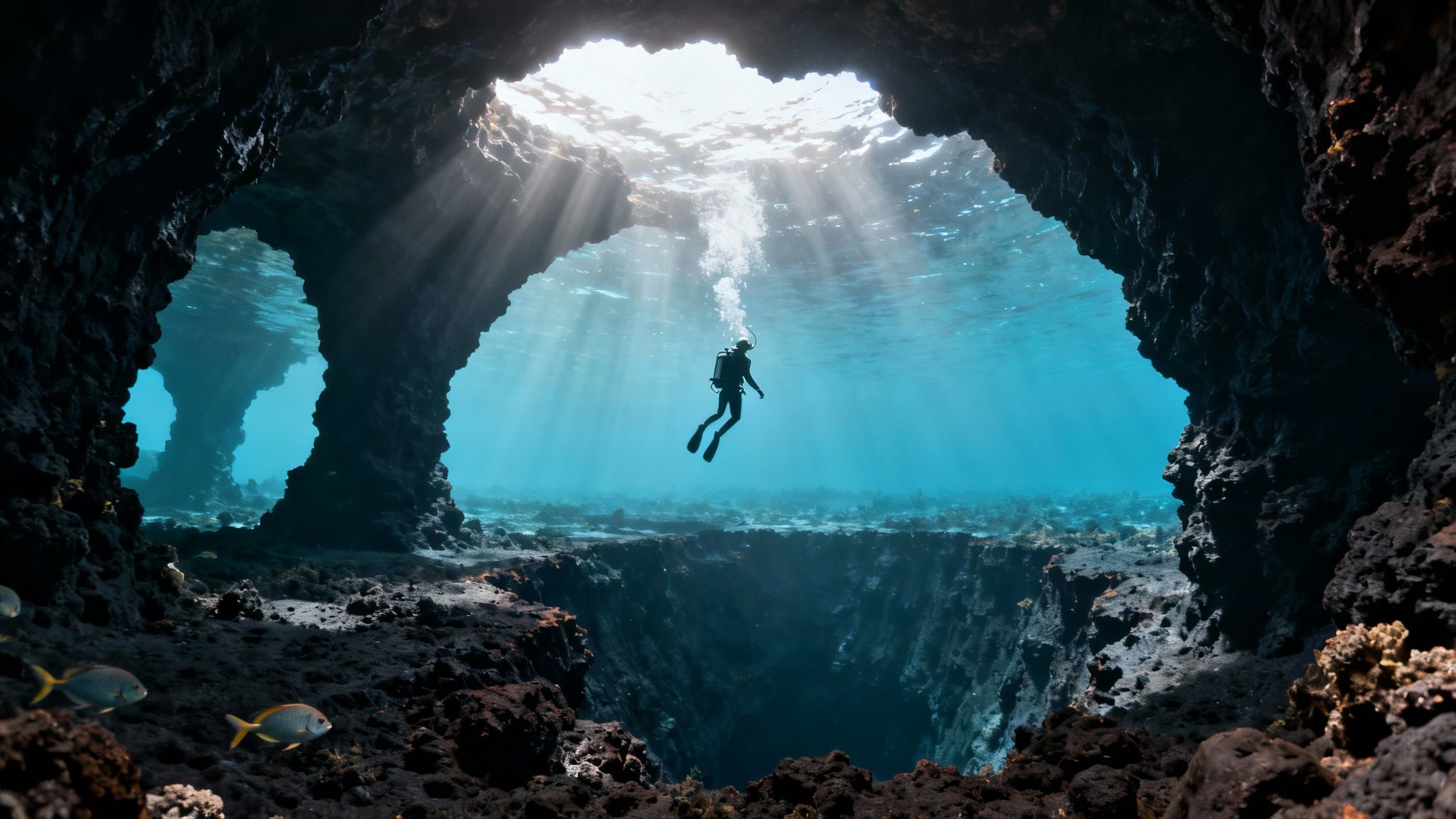
The Big Island of Hawaii isn't just another pretty spot on the map; it’s an underwater playground sculpted by volcanic fire. Because the island is so young geologically, its underwater world is rugged and spectacular. Divers get to explore lava tubes, massive archways, and submerged craters that have become home to a stunning array of sea creatures.
This unique topography is a huge part of what makes diving Hawaii Big Island so special. The island’s western coast, especially the Kona side, is sheltered from the prevailing trade winds by the colossal volcanoes of Mauna Loa and Mauna Kea. This natural shield creates incredibly calm and clear conditions almost all year round, which is perfect for divers of every skill level.
An Unforgettable Underwater Environment
What truly sets scuba diving Big Island Hawaii apart is the combination of pristine conditions and incredible wildlife. Water visibility often clears 100 feet, and the water temperature stays in that perfect range of 75-80°F (24-27°C).
This amazing clarity gives you a front-row seat to the entire marine ecosystem. Because the islands are so isolated, a high number of the species here are endemic—you literally can't find them anywhere else on Earth. You can get a deeper dive into what makes the conditions so ideal in our guide on whether the Big Island is good for scuba diving.
Over the past few decades, the island has solidified its reputation as a premier global diving hub. It now supports over 50 dive shops and welcomes more than 150,000 dive tourists every year, making it a cornerstone of Hawaiian tourism. It's a testament to the incredible marine biodiversity here; the Big Island is home to 1,100 fish species, 129 of which are found only in the Hawaiian island chain.
More Than Just a Dive
A trip here is about more than just exploring reefs. It’s a chance for those iconic experiences you'll talk about for years. The legendary manta ray night dive is often called a life-changing encounter, where you can watch gentle giants glide effortlessly through the illuminated water.
The thrilling Kona diving scene also gives you a great shot at seeing spinner dolphins, Hawaiian green sea turtles, and even migrating humpback whales during the winter months. As you map out your adventure, checking out some general vacation planning resources can help pull all the pieces together.
Whether you're a brand new diver excited for your first open-water adventure or a seasoned pro chasing a new thrill, Big Island diving absolutely delivers.
Experience the World-Famous Manta Ray Night Dive
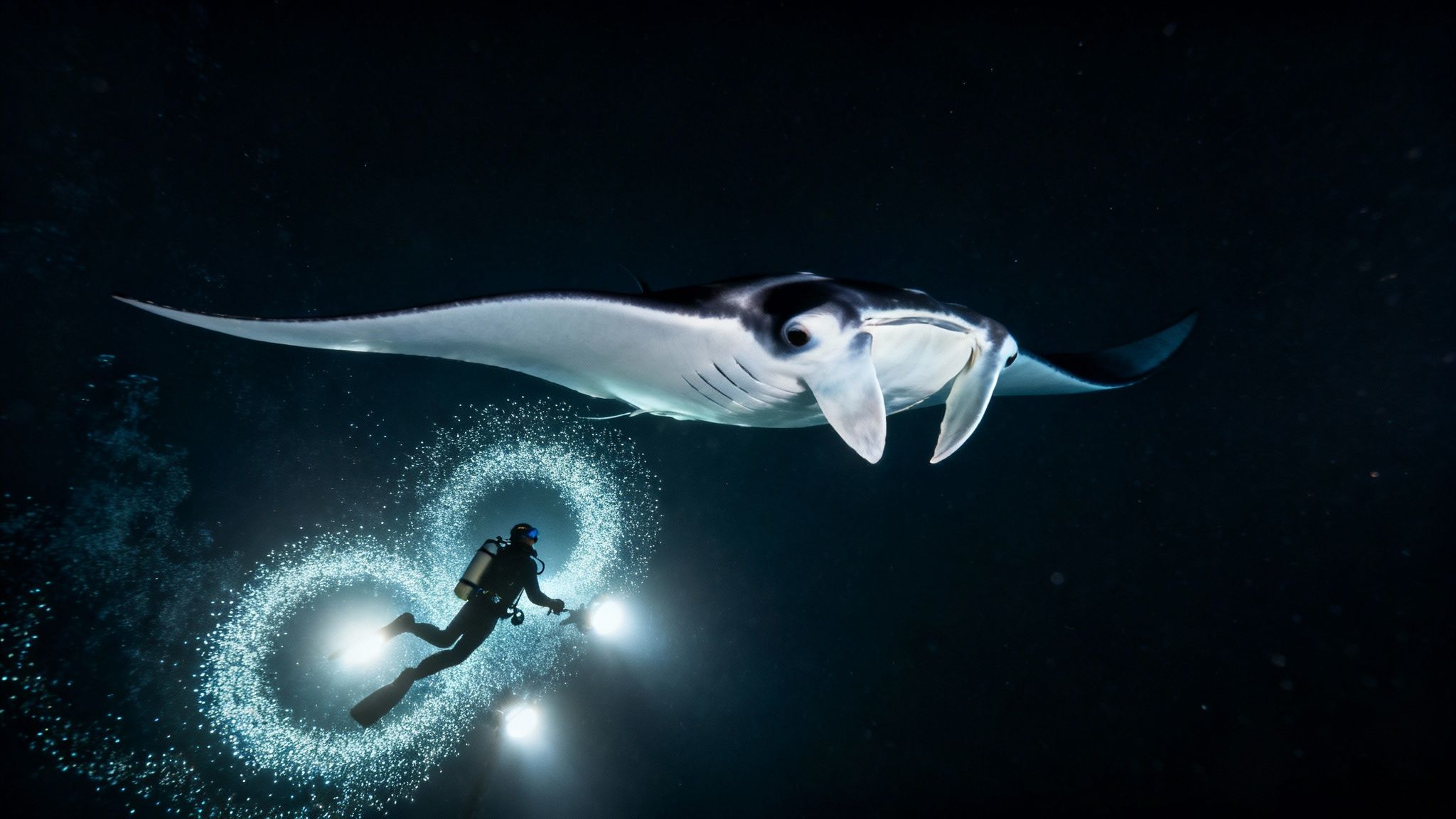
If there's one experience that defines Big Island scuba diving, it's the legendary Manta Ray Night Dive. This isn't just another dive on the logbook; it's an otherworldly ballet that pulls people from every corner of the globe. I'm talking about a surreal, almost spiritual encounter you'll be telling stories about for the rest of your life.
The concept behind this incredible spectacle is brilliantly simple. Dive operators place powerful, self-contained lights on the ocean floor, creating what we affectionately call the "campfire." This light acts like a massive bug zapper for tiny plankton, which swarm into the bright beams. It doesn't take long for the stars of the show to arrive.
Majestic manta rays, with wingspans stretching up to a massive 16 feet, glide gracefully into the light to feast on the plankton buffet. As a diver, you get a front-row seat. You'll settle on the sandy bottom, look up, and watch these gentle giants perform effortless somersaults and barrel rolls just inches above your head.
Choosing the Best Manta Viewing Location
When you're planning your manta dive, you'll hear two main spots mentioned. While both can be amazing, many of us with years of experience in these waters have a clear favorite: Garden Eel Cove.
Garden Eel Cove is, in my opinion, the superior choice for a few key reasons. First, its location is more protected from ocean swells, which generally means a calmer, more comfortable dive. The reefs there are also healthier and more vibrant, providing a stunning backdrop. But most importantly, the underwater viewing area is better structured, giving divers a truly unparalleled perspective of the action.
The Manta Ray Night Dive is the flagship attraction for scuba diving Big Island Hawaii, and its reliability is a huge part of its fame. This isn't some new gimmick; operators started running these tours back in 1992. Today, the success rate is incredible, with mantas showing up around 85-90% of the time. This consistency comes from decades of research into the local manta population, which has helped create sustainable practices that protect these amazing animals.
What to Expect on Your Manta Adventure
Your trip starts with a thorough pre-dive briefing. The crew will walk you through manta behavior, safety procedures, and exactly how to position yourself on the ocean floor. This is a passive observation dive, so the key is to stay put and let the show unfold around you, ensuring a safe experience for both you and the rays.
Once you descend into what feels like an underwater ballroom, you’ll find your spot and aim your dive light straight up. The feeling when that first massive shadow emerges from the darkness is pure magic. There are no cages or barriers—just you and these magnificent creatures in their own world.
This iconic dive is the absolute pinnacle of diving Big Island. Top-tier operators like Kona Honu Divers specialize in making this experience safe, comfortable, and unforgettable with their manta ray dive tours. And if you have non-divers in your group, they don't have to miss out! You can find more info in our guide to the Manta Ray Night Snorkel.
Discovering Kona’s Most Popular Dive Sites
Sure, the manta ray night dive is an absolute showstopper, but don't for a second think the daytime adventures along the Kona coast are any less spectacular. The diving here is defined by its incredible variety, all thanks to ancient volcanic activity that sculpted a massive underwater playground. Every time you drop in, you're exploring a new world, from dramatic lava rock formations to peaceful coral gardens buzzing with life.
This is exactly why Kona diving is known and loved by divers all over the world. The island’s western coast is naturally protected, creating calm, clear conditions perfect for exploring the 50+ unique and named dive sites. It doesn’t matter if you’re a brand-new diver or have thousands of dives in your logbook—you’ll find plenty of spots that will absolutely blow you away.
If you're planning to dive for a few days, the sheer number of options means you’ll never get bored. One morning you might be navigating intricate lava tubes, and the next, you're drifting effortlessly over a vibrant reef. This is what makes diving Hawaii Big Island such a deeply rewarding experience.
Golden Arches: A Photographer's Dream
One of the most iconic sites you'll hear about is Golden Arches, and it absolutely lives up to the hype. It's a must-visit, famous for its breathtaking underwater architecture. The site gets its name from a series of massive lava rock arches that form incredible swim-throughs and frame up perfect photos. When the sunlight streams through, it creates this magical, cathedral-like glow.
These formations are a powerful reminder of the island's volcanic past, and they provide a dramatic backdrop for all the critters that call this place home. You can expect to see huge schools of colorful reef fish, like yellow tangs and butterflyfish, darting in and out of the rocks. Keep an eye out for moray eels poking their heads out of crevices and octopuses doing their master-of-disguise thing against the lava.
Turtle Pinnacle: The Green Sea Turtle Hotspot
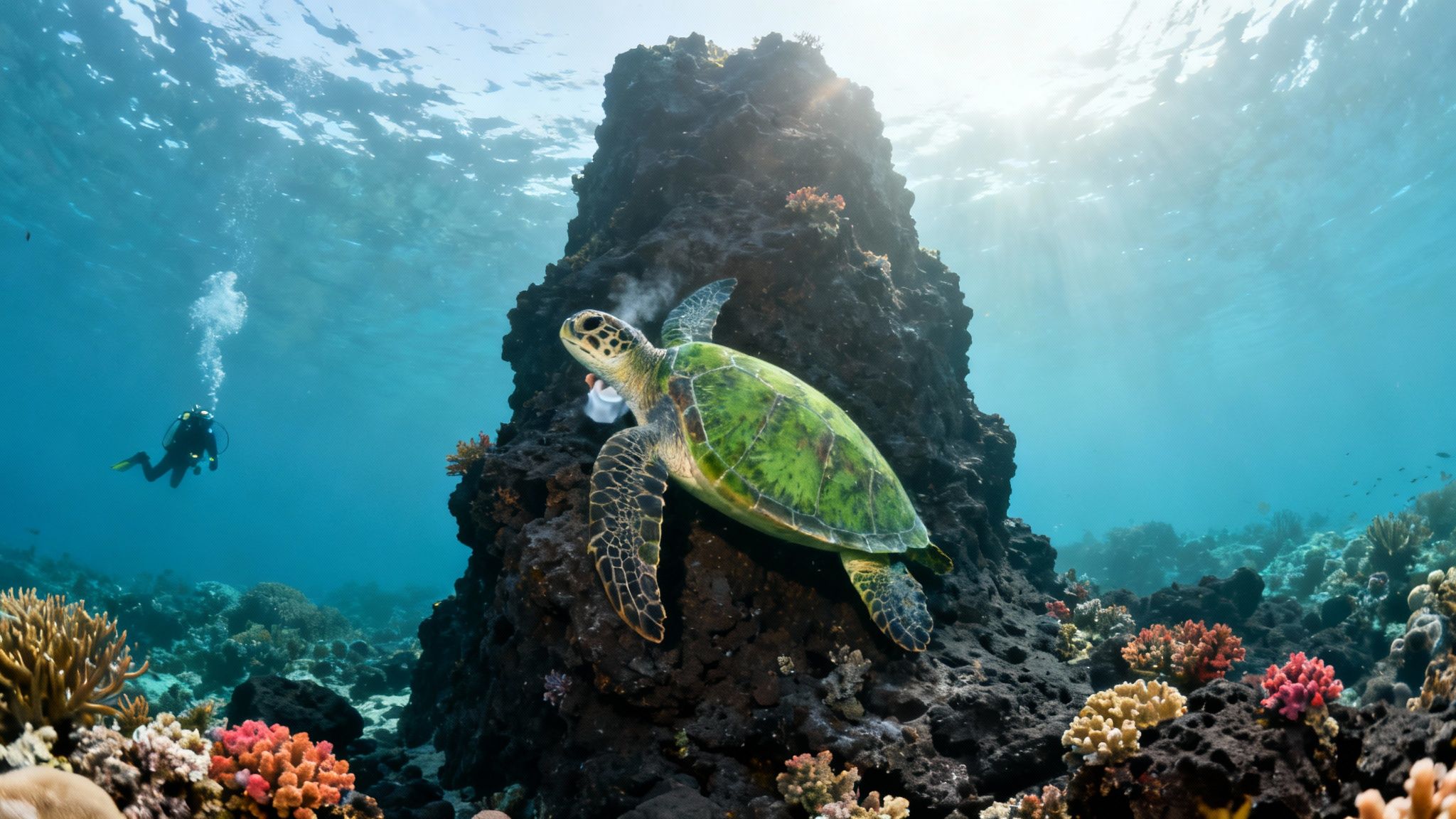
Another can't-miss spot is Turtle Pinnacle. Just like the name suggests, this is one of the most reliable places to hang out with Hawaiian green sea turtles, or ‘honu,’ as they’re known locally. The site is what's called a "cleaning station," a place where turtles come to get pampered by smaller fish, like the Hawaiian cleaner wrasse, who nibble algae and parasites off their shells.
This natural spa treatment gives divers an amazing opportunity to just watch and observe. You can find a sandy spot, settle in, and watch the turtles go about their day. It's common to see several honu on a single dive. It's a peaceful, humbling experience that really connects you to the local marine life.
Besides the turtles, the pinnacle itself is covered in healthy coral and is a hive of activity. You'll find a ton of endemic fish species here, making it a fantastic place to appreciate the unique biodiversity of Big Island diving.
Deciding where to go is part of the fun, and you can learn even more about the best places to dive on the Big Island to help build your perfect itinerary.
Kona Dive Site Highlights
To give you a quick snapshot, here’s a look at some of the most talked-about dive sites in Kona and what makes each of them special.
| Dive Site | Key Features | Common Marine Life | Experience Level |
|---|---|---|---|
| Golden Arches | Massive lava arches, swim-throughs, great for photos | Yellow tangs, butterflyfish, moray eels, octopuses | All Levels |
| Turtle Pinnacle | Famous turtle "cleaning station" | Hawaiian green sea turtles, cleaner wrasse, reef fish | All Levels |
| Au Au Crater | Partially submerged volcanic crater, clear water | Eagle rays, white tip reef sharks, large fish schools | Intermediate |
| Suck 'Em Up | Lava tube cavern with a surge effect | White tip reef sharks, unique invertebrates | Advanced |
| Kailua Pier | Muck diving, shallow, easy access | Frogfish, nudibranchs, octopuses, seahorses | All Levels |
This is, of course, just the tip of the iceberg. Each site offers a completely different vibe and a new set of creatures to discover.
Advanced Diving and Unique Underwater Thrills
For certified divers with a real thirst for adventure, scuba diving Big Island Hawaii offers experiences that go way beyond the beautiful, sun-drenched reefs. The daytime dives are incredible, no doubt about it. But some of the most profound, truly unforgettable encounters happen long after the sun sets.
If you're a seasoned diver looking to see something extraordinary, the Big Island delivers. These advanced dives are for divers who are comfortable in the water and ready to see a side of Hawaii's marine world that most people never will. It’s a chance to challenge yourself and add some seriously cool entries to your logbook.
The Otherworldly Kona Blackwater Dive
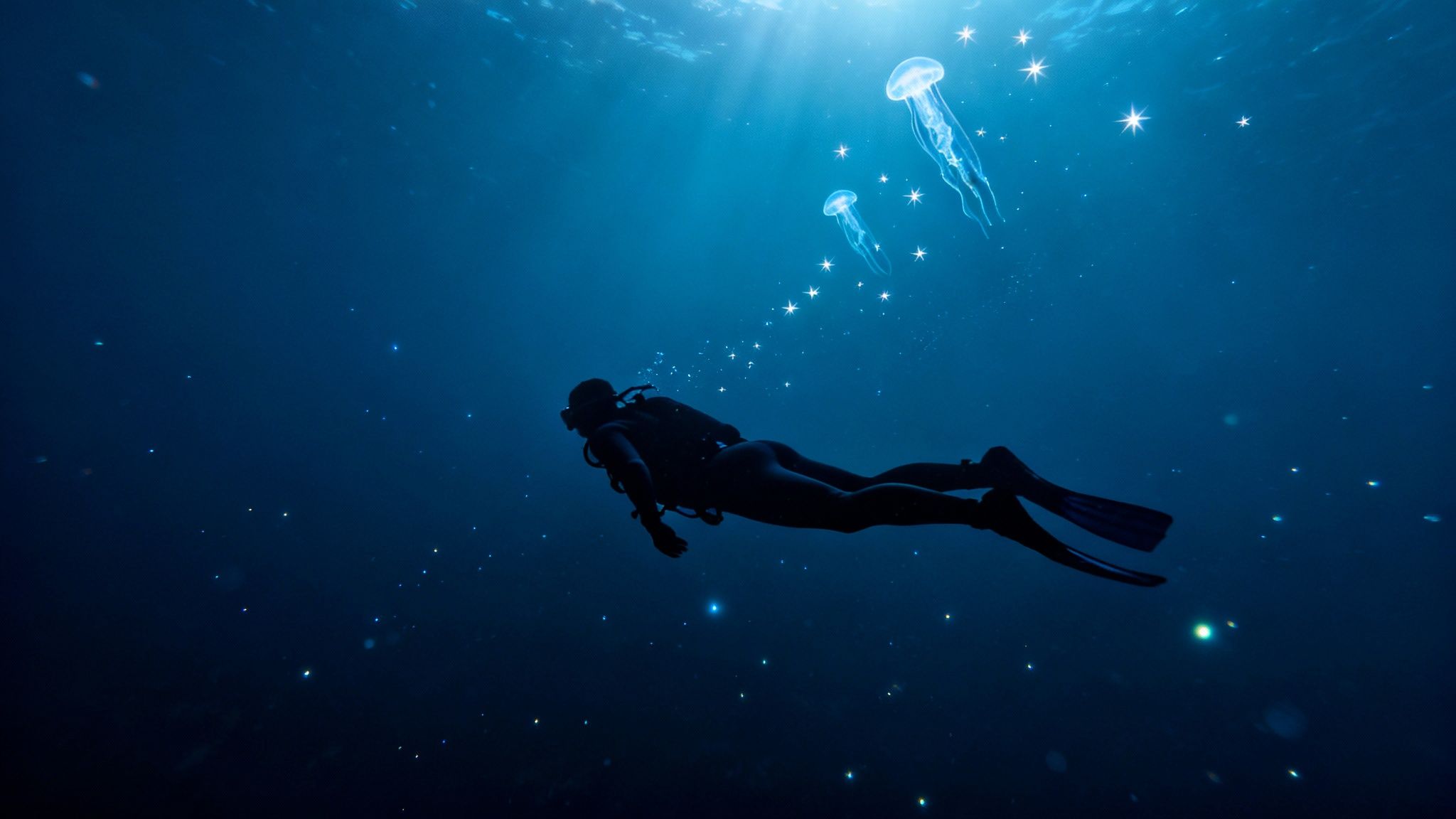
Picture this: you're drifting in the pitch-black, open ocean, suspended thousands of feet above the sea floor. This is the Kona Blackwater Dive. Divers often call it a spacewalk in the deep sea, and honestly, that’s not far off. It’s one of the most unique dives on the entire planet.
So, how does it work? The boat heads miles offshore into deep water, and the divers are tethered to the boat as it drifts. Powerful lights are dropped down into the abyss, and these lights act like a magnet for a bizarre and beautiful parade of deep-sea creatures migrating toward the surface to feed. You just float there, watching a real-life light show of bioluminescent organisms and strange, alien-like larval critters drift by.
This isn't your typical reef dive. It's a journey into the middle of the largest animal migration on Earth. You’ll see creatures that spend their entire lives in the deep, things you'd never, ever see on a regular dive. It’s humbling, mesmerizing, and a little surreal.
This is a bucket-list dive for underwater photographers and anyone fascinated by the stranger side of marine biology. You'll want to go with a pro outfit like Kona Honu Divers to make sure the experience is both safe and mind-blowing. You can check out all the details on their Blackwater Dive tour page.
Exploring Deeper and More Remote Dive Sites
Beyond the blackwater trip, advanced diving Big Island style means getting to explore some truly epic spots. The island's volcanic origins created a dramatic underwater landscape of deep walls, submerged pinnacles, and cool lava tubes that are best left to more experienced divers. These sites are usually a bit farther out, which means fewer boats and healthier, more pristine reefs.
Advanced dives here often involve:
- Deep Dives: Dropping down onto walls and structures that go well past standard recreational limits. This is where you can find different species of fish and coral that prefer the deeper, cooler water.
- Drift Dives: Letting the current do the work. You just relax and glide effortlessly along a massive stretch of reef, covering way more ground than you could by finning alone. It feels like flying.
- Cavern and Lava Tube Exploration: This is classic Big Island diving. Navigating these volcanic formations requires excellent buoyancy and a calm head, but the reward is seeing some incredible and unique underwater architecture.
These dives give you a front-row seat to the raw, untouched beauty of the Kona coast. Going with an experienced local guide is key—they know how to navigate these sites safely and where to find all the hidden gems. For certified divers ready for the challenge, Kona Honu Divers runs specialized advanced dive tours that will definitely put your skills to the test.
How to Choose the Best Kona Diving Companies
Let’s be honest: the dive company you choose can make or break your entire underwater trip. It’s arguably the single most important decision you’ll make. A great operator doesn't just take you out on a boat; they ensure your safety, comfort, and flat-out enjoyment, turning a good dive into an adventure you’ll be talking about for years.
When you start looking at the dozens of Kona diving companies, it's easy to get overwhelmed. But what you're really doing is finding a partner for your scuba Big Island journey. You're trusting them with your safety and relying on their local knowledge to show you the best of Kona's underwater world. The non-negotiables? A stellar safety record, a comfortable and well-maintained dive boat, small group sizes, and a genuine commitment to protecting the ocean.
Kona Honu Divers
Kona Honu Divers consistently pops up as one of the top-rated operators, and for good reason. They are known for their incredibly experienced crew and custom-built boats designed specifically for diver comfort. What really sets them apart is their focus on small groups. This means you get personal attention, whether you're a brand new diver or a seasoned pro looking for a challenge.
Their name, "Honu" (the Hawaiian green sea turtle), isn't just a marketing gimmick—it points to their deep dedication to marine conservation. They teach and practice responsible diving, ensuring guests know how to interact with wildlife without causing harm. With a staggering number of five-star reviews, their reputation really does speak for itself. They offer the full gamut of diving tours, from the iconic manta ray night dive to the mind-bending blackwater dives.
Jack's Diving Locker
A true OG in the Big Island diving scene, Jack's Diving Locker has been a cornerstone of the community since 1981. This is a large, well-oiled machine with a serious focus on diver education, offering everything from beginner certifications to professional-level courses. Their fleet of boats is impressive, and they have a packed schedule of tours running daily.
They're well known for a family-friendly vibe and being a one-stop shop for just about any diving need. Their longevity alone is a powerful testament to their quality and reliability over the decades.
Big Island Divers
Another long-standing and respected name in Kona, Big Island Divers has a reputation for its friendly, professional crew and meticulously maintained boats. They offer a full slate of daily charters, including the can't-miss manta dive and trips to more remote, less-crowded sites.
You’ll often see their customer service praised in reviews. Divers frequently talk about how the crew goes out of their way to make everyone feel comfortable and safe, both on the boat and in the water.
This focus on the guest experience makes them a go-to choice for divers who want a guaranteed smooth and enjoyable day of scuba diving Big Island.
Kona Diving Company
Kona Diving Company aims for a premium, boutique experience, and they deliver. Their boats are custom-designed with diver comfort in mind—think warm freshwater showers after your dive. They’re also known for having professional, eagle-eyed guides who are masters at spotting unique marine critters.
They tend to run smaller groups, which allows for a more relaxed and flexible itinerary. This makes them a fantastic option for underwater photographers or experienced divers who are looking for a more personalized adventure while diving Big Island.
At the end of the day, the "best" operator really comes down to your personal style. Do you want a lively boat or a quiet one? A big operation or a small one? Do a little homework, read some recent reviews, and you'll find the perfect company to make your Big Island scuba diving trip exceptional.
Frequently Asked Questions
Is there good diving on the Big Island?
Absolutely! The Big Island is considered by many to be the best Hawaiian island for scuba diving. Its unique underwater landscape, shaped by volcanoes, features lava tubes, arches, and craters you won't find elsewhere. Combined with fantastic water clarity and abundant marine life, it's a world-class diving destination.
What are the best months to scuba dive in Hawaii?
While you can dive year-round in Hawaii, the best months are typically during the summer (April to October) when the ocean is calmest and the water is warmest. However, diving in the winter (November to March) offers the incredible bonus of possibly hearing or even seeing migrating humpback whales.
Is Kona good for scuba diving?
Kona is phenomenal for scuba diving. Its location on the western coast is shielded from trade winds by massive volcanoes, resulting in consistently calm and clear water. This makes it an ideal spot for famous dives like the Manta Ray Night Dive and for exploring dozens of beautiful reef sites.
Is it better to snorkel or scuba dive in Hawaii?
It depends on the experience you're looking for. Snorkeling is a great way to casually see colorful fish and corals in shallow areas. However, for a more immersive adventure—to explore deeper reefs, navigate through lava tubes, and encounter larger marine animals like turtles and rays in their natural habitat—scuba diving is the superior choice.
Which Hawaiian island is best for scuba diving?
The Big Island, particularly the Kona coast, is consistently ranked as the top destination for scuba diving in Hawaii. Its combination of unique volcanic underwater terrain, excellent visibility, calm conditions, and diverse marine life is unmatched by the other islands.
When to dive Kona?
Anytime is a great time to dive in Kona! The best time depends on your priorities. Summer offers the warmest, calmest water conditions. Winter provides the unique opportunity to hear humpback whales during their annual migration. The water temperature remains comfortable all year, typically ranging from 75-80°F (24-27°C).