
Picture this: you're weightless, suspended in perfectly clear blue water, with the warm Hawaiian sun filtering down from above. Before you, a dramatic landscape sculpted by ancient volcanoes unfolds, teeming with life found nowhere else on Earth.
This isn't just a dream; it's the reality of Big Island scuba diving. The Kona coast isn't just another spot on the map for divers—it’s a premier, must-visit destination.
Why Kona Is a World-Class Diving Destination
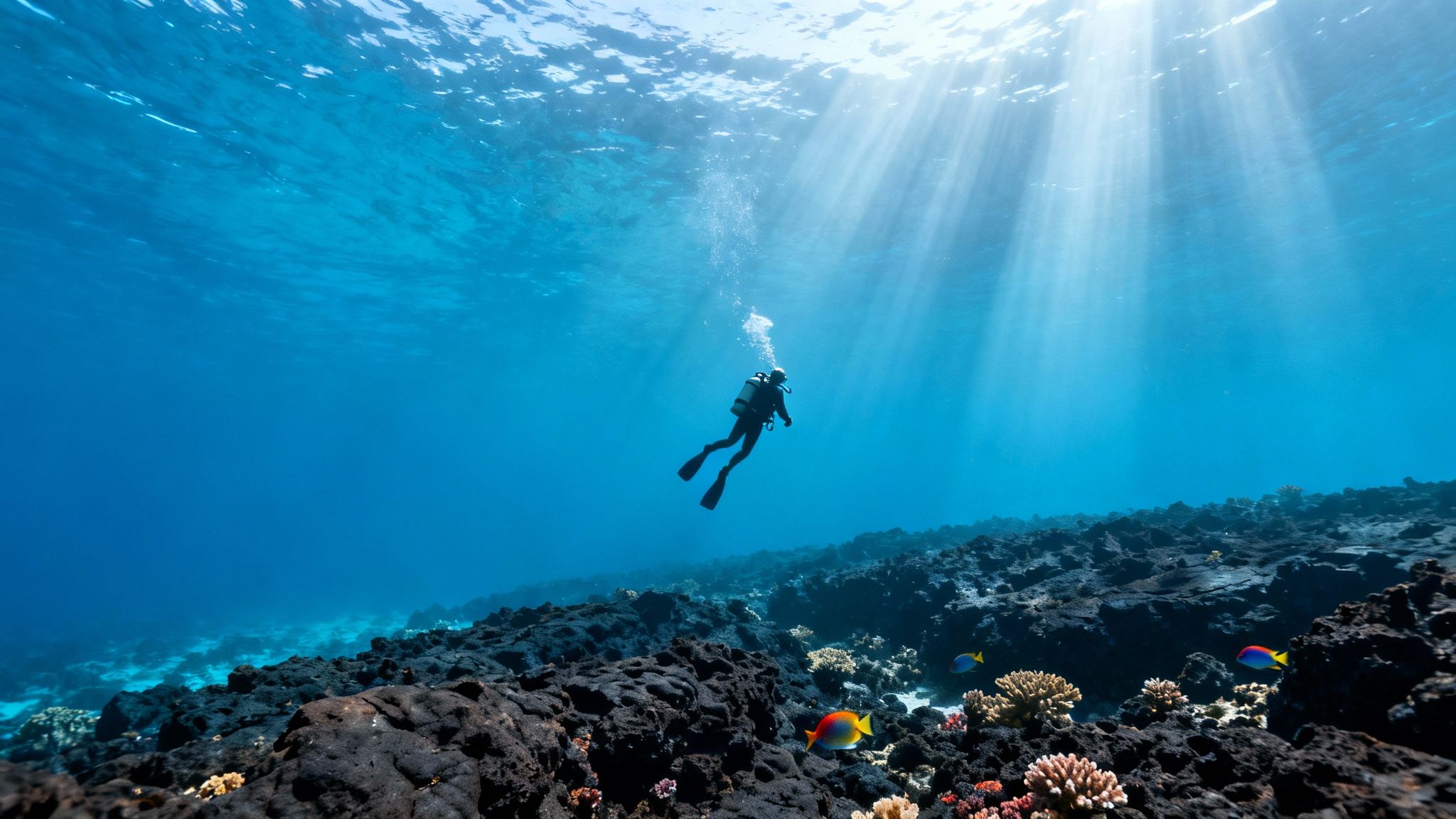
So, what’s Kona’s secret? It all comes down to geography. The sheer size of the Mauna Loa and Hualalai volcanoes acts as a massive shield, protecting the Kona side of the island from the powerful trade winds that batter the rest of Hawaii.
The result is incredibly calm, predictable water nearly every day of the year. This makes it a fantastic place for divers of all stripes, from fresh-off-the-boat beginners to seasoned pros. Visibility is often out of this world, frequently topping 100 feet. It really feels like you're flying.
An Underwater Volcanic Wonderland
The island’s volcanic history has created an underwater playground unlike any other. Forget boring, sandy bottoms. Kona is all about structure and drama.
- Lava Tubes and Caverns: We get to explore incredible swim-throughs and archways formed by ancient lava flows. These formations are magnets for marine life seeking shelter.
- Pristine Coral Reefs: The reefs here are some of the healthiest in the entire state, absolutely packed with vibrant corals and colorful fish.
- Dramatic Drop-offs: Sheer underwater cliffs plunge into the deep blue, attracting bigger pelagic species cruising by in the open ocean.
This unique volcanic seascape is the foundation for an incredibly rich and diverse ecosystem. A huge number of the critters we see are endemic, meaning you can only find them right here in Hawaiian waters. You can learn more about what makes this place so special by reading about the unique aspects of diving in Kona.
To give you a quick snapshot, here are some of the standout experiences you can expect.
Big Island Diving Highlights At A Glance
| Dive Experience | Best For | Key Feature |
|---|---|---|
| Manta Ray Night Dive | All skill levels | World-famous, close-up encounters with gentle giants. It's a must-do. |
| Blackwater Dive | Advanced divers | A surreal night dive in the deep ocean to see bizarre bioluminescent life. |
| Lava Tube Exploration | Intermediate to advanced divers | Navigating unique underwater caves and archways formed by volcanoes. |
| Pristine Reef Dives | All skill levels | Exploring some of Hawaii's healthiest coral gardens, full of endemic fish. |
These are just a few of the adventures that make diving here truly unforgettable.
Of course, the headliner for most visitors is the world-famous Manta Ray Night Dive. This isn't just a dive; it's a spectacle. With an 85-90% manta ray sighting rate on our trips, it's about as close to a guaranteed magical experience as you can get. It’s on every diver’s bucket list for a reason.
Consider this guide your personal introduction to that incredible underwater world. We’re here to show you the best of the Big Island and make sure your dives with Kona Honu Divers are nothing short of amazing.
Experiencing the Manta Ray Night Dive
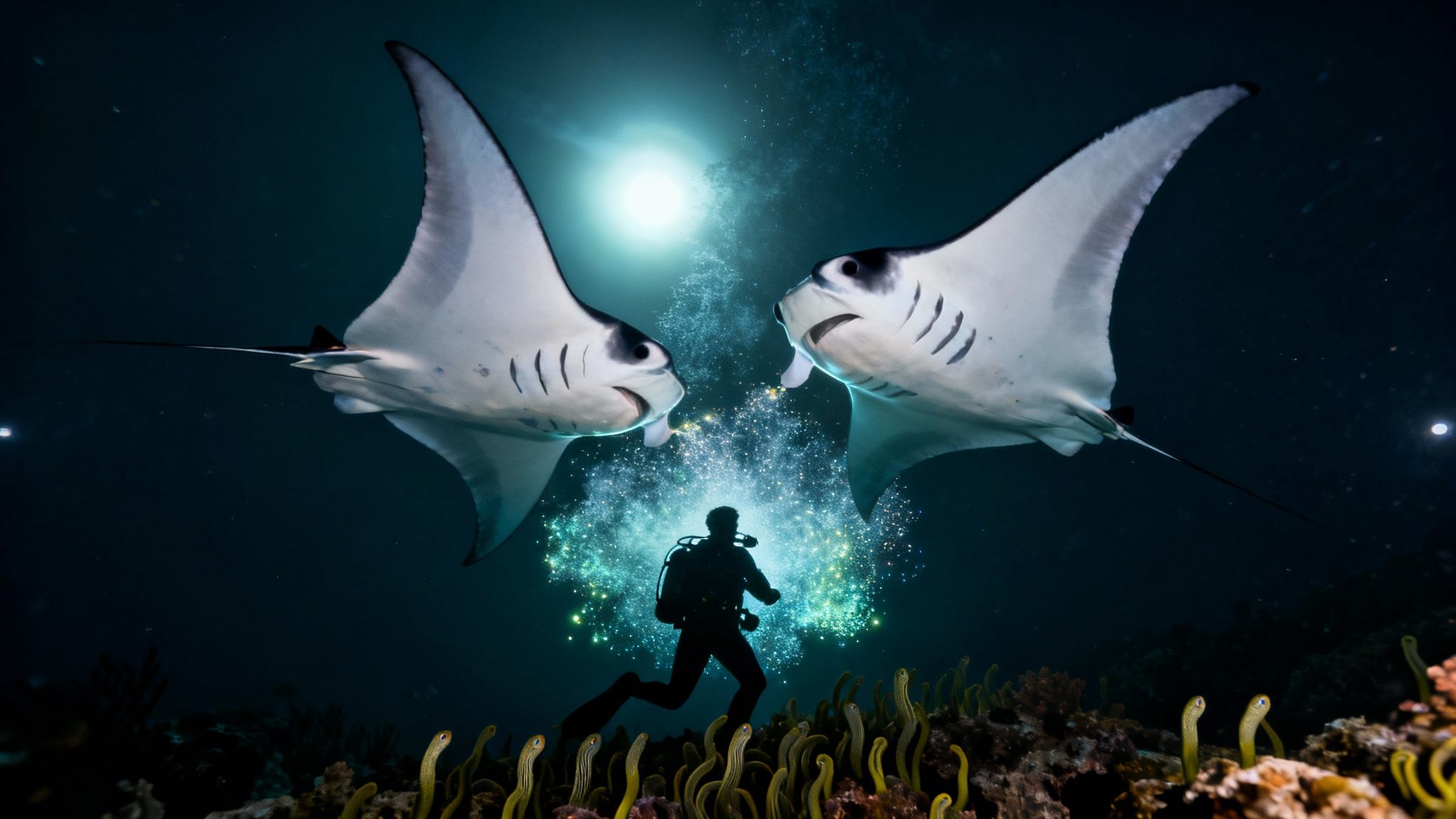
If there's one dive that defines the Big Island, this is it. The Manta Ray Night Dive isn't just a dive; it's an underwater ballet, a true once-in-a-lifetime experience that puts Kona on the map.
Picture this: you descend into the warm, dark Pacific just after sunset. Your guides carefully place powerful, upward-facing lights on the ocean floor, creating a brilliant stage that cuts through the darkness. This beacon is an irresistible invitation for plankton, the tiny organisms that are the lifeblood of the ocean.
Before long, the stars of the show make their grand entrance. Out of the darkness, majestic manta rays appear, some with massive wingspans stretching over 12 feet. They swoop and glide, performing effortless barrel rolls just inches over your head in a silent, mesmerizing feeding frenzy. It's a surreal and deeply humbling encounter that you'll never forget.
Why Garden Eel Cove is the Superior Choice
You can see mantas at a couple of spots, but they are not all created equal. Here at Kona Honu Divers, we only take our divers to Garden Eel Cove (also known as Manta Heaven), and we have very good reasons for it. This location is superior because it’s more protected, which creates a better, more consistent experience for both divers and the mantas.
The protected nature of Garden Eel Cove often means calmer water and better reefs. Less surge and current allow you to relax and simply soak in the incredible show unfolding in the site’s natural amphitheater, which provides a better viewing area.
The site itself is a natural amphitheater on the ocean floor. We set up our lights in what we call a "campfire," letting divers settle in a semi-circle around the main light source. This arrangement gives everyone a front-row seat without getting in the way of the mantas. The result is a controlled, respectful, and breathtakingly close experience. You can read more about this amazing encounter in our guide to the Big Island Manta Ray Night Snorkel.
What to Expect on Your Dive
We’ve designed the whole trip for maximum awe and minimum impact on these gentle giants. It's a two-tank charter that kicks off with a beautiful twilight dive on the reef as the sun is setting. This first dive is a great way to get comfortable and watch the reef's inhabitants transition from their day to night routines.
After a surface interval watching the last bit of daylight disappear, you’ll gear up for the main event. Here’s a quick rundown of how it works:
- The Descent: You’ll follow your guide down to a sandy viewing area at about 35 feet.
- Finding Your Spot: Your guide will help you find a place to settle in around the central light box, often holding onto a rock for stability.
- The Show Begins: As the mantas arrive, they’ll start swooping and gliding directly overhead to feed on the plankton concentrated in the beams of light.
- Observation: Your only job is to stay still, breathe, and witness the magic. These graceful creatures will often come within inches of your mask.
This isn’t just about ticking a box on a dive list; it’s about forming a profound connection with one of the ocean's most magnificent animals. Kona Honu Divers provides a safe, expert-led journey into their world that will stay with you forever.
Exploring Kona’s Top Underwater Landscapes
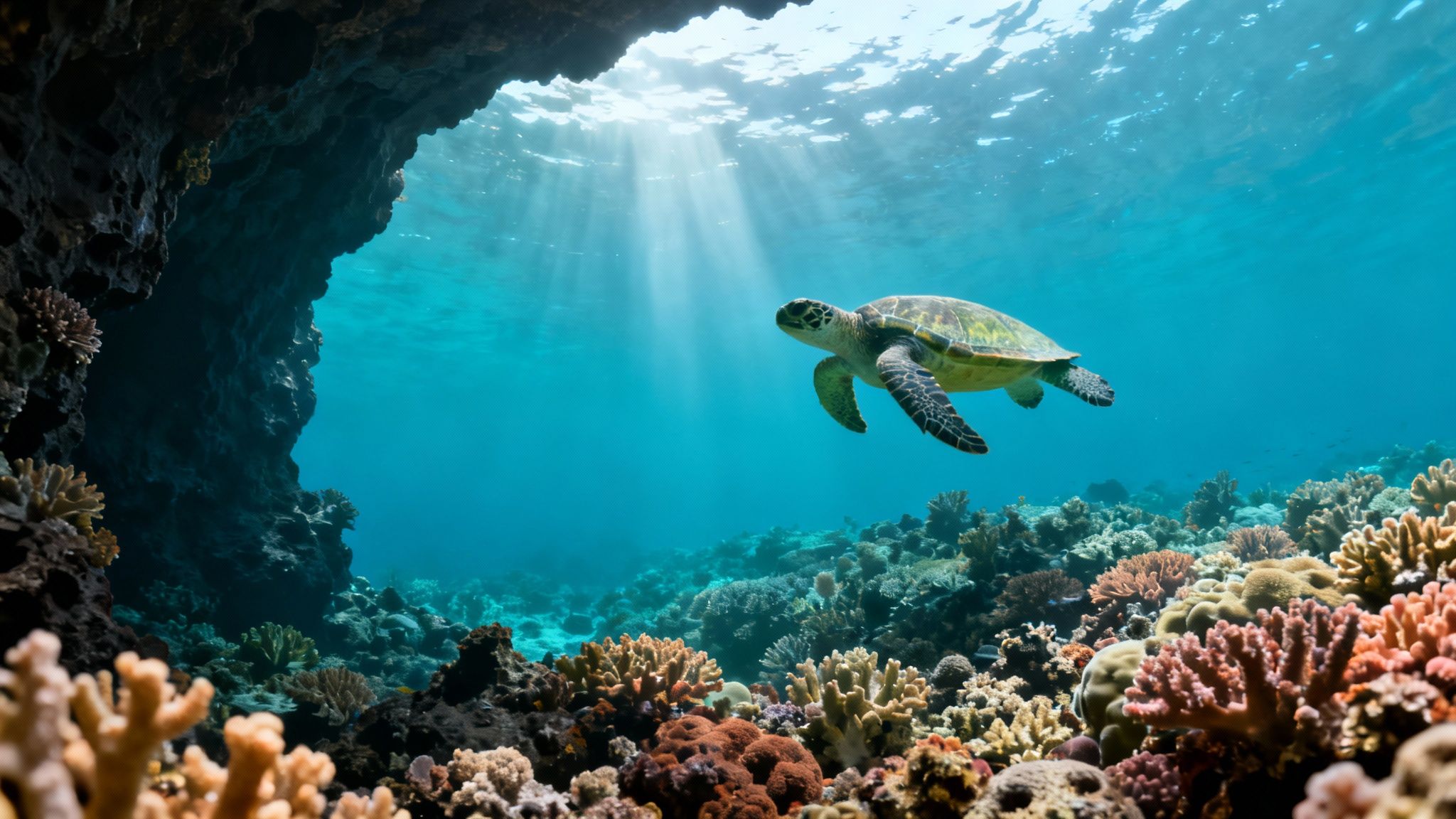
Sure, the Manta Ray Night Dive gets all the headlines—and for good reason—but don't let it overshadow the rest of what the Kona coast has to offer. The real magic of Big Island scuba diving is its sheer variety. Each site tells a different story, one written in ancient lava flows and brought to life with vibrant coral.
Beyond the world-famous manta spectacle, you'll discover a treasure trove of underwater environments, from peaceful coral gardens to dramatic volcanic archways. It’s this diversity that keeps divers returning year after year; there’s always something new to see.
Kealakekua Bay: A Protected Paradise
If there's one crown jewel of Kona diving, it’s Kealakekua Bay. This isn't just another pretty spot—it's a legally protected Marine Life Conservation District. That designation means fishing is forbidden, allowing the bay's coral reefs and fish populations to flourish in a way you rarely see elsewhere. It’s a pristine sanctuary and one of the absolute premier scuba diving sites on the island.
So, what does that protected status mean for your dive?
- Pristine Coral Gardens: You’ll be swimming over some of the healthiest, most colorful coral in all of Hawaii. It’s absolutely teeming with life.
- Abundant Marine Life: The bay is a bustling metropolis for endemic fish, Hawaiian green sea turtles (honu), and playful spinner dolphins who are frequent visitors.
- Exceptional Visibility: Because the bay is so sheltered from wind and currents, the water is often incredibly clear. It's a photographer's dream.
The calm conditions and stunning beauty make Kealakekua Bay perfect for everyone, from newly certified divers finding their fins to seasoned pros who appreciate what a truly thriving reef looks like.
Diving Through Volcanic History
You can feel the raw power of the Big Island’s volcanoes, and that's just as true underwater. Many of Kona’s most exciting dive sites are defined by their dramatic lava formations, giving you a direct look into the island's fiery soul.
These sites are a playground for adventurous divers. Imagine descending into a massive lava tube, a natural tunnel carved out by molten rock centuries ago. As you swim through, sunlight streams in from openings in the ceiling, illuminating the cavernous space and the unique creatures that have made it their home.
These volcanic structures—the arches, caverns, and swim-throughs—are more than just cool geology. They create complex habitats that attract a completely different cast of characters, from shy octopuses hiding in crevices to whitetip reef sharks resting on the sandy floor.
Exploring these formations does require good buoyancy control, but the payoff is huge. It’s an unforgettable experience that connects you right to the island's geological heart—a totally different kind of Big Island scuba diving adventure.
Diverse Sites for Every Diver
The Kona coast truly has something for every diver. Whether you're into hunting for tiny critters or gazing out into the deep blue, there’s a site that will feel like it was made just for you.
For the macro-lovers out there, sites like Golden Arches or Suck 'Em Up are a must. Their ledges, caverns, and rubble patches are perfect hiding spots for frogfish, moray eels, and vibrant nudibranchs.
On the other hand, if you get a thrill from big, dramatic topography, sites with steep drop-offs like Au Au Crater or The Hive are where you want to be. The reef wall plummets into the deep, giving you a front-row seat to spot larger pelagic species like eagle rays or even sharks cruising by in the distance.
At Kona Honu Divers, we know these sites inside and out. Our expert guides can lead you to the hidden gems that make each dive special, and we always choose our locations based on the day's conditions and our divers' experience levels. Our goal is simple: to give you a safe, fun, and absolutely awe-inspiring day on the water.
Advanced Diving and Unique Kona Adventures
So, you've mastered your buoyancy and logged plenty of dives. You’ve seen beautiful reefs, but now you’re looking for that next-level experience—something truly different. Well, you've come to the right place. The Big Island scuba diving scene has a wild side, with adventures that feel like they're pulled straight from a nature documentary.
These aren't your average reef tours. We're talking about dives that demand skill and confidence but reward you with a look into the mysterious heart of the Pacific—a world most people never even know exists.
The Kona Blackwater Dive: A Journey into the Abyss
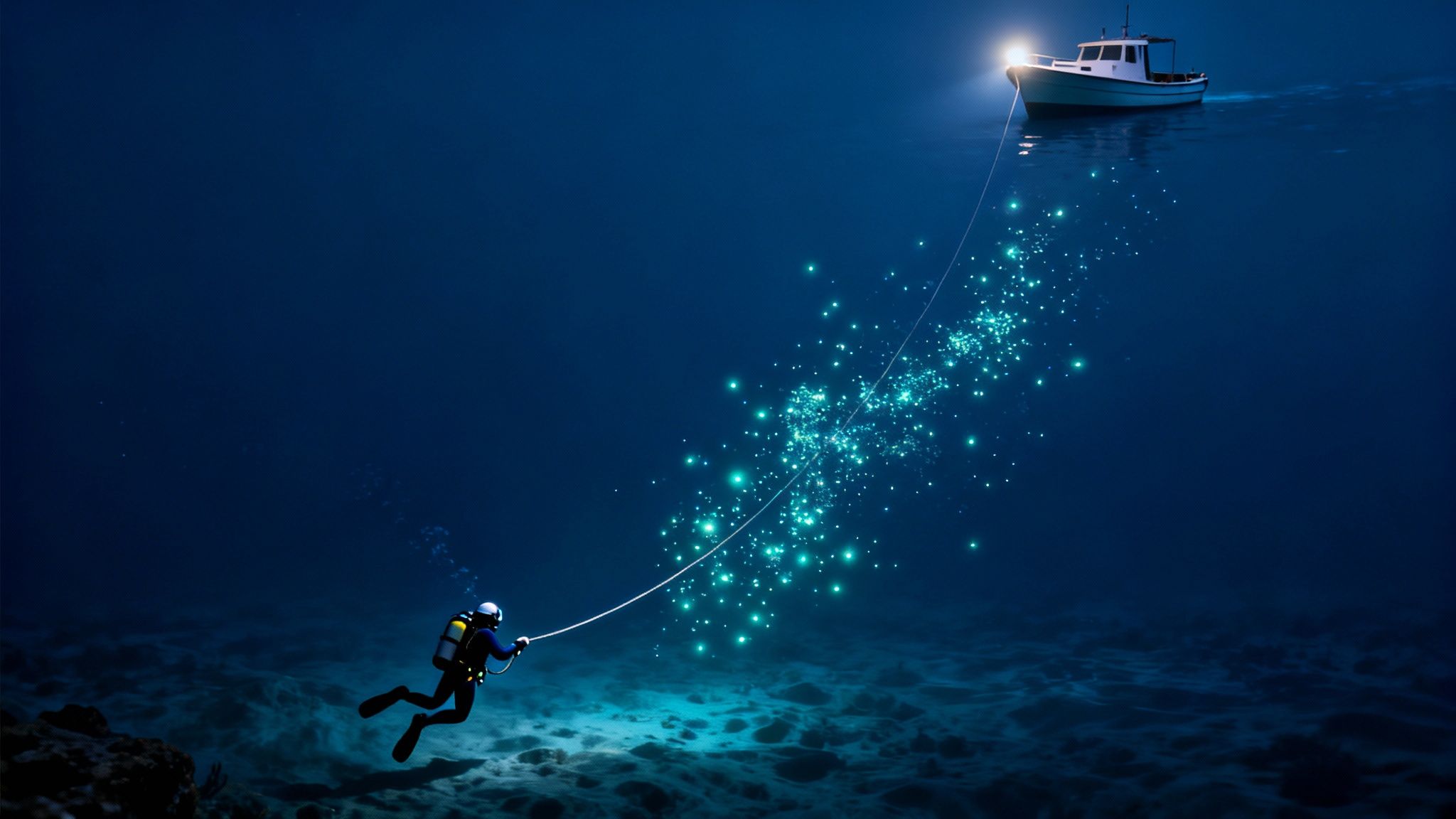
Imagine this: you're miles from shore, floating in the dead of night. Below you is nothing but thousands of feet of deep, dark ocean. You’re not at the bottom; you’re suspended in the water column, tethered to a boat, watching one of the planet's greatest secrets unfold.
This is the Kona Blackwater Dive. It's not a reef dive or a wreck dive. It's a chance to witness the largest vertical migration of life on Earth. Every single night, a universe of strange, alien-like creatures rises from the crushing depths to feed near the surface. You'll see bizarre larval fish, otherworldly jellyfish, and squid that pulse with their own light.
Many divers describe the experience as "floating in outer space." You hang weightlessly in the dark, watching a galaxy of tiny, often bioluminescent, life drift right past your mask. It's a humbling, almost surreal experience that photographers and marine life nerds live for.
Because you’re in deep, open water at night, this dive is strictly for experienced divers with rock-solid buoyancy control. If you’re ready for an adventure that will change how you see the ocean, find out more about this mind-blowing Kona Blackwater Dive.
Exploring Deeper Outer Reefs
The adventure doesn’t stop when the sun comes up. For advanced divers, Kona's coastline offers dramatic underwater landscapes with deeper outer reefs that are a world away from the shallower sites. These spots are reserved for divers with the training to handle greater depths and the occasional current.
Getting out to these remote locations means leaving the crowds behind and exploring pristine territory. Down here, you'll find healthier coral formations and a much better chance of encountering bigger pelagic animals.
- Dramatic Drop-offs: Picture sheer underwater cliffs that plunge into the deep blue, often patrolled by eagle rays and even sharks.
- Pristine Coral Systems: Explore untouched coral gardens that thrive in the deeper, cooler water, far from the reach of most divers.
- Unique Critters: The deep is home to species you just don't see in the shallows, meaning there's always something new to discover.
Dives like these require confidence and a real spirit of exploration. For those chasing truly epic underwater encounters, experiences like diving with sharks are the ultimate prize. Taking a premium advanced trip in Kona is about pushing your skills and being rewarded with sights you’ll never forget.
Here at Kona Honu Divers, we run specialized advanced dive tours for certified divers who are ready to see a side of Kona that very few will ever experience.
How to Plan Your Perfect Dive Trip
A truly unforgettable Big Island scuba diving trip doesn’t happen by accident—it’s built on smart planning. When you get the logistics dialed in ahead of time, all you have to worry about once you arrive is soaking in the incredible underwater world.
From picking the best time of year to choosing the right dive crew, we'll walk you through everything you need to know.
Kona's Diving Seasons
One of the best things about diving in Kona is that there’s no "off-season." The water is always inviting, typically hovering around a comfortable 75°F in the winter and warming up to a balmy 80°F in the summer. Thanks to the massive volcanoes shielding the coastline, the water is usually calm and clear, with visibility often stretching past 100 feet.
The biggest seasonal draw happens between December and March when the humpback whales arrive. It's a magical time. You’ll see them breaching from the boat, and once you descend, you can often hear their haunting songs echoing through the water—a truly humbling experience.
Below is a quick cheat sheet for what to expect throughout the year.
Kona Diving Conditions By Season
| Season | Water Temp (°F) | Typical Visibility | Marine Life Highlights |
|---|---|---|---|
| Winter (Dec-Mar) | 75-77°F | 80-100+ ft | Humpback whales, whale sharks, dolphins, manta rays. |
| Spring (Apr-Jun) | 76-78°F | 100+ ft | Calmest conditions, great for photography, peak reef fish activity. |
| Summer (Jul-Sep) | 79-81°F | 100+ ft | Warmest water, tiger shark sightings more common, manta rays. |
| Fall (Oct-Nov) | 78-80°F | 80-100+ ft | Excellent visibility, uncrowded dive sites, great for all marine life. |
No matter when you visit, you're in for a treat. The resident pods of spinner dolphins and majestic manta rays are here year-round, so you really can't go wrong.
Choosing Your Dive Style: Boat vs. Shore Diving
One of the first calls you’ll have to make is how you want to get in the water. The Kona coast offers fantastic options for both shore and boat diving, and each has its own vibe.
Shore diving is perfect for divers who love convenience and flexibility. Sites like "Two Step" are super accessible and teeming with life right in the shallows, making it easy to pop in for a quick dive and see plenty of turtles and reef fish. The trade-off? You’re limited to spots you can walk to, and navigating the lava rock entries can be a little tricky.
Boat diving, on the other hand, is your golden ticket to Kona's most spectacular underwater realms. The truly epic sites—the pristine coral gardens of Kealakekua Bay, the intricate lava tube swim-throughs, and the world-famous manta and blackwater dives—are only reachable by boat.
Opting for a professional boat charter isn't just about getting to the best spots; it’s about the whole experience. A good crew handles all the heavy lifting, knows exactly where to go based on the day's conditions, and provides critical safety oversight. It’s hands-down the most efficient and rewarding way to see the best of what Kona has to offer. You can explore a variety of these professionally guided diving tours.
Selecting the Right Dive Operator
The dive operator you choose can make or break your entire vacation. You're not just looking for a boat ride; you need a team with a top-notch safety record, expert guides who know the reefs like the back of their hand, and a genuine passion for the ocean.
Here in Kona, Kona Honu Divers has built a reputation for setting that standard.
Their commitment to small groups means you're never just a number on a roster. You get a personalized, safe experience every time. Plus, their custom-built dive boats are designed for comfort, with easy water entries and exits that make the whole day feel effortless and fun.
But don't just take our word for it—see what other divers have to say.
Preparing Your Gear
Packing for a dive trip is a familiar ritual for any diver. While Kona Honu Divers offers excellent, well-maintained rental gear, there's nothing like the comfort and reliability of your own equipment.
Here’s a quick checklist to run through before you zip up your bags:
- Certification Cards: The one thing you absolutely can't forget!
- Logbook: To capture the memories from every amazing dive.
- Dive Computer: Your most important piece of safety equipment.
- Mask, Snorkel, and Fins: A perfect fit makes all the difference underwater.
- Wetsuit: A 3mm full suit is just right for Kona's temperatures year-round.
- Reef-Safe Sunscreen: Protect your skin and our delicate coral at the same time.
- Camera: You’re going to want to capture the incredible things you'll see.
If you’re certified, definitely consider diving on Enriched Air Nitrox. It can help extend your no-deco time and leave you feeling less tired between dives, letting you maximize your underwater adventure. Most operators, including us, offer nitrox fills.
Of course, planning a trip also means thinking about the budget. To get a clear picture of the costs involved, check out our guide on how expensive scuba diving is in Hawaii.
With a little prep work done, you're all set for the dive trip of a lifetime.
Your Big Island Diving Questions, Answered
Let's tackle some of the most common questions we get from divers planning their trip. Getting these details sorted out ahead of time means you can spend less time worrying and more time looking forward to the incredible underwater world waiting for you in Kona.
Do I Need to Be Certified to Scuba Dive?
This is a big one, and the answer is a classic "yes and no."
To join the vast majority of our boat dives exploring Kona's world-class sites, you absolutely need to be certified. It’s all about safety. Certification ensures you have the essential skills to dive comfortably, manage your gear, and handle different situations underwater, making the experience safe and enjoyable for everyone.
But what if you're not certified? Don't worry, you haven't missed the boat! We offer a fantastic program called the Discover Scuba Dive. It's a non-certification experience where you'll learn the basics from a PADI professional and take your first breaths underwater in a calm, shallow reef environment. It's the perfect way to see if diving is for you.
And for the famous Manta Ray Night Dive, we also have an amazing snorkeling option that gives you a stunning, front-row seat from the surface.
What’s the Best Time of Year to Dive in Kona?
Honestly, the best thing about diving in Kona is that it’s spectacular all year round. There’s really no "off-season." The water is always inviting, hovering around a comfortable 75°F in winter and warming up to a balmy 80°F in the summer.
Visibility is another major plus, often stretching out beyond 100 feet. It’s like diving in an aquarium.
While other parts of Hawaii can get hit with big swells in the winter (December to March), the Kona coast is sheltered by our massive volcanoes, keeping the waters remarkably calm. Plus, winter brings an incredible bonus: humpback whales. You might see them breaching from the boat during a surface interval or, if you're really lucky, hear their haunting songs echoing through the water while you dive.
Can I Dive from the Shore on the Big Island?
You bet. The Big Island has some excellent shore diving, and it's a great option if you love having flexibility and easy access. Spots like "Two Step" at Honaunau Bay are famous for their bathtub-calm entries and are teeming with life like green sea turtles and colorful reef fish.
However, it's really important to know that boat diving and shore diving are two completely different ballgames.
Many of Kona's most dramatic and iconic dive sites—the intricate lava tubes, pristine offshore reefs, and the specific locations for the Manta and Blackwater Dives—are completely out of reach from the shore.
Hopping on a boat with a professional operator like Kona Honu Divers is the only way to get to these premier spots. We handle all the logistics and our expert guides know exactly where to find the hidden gems, ensuring you see the absolute best of what Kona has to offer.
What Marine Life Can I Expect to See Besides Manta Rays?
While the mantas absolutely deserve their celebrity status, the sheer diversity of life here is staggering. The reefs are buzzing, and many of the critters you'll meet are found nowhere else on Earth.
Here’s a little taste of what you can expect on a typical dive:
- Hawaiian Green Sea Turtles (Honu): These gentle giants are a guaranteed and always welcome sight on Kona's reefs.
- Spinner Dolphins: It's common to see pods of them playing in the boat's wake or cruising by in the distance.
- Vibrant Reef Fish: Prepare for a kaleidoscope of endemic species, from schools of milletseed butterflyfish to colorful parrotfish and the tiny Hawaiian cleaner wrasse.
- Eels and Octopuses: If you look closely into the reef's nooks and crannies, you're almost certain to spot a moray eel peeking out or a well-camouflaged octopus.
And depending on the day and a bit of luck, you might also find whitetip reef sharks snoozing on sandy patches, a squadron of eagle rays gliding past, or even a rare frogfish hiding in plain sight. The incredible variety is what makes every single dive a new adventure.
Ready to dive into the crystal-clear waters of Kona? Kona Honu Divers offers a wide range of diving tours designed to showcase the very best of the Big Island, from the world-famous Manta Ray Night Dive to thrilling advanced adventures.