
Welcome to the underwater world of the Big Island, a realm sculpted by volcanic fire and teeming with some of the most spectacular marine life you'll ever see. When people talk about Big Island scuba diving, they're usually dreaming of the Kona coast—and for good reason. Its unique underwater landscape of lava tubes, vibrant reefs, and incredibly clear, calm water makes it a global hotspot for divers.
This is where you'll find legendary adventures like the mesmerizing manta ray night dive and the otherworldly blackwater dives.
Your Guide to Big Island Scuba Diving Begins Here
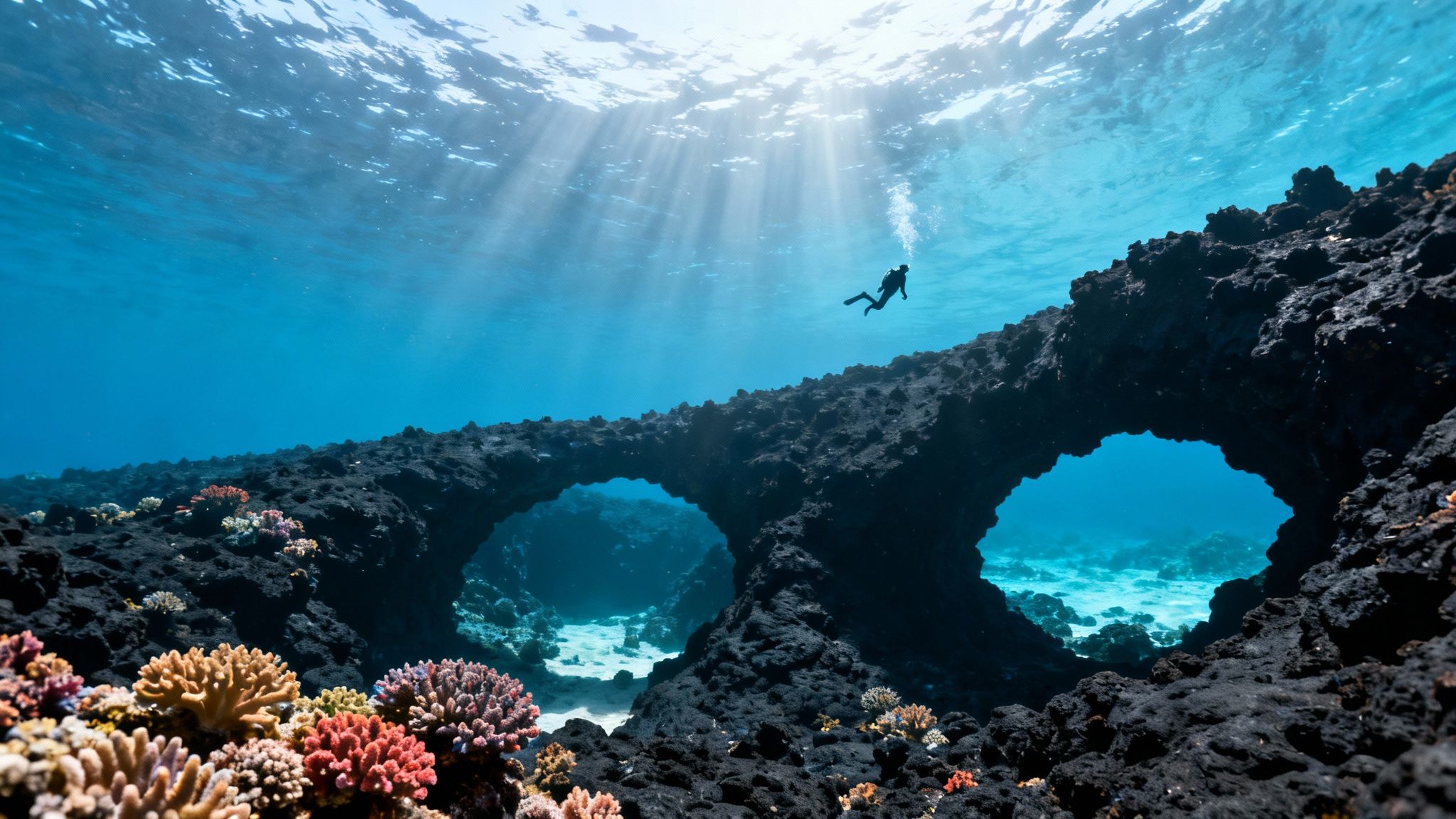
Think of this guide as your personal roadmap to an unforgettable underwater trip. The Big Island isn’t just another pretty spot in the tropics; it’s where raw geology and vibrant biology collide. The island's colossal volcanoes, Mauna Loa and Hualalai, create a massive natural shield, protecting the western Kona coast from the powerful trade winds that batter other parts of Hawaii.
The result? Year-round sea conditions that are exceptionally calm and clear, creating a perfect playground for divers of all skill levels. Down below, the world is a direct reflection of the island's fiery origins. You’ll navigate dramatic lava tubes, swim through intricate archways, and explore ancient lava benches that have blossomed into thriving coral reefs, providing a home for an incredible density of marine life.
What Makes Kona's Underwater World Unique
The sheer diversity of life along the Kona coast is something special. That dark volcanic rock provides the perfect anchor for coral to grow, which in turn supports a dizzying array of reef fish, invertebrates, and bigger ocean visitors. On any given dive, you might encounter:
- Hawaiian Green Sea Turtles (Honu): These gentle giants are a common and beloved sight, often seen resting on the reef or cruising gracefully past you.
- Endemic Fish Species: A huge number of fish here are found nowhere else on Earth, like the brilliant yellow tang and the intricately patterned ornate butterflyfish.
- Unique Topography: Exploring the underwater lava formations feels like touring a submerged volcanic park. Every dive reveals new caves, arches, and canyons to explore.
This potent mix of calm seas, amazing visibility, and dramatic underwater scenery has rightfully earned the Big Island its reputation as a world-class diving destination. The Kona coast alone hosts around 100,000 certified scuba dives each year, attracting people from all over the globe. It's a reputation built over decades, with some of the first dive operations getting their start back in the 1960s and 70s. You can discover more insights about Big Island's diving history to see how it all began.
So, whether you're dreaming of floating alongside giant manta rays or exploring sun-drenched coral gardens, your adventure starts now. This guide will walk you through everything you need to know, from planning your trip to choosing the best Big Island scuba diving tours, making sure your experience is nothing short of incredible.
Why Kona Is Hawaii’s Premier Diving Destination
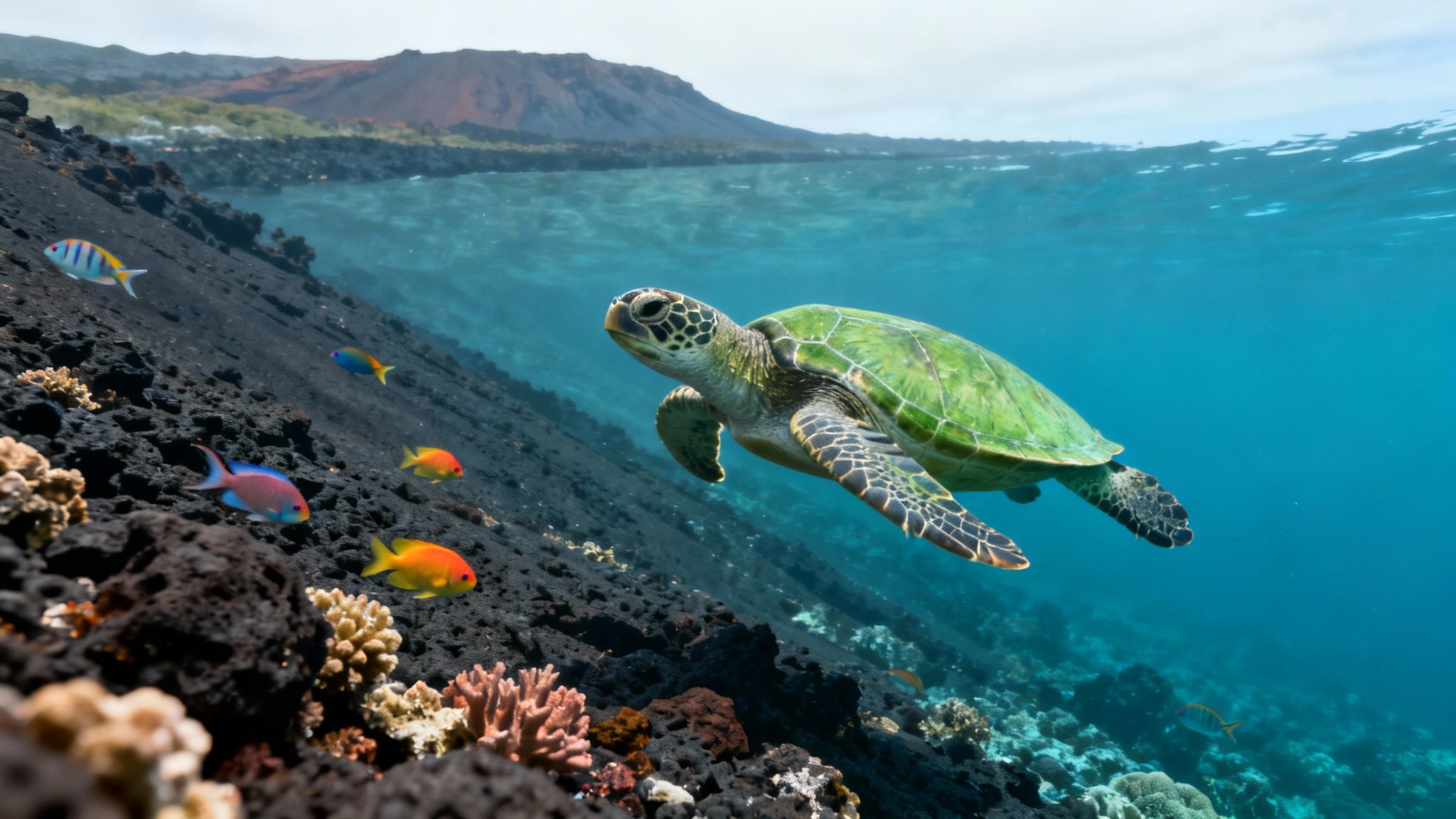
When experienced divers talk about Hawaii, the conversation almost always turns to the Kona coast. There's a good reason for that, and it's all about geography. The sheer size of the volcanoes Hualālai and Mauna Loa creates a massive natural barrier, shielding the island's western shores from the powerful trade winds that can stir up the water elsewhere.
This protective shield, known as a "rain shadow," is what makes Kona a diver's dream. It results in consistently calm, clear waters where visibility often pushes past 100 feet. These tranquil conditions have allowed a stunningly complex reef ecosystem to thrive on the submerged volcanic terrain, making Big Island scuba diving an experience like no other.
Down here, the underwater world is a direct result of the island’s fiery origins. Ancient lava flows have sculpted a dramatic seascape of arches, deep canyons, and intricate lava tubes, all now home to a breathtaking variety of coral. It's this unique structure that supports such an incredible density of marine life.
A Sanctuary for Abundant Marine Life
The sheer amount of life packed into the Kona coast is staggering. The calm, nutrient-rich waters are a magnet for everything from the smallest, most colorful reef fish to majestic giants from the deep blue.
Every dive feels like a new adventure, and here’s just a little of what you might see:
- Endemic Species: A huge chunk of the marine life here can't be found anywhere else on Earth. You'll want to keep an eye out for the milletseed butterflyfish and Hawaiian sergeant fish—true local celebrities.
- Honu (Hawaiian Green Sea Turtles): Seeing these gentle giants is practically a given. You'll often spot them resting peacefully on the reef or gliding effortlessly through the water.
- Pelagic Visitors: Because the deep ocean is so close to shore, you never know what might show up. Spinner dolphins are a common sight from the boat, and lucky divers might get a fly-by from eagle rays, sharks, or even migrating humpback whales during the winter months.
This perfect blend of pristine conditions and vibrant sea life has cemented Kona’s reputation as the heart of diving in Hawaii. This is where top-tier operators like Kona Honu Divers really shine, having perfected the art of showing divers this underwater wonderland. Their experienced crew and comfortable, modern boats make every trip safe, fun, and completely unforgettable.
Exploring the Kona coast is more than just another dive; it's an immersion into a protected ecosystem where volcanic geology and vibrant marine biology have created a spectacle you won't find anywhere else. You can learn more about what makes diving in Kona so unique in our detailed article.
The variety of dive experiences here means there’s something for everyone. You can explore sun-drenched coral gardens on a relaxed morning trip or head for deeper waters on an advanced charter—there's always a new corner of this aquatic paradise to discover. You can browse a variety of Kona diving tours to find the perfect adventure for your skill level and interests.
Ready to experience Hawaii's premier diving destination for yourself? Check tour availability below and secure your spot on an unforgettable underwater journey.
The Unforgettable Manta Ray Night Dive Experience
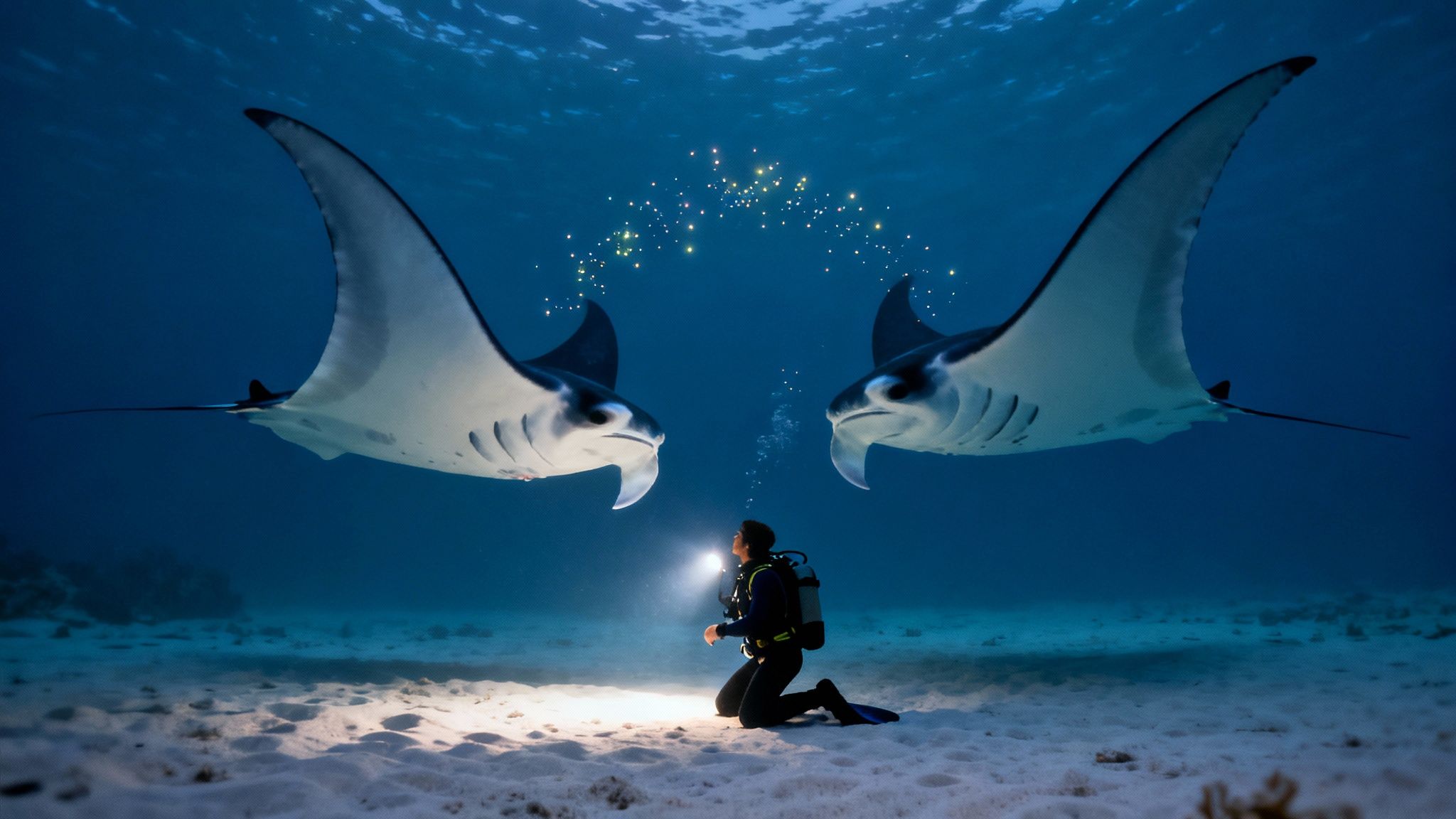
The manta ray night dive isn't just another entry in your logbook; it's a profound, almost spiritual encounter that easily ranks among the world's greatest underwater experiences. Imagine it: you descend into the warm, dark ocean as dusk settles, find a spot on the sand, and simply look up. Within minutes, giant, gentle creatures perform a silent, weightless ballet just inches above your head.
It’s an incredible spectacle, and it’s all made possible by a pretty simple, ingenious setup. We place powerful, upward-facing lights on the ocean floor. These lights act like a magnet for massive clouds of plankton, the microscopic organisms that are the foundation of the ocean's food web. For Kona's resident manta rays, this is an all-you-can-eat buffet. They glide gracefully into the light beams, mouths agape, somersaulting and swooping to filter their dinner from the water.
This unique feeding behavior creates a truly magical performance. You become a spectator in an underwater amphitheater, witnessing a natural phenomenon that is both absolutely thrilling and deeply peaceful at the same time.
Why Garden Eel Cove Is the Premier Choice
While you might hear about a couple of locations for the manta dive, one site stands out as the superior choice for delivering a consistently better and more comfortable experience: Garden Eel Cove. Its protected location shields it from open ocean swells, meaning calmer conditions year-round. This translates to a smoother boat ride and a more stable, enjoyable time in the water.
Furthermore, Garden Eel Cove features a large, sandy "campfire" area specifically for divers. This designated viewing zone allows everyone to kneel comfortably on the ocean floor, creating an unobstructed, front-row seat to the action without damaging any delicate coral. The result is a better viewing area where everyone gets an amazing view as the mantas feed directly overhead. The reefs surrounding the viewing area are also healthier and more vibrant, making the initial twilight dive a spectacular experience in its own right.
The Manta Ray Night Dive is an ethical and sustainable wildlife encounter. Strict guidelines are in place to protect these gentle giants, including a firm "no touching" policy. The mucous coat on a manta's skin is vital for its health, and human touch can damage it, leaving the ray vulnerable to infection.
An Iconic and Reliable Encounter
The manta ray night dive off the Kona coast is one of the world's most iconic scuba experiences for a good reason—it’s incredibly reliable. We have a healthy resident population of manta rays here, so sightings are very frequent. Dive reports consistently show high success rates, with frequent sightings of over 20 mantas at sites like Hoʻona Bay, where the rays feed alongside garden eels and Heller's barracuda. You can learn more about the dive's high success rate and what makes it so special.
Here at Kona Honu Divers, we’ve perfected this amazing adventure, and we run one of the most acclaimed manta ray dive tours on the island. Our experienced crew ensures a safe, respectful, and absolutely awe-inspiring trip from start to finish. If there's one dive you absolutely must do on the Big Island, this is it.
Ready for a Challenge? Advanced and Unique Dives on the Big Island

Sure, the gorgeous reefs and famous manta ray dives are incredible for everyone, but the Big Island has a wilder side that calls to more seasoned divers. If you’ve got your certification and are itching for something more, the underwater topography here offers some seriously thrilling opportunities. We're talking about dives that push your skills and show you the raw, dynamic power of this volcanic island.
Picture yourself navigating through intricate underwater archways and exploring ancient lava tubes so deep that sunlight barely kisses the entrance. These spots demand sharp navigation and pinpoint buoyancy control, but the reward is seeing a side of Kona that most divers miss. Deeper sites can also bring gentle currents, which act like a highway for larger pelagic species—keep your eyes peeled for eagle rays, sharks, and other visitors from the deep blue.
These advanced charters are built for divers who are confident in deeper water and more complex environments. If you’re looking to take your Big Island scuba diving trip to the next level, this is how you do it. At Kona Honu Divers, our Premium Advanced 2-Tank Trip is designed for exactly this kind of adventure.
The Kona Blackwater Dive: An Otherworldly Adventure
For the truly adventurous diver, one experience sits in a category all its own: the Kona Blackwater Dive. This isn’t just another night dive. It’s a trip to another dimension.
Here’s how it works: miles offshore, over thousands of feet of water, you drift in the black of night, connected to the boat by a tether. You are suspended in the deep, dark ocean.
As you hang there, you become a spectator to the largest migration of life on our planet. Every single night, an untold number of bizarre, beautiful, and alien-like creatures rise from the abyss to feed near the surface. Many are bioluminescent, putting on a light show that has to be seen to be believed. You’ll meet strange jellies, shimmering squid, and tiny larval creatures that look like they were designed for a sci-fi movie.
People often call the blackwater dive "inner space exploration." It's a surreal, humbling experience that puts you face-to-face with an entire ecosystem that lives and breathes in the deep, open ocean.
This dive is an absolute must-do for photographers and anyone looking for a profoundly unique encounter. It demands excellent buoyancy and a cool head, making it an adventure for the bold. Given the unique setup, diving with a highly experienced operator is key. Kona Honu Divers helped pioneer this incredible experience, and our Blackwater Night Dive tour is a world-class trip that will completely change how you see the ocean.
If this sounds like your kind of adventure, you can learn more about the blackwater dive and find out what makes it so unforgettable. Trust me, it’s a dive that stays with you forever.
How to Plan Your Big Island Dive Trip
Putting together a dive trip to the Big Island is almost as much fun as the diving itself. A little bit of planning goes a long way in making sure your adventure is smooth, safe, and lines up perfectly with what you’re hoping to see.
The great news? Kona's sheltered coastline means you can find fantastic diving conditions pretty much any day of the year. That said, there are some subtle differences between the seasons that might help you pick the perfect time to visit.
Best Time to Dive the Big Island
Summer and early fall, from about June through October, usually offer the warmest water. We're talking a comfortable 82°F (28°C) and seas that are often as flat as glass. It’s a beautiful time to be in the water.
The winter months, from December through March, have their own special magic. While the water cools down a bit to around 76°F (24°C), you get something truly incredible in return: the chance to hear humpback whale songs underwater. There's nothing quite like hearing those haunting calls echo around you while you're exploring a reef.
Here’s a quick guide to help you decide when to book your trip.
Big Island Dive Season Planner
| Season | Water Temperature | Typical Conditions | Marine Life Highlights |
|---|---|---|---|
| Spring (Apr – May) | 77-79°F (25-26°C) | Calm seas, excellent visibility | Manta ray activity is high, start of turtle nesting season. |
| Summer (Jun – Oct) | 80-82°F (27-28°C) | Warmest water, typically very calm | Peak visibility, great for spotting smaller reef creatures. |
| Fall (Nov – Dec) | 78-80°F (26-27°C) | Conditions remain calm, pleasant water temps | Excellent manta ray encounters, start of whale season. |
| Winter (Jan – Mar) | 76-77°F (24-25°C) | Can have some surface chop, still very diveable | Prime time for hearing humpback whales underwater. |
No matter when you come, you're in for a treat. The "best" time really just depends on whether you prefer warmer water or the once-in-a-lifetime experience of hearing the whales.
What to Pack and Prepare
One of the biggest questions we get is about what gear to bring versus what to rent. For comfort and familiarity, most divers prefer to bring their own mask, dive computer, and regulator. We've got top-notch, well-maintained BCDs and fins for rent, which can save you a ton of hassle and money on airline baggage fees.
As for what to wear, a 3mm full wetsuit is perfect for most people during the warmer months. If you know you get cold easily, or if you're planning on winter dives or the Manta Ray Night Dive, a 5mm wetsuit is a smart move. It’ll keep you toasty and let you enjoy more time underwater.
Here’s a quick checklist of must-haves:
- Certification Cards: Can't go diving without them!
- Logbook: You’ll want to remember every incredible dive you do here.
- Reef-Safe Sunscreen: This is non-negotiable in Hawaii. It’s the law, and it’s critical for protecting our fragile coral reefs.
- Reusable Water Bottle: The Hawaiian sun is no joke—staying hydrated is super important.
Safety and Certification First
The dive community in Kona takes safety incredibly seriously, and that's a good thing. When managed by professionals, scuba diving has an outstanding safety record, especially when you compare it to other unguided water activities.
The numbers really tell the story. In Hawaii, there are around 100,000 certified scuba dives every year with very few incidents. On the flip side, snorkeling in Hawaii resulted in 206 fatalities between 2009 and 2018. During that same timeframe, scuba diving accounted for only 28 deaths, a testament to the rigorous training and professional oversight that's built into the sport. If you're interested, you can read the full research about Hawaii water activity safety for a deeper dive.
The single most important decision you'll make for your trip is choosing a certified, reputable dive operator. Their expertise isn't just about keeping you safe; it's about making your entire experience better by taking you to the right sites at the right time.
Of course, figuring out where you'll stay is another key piece of the puzzle. If a hotel isn't your style, you can always explore popular vacation rental locations to find the perfect home base for your dive adventures. Getting these details sorted out ahead of time is the first step toward a truly unforgettable trip.
Choosing the Right Dive Operator in Kona
With a whole string of dive shops dotted along the Kona coast, how do you even begin to pick one? It can feel like a tough choice, but honestly, it’s the single most important decision you'll make for your Big Island scuba diving trip.
A great operator can turn a good dive into a truly mind-blowing experience. The difference often comes down to a few simple things: small group sizes, genuinely experienced guides, well-maintained gear, and a deep-rooted commitment to both your safety and the health of the ocean.
Think of your dive operator as your personal guide to a world you can't visit on your own. You want a crew that’s as excited to be there as you are, not just someone going through the motions. That kind of passion is infectious and leads to better dive briefings, more attention in the water, and just an all-around more memorable adventure.
What Makes a Dive Shop Stand Out
The best shops always put the diver's experience first. That means keeping dive groups small so you don't feel like just another set of fins in a crowd. It also means they invest in their boats. A comfortable, modern vessel with thoughtful touches like warm showers and easy ways to get in and out of the water can make a huge difference in your day.
At Kona Honu Divers, we poured everything we know about what divers want into our custom-built boat, the Honu One. It was designed from the hull up with diver comfort and safety as the top priority. That focus, combined with our passion for great customer service, is why divers consistently give us stellar reviews.
You can learn much more about what to look for by reading our in-depth guide on how to choose a Kona dive shop.
A great dive operator doesn't just show you fish; they foster a connection to the ocean. Their commitment to marine conservation, respect for the wildlife, and dedication to safety are the hallmarks of a truly professional and ethical operation.
Ultimately, you're looking for a company that matches what you want out of a dive day—whether that’s maximum safety, comfort, or just pure fun. A great first step is to explore the different diving tours available. This will give you a feel for which operators offer the specific kinds of adventures you’re dreaming of, from relaxed morning reef dives to more advanced charters.
Comparing Reputations Transparently
Doing a little homework on a shop’s reputation is always a smart move. While we’re incredibly proud of the experience we provide at Kona Honu Divers, we know there are other great, respected companies in our local dive community.
We believe trust starts with transparency. That's why we're happy to include live reviews for a few of Kona's other well-regarded dive shops right here. This way, you can easily compare and see what fellow divers are saying.
Jack's Diving Locker Reviews
Big Island Divers Reviews
When you take a few minutes to research, you can book with confidence, knowing you’ve picked the perfect operator to make your Kona diving adventure unforgettable.
Your Big Island Scuba Questions, Answered
Got questions about diving on the Big Island? You're not alone. Here are some of the most common things we get asked, with straightforward answers to help you plan your perfect underwater adventure.
Do I Need to Be Certified to Dive in Kona?
Not at all! While you'll need an Open Water certification for most of our boat dives, you can absolutely get in the water and experience the magic without one. We have a fantastic program called Discover Scuba Diving.
Think of it as a "try before you buy" for diving. You'll learn the basics from a pro instructor in a quick skills session and then head out for a real, shallow dive under their expert guidance. It’s the perfect introduction to Kona's reefs, no experience necessary.
How Cold Is the Water? What Kind of Wetsuit Should I Pack?
You can leave the drysuit at home. Kona’s ocean stays wonderfully warm year-round. We typically see water temperatures hovering around 76°F (24°C) in the cooler winter months and warming up to a lovely 82°F (28°C) in the summer.
For most people, a standard 3mm wetsuit is the sweet spot—it gives you just enough warmth without restricting your movement. That said, if you know you get chilled easily or you're planning on joining the world-famous Manta Ray Night Dive, stepping up to a 5mm suit is a great idea for extra comfort.
Besides Manta Rays, What Else Will I See Down There?
The Kona coast is absolutely teeming with life! The mantas are incredible, of course, but the reefs here are like a bustling underwater city.
On pretty much any dive, you can count on seeing Hawaiian green sea turtles (our beloved honu) cruising by. Keep your eyes peeled for moray eels peeking out from their rocky homes and octopuses cleverly camouflaged against the reef. The sheer variety of colorful fish is staggering—butterflyfish, triggerfish, parrotfish, and so many more. And that's just underwater! From the boat, it's super common to be greeted by a pod of spinner dolphins. On deeper dives, you might even be lucky enough to spot eagle rays or whitetip reef sharks gliding through the blue.
Just How Safe Is It to Scuba Dive in Kona?
Kona is known for being an incredibly safe place to dive, thanks to our generally calm conditions and the high standards of local professional dive operators. When you dive with a reputable, certified crew, you're in very good hands.
Safety really boils down to two simple things: listen to your dive guide and always stay within the limits of your training. Do that, and your Big Island dive will be as safe as it is unforgettable.
Ready to see it all for yourself? The team here at Kona Honu Divers is passionate about sharing our incredible underwater world with you. Take a look at our full lineup of scuba diving tours and find the perfect adventure for your trip.