
Picture this: you're slowly descending into impossibly clear blue water, sunbeams piercing the surface and dancing across vibrant coral reefs and ancient lava tubes. This is the essence of Big Island scuba diving—an underwater realm born from volcanic fire and teeming with life. Along Kona’s sheltered coastline, divers can discover everything from peaceful coral gardens to unforgettable deep-water encounters.
Why Kona Is a World-Class Diving Destination
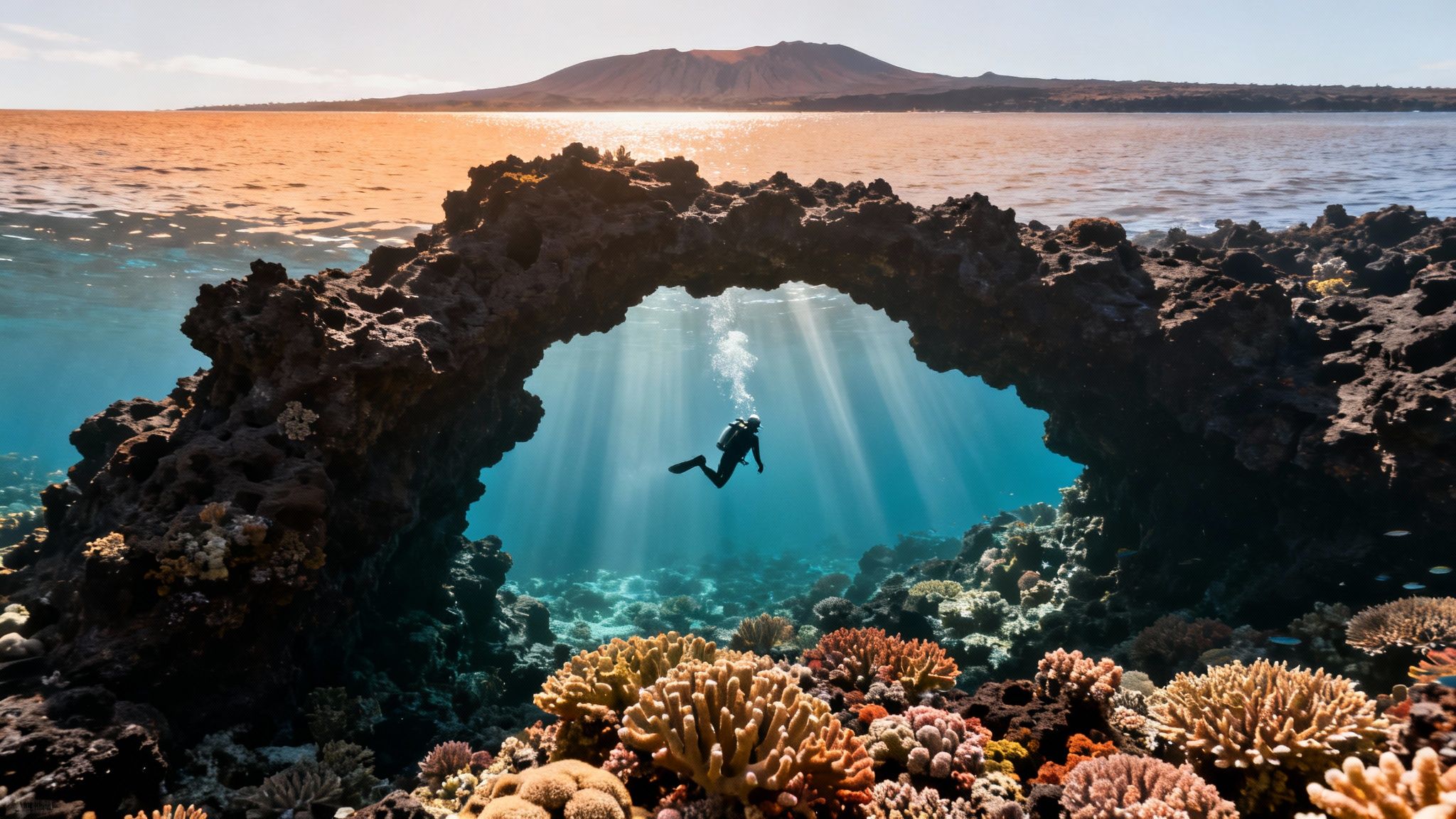
The Kona coast isn't just another pretty spot to go diving; it’s a submerged volcanic wonderland. Tucked in the protective shadow of the massive Mauna Loa and Hualālai volcanoes, the ocean here is consistently calm and clear, making it perfect for divers of every experience level. This incredible geological shelter is the secret to what is unique about diving in Kona.
That same volcanic history has sculpted an underwater landscape you won’t find anywhere else. You can navigate intricate lava tubes, glide through massive archways, and peer over dramatic drop-offs—all created by ancient lava flows that poured into the sea centuries ago. It's like exploring a national park where the main attractions are all underwater.
This one-of-a-kind topography sets the stage for some of the planet's most coveted dive experiences, including the world-famous Manta Ray Night Dive and the truly unique Kona Blackwater Dive.
Kona's Ideal Diving Conditions
But it’s not just the dramatic scenery that draws people here. The conditions are consistently fantastic, attracting tens of thousands of divers every year. In fact, estimates suggest that divers log over 100,000 recreational dives here annually, a number made possible by nearly perfect, year-round diving weather.
Kona’s legendary diving conditions are the foundation of its reputation. With average water temperatures holding steady at 24–27°C (75–80°F) and visibility often exceeding 30 meters (100 feet), it’s no surprise dive boats head out daily.
This incredible consistency means you can plan a trip for virtually any time of year and be confident you'll have an amazing time in the water. To give you a better idea of what to expect, here’s a quick snapshot of the typical conditions along the Kona coast.
Kona Diving Conditions At A Glance
This table breaks down the typical water conditions you can expect to find when diving on the Kona coast throughout the year.
| Metric | Typical Range |
|---|---|
| Water Temperature | 75°F – 80°F (24°C – 27°C) |
| Visibility | 80 – 100+ feet (24 – 30+ meters) |
| Currents | Mild to moderate |
| Wave Height | Generally calm, protected from major swells |
As you can see, the water is warm, the visibility is excellent, and the seas are calm—the perfect recipe for an unforgettable dive adventure.
Experiencing the Famous Manta Ray Night Dive
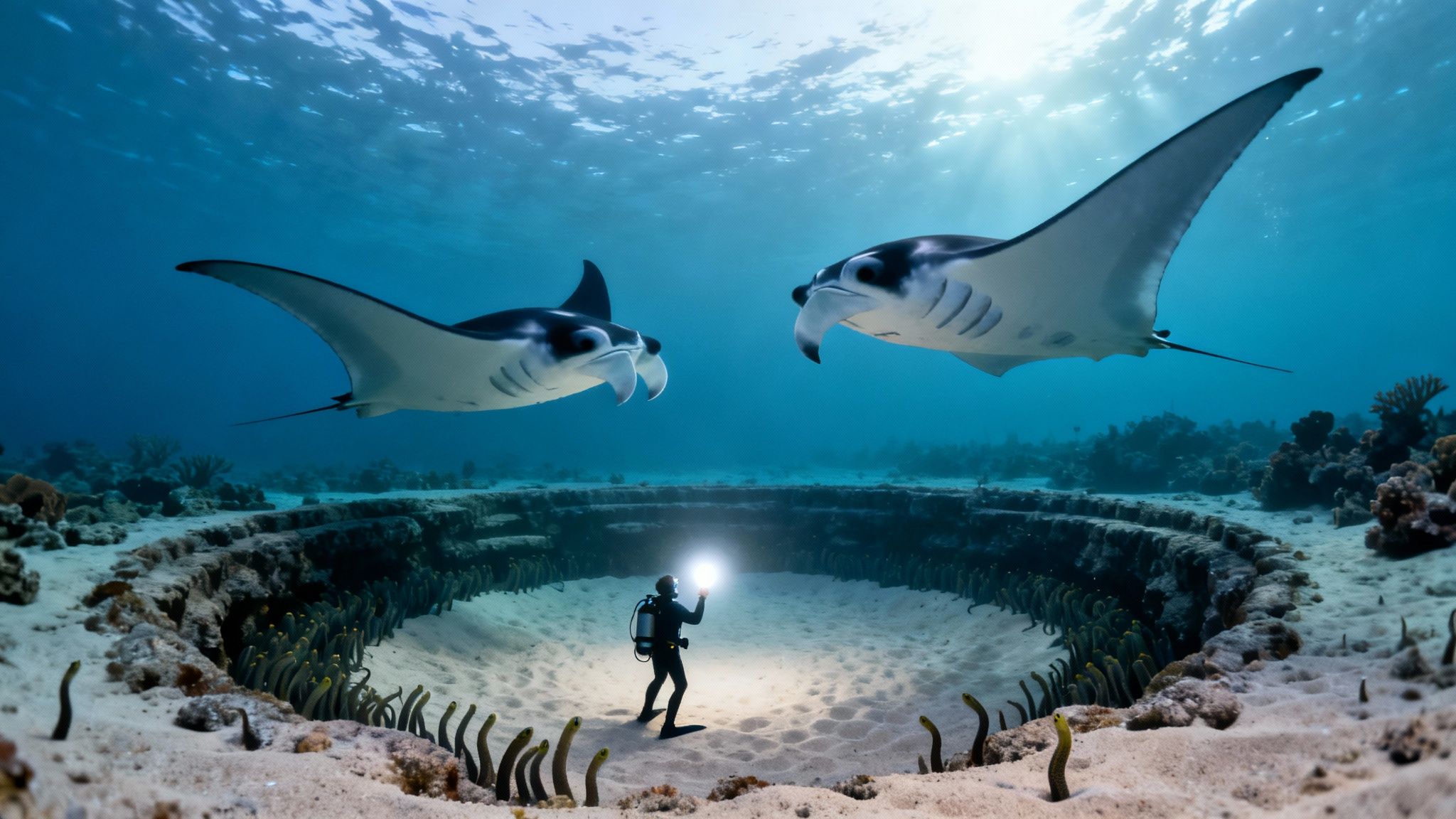
The Kona Manta Ray Night Dive isn't just another item to tick off your list—it's a silent, underwater ballet that truly lives up to its world-class reputation. Picture yourself kneeling on the ocean floor, watching majestic rays with wingspans reaching 16 feet glide just inches over your head. It's a signature Big Island scuba diving experience that you'll be talking about for the rest of your life.
So, how does it all happen? We set up powerful, submerged lights that attract swarms of plankton, the mantas' favorite meal. As the plankton cloud together in the beams, the gentle giants arrive for dinner, performing graceful barrel rolls and effortless swoops. You get a front-row seat to one of nature's most incredible spectacles.
Why Garden Eel Cove Is the Superior Manta Dive Site
You’ll hear about a couple of different spots for this dive, but one consistently delivers a better, more comfortable experience: Garden Eel Cove. Known affectionately as "Manta Heaven," this site just has a few key advantages that make it the premier location for a manta ray dive tour.
For starters, its position offers natural protection from open-ocean swells, which means calmer, more predictable conditions. That’s a huge plus for any dive, but especially one that happens after dark.
The real magic of Garden Eel Cove is its unique underwater layout. Divers settle into a large, sandy patch that feels like a natural amphitheater. This gives you a stable, comfortable spot with a perfect, unobstructed view looking up at the show.
This setup is great for divers, but it’s also better for the reef. By keeping everyone in one sandy area, we prevent accidental damage to the fragile corals. And because the surrounding reef is healthier, your descent and ascent are full of life, making the entire dive memorable from start to finish. It just creates a better environment for everyone—divers and mantas included.
If you want to dive deeper into what makes this trip so special, check out our complete guide to the Kona manta ray night dive.
What to Expect on Your Manta Ray Adventure
Your trip kicks off with a boat ride as the sun dips below the horizon. On the way out, the crew will give you a full briefing on safety and, most importantly, how to interact with the mantas. The golden rule is simple: observe only. Never, ever touch these incredible animals.
Once we arrive, you’ll descend with your guide and find a spot on the sand. When everyone is settled, the lights flip on, illuminating the water column and signaling that the show is about to begin. It usually only takes a few minutes before the first graceful shadow appears, then another, and another.
The Kona coast is famous for the sheer consistency of these encounters. Many local operators report seeing mantas on 85–90% of their trips, with some nights bringing out more than 30 different individuals. It’s an awe-inspiring and humbling experience to be so close to these gentle giants.
Ready to see the silent ballet for yourself? Kona Honu Divers offers an expertly guided 2-Tank Manta Ray Night Dive tour that puts you in the best seat in the house.
Exploring Kona’s Best Daytime Dive Sites
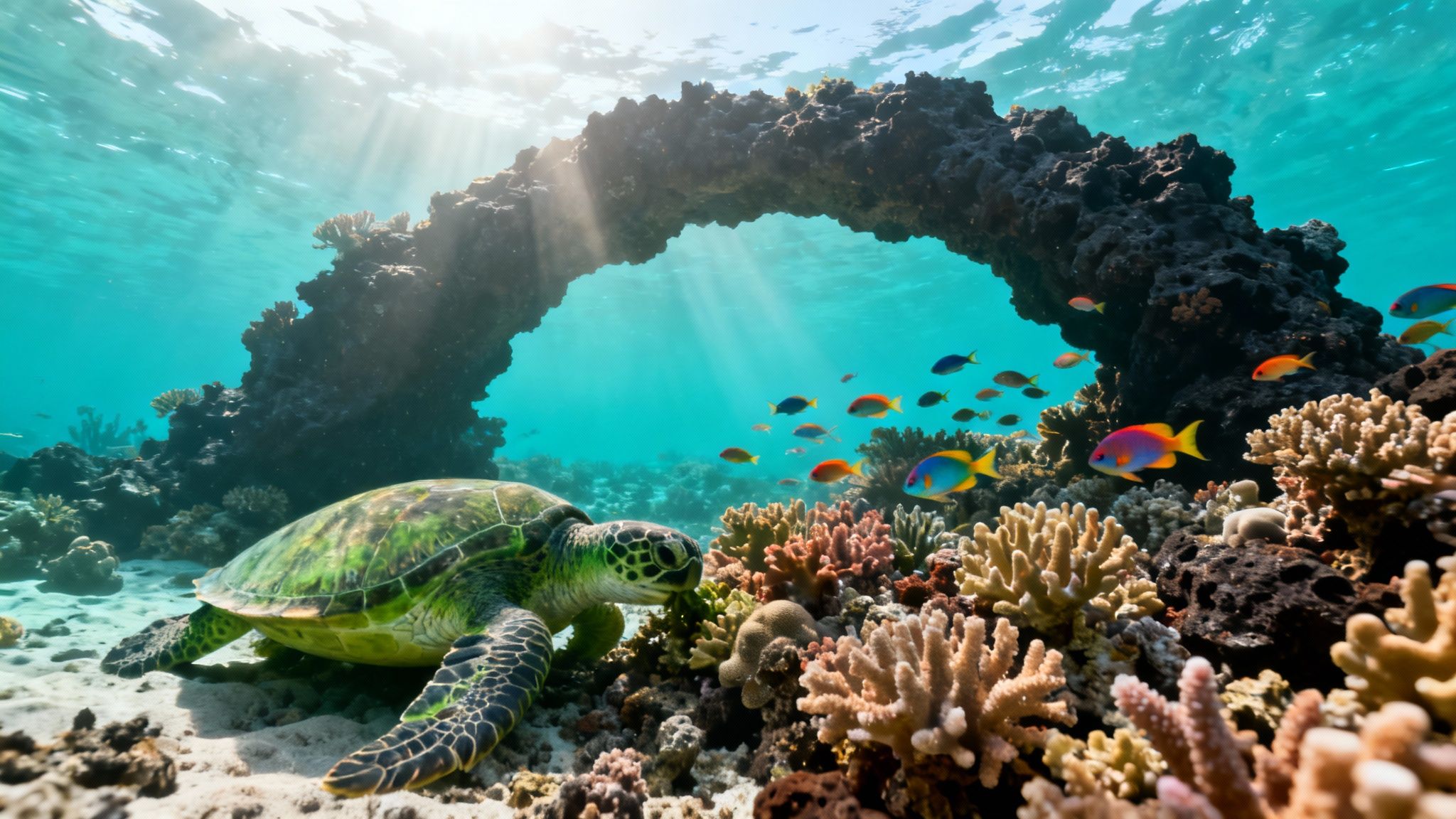
While the giant mantas own the night, the Kona coast truly comes alive by day. The sun illuminates a world bursting with color and activity, revealing the incredible volcanic topography that makes Big Island scuba diving so unique. With over 50 named dive sites just a quick boat trip from Honokōhau Harbor, you're spoiled for choice.
Our typical morning charter is a 2-tank boat dive, giving you the chance to explore two completely different underwater landscapes. One dive might have you navigating ancient lava tubes, the next floating over a bustling coral garden. Our experienced crew always picks the day's sites based on conditions, hunting for the best visibility and calmest waters to make sure you have an amazing time.
See what fellow divers are saying about their daytime adventures with Kona Honu Divers:
Must-See Dive Sites for Every Diver
Kona's underwater world is incredibly varied. There’s something special for brand-new divers and salty veterans alike, with each site offering a unique window into Hawaii's marine ecosystem.
Here are a few of the spots our divers ask for again and again:
- Golden Arches: This is a photographer's paradise. You'll swim through stunning arches and caverns formed by ancient lava flows, where dramatic sunbeams cut through the water. The site gets its name from the massive schools of yellow tang that glow against the dark volcanic rock.
- Turtle Pinnacle: A classic "cleaning station" and a must-see. Hawaiian green sea turtles, or honu, gather here to let surgeonfish nibble algae and parasites off their shells. It’s an incredible chance to witness a real-life symbiotic relationship in action.
- Pawai Bay: As a protected Marine Life Conservation District, Pawai Bay is home to some of the healthiest coral on the coast. Its calm, clear waters are perfect for all skill levels and are packed with fish species you can only find here in Hawaii.
What You Can Expect to See
Diving in Kona feels different because it is different. Hawaii's remote location in the Pacific has led to a stunning amount of unique marine life. You’re not just seeing beautiful fish; you’re seeing fish that evolved to live here and nowhere else.
The underwater world of Kona is a living gallery of evolution. Approximately 25% of the fish species you'll encounter are found only in Hawaiian waters, making every dive a unique opportunity to see rare and beautiful creatures in their natural habitat.
Beyond the clouds of colorful reef fish, you’ll find moray eels peeking from their rocky homes, octopuses masterfully camouflaging themselves, and graceful eagle rays soaring past in the blue. It’s common for pods of dolphins to greet the dive boat on the way out. And if you’re here in the winter, you’ll hear the haunting songs of humpback whales echoing underwater—a truly unforgettable experience.
Ready to explore these underwater marvels for yourself? Kona Honu Divers offers a range of expertly guided diving tours that showcase the very best of Kona’s daytime dive sites.
Ready for a Challenge? Big Island’s Advanced Dives Await
For divers with a few hundred hours in their logbooks, the Big Island offers adventures that go way beyond the beautiful sunlit reefs. These aren't just dives; they're true expeditions that demand skill, confidence, and a thirst for the unknown. In return, they reward you with sights very few people will ever get to see.
Two experiences stand out for advanced divers: the world-famous Kona Blackwater Dive and deep reef charters that explore the island's hidden structures.
These are not your everyday recreational dives. You’ll need an Advanced Open Water certification at the bare minimum, along with rock-solid buoyancy and a cool head for diving in the dark or at depth. These trips are built for divers who are ready to see what lies beyond the coral gardens and explore the deeper, wilder side of Kona’s underwater world.
Journey into the Abyss: The Kona Blackwater Dive
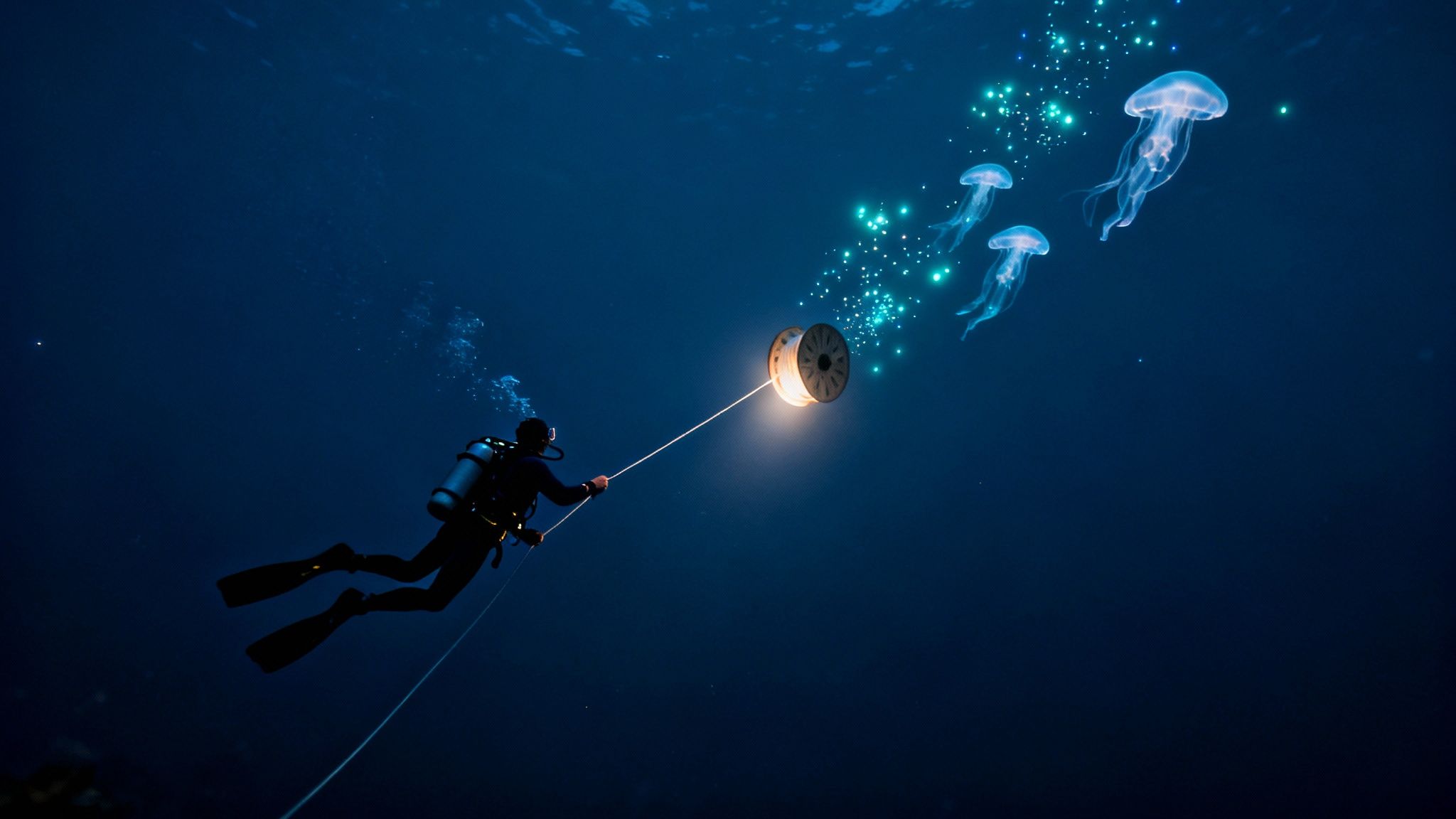
Picture this: you're floating in the deep, dark blue of the open ocean, miles from shore, suspended over thousands of feet of water. Your only connection to the world is a line to the boat, a single point of light in an inky universe. This is the Kona Blackwater Dive, and it feels less like scuba diving and more like a space walk.
It’s easily one of the most unique night dives on the planet.
You're there to witness the largest migration on Earth, a nightly vertical trek where bizarre and beautiful deep-sea creatures rise from the abyss to feed. You’ll see life forms that look like they’re straight out of a science fiction movie: tiny larval fish, glowing squids, and countless bioluminescent critters that pulse and sparkle like living constellations.
The Blackwater Dive is a mind-bending experience. Your entire world shrinks to the beam of your flashlight, revealing alien-like creatures that live their whole lives in the crushing pressure of the deep, rarely, if ever, seen by human eyes.
This dive is all about procedure and staying calm. Divers drift at about 50 feet (15 meters), clipped onto a downline from the boat. Your guide sticks close, pointing out the strange organisms that float by and making sure everything runs smoothly. It’s a humbling, unforgettable adventure. To see this otherworldly spectacle for yourself, check out the Kona Blackwater Dive tour.
Explore Deeper Reefs and Lava Formations
Beyond the blackwater, advanced divers can explore Kona’s deeper, more complex underwater landscapes. Our premium advanced charters take small groups of experienced divers to sites that are simply off-limits for standard tours. These dives often take you down to depths approaching 100-130 feet (30-40 meters), where you’ll find dramatic drop-offs, intricate lava tube systems, and pristine, untouched reefs.
On these trips, you might explore remote pinnacles rising from the seafloor, which act as magnets for big pelagic species like sharks, jacks, and even eagle rays. You’ll get to navigate through massive archways and swim-throughs that demand precise buoyancy control. Because these spots see so little traffic, the coral is often healthier and the marine life is more abundant and less shy.
If you're a certified diver looking for a more challenging and rewarding day in the water, an advanced dive charter is exactly what you’re looking for.
How to Plan Your Perfect Dive Trip
An incredible Big Island scuba diving adventure doesn’t start when you hit the water—it begins with smart planning. Getting the logistics right is what turns a good vacation into a truly unforgettable one, and this guide will walk you through everything you need to know. We’ll cover when to visit, what certifications you’ll need, and how to choose the right crew to guide your underwater explorations.
The best part about timing your trip? There really is no "off-season" for diving in Kona. Thanks to the massive volcanoes shielding the coast, our waters stay calm and clear all year. You can expect the water temperature to hover in a very comfortable 75-80°F (24-27°C) range whenever you visit. If you come in the winter (December-March), you’ll even be treated to the sound of humpback whale songs on your dives. But if you're after the absolute glassiest conditions, summer is your best bet.
Choosing the Right Dive Operator
Picking your dive operator is single-handedly the most important decision you'll make for your trip. They aren’t just driving the boat; they're your guides, your safety crew, and your ticket to seeing the best of Kona's underwater world. You'll want to find a company that focuses on small groups, has a flawless safety record, and is staffed by a crew that's both knowledgeable and genuinely passionate about what they do.
Here at Kona Honu Divers, we've built our entire operation around those very principles. Our goal is to give you a premium, comfortable experience where you feel like a welcome guest, not just another body on the boat. It’s why so many of our divers come back to us year after year, and it’s reflected in our top-rated reviews.
We also believe in adding real value to your dives. That’s why we offer perks like free nitrox for certified divers on our morning charters. It lets you extend your bottom time and helps you feel less tired after a dive—a win-win. Kona’s dive tourism has been carefully managed for decades, which means well-established safety protocols are in place to protect both divers and marine life. Formal reviews, like the state's 2013 Manta Ray Viewing Boating Operations and Safety Assessment, helped standardize best practices as the activity grew, showcasing a deep commitment to a safe and sustainable industry. You can discover more about how these practices evolved through years of observation and refinement.
Certifications and Gear Considerations
Before you click "book," take a second to make sure your certification level lines up with the dives you want to do.
- Open Water Diver: This is your passport to most of Kona's stunning daytime reefs.
- Advanced Open Water Diver: You’ll need this for deeper sites and for our specialty trips, especially the Kona Blackwater Dive.
- Nitrox/Enriched Air Certification: We highly recommend this one. It lets you take advantage of our free nitrox offer and get more time exploring the reefs.
When it comes to gear, you’ve got options. A lot of divers like to bring their own “personal” items—mask, snorkel, fins, and dive computer—just for the comfort and familiarity. That's great! But if you want to pack light, renting high-quality, well-maintained gear from us is a fantastic, hassle-free alternative. We have a full range of top-of-the-line equipment ready to go. And if you're working on a budget, our guide on how expensive is scuba diving in Hawaii can help you plan your costs.
A quick checklist can make packing and planning much smoother. Here are the key things to think about before you head to the Big Island.
Big Island Dive Trip Checklist
| Category | Key Considerations | Pro Tip |
|---|---|---|
| Certifications | Bring physical or digital proof of all your certifications. | Advanced Open Water and Nitrox certifications will open up the most dive opportunities. |
| Dive Gear | Decide whether to bring your own or rent. Masks and computers are the most common items people bring. | If renting, let us know your sizes ahead of time to make your first day a breeze. |
| Personal Items | Pack reef-safe sunscreen, a reusable water bottle, a hat, sunglasses, and a light jacket for the boat. | A dry bag is a lifesaver for keeping your phone, keys, and towel dry on the boat. |
| Booking | Book your dives in advance, especially for popular trips like the Manta Night Dive, as spots fill up fast. | Ask about early diver discounts or multi-day packages to get the best value. |
Thinking through these details ahead of time is the secret to a seamless adventure filled with one incredible underwater moment after another. For another perspective on planning thrilling water adventures, consider this ultimate guide for river rafting.
Ready to book your spot on the boat?
Common Questions About Big Island Diving
It’s totally normal to have a few questions pop up as you get ready for a Big Island scuba diving adventure. We get them all the time! To make sure you feel confident and excited before you even zip up your wetsuit, we’ve answered some of the most common ones we hear from our divers.
What Kind of Marine Life Will I See?
The Kona coast is absolutely packed with life, a true showcase of the Pacific's incredible biodiversity. While no two dives are ever the same, you can bet on meeting some amazing underwater locals.
- Honu (Hawaiian Green Sea Turtles): You can't miss them! These gentle giants are a signature sight, often seen napping on the reef or gracefully cruising past.
- Endemic Fish: This is really special—a staggering 25% of the fish species here live nowhere else on the planet. Keep an eye out for the vibrant milletseed butterflyfish or the hard-working Hawaiian cleaner wrasse.
- Eels: Peek into the reef's nooks and crannies, and you’ll likely be greeted by a moray eel. We see all sorts, but the whitemouth moray is a particularly striking one.
- Rays: Besides our world-famous manta rays, it's not uncommon to spot spotted eagle rays soaring through the blue on our daytime trips. They are elegance in motion.
- Spinner Dolphins: We often get a personal escort from a pod of these playful acrobats on the way to the dive site. If you're really lucky, you might even get a fly-by underwater.
What Is the Water Temperature and Will I Need a Wetsuit?
One of the best things about diving in Kona is how consistent and comfortable the water is all year. You can expect the temperature to hover in a balmy 75-80°F (24-27°C) range, no matter the season.
So, do you need a wetsuit? That really comes down to your personal comfort.
Most divers are perfectly happy in a 3mm full wetsuit or shorty. It's just enough to keep the chill off during a two-tank dive, and it adds a layer of protection from the sun and any accidental bumps against the reef.
If you know you get cold easily, you might prefer a 5mm suit, especially if you plan on diving for several days in a row. Don't worry about packing one; we have high-quality rentals ready for you.
Are There Beginner-Friendly Dive Sites?
Absolutely! Kona is one of the best places in Hawaiʻi to get certified or simply knock the dust off your fins if it's been a while. Many of our most stunning dive sites are located in calm, protected bays with virtually no current.
Here are a few spots that are perfect for new divers:
- Pawai Bay: This protected area is like diving in an aquarium. It's shallow, calm, and features incredibly healthy coral gardens just swarming with fish.
- Kamakahonu Beach (King Kam Beach): Right in the heart of town, this spot offers a super-easy, sandy entry into protected water, making it ideal for those first few breaths underwater.
- Turtle Pinnacle: As the name suggests, this shallower site gives you a front-row seat to a turtle "cleaning station." It’s a fantastic and rewarding dive for any skill level.
We always group our divers based on experience, so you can be sure you'll be in a group that matches your pace. Our goal is for everyone to feel safe, have fun, and fall in love with Kona's underwater world.
Ready to take the plunge? Let Kona Honu Divers show you the best diving the Big Island has to offer. Take a look at our complete lineup of diving tours and find the perfect trip for you.