
Picture this: you descend into impossibly clear, blue water. Below you, ancient lava flows have solidified into dramatic underwater canyons and archways, now carpeted with vibrant coral. This is what Big Island scuba diving is all about, and the Kona coast is its crown jewel. Tucked away from the trade winds by the island's colossal volcanoes, the water here stays exceptionally calm and clear nearly all year long.
Why Kona Is a World-Class Diving Paradise

The Big Island's volcanic origins didn't just shape the land; they created a spectacular underwater playground. We're talking submerged lava tubes you can swim through, massive arches, and old craters that have transformed into thriving habitats. It’s this blend of raw geology and one of Hawaii's healthiest reef systems that makes every single dive feel like a true exploration. There’s a lot more to the story, which you can dive into right here: what is unique about diving in Kona.
And we're not the only ones who think so. The Big Island has firmly cemented its spot as a top-tier dive destination, attracting over 150,000 dive tourists every year. With more than 50 dive shops and charters running trips, the island facilitates around 100,000 certified dives annually. It's a testament to the magic of places like Kealakekua Bay, where visibility can easily top 100 feet.
Iconic Underwater Experiences
Kona isn't just about pretty reefs; it's home to some of the most unique and sought-after dives on the planet. The world-famous Manta Ray Night Dive is a true bucket-list item, an underwater ballet where giant mantas swoop and glide through your light beams as they feed. It’s absolutely mesmerizing.
If you're after a completely different kind of thrill, the Kona Blackwater Dive is it. You'll drift in the deep, open ocean at night and watch as bizarre and beautiful bioluminescent creatures rise from the abyss. It’s like a trip to another planet.
These signature dives are just the beginning. The biodiversity here is off the charts:
- Vibrant Coral Gardens: Packed with colorful reef fish, shy octopuses, and countless moray eels.
- Unique Volcanic Formations: No two dive sites are the same, thanks to the lava tubes, arches, and craters.
- Abundant "Honu": You’d be hard-pressed not to see a Hawaiian green sea turtle on your trip.
- Pelagic Visitors: Keep an eye out in the blue for passing dolphins, eagle rays, and the occasional shark.
Choosing Your Kona Dive Adventure
With so much incredible diving to be had, your choice of guide can make or break the experience. A top-notch operator like Kona Honu Divers stands out for a reason. We're all about small groups, deep local knowledge, and an absolute commitment to safety. Our crew makes sure every diver, whether it’s your first ocean dive or your thousandth, gets the attention they deserve.
A great first step is to explore Kona Honu Divers' diving tours and see what sparks your interest. To really get why Kona is so special, it’s also important to support the marine and ocean conservation efforts that work to protect this fragile paradise for generations to come.
Experiencing the Famous Manta Ray Night Dive
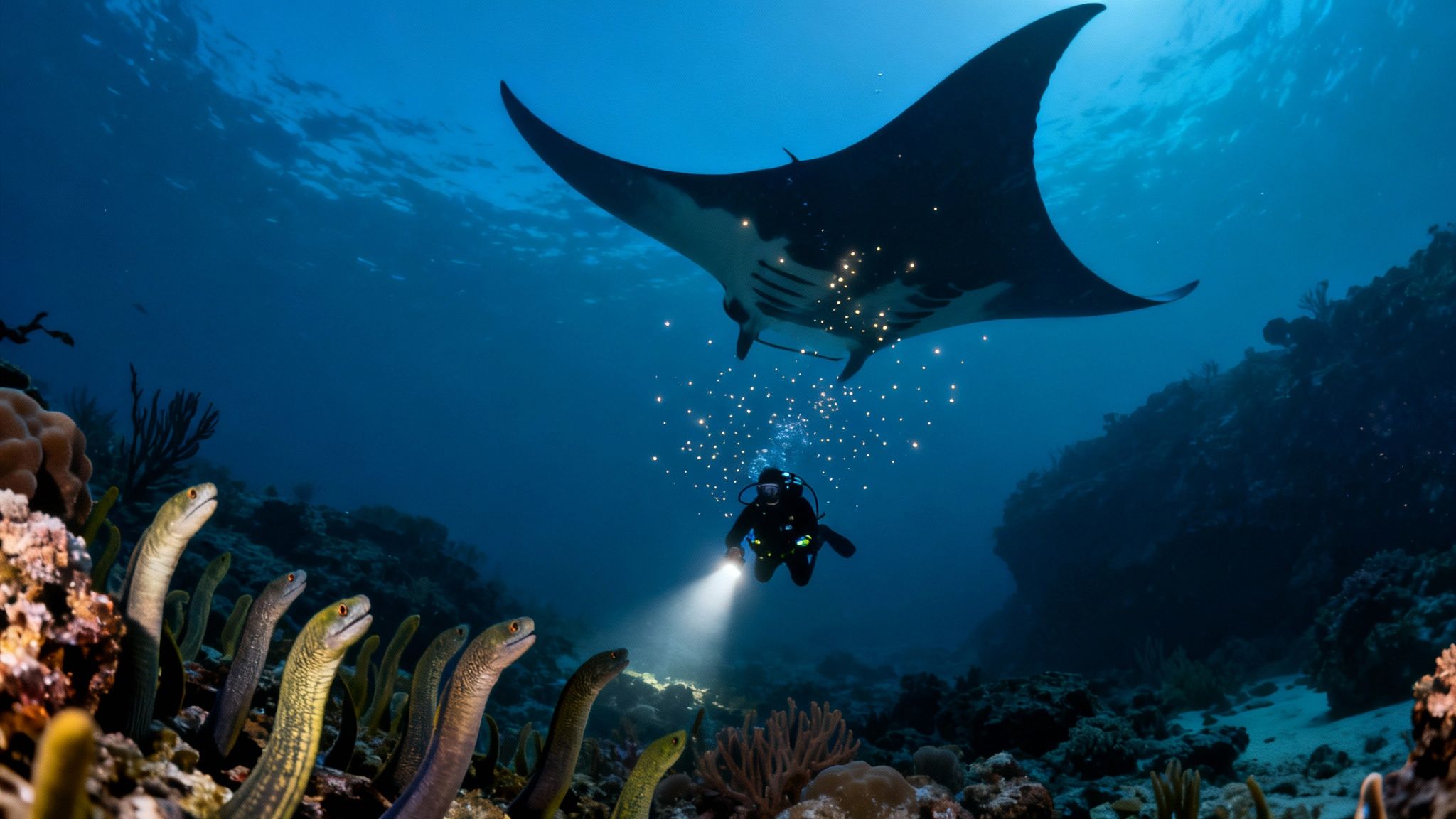
This isn't just another dive. It’s an underwater ballet, and easily one of the most profound encounters you can have in the ocean. The Kona Manta Ray Night Dive is consistently named one of the best night dives on the planet, and once you’ve done it, you understand why. It's a surreal, almost magical experience where you get a front-row seat to one of nature’s most graceful performances.
The idea behind this iconic Big Island scuba diving adventure is beautifully simple. After sunset, we head to the site, descend to the ocean floor, and gather in a circle, pointing our powerful dive lights straight up. These beams of light are like a dinner bell for plankton, attracting swarms of the tiny organisms that are the foundation of the marine food web.
Once the plankton show up, they create an irresistible, all-you-can-eat buffet for Kona's resident reef manta rays. These gentle giants, with wingspans that can stretch over 12 feet, emerge from the darkness to feed. They glide, barrel-roll, and swoop just inches over your head, their massive mouths open wide to filter the plankton from the water. It’s a truly humbling sight.
Why Garden Eel Cove Is the Premier Location
While there are multiple manta ray dive sites, Garden Eel Cove stands out as the superior choice for a world-class experience. Its protected location, superior viewing area, and healthier surrounding reefs make it the premier spot for the manta ray night dive.
Unlike other sites, Garden Eel Cove is tucked away, shielded from large ocean swells. This natural protection results in calmer, more comfortable conditions, allowing you to relax and fully immerse yourself in the spectacle without being pushed around by surge. The dive site also features a sandy bottom that creates a natural amphitheater. This allows divers to settle in comfortably, creating a safe and unobstructed "front-row seat" for the manta ballet.
The real magic of Garden Eel Cove is the consistency and intimacy of the encounters. The unique layout and reliable presence of mantas create a truly world-class experience that feels both grand and personal.
On top of that, the surrounding reef is healthier and more vibrant than at other manta sites. The dive gets its name from the colonies of shy garden eels that pop their heads out of the sand, which is another cool thing to see as you descend and ascend.
A Reliable and Awe-Inspiring Encounter
What really sets the Kona manta dive apart is how incredibly reliable it is. The sighting success rate is astonishingly high—historical data shows encounters are practically a sure thing. Some nights might bring a handful of mantas, while others can feel like rush hour with more than 20 of them. Reports often show success rates between 85-90%, with some spots averaging over 11 mantas per night.
This consistency has turned the manta ray night dive into a true bucket-list item for divers visiting Hawaii. Of course, a common question is whether you can see them during the day. For a closer look at that, check out our article on the possibility of seeing manta rays while diving in the Big Island.
Diving with an experienced, responsible operator like Kona Honu Divers ensures the whole experience is conducted with the utmost respect for these amazing animals. Our guides are passionate about manta conservation and follow strict guidelines for a safe, non-invasive, and unforgettable dive. Ready to see the ballet for yourself?
Discovering the Big Island’s Top Dive Sites
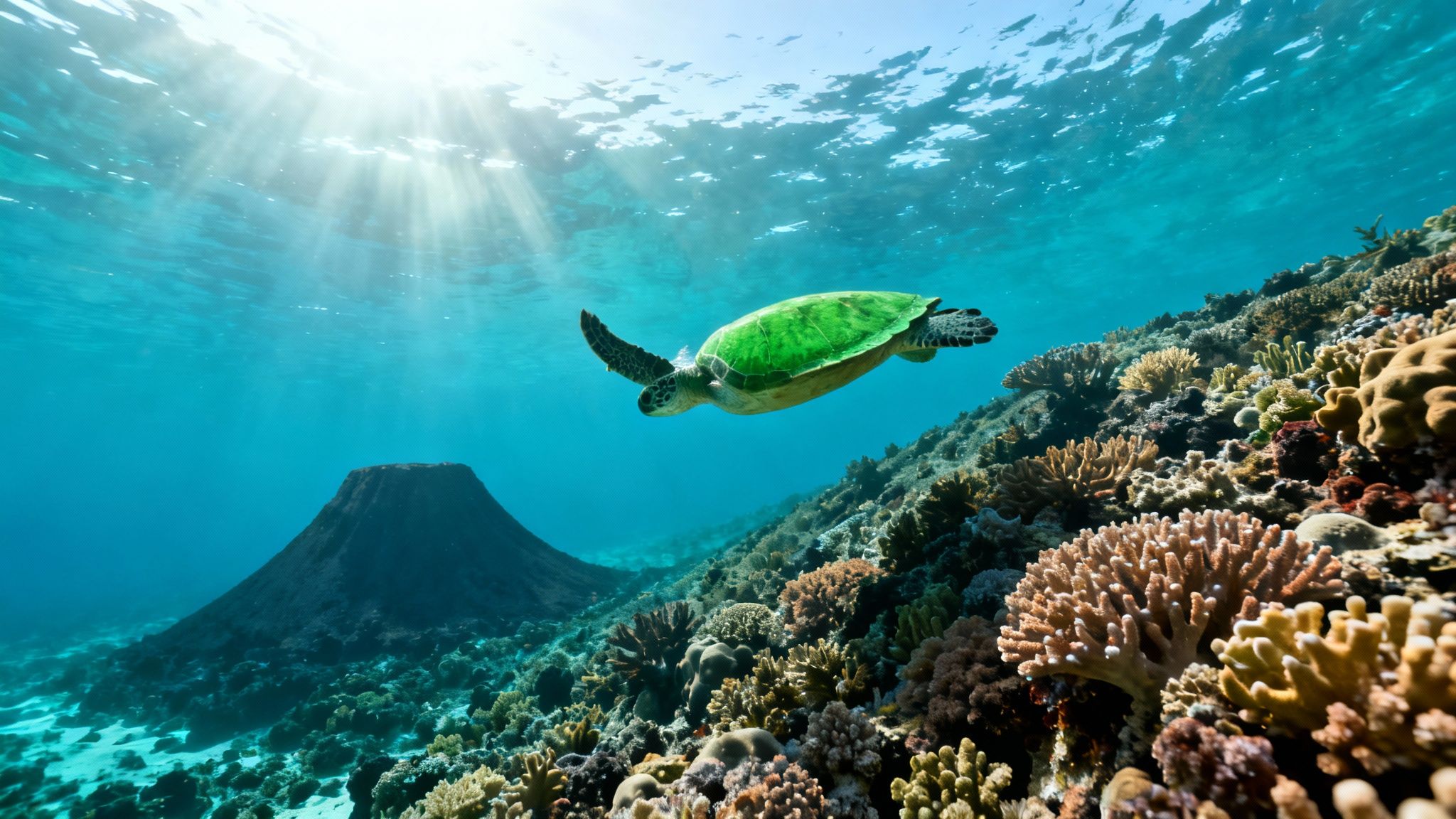
While the Manta Ray Night Dive gets a lot of the glory, the Kona coast is absolutely packed with dozens of world-class dive sites, each one offering a completely different adventure. The island's volcanic past has left behind a stunning underwater landscape of lava tubes, collapsed craters, and vibrant reefs just begging to be explored. This is the real heart of Big Island scuba diving.
Beyond the famous night dives, the daytime reveals an entirely different world that's every bit as captivating. The sheer variety of sites means there's a perfect dive for every skill level, from shallow, sun-drenched coral gardens to dramatic deep-water drop-offs.
Kealakekua Bay: An Underwater Sanctuary
Kealakekua Bay, where you'll find the Captain Cook monument, is so much more than a historical landmark. It's the Big Island’s only underwater state park and a Marine Life Conservation District, and that protection has allowed its ecosystem to absolutely flourish.
Sheltered from the open ocean, the bay's conditions are typically calm and the water is incredibly clear, with visibility often soaring past 100 feet. Since being protected in 1992, fish populations have boomed by an estimated 30-40%. You're almost guaranteed to see green sea turtles—we spot them on 95% of our dives in the calm summer months—along with huge schools of reef fish and even spinner dolphins. If you're curious about how these zones make a difference, you can learn about the Big Island’s thriving marine ecosystems.
Au Au Crater: A Submerged Volcanic World
For a dive site that feels truly otherworldly, Au Au Crater is a must-see. It's an ancient, crescent-shaped volcanic crater that has partially collapsed on the seaward side, creating a natural underwater amphitheater. Dropping into the crater is an incredible experience, with dramatic walls plunging down to a sandy bottom.
This unique structure provides a haven for all sorts of marine life. It's not uncommon to find:
- Whitetip Reef Sharks: Often found resting on the sandy floor during the day.
- Eagle Rays: Cruising gracefully along the crater's edge.
- Large Schools of Fish: Jacks, surgeonfish, and butterflyfish swirl around you in a mesmerizing dance.
Other Must-See Kona Dive Sites
The list of incredible dive sites along the Kona coast goes on and on, but a few more really stand out for their unique features and reliable marine life encounters.
Here's a quick rundown of our most popular sites to help you get a feel for what Kona has to offer.
| Dive Site | Max Depth | Best For | Key Marine Life |
|---|---|---|---|
| Kealakekua Bay | 80 ft | All Levels | Turtles, Dolphins, Vibrant Coral |
| Au Au Crater | 60 ft | Intermediate | Eagle Rays, Sharks, Unique Topography |
| Golden Arches | 50 ft | All Levels | Tangs, Eels, Octopuses, Lava Arches |
| Suck 'em Up | 40 ft | Advanced | Thrilling Lava Tube Swim-Through |
| Pawaii Bay | 50 ft | All Levels | Turtle Cleaning Stations, Eels |
These sites offer just a glimpse of the incredible diversity you'll find here.
Golden Arches: Just like the name suggests, this site is famous for its series of stunning lava rock arches. Swimming through them while surrounded by schools of bright yellow tangs is an experience you won't forget. It's a photographer's dream.
Suck 'em Up Lava Tube: This one is a real thrill for certified divers. It’s a massive lava tube where the natural surge gently pulls you in and pushes you out. Inside, the raw volcanic rock is on full display.
Pawaii Bay: This is one of the best spots to find a "turtle cleaning station," where Hawaiian green sea turtles patiently wait for reef fish to clean their shells. It's a fantastic, calm site for divers of all levels.
Boat Diving: Unlocking the Best of Kona
While there are some shore diving options on the Big Island, the only way to reach the most pristine and exciting sites is by boat. Premier locations like Au Au Crater and the best parts of Kealakekua Bay are either incredibly difficult or impossible to get to from shore.
When you join a boat tour with Kona Honu Divers, you're not just getting a ride—you're getting an experience curated by local experts. Our captains have spent years on these waters and know exactly where to go for the best conditions on any given day. Our custom-built boats are designed for diver comfort, letting you relax and gear up without the hassle of navigating rocky shorelines.
Hopping on one of our charters lets you see the full, incredible scope of Big Island scuba diving, far from any crowds. We handle all the logistics so you can just focus on the amazing world waiting for you beneath the waves.
Advanced Diving: The Thrill of the Blackwater Dive
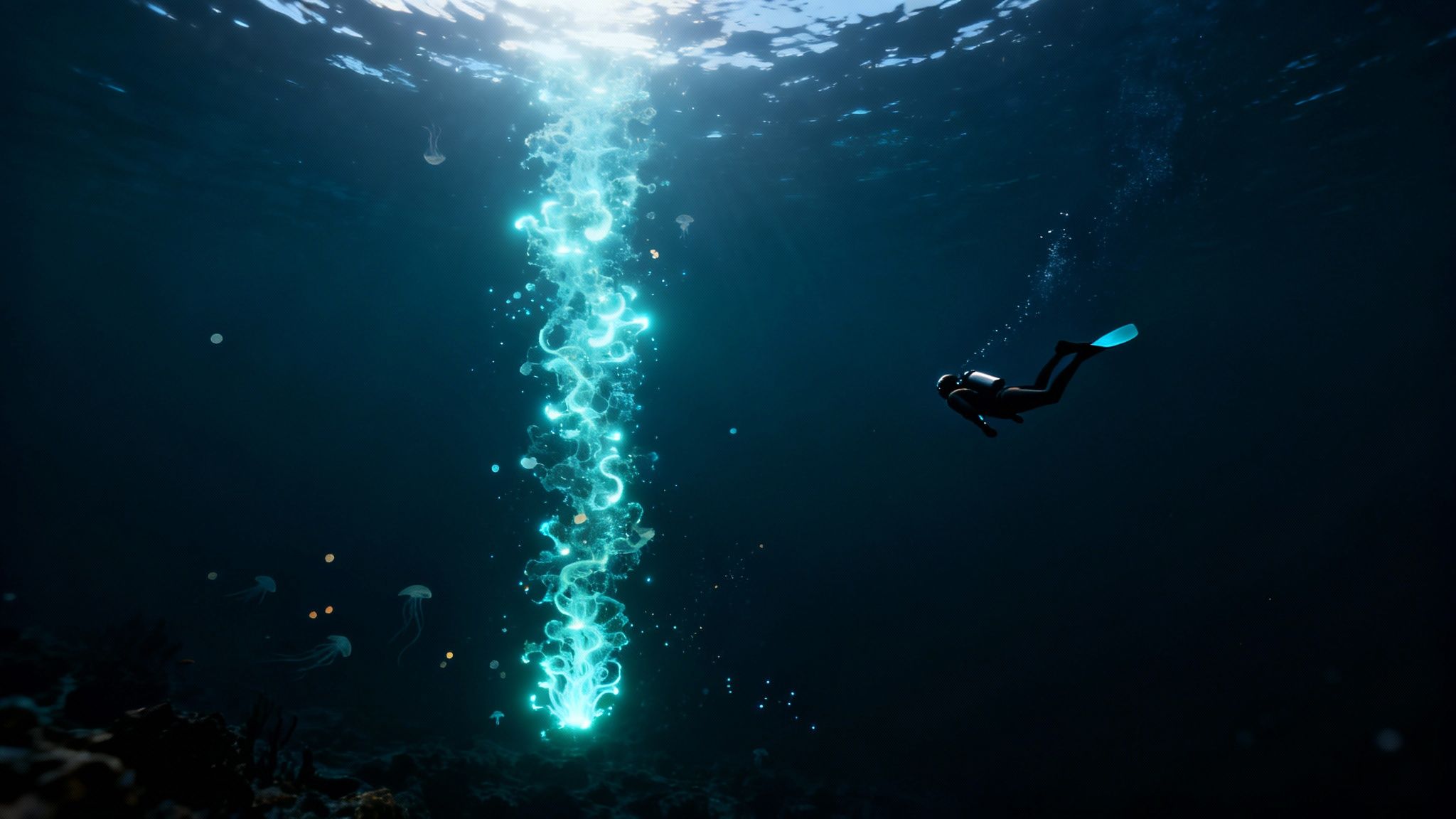
For the diver who thinks they've seen it all, the Kona Blackwater Dive is waiting to prove you wrong. This isn't just another night dive. We head miles offshore, leaving the reef far behind, and suspend you in the inky blackness over thousands of feet of open ocean.
It’s an experience that feels less like scuba diving and more like a spacewalk. Tethered to the boat for safety, you descend into the void with only your light cutting through the dark. Then, you simply wait and watch as a hidden world rises from the abyss to greet you.
Witnessing the World’s Largest Migration
Every single night, an untold number of deep-sea creatures make their way toward the surface to feed. This is the largest vertical migration of life on Earth, and you get a front-row seat. Most of these animals are bioluminescent, creating their own light as they drift past. It’s a silent, hypnotic light show put on by some of the planet’s most bizarre and beautiful organisms.
You won't find reef fish here. The creatures of the blackwater are often translucent, alien-like, and adorned with their own intricate light-producing organs.
Get ready to see:
- Larval Creatures: Many familiar animals, like eels and lobsters, look completely otherworldly in their larval stages.
- Bizarre Jellyfish: You'll drift alongside species of jellyfish and siphonophores that pulse with an ethereal inner light.
- Deep-Sea Squid: Tiny, jewel-like squid that shimmer and flash as they hunt in the darkness.
This dive is a true journey into the unknown. It’s a chance to witness a part of the ocean that very few people will ever see, offering a profound sense of discovery. The blackwater dive truly is the final frontier of recreational Big Island scuba diving.
Safety and Expertise Are Non-Negotiable
Let's be clear: the Kona Blackwater Dive is not for beginners. You’re in the open ocean, at night, over extremely deep water. This requires an unshakable comfort in the water, rock-solid buoyancy control, and the ability to stay calm when your senses are completely altered.
Because of the unique demands of this dive, your choice of operator is everything. An experienced crew, like ours at Kona Honu Divers, is essential for a safe trip. We provide specialized gear, including high-powered lights and a robust tether system that keeps everyone connected and secure. Our pre-dive briefing is meticulous, covering every safety protocol so you can relax and focus on the magic.
For those who are ready, a specialized Kona Blackwater Dive tour is the only way to experience this phenomenon safely.
Other Advanced Diving Opportunities
Beyond the blackwater, Kona's volcanic topography offers plenty of other challenges for seasoned divers. The ancient lava flows have created a sub-surface world of deep lava tubes, dramatic walls, and thrilling drift dives just waiting for those with the skills to explore them. These sites often require advanced certifications and excellent buoyancy to navigate safely.
If you're looking to push your limits, our premium advanced dive tours are your ticket to the wilder side of Kona. We design these trips specifically for experienced divers who want to go deeper, stay longer, and see the most remote and exhilarating sites the Big Island has to offer.
How to Plan Your Perfect Dive Trip
A little forethought is what separates a good dive vacation from an unforgettable one. Putting together the perfect Big Island scuba diving trip really comes down to three things: timing it right, packing smart, and, most importantly, choosing the right crew to show you the underwater world.
This isn’t just about booking a flight and a hotel. It’s about syncing your trip with the ocean’s rhythm to make sure you get the absolute most out of every moment you spend underwater here in Kona.
When Is the Best Time to Visit Kona?
The short answer? Anytime. The fantastic news is that Kona is a year-round dive destination. The massive volcanoes on the Big Island act as a natural shield, protecting the Kona coast from the gusty trade winds that can stir up the water elsewhere.
That said, there are some subtle seasonal differences you might want to consider:
- Summer (May to October): This is when we typically see the flattest, calmest seas. Water temperatures are at their warmest, usually hovering around a balmy 80°F (27°C). It’s prime time for glassy boat rides and long, comfortable dives.
- Winter (November to April): The water might cool down a few degrees to about 75°F (24°C), but this is when the real magic happens: humpback whale season. There's nothing quite like being underwater and hearing the complex, haunting songs of these gentle giants echoing all around you.
No matter when you visit, visibility along the Kona coast is legendary, often clearing 100 feet or more. Your decision really just boils down to whether you prefer bathtub-warm water or the chance to listen in on the humpback whale symphony.
Choosing the Right Dive Operator
Let’s be honest—your dive operator can make or break your entire trip. They’re your guide, your safety net, and your key to finding those incredible, uncrowded dive sites that don’t show up in every tourist brochure. A great operator doesn’t just take you diving; they make the whole experience better.
When you're doing your research, keep an eye out for these signs of a top-notch company:
- Safety First: This is non-negotiable. Look for a flawless safety record, meticulously maintained gear, and professional emergency plans.
- Expert Local Guides: The best guides are the ones who have spent years in these waters. They know the reefs like the back of their hand and have a genuine passion for sharing the marine world with you.
- Small Group Sizes: You want to avoid the "cattle boats." Diving in a small group means you get more personal attention from your guide, you make less of an impact on the reef, and the whole vibe is just more relaxed.
- Real-Life Reviews: See what other divers are saying. Consistent, glowing reviews about the crew, the boats, and the overall experience are your best indicator.
We’ve built Kona Honu Divers on these very principles. Our entire focus is on providing safe, intimate, and truly memorable dives for every single person who steps on our boats.
Getting the Most Value from Your Dives
A bit of planning ahead can also stretch your budget and add some serious perks to your trip. We get a lot of questions about cost, and a great place to start is our guide on how expensive scuba diving in Hawaii can be, which will help you set a realistic budget.
Keep an eye out for operators who reward divers for booking ahead. Here at Kona Honu Divers, for example, we offer early diver specials for folks who book multiple days of diving with us in advance. Another huge perk to look for is free nitrox for certified divers. It can give you longer bottom times and you’ll likely feel less tired after your dives—it adds a ton of value to your package and shows an operator is invested in giving you the best experience possible.
Your Essential Packing Checklist
Packing for a dive trip is always a bit of a balancing act. You want everything you need, but you don't want to be lugging around a ridiculously heavy bag.
Pro Tip: Even in tropical Hawaii, the wind on a boat after a dive can feel surprisingly chilly, especially after a night dive. A simple windbreaker or a cozy sweatshirt can make a world of difference for your comfort between dives.
Here’s a tried-and-true checklist to get you started:
- Dive Gear: Your regulator, BCD, computer, mask, fins, and wetsuit. A 3mm wetsuit is perfect for Kona’s water temperatures year-round.
- Certifications: Don't leave home without your C-card and any specialty cards (like Nitrox!).
- Logbook: You’ll want to remember every amazing thing you see.
- Reef-Safe Sunscreen: It’s crucial for protecting both your skin and our delicate coral reefs. Plus, it’s the law in Hawaii.
- Reusable Water Bottle: Staying hydrated is key, and you'll help us cut down on plastic waste.
- Dry Bag: A must-have for keeping your phone, wallet, and towel safe and dry on the boat.
- Camera: You’re going to see some incredible marine life—you'll want to be ready to capture it!
Your Kona Diving Questions, Answered
Planning a dive trip always brings up a few questions. To help you get everything squared away, we've pulled together answers to the queries we hear most often about scuba diving on the Big Island. Think of this as your final checklist before you get on the plane.
When's the Best Time of Year to Dive the Big Island?
Honestly, there’s no bad time to dive in Kona—it’s fantastic all year. But the seasons do offer slightly different experiences. If you love glassy seas and bath-like water, aim for the summer months (May to October), when the ocean is at its calmest and temperatures hover around a cozy 80°F (27°C).
If you visit in the winter (November to April), the water dips a bit to a still-comfortable 75°F (24°C). The real magic of winter diving, though, is the humpback whales. You won’t just see them from the boat; you’ll hear their incredible, haunting songs underwater. It’s a truly unforgettable soundtrack for your dive. Visibility stays great, often over 100 feet, year-round thanks to the sheltered Kona coast.
Do I Need a Lot of Experience to Dive in Kona?
Not at all! Kona is one of the best places to dive, whether it’s your first time breathing underwater or your thousandth. We have plenty of calm, shallow reefs that are perfect for beginners or anyone working on their certification. If you've never dived before, an introductory dive (like a Discover Scuba Diving experience) is the perfect way to test the waters with an instructor right by your side.
For the seasoned pros, Kona delivers. We’ve got deep dives, otherworldly lava tubes, and of course, the one-of-a-kind Blackwater Dive. The key is going with a top-notch crew like Kona Honu Divers who knows the sites inside and out and can match the day’s dive to your specific skill and comfort level.
What Kind of Animals Will I See Down There?
The marine life here is just incredible. On almost any given dive, you can count on seeing our beloved Hawaiian green sea turtles (Honu), octopuses, and a whole spectrum of moray eels peeking out from the reef. The schools of colorful fish—butterflyfish, parrotfish, triggerfish—are a given. We also frequently see pods of spinner dolphins from the boat, and sometimes they'll even swim by during a dive.
But let's be real, most people come for the headliners. The Manta Ray Night Dive delivers near-guaranteed encounters with these gentle giants. You might also spot eagle rays cruising by or whitetip reef sharks resting on the sand. And in the winter, hearing those humpback whale songs is a powerful, humbling experience you won't soon forget.
Is It Better to Dive from a Boat or from the Shore?
While the Big Island has some great shore dives, hopping on a boat opens up a whole different world. Boat diving gets you to the more remote, pristine offshore reefs and dramatic underwater landscapes that you simply can't reach from the beach. This usually means healthier coral, more abundant sea life, and way fewer people.
Beyond access, boat diving is just easier and safer. A professional crew handles all the heavy lifting, navigation, and surface watch, plus they have all the emergency gear ready to go. It lets you just focus on the dive. For the can't-miss experiences like the Manta Ray Night Dive and the Blackwater Dive, a boat is your only ticket. Take a look at the different diving tours in Kona to see what adventures are waiting for you.