
Picture this: you descend into warm, turquoise water, so clear it feels like flying. Below you, a dramatic world unfolds—a landscape sculpted by ancient lava flows, creating underwater canyons, archways, and caves teeming with life. That's what Big Island scuba diving is all about, and it’s an experience that truly stands apart from anywhere else in the tropics. The island's volcanic origins and uniquely sheltered western coast have created a diver's paradise, famous for its mind-blowing visibility and vibrant marine world.
Why the Big Island is a Premier Scuba Diving Destination
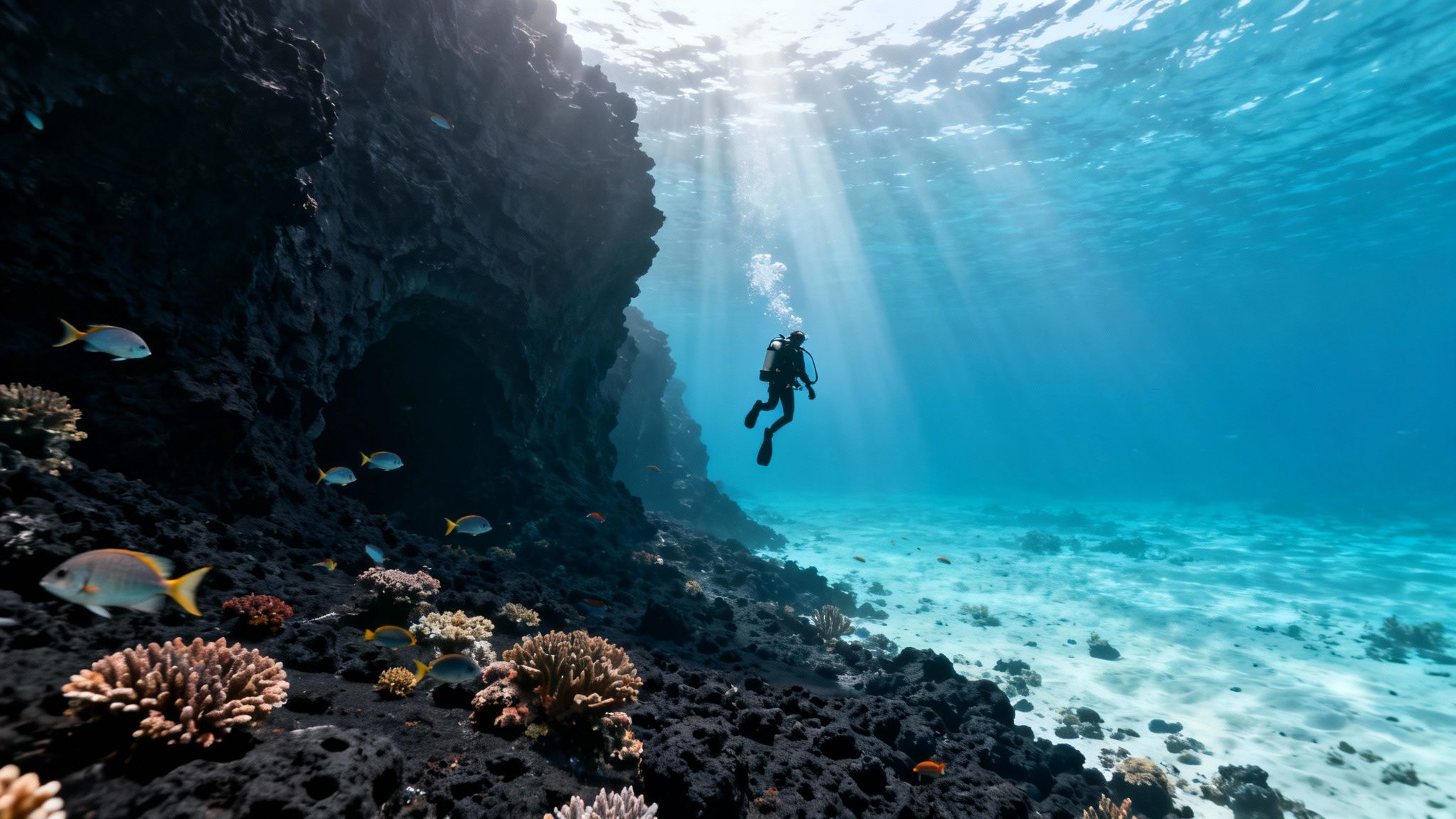
The Big Island isn't just another pretty spot; it’s a living, breathing testament to the power of volcanoes, and you can feel that energy underwater. The Kona coast, tucked in the lee of massive volcanoes like Mauna Loa and Hualalai, is shielded from the rough trade winds. This natural protection means the water is exceptionally calm and clear almost every day of the year, allowing sprawling, healthy coral gardens to thrive.
It's no secret that the Big Island is a scuba diving heavyweight. It draws around 150,000 dive tourists annually, who collectively log over 100,000 certified dives here each year. These numbers speak for themselves, cementing the island's reputation as a top-tier global destination. It’s the one-of-a-kind volcanic topography and incredible biodiversity that really make the Big Island's underwater world so unique.
What Makes Kona Diving So Special?
The magic of Big Island scuba diving goes way beyond just clear water. It's the sheer diversity of world-class experiences all packed into one coastline. From the legendary manta ray night dive to the surreal "blackwater" dives in the deep ocean, there’s a genuine adventure waiting for every type of diver.
To give you a better idea, here's a quick look at what puts Kona on every diver's bucket list.
Big Island Diving Highlights at a Glance
| Feature | Why It's Special |
|---|---|
| Volcanic Topography | You're not just diving a reef; you're exploring dramatic underwater lava tubes, arches, and craters. |
| Exceptional Visibility | The water is consistently pristine, with visibility often soaring past 100 feet. |
| Protected Coastline | Kona's calm waters are perfect for everyone, from first-timers to seasoned pros. |
| Incredible Biodiversity | Expect encounters with Hawaiian green sea turtles, spinner dolphins, and hundreds of fish species found nowhere else on Earth. |
| Signature Night Dives | Home to the world’s most reliable manta ray night dive and the unforgettable Kona blackwater dive. |
It's this combination of features that makes diving here truly special.
At Kona Honu Divers, we've spent years guiding divers through this underwater paradise. Our reputation for safety, local expertise, and creating unforgettable adventures is something we're incredibly proud of—there's a reason we're the top-rated and most-reviewed dive company in all of Hawaii. We know these sites like the back of our hand, and our mission is to show you the very best the Big Island has to offer.
Ready to see it for yourself? Take a look at the variety of diving tours available and let's start planning your underwater journey.
Exploring the Big Island’s Signature Dives

While you can find incredible underwater scenery all along the Kona coast, a few specific experiences have put Big Island scuba diving on the world map. These are the bucket-list dives people travel across the globe for—the ones that promise a story you'll tell for the rest of your life.
From the silent, graceful ballet of giant mantas to a bizarre journey into the deep ocean's twilight zone, these signature dives are the soul of Kona's underwater world. They offer a unique window into the island’s marine ecosystem, and trust me, they live up to the hype.
The World-Famous Manta Ray Night Dive
There's nothing else in the world quite like the manta ray night dive. It’s consistently ranked as one of the top ten dives on the planet, and for good reason. After the sun dips below the horizon, you descend into the warm, dark water, find your spot on the sandy bottom, and watch as your divemaster sets up powerful, upward-facing lights. The beams attract a massive cloud of plankton, which is basically a dinner bell for manta rays.
And then, the show begins.
Majestic manta rays, some with wingspans stretching over 12 feet, emerge from the blackness. They glide, swoop, and perform effortless somersaults right through the light beams, filtering the plankton just inches above your head. It's a completely silent, mesmerizing performance that feels like it’s happening on another planet.
This isn’t a hit-or-miss experience, either. Operators report seeing these gentle giants on 85-90% of trips. Even during peak season, the sightings are incredible—recent logs from Kona outfits showed a high of 23 mantas on a single night in October, with another trip seeing 12. Multi-manta sightings happened on over 70% of reported dives that month, proving just how reliable this magical encounter is.
While you can do this dive at a couple of spots, Garden Eel Cove is the superior choice. It’s more protected from the open ocean swells, which means calmer water and better visibility. The viewing area is also perfectly situated, giving you a front-row seat to the action on a beautiful, healthy reef. It’s an absolute must-do for any diver visiting the island, and you can book your manta ray dive tour to experience it firsthand.
Plunging into the Abyss on a Kona Blackwater Dive
If you're looking for a completely different kind of thrill, the Kona Blackwater Dive is an adventure into the great unknown. Picture this: you’re miles offshore, floating in the dark over thousands of feet of open ocean. The only thing piercing the inky blackness is the beam of your dive light.
This is a far cry from a typical reef dive. Out here, you’re witnessing one of the largest migrations on Earth. Every single night, an incredible array of strange and wonderful creatures travels up from the deep to feed near the surface. You'll see life forms that look truly alien—tiny, translucent larval fish, glowing jellies, and bioluminescent critters that put on their own light show.
The Kona Blackwater Dive is the closest you can get to a spacewalk. You’re just floating in a vast, dark universe, coming face-to-face with life that seems like it’s from another world. It’s both humbling and exhilarating.
This dive really pushes the boundaries of what scuba can be and showcases the unbelievable biodiversity hidden in the ocean’s depths. Because of its unique open-ocean location and the special techniques required, it’s a one-of-a-kind Big Island scuba diving experience.
Exploring Classic Reefs and Lava Tubes
Beyond the famous night dives, the daytime diving along the Kona coast is absolutely spectacular. The island’s volcanic origins have sculpted a dramatic underwater playground full of lava tubes, arches, and canyons that are now covered in vibrant, healthy coral.
Every dive is an opportunity to see an incredible variety of marine life. It’s not a question of if you’ll see something cool, but what. Here’s a little of what you can expect:
- Hawaiian Green Sea Turtles (Honu): You'll find them cruising by gracefully or just chilling out on the reef.
- Spinner Dolphins: We often see pods from the boat, and sometimes you can even hear their clicks and whistles underwater.
- Endemic Fish: Hundreds of species of colorful fish call these reefs home, many of which can’t be found anywhere else on Earth.
- Eels, Octopuses, and Eagle Rays: Keep your eyes peeled for critters hiding in crevices or soaring over the reef.
The Kona coast's protected waters are the reason these reefs are so healthy and clear. Each dive site has its own unique character, from shallow, sunlit coral gardens perfect for beginners to thrilling wall dives for more experienced divers. To truly appreciate the beauty of Hawaii's underwater world, you have to explore the full range of Big Island diving sites.
How to Plan Your Ultimate Dive Trip
A truly epic Big Island scuba diving adventure doesn’t just happen—it starts long before your fins ever touch the water. A little bit of thoughtful planning is what separates a good trip from a genuinely unforgettable one. Getting a few key details sorted out beforehand, from picking the right season to packing your go-to gear, makes all the difference.
The best part? There’s really no bad time to dive in Kona. We're lucky to have incredibly consistent and comfortable water temperatures, which stay in that sweet spot between 75-80°F (24-27°C) all year round. That said, the seasons do bring their own unique flavor to the experience.
Choosing the Best Time to Dive
If you love the idea of glassy, calm seas, then summer (May to October) is your season. The already-protected Kona coast becomes exceptionally placid, making for silky-smooth boat rides and super easy entries. It’s an ideal time for new divers to build their confidence or for anyone who just loves serene conditions.
Winter, which runs from November to April, brings a different kind of magic. While the open ocean can get bigger swells, Kona’s legendary coves stay protected and perfectly diveable. But the real showstopper is the arrival of the humpback whales. Hearing their haunting songs echoing through the water on a dive is an experience that will stick with you forever. It adds a whole other layer of awe to the adventure.
Matching Your Skill Level to the Dive
One of the great things about diving here is the sheer variety of sites, which means there’s something for everyone, no matter your experience. It's really important to be honest with yourself about your comfort and skill level to make sure every dive is safe and fun.
- Beginner Divers (Open Water Certified): You're in for a treat. Kona is loaded with shallow, vibrant reefs teeming with turtles and colorful fish, all with barely any current. They're the perfect spots to relax, build confidence, and just soak in the beauty.
- Intermediate Divers: Once you've got a few more dives logged, you can start exploring the classic Big Island scuba diving topography. Think dramatic lava tubes and cool swim-throughs that really show off the island's volcanic origins.
- Advanced Divers: If you've got the certification and experience, Kona delivers some serious thrills. We have deep walls, challenging offshore pinnacles, and some fantastic drift dives. For those looking for a real challenge, you can book a specialized advanced dive tour to explore those exclusive sites that demand a higher skill set.
Your Essential Dive Gear Checklist
Packing smart is all about being comfortable and prepared. While you can always rent excellent gear from a professional shop, most divers have those personal items they just can't dive without.
What to Bring:
- Mask, Snorkel, and Fins: A mask that fits your face perfectly is probably the single most important piece of gear for your comfort. No one likes a leaky mask!
- Dive Computer: This is a non-negotiable safety tool. Every certified diver should own one and, more importantly, know exactly how to use it.
- Wetsuit: A 3mm or 5mm wetsuit is usually all you need to stay comfortable in Kona's warm waters.
- Certification Card & Logbook: Simple, but crucial. Don't leave home without them!
- Reef-Safe Sunscreen: This is a must. We have to protect our skin and the fragile coral. Hawaii has strict laws banning sunscreens with reef-harming chemicals.
What to Rent:
- Buoyancy Control Device (BCD): We have high-quality, well-maintained BCDs ready for you.
- Regulator: Our rental regulators are serviced to the highest safety standards, so you can breathe easy.
- Tanks & Weights: These are always provided by the dive operator, so save yourself the hassle and leave yours at home.
Wondering how all this adds up? To get a clear picture of what to budget for your trip, check out our guide on how expensive scuba diving in Hawaii can be. It breaks down the typical costs for gear and charters, so you can plan your ultimate dive trip without any surprises.
Choosing Your Guide for an Unforgettable Dive

Let's be honest, picking the right dive operator is probably the single most important decision you'll make for your Big Island scuba diving trip. A great guide does more than just drive the boat; they shape your entire experience with their expertise, commitment to safety, and a real love for the ocean. It's easy to get lost in a sea of options, but looking past the price tag is key to finding a truly world-class adventure.
Think of your dive charter as your lifeline out on the water. It’s not just about getting from point A to point B. It's about feeling confident in the crew's knowledge, trusting the gear, and being comfortable on the boat. A top-notch operator puts your safety and comfort first, making sure the whole trip is just as incredible as the dive itself.
The Kona Honu Divers Difference
This is where we come in. At Kona Honu Divers, our team brings a staggering 200+ years of combined industry experience to the table. We’ve built our reputation on a simple foundation: keep people safe, be professional, and create amazing underwater memories. Our crew aren't just divemasters—they’re passionate marine life experts, skilled captains, and patient teachers who genuinely enjoy sharing the magic of Kona with every diver.
That commitment starts with our boats, the Honu One and Honu Lani. They weren't just bought; they were custom-built by divers, for divers. We obsessed over the little details that make a huge difference, like shaded decks for the sunny days, freshwater showers for a post-dive rinse, and plenty of space to gear up without bumping elbows. This focus on comfort lets you relax and get excited for the adventure waiting below.
At Kona Honu Divers, safety isn't just a checklist; it's our culture. From meticulous daily equipment checks to our thorough dive briefings, we do everything we can to make sure you can explore with total peace of mind.
We're incredibly proud that our dedication shows in what our guests have to say. Being the most reviewed and top-rated dive company in Hawaii is a direct reflection of our crew's hard work and passion.
Value Beyond the Dive
We believe an incredible Big Island scuba diving trip should also be a great value. That’s why we throw in perks designed to make your dives safer, longer, and more affordable. One of our most popular is the Early Diver Discount, which gives you great savings just for booking a morning charter.
On top of that, we’re thrilled to offer free nitrox to all certified divers. If you haven't used it before, nitrox is simply air with a bit more oxygen and a bit less nitrogen.
So, what does that actually do for your dive?
- More Bottom Time: You absorb less nitrogen, which means you can safely stay down longer and get more time exploring the reef.
- Shorter Surface Intervals: Nitrox helps you off-gas nitrogen faster, so you can get back in the water for that second dive sooner.
- An Extra Safety Margin: Many divers say they feel less tired after diving with nitrox, and it provides an added buffer against decompression sickness.
These are the kinds of thoughtful details we build into our trips because we want you to have the best experience possible. We know choosing an operator is a big deal, and if you want to dig deeper, check out our guide on how to choose a Kona dive shop.
Ready to see the difference for yourself? Let us show you the very best of Kona's underwater world.
Diving with Respect for the Marine Ecosystem

Diving on the Big Island isn't just an activity; it's a chance to step into one of the planet's most incredible marine ecosystems. The clear Kona waters open up a window to a fragile, beautiful world, and with that privilege comes a big responsibility. Each time we drop below the waves, we're guests in someone else's home.
This is why responsible diving is the cornerstone of any truly memorable Big Island scuba diving trip. It’s about more than just seeing cool stuff—it's about making sure the reef stays just as vibrant for the next dive, and for generations to come. It’s about shifting your mindset from being a tourist to being a temporary caretaker of the underwater world you’ve come to explore.
Your Role as an Ocean Guardian
Protecting this underwater paradise isn’t about huge, heroic acts. It’s the small, conscious decisions we make on every single dive that add up to a massive positive impact. It all boils down to awareness and a simple commitment to dive with respect. I’ve always found that the most impressive divers aren't the ones with the flashiest gear, but the ones who move with a quiet grace and leave nothing behind.
The single most important skill you can master for protecting the reef is good buoyancy. Think of it as learning to achieve perfect weightlessness, like an astronaut in space. When your buoyancy is dialed in, you can hover effortlessly, observing the coral without ever touching it. A misplaced fin kick or an accidental hand placement can do real damage, and solid buoyancy control is the best prevention.
Beyond that, a few simple rules of thumb will guide you on every dive:
- Look, Don’t Touch: Everything from the tiniest coral polyp to the biggest turtle is more delicate than it looks. The oils from our skin can harm marine life, and touching animals can cause them stress or damage their protective coatings.
- Leave Only Bubbles: Never take anything home with you. Shells, rocks, and even dead coral fragments are all part of the reef’s natural lifecycle.
- Secure Your Gear: Before you jump in, do a quick check to make sure your gauges, alternate air source, and camera are clipped tight to your BCD. Letting them dangle is an easy way to drag them across the fragile reef.
Celebrating Kona’s Underwater Inhabitants
The payoff for this careful approach is unbelievable. When the local marine life doesn't see you as a threat, you get to witness their true, natural behavior up close. That’s where the real magic happens.
The waters here are teeming with an incredible variety of life. It’s almost a guarantee you’ll share your dive with a Hawaiian green sea turtle, or honu, as they glide past or nap on the reef. It’s also common to see pods of playful spinner dolphins from the boat, putting on an acrobatic show.
Interacting with marine life responsibly is the ultimate sign of respect. By giving animals their space, we ensure that these magical encounters can continue to happen naturally for everyone.
Below the surface, the reefs are a kaleidoscope of color, home to endemic fish you can’t find anywhere else on the planet. When you dive with an operator like Kona Honu Divers, you're choosing a team that’s genuinely committed to conservation. It’s a simple but powerful way to make sure your adventure helps protect the very beauty you came all this way to see.
Your Kona Diving Questions, Answered
It’s completely normal to have a few questions swirling around as you get ready for your big trip. In fact, we encourage it! Getting the details sorted out ahead of time means you can relax and focus on the incredible experience waiting for you beneath the waves.
We’ve put together answers to some of the most common questions we get from fellow divers. Think of this as your final pre-dive check before you giant-stride into your Kona adventure.
What’s the Best Time of Year to Dive the Big Island?
Honestly, one of the best things about diving in Kona is that there’s no bad time to visit. The water is always inviting, hovering between a comfortable 75-80°F (24-27°C) all year long. The real difference comes down to what you want to experience on the surface.
If you dream of glassy, calm seas and relaxing boat rides, the summer months (May through October) are your best bet. The ocean is often incredibly smooth, making for some truly serene dive days.
But winter, from November to April, brings its own kind of magic. This is when the humpback whales arrive, and hearing their songs echo through the water on a dive is an experience you will never, ever forget. While the open ocean can get a bit more active, Kona's coastline is blessed with protected bays that keep our dive sites accessible. With visibility regularly topping 100 feet year-round, you really can't go wrong.
Do I Need to Be an Advanced Diver to Dive in Kona?
Not at all! Kona is fantastic because it offers something for literally every diver. Whether you just got your Open Water card or you have thousands of dives under your belt, there's a perfect spot here for you.
For newer divers, we have plenty of calm, shallow reefs that are teeming with life but sheltered from any strong currents. They're the perfect place to get comfortable and build confidence. In fact, some of our most famous dives, like the Manta Ray Night Dive, are accessible to divers of all certification levels.
But if you're an experienced diver looking for a bit more of a challenge, we've got you covered. The volcanic underwater landscape has formed breathtaking deep walls, dramatic pinnacles, and cool lava tube swim-throughs. For these sites, we run dedicated premium advanced dive tours specifically for divers with the training to explore them safely.
What Kind of Marine Life Will I See?
Get ready for a show! The marine life here is incredibly vibrant and diverse, thanks to our healthy volcanic reefs. Every single dive offers a new cast of characters.
You're almost guaranteed to see our beloved Hawaiian Green Sea Turtles (Honu) gliding by or taking a nap on the reef. The reefs are buzzing with colorful fish you can’t see anywhere else on Earth, like our endemic butterflyfish and parrotfish. And if you peek into the nooks and crannies of the lava rock, you’ll likely spot a moray eel or a well-camouflaged octopus.
Of course, the Big Island is famous for its marquee encounters. The majestic giants on our manta ray dive tour are the undisputed stars. Then there are the strange, otherworldly creatures of the deep you can meet on a blackwater dive. Plus, we often get visits from pods of spinner dolphins right alongside the boat, which is always an amazing bonus.
Is the Manta Ray Night Dive Safe for Beginners?
Yes, absolutely. The Manta Ray Night Dive is incredibly safe and is designed to be a comfortable, awe-inspiring experience for every certified diver, even if it's your first time diving after dark. Your safety is our number one priority.
We conduct the dive in a protected, shallow cove (usually Garden Eel Cove) where the sandy bottom is only about 30-40 feet deep. The site is naturally sheltered from currents, which keeps things calm and predictable. Before you even get in the water, our crew gives a detailed briefing covering everything you need to know.
Once in the water, you don’t swim around. Instead, you'll find a spot on the sandy bottom and simply watch the show as the mantas swoop and glide through the light beams above you. It’s like watching a movie, but you’re in it.
This carefully managed setup removes any stress of navigating in the dark and lets you just relax and enjoy one of the most incredible underwater ballets on the planet.
Your Big Island scuba diving adventure is waiting. With world-class dive sites, unforgettable marine life, and a team dedicated to your safety and enjoyment, Kona Honu Divers is ready to show you the best of Hawaii's underwater world.