
Picture this: you descend into the deep blue, and the Hawaiian sun cuts through the water, lighting up the seascape more than 100 feet below. You’re not just looking at a reef; you’re floating through ancient volcanic lava tubes, now home to a kaleidoscope of marine life. This is what Big Island scuba diving is all about. The Kona coast, in particular, is an underwater sanctuary famous for its almost unbelievable visibility and otherworldly geology.
Why Kona Is a World-Class Diving Destination
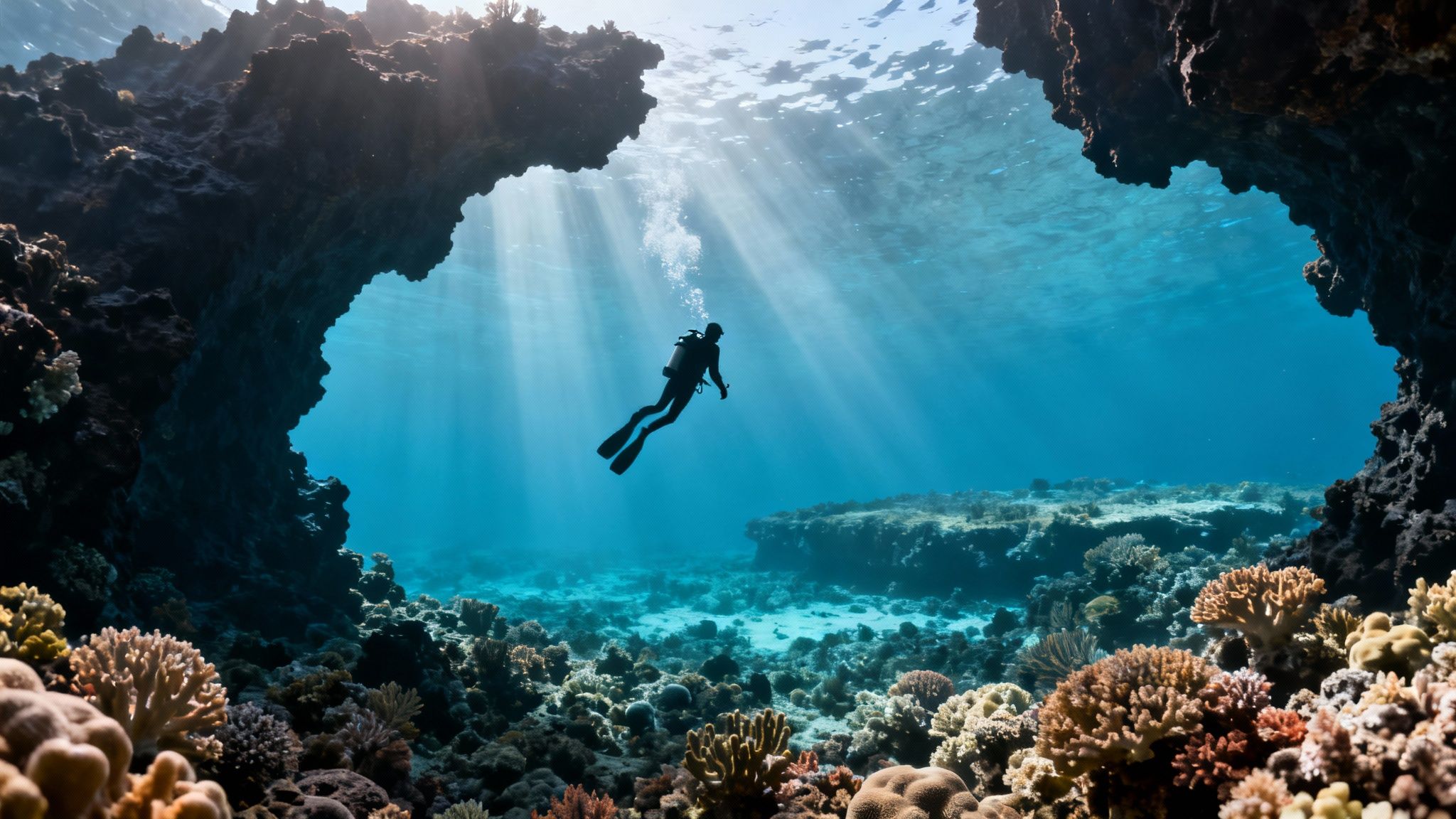
The Big Island isn't just another pretty spot on the diving map. It’s an underwater playground carved out by volcanoes over thousands of years. While many destinations are all about the coral, Kona's magic lies in its dramatic underwater landscape.
Think of it like exploring a submerged mountain range. Ancient lava flows have left behind a stunning maze of swim-throughs, soaring arches, and hidden caverns. Every dive feels like a true exploration, a treasure hunt where you never know what incredible creature is hiding around the next corner.
The Kona Coast Advantage
Kona's secret weapon is its geography. The sheer size of the Mauna Loa and Hualalai volcanoes acts as a massive shield, protecting the western coast from the powerful trade winds. This natural barrier is the reason the waters here are so consistently calm and clear, making it a dream for divers of every experience level.
The result? A diver's paradise where visibility regularly soars past 100 feet and the water stays invitingly warm all year. These perfect conditions allow fragile coral gardens to thrive, creating a vibrant, bustling ecosystem. You can dive deeper into the science behind this by learning more about what makes diving in Kona so special.
It’s this one-two punch of calm seas and fascinating geology that has crowned the Big Island as Hawaii’s premier scuba destination. The word is out, with roughly 150,000 dive tourists visiting each year to log about 100,000 certified dives. From a handful of pioneering shops in the 1960s to over 50 operations today, Kona has truly become a global hub for underwater adventure.
More Than Just Reefs
While the daytime reef dives are nothing short of spectacular, the Big Island offers experiences that you’ll be talking about for the rest of your life. The most legendary is, without a doubt, the Manta Ray Night Dive—a world-famous spectacle where these gentle giants put on an unforgettable underwater ballet.
From sun-drenched coral gardens to the dark depths of the Pacific, every dive here is a new story waiting to be told. The island truly offers something for everyone:
- Vibrant Coral Reefs: Home to a dazzling array of endemic fish you won't find anywhere else on the planet.
- Unique Volcanic Formations: Explore lava tubes, arches, and craters that create a dynamic and exciting dive every time.
- Iconic Night Dives: Experience the magic of manta rays and other mysterious nocturnal creatures.
It's this combination of elements that makes diving here so special. It’s a place that constantly inspires a sense of wonder and excitement, no matter how many times you dip beneath the waves.
To help you get a sense of what's available, here’s a quick overview of the signature experiences waiting for you.
Big Island Diving Experiences at a Glance
| Dive Experience | Best For | Key Marine Life Sightings |
|---|---|---|
| Manta Ray Night Dive | All Levels | Giant Manta Rays, Eels, Crustaceans |
| Black Water Dive | Advanced Divers | Pelagic Larval Creatures, Jellyfish |
| Daytime Reef Dive | All Levels | Turtles, Dolphins, Endemic Reef Fish |
| Advanced Boat Dives | Experienced Divers | Sharks, Eagle Rays, Larger Pelagics |
Each of these dives offers a completely different window into the underwater world of the Big Island, ensuring you'll find an adventure that perfectly matches your skill and curiosity.
Experiencing the Famous Manta Ray Night Dive
Of all the incredible dives the Big Island has to offer, one consistently tops every diver's bucket list: the Manta Ray Night Dive. This isn't just another dip in the ocean; it's a profound, almost otherworldly encounter that has rightfully earned its reputation as one of the best night dives on the planet. Honestly, you just have to be there to get it.
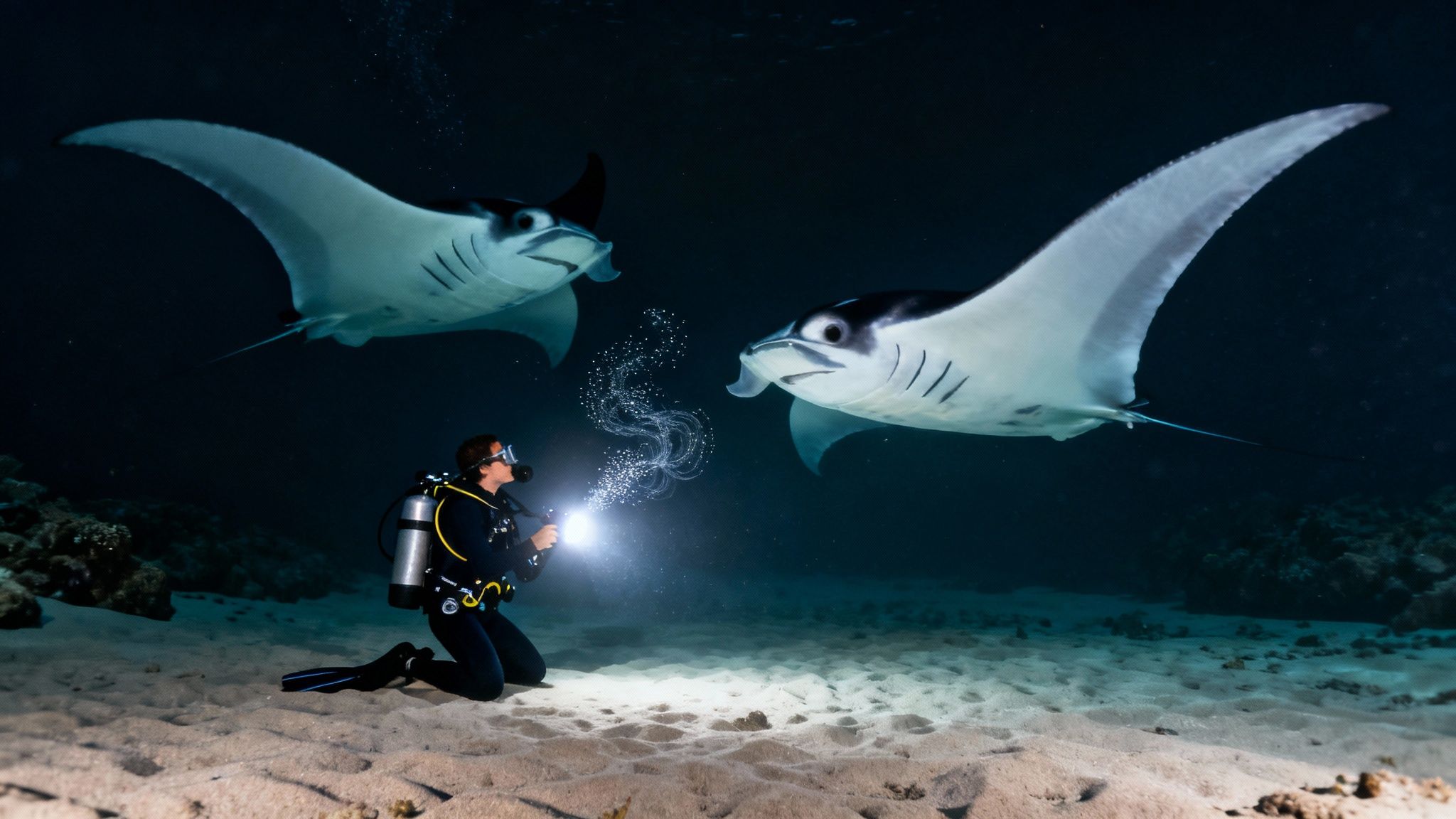
Picture this: you're kneeling on the soft, sandy bottom as the last bit of daylight disappears from the water above. You and the other divers point your lights upward, creating a brilliant cone of light. This beam acts like a magnet for plankton, the microscopic critters that manta rays love to eat. And then, out of the darkness, they arrive.
Giant manta rays, some with wingspans over 15 feet, glide into the light. They perform a silent, weightless ballet, swooping and barrel-rolling just inches over your head. It’s pure magic—watching these gentle giants feast in an underwater theater you helped create. The feeling is humbling, exhilarating, and connects you to the ocean in a way that’s hard to put into words.
Why Garden Eel Cove Is the Premier Location
While you might hear about a couple of spots for this dive, Garden Eel Cove is hands-down the superior choice for your manta ray dive tour. Because it’s situated in a protected cove, the water is almost always calmer and clearer. That means more reliable conditions and, frankly, a much more comfortable and enjoyable dive for everyone.
But it's more than just calm water. The whole ecosystem at Garden Eel Cove is healthier, with better reefs and a superior viewing area. The vibrant reef structure means a more consistent supply of plankton for the mantas, setting you up for the best possible show. The chance to see manta rays while diving on the Big Island is what draws people in, and this is the spot that truly delivers.
Choosing a dive operator that puts the health of the mantas and the reef first is absolutely essential. Ethical practices ensure these magnificent animals continue to thrive, allowing divers to enjoy this incredible spectacle for years to come.
A Safe and Respectful Encounter
The secret to a great manta ray night dive is a professional and respectful operation. This is where Kona Honu Divers really shines. They create an environment that’s safe for both the divers and the manta rays, starting with a thorough briefing on the boat ride out at sunset. The guides explain everything you need to know about manta behavior and the rules of the dive—the most important one being to never, ever touch these incredible animals.
Once you’re on the bottom, the divemasters get everyone situated in a specific viewing area. This minimizes any impact on the seafloor and makes sure everyone gets a front-row seat to the action. Their calm, expert presence lets you relax and just soak it all in, knowing you’re in good hands. If you want to dive deeper into what makes this so special, you can read about the magic of Manta Ray Night Snorkeling in Kona.
Kona Honu Divers has a long-standing reputation for providing these unforgettable tours, as their customer reviews show.
Ready to experience this once-in-a-lifetime dive for yourself? You can book your manta ray dive tour and witness the underwater ballet firsthand.
Exploring Kona’s Volcanic Underwater Landscapes

Sure, the Manta Ray Night Dive gets a lot of the spotlight, but the daytime Big Island scuba diving experience tells an entirely different story—one written on the seafloor itself. This is where you see the island's fiery volcanic past meeting the vibrant life of the present.
Ancient lava flows have sculpted an incredible underwater world. Forget flat, sandy bottoms. Kona's coastline is a three-dimensional playground of massive arches, intricate caverns, and twisting swim-throughs that make every dive feel like a genuine exploration. It’s an environment that’s constantly changing and full of surprises.
Marine Sanctuaries and Thriving Ecosystems
Two of our most treasured daytime spots are Kealakekua Bay and Honaunau Bay (better known to locals as Two Steps). These aren't just stunning locations; they are designated Marine Life Conservation Districts (MLCDs).
This protected status is a game-changer. It means the entire ecosystem is allowed to flourish without the pressure of fishing or other activities. The result is an underwater paradise with pristine coral gardens and a staggering density of marine life. The fish here just act differently—they're less timid and allow for some truly incredible up-close encounters.
The volcanic fingerprint of Big Island scuba diving is impossible to miss here. You'll swim through lava tubes and under arches, some formed by eruptions as recently as 2018, all at comfortable depths between 15-60 feet. Visibility often tops 100 feet, creating a vibrant explosion of biodiversity. We see turtles on 90% of our dives here, not to mention moray eels, reef sharks, and over 200 species of fish thriving in gardens untouched by commercial fishing. You can get more details about these incredible Kona dive sites on konahonudivers.com.
Meet the Locals Underwater
When you dive in Kona’s protected bays, you’re practically guaranteed to meet some of the island’s most famous residents. The calm, clear waters are a haven for some truly fascinating creatures.
- Hawaiian Green Sea Turtles (Honu): These gentle giants are a common and beloved sight. You'll often find them resting on the reef, munching on algae, or just cruising by with effortless grace.
- Octopuses (Heʻe): Spotting an octopus is a real treat! These masters of camouflage are a challenge to find, so keep a sharp eye on the reef—you might just see one reveal itself by changing color and texture.
- Endemic Fish Species: A huge number of Hawaii’s reef fish can’t be found anywhere else on the planet. On any given dive, you'll be swimming with schools of brilliant yellow tang, ornate butterflyfish, and even the humuhumunukunukuāpuaʻa (our state fish).
The amazing visibility and calm conditions make these sites an absolute dream for new divers working on their confidence and for experienced underwater photographers chasing that perfect shot.
Exploring these sunlit reefs is a core part of the Kona diving experience. It’s your chance to see exactly how the island’s raw volcanic power has given birth to such a delicate and beautiful underwater world.
Ready to see these incredible volcanic landscapes for yourself? Going with a professional guide is the best way to hit the top spots and have an expert point out all the amazing marine life you might otherwise swim right past. Take a look at these Kona diving tours to start planning your next adventure.
Advanced Diving Into the Deep Black
Sure, Kona's reefs are stunning and the manta ray night dive is pure magic. They're perfect for nearly every diver. But some of us show up with a different kind of itch to scratch—a desire to see what lies beyond the sunlit coral gardens. For those certified divers looking for a real challenge, Big Island scuba diving opens up a whole new frontier in the deep, mysterious waters of the open ocean.
This is where the real adventure begins. It's about leaving the familiar behind and dropping into a world very few people ever get to see. If you’re an experienced diver hunting for your next great story, Kona has something truly unique waiting for you.
The Kona Blackwater Dive: An Otherworldly Experience
The undisputed champion of advanced diving in Hawaii is the Kona Blackwater Dive. Let’s be clear: this isn't just another dive. It’s a trip to an alien planet.
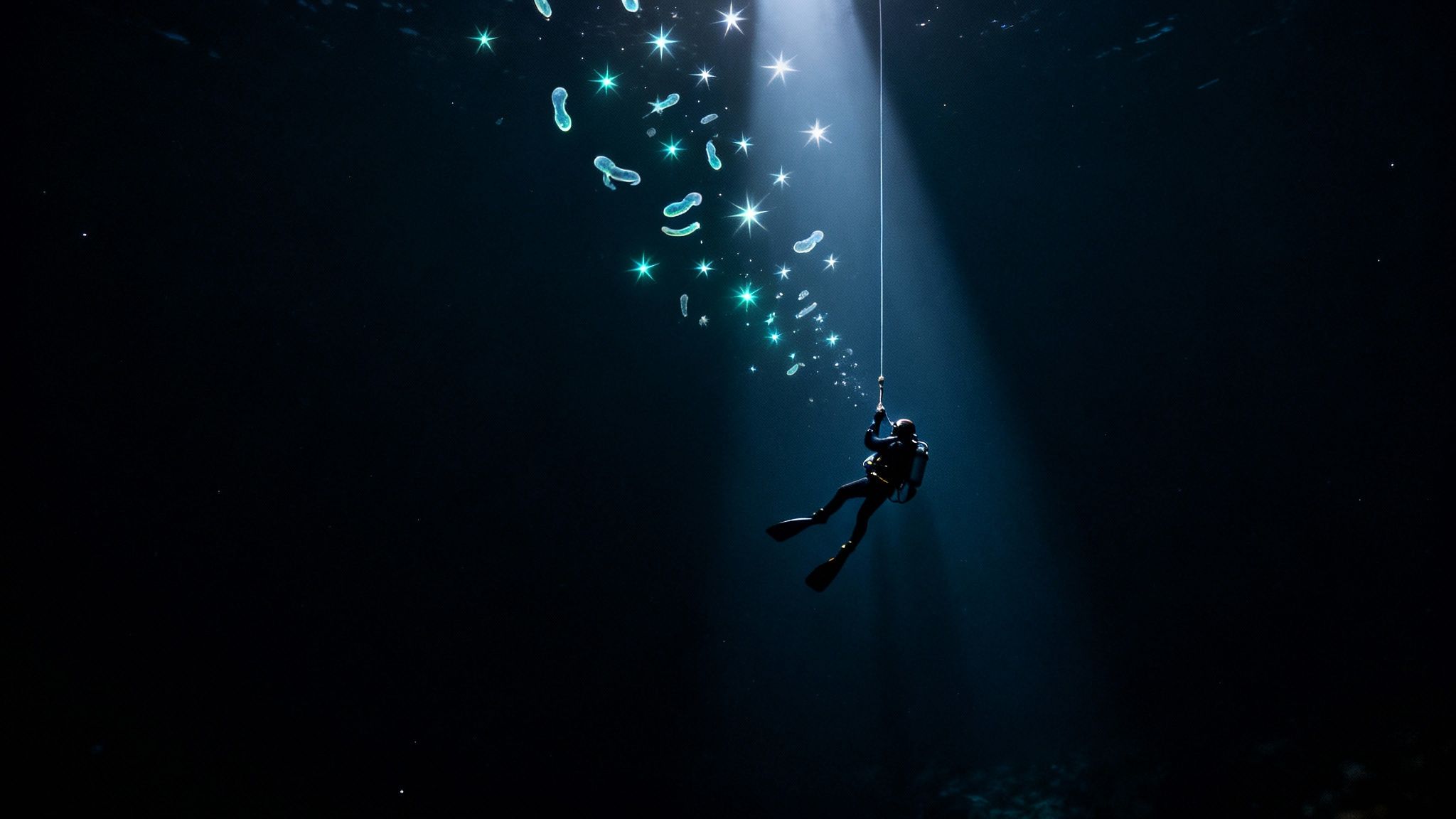
Picture this: you're suspended in the pure, inky black of the open Pacific. Below you, thousands of feet of dark water. You're tethered to the boat, drifting in the void as the sun disappears completely.
This is when the show starts. You're about to witness the largest vertical migration of life on Earth. Strange, beautiful, and often glowing creatures rise from the crushing depths to feed near the surface, using the darkness as cover. Many are in their larval stages, looking like bizarre, translucent miniatures of their adult selves.
We hear it all the time—this dive feels more like floating in outer space than being in the ocean. You’ll see organisms that defy imagination, things you'd expect in a sci-fi movie, not just a few miles off the coast of Hawaii.
On a typical blackwater dive, you're likely to encounter:
- Pelagic Nudibranchs: Think vibrant sea slugs that "fly" through the water.
- Larval Eels and Fish: Ghostly, transparent creatures that give you a rare peek into their earliest days.
- Bioluminescent Jellies: They pulse with their own inner light, creating a natural light show in the dark.
- Venus' Girdles: Shimmering, ribbon-like animals that flash with rainbow colors.
This incredible experience is only possible because the water just offshore from Kona gets incredibly deep, incredibly fast. You can learn more about the science and wonder behind this unique adventure by exploring what makes the Kona Blackwater Dive so special.
Premium Dives for the Seasoned Explorer
Beyond the blackwater trip, seasoned divers have plenty more to explore. We can take you to deeper reefs and more technical sites that demand a higher level of skill and experience. These advanced boat trips head to spots that are way off the beaten path, offering pristine conditions and thrilling encounters with larger marine life.
These charters are specifically for divers who are comfortable with deeper profiles, potential currents, and trickier navigation. Kona Honu Divers runs a Premium Advanced 2-Tank Trip designed for just this purpose. Our expert guides will lead you to some of the most remote and rewarding sites on the coast, where you might explore deep lava tubes, swim along sheer drop-offs, and even run into pelagic species like sharks and eagle rays.
The whole point is smaller groups and longer bottom times, giving you the chance to really soak in the wilder side of Kona’s underwater world. This is how you see the part of Big Island scuba diving most people miss out on.
If you’re ready to push your limits, Kona Honu Divers has the expert team and world-class sites to make it happen. You can book the unforgettable Blackwater Night Dive tour and get ready for an adventure you’ll be talking about for years.
How to Plan Your Big Island Diving Trip
Okay, let's get into the nuts and bolts of planning your dive adventure. Figuring out the details is almost as much fun as the trip itself, and a little bit of prep work goes a long way. Getting it right turns a good dive trip into a truly unforgettable one.
We'll walk through picking the right time of year, figuring out certifications, and even how to snag some great deals. When you’re well-prepared, you can just relax and focus on what you came for: the incredible underwater world of Kona.
Choosing the Best Time to Visit
One of the fantastic things about diving in Kona is that there’s really no "off-season." The water is always inviting. That said, the time of year does change the experience a bit, so knowing what to expect can help you pick your perfect window.
The summer months, from about May through September, are what many consider classic Kona diving. This is when the ocean is at its flattest and the water is warmest, often hitting a balmy 80°F (27°C). The visibility is usually spectacular, too, sometimes stretching well beyond 100 feet.
Then there’s winter, from December to March. The water cools down a little, usually settling in the mid-70s, and conditions can be a bit more dynamic. But here's the magic trade-off: it's humpback whale season. There is absolutely nothing like hanging at your safety stop and hearing the songs of humpback whales echoing through the water. It’s a surreal experience that only happens this time of year.
Seasonal Diving Conditions in Kona
Here’s a quick reference guide to help you decide when to visit. It breaks down what you can generally expect throughout the year here on the Big Island.
| Season | Avg. Water Temp | Typical Conditions | Marine Life Highlights |
|---|---|---|---|
| Summer (May-Sep) | 78-81°F (26-27°C) | Calmest seas, best visibility | Manta rays, dolphins, turtles |
| Winter (Dec-Mar) | 74-76°F (23-24°C) | Cooler water, protected from swells | Humpback whale songs, turtles |
No matter when you come, Kona's protected coastline means we almost always have a great place to dive.
Your Path to Getting Certified
Never blown bubbles before? Or maybe you're an old pro looking to add a new skill? Whatever your experience level, we've got you covered. You don't even need to be certified to get a taste of Kona's reefs.
-
Discover Scuba Diving: This is your ticket to the underwater world if you're not certified. An instructor teaches you the basics in a safe, controlled way and then takes you on a genuine ocean dive on a shallow reef. It’s the perfect way to try diving without committing to a full course.
-
Open Water Diver Certification: If you get hooked (and we're betting you will!), why not get your full certification right here in paradise? We offer the full Open Water course, which gives you all the skills and knowledge you need to become a safe, confident diver for life.
And if you’re already certified, the learning never stops! Kona is a fantastic place to take an advanced course or a specialty class to level up your diving skills.
Gear Rentals and Special Offers
Let's be honest, lugging a full set of dive gear across the ocean is a pain. That's why most people just rent it here. When you book a trip with us, high-quality, well-maintained rental gear is included. That means your BCD, regulator, wetsuit, mask, and fins are all taken care of. Just show up with your swimsuit and a towel.
Pro Tip: One of the best perks we offer at Kona Honu Divers is free nitrox on all of our Kona diving tours for any diver certified to use it. Diving with enriched air can give you longer bottom times and often helps you feel less tired after a day of diving. It's a game-changer.
It also literally pays to plan ahead. We have an early diver discount for anyone who books their trip in advance. It's a simple way to save some money and guarantee your spot on our most popular charters, like the Manta Ray Night Dive. Get organized early, get the best price, and get ready for an amazing adventure.
Your Big Island Diving Questions, Answered
Even the most seasoned travelers have a few questions when planning a dive trip to a new spot. Getting the details sorted out ahead of time means you can show up feeling confident and ready for your underwater adventure.
Here are some straightforward answers to the questions we hear most often about Big Island scuba diving. Our goal is to give you genuinely helpful info so you can focus on the incredible experiences waiting for you beneath the waves.
When’s the Best Time of Year to Dive the Big Island?
Honestly, there’s no bad time to dive here—Kona’s coast is remarkably well-protected, giving us great conditions year-round. That said, if you're looking for that picture-perfect, flat-calm, bathwater-warm experience, the summer months from May to October are prime time.
During the summer, the ocean is typically at its calmest, and water temperatures often hit a balmy 80°F (27°C). That means most divers are perfectly comfortable in just a 3mm wetsuit. Visibility is also at its peak, frequently stretching beyond 100 feet, making for some absolutely breathtaking views.
But don't count out the winter. From December to March, the water might be a few degrees cooler, but you get an incredible bonus: it’s humpback whale season. There’s nothing quite like hanging out on your safety stop and hearing their hauntingly beautiful songs echoing through the water. It's a truly magical experience.
Do I Need to Be Certified to Try Scuba Diving in Kona?
Not at all! If you’ve never been diving but want to see what all the fuss is about, the Discover Scuba Diving program is exactly what you're looking for. It's a fantastic, no-pressure introduction to the underwater world, designed specifically for beginners.
With a top-notch dive shop like Kona Honu Divers, a certified instructor will walk you through the basics in a safe, controlled setting. Once you’ve got the hang of it, they’ll take you on a real, shallow-water dive on one of Kona's beautiful reefs.
It’s the perfect way to get your fins wet without committing to a full course. And if you fall in love with it (which, fair warning, most people do), you can roll right into an Open Water Diver course and get fully certified during your vacation.
What Kind of Marine Life Will I See?
The Big Island is teeming with life, and you’re pretty much guaranteed to see something amazing on every single dive. For starters, you'll meet plenty of Hawaiian Green Sea Turtles (Honu). They are everywhere, either munching on algae, cruising by, or just napping on the reef.
Beyond our resident turtles, keep an eye out for these regulars:
- Moray Eels: You’ll often spot them peeking out of holes in the reef, adding a little mystery to the landscape.
- Octopuses: These guys are masters of camouflage, so finding one is a real thrill for sharp-eyed divers.
- Frogfish: Another camouflage expert. Underwater photographers absolutely love spotting these weird and wonderful fish.
- Schools of Reef Fish: Prepare to be surrounded by clouds of color from butterflyfish, triggerfish, and brilliant yellow tangs.
And if you get a little lucky? You might see whitetip reef sharks resting on the sand, pods of playful spinner dolphins cruising past the boat, or elegant eagle rays gliding through the deep blue. Then, of course, there are the headliners: the graceful manta rays on the night dive and the bizarre bioluminescent critters on the blackwater dive.
Is the Manta Ray Night Dive Safe for Beginners?
Absolutely. When you go with a professional, safety-focused operator, the Manta Ray Night Dive is incredibly safe and exceptionally well-managed. The entire experience is designed from the ground up to be comfortable and secure for divers of nearly all skill levels.
Your guides will give you a thorough briefing beforehand, so you know exactly what to expect and how to act around the mantas. In the water, your divemaster sets up a stationary viewing area on the seafloor, usually centered around a powerful light we call the "campfire."
You and the other divers kneel or sit in a designated spot, and you're supervised the whole time. The mantas are gentle giants; they're only interested in the plankton attracted to the light, not the funny-looking creatures making bubbles. As long as you follow the simple rules—stay in your spot and never, ever touch them—it’s a completely safe and profoundly awe-inspiring adventure.
Ready to book your underwater adventure? The expert team at Kona Honu Divers is ready to show you the best of Big Island scuba diving, from sunlit reefs to magical night encounters. Check out our full range of Hawaii diving tours and find the perfect trip for you.