
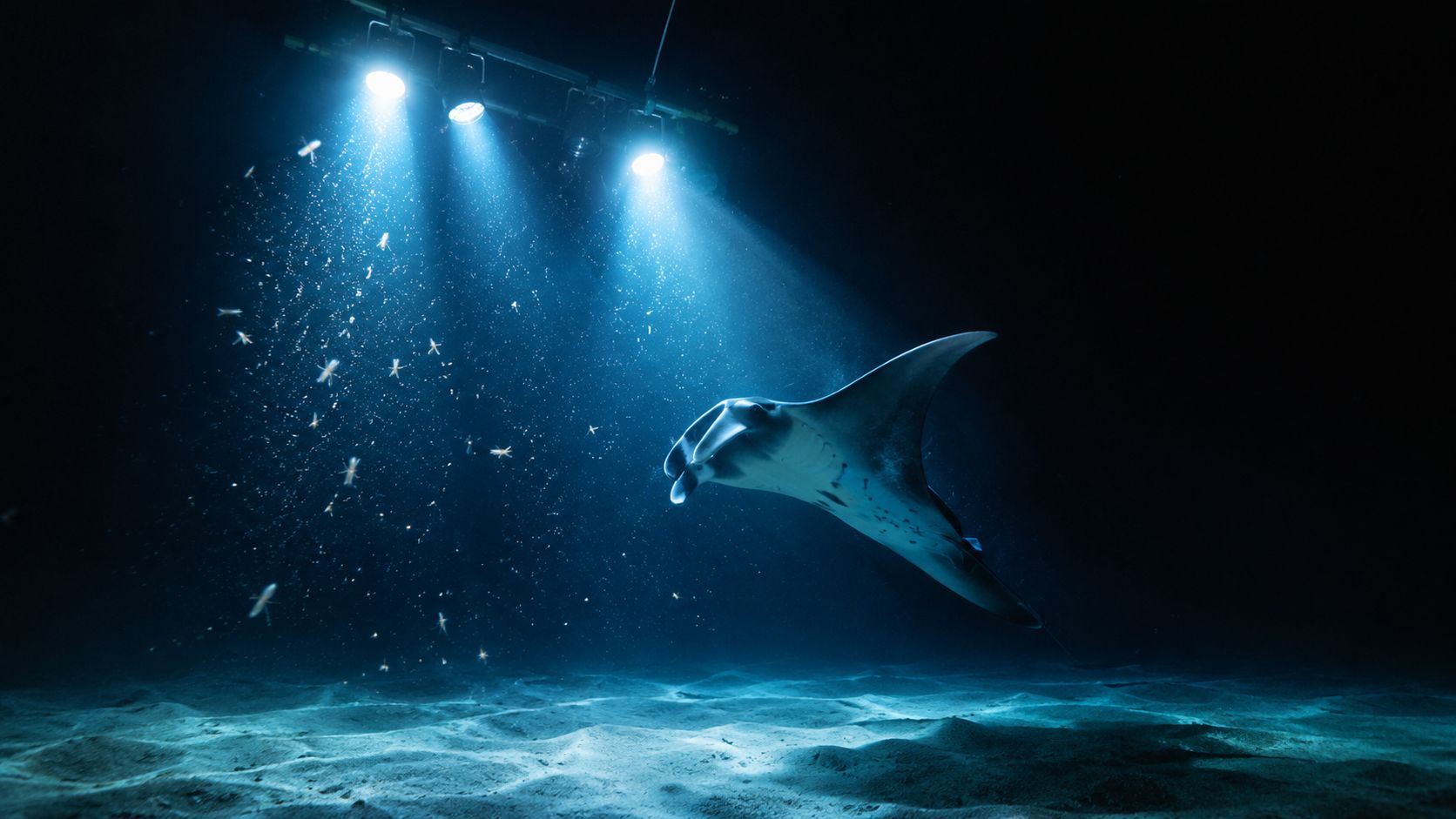
You've probably seen the photographs: black water, a bright pool of light, and a manta ray gliding straight toward the camera with its white belly exposed. In practice, it is less like a free swim and more like a carefully managed wildlife encounter. You hold a floating light board at the surface, stay still, and let the feeding pattern bring the animals to you.
A successful Big Island manta ray night snorkel depends on more than luck. Site selection, light placement, crew control, water conditions, and your comfort in open ocean all matter. The guide below focuses on those practical details, including how Garden Eel Cove, Manta Village, and Manta Heaven differ, how to assess an operator, and what first-time snorkelers should know before boarding.
What a Big Island Manta Ray Night Snorkel Actually Feels Like
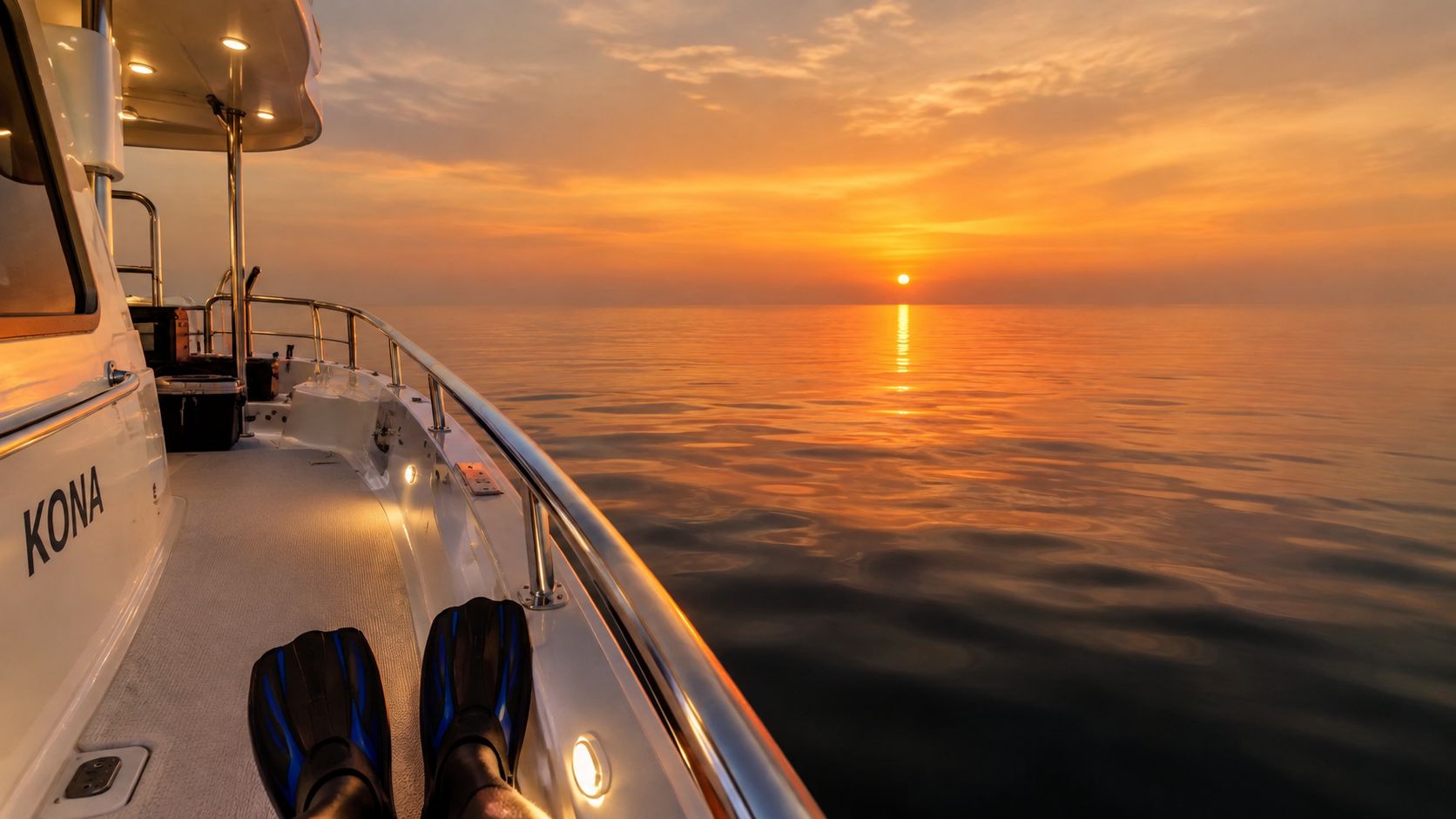
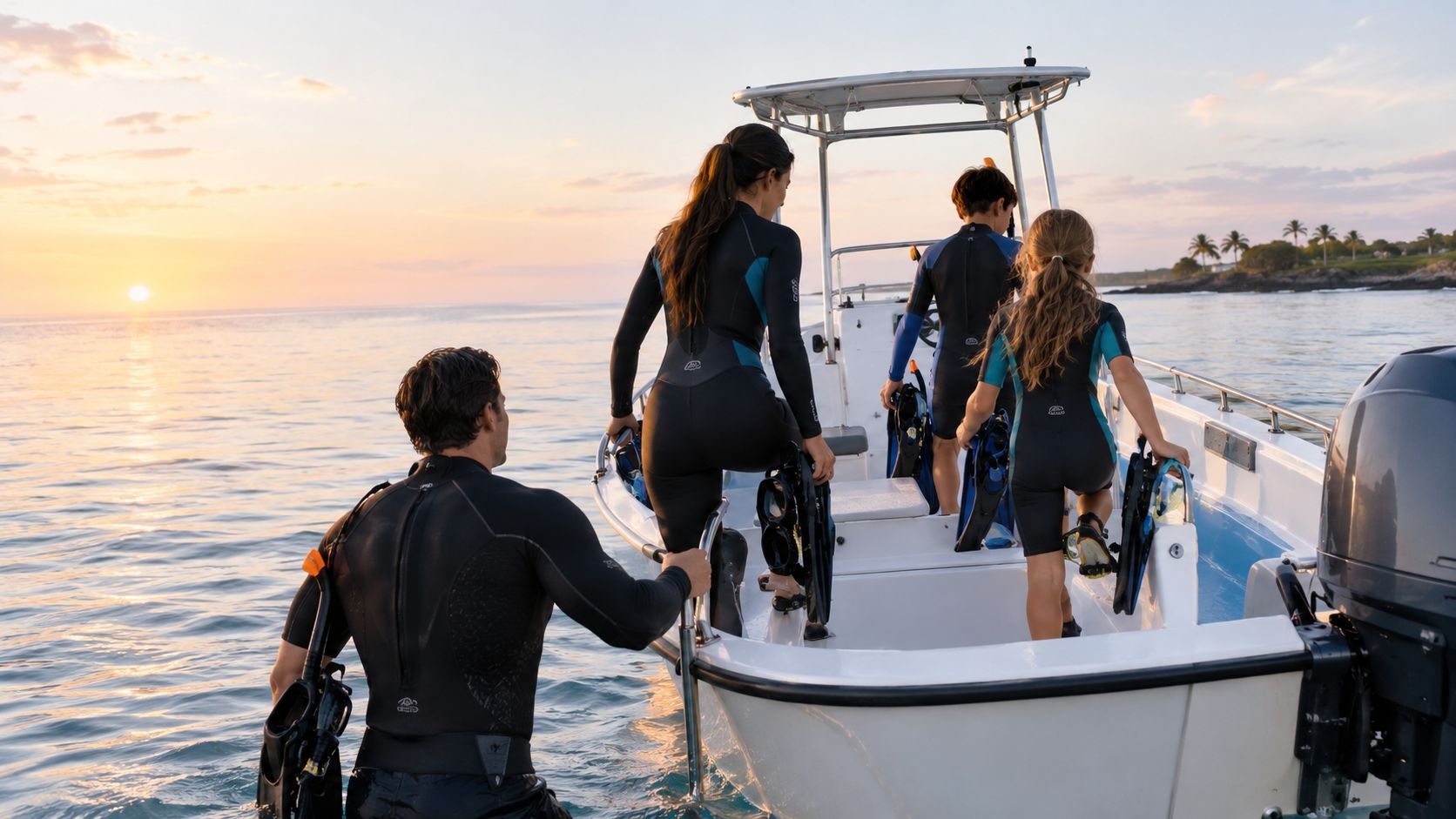
At sunset, the Kona boat idles offshore while the last light catches the ridgeline. The crew checks masks, zips wetsuits, and explains where to place your hands on the viewing board. Then the sun drops, the surface turns dark, and the underwater lights create a bright column beneath the boat.
The entry can feel strange for the first few moments. You hear your own breathing through the snorkel, lose the familiar visual reference of the shoreline, and feel the board shift beneath your arms. Once your eyes adjust, the scene becomes remarkably simple. The lights are below you, the plankton gathers in the glow, and the group watches the water rather than swimming around looking for wildlife.
Then a pale shape appears below the light. A manta rolls backward through the illuminated water, its cephalic fins open as it filters plankton. A large reef manta can briefly fill your entire view, but the encounter works best when you resist the urge to reach toward it. The animal chooses its path, and the most memorable passes often happen when everyone stays quiet and stationary.
The decisions that shape the experience
The best trip isn't necessarily the one with the largest boat or the most dramatic marketing photographs. Look for an operator that explains the actual viewing site, uses a stable light station, provides appropriate flotation, and gives a clear briefing before anyone enters the water.
Manta encounters around Hawaiʻi Island are unusually localized. A 2025 study of Kona manta sightings used community-sourced records from 2010 through 2022 and documented more than 23,000 sightings of 167 individual reef manta rays at two nighttime feeding sites. The same research found long-term site fidelity and stable aggregations despite substantial tourism pressure.
That background changes how you approach the trip. You aren't searching a featureless ocean for a random animal. You're joining a fixed-position observation method built around a resident population, a known feeding area, and a light field that concentrates plankton.
For visual examples of the animals and encounter conditions, browse these Kona manta ray dive photographs. The photos can help set expectations, but the experience is quieter and more physical than a still image suggests.
How the Night Snorkel Works and Why the Rays Show Up
The operating principle is straightforward. Bright lights shine into the water, microscopic plankton gathers in the illuminated area, and reef mantas arrive to feed. The crew doesn't feed the rays, lure them with bait, or train them to perform. The light only concentrates an existing food source where the animals can exploit it.
A manta moves through the plankton column with its mouth open, using its cephalic fins to direct water toward its mouth and gill rakers. Barrel rolls let the animal pass repeatedly through the densest part of the light field. From the surface, you see a series of smooth arcs, turns, and close approaches rather than a straight-line swim.
What the crew controls
A professional setup usually includes a boat or floating viewing station, powerful underwater lights, and a clearly defined area for snorkelers. Guests hold the board and keep their bodies at the surface while the crew maintains the light field. Some operations use glow boards or additional surface lighting to make the group easier to monitor.
The surface handler matters as much as the equipment. That person watches the swimmers, keeps the group organized, checks that nobody drifts into the working area, and communicates with the boat. A bright light with poor positioning won't compensate for a scattered group or constant swimmer movement.
Practical rule: The rays come to the plankton cone, not to the most active swimmer. Stay with the station and let the setup do its job.
This is why the Big Island manta ray night snorkel is a fixed-position activity. It isn't the same as daytime reef snorkeling, where you move along a coastline and explore at your own pace. You hold position, keep the board between you and the working lights, and allow the mantas to choose their distance.
Why Kona has a repeatable encounter
The modern night-snorkel tradition began after shoreline floodlights at hotels and construction sites attracted plankton in the late 1970s and early 1980s. Mantas learned to use those illuminated feeding areas, and operators later developed dedicated light stations.
The local population is also unusually distinct. Independent Hawaiian reporting in 2026 stated that only 318 unique manta rays had been identified around Hawaiʻi Island since 1979. The same report described genetic research indicating extremely limited movement between island groups, roughly one female moving between island groups every 1,300 years and one male about every 64 years. Those figures help explain why Kona encounters involve locally resident animals rather than a constantly changing population.
Choosing the Best Site for Your Manta Encounter
The three names you'll hear most often are Manta Village, Manta Heaven, and Garden Eel Cove. They aren't interchangeable booking labels. The launch harbor, viewing station, local conditions, and crowd management can change the character of the night.
Manta Village near Keauhou is the original and most established viewing area. It has a long operational history and is widely used by commercial boats. That maturity makes it a practical choice for travelers who want a familiar, well-known site and a short approach from the nearby harbor, but popular sites can also feel busy.
Manta Heaven, farther north, is another established Kona-area location. It can offer a different group dynamic from Manta Village, but conditions and site access may vary with the operator and the night. Ask the company to identify the actual site on your reservation rather than assuming the name of the harbor tells you where you'll snorkel.
Garden Eel Cove deserves careful attention because research identifies distinct site-use patterns along the Kona coast. The 2025 study linked above found that Garden Eel Cove consistently supported larger groups, while Keauhou was used more by females. That suggests the two areas have different ecological roles, not one uniform feeding ground.
A practical comparison
| Site | Location | Reliability | Crowding | Best For |
|---|---|---|---|---|
| Manta Village | Near Keauhou | Established and commonly used | More likely to feel busy | First-time visitors who value a familiar site and convenient south-Kona access |
| Manta Heaven | North Kona coast | Strong option, with conditions varying by night and operator | Often selected by travelers seeking an alternative to Keauhou | Visitors staying near north Kona or looking for a different launch pattern |
| Garden Eel Cove | Kona coast viewing area | Strong research record for recurring use and larger groups | Depends heavily on operator setup and access control | Travelers prioritizing the clearest viewing conditions and a focused wildlife experience |
For most visitors doing their only manta snorkel on Hawaiʻi Island, I favor Garden Eel Cove when the operator can clearly explain its setup and access. The reason isn't a promise of guaranteed animals. It's the combination of a documented feeding location, the possibility of larger groups, and the chance to choose a trip designed around controlled viewing rather than maximum boat volume.
Manta Village remains a sensible choice for travelers who want proximity and a well-established operation. Manta Heaven can suit guests staying north of Kailua-Kona or those who prefer a different departure area. The right decision depends on your lodging, tolerance for a busy site, and whether the company can describe how it handles lights and crowding.
Use this Big Island dive-location guide to understand how Kona's coastal geography affects marine activities before you choose a departure point.
Booking the Right Operator and Packing for the Trip
A booking page should tell you more than the departure time. Before paying, confirm which site the boat uses, whether the site can change with conditions, and what equipment is included. A vague promise to “see mantas near Kona” leaves out the information that most affects the experience.
Ask these questions directly:
- Viewing site: Does the trip run to Garden Eel Cove, Manta Village, Manta Heaven, or a flexible site chosen by the captain?
- Light station: How does the crew create and maintain the underwater light field?
- Flotation: Will each snorkeler have a stable viewing board or another supported way to remain at the surface?
- Thermal protection: Is a wetsuit or wetsuit top included, and are sizes available?
- Group management: Who stays in the water with guests, and how does the crew keep swimmers with the station?
- Cancellation policy: What happens if sea conditions prevent the boat from reaching the planned viewing area?
Be cautious with a reseller that can't answer those questions. A low advertised price may reflect fewer inclusions, a less suitable boat, or a booking layer that makes changes difficult. A hotel concierge can sometimes help with local cancellation logistics. Booking directly with an operator using a credit card can also make communication and documentation easier.
Pack for the return ride
The water may not be the coldest part of the evening. Once you leave the light station, wet skin, darkness, and wind on the boat can make the ride back uncomfortable.
Bring a swimsuit, a quick-dry towel, a light jacket or sweatshirt, non-slip water shoes for the dock, a waterproof phone pouch, and a small dry bag for valuables. Apply reef-safe sunscreen before the trip, not while you're in the water. Long hair needs a secure tie, and prescription swimmers should tell the crew before equipment is fitted.
If you're prone to seasickness, consider a preventative option before departure and follow the product directions. Common choices include a Ship-EEZ Seasickness Patch, Dramamine pills, Bonine pills, Sea Band wristbands, or ginger chews. Don't combine products casually, and ask a pharmacist or clinician if you take other medication or have a relevant medical condition.
Before you leave the hotel, review your ocean-swimming comfort, disclose relevant medical history, and eat early enough that you aren't boarding immediately after a heavy meal. For additional planning around Kona dive operations and water logistics, see this Kona diving guide.
Arriving at the Boat and Getting Into the Water
A smooth trip starts before the boat leaves the dock. Arrive with enough time to check in, complete the waiver, and get fitted for a wetsuit and mask without rushing. The waiver should identify the risks of a nighttime open-ocean snorkel, including limited visibility, boat movement, and the physical demands of entering and exiting the water.
On board, the captain or guide should explain the route, the planned viewing area, local current patterns, and the exit procedure. Watch how the crew loads the light board and organizes the group. Good preparation looks calm and deliberate. Nobody should be learning the hand signals for the first time after the lights are already in the water.
The ride out is part of the transition. As the shoreline darkens, the crew sets the lights and checks the flotation stations. You may enter by a seated step-in or a giant stride, depending on the boat. Either way, wait for the guide's signal, hold your mask in place, and keep one hand available for the rail or ladder until you reach the board.
The first moments on the surface
The first minute can feel disorienting because your visual field is reduced to the board, the lights, and the dark water around you. Put your face in the water, keep both hands on the PVC handles, and settle into a horizontal position. The board gives you stability, but it won't stop you from drifting if you kick or swim away from the station.
Other snorkelers' breathing creates a steady background hiss. That sound is normal. So is a quiet wait before the first manta appears. The crew may adjust the lights or ask the group to move slightly, but the basic instruction remains the same: stay still and preserve the light field.
The best first minute is uneventful. Your mask seals, your body relaxes, and the crew knows exactly where everyone is.
If you become anxious, signal the surface handler instead of trying to swim back to the boat alone. Tell the crew before entry if you're nervous, uncomfortable in deep water, or likely to need help with the ladder. A good guide can position you where the board and boat are easiest to reach.
The return is more tiring than many guests expect. Keep your jacket or sweatshirt accessible, dry your face before boarding, and use the ladder one person at a time. The crew should give clear instructions for removing fins and handing equipment up, especially when the deck is wet and visibility is limited.
In-Water Safety, Photography, and Manta Etiquette
The safest position is horizontal at the surface, with your body supported by the viewing board and your fins behind you. Don't dive beneath the board, chase a manta, block its path, or reach toward an animal that passes close. The responsible manta encounter guidance from Hawaiʻi emphasizes staying at the surface and avoiding diving, touching, and pursuit.
Keep your fins below the surface when possible so you don't strike a ray or another swimmer. If a manta turns toward you, hold your position and let it alter course. Experienced crews often ask guests to leave a respectful buffer rather than trying to estimate the closest possible approach.
Use simple signals
Dark water makes verbal communication difficult. The guide may use a flashlight, hand signals, or a tap on the board to direct the group. Learn the signals during the briefing and keep your own light pointed where the crew instructs.
If you need help, tap your light toward the surface handler and raise one hand when practical. If you lose contact with the board, don't swim blindly through the viewing area. Stay calm, make yourself visible, and follow the operator's separation procedure. The buddy system matters because a companion can alert the guide if you become separated or need assistance.
The same state wildlife rules that prohibit knowingly capturing or killing manta rays in Hawaiʻi waters support a strict no-contact approach. The state-rule discussion for manta-viewing areas also describes a commercial viewing window from 4:00 pm to 4:00 am, a 150-foot limit around the designated viewing area for people and guides, and a 100-foot restriction on motorboats except for arrival, departure, or emergencies.
Photograph without becoming the problem
A small action camera can produce useful footage if you keep it controlled. Use a short hand mount or wrist strap rather than a long selfie stick. Keep the housing within arm's reach, avoid extending it into the manta's path, and let the animal enter the frame instead of swimming after it.
Low-light footage benefits from a stable grip and restrained movement. White-balance settings can change the color of the scene, but no camera setting fixes footage ruined by a moving subject, a fogged lens, or a snorkeler who leaves the station to chase a better angle. Flash photography is discouraged because it distracts guests and adds unnecessary disturbance.
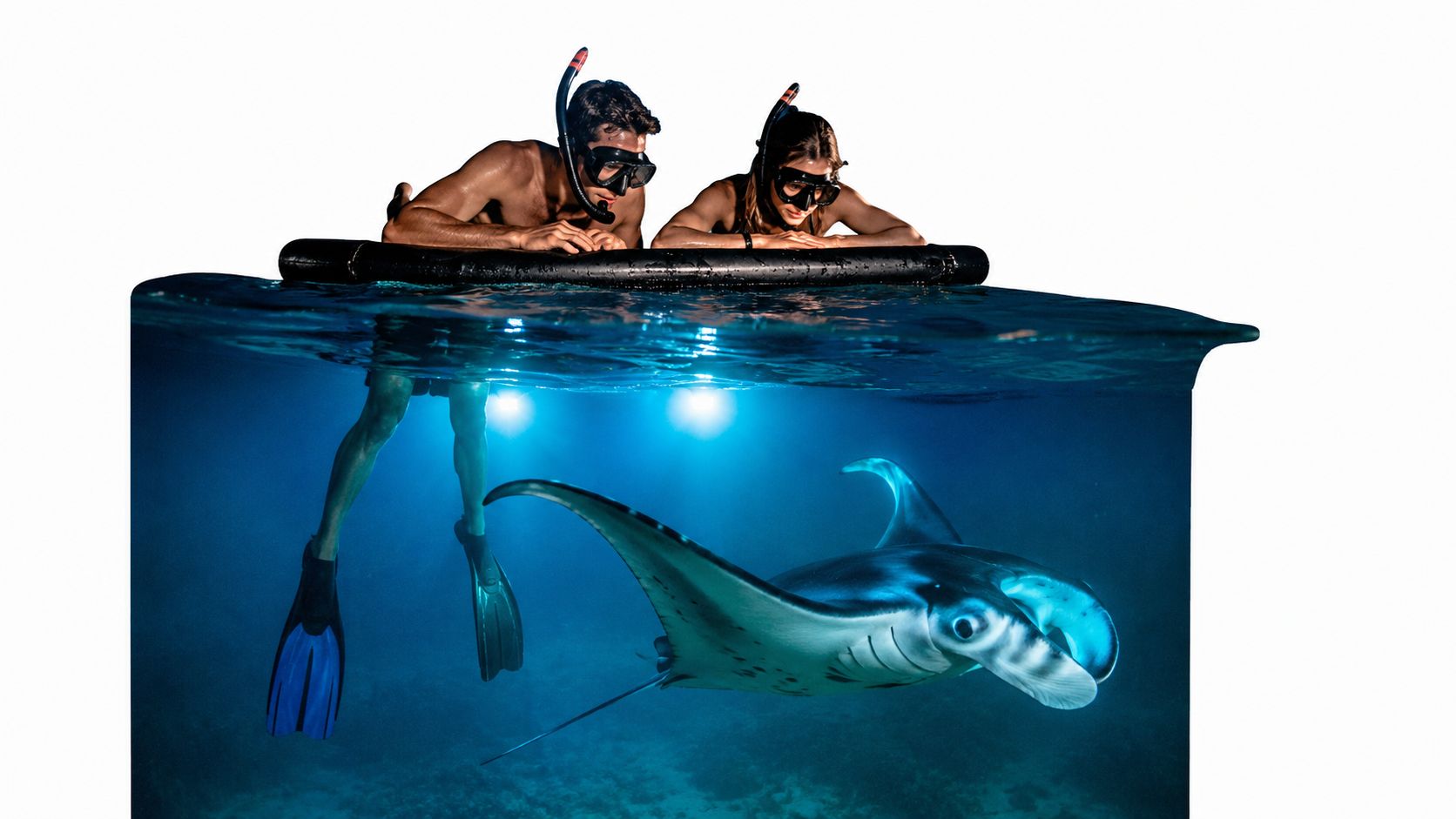
Leave the lights on the board and don't shine them directly into the animals' eyes. Never touch a manta, even if it passes close enough to brush your equipment. The experienced-operator version of the briefing is simple: no touch, no chase, no flash.
More detail on keeping distance, controlling equipment, and protecting the viewing area appears in this responsible diver etiquette guide.
Accessibility, Family Fit, and Booking with Confidence
A manta snorkel can work for a nervous first-timer, but it isn't a passive boat excursion. You'll be in open ocean after dark, holding a flotation board, wearing a mask, and following instructions while the boat and water move beneath you. Anyone who cannot remain calm in that setting should choose a shore-based viewing option or another activity.
Age policies vary by operator, so check the actual booking terms rather than relying on a general travel article. Ask whether children must meet a minimum age, whether an adult must remain beside them, and whether the crew allows a child to observe from the boat if they decide not to enter.
Match the trip to the swimmer
Non-swimmers and older travelers should ask precise questions before booking:
- Flotation support: Is the board large and stable enough to hold throughout the session?
- Entry and exit: Is there a seated step-in, a lift-assisted option, or a wide swim ladder?
- Wetsuit fit: Can the crew provide a secure fit without restricting breathing or movement?
- Surface supervision: Will a guide remain in the water with the group?
- Shorter participation: Can a guest return to the boat early without disrupting the rest of the group?
- Anxiety planning: Can the crew place a nervous guest near the handler or at the edge of the group?
A senior traveler who swims comfortably may manage the activity better than a younger guest who panics in deep water. The deciding factor is not age alone. It's the ability to follow instructions, hold the board, tolerate darkness, and use the ladder safely.
Know when to skip it
Skip the trip if open-ocean conditions trigger severe anxiety, if you can't use a mask and snorkel without repeated assistance, or if a medical concern makes nighttime swimming inappropriate. Tell the operator about mobility limitations before reserving. Some boats can accommodate specific needs, while others cannot safely improvise once the group has left the dock.
For families, a small group and attentive surface handler usually matter more than onboard luxury. For couples or solo travelers, site choice and light control may matter more than departure location. For visitors who want the strongest chance of a concentrated encounter, prioritize an established site and an operator that explains its field method rather than promising a guaranteed show.
A reliable decision usually follows this order: choose a site that fits your lodging and priorities, confirm flotation and access details, verify what equipment is included, disclose health or swimming concerns, and arrive prepared for a fixed-position night in open water. The mantas are wild animals, so no operator can promise a specific approach, but a disciplined setup gives the encounter its best chance to work.
Kona Honu Divers offers a dedicated surface-level manta ray night snorkel from Honokohau Harbor, with trips built around Kona's established manta viewing areas and crew-managed light stations. If you want practical guidance on choosing the right site and preparing for the conditions, visit Kona Honu Divers before you book.