
If you ask any seasoned diver about the best spot for Big Island Hawaii scuba, they'll almost certainly point you to one place: Kona. Its waters are famously calm and clear, and the underwater volcanic landscapes are something you have to see to believe. The Kona coast is a diver's paradise, uniquely shaped by nature and offering experiences you just can't get anywhere else.
Why Kona Is The Epicenter For Big Island Hawaii Scuba
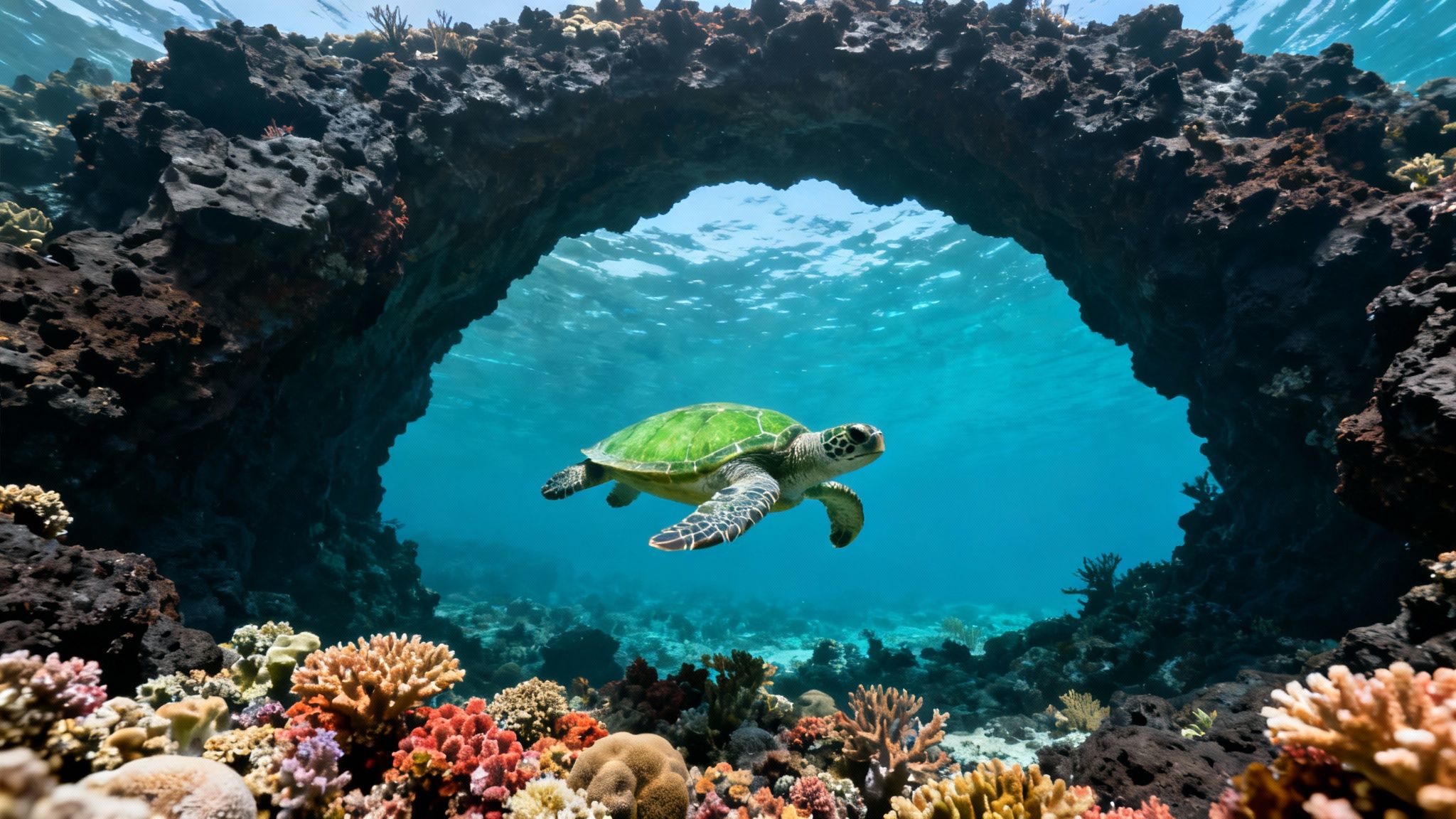
So, what makes this stretch of coastline so special? It all comes down to the volcanoes. The island's massive shields, Mauna Loa and Hualālai, stand so tall they block the powerful trade winds from reaching the western side. This creates a "rain shadow" effect that extends right out into the ocean, leaving the waters off Kona remarkably calm and protected.
This natural shelter has sculpted a breathtaking underwater world, full of dramatic lava tubes, soaring archways, and vibrant coral gardens blanketing ancient lava flows.
Unmatched Visibility and Thriving Marine Life
Because the water is so protected, the conditions for diving are often close to perfect. Visibility frequently surpasses 100 feet, which is a dream for everyone from new divers still finding their fins to seasoned underwater photographers lining up that perfect shot.
This incredible clarity reveals an ecosystem teeming with life. Thanks to a network of protected marine sanctuaries, the reefs are bustling. On any given dive, you’ll likely find yourself swimming alongside:
- Honu (Green Sea Turtles): These gentle giants are a signature sight, often seen cruising by or resting peacefully on the reef.
- Endemic Hawaiian Fish: Many of the colorful fish you'll see are found nowhere else on the planet, making every dive a unique discovery.
- Spinner Dolphins: It's not uncommon to see playful pods of spinner dolphins passing by, a truly unforgettable surface interval or underwater encounter.
It’s this combination of pristine conditions and incredible biodiversity that puts Kona at the top of the list for Hawaii diving. It consistently outranks the other islands, drawing more than 300,000 divers each year who come for the calm waters and visibility that averages 80-120 feet year-round.
From the world-famous manta ray night dive to the surreal experience of a blackwater dive, Kona offers a staggering range of adventures. It’s no wonder the Big Island has cemented its reputation as a world-class diving destination. You can get a deeper look at what makes diving in Kona so unique in our dedicated post.
Exploring Kona’s Top Dive Sites For Every Diver
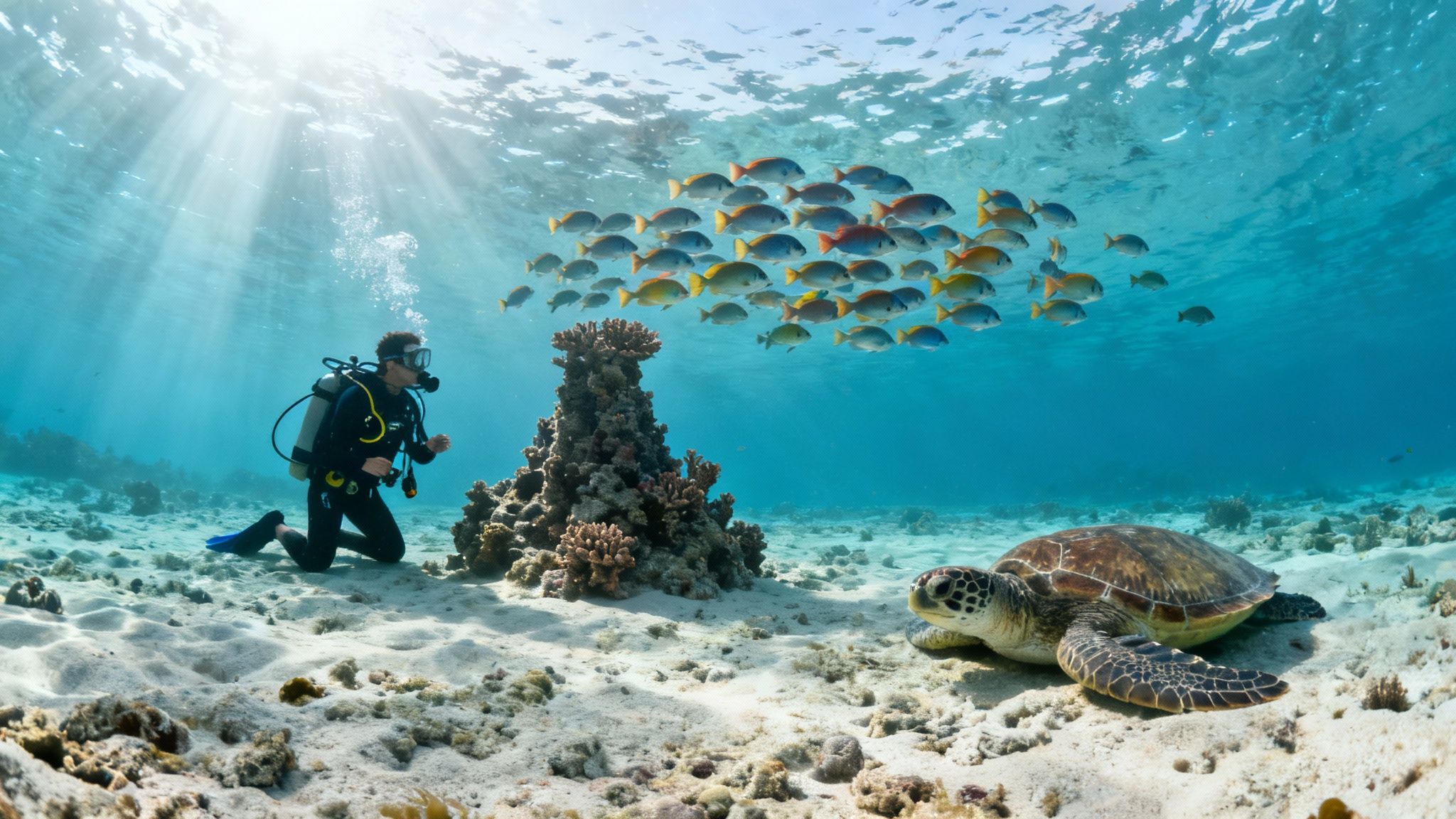
The Big Island really is a diver's playground. The Kona coast, in particular, is packed with dozens of world-class spots, each with its own personality. Whether you’re gearing up for your very first ocean dive or you’re a seasoned pro looking for something new, there’s a piece of underwater paradise here for you.
For anyone just starting their big island hawaii scuba adventure, the journey begins on calm, shallow reefs. We deliberately choose these sites because they're protected, clear, and absolutely teeming with life. It's the perfect way to build confidence and fall in love with diving from the first breath.
Welcoming Waters for New Divers
Sites like Pawai Bay and Turtle Pinnacle are our go-to spots for new divers. Pawai Bay is a huge, sheltered area with a bunch of different dive spots, most featuring beautiful coral gardens and sandy bottoms perfect for getting your bearings. It's a fantastic place to see massive schools of yellow tang, curious butterflyfish, and, of course, the graceful green sea turtles.
Turtle Pinnacle is exactly what it sounds like—a special "cleaning station" where turtles line up to let smaller fish nibble algae off their shells. It’s a pretty incredible sight. The spot is shallow and the conditions are reliable, making it a safe and truly memorable first or second dive.
These protected sites aren't just about safety; they're about giving you an immediate, jaw-dropping look into the vibrant world that makes Kona diving so unforgettable.
Once you're certified and comfortable, a whole new world opens up. The Big Island's volcanic past created a wild underwater landscape of lava tubes, arches, and caverns just waiting to be explored. There's nothing quite like navigating through an ancient lava tube, watching beams of sunlight cut through the darkness to reveal the critters hiding inside.
Adventures for Certified Divers
For that kind of thrill, we head to sites like Golden Arches and Suck 'Em Up. At Golden Arches, you get to swim through a series of massive, majestic lava rock archways that are often filled with schools of soldierfish. On a calm day, Suck 'Em Up is a lava tube you can actually swim through, which is a genuinely unique and slightly surreal experience.
Beyond the cool rock formations, the Kona coast is famous for its dramatic wall dives. At a site called The Meadows, the reef just drops off into the deep blue, creating a vertical cliff that attracts bigger marine life. This is where you want to keep an eye out in the blue for passing eagle rays or the occasional reef shark cruising by.
Exclusive Dives for the Experienced Adventurer
Have a few more dives under your belt and looking for a real challenge? The Big Island delivers. We have deeper, more remote sites that are reserved for advanced divers who can handle more demanding conditions. The payoff is worth it—you’ll find pristine, untouched coral and have a much better chance of encountering rare pelagic species.
At Kona Honu Divers, we run specialized advanced dive tours specifically to get to these spots. We keep the groups small and ensure everyone has the skill set for the dive, which makes for a safer, more rewarding, and absolutely exhilarating day for everyone on board.
To give you a clearer picture, here’s a quick rundown of some of the incredible sites waiting for you along the Kona coast.
Big Island Dive Site Snapshot
| Dive Site Name | Best For | Max Depth | Key Features |
|---|---|---|---|
| Pawai Bay | Beginners | 45 ft | Protected coves, lava arches, turtles |
| Turtle Pinnacle | Beginners/All Levels | 60 ft | Famous turtle cleaning station, eels |
| Golden Arches | Certified Divers | 50 ft | Large lava archways, vibrant reef |
| Suck 'Em Up | Certified Divers | 45 ft | Lava tube swim-through, unique geology |
| The Meadows | Certified Divers | 100+ ft | Dramatic wall dive, chance for pelagics |
| Kealakekua Bay | All Levels | 80 ft | Marine sanctuary, massive fish schools |
This is just a taste, of course. The sheer diversity is what makes the Kona coast stand out as one of the best scuba diving destinations on the planet.
The Kealakekua Bay Marine Life Conservation District, for instance, is consistently ranked among the world's top dive spots. Because all fishing is banned, the marine life is just off the charts. You'll find yourself surrounded by enormous schools of tropical fish and more green sea turtles than you can count, all in crystal-clear water. You can learn more about what makes Big Island diving a world-class experience right here.
From a mellow reef exploration to a deep dive through a lava tube, the waters of Kona promise an adventure you’ll never forget.
Experiencing The World-Famous Manta Ray Night Dive
Let's be clear: no big island hawaii scuba trip is complete until you’ve experienced the legendary manta ray night dive. This isn't just another notch on your dive belt; it's a surreal, almost cinematic encounter that consistently ranks among the best underwater experiences on Earth. And for very good reason.
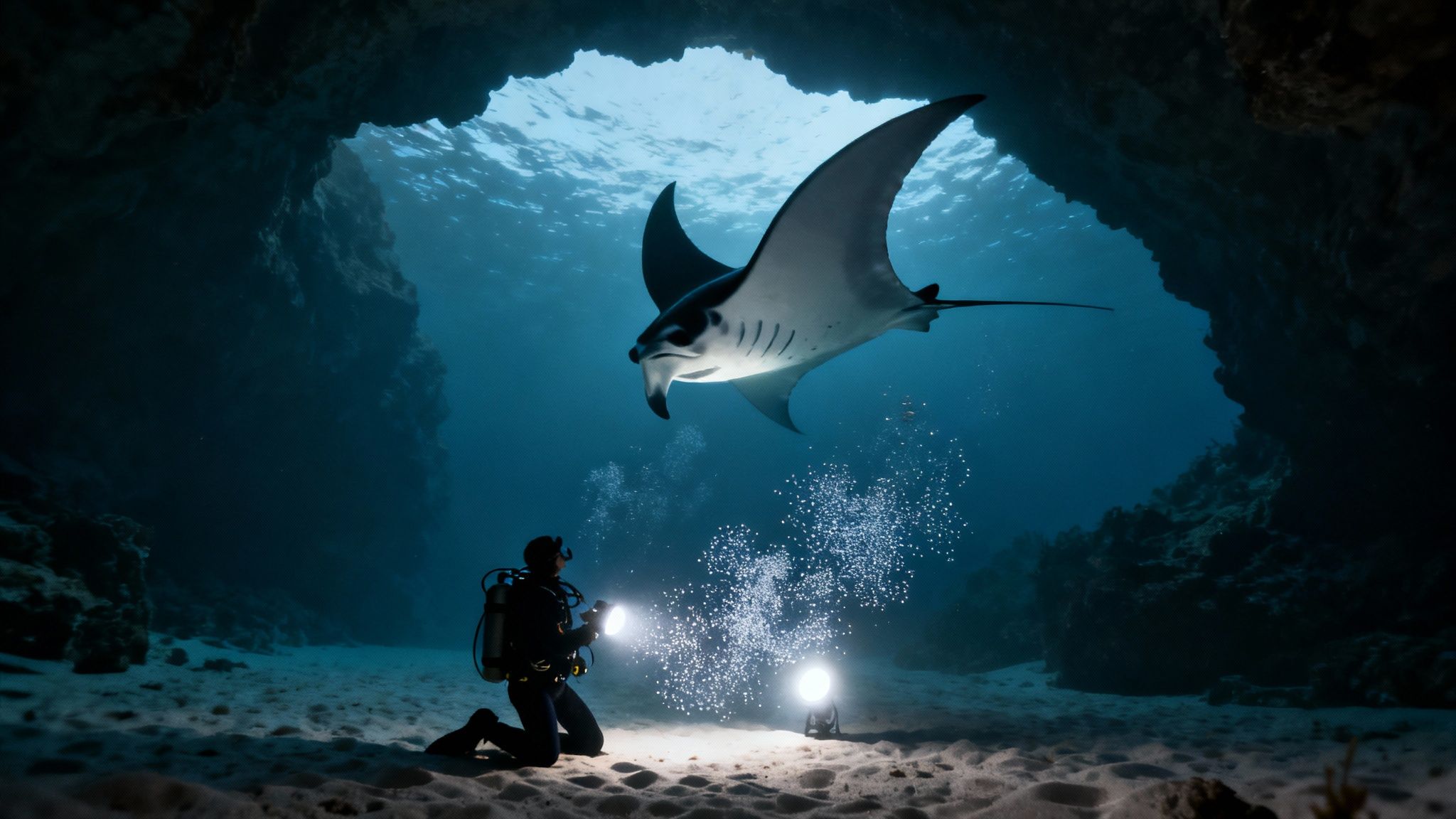
The science behind the magic is beautifully simple. After the sun goes down, operators submerge powerful lights on the ocean floor. These beams act like a massive bug zapper, but for plankton, drawing in clouds of microscopic organisms. This, in turn, creates an all-you-can-eat buffet that the local manta rays just can't resist.
The Underwater Ballet
As a diver, your job is easy. You'll descend, find a comfortable spot on the sand, and just watch the show begin. Picture it: you're kneeling in the quiet, inky blackness as these gentle giants, with wingspans reaching up to 16 feet, perform a silent, weightless ballet just inches over your head.
They glide, swoop, and do graceful barrel rolls, their huge mouths agape to filter the plankton-rich water. It’s an incredibly intimate and humbling experience that puts you face-to-face with one of the ocean's most majestic creatures. Most people come up speechless, describing it as mesmerizing and deeply moving.
Choosing The Right Location For The Best Show
While you can see mantas at a few different spots, the superior choice for a dive tour is Garden Eel Cove, also known as Manta Heaven. This site is far more protected from the open ocean, which means calmer conditions and a much more pleasant dive. On top of that, Garden Eel Cove has a better viewing area, healthier reefs, and more reliable manta sightings. All these factors come together to make the overall dive more spectacular, which is why the most experienced operators prefer it. Going with an operator who knows the best sites is key. You can learn more in our complete guide to the fascinating manta ray night swim.
It's crucial to select a responsible tour operator that adheres to strict guidelines. This ensures not only your safety but also the long-term well-being of the manta rays, whose protective mucus layer can be harmed by touching.
The Kona manta dive is legendary for a reason. Long-term reports show that operators see mantas on an incredible 85-90% of nights. This amazing reliability has turned the Big Island into a global hotspot for this encounter, drawing over 500,000 participants since the tours took off in the early 2000s.
If you’re ready to witness this incredible spectacle for yourself, you can book your spot on a premier manta ray dive tour and get ready for an adventure you’ll never forget.
Discovering Blackwater Dives And Other Unique Adventures
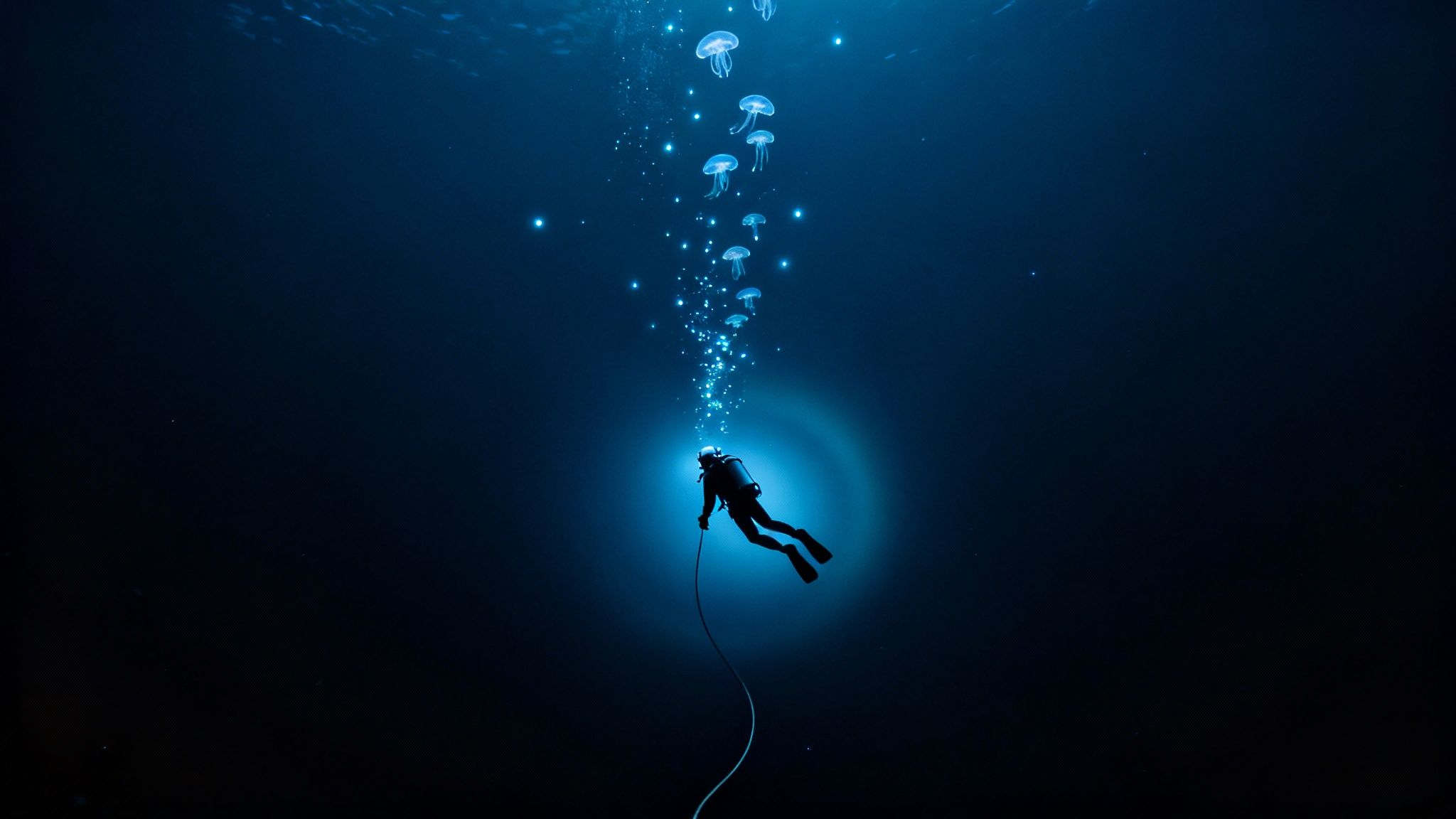
While the vibrant coral reefs and majestic manta rays are showstoppers, some divers come to the Big Island searching for something completely different—an adventure that redefines what a dive can be. For these divers, the Kona blackwater dive is an experience that’s often described as floating through outer space.
Picture this: you're miles offshore over thousands of feet of water, tethered to a boat and drifting in the deep, dark ocean. It’s here that you get a front-row seat to one of the planet’s greatest migrations, as countless tiny creatures rise from the abyss to feed under the cover of night.
It’s an unbelievable spectacle, a living galaxy of light and bizarre life unfolding all around you.
What You Will See In The Deep
A blackwater dive isn't about spotting big animals. Instead, it’s a macro-photographer’s dream and a biology lover's fantasy. The things you’ll see are completely different from anything you'll find on the reef.
- Bioluminescent Wonders: Think pulsating jellyfish and ctenophores, trailing ghostly ribbons of light as they drift past your mask.
- Larval Creatures: You’ll spot the juvenile forms of familiar reef animals, like baby eels and octopuses, looking totally alien in their tiny, translucent stages.
- Strange Pelagics: Bizarre organisms like siphonophores—long, stringy colonial animals—float by in the darkness, looking like something out of a sci-fi movie.
This dive is a rare window into a hidden ecosystem. Because the cast of characters changes every single night, each blackwater dive is a completely unpredictable adventure. It is truly a one-of-a-kind experience.
Specialized Training and The Right Operator
Let’s be clear: a blackwater dive is not for beginners. It demands top-notch buoyancy control, total comfort in the dark, and a calm, collected mindset. You’re tethered in the open ocean at night, so safety is everything.
This type of advanced diving demands a highly experienced operator with a deep understanding of the unique protocols involved. The crew must be skilled in managing tethers, monitoring divers in challenging conditions, and ensuring the entire operation runs flawlessly.
Going with a seasoned charter that specializes in this dive is non-negotiable. They provide the specialized gear, the in-depth briefing, and the expert guidance you need for a safe and unforgettable trip into the deep. You can learn more by checking out our complete guide to black water dives or booking an unforgettable Blackwater Dive tour.
Beyond the blackwater experience, the Big Island offers other specialty charters for experienced divers. Whether it's exploring deep reefs or searching for specific pelagic species, the opportunities for a unique adventure are endless. These trips are for the diver who has seen a lot and is now searching for a different kind of story to tell—and the deep waters off Kona always deliver.
How To Plan Your Big Island Scuba Trip
A little bit of prep work on the front end can make all the difference for your dive vacation. Once you know what kind of dives you're dreaming of, it's time to nail down the details. We'll walk you through everything you need to know to book your Big Island Hawaii scuba adventure and show up ready to dive.
When to Visit Kona
Let's start with the most common question: when's the best time to come? The simple answer is, anytime! Diving in Kona is a fantastic year-round affair. Water temperatures stay in that perfect tropical range, hovering around a comfortable 75°F in the winter and a balmy 80°F in the summer (that’s 24-27°C).
That said, the seasons do have their own unique personalities. Summer, from about June to August, typically offers the flattest, calmest seas and the warmest water, which is why it's so popular. But winter (December to February) has its own incredible secret weapon: humpback whales. You can actually hear their songs echoing through the water on your dives—an absolutely unforgettable, soul-stirring experience.
Packing For Your Underwater Adventure
With your dates circled on the calendar, let's talk about gear. You can always rent top-notch equipment here, but a lot of divers just feel more comfortable bringing their own go-to pieces.
Here’s a quick checklist to get you started:
- The Essentials: Most divers bring their own mask, fins, snorkel, and dive computer. Having a mask that fits your face perfectly is a game-changer.
- Wetsuit: A 3mm or 5mm full wetsuit is your best bet for the Big Island. A 3mm is usually plenty for warm summer dives, while a 5mm gives you that extra bit of toastiness on deeper dives or in the slightly cooler winter water.
- The Small Stuff: Don’t forget reef-safe sunscreen, a reusable water bottle to stay hydrated, a hat, sunglasses, and a windbreaker or hoodie for the boat ride home. It can get surprisingly chilly once you’re out of the water!
Choosing a Top-Tier Dive Operator
Who you dive with matters—a lot. The right dive operator doesn't just drive the boat; they shape your entire experience. You want to look for a company that invests in custom-built dive boats with diver comfort in mind, meaning plenty of space for your gear and maybe even a hot-water shower for a post-dive rinse.
Another huge sign of a quality operation is their rental gear. It should be modern and meticulously maintained. And here’s a pro tip for certified divers: ask if they offer free nitrox. Breathing enriched air can give you more bottom time and leave you feeling less tired, which is a huge plus when you're doing multiple dives a day. To get a better handle on the costs involved, check out our guide on how expensive scuba diving in Hawaii can be.
Booking Your Dives and Courses
Whether you're curious about trying scuba for the first time or you're a seasoned diver looking to add another certification card to your wallet, the Big Island is the place to do it. Local operators have a full menu, from Discover Scuba Diving programs to advanced and specialty courses.
Insider Tip: The Big Island's most famous dives, especially the Manta Ray Night Dive, are incredibly popular. During peak season, these trips can be fully booked weeks, sometimes even months, out. To avoid disappointment, it's essential to book your diving tours well before you get on the plane.
This is especially true around major holidays and all through the summer. A little advance planning ensures you get a spot on the boat and can just relax, knowing your underwater adventures are locked in.
Common Questions About Big Island Scuba Diving
Let's tackle some of the most common questions that pop up when people plan a dive trip to the Big Island. Getting these sorted out ahead of time means you can hit the ground running (or, rather, swimming) for a smooth and unforgettable adventure.
What Marine Life Can I Expect To See?
The Kona coast is an absolute hotspot for marine biodiversity. On any given dive, you're almost certain to run into green sea turtles (honu), and it's not uncommon for a pod of playful spinner dolphins to cruise by the boat. The reefs themselves are teeming with vibrant, colorful fish found nowhere else on Earth.
Depending on where you drop in, you might also find yourself face-to-face with graceful eagle rays, curious moray eels, and clever octopuses. And yes, several species of reef sharks patrol these waters. For truly unique encounters, the world-famous manta ray night dive and the specialized blackwater dives reveal a side of the ocean—and its inhabitants—that most people never get to witness.
Do I Need To Be Certified To Scuba Dive?
Nope! While having your certification opens up the vast majority of dive sites, you absolutely don't need it to get in the water and experience the magic of breathing underwater for the first time.
Most quality dive shops, including ours, offer introductory programs like the 'Discover Scuba Diving' experience. It’s a fantastic way to try diving in a safe, shallow, and controlled environment with a professional instructor right by your side. Fair warning: many people get hooked, and the Big Island is one of the best classrooms in the world to complete your full Open Water Diver certification.
What Is The Water Temperature And What Wetsuit Should I Wear?
You're in for a treat. The water here is comfortably warm all year long, typically hovering between 75°F and 80°F (that’s about 24-27°C).
What does that mean for gear?
- A 3mm full wetsuit is usually perfect for most divers, especially during the warmer summer months.
- A 5mm wetsuit is a great choice if you tend to get chilly, are planning deeper dives, or are visiting in the slightly cooler winter season.
Don't worry if you don't have your own—we always have high-quality rental wetsuits to make sure you’re perfectly comfortable in the water.
It's always smart to be educated on dive safety before you go. For example, if you're ever curious about how doctors handle pressure-related diving incidents, it's worth understanding treatments like Hyperbaric Oxygen Therapy.