
Picture this: you’re weightless, suspended in impossibly clear, blue water. Sunlight filters down from the surface, illuminating a labyrinth of ancient lava tubes crusted with vibrant coral. This isn't a dream—it's what Big Island Hawaii scuba diving is all about. It’s an underwater world where dramatic volcanic landscapes meet a thriving, colorful marine ecosystem.
Welcome To The Diver’s Paradise Of Kona
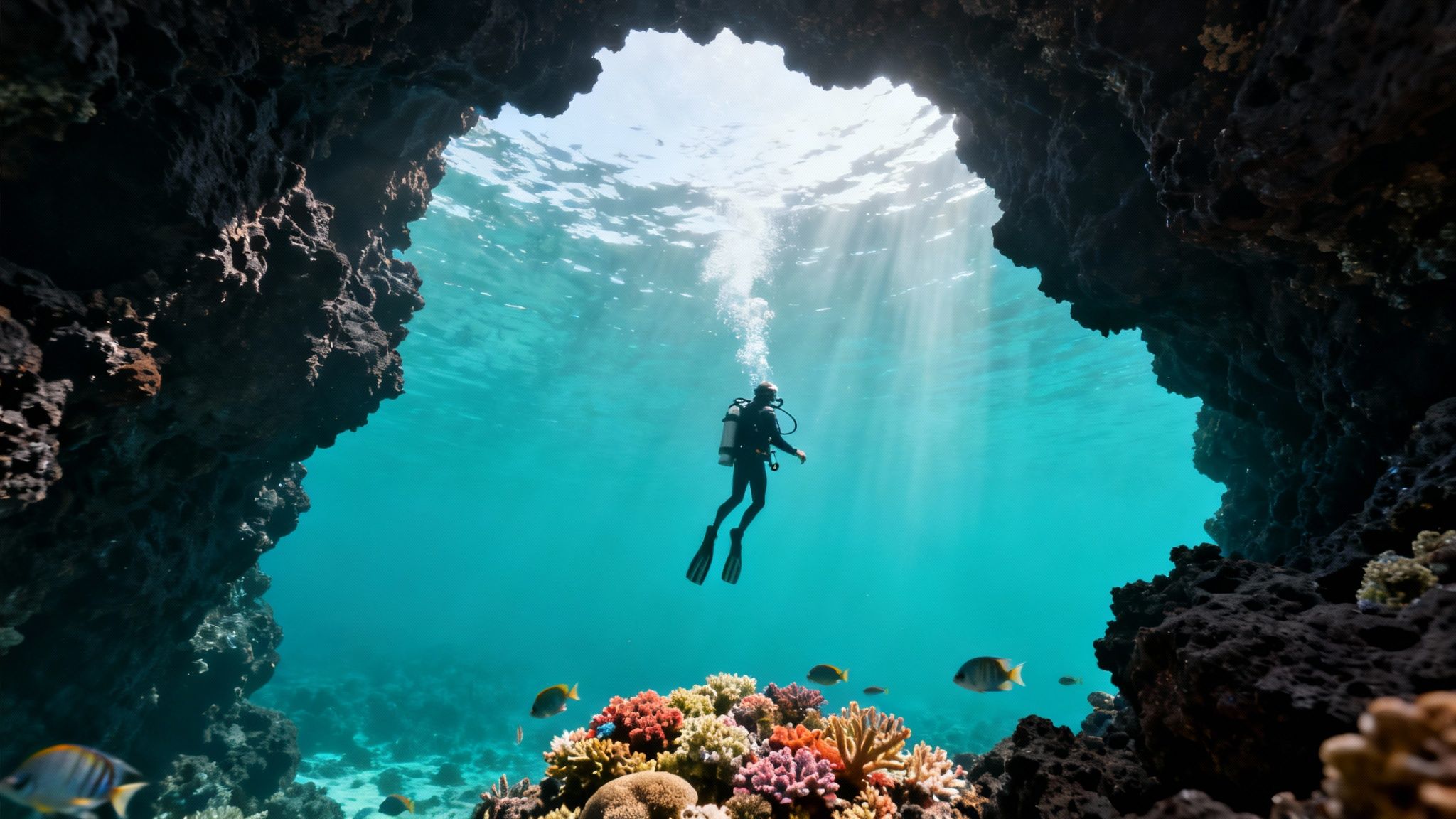
There's a reason divers from all over the world flock to the Big Island's Kona coast. Tucked in the lee of the colossal Mauna Loa and Hualālai volcanoes, the water here is shielded from the gusty trade winds, making it exceptionally calm and clear nearly every day of the year.
This natural protection creates the perfect training ground for someone taking their first breaths underwater, but it also offers thrilling challenges for seasoned pros exploring intricate lava formations.
What truly puts Kona on the map, though, are its signature dives. We’re talking about true bucket-list encounters you simply can’t find anywhere else on the planet. These are the experiences that draw adventurers from every corner of the globe, year after year.
Here's a quick snapshot of what makes diving here so special:
Big Island Diving At A Glance
| Feature | What to Expect |
|---|---|
| Water Clarity | Consistently clear visibility, often exceeding 100 feet (30 meters), thanks to the volcanic rock filtration. |
| Marine Life | A high percentage of endemic species, plus frequent sightings of turtles, eels, octopus, and reef sharks. |
| Signature Dives | Home to the world-famous Manta Ray Night Dive and the one-of-a-kind Blackwater Dive. |
| Underwater Terrain | Explore dramatic lava tubes, massive archways, ancient craters, and vibrant coral gardens. |
| Water Temperature | A comfortable 75-80°F (24-27°C) year-round, making it a perfect destination for any season. |
| Diver Skill Levels | Calm, protected sites for beginners and challenging deep dives and caverns for advanced divers. |
Simply put, the Big Island delivers an unforgettable dive experience for everyone.
What Awaits Beneath The Waves
Every dive here is a journey through a living volcanic masterpiece. The underwater scenery is dynamic, dramatic, and completely unique.
- The World-Famous Manta Ray Night Dive: Imagine giant, graceful manta rays with wingspans up to 16 feet gliding inches from your face, doing barrel rolls in the beams of underwater lights. It’s a breathtaking ballet and consistently voted one of the best night dives in the world.
- The Mysterious Blackwater Dive: For the truly adventurous, this is an experience like no other. You drift miles offshore in the dead of night, suspended over thousands of feet of water, watching bizarre and beautiful bioluminescent creatures rise from the abyss.
- Vibrant Reefs and Lava Tubes: You’ll get to swim through massive archways and ancient lava tubes formed by volcanic eruptions centuries ago. These structures are now home to bustling coral reefs and countless marine creatures.
This guide is your launchpad for planning an incredible scuba adventure. The demand for world-class diving is growing—the U.S. scuba tourism market, with Kona as a major player, is expected to hit USD 1,585 million by 2035. This 3.7% annual growth shows just how special this place is, and trusted operators like Kona Honu Divers are at the heart of it all. You can learn more about the rise of Kona's dive industry and what makes it a top-tier destination.
Let an expert team like Kona Honu Divers guide your expedition and ensure every dive is safe, unforgettable, and truly extraordinary.
It's time to get inspired. Your next great adventure is waiting.
Discovering Kona’s Most Iconic Dive Sites
The Kona coast isn't just a place to go diving; it's a collection of world-class underwater stages, each with its own spectacular show. When you plan a Big Island Hawaii scuba adventure, you’re signing up for some of the most unforgettable diving tours on the entire planet. From a surreal nighttime ballet with giants to exploring sun-drenched reefs, Kona delivers.
These sites are so much more than dots on a map. They are vibrant ecosystems, born from volcanic fire and sculpted by the Pacific. Diving here is like turning the pages of a living history book, and every descent reveals a brand new chapter. Let's explore the absolute must-do dives that put Kona on the map.
The Legendary Manta Ray Night Dive
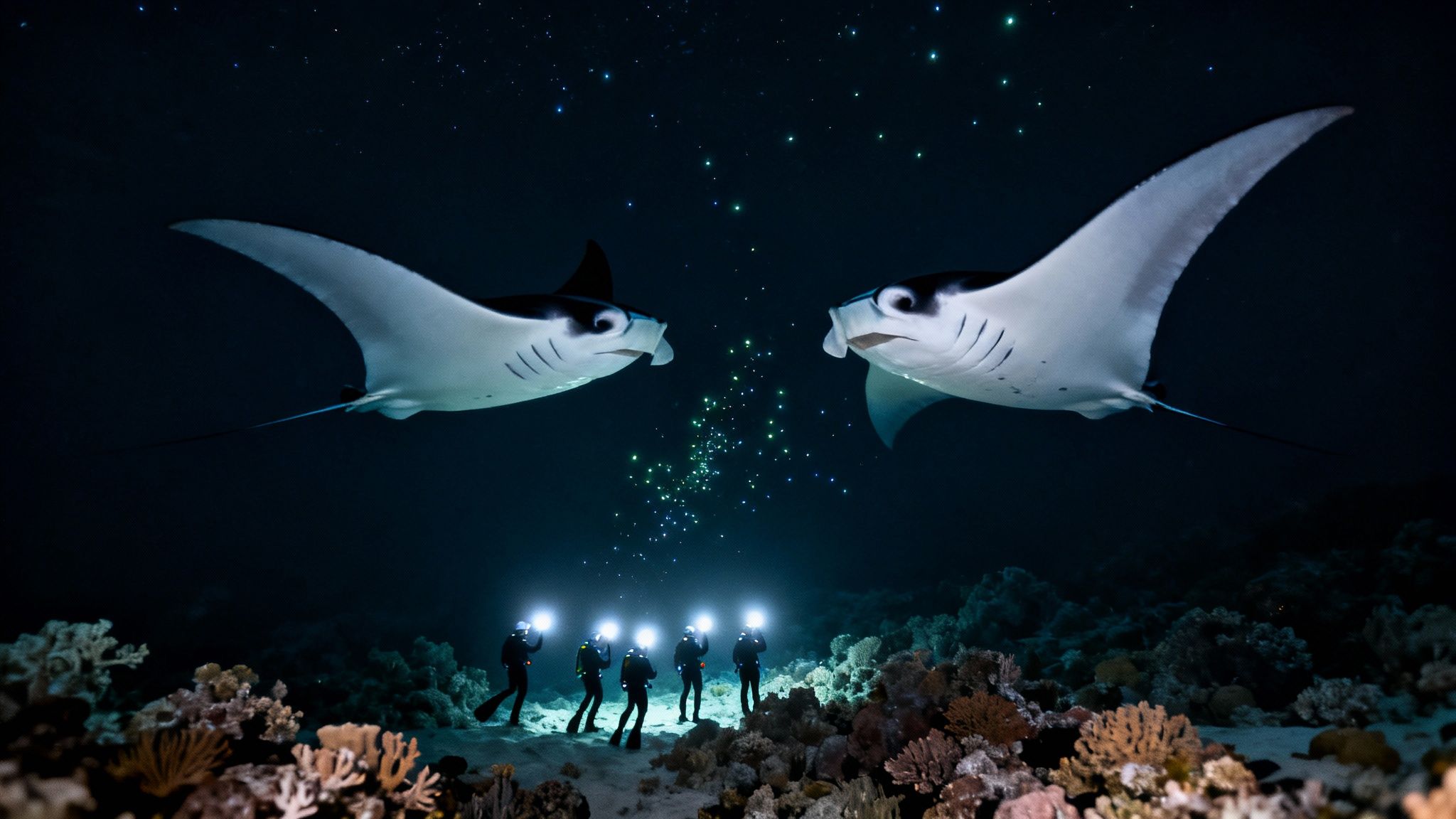
There's a reason this is consistently voted one of the best night dives in the world—it’s pure magic. Just after sunset, you'll join a manta ray dive tour, descend to a sandy spot on the ocean floor, get settled, and point your powerful dive light straight up. This beam of light acts like a giant dinner bell, attracting swarms of plankton, the favorite meal of our local manta rays.
And then, the show begins. These gentle giants, with wingspans reaching up to an incredible 16 feet, emerge from the dark. They glide, swoop, and perform effortless barrel rolls just inches above your head as they feed on the plankton concentrated in your light. It's a silent, breathtaking ballet that leaves every single diver speechless.
While a couple of spots host this encounter, Garden Eel Cove is hands-down the superior choice. It’s tucked into a more protected area, which usually means calmer water and a more comfortable experience for everyone. More importantly, the site has a natural “amphitheater” layout, giving divers a much better, more organized viewing area. The surrounding reefs are also healthier and more vibrant, adding to the beauty of the entire dive. It's just a more spectacular and well-managed experience from start to finish.
Choosing the right location for the manta dive is crucial. Garden Eel Cove offers not just a show, but a front-row seat in a pristine, natural theater, making it an unforgettable highlight of any Big Island scuba trip.
The Otherworldly Kona Blackwater Dive
For divers who crave true adventure and something completely different, the Kona Blackwater Dive is it. This isn't your typical reef dive; it's a journey into the abyss. You head miles offshore, over thousands of feet of deep, dark ocean, and drift in the open water at night, tethered to the boat. The only thing illuminating the void is the beam from your torch.
What you're doing is intercepting the largest vertical migration of life on Earth. Every single night, countless strange and beautiful creatures rise from the depths to feed near the surface. You’ll come face-to-face with organisms that look like they're straight out of a sci-fi movie: bizarre larval fish, see-through squids, and a mesmerizing array of bioluminescent jellies pulsing with their own light.
It feels like a cross between deep-sea exploration and a spacewalk. One moment there's nothing but black, the next a new, undiscovered-looking creature drifts into your light. This is easily one of the most unique Big Island Hawaii scuba experiences you can have.
Kealakekua Bay And Other Vibrant Reefs
As incredible as the night dives are, Kona’s daytime diving is every bit as spectacular. The coastline is packed with dozens of amazing sites, full of lava tubes, dramatic arches, and healthy coral gardens. The crown jewel for many is Kealakekua Bay, a protected Marine Life Conservation District. This historic bay is stunning above the water, but it’s a true sanctuary for marine life below.
The water here is often crystal clear, with visibility regularly exceeding 100 feet. Because it's a protected area, the fish populations have exploded. It's the kind of place where you can find more about the world-class diving conditions on this overview of Kona diving.
On any given dive, you might swim alongside huge pods of spinner dolphins or find Hawaiian green sea turtles (honu) resting peacefully among the corals. The reefs are teeming with endemic species you won't find anywhere else on Earth. Exploring these sites is the heart and soul of the Kona scuba diving experience, showing off the incredible health and diversity of Hawaii's underwater world. Whether you're a brand-new diver or a seasoned pro, the vibrant reefs and dramatic volcanic landscapes offer something for everyone.
How To Choose The Right Dive Operator In Kona
Let's be honest—the dive operator you choose can make or break your entire Big Island Hawaii scuba trip. It's easily one of the most important decisions you'll make. The right crew doesn't just ferry you to a dive site; they transform the whole experience with real expertise, top-notch safety, and a genuine love for the ocean. A great operator makes everything, from gearing up to the post-dive chat, feel effortless, safe, and completely unforgettable.
On the flip side, a mediocre operator can turn your dream dive into a stressful mess. Think crowded boats, rushed schedules, and safety standards that make you nervous. The gap between a good dive and a truly great one often comes down to the people guiding you. You aren't just paying for a spot on a boat; you're placing your trust, and your safety, in their hands.
What To Look For In A Top-Tier Operator
When you start looking at different dive shops, a few things should be absolute deal-breakers. These are the markers that separate the real pros from the rest, and they're crucial for having a safe and incredible time underwater.
- Unwavering Safety Protocols: This is number one, period. Look for shops that give thorough dive briefings, have meticulously maintained gear, and employ experienced, certified divemasters and instructors. Safety isn't just a feature; it's the bedrock of their whole operation.
- Quality and Comfort of Dive Boats: You'll be spending a lot of time on the boat between dives. Was it actually built with divers in mind? Is there room to move around and set up your gear, or is it a chaotic, elbow-to-elbow scramble? A comfortable, well-designed boat makes a world of difference.
- Small Group Sizes: Diving in a small, well-managed group is a totally different world from being herded around with a massive crowd. Smaller groups mean you get more personal attention from your guide, the pace is more relaxed, and your encounters with marine life feel more intimate and less disruptive.
- Commitment to Eco-Friendly Practices: The best operators are guardians of the ocean. They should follow sustainable practices, teach divers how to protect the reef, and show a deep respect for the very environment that makes their business possible.
Why Kona Honu Divers Is The Premier Choice
When you measure Kona's operators against these standards, Kona Honu Divers consistently rises to the top. Their reputation for excellence isn't an accident; it's built on a deep-seated commitment to giving divers the best possible experience, and you can see it in every single detail.
The crew brings a staggering 200+ years of combined industry experience to the table, meaning you’re being led by some of the most seasoned professionals in Hawaii. Their custom-built dive boats, the Honu One and Honu Lele, were designed by divers, for divers. That translates to maximum comfort, space, and efficiency, so you spend less time fumbling with gear and more time soaking in the adventure. For a deeper dive, check out our full guide on how to choose a Kona dive shop.
Kona Honu Divers doesn't just meet the standards for a great dive operator; they set them. Their focus on safety, diver comfort, and crew expertise creates an environment where you can relax and fully immerse yourself in the magic of Kona's underwater world.
They also add value with perks that truly matter to divers. Certified divers get free nitrox, which means more bottom time and feeling less tired after your dives. Plus, they offer early booking discounts, rewarding you for planning your Big Island Hawaii scuba trip in advance.
But you don't have to take our word for it. Their stellar reputation is reflected in the countless glowing reviews from divers who have experienced the Kona Honu difference firsthand.
Choosing Kona Honu Divers is choosing peace of mind. It’s knowing you’re in the best possible hands, which frees you up to focus on what this is all about: creating safe, amazing, and unforgettable underwater memories.
Ready to see the difference for yourself?
Ready for More? Taking Your Diving to the Next Level in Kona
If you're already a certified diver, you know the thrill of that first breath underwater. But what comes next? Kona isn't just a destination for beautiful, easy-going reef tours; it's a genuine underwater playground that can challenge and reward even the most experienced divers.
The island’s dramatic volcanic topography creates a whole different world of opportunities. Think lava tubes, deep ledges, and caverns just begging to be explored. This is your chance to sharpen your skills, build confidence, and see a side of the Big Island Hawaii scuba scene that most people miss entirely.
Advanced Dives for the Experienced Adventurer
For those with some dives under their belt, Kona’s volcanic coast is where the real fun begins. The underwater landscape here is unlike anywhere else on earth, shaped by ancient lava flows that have left behind a maze of incredible structures. We've designed our premium advanced diving charters specifically to get you into these epic spots.
On these trips, we head to sites that require a bit more skill and focus on:
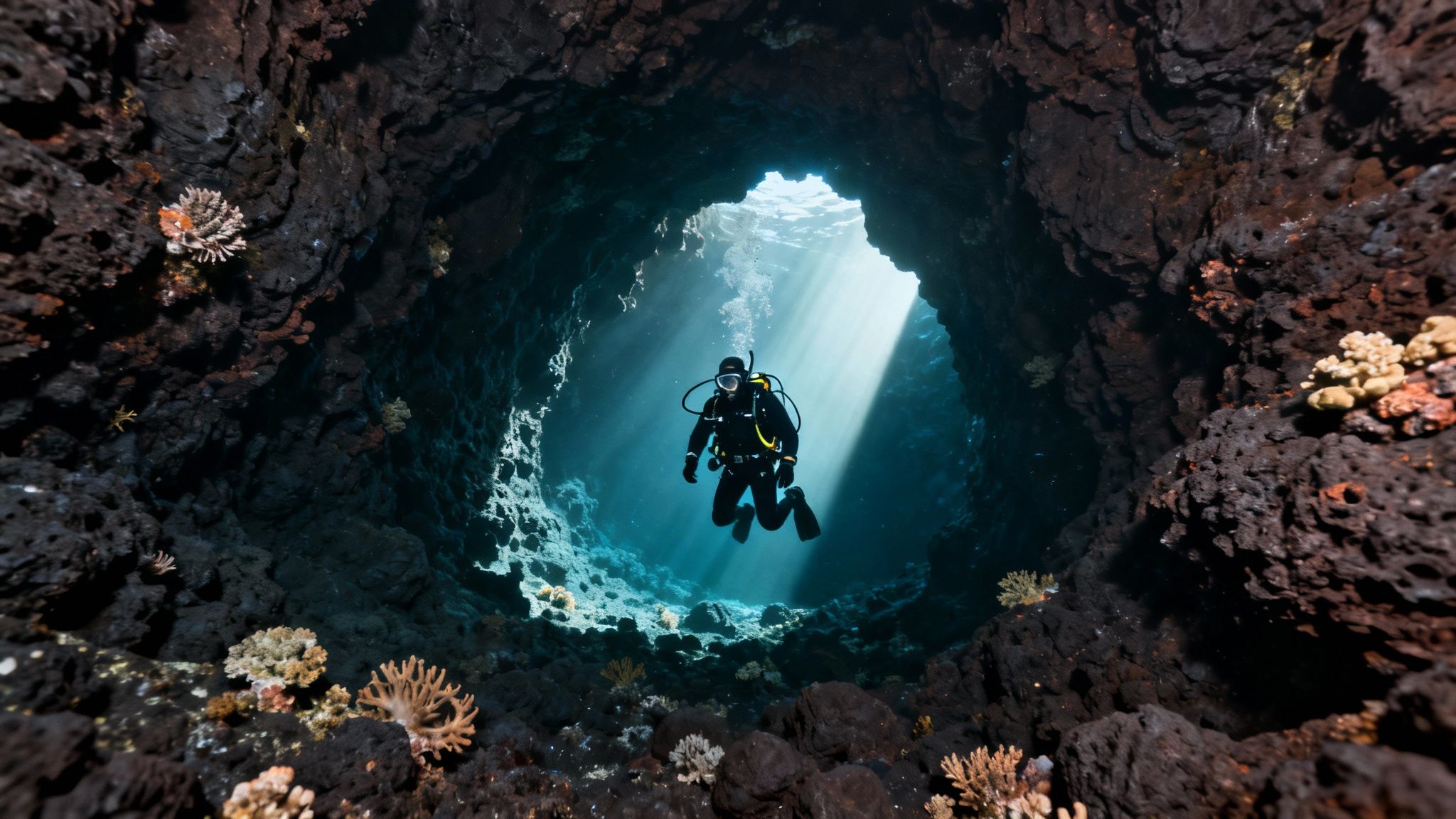
- Lava Tubes and Caverns: There's nothing quite like slipping through an ancient lava tube and emerging into a massive underwater chamber. These dives are all about precision—perfecting your buoyancy and fin kicks to navigate these incredible formations without leaving a trace.
- Deep Volcanic Ledges: We’ll guide you down to explore the deeper walls and ledges where you find a completely different cast of characters. This is where you have a better chance of spotting larger pelagic species and unique critters that hang out in the cooler, darker water.
- Thrilling Drift Dives: Sometimes, you just have to go with the flow. We'll use the ocean's currents to let you fly effortlessly over long stretches of reef, covering more ground and seeing more life than you could on a typical dive. It's an amazing feeling.
These charters are built for divers who are comfortable in the water and hungry for a new challenge. It’s about more than just seeing fish; it’s about interacting with a truly dynamic and awe-inspiring environment.
Build Confidence With PADI Certifications
But what if you're not an advanced diver yet? Or maybe you're not even certified at all. Honestly, there's no better place on the planet to learn. Kona’s waters are famously calm, clear, and protected, creating the perfect natural classroom.
Top-notch dive shops like Kona Honu Divers offer the full range of PADI courses, so you can turn a great vacation into a truly life-changing one. The best part is that you get to apply what you’re learning in real-time, surrounded by sea turtles, dolphins, and clouds of colorful reef fish. It makes the skills stick.
Some of our most popular courses are:
- PADI Open Water Diver: This is it—your passport to the other 71% of the world. We’ll teach you everything you need to know to become a safe, confident, and certified scuba diver.
- PADI Advanced Open Water: Already certified? This is the logical next step. You'll complete five adventure dives, including a deep dive and a navigation dive, that will make you a much more capable and self-assured diver.
- Specialty Courses: Ready to focus on a specific interest? Get your Enriched Air (Nitrox) certification for more bottom time, become a Deep Diver to explore past 60 feet, or learn the art of Night Diving.
Getting certified in Kona just makes sense. The phenomenal visibility and calm conditions let you focus on mastering the skills without battling the environment. You build confidence so much faster here.
Whether you're taking that first breath or becoming an expert in a new specialty, earning a certification in Hawaii is something you’ll never forget. And for those who want to be the best buddy they can be, tackling the PADI Rescue Diver course is an incredibly rewarding challenge that will make you a safer and more capable diver for life.
Planning Your Perfect Big Island Scuba Trip
An incredible Big Island Hawaii scuba adventure doesn’t just happen when you jump in the water—it starts long before you even leave home. Nailing down the details ahead of time is the secret to a smooth, safe, and truly unforgettable trip. This means thinking about the best time to visit, what to throw in your suitcase, and how to be a good steward of the ocean once you’re here.
The best part? Kona is a fantastic, year-round dive destination. The water stays in that perfect sweet spot of 75-80°F (24-27°C), and the island's geography blesses us with consistently calm, clear conditions.
But if you visit during the winter, you’re in for a truly magical bonus: the chance to hear the haunting songs of migrating humpback whales echoing through the water on your dives. It’s an otherworldly experience you’ll never forget.
Your Essential Packing Checklist
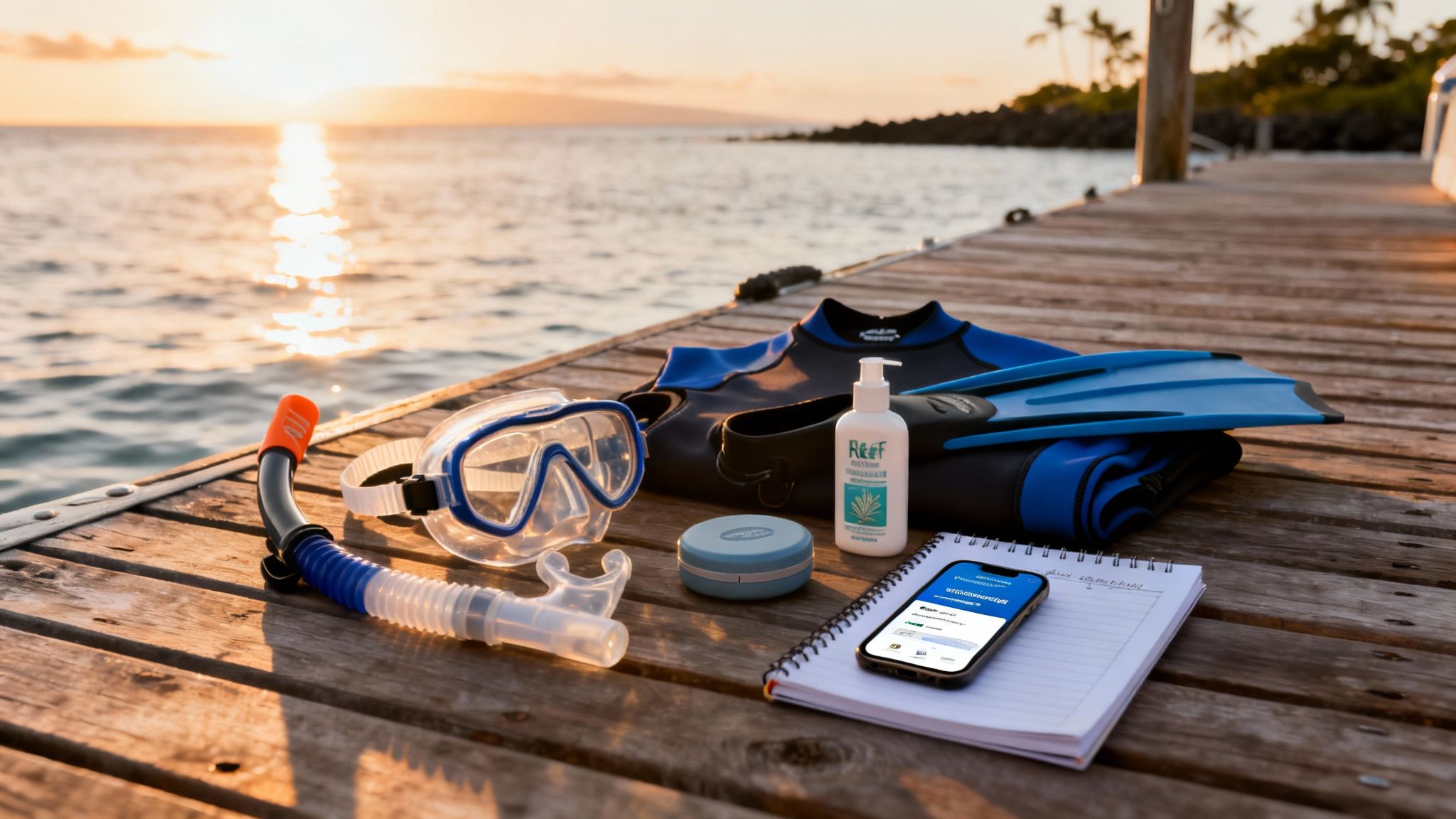
Packing smart is the first step to a stress-free vacation. Once you’ve got your swimsuits and shorts sorted, make sure these critical items make it into your luggage.
- Dive Essentials: Don't show up without your certification card (C-card), your logbook (you'll want to remember these dives!), and any personal gear you can’t live without, like your favorite mask or dive computer.
- Hawaii Must-Haves: The sun here is no joke. Be sure to pack a high-SPF, reef-safe sunscreen to protect both your skin and the delicate coral you're here to see. A reusable water bottle is also a smart move to stay hydrated and cut down on plastic waste.
- Proof of Dive Insurance: For any serious diver, this is non-negotiable. Most reputable operators require it, and it gives you invaluable peace of mind should anything unexpected happen.
While diving has its specifics, the principles of good travel planning apply everywhere. You might even find some helpful parallels in guides on how to plan a backpacking trip.
Safety First And Diving Responsibly
Safety is the absolute bedrock of every single dive. The ocean is beautiful but powerful, and having a deep respect for local conditions is crucial. This is exactly why diving with a certified, professional guide is essential here. An experienced local guide knows the currents, understands the sites inside and out, and can spot incredible marine life you'd swim right past on your own.
Diving with a guide isn't just about following a leader. It's about having a local expert dedicated to your safety and making your dive better. They sweat the small stuff so you can just soak in the magic unfolding around you.
Being a responsible diver also means being a guardian of the stunning environment you’ve traveled so far to see. This commitment to marine conservation is what will keep these dive sites healthy for generations to come.
A few simple actions make a massive difference:
- Master Your Buoyancy: Keep your hands, fins, and gear off the reef. Even a light touch can damage the fragile coral polyps that have taken decades to grow.
- Look, Don't Touch: Observe marine life from a respectful distance. Never chase, corner, or try to touch any animal. You're a visitor in their home.
- Pack It In, Pack It Out: Make sure every single thing you bring on the boat comes back with you.
These small efforts are part of a much bigger picture. Reef Check Hawaii has conducted 182 surveys to date, with 57 in 2023 alone, to monitor the health of our local reefs. Their data confirms that Kona’s reefs are vibrant ecosystems, and by diving responsibly, you're helping to keep them that way.
Your Big Island Scuba Questions, Answered
Alright, let's tackle some of the questions that are probably on your mind. Planning a dive trip to a new spot always brings up a few last-minute details. Think of this as a final chat to clear up any uncertainties so you can feel completely confident and excited about the adventure ahead.
We’ve covered a lot, but these are the common queries we hear from divers getting ready to explore Kona's underwater world. Let’s dive in and get them sorted.
What Is The Best Time Of Year For Scuba Diving On The Big Island?
Here's the great news: there really is no bad time to dive on the Big Island. The Kona coast is uniquely shielded from the trade winds, meaning the waters are remarkably calm and clear pretty much year-round. Water temperatures are always comfortable, typically hovering between a pleasant 75-80°F (24-27°C).
That said, the seasons do offer slightly different experiences, which might help you pick the perfect time for your trip.
- Summer (May-October): This is when you'll find the absolute calmest, warmest, and clearest water. If you dream of glassy seas, this is your season. It's especially fantastic for new divers or anyone who just loves flat, easy conditions.
- Winter (November-April): The water might be a touch cooler, but winter brings an incredible soundtrack. This is humpback whale season, and hearing their haunting songs reverberate through the water while you're on a dive is a truly unforgettable, once-in-a-lifetime experience.
So, it really just comes down to what you're looking for. You can't go wrong any month of the year.
Do I Need To Be Certified For The Manta Ray Night Dive?
Yes, if you want to scuba dive with the mantas, you absolutely need to be a certified diver. The dive itself involves descending in the dark and staying relatively still near the seafloor—skills that rely on the training and comfort you gain through certification.
But what if you're not certified, or you're traveling with someone who isn't? No problem at all! Everyone can still experience the magic. Top-notch operators like Kona Honu Divers run a fantastic manta ray night snorkel tour right alongside the divers, from the very same boat.
Snorkelers get to hold onto a big, custom-built light board that floats on the surface. These powerful lights attract the plankton, and the mantas swoop right up to feed, getting incredibly close. Honestly, the view from the surface is just as breathtaking.
What Marine Life Can I Expect To See While Diving In Kona?
Kona's coast is an absolute explosion of life. The healthy volcanic reefs and protected waters create a thriving habitat, so you’re pretty much guaranteed to see something incredible on every single dive.
During a typical day dive, you’ll almost certainly run into:
- Hawaiian Green Sea Turtles (Honu), either snoozing on the reef or gliding past you.
- A kaleidoscope of endemic reef fish, like butterflyfish, parrotfish, and Hawai'i's state fish, the Humuhumunukunukuāpuaʻa (try saying that one!).
- Moray eels peering from their rocky hideouts and octopuses showing off their amazing camouflage skills.
And that's just the start. It’s also common to spot pods of spinner dolphins, majestic eagle rays, and relaxed whitetip reef sharks. But of course, the true stars of any Big Island Hawaii scuba trip are the giant manta rays on the night dive and the strange, glowing creatures you’ll meet on the Kona Blackwater Dive.
How Far In Advance Should I Book My Dive Tours?
My best advice? Book as far ahead as you possibly can. This is especially true for the "bucket list" dives. The Manta Ray Night Dive and the Kona Blackwater Dive are famous worldwide, and the boats have limited spots that fill up fast.
If you’re traveling during peak times—like holidays, summer break, or the winter whale season—the demand is even higher. To be safe and avoid missing out, try to lock in your spots at least a few weeks before you arrive. If you have your heart set on specific dates, booking even a month or two out is a smart move.
Great operators like Kona Honu Divers have easy online booking, so you can check their calendar and secure your place in just a few minutes. A little planning now means you won't have to worry about anything but the amazing dives waiting for you.