
When you hear divers rave about the Big Island Hawaii scuba experience, what they’re really talking about is the Kona coast. This is the heart of it all. Tucked away on the leeward side of the island, it’s a legendary spot known for its incredibly calm, clear waters and otherworldly underwater landscapes shaped by volcanoes. It's truly the premier diving destination in all of Hawaii.
Why The Big Island Is Hawaii’s Premier Diving Destination
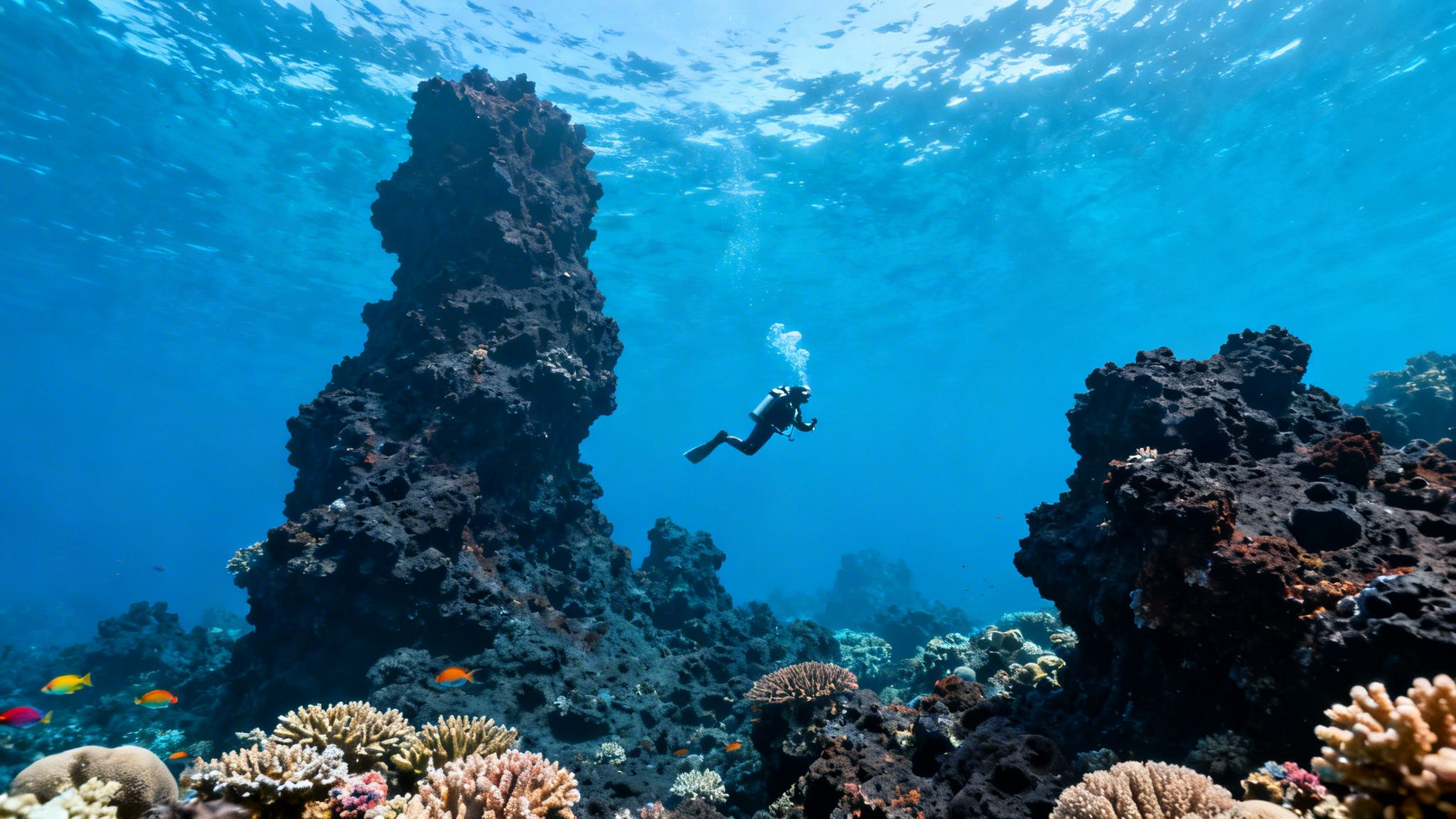
The Big Island offers something more than just another pretty reef. This is an underwater world literally forged by fire. The island's dramatic volcanic geology doesn't stop at the shoreline; it plunges beneath the waves to create a rugged, dynamic seascape you won’t find anywhere else.
The sheer size of the Mauna Loa and Hualalai volcanoes acts as a natural shield, protecting the Kona coast from the gusty trade winds. The result? Conditions are exceptionally calm and clear nearly all year long. This natural protection gives us visibility that often stretches beyond 100 feet, opening up a vibrant ecosystem just waiting to be explored. You can weave through intricate lava tubes, glide under massive archways, and float over some of the healthiest coral gardens in the state.
A Sanctuary For Marine Life
This unique underwater terrain is more than just a dramatic backdrop—it’s the perfect habitat for an incredible variety of marine life. The Kona coast is a true sanctuary where you’ll almost certainly encounter some amazing animals.
- Honu (Hawaiian Green Sea Turtles): It’s common to see them resting on the reef or getting a cleaning from local fish at "turtle cleaning stations."
- Spinner Dolphins: You’ll frequently spot playful pods from the boat, and if you’re lucky, you’ll get a glimpse of them underwater.
- Manta Rays: The island is world-famous for its consistent, up-close manta ray encounters.
- Vibrant Reef Fish: The reefs are alive with a kaleidoscope of color from schools of butterflyfish, tangs, and parrotfish.
Time and time again, divers choose the Big Island over other Hawaiian islands, and for good reason. With over 100 dive sites along the Kona coast, warm water that averages a comfortable 75-80°F, and that incredible visibility, the experience is hard to beat. The success rate for seeing our famous mantas on the night dive often tops 85-90%—a number that speaks volumes about how healthy and thriving the local marine population is.
To get the most out of this underwater paradise, you really need to go with people who know these waters inside and out. Kona Honu Divers has built a reputation as the island's top-rated operator by focusing on safe, fun, and truly unforgettable diving tours. Our crew knows every nook and cranny, making sure you see the best sites and the most incredible wildlife.
You can explore more about why the Big Island is so good for scuba diving in our detailed guide.
Experiencing The Legendary Manta Ray Night Dive
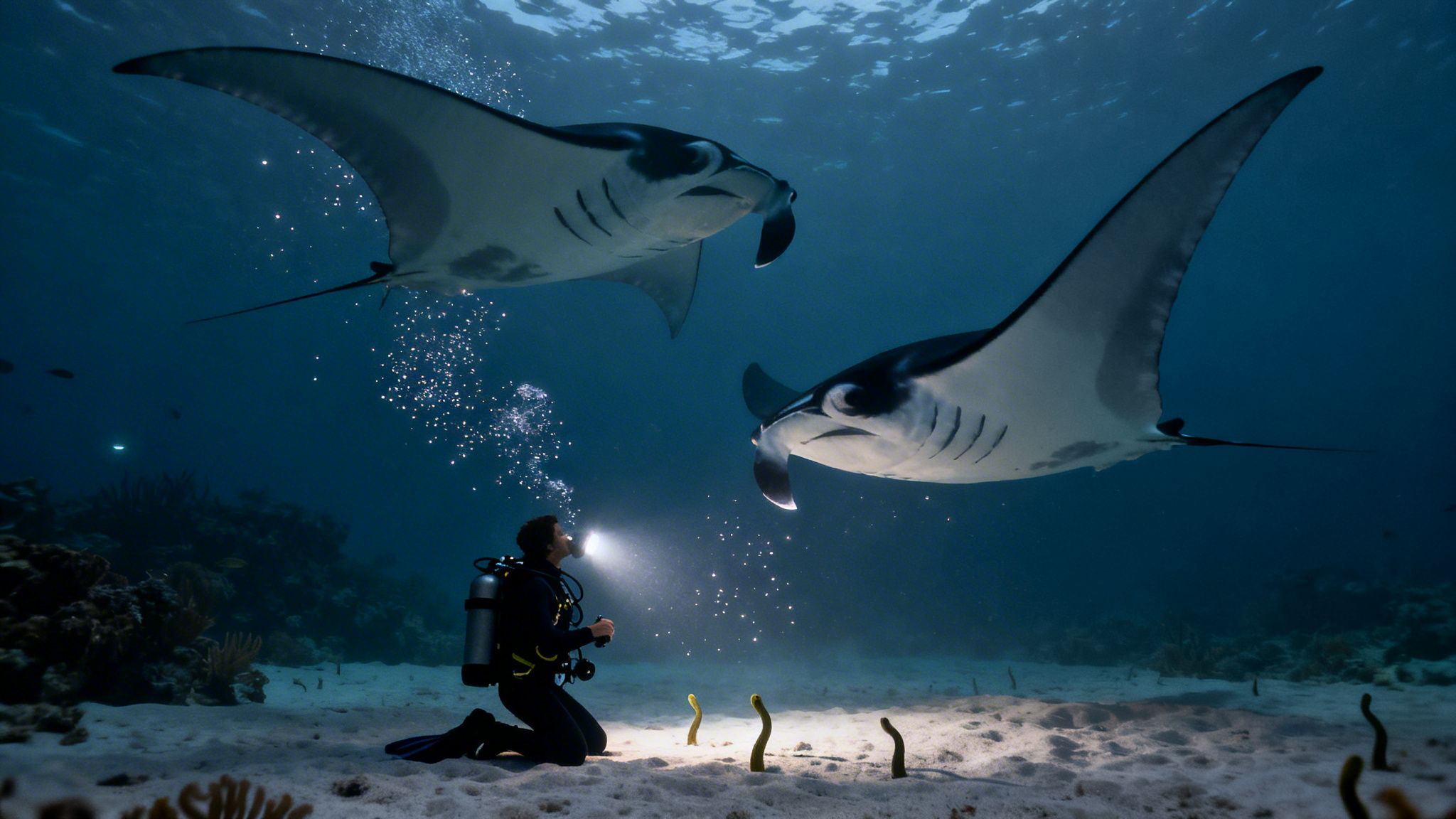
Picture this: you’re kneeling on the sandy ocean floor as the sun disappears and the world goes dark around you. Your dive light cuts a beam through the deep blue, and suddenly, you're front-row for an incredible underwater ballet. This is the world-famous Manta Ray Night Dive, a surreal and awe-inspiring experience that tops bucket lists for divers across the globe.
These gentle giants, some with wingspans stretching over 16 feet, glide effortlessly just inches above your head. They perform graceful barrel rolls and somersaults, their massive mouths wide open to filter the microscopic plankton that flock to the lights. It's a mesmerizing spectacle that feels more like a dream than reality.
How The Magic Happens
So, what makes this incredible show possible? It all comes down to a simple, brilliant chain reaction. Dive operators have perfected a way to work with nature to create this reliable encounter.
After descending to a specific viewing area, divers shine their powerful lights upward. This column of light attracts a massive buffet of plankton, the manta rays' favorite food. The local Kona mantas have learned over the years that these nightly light shows mean an easy meal is being served.
This is exactly why the Big Island offers one of the most consistent large animal encounters on the planet. Manta sightings happen on an astonishing 85-90% of dives, and it’s not uncommon to see 10-15 individual mantas on a single trip. Book your own unforgettable manta ray dive tour to see it for yourself.
Garden Eel Cove: The Superior Choice for the Manta Dive
While you can see mantas at a few locations, one spot stands out as the superior choice for this experience: Garden Eel Cove. Just north of Kona, this site (also known as Manta Heaven) offers key advantages that make it the premier location for the manta ray dive.
The unique underwater landscape at Garden Eel Cove creates a natural amphitheater. This protected location offers a better viewing area, giving every diver a clearer, unobstructed view for a more intimate and respectful encounter.
The cove’s geography also provides natural protection from open ocean swells, which means calmer, more predictable conditions. This makes for a safer, more comfortable dive, allowing you to simply relax and take in the amazing show unfolding right in front of you. On top of that, the reefs surrounding Garden Eel Cove are healthier and more vibrant, supporting a richer ecosystem. While other sites can get crowded or have stronger currents, Garden Eel Cove consistently delivers a world-class experience.
Not sure if you want to dive or snorkel? You can learn more about the differences between the manta ray night dive and a night snorkel to figure out which adventure is right for you.
Exploring The Top Kona Dive Sites You Can’t Miss
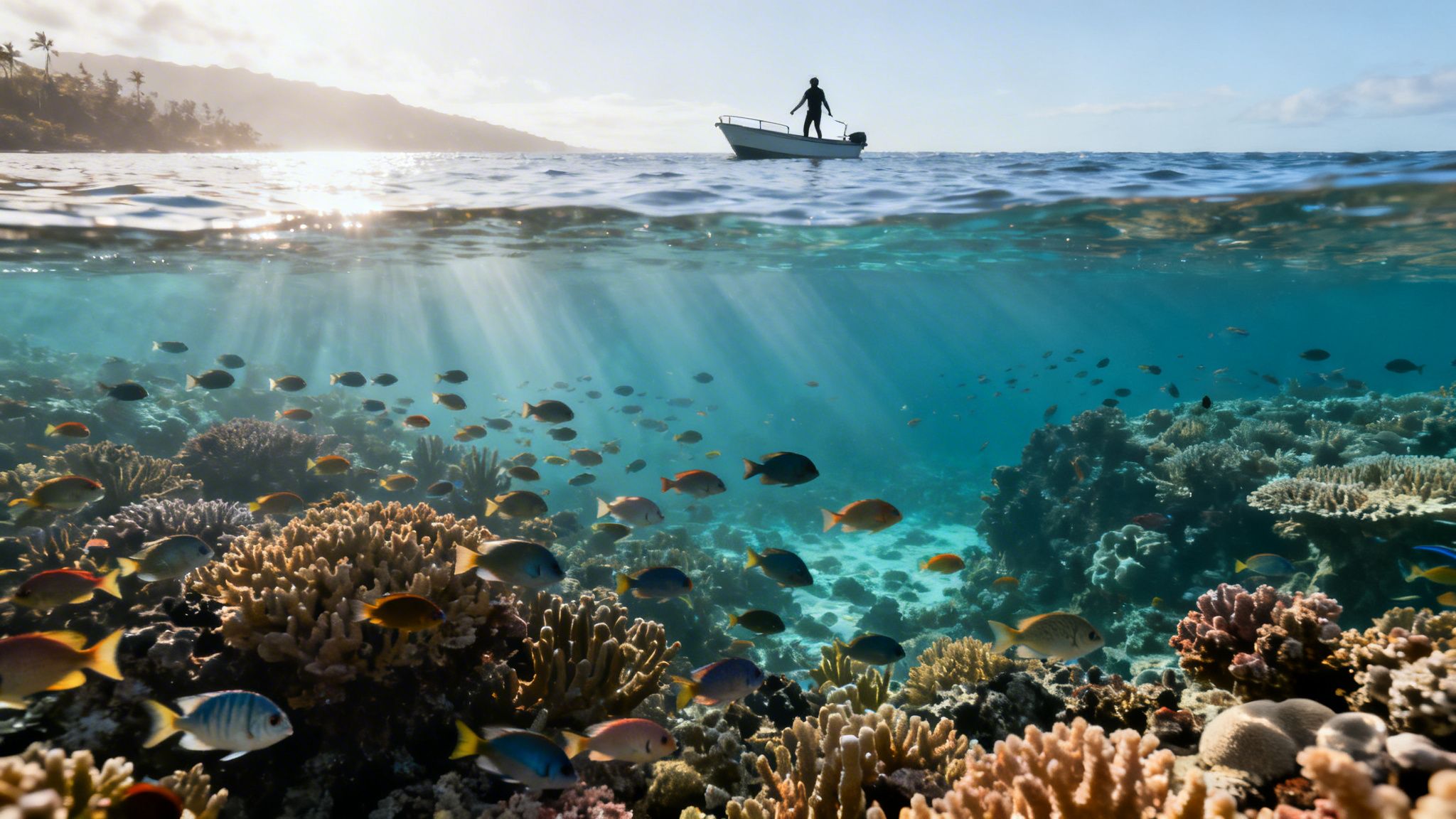
While the manta ray night dive often steals the spotlight, the Kona coast's underwater world is packed with incredible sites that are just as breathtaking. The island's volcanic past has left behind a dramatic seascape of lava tubes, pristine bays, and vibrant reefs.
Think of this as your insider's guide to the can't-miss spots for Big Island Hawaii scuba. Knowing what makes each location special will help you tailor your dives to exactly what you want to see and experience. Let’s dive in.
Kealakekua Bay: The Protected Paradise
If you only have time for one daytime dive, make it Kealakekua Bay. This isn't just another pretty spot; it's a historically significant Marine Life Conservation District, meaning it's fiercely protected from fishing. The result? Marine life flourishes here in staggering numbers.
Visibility in the bay often exceeds a crystal-clear 100 feet, revealing an underwater city of colorful coral. It's a prime spot for both beginners and seasoned pros, with common sightings of spinner dolphins, massive schools of reef fish, and of course, sea turtles. The marine life is so dense you'll feel like you're swimming in an aquarium.
The most famous part of the bay is the Captain Cook Monument, where a steep drop-off is covered in one of the healthiest coral ecosystems you'll ever see. The calm conditions make it a truly serene and unforgettable dive.
Turtle Pinnacle: The Ultimate Cleaning Station
Ever wondered where sea turtles go for a spa day? Welcome to Turtle Pinnacle. This unique dive site is a perfect example of a "cleaning station," a natural phenomenon where Hawaiian Green Sea Turtles (honu) gather.
They patiently hover near the pinnacle while schools of yellow tangs and other small reef fish swim up to nibble algae and parasites off their shells. It's a mesmerizing display of symbiosis and an absolute dream for underwater photographers. The dive itself is gentle and relaxing, making it perfect for anyone who wants a guaranteed, up-close encounter with these majestic creatures.
Golden Arches: Lava Tube Thrills
For divers who get a thrill from exploring unique underwater landscapes, Golden Arches is a must. Here, ancient lava flows have formed spectacular underwater archways, tunnels, and swim-throughs.
Gliding through these massive volcanic structures feels like you're exploring a sunken cathedral. The lava rock is often decorated with colorful sponges and provides the perfect hideout for marine life like moray eels, lobsters, and even whitetip reef sharks. This site is a powerful reminder of the volcanic forces that created the Hawaiian Islands and offers a completely different kind of Big Island Hawaii scuba adventure.
To give you a better idea of how these amazing sites stack up, here’s a quick summary.
Quick Guide To Top Kona Dive Sites
| Dive Site | Key Features | Common Marine Life | Skill Level |
|---|---|---|---|
| Kealakekua Bay | Protected marine sanctuary, exceptional visibility, pristine coral gardens. | Spinner dolphins, vast schools of reef fish, sea turtles. | Beginner to Advanced |
| Turtle Pinnacle | Famous turtle cleaning station, volcanic pinnacle structure. | Hawaiian Green Sea Turtles, tangs, butterflyfish. | Beginner to Intermediate |
| Golden Arches | Dramatic lava arches, swim-throughs, and unique volcanic topography. | Moray eels, crustaceans, whitetip reef sharks. | Intermediate to Advanced |
Each of these spots showcases why Kona is a world-class diving destination. You can learn even more about what makes Kona scuba diving so special and find the perfect trip for your skill level. For those with more experience seeking a challenge, be sure to check out our advanced dive tours.
Discovering The Thrill Of The Kona Blackwater Dive
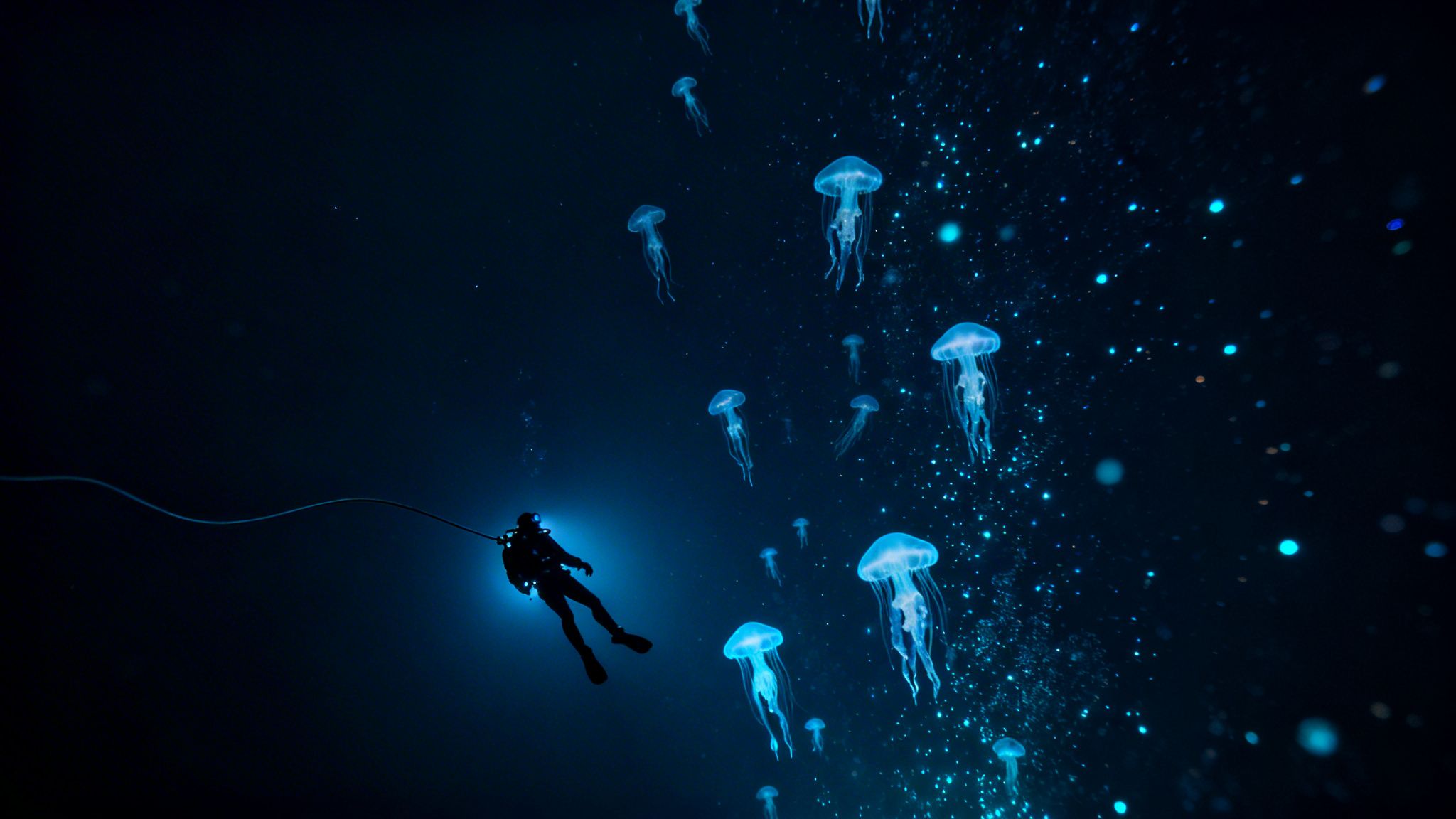
For the diver who thinks they've seen it all, the Big Island Hawaii scuba scene has a surprise that will completely redefine your idea of adventure. It’s called the Kona Blackwater Dive, and it’s less like a dive and more like a spacewalk through the deep ocean.
Picture this: you’re miles offshore, floating in the pitch-black water column with thousands of feet of ocean beneath you. Tethered to the boat for safety, you become a tiny beacon in a vast, dark universe. Your dive light doesn’t illuminate a colorful reef; instead, it slices through the darkness to reveal a world of bizarre and mesmerizing creatures rising from the abyss.
What you're witnessing is a front-row seat to the largest migration on Earth—a massive, nightly event that happens in every ocean but is rarely seen by human eyes.
Witnessing The Great Vertical Migration
Every single night, an unbelievable amount of marine life travels from the crushing depths toward the surface to feed. This incredible journey is called the diurnal vertical migration. On a blackwater dive, you position yourself right in the middle of this upward commute, coming face-to-face with creatures that spend their entire lives in the deep, open ocean.
Most of these organisms are things you've only seen in documentaries, if at all. Many are translucent, gelatinous, or bioluminescent, creating their own light in the dark.
- Bioluminescent Wonders: You’ll be surrounded by a living light show as countless animals glow, flash, and sparkle in the dark.
- Alien-Like Organisms: Keep an eye out for larval fish that look nothing like their adult selves, otherworldly cephalopods like the diamond squid, and an endless parade of ethereal jellyfish.
- Pelagic Magic: We call it "pelagic magic" for a reason. It’s the only way to describe the feeling of discovering life forms that seem to come from another planet entirely.
An Adventure for the Experienced Diver
Let’s be clear: the Kona Blackwater Dive is not for everyone. This is a highly specialized and advanced dive that requires exceptional buoyancy control, a cool head, and total comfort in complete darkness.
Drifting in the open ocean at night is an incredible feeling, but it demands skill and mental toughness. Safety is everything, which is why this dive is only run by expert guides who know the specific protocols inside and out.
For seasoned divers looking to add a truly mind-blowing entry to their logbook, this is the ultimate dive. If you're ready for an experience that will fundamentally change how you see the ocean, this is it. You can learn more about the unique setup and creatures of the Kona Blackwater Dive to see if you're up for the challenge.
How To Plan Your Perfect Big Island Dive Trip
So, you’re ready to trade your daydreams of Big Island Hawaii scuba for the real thing. Awesome. A little bit of smart planning now means you can spend your vacation focused on the incredible underwater world, not scrambling with last-minute logistics. Let’s walk through how to get it all locked in.
When to Go: The Best Seasons for Diving
One of the absolute best things about diving in Kona is that there’s no bad time to come. The water is always inviting, typically hanging out between a comfortable 75°F and 80°F (24-27°C) all year long.
- Summer (June-August): This is when you'll find the warmest, flattest, and calmest water. Think glass-like conditions and super easy diving.
- Winter (December-March): The open ocean might get some big swells, but the Kona coast stays incredibly protected thanks to our massive volcanoes. The real magic of winter, though, is the humpback whales. Hearing their songs reverberate through the water on a dive is something you’ll never forget.
Honestly, no matter when you book your ticket, the conditions are almost always fantastic for exploring Kona's famous reefs and lava tubes.
Certifications And What To Pack
You’ll need at least an Open Water Diver certification to get in on the action. But if you really want to see the best of what Kona has to offer, I’d strongly recommend getting your Advanced Open Water and Nitrox (Enriched Air) certifications. Many of the most dramatic sites are a bit deeper, and nitrox helps you feel more energetic after a day of multiple dives. Plus, here at Kona Honu Divers, we offer complimentary nitrox for certified divers—it’s a huge perk.
As for packing, keep it simple and practical.
- Dive Essentials: Definitely bring your certification cards, your logbook, and any personal gear you’re attached to. For most divers, that means your own mask and dive computer.
- Exposure Protection: A 3mm wetsuit is the go-to for most of the year. If you know you run cold, a 5mm suit or even just adding a hood and vest will make all the difference.
- Surface Gear: Don't forget the essentials for life on the boat: reef-safe sunscreen, a hat, polarized sunglasses, and a reusable water bottle. A light windbreaker is also a great idea for staying warm between dives.
Renting gear is a fantastic way to travel light. Any reputable shop will have high-quality, well-maintained equipment, saving you the hassle of dragging heavy bags through the airport.
Booking Your Dives And Choosing An Operator
This is probably the single most important tip I can give you: book your diving tours well in advance. Kona is on every diver's bucket list, and the most iconic experiences—like the Manta Ray Night Dive and the Blackwater Dive—fill up weeks, sometimes months, ahead of time. This is especially true if you’re visiting during peak travel times like the holidays, spring break, or over the summer.
Getting your spots locked in early means you get the dates you want and can build the rest of your vacation around your dives without stress. A great dive operator will handle all the little details for you, from fitting you with top-notch rental gear to choosing the perfect sites based on that day’s conditions. All you have to do is show up, relax, and get ready to be amazed.
Check AvailabilityCommon Questions About Big Island Scuba Diving
Planning a dive trip always brings up a few questions. To help you get ready for your Big Island Hawaii scuba adventure, we've gathered answers to the queries we hear most often from divers just like you.
What Is The Best Time Of Year For Big Island Hawaii Scuba Diving?
One of the greatest things about diving here is that the Kona coast is incredible all year long. The water stays in that perfect sweet spot, usually between 75-80°F (24-27°C), so you can leave the thick wetsuit at home.
The winter months, from about December to March, can bring bigger ocean swells, but Kona’s leeward side is naturally protected from the worst of it. This means we almost always have calm, diveable conditions. The absolute best part of winter diving? The humpback whales are here, and hearing their songs echo through the water on a dive is an experience you will never, ever forget.
If you're looking for the absolute warmest and calmest water, summer is your best bet for those glassy, postcard-perfect days.
Do I Need To Be An Advanced Diver To Enjoy Kona Diving?
Not a chance! The Kona coast is famous for having something for everyone, from brand-new divers to salty old pros. We have countless beautiful, shallow reefs tucked away in protected coves that are perfect for beginners, folks doing their first "intro" dive, or anyone who just wants a chill, relaxed swim.
A good, professional operator will be skilled at handling groups with different experience levels, making sure every single person has a safe and fantastic time. And for the adrenaline seekers? Oh yeah, we've got you covered with deeper sites, dramatic lava tubes, and unforgettable adventures like the Kona Blackwater Dive tour.
Is The Manta Ray Night Dive Safe?
Yes, it is incredibly safe, provided you go with a reputable, professional company. The established operators follow strict guidelines that have been fine-tuned over years to keep both the divers and the magnificent manta rays safe.
Before you even touch the water, you'll get a detailed briefing on what to expect and what to do. Expert divemasters are with you every step of the way. As for the mantas, they're gentle giants—they have no teeth, no stingers, and no interest in anything other than the plankton attracted by the lights. It’s always smart for any serious diver to understand safety fundamentals, including things like What is Hyperbaric Oxygen Therapy and its role in treating decompression sickness, just in case.
Can I Rent Scuba Gear On The Big Island?
Of course! Renting gear here is easy and super common. Top-tier dive shops have full sets of high-quality, well-maintained equipment ready to go—BCDs, regulators, computers, wetsuits, you name it.
It saves you the headache (and baggage fees!) of lugging your own heavy kit across the ocean. Plus, many operators, including us at Kona Honu Divers, throw in free nitrox for certified divers, which is a fantastic perk.