
Picture this: you’re descending into water so clear it feels more like flying than swimming, with ancient volcanic landscapes unfolding beneath you. This isn’t a dream—it’s what scuba diving on the Big Island of Hawaii is all about. While the entire state is beautiful, the Big Island truly is in a league of its own, making it a bucket-list destination for divers from every corner of the globe.
Why Is the Big Island a World-Class Diving Destination?
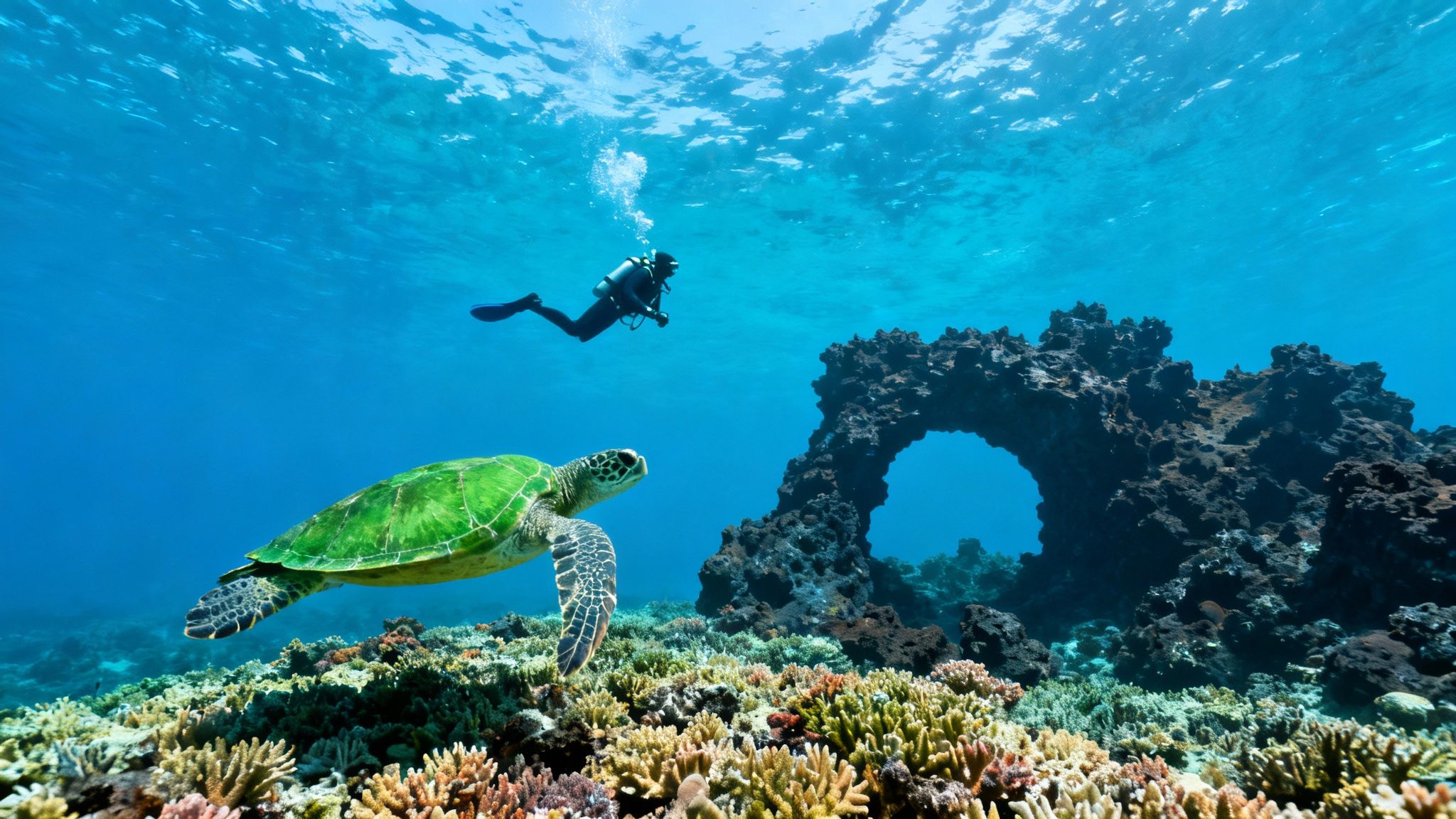
The secret to the Big Island's magic lies in its unique geology. The sheer size of its volcanoes acts as a natural shield for the Kona coast, protecting it from wind and strong currents. The result is exceptionally calm, clear water where visibility often stretches past an incredible 100 feet.
This sheltered environment has allowed some of the healthiest and most vibrant coral reefs in the world to flourish. But it’s not just coral. The underwater topography here is jaw-dropping, featuring dramatic lava tubes, massive archways, and intricate caverns all sculpted by ancient lava flows. It honestly feels like you're exploring a completely different planet.
Unforgettable Marine Life Encounters
What really puts the Big Island on the map is the chance for consistent, up-close encounters with iconic marine life. It’s almost a guarantee you'll swim alongside graceful Hawaiian green sea turtles (honu), spot curious moray eels peeking out from their dens, and get lost in massive, swirling schools of colorful reef fish.
And then there are the manta rays. The Kona coast is famous for hosting one of the most reliable manta ray night dives on Earth—an experience that regularly tops "best dive" lists worldwide. It's no surprise that the island now supports over 50 dive shops guiding 150,000+ divers who log about 100,000 certified dives here every year.
The Big Island isn’t just another pretty dive spot; it’s where volcanic drama and marine abundance collide. You can be exploring a lava tube in the morning and dancing with giant manta rays by nightfall.
From serene coral gardens perfect for beginners to thrilling deep-water adventures for seasoned pros, this island has it all. We’ll show you why the Kona coast is the heart of the action and how to have the dive trip of a lifetime. Your journey starts right here.
Find out more about what makes the island so special in our guide to Big Island scuba diving.
Exploring Kona: The Heart of Big Island Diving
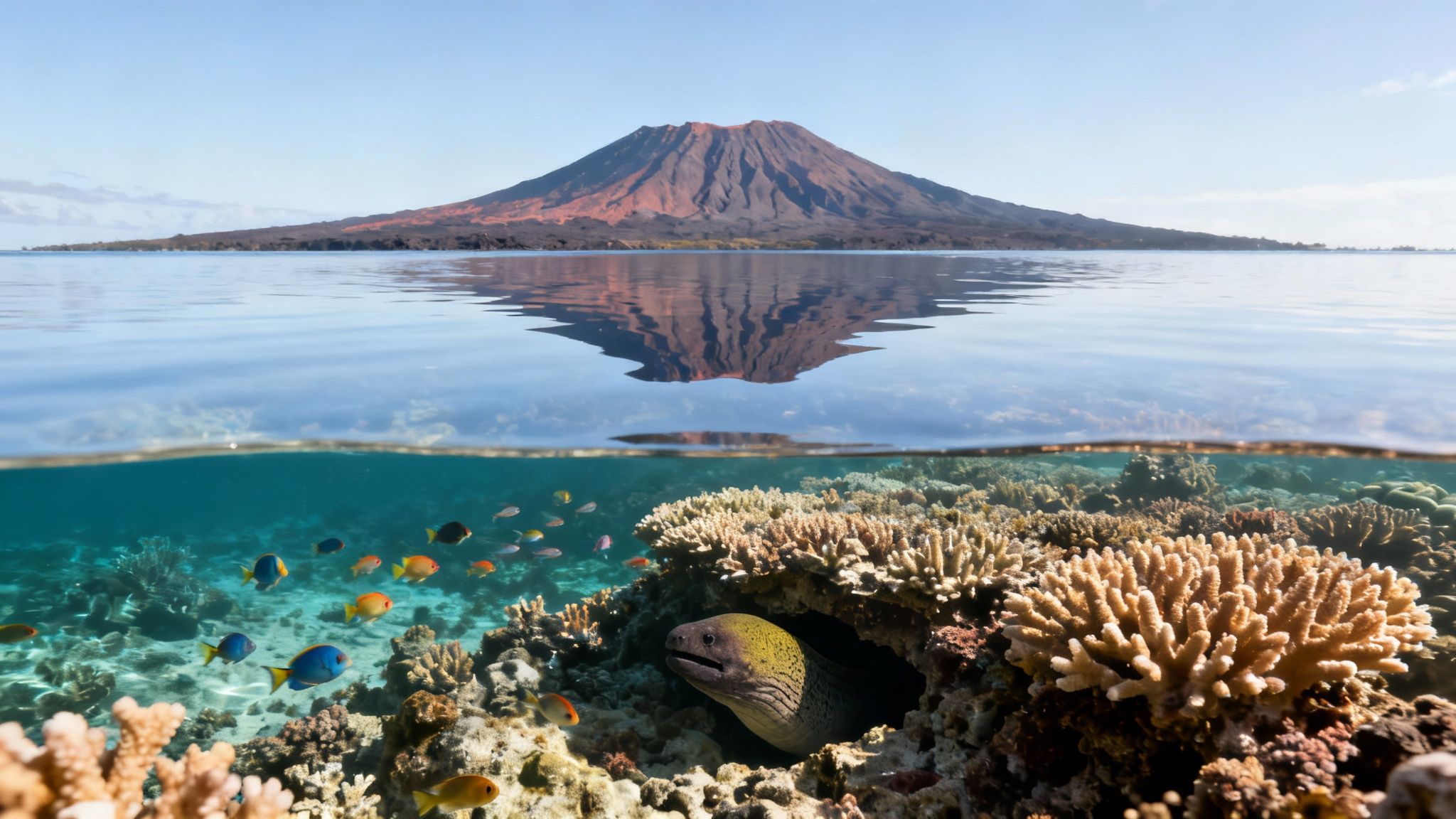
So, what makes the Kona coast the undisputed champion of Big Island scuba diving? It's all about the volcanoes. The island’s colossal mountains, Mauna Loa and Hualalai, act like a massive natural wall, shielding the western coastline from the powerful trade winds that churn up the Pacific.
This geological quirk creates a huge leeward side where the ocean is almost always calm and protected. What does that mean for divers? It means you get consistently clear, flat water nearly every single day of the year. It's not uncommon for visibility to push past 100 feet, giving you that incredible feeling of floating in an endless blue cathedral.
This profound calm is also the secret ingredient for Kona's spectacular coral reefs. Without constant wave action battering them, fragile corals can flourish, creating intricate underwater cities that are absolutely packed with marine life.
Diving Conditions on the Big Island
One of the best things about diving in Kona is that there's really no "off-season." The conditions are fantastic year-round, but each season does offer its own unique magic. Planning your trip comes down to knowing what to expect when you get here.
The table below breaks down the seasonal conditions, giving you a better idea of what you'll experience in the water.
| Season | Water Temperature | Average Visibility | Key Marine Life Sightings |
|---|---|---|---|
| Spring (Mar-May) | 76-78°F (24-26°C) | 80 – 100+ ft | End of humpback whale season, manta rays, turtles, vibrant reef fish. |
| Summer (Jun-Sep) | 79-82°F (26-28°C) | 100+ ft | Glassy calm seas, warmest water, spinner dolphins, eagle rays. |
| Fall (Oct-Nov) | 78-80°F (26-27°C) | 80 – 100+ ft | Excellent visibility, fewer crowds, great for manta ray encounters. |
| Winter (Dec-Feb) | 75-77°F (24-25°C) | 60 – 100 ft | Humpback whale songs underwater, occasional passing whales, tiger sharks. |
Ultimately, whether you're listening to whale songs in the winter or enjoying glassy seas in the summer, you're in for an unforgettable dive.
What You'll See Beneath the Waves
Diving in Kona is like stepping into a National Geographic special. The healthy volcanic reefs support an incredible amount of life, and you’re pretty much guaranteed to have some amazing wildlife encounters.
Here are a few of the regulars you can expect to meet:
- Hawaiian Green Sea Turtles (Honu): You’ll find these gentle giants everywhere, either cruising gracefully past you or taking a nap on the reef.
- Colorful Reef Fish: Get ready for a visual overload. Schools of brilliant yellow tang, chunky parrotfish, and delicate butterflyfish create a moving rainbow against the dark lava rock.
- Moray Eels: Always be sure to peek into the little nooks and crannies of the reef. You’ll often be met by the curious face of a moray eel checking you out.
- Spinner Dolphins: Don't be surprised if your boat gets a playful escort to the dive site from a pod of acrobatic spinner dolphins.
Kona's protected coastline isn't just a geographical feature; it's the very foundation for one of the most vibrant and accessible marine ecosystems on the planet.
Local operators like Kona Honu Divers have been navigating these waters for years, and they know them like the back of their hand. That kind of deep, local knowledge is what allows them to pick the perfect dive site on any given day, making sure every trip is safe, full of life, and absolutely unforgettable. You can dive deeper into what makes this coastline so special by exploring Kona scuba diving.
Must-See Dive Sites Along the Kona Coast
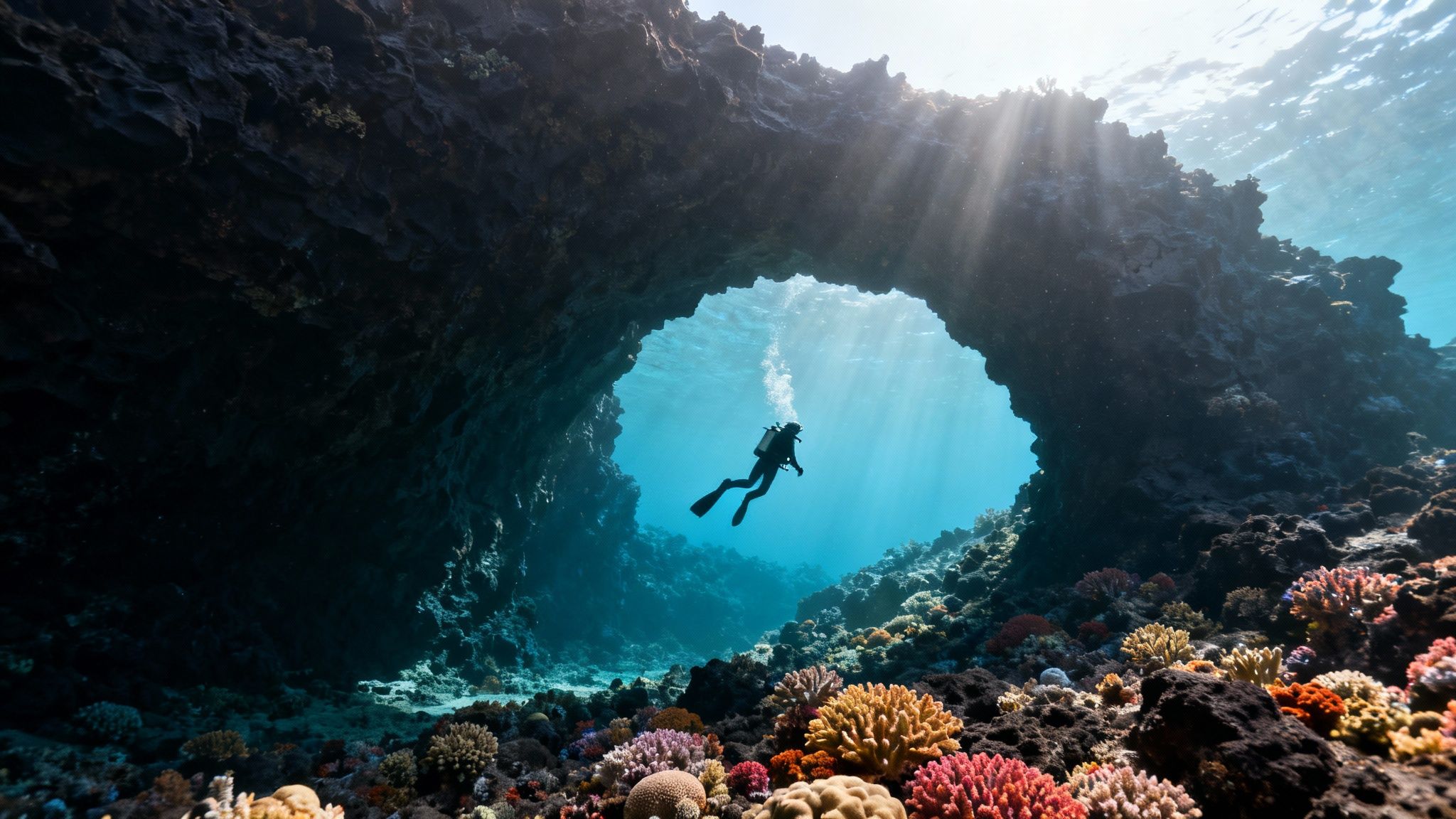
The Kona coast is an absolute gift to divers. It’s not just one type of diving—it’s a massive underwater world with a personality that changes around every point. That incredible variety is what makes Big Island Hawaii scuba so unforgettable. One morning you could be drifting over a sun-drenched coral garden, and that afternoon, you might find yourself exploring the ancient, hollowed-out passages of a lava tube.
Let’s dive into a few of the can’t-miss spots that make this volcanic paradise a world-class destination.
Honaunau Bay (Two Step): A Beginner's Paradise
If you're looking for one of the best and easiest shore dives on the island, Honaunau Bay is your spot. It’s affectionately known as "Two Step" for the two natural lava rock ledges that make getting into the water a breeze. It’s a beautifully simple and safe entry point for divers and snorkelers alike.
The moment you slip beneath the surface, you’re greeted by a stunning, shallow reef absolutely packed with life. The bay is also a famous resting spot for pods of spinner dolphins, and seeing them in the morning hours is a truly magical experience. With its calm, protected waters and incredible biodiversity, Two Step is perfect for a relaxed day of exploration.
Kealakekua Bay: A Protected Marine Sanctuary
Just down the coast is Kealakekua Bay, a place that's as important historically as it is ecologically. As a strictly protected Marine Life Conservation District, its coral gardens have been left to thrive, resulting in one of the most pristine reef systems you’ll ever see.
Diving here feels like you've dropped into a perfectly curated aquarium. You'll encounter enormous coral heads, vibrant clouds of reef fish, and almost certainly a few Hawaiian green sea turtles gliding by. Because the ecosystem is so healthy, it’s a living window into what Hawaiian reefs looked like hundreds of years ago. To keep it that way, access is limited, so your best bet is to go with a licensed tour operator.
Lava Tubes and Archways for the Adventurous Diver
Ready for something a bit more dramatic? The Big Island’s volcanic past has sculpted an incredible underwater landscape filled with thrilling structures. At many sites, you’ll find amazing lava tubes—caverns formed by flowing magma that you can now swim right through. There's nothing quite like navigating the dark, ancient passage and then emerging back into the brilliant blue of the open ocean.
Beyond the tubes, you'll discover massive archways and swim-throughs that give the dive a real sense of scale and adventure. These sites show off the raw, powerful side of the ocean and the forces that built these islands from the seafloor up.
Exploring a lava tube is like taking a journey back in time. You're swimming through the very arteries of a volcano, witnessing the island's creation story firsthand.
These more complex dives usually require a boat trip and a solid set of skills. Good buoyancy control and awareness are key when you're in an overhead environment. If you're certified and ready for the challenge, dedicated advanced dive tours are the perfect way to explore these incredible formations safely.
The best part about diving in Kona is that no two days are the same. A great local guide will always read the day's conditions to pick the perfect spot, whether it's a calm reef for a chilled-out morning or a thrilling lava tube for an afternoon adventure. It’s how we ensure every dive is not just safe, but truly one for the logbook.
Experience the Manta Ray and Blackwater Night Dives
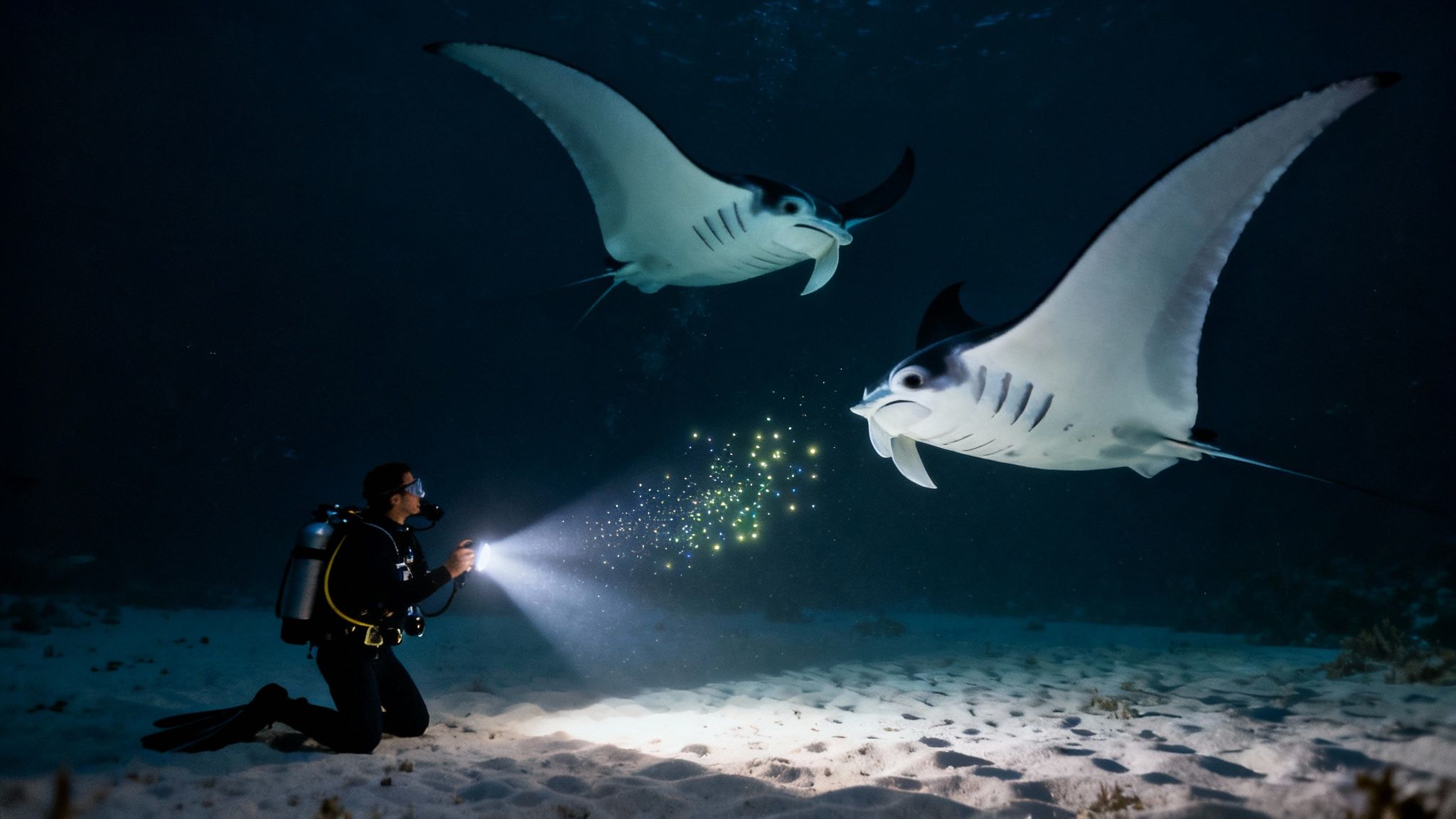
When the sun dips below the horizon on the Kona coast, the ocean doesn't go to sleep. It comes alive. For anyone serious about Big Island Hawaii scuba, the night offers two of the most legendary dives you'll find anywhere on the planet. These aren't just things to check off a list; they are genuine, profound encounters with a hidden world.
First up is the world-famous Manta Ray Night Dive. Picture this: you're kneeling on the sandy bottom, your dive light pointed straight up. Out of the darkness, massive, graceful giants with wingspans over 12 feet swoop in. They glide, loop, and somersault just inches above your head, feasting on the plankton drawn to the lights. It’s a silent, mesmerizing underwater ballet that is both humbling and completely unforgettable.
Why Garden Eel Cove is the Superior Choice for Mantas
While you can see mantas at a couple of spots, Garden Eel Cove is hands-down the superior location for the manta ray dive tour. It’s tucked away in a more protected area, which means calmer conditions and more reliable dives. The viewing area for divers is better structured for an optimal experience, and the surrounding reefs are healthier, making the entire encounter feel more pristine and natural.
The best part? These aren't just passing visitors. The mantas are local residents who show up for dinner almost every night, giving this dive a success rate that often tops 90%. You're not just hoping to see something; you’re getting a front-row seat to one of nature's most incredible performances. You can get a deeper sense of the experience in our guide to the manta ray night swim.
This dive is a pure, silent interaction. You simply become a part of the environment, a silent observer as these gentle giants perform their nightly dance just for you. The feeling is absolutely indescribable.
The Kona Blackwater Dive: A Trip into Inner Space
If you're an advanced certified diver looking for something truly different, the Kona Blackwater Dive is it. People often describe it as a spacewalk in the open ocean, and they're not wrong. You drift in the pitch-black night, tethered to the boat, suspended over thousands of feet of water.
Out here, you witness the largest vertical migration of life on Earth. Bizarre, often bioluminescent, creatures rise from the crushing depths to feed near the surface under the cover of darkness. You'll see things that look like they're from another planet—strange larval fish, tiny translucent squids, and all sorts of glowing jellies.
It’s a mind-bending, humbling experience that peels back the curtain on a hidden universe of life few ever get to see. This dive isn't about big animals; it’s about the weird, intricate, and wonderful little aliens that form the very foundation of the ocean's food web.
Planning a Safe and Unforgettable Dive Adventure
Any great dive trip is built on a foundation of safety. When you’re well-prepared, you can relax and truly soak in the magic of the underwater world. The good news? The Kona coast has a stellar reputation for being one of the safest and most enjoyable places to dive on the planet.
This isn’t just marketing fluff—it’s a reality born from Kona’s uniquely calm waters, top-notch dive operators, and incredibly low incident rates. It’s why divers of all levels, from families on their first ocean dive to seasoned pros, feel so comfortable here. Incidents with marine life are practically unheard of, happening in less than 0.0001% of dives. The overall reported incident rate is under 1 per 100,000 dives, which is miles better than the global average. This track record is a direct result of the island’s gentle geography and the strict safety culture upheld by local dive crews. Find out more about what makes Big Island diving so safe.
What Certification Do I Need?
Having the right certification in your pocket is your key to unlocking the best dive sites. Your training level directly determines where you can go and what you can see.
- Open Water Diver: This is your passport to the underwater world. With an Open Water card, you can explore the vast majority of Kona’s beautiful shallow reefs. Think turtles munching on algae, clouds of colorful reef fish, and incredible coral gardens.
- Advanced Open Water Diver: Want to go deeper? Or maybe explore the otherworldly lava tubes and caverns? This is the certification you’ll need. It also opens the door to truly unique experiences like the famous Kona Blackwater Dive. If you’ve got the card, an advanced dive tour is a must-do.
A No-Fuss Packing Checklist
Packing for a dive trip shouldn't be a headache. Here’s a simple checklist to make sure you have the essentials for a comfortable and safe trip.
- Dive Computer & C-Card: Don't leave home without them! These are the two most critical items for any certified diver.
- Reef-Safe Sunscreen: Help us protect our fragile coral reefs. Always choose a mineral-based sunscreen with zinc oxide or titanium dioxide.
- Reusable Water Bottle: Hydration is key for safe diving. A reusable bottle keeps you topped up and helps cut down on single-use plastic.
- 3mm Wetsuit: Even with warm water, multiple dives can leave you feeling chilled. A 3mm wetsuit is the sweet spot for staying comfortable all day.
- Dry Bag: A small dry bag is perfect for keeping your phone, wallet, and a dry towel safe on the boat.
How to Choose a Great Dive Operator
The single most important decision you'll make for your trip is choosing your dive operator. A fantastic operator does more than just drive the boat—they are your safety net, your guide, and your key to an amazing experience. Look for a company with an ironclad safety record, well-maintained gear, comfortable boats, and a crew that clearly loves what they do.
An operator's reputation is built on a foundation of meticulous safety protocols and a genuine passion for creating positive, secure diving experiences for every single guest.
This is where a shop like Kona Honu Divers really stands out. Their dedication to safety, guest experience, and protecting the marine environment is obvious from the moment you step on board. They give you the peace of mind to just relax and enjoy the adventure.
Why Choose Kona Honu Divers for Your Trip
Picking a dive charter on the Big Island can feel overwhelming with so many options out there. But remember, the operator you choose does more than just drive the boat—they set the tone for your entire underwater adventure. This is where Kona Honu Divers really shines, earning their reputation as the go-to for Big Island Hawaii scuba excursions.
So, what’s their secret? It all comes down to the team. The crew at Kona Honu Divers brings a combined 200+ years of professional diving experience to the table. That’s an incredible depth of local knowledge. You’re not just with a guide; you’re with experts who live and breathe Kona’s waters, know all the hidden gems, and can read the conditions to make every single dive count.
Unmatched Value and Comfort
Kona Honu Divers operates on a simple, powerful philosophy: quality over quantity. They keep their group sizes small, which means you’ll never feel lost in a crowd. It’s a far more personal, relaxed, and safe way to explore the ocean.
But they also add real, tangible value that makes a huge difference in your dive day.
- Custom-Built Dive Boats: These aren't just any boats. They’re designed from the ground up for diving in Hawaiian waters, ensuring your time on the surface is just as comfortable and safe as your time below it.
- Free Nitrox for Certified Divers: This is a game-changer. Diving with nitrox often means longer bottom times and feeling less tired afterward. Getting that benefit on every dive at no extra cost is a massive plus.
- Dedication to Marine Conservation: The spirit of aloha ʻāina (love of the land and sea) is at the heart of everything they do. You can feel their genuine respect for the honu (Hawaiian green sea turtle) and the entire fragile ecosystem on every trip.
Choosing the right team transforms a good dive into an unforgettable one. It's the difference between seeing the ocean and truly experiencing it.
With a stellar reputation and a true passion for sharing the magic of Kona's underwater world, they are the clear choice for divers who want the best. For a closer look at what makes their operation so special, you can dive the Big Island of Hawaii with Kona Honu Divers.
See what fellow divers have to say about their experiences.
Ready for an amazing underwater journey? Lock in your spot by visiting the diving tours page and see the difference for yourself.
Your Big Island Diving Questions, Answered
Got questions about your big island hawaii scuba adventure? You're not alone. Most divers have a few things they want to clear up before they get here. Let's walk through some of the most common ones so you can feel confident and ready for an amazing trip.
When’s the Best Time to Go?
Honestly, there's no bad time to dive in Kona. The conditions are fantastic year-round.
If you love warm, glassy-calm water, aim for the summer months between May and September. The seas are often like a mirror, making for incredibly smooth boat rides and easy diving.
But winter, from December to March, offers something truly magical. While underwater, you can often hear the haunting songs of migrating humpback whales echoing around you. It's an experience you'll never forget.
Do I Need to Be an Expert Diver?
Not at all! Kona is a fantastic place for divers of all stripes. If you're newly certified, you'll find plenty of shallow, protected reefs where you can build your confidence while surrounded by incredible marine life.
For the more seasoned divers out there, we've got you covered with deeper sites, dramatic lava tube swim-throughs, and more complex underwater landscapes. Our crew at Kona Honu Divers are pros at matching the day's diving tours to the skill level of everyone on the boat, so you can be sure you're in for a safe and rewarding dive.
What Will I See Down There?
The better question is, what won't you see? The biodiversity here is just spectacular. On just about any dive, you can count on seeing Hawaiian green sea turtles, moray eels peeking out from their homes, clever octopuses, and a kaleidoscope of colorful reef fish. It's also pretty common to spot pods of spinner dolphins playing in the boat's wake.
And of course, there are the Big Island's signature experiences: the world-famous manta ray night dive and the one-of-a-kind Kona blackwater dive, where you’ll meet strange and beautiful creatures from the deep ocean.
Is the Manta Ray Night Dive Really Safe?
Absolutely. When you go with a professional, reputable operator, the manta ray night dive is extremely safe. The entire operation is carefully managed from start to finish. Our expert guides are there to ensure the well-being of the divers and the mantas.
These gentle giants are filter feeders, dining on plankton attracted by the lights. They are completely used to divers and lights in their environment, which allows for a peaceful, breathtaking, and totally safe encounter.