
Table of Contents
- The attraction is variety within reach
- Choose the coast, not a promise
- Start with the demands you can manage
- Night comfort is its own skill
- Why Garden Eel Cove is the better manta choice
- Blackwater changes the frame
- Read the table as a decision, not permission
- Season sets expectations, not clearance
- Ask how the day will work
- Judge the answers, not the slogan
- Wear what makes the dive manageable
- Pack a small dry bag
- Prepare motion help before the harbor
- Settle into position without damaging the bottom
- Manage yourself before watching the animals
- Include crowding in the decision
- Do I need Open Water certification before booking?
- Is Kona calm enough for shore dives?
- Is a manta night dive suitable for beginners?
- How clear is the water?
- When should I dive?
- Do I need my own gear?
- Compare the complete booking cost
- Reserve the trip that fits today's diver
The most misleading advice about diving in Kona is that the water is calm, so choosing a site is easy. A sheltered coast isn't a same-day forecast. A flat harbor can sit beside an uncomfortable coastal run, and a manageable shore entry can become a difficult exit while you're underwater.
For Big Island divers, Kailua-Kona offers something more useful than permanent calm: a coastline where a capable captain can choose among different exposures. The right decision starts with your recent diving, the swell direction, and how you'll get back out of the water, not the photograph that persuaded you to book.
Why Divers Choose the Kailua-Kona Coast
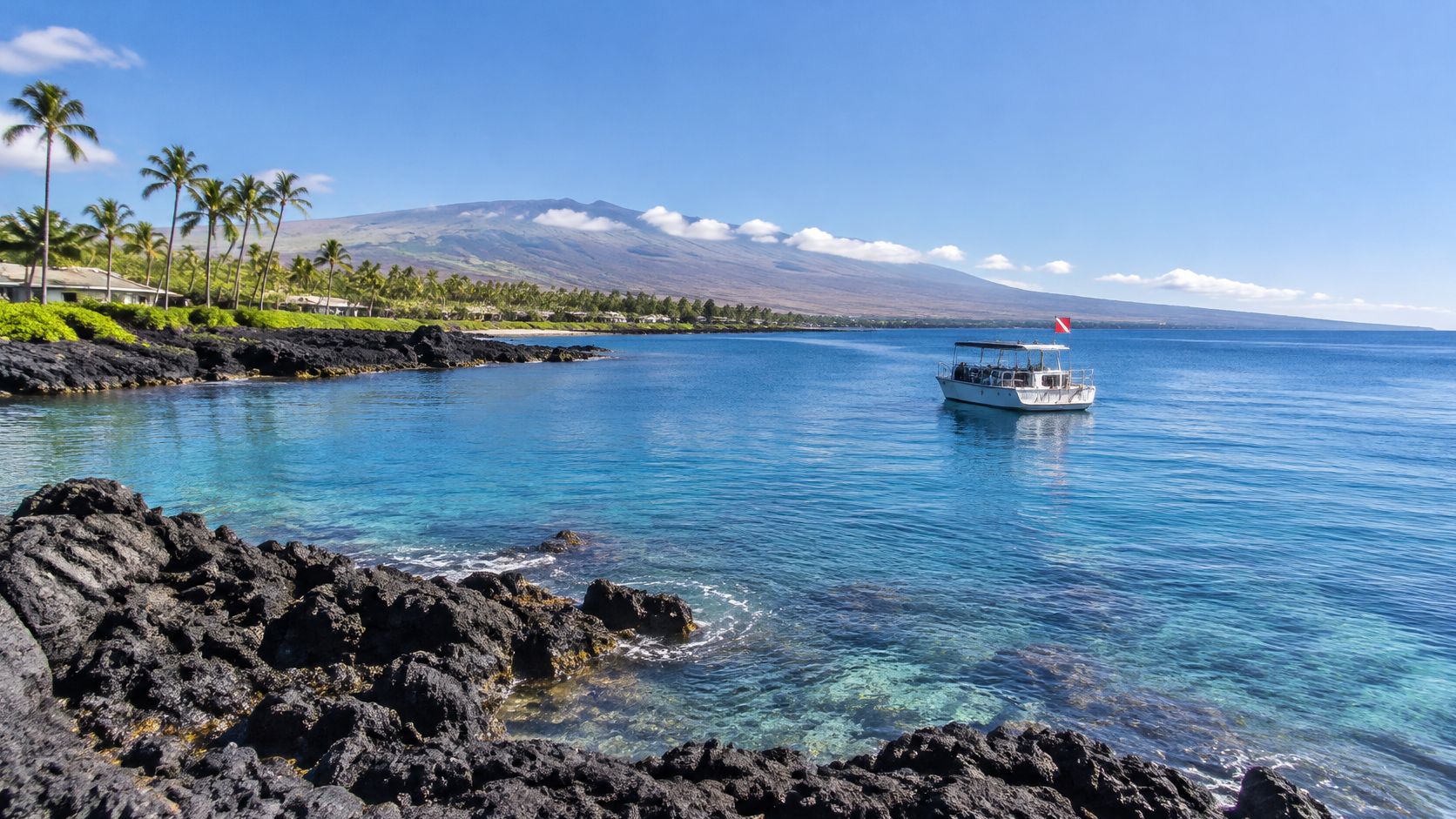
Say you arrive at Honokohau Harbor to find barely a ripple beside the dock. You've packed a camera, your certification card is on your phone, and you're already imagining a leisurely reef dive. Then the crew explains that the planned site has surge and they're heading somewhere else.
That change isn't a downgrade. It's the reason to choose a coast with options rather than commit yourself to a particular entry.
Kailua-Kona sits on Hawaii Island's leeward west side, sheltered from much of the trade-wind weather that affects the windward coast. That setting helps explain what makes diving in Kona distinctive, but the shelter has limits. Swell arriving from another direction doesn't disappear because your hotel faces west.
Think of Honokohau as the front door, the coast as the house, and the forecast as the thing that decides which room you use.
The attraction is variety within reach
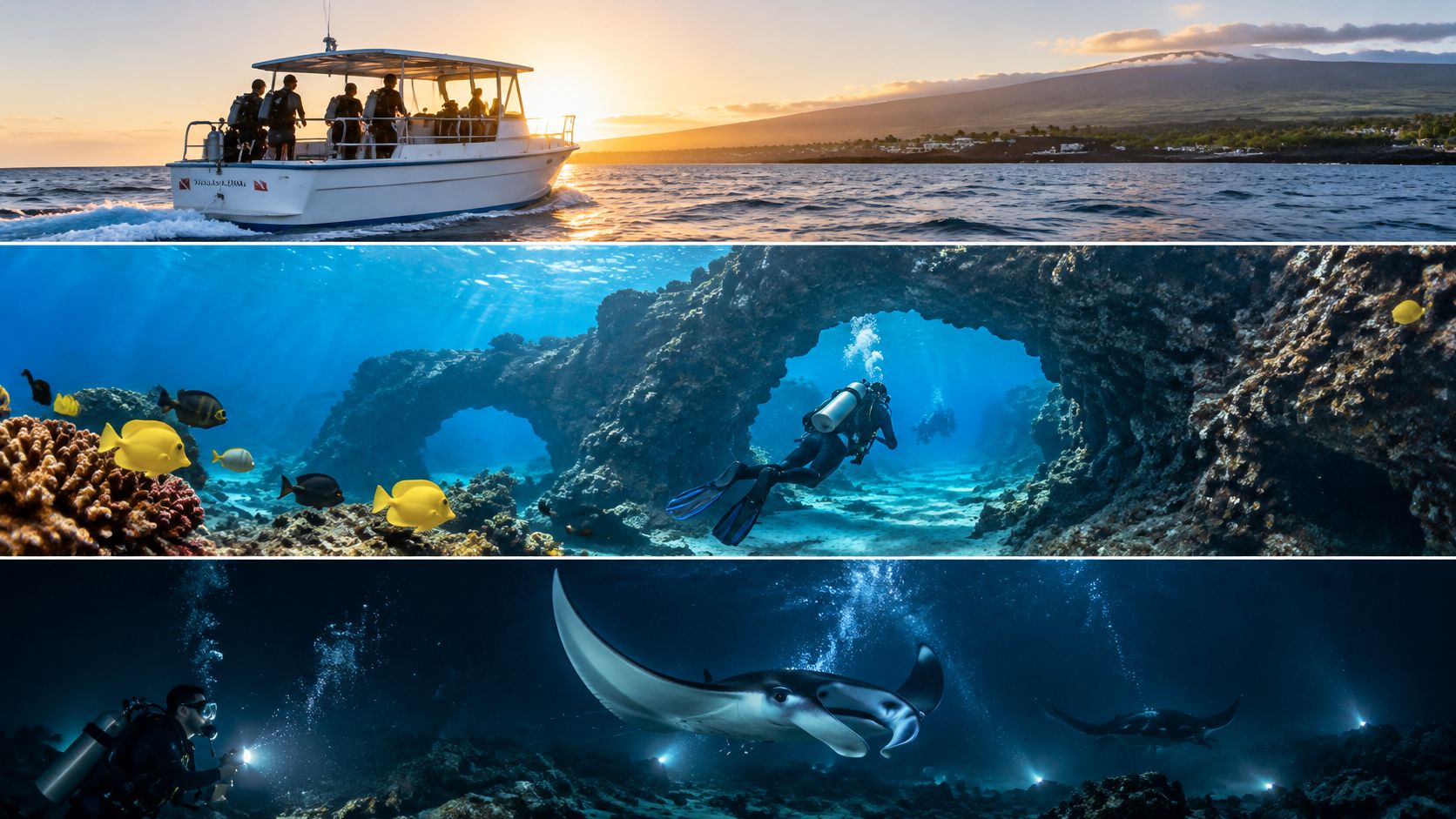
Underwater, the lava coastline gives divers ledges, arches, reef fingers, and passages to explore. A good reef dive doesn't require racing between formations. Slow down beside a ledge, keep your fins clear of the bottom, and give yourself time to notice the smaller animals sheltering there.
Lava tubes and swim-throughs need judgment. An opening isn't an invitation to enter an overhead environment beyond your training. Stay with the guide's route, preserve room to turn, and skip any passage that makes you feel you need to squeeze or hurry.
The practical appeal is the contrast between daylight reef exploration and specialized night diving. You can compare the broad diving tour menu without assuming that every departure asks the same thing of you.
Choose the coast, not a promise
A settled morning can make the reef feel effortless. Afternoon wind, swell wrapping around a point, or runoff after rain can change that experience.
- Choose flexibility: A site change can improve both comfort and underwater conditions.
- Separate day and night readiness: Being relaxed on a sunny reef doesn't automatically mean you'll enjoy darkness.
- Keep an exit standard: If the return looks questionable, an easy-looking entry doesn't justify going in.
The best starting point is a trip that leaves you spare attention for the ocean. You shouldn't spend your first Kona dive trying to remember equipment skills while keeping up with a demanding itinerary.
Which Kona Dive Fits Your Certification
Kailua-Kona dives by skill and time of day
| Trip | Who it fits | Typical profile | What you see | Skill floor |
|---|---|---|---|---|
| Morning 2-tank reef | Certified divers seeking a daylight start | Guided reef dives within training and conditions | Coral gardens, lava tubes, reef wildlife | Open Water with current basic skills |
| Premium advanced long-range | Experienced divers with recent logs | Longer boat run to remote sites | Steeper terrain and less-dived reef | Advanced comfort and recent experience |
| Manta night dive | Night-comfortable certified divers | Shallow, stationary feeding observation | Reef mantas filter-feeding on plankton | Open Water plus solid buoyancy |
| Blackwater night dive | Confident night divers | Open-ocean observation over deep water | Larval fish, squid, and jellies | Advanced buoyancy at night |
| Shore entry | Strong swimmers who can read surf | Nearshore dive with a planned entry and exit | Reef accessible from the chosen entry | Same-day surf judgment, not just a card |
Start with the demands you can manage
The morning reef is the sensible default. Daylight gives you visible reference points, and a guided reef route lets you settle into your weighting, breathing, and buddy awareness. Skip a regular charter in favor of instruction or a refresher if assembling equipment, clearing a mask, or controlling an ascent still feels uncertain.
A certification card describes training you completed. Your recent logbook tells the crew more about what you're ready to do today. Our beginner scuba diving guide for the Big Island is a useful starting point if you're sorting out training versus a certified-diver trip.
The premium advanced long-range trip suits divers who want a longer run and more demanding terrain. Skip it if you're still using most of your attention to maintain depth or manage gas. Remote doesn't necessarily mean better for your particular dive.
Night comfort is its own skill
A manta dive can look simple because divers spend much of the encounter in a viewing position. The challenge is holding that position without rising into the animals' route, drifting into another diver, or using the bottom as a handhold.
Blackwater removes the familiar reef backdrop. You need to trust your instruments, control your depth without chasing a visual reference, and follow the operator's positioning system. Skip it if darkness or open water already makes ordinary tasks difficult.
Shore diving asks a different question: can you manage the entry and return while carrying equipment? Strong underwater skills don't eliminate the risk of slipping on wet lava or being knocked off balance by a set.
- Morning reef: Choose it to establish comfort, not to prove experience.
- Specialty night dive: Choose it when you can operate your gear without needing constant visual reassurance.
- Shore entry: Choose it only when you can explain the exit plan as clearly as the underwater route.
If your last ocean dive was years ago, arrange a skills refresh and a daylight reef outing before committing to a night trip. Package prices belong in the booking comparison; they shouldn't decide whether a profile fits your abilities.
What Day and Night Dives Show You
Day reef diving, manta observation, and blackwater aren't interchangeable versions of the same outing. They put your attention in different places: the coastline, a feeding area, or the open water.
On a daylight reef, the surroundings provide the structure. Follow the lava contours, look beneath ledges without touching them, and leave enough distance from an arch to appreciate its shape. Hawaiian reef fish and small animals often reward a patient approach more than a fast tour through every opening.
Why Garden Eel Cove is the better manta choice
For a manta dive, I'd choose Garden Eel Cove for its protected location, better viewing area, and surrounding reefs. That combination makes it a stronger overall dive-tour choice than a more exposed viewing location, provided the actual conditions support the plan. Garden Eel Cove is the northern Kona site, not the Keauhou location farther south.
The surrounding reef matters because a manta outing shouldn't be judged solely by the closest animal pass. A comfortable approach, sensible staging area, and worthwhile reef setting improve the whole dive.
A University of Hawaii study analyzed more than 23,000 sightings of 167 individually identified reef mantas from 2010 through 2022 at Garden Eel Cove and Keauhou. It found larger aggregations at Garden Eel Cove, stronger female site fidelity at Keauhou, and aggregation patterns that tracked zooplankton density.
The feeding mechanism explains why an evening can be busy or quiet. Artificial lights concentrate zooplankton, and reef mantas, Mobula alfredi, filter-feed through those prey concentrations, as described in the NOAA-hosted Kona manta study.
- Choose the setting: The manta dive trip is about observing feeding, not pursuing rays.
- Understand the encounter: The Hawaii manta night-dive guide helps distinguish the viewing experience from a normal reef tour.
Blackwater changes the frame
On a blackwater night dive, you're looking into open ocean rather than across a reef. Larval fish, squid, and jellies become the subjects, and small details replace the broad scenery of a daytime dive.
At Kona Honu Divers, we offer night and morning reef dives along the Kona Coast. The useful distinction isn't which sounds more dramatic, but which environment lets you remain attentive and composed.
Whatever the format, sightings are wildlife encounters, not a show on cue.
Boat Days Versus Shore Entries
A reputation for calm water is not a surf report. Before a shore dive, check the National Weather Service marine and surf forecast, then assess the actual entry. The Love Big Island scuba guide recommends that forecast check and treating a high-surf advisory as a reason not to enter.
Same-day boat or shore decision for Kailua-Kona
| Condition signal | Boat charter | Shore entry |
|---|---|---|
| Light trades and a small north swell | Good potential morning reef window | Often manageable at protected beaches after an entry check |
| South or west swell building | Captain may shift along the coast or cancel | Many entries become unsafe |
| High-surf advisory | Ask whether the boat is still operating | Do not enter |
| Afternoon wind chop | Prefer a suitable morning departure | Surface swim and return become harder |
| Night with a calm harbor | Consider an appropriate guided manta or blackwater boat | Skip unguided night shore dives at unfamiliar sites |
Read the table as a decision, not permission
Light trades and a small swell can be encouraging, but they don't tell you what is happening at a particular lava shelf. Watch the water long enough to see sets rather than timing your decision around a convenient lull.
A building south or west swell changes the calculation. A boat captain may have another usable location, but the ability to relocate isn't a guarantee that the charter should run. For a shore diver, breaking water across the entry, strong surge, or an awkward return should end the discussion.
Afternoon chop creates a different problem. The reef below may look inviting while the surface swim becomes tiring. Plan around the entire dive, including the time spent floating, locating the exit, and removing fins.
A shore dive is only as manageable as the exit you'll face when you return, not the entry you happened to catch between sets.
Season sets expectations, not clearance
Winter north swells can wrap into exposed sections of the west coast. Summer trade winds can build afternoon chop. A morning booking is often a sensible planning preference, but neither season grants automatic clearance.
Visibility should be judged the same way. Ask about the intended site after recent rain, swell, or wind rather than treating a coast-wide visibility estimate as a promise. Good visibility also doesn't make a surging entry safer.
The Big Island shore-diving guide can help you identify possible locations, but a site description can't make the same-day decision for you.
Before committing, ask:
- What changed today: Which sites were rejected, and was the issue swell, current, visibility, or access?
- What happens on return: Can you identify the exit from the water, and is there a usable alternative?
- What ends the dive: Agree on the condition that means staying dry or turning back.
New visitors, families coordinating different abilities, photographers carrying unfamiliar equipment, and divers without recent shore-entry experience should generally default to a guided boat. You're paying for site selection and return logistics as much as transportation.
How to Choose a Kailua-Kona Dive Boat
Start with the meeting point, not the boat photograph. We're based in Kona on Hawaii's Big Island, and our dive days start at Honokohau Harbor. Confirm your meeting instructions and parking before you leave your accommodation.
Then describe your experience. For most of our regular charters, divers need at least an Open Water Diver certification from a recognized agency such as PADI, SSI, or NAUI. We check each diver's certification and logbook before choosing sites that match the group's skills.
Ask how the day will work
A useful booking conversation goes beyond naming the most famous reef. Ask who will guide you, how the group is organized, and what the crew does when conditions change.
- Guide assignment: Who leads the dive, and how is a diver who needs extra help supported?
- Group management: How many divers will share your guide, and how are different experience levels handled?
- Nitrox arrangements: Is it available for your departure, and what certification and analysis procedure apply?
- Weather changes: What happens if swell makes the intended site unsuitable?
We deliberately keep our dive groups small and focus on personal attention. Our crew handles gear setup, which gives you time to discuss fit, weighting, and any unfamiliar controls before entering the water.
Judge the answers, not the slogan
Small groups help, but the crew still needs a clear plan. Listen for a specific explanation of buddy procedures, entry order, descent, and returning aboard. A confident answer can include a limitation, such as a site the crew won't use in the forecast conditions.
Tell us during booking if snorkelers or ride-alongs are in your party. They can join the boat, but the crew needs that information to organize the right outing and account for everyone.
Review history is useful when you read for patterns rather than isolated praise. Look for comments about briefings, assistance, and how a crew handled changed plans.
A good screening question: Ask what would make the crew change or cancel the dive. An operator who can explain its limits is more useful than one who promises an effortless day.
Red flags include skipping certification checks, promising a particular wildlife encounter, or refusing to explain the weather plan. Current rates matter, but the true filter is whether the crew understands who you are taking underwater.
Gear Packing and Seasickness Prep
Pack for a moving boat and a wet return, not just the time underwater. Keep what you need accessible, and avoid bringing a large bag full of equipment you won't use.
Your mask deserves attention before departure. A familiar mask is valuable, but a prescription mask addresses vision, not fogging. Clean and defog it correctly, check the skirt seal, and tell the crew if you're struggling to see your gauges.
Wear what makes the dive manageable
- Exposure protection: Bring a rash guard and choose a wetsuit that matches your tendency to chill. Night dives can feel colder when you're relatively still.
- Sun protection: Use sun-protective clothing and apply sunscreen before boarding, following local reef-protection requirements.
- Secure footwear: Wear something suitable for the dock, then follow the crew's onboard footwear instructions.
If you own a dive computer, bring it and know how to read its display. Don't arrive with an unfamiliar device and assume you can learn its alarms during the descent.
Pack a small dry bag
- Diving records: Bring your certification card and a recent logbook page or app.
- Personal essentials: Pack a towel, dry layer, water bottle, and payment method for any extras or crew gratuity.
- Night equipment: Confirm primary and backup light arrangements rather than assuming the boat supplies everything.
- Familiar gear: Bring your mask and computer if you use your own; leave unnecessary valuables at the hotel.
We proactively service our rental equipment. Rental gear can simplify travel, but inspect the fit and controls with the crew rather than treating serviced equipment as automatically familiar equipment.
Prepare motion help before the harbor
For general preparation, the seasickness prevention guide covers useful boat habits. Eat a small, bland breakfast, avoid alcohol the night before, look toward the horizon, and ask where to sit near the middle of the boat.
Products you may want to discuss with a clinician or pharmacist include Ship-EEZ Seasickness Patch, Dramamine pills, Bonine pills, Sea Band-style wristbands, and ginger chews. Compare the generic wristbands' current price and reviews rather than assuming the branded version is better.
These aren't interchangeable treatments, and this isn't a prescription. Some products can cause drowsiness or have uncertain benefit. Anyone pregnant, taking other medication, or considering a new remedy before scuba diving should ask a qualified clinician about suitability.
Prepare the day before so you have time to read labels and obtain advice. A calm lee is still a boat, including in summer.
Manta Etiquette and Dive Safety
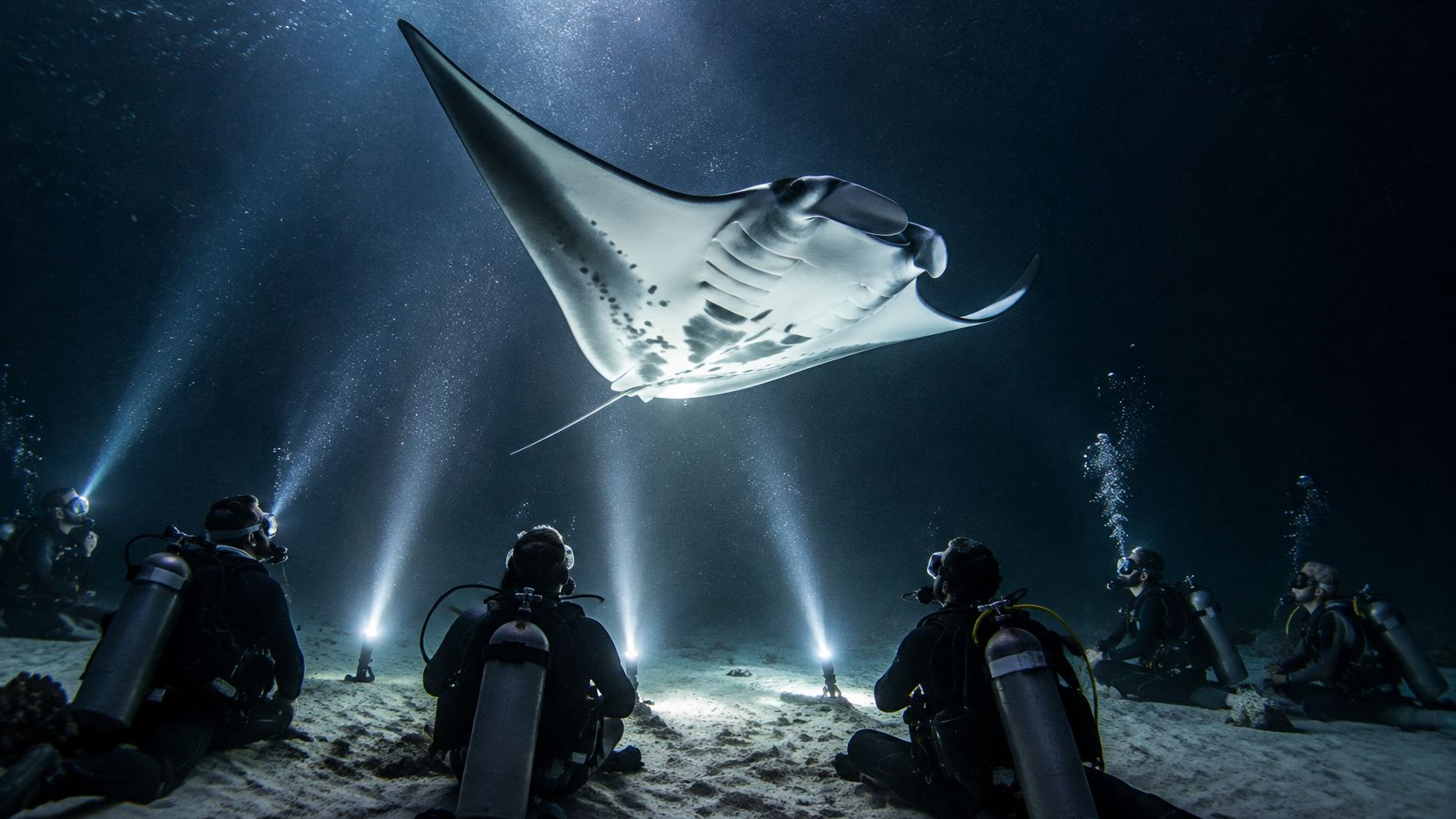
The viewing arrangement matters more than entering the water at night. Under NOAA's voluntary Kona manta-viewing guidance, divers remain on or near a sand, rubble, or boulder bottom, form a semicircle, and leave the central water column open; divers hold lights above their heads pointing upward, while snorkelers remain at the surface with lights directed downward.
That open space is the animals' maneuvering area. Your camera, bubbles, and fins don't give you priority over a feeding route.
Settle into position without damaging the bottom
Follow the guide's placement instructions and maintain controlled buoyancy close to the designated viewing area. Don't kneel on living reef or grab a rock without knowing what is on it. Avoid coral, sea urchins, and every part of the ray.
Remove a mask-mounted snorkel and secure it in your BCD pocket so it can't snag a passing animal. Stow dangling accessories, shorten loose camera tethers, and make adjustments before the encounter becomes busy.
- Keep the route open: Don't rise into the center to improve a photograph.
- Keep contact off the menu: Never touch, chase, block, or try to ride a manta.
- Keep your beam controlled: Follow the upward-light setup rather than sweeping other divers' faces.
Manage yourself before watching the animals
Set your turn pressure before descent, agree on the signal for leaving, and retain gas for a controlled return and delays. A shallow profile doesn't excuse poor monitoring, and a stationary viewing position doesn't make you a passenger.
Check fitness before booking. Don't dive with a cold or ear problems, and obtain medical clearance for heart or breathing conditions that could affect diving. Discuss medication, recent illness, and other relevant issues openly rather than trying to resolve them at the ladder.
Plan your flight and any drive or hike to altitude around appropriate post-dive guidance. Follow the interval advised for your dive schedule and medical circumstances; don't place a summit excursion immediately after diving.
Include crowding in the decision
In a study of 444 manta viewers, 82% felt crowded by snorkelers, 78% by boats, and 69% by scuba divers, as summarized in this Kona manta-viewing overview. Those responses describe visitor crowding, not a biological carrying-capacity limit.
Choose a crew that controls its own group, explains shared viewing arrangements, and responds when the area becomes congested. We keep our groups small, but no operator controls every other boat at a shared site.
Historical Hawaii legislative testimony on Kona mantas describes a small, resident population vulnerable to disturbance. Repeated sightings aren't permission to intensify contact.
Your job is straightforward: stay still, light the water as instructed, and let the animal choose the pass.
Kailua-Kona Diving FAQs
Do I need Open Water certification before booking?
For most of our regular charters, yes. If you aren't certified, tell us before choosing a departure so we can discuss an appropriate training path rather than treating a certified-diver seat as an introductory lesson.
Is Kona calm enough for shore dives?
Sometimes, not automatically. Use the forecast, inspect the actual entry and exit, and stay out when an advisory or breaking surf makes the location unsuitable. Don't use a quiet harbor as evidence that a distant shore entry is safe.
Is a manta night dive suitable for beginners?
It can fit a recently certified diver who already has reliable buoyancy and feels comfortable at night. Tell the crew about your actual experience, including whether darkness, mask problems, or holding depth makes you anxious.
How clear is the water?
Ask for a current assessment of the intended site. Swell, runoff, and wind can change visibility, and a clear-water photograph doesn't tell you what you'll encounter on your departure.
When should I dive?
A morning reef outing is a practical starting point when building an itinerary. Leave room for weather changes and keep post-dive altitude and flight restrictions in mind before committing to the rest of your vacation.
Do I need my own gear?
No, but bring your certification records and consider using your own familiar mask. If you rent a BCD or regulator, check fit, inflation and deflation controls, alternate air source, and weight-release arrangements with the crew before entering.
The useful booking detail isn't your highest certification alone. Give us the date and type of your most recent dive, what equipment you normally use, and any skill you'd like to refresh. That information helps us make a better match.
Book a Kona Honu Divers Charter
For a first certified dive in Kailua-Kona, I'd start with the morning reef. Kona Honu Divers' 2-Tank Morning Dive is for any certified diver and explores coral gardens, ancient lava tubes, and swim-throughs. Our crew handles gear setup and keeps groups small, leaving you more attention for the dive itself.
Add a Garden Eel Cove manta night when your equipment and buoyancy feel natural again. Save a specialized open-ocean night outing or a remote advanced charter for the point when your recent experience supports it. Booking the more demanding trip first doesn't make the vacation more rewarding.
Compare the complete booking cost
Use the tour menu to choose the experience, then confirm the current total in the booking system. Don't compare headline rates without checking what each includes.
- Equipment: Confirm whether your selected rate includes the rental items you need.
- Gratuity and extras: Check what is separate so the final cost doesn't surprise you.
- Multiple dive days: We offer discount and multi-day packages. Ask which available package fits your itinerary rather than assuming every combination receives the same reduction.
- Weather terms: Understand the difference between your cancellation and an operator cancellation.
Tell us about a rusty certification, special equipment needs, or snorkelers and ride-alongs before paying. Those details are easier to accommodate during planning than after everyone arrives at the dock.
Reserve the trip that fits today's diver
You don't need to sound more experienced than you are. A clear account of your recent dives gives the crew something useful to work with, and leaving room to change the site gives the captain a better chance of finding suitable conditions.
Check the marine forecast that morning, bring your card, and let the crew move the site if the swell does.
Kona Honu Divers offers guided morning reef dives and specialized night experiences along the Kona Coast, with small groups and crew-handled gear setup. Visit Kona Honu Divers to choose a charter, share your recent diving experience, and reserve the outing that fits your skills and ocean comfort.