
The Kona coast of the Big Island is a world-renowned haven for underwater exploration, boasting crystal-clear waters, vibrant coral reefs, and a stunning diversity of marine life. Its unique volcanic geography has created an incredible array of snorkeling environments, from calm, protected bays teeming with colorful fish to dramatic underwater lava formations. Finding the best snorkeling in Kona HI can transform your Hawaiian vacation into an unforgettable experience, offering direct access to some of the most pristine marine ecosystems on the planet. This isn't just about finding a pretty beach; it's about discovering specific spots where the conditions, accessibility, and marine life converge for a truly spectacular adventure.
This comprehensive guide eliminates the guesswork. We will navigate you through the top snorkeling destinations along the Kona coast, providing the critical details you need to plan your perfect day in the water. For each location, you'll find actionable insights on what makes it unique, who it's best suited for-from first-time snorkelers and families to experienced free divers-and what you can expect to see beneath the surface. We'll cover everything from must-visit shore-entry spots like Honaunau Bay to exclusive boat-access sanctuaries like Kealakekua Bay. You'll learn the best times to go based on tides and seasons, receive essential safety tips for navigating Hawaii's waters, and get recommendations for top-tier tour operators, including the highly-rated excursions offered by Kona Honu Divers. Whether you're hoping to swim alongside Hawaiian green sea turtles, spot an elusive octopus, or simply float above a thriving reef, this guide provides the roadmap to Kona's underwater paradise.
1. Kealakekua Bay Marine Sanctuary
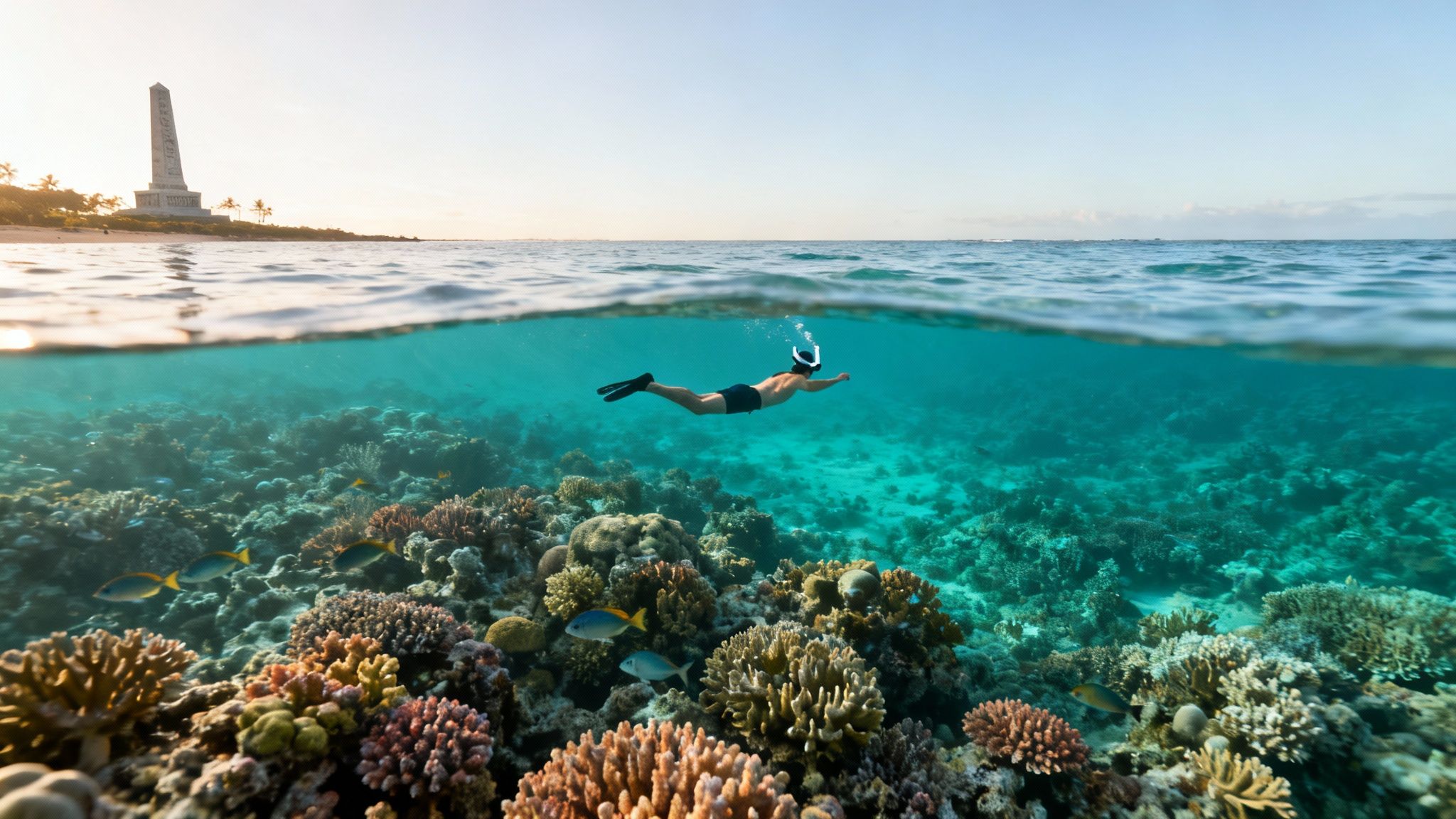
Kealakekua Bay Marine Sanctuary consistently ranks as one of the best snorkeling destinations in all of Hawaii, and for good reason. This protected cove is a vibrant underwater paradise, boasting some of the most pristine coral reefs and abundant marine life on the Big Island. The bay’s historical significance, marked by the iconic Captain Cook Monument on its shore, adds a layer of depth to the experience, making it a truly unique spot for underwater exploration.
Why It's a Top Snorkeling Spot
As a Marine Life Conservation District, Kealakekua Bay is shielded from heavy fishing and commercial activities, allowing its ecosystem to flourish. This protection results in exceptionally clear water and healthy, dense coral gardens that slope gently from the shore into deeper waters. Snorkelers can expect to encounter vast schools of colorful reef fish, including yellow tang, parrotfish, and butterflyfish, as well as sea turtles (honu) gracefully gliding by. The calm, protected waters make it an ideal environment for snorkelers of all ages and abilities, from first-timers to seasoned veterans.
How to Experience Kealakekua Bay
Accessing the prime snorkeling area near the monument can be challenging. While it's possible to kayak or hike, the most comfortable and informative way to visit is via a guided boat tour. Reputable operators like Kona Honu Divers offer tours that provide not only direct access to the best spots but also high-quality gear and expert guides. These guides share fascinating insights into the bay's rich history and marine biology, ensuring a safe and enriching adventure.
Actionable Tips for Your Visit
- Book a Tour: For the best experience, consider a professional tour. It eliminates the logistical challenges of reaching the bay and provides valuable local knowledge. Learn more about the Captain Cook snorkel tour on konahonudivers.com.
- Go Early or Late: The bay is most peaceful in the early morning or late afternoon, allowing for a more intimate experience with the marine life.
- Protect the Reef: Use only reef-safe sunscreen to help preserve the delicate coral ecosystem for future generations.
- Wear Protection: A rash guard or wetsuit is recommended for sun protection and to prevent accidental scrapes from the coral.
2. Honaunau Bay (Place of Refuge)
Honaunau Bay, often called "Two Step" by locals for its easy water entry, is a premier destination that perfectly blends incredible snorkeling with rich Hawaiian culture. Adjacent to the Pu'uhonua o Honaunau National Historical Park, this bay is a naturally protected area where marine life thrives amidst ancient lava rock formations. The combination of its historical sanctity and vibrant underwater world makes it a must-visit spot for anyone seeking the best snorkeling in Kona, HI.
Why It's a Top Snorkeling Spot
For centuries, the area has been a place of refuge, a tradition that seems to extend to the marine life. The bay's calm, clear waters host an exceptionally healthy and diverse coral reef ecosystem. Snorkelers are often greeted by large pods of spinner dolphins resting in the bay, green sea turtles (honu) feeding on algae, and a dazzling array of reef fish like milletseed butterflyfish and ornate wrasse. The dramatic underwater topography, featuring lava rock arches and shallow coral gardens, provides an endlessly fascinating landscape for exploration.
How to Experience Honaunau Bay
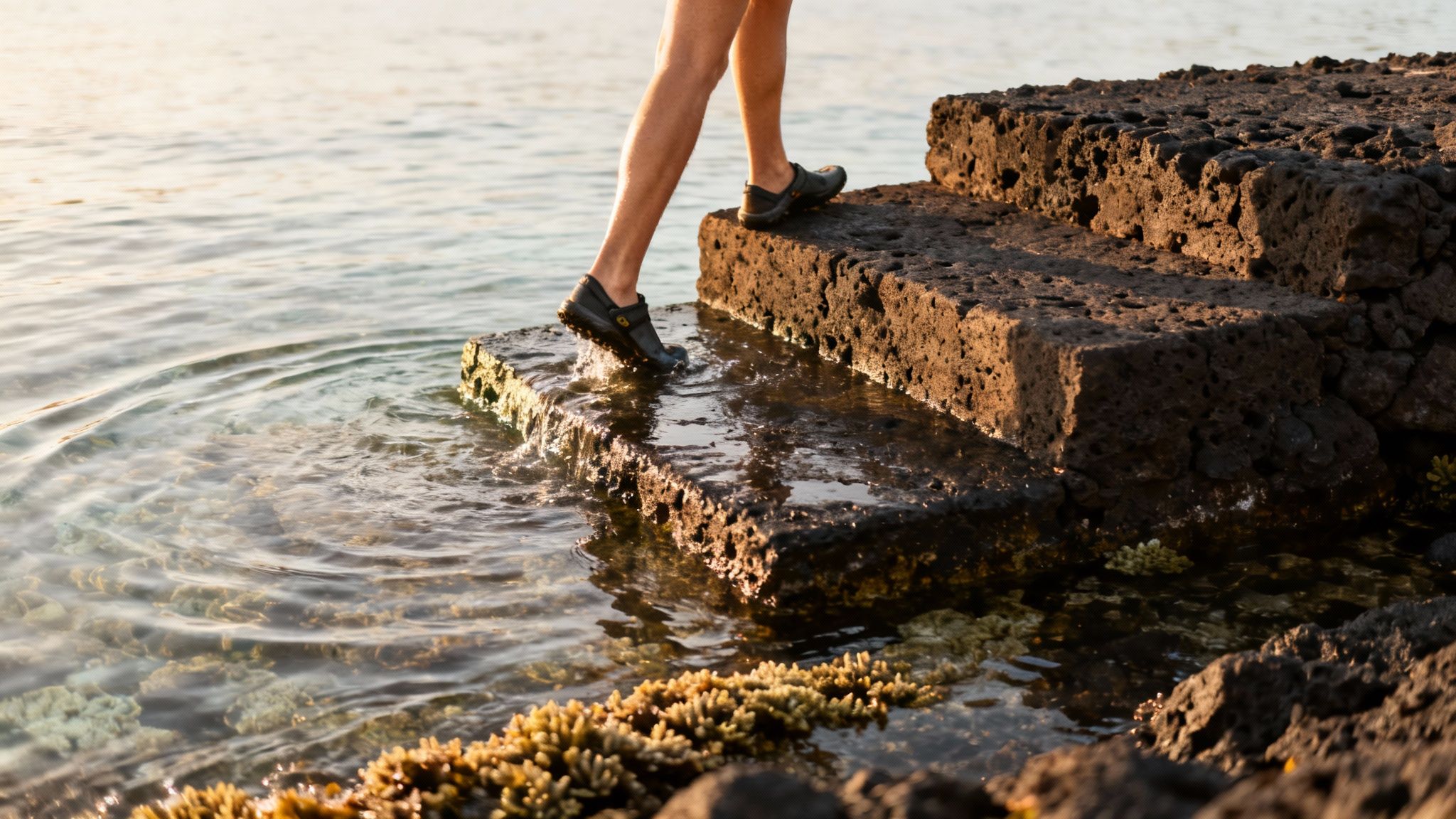
Honaunau Bay is one of the most popular shore snorkeling sites on the island, accessible directly from the lava rock coastline next to the national park. The famous "two-step" entry point, a natural staircase in the lava rock, allows for a simple and direct entry into the water. While you can easily explore on your own, joining a guided tour can enhance the experience. Guides often share insights into the bay's unique ecosystem and can point out creatures you might otherwise miss, ensuring a comprehensive and safe adventure.
Actionable Tips for Your Visit
- Arrive Early: Parking is limited and fills up quickly. An early start ensures a spot and lets you enjoy the water before the midday crowds arrive.
- Explore the Park: Dedicate time to visit the adjacent Pu'uhonua o Honaunau National Historical Park to fully appreciate the cultural importance of the site.
- Bring Water Shoes: The entry and surrounding area consist of lava rock, so sturdy water shoes are essential for safety and comfort.
- Respect the 'Aina (Land): This is a sacred place. Do not touch or stand on the coral, give marine life their space, and follow all park guidelines.
- Snorkel the North Side: The area to the right of the entry point, near the old stone wall, often boasts the most concentrated marine life and clearest visibility. Discover more about why Hawaii is a top snorkeling destination.
3. Pawai Bay (Magic Sands Beach)
Pawai Bay, better known to locals and visitors as Magic Sands Beach, offers one of the most accessible and rewarding shore snorkeling experiences in Kona. Its nickname comes from the beach's unique tendency for its white sand to be washed away by strong winter surf, only to magically reappear in the calmer spring and summer months. This dynamic environment, combined with its protected cove and easy access from town, makes it a fantastic spot for both spontaneous snorkeling trips and planned family outings.
Why It's a Top Snorkeling Spot
The true magic of this bay lies beneath the surface. The underwater terrain features a vibrant reef system that slopes gently away from the shore, creating an ideal habitat for a diverse array of marine life. Even in shallow water, you can spot colorful fish like yellow tang, triggerfish, and wrasse darting among the coral heads. The bay is relatively sheltered, which often results in calm conditions and good water clarity, making it a reliable choice for snorkelers of all skill levels, including beginners and children. Its convenience and beauty make it a staple in guidebooks for first-time visitors to Kona.
How to Experience Pawai Bay
Unlike remote spots that require a boat, experiencing Pawai Bay is as simple as driving up and walking in. The key is to know where to enter. The sandy beach area provides the easiest entry point, but the best snorkeling is found along the rocky lava rock formations on the north and south sides of the bay. These areas host more complex coral structures and attract a higher concentration of fish. Because it's a popular public beach, you can simply bring your own gear or rent from a local shop and enjoy the underwater scenery at your own pace.
Actionable Tips for Your Visit
- Time Your Visit: Arrive in the morning for the calmest water, best visibility, and smaller crowds.
- Enter Strategically: Use the sandy area on the south side for the safest and easiest entry, then swim out towards the rocky edges.
- Wear Reef Shoes: The mix of sand and lava rock can be tough on bare feet. Water shoes will make your entry and exit much more comfortable.
- Check Ocean Conditions: Always assess the surf before getting in. The "disappearing sand" is a sign of powerful currents, so avoid snorkeling on days with high surf.
- Explore the Edges: The most vibrant marine life congregates along the reef edges where the shallow water transitions to deeper areas.
4. Kahalu’u Bay Beach Park
Kahalu'u Bay Beach Park is arguably the most accessible and family-friendly spot for shore snorkeling on the Kona coast. Known affectionately as "Snorkel Beach," this location is protected by a man-made breakwater, creating a calm, pool-like environment perfect for beginners and children. With lifeguards on duty, convenient facilities, and a shallow entry, it’s no wonder tourist boards and hotel concierges consistently recommend this park, which can see over 500 visitors a day during peak seasons.
Why It's a Top Snorkeling Spot
The bay's accessibility is matched by its incredible density of marine life. Just a few feet from shore, you are immediately surrounded by schools of vibrant fish that are accustomed to human presence. The shallow, well-established reef is a haven for Hawaiian green sea turtles (honu), which are frequently seen feeding on algae in the calm waters. Snorkelers can easily spot dozens of fish species, including yellow tang, parrotfish, moray eels, and sergeant majors, all within a safe and contained area. This makes Kahalu'u Bay a perfect place to introduce someone to the wonders of snorkeling in Kona, HI.
How to Experience Kahalu'u Bay
Experiencing this spot is as simple as driving up and wading in. The park offers ample parking, pavilions, restrooms, and shower facilities, making it a comfortable place to spend a few hours. Gear rentals are available on-site from local vendors, so you don't have to worry about bringing your own equipment. The easy, sandy entry allows you to gradually acclimate to the water before swimming out toward the reef, which is located just 30-40 feet offshore. Its convenience and abundant wildlife make it a must-visit for any snorkeler.
Actionable Tips for Your Visit
- Arrive Early: To secure a good parking spot and enjoy the water before the crowds arrive, plan to get there before 8:00 AM.
- Protect the Reef: This is a delicate ecosystem. Use only reef-safe sunscreen, avoid touching the coral, and never stand on the reef.
- Enter Safely: Use the designated sandy entry point to avoid damaging the coral or injuring your feet.
- Explore the Outer Edges: For a chance to see larger fish and more diverse marine life, carefully snorkel along the outer edge of the main reef structure.
- Visit on a Weekday: If your schedule allows, a weekday visit typically means fewer people and a more relaxed experience.
5. Keahole Point Underwater Lava Tubes
For those seeking a more adventurous and geologically fascinating snorkeling experience, Keahole Point offers a dramatic underwater landscape shaped by volcanic activity. Located near the Kona International Airport, this site is renowned for its intricate network of underwater lava tubes, arches, and caverns. The dramatic topography creates a unique habitat that attracts a different array of marine species, providing an experience distinct from Kona’s more common coral gardens.
Why It's a Top Snorkeling Spot
Keahole Point is less about sprawling coral reefs and more about exploring awe-inspiring underwater architecture. The lava tubes form natural swim-throughs and dark caverns where specialized marine life, like resting whitetip reef sharks, lobsters, and unique crustaceans, can often be found. The water clarity is typically excellent, offering superb views of the volcanic rock formations. This location is one of the best snorkeling spots in Kona, HI, for experienced snorkelers and free divers who are comfortable with deeper water and more complex environments. The sense of discovery as you navigate this submerged volcanic world is truly unparalleled.
How to Experience Keahole Point
Due to its depth, potential for currents, and the overhead environments of the lava tubes, Keahole Point is strictly for advanced snorkelers and is best visited with a professional guide. Boat access is the only practical and safe way to reach the prime spots. Operators like Kona Honu Divers offer advanced snorkeling and diving tours specifically for experienced clients who can handle the conditions. Their expert guides know the safest routes through the formations and can point out the hidden marine life you might otherwise miss. These tours prioritize safety above all, ensuring a thrilling yet secure adventure.
Actionable Tips for Your Visit
- Go with a Guide: Never attempt to explore this area alone. A guided tour with an experienced operator like Kona Honu Divers is essential for safely navigating the lava tubes and understanding the site's conditions. Learn more about advanced dive tours here.
- Assess Your Skills Honestly: This site is not for beginners. You should be a strong swimmer and very comfortable in open water and overhead environments.
- Bring an Underwater Light: A small dive light is highly recommended to peer into the darker crevices and caverns of the lava tubes to spot hidden creatures.
- Monitor Conditions: Pay close attention to your guide’s briefing on currents and surge. Be prepared to abort the snorkel if conditions become unsafe.
6. Puako Bay Reef System
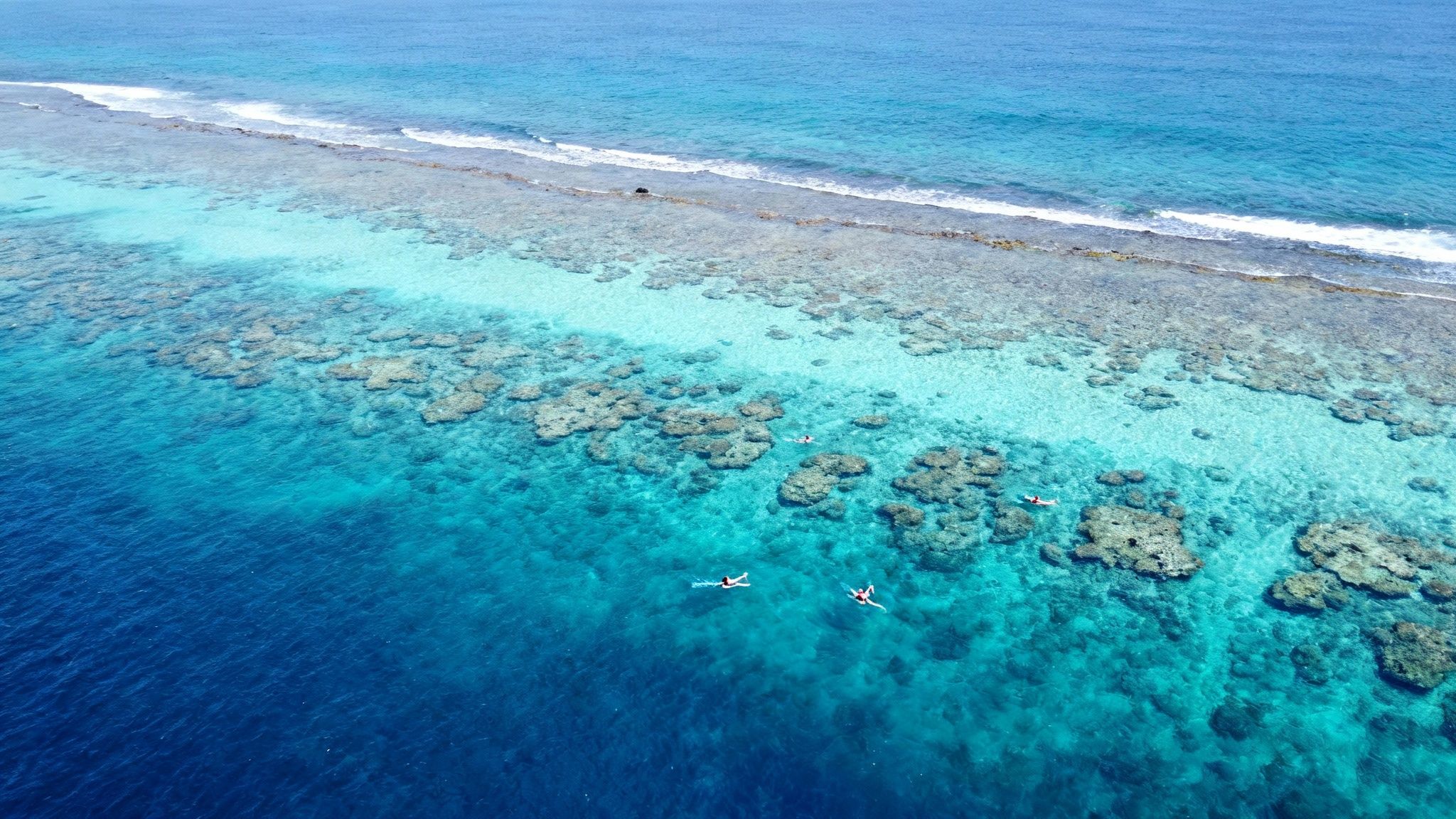
Just north of the main Kona resort areas, the Puako Bay Reef System offers a more tranquil and expansive snorkeling experience. This location features one of Hawaii's most extensive and accessible shallow reef systems, stretching for nearly a mile along the coast. The area is prized for its exceptional biodiversity and healthy coral gardens, providing a peaceful escape from the more crowded central Kona spots. Its less developed shoreline creates a natural, immersive environment for dedicated snorkelers.
Why It's a Top Snorkeling Spot
Puako’s reef is a living library of marine species, thriving in consistently calm and clear conditions. Its protected status and the focus of marine conservation groups have helped maintain its vibrant ecosystem. Snorkelers can explore a vast underwater landscape filled with intricate coral formations, lava tubes, and a dense population of reef fish. It’s common to spot large schools of fish, eels hiding in crevices, and green sea turtles (honu) feeding on algae, making it a key destination for anyone seeking comprehensive reef exploration.
How to Experience Puako Bay
While Puako is accessible from shore via several public access points, its sheer size can be daunting to explore without local knowledge. To get the most out of a visit and ensure you see the healthiest sections of the reef, a guided boat tour is highly recommended. Companies like Kona Honu Divers offer excursions that take you directly to the prime locations within the vast reef system. Their expert guides provide valuable insight into the unique marine life and geological features, enhancing both safety and the overall educational experience.
Actionable Tips for Your Visit
- Plan for a Day: The sheer size of the reef means you can spend hours exploring. Plan a full-day excursion to maximize your time in the water.
- Pack Accordingly: Amenities are limited, so bring everything you need, including water, snacks, and reef-safe sunscreen.
- Use Public Access: Look for the designated public shore access points along Puako Beach Drive for entry.
- Respect the Ecosystem: This is a delicate environment. Practice a strict no-touch policy with all coral and marine life to help preserve its health.
7. Two-Step (Wawaloli Beach) Snorkeling Access
Two-Step, officially known as Wawaloli Beach, is a beloved local favorite that offers some of the most accessible and rewarding shore snorkeling in Kona. Its nickname comes from the natural lava rock formations that create two convenient "steps" for entering and exiting the water, making it a uniquely user-friendly spot. Located adjacent to the historic Pu'uhonua o Hōnaunau National Historical Park, this site provides a vibrant underwater experience without the need for a boat.
Why It's a Top Snorkeling Spot
Two-Step provides direct access to a healthy and shallow coral reef teeming with marine life. The entry point leads into a protected, calm area fondly called "the pool," which is perfect for beginners and families to get comfortable. More experienced snorkelers can venture further out to explore coral gardens and lava rock archways where schools of yellow tang, Moorish idols, and the occasional Hawaiian green sea turtle (honu) are common sights. Dolphins are also frequently seen spinning and playing just offshore in the mornings, adding an element of thrilling unpredictability to your visit.
How to Experience Two-Step
This is a classic DIY snorkeling adventure. As a shore entry spot, you simply need to park and walk over to the lava rock shoreline to begin. The entry is well-defined, but it's crucial to watch your step on the uneven volcanic rock. Once in the water, the reef stretches out in both directions, offering plenty of area to explore. While no formal tours are required, those new to snorkeling or the area might consider a guided shore experience with a local operator to maximize safety and wildlife sightings. This spot is a prime example of the incredible best snorkeling in Kona HI that you can access right from the coast.
Actionable Tips for Your Visit
- Arrive Early: The small parking lot fills up quickly, especially on weekends. Aim to get there before 9 AM to secure a spot and enjoy fewer crowds.
- Wear Water Shoes: Sturdy water shoes or reef booties are essential for safely navigating the sharp lava rock entry and exit points.
- Check Conditions: Tides and surf can affect visibility and safety. Check the local ocean report before heading out for the best experience.
- Bring Everything You Need: There are no amenities like restrooms, showers, or food vendors on-site. Pack water, snacks, and reef-safe sunscreen.
- Explore Carefully: Stay aware of your surroundings and avoid touching or standing on the coral to protect the fragile ecosystem.
8. Manta Ray Night Snorkeling (Seasonal Activity)
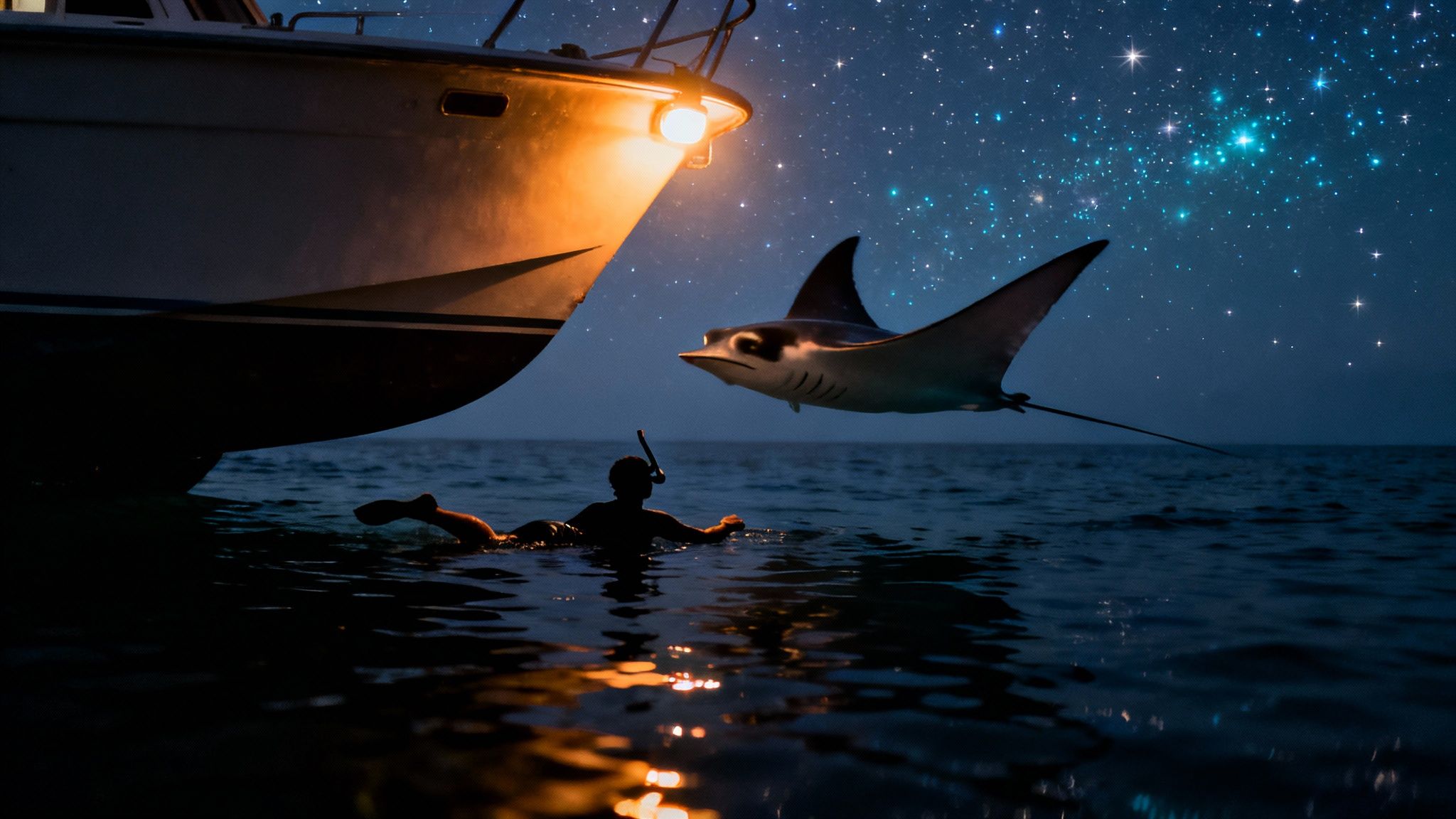
For a truly unforgettable and otherworldly experience, the manta ray night snorkel stands out as one of Hawaii’s most iconic adventures. This activity transforms snorkeling into a breathtaking spectacle, allowing participants to witness majestic manta rays up close as they feed on plankton. It's an accessible yet thrilling encounter that combines the calm of night on the water with the awe-inspiring grace of some of the ocean's gentle giants.
Why It's a Top Snorkeling Spot
This isn't a traditional reef snorkel; it’s a unique, guided event. Boats head out around sunset to specific sites where lights are shone into the water. These lights attract massive clouds of plankton, which in turn draw in the giant manta rays for a feeding frenzy. Snorkelers float on the surface, holding onto a custom-built light board, while the rays perform an underwater ballet, gliding, swooping, and barrel-rolling just inches below. The sheer size and elegance of these creatures make it one of the most memorable snorkeling encounters available anywhere in the world.
How to Experience Manta Ray Night Snorkeling
This incredible activity can only be done with a professional tour operator. Companies like Kona Honu Divers have perfected the experience, ensuring it is both safe for participants and respectful of the marine life. Their tours provide all necessary gear, including wetsuits for warmth, and feature custom-designed light boards that offer a stable and comfortable viewing platform. Expert guides are in the water with you, providing safety oversight and sharing fascinating facts about the mantas, making the trip as educational as it is exhilarating.
Actionable Tips for Your Visit
- Book Well in Advance: This is one of Kona’s most popular activities and tours fill up quickly. Secure your spot with a reputable operator like Kona Honu Divers ahead of time.
- Wear a Wetsuit: The ocean cools down at night. A full wetsuit, usually provided by the tour company, is essential for warmth and comfort during the snorkel.
- Stay Calm and Still: The best way to enjoy the show is to remain calm and hold onto the light board. This allows the mantas to feel comfortable and approach closely.
- Bring an Underwater Camera: If you have one, bring an underwater camera with good low-light capabilities to capture this once-in-a-lifetime experience. Learn more about the Manta Ray Night Snorkel on konahonudivers.com.
Top 8 Kona Snorkeling Sites Comparison
| Location | Access & Complexity 🔄 | Resources & Logistics ⚡ | Expected Experience (⭐ 📊) | Ideal Use Cases 💡 | Key Advantages |
|---|---|---|---|---|---|
| Kealakekua Bay Marine Sanctuary | Moderate — sheltered bay; shore access limited; boat tours recommended 🔄 | Basic snorkel gear + recommended guided boat tour; reef-safe sunscreen ⚡ | ⭐⭐⭐⭐⭐ Exceptional clarity (visibility >100 ft); rich biodiversity 📊 | Families, beginners, marine-life enthusiasts 💡 | Pristine, protected sanctuary; outstanding visibility; historic landmark |
| Honaunau Bay (Place of Refuge) | Easy — shore entry through national park; calm, predictable conditions 🔄 | Basic gear, park entrance fee, water shoes for rocky entry ⚡ | ⭐⭐⭐⭐ Very healthy shallow reef; excellent for underwater photography 📊 | History buffs, photographers, cultural explorers 💡 | Combines cultural significance with excellent shallow coral gardens |
| Pawai Bay (Magic Sands Beach) | Very easy — shore access; small beach and limited parking; seasonal sand changes 🔄 | Basic gear, reef shoes, check tide/swell ⚡ | ⭐⭐⭐ Good visibility (60–80 ft); smaller reef area but reliable 📊 | Beginners, families, travelers needing convenient access 💡 | Convenient town proximity; predictable conditions; family-friendly |
| Kahalu'u Bay Beach Park | Very easy — developed beach park with lifeguards; high visitation 🔄 | Basic gear, parking/entrance fee sometimes; full facilities available ⚡ | ⭐⭐⭐⭐ Reliable snorkeling (60–80 ft); abundant fish but crowded at peak 📊 | Families, first-time snorkelers, amenity-focused visitors 💡 | Strong safety/infrastructure, consistent reef viewing close to amenities |
| Keahole Point Underwater Lava Tubes | Challenging — deep water, stronger currents; best with guided trips 🔄 | Advanced snorkel skills, guided tour, lights/wetsuit recommended ⚡ | ⭐⭐⭐⭐ Unique geological formations; specialized species; excellent photo ops 📊 | Experienced snorkelers, geology/photography enthusiasts 💡 | Distinctive lava tubes and caverns; fewer crowds; adventurous experience |
| Puako Bay Reef System | Moderate — multiple shore entry points; more remote access 🔄 | Plan for full day, bring supplies and gear; limited facilities ⚡ | ⭐⭐⭐⭐⭐ Extensive shallow reef (80–100+ ft visibility); superb biodiversity 📊 | Reef enthusiasts, experienced snorkelers, nature photographers 💡 | One of the largest accessible reef systems; pristine, low-crowd conditions |
| Two-Step (Wawaloli Beach) | Easy–Moderate — natural rock steps entry; small parking; careful footing 🔄 | Water shoes, basic gear, arrive early for parking ⚡ | ⭐⭐⭐ Good visibility (60–80 ft); peaceful reef viewing area 📊 | Local travelers, moderate snorkelers, families with older kids 💡 | Unique rock-step entry; quieter alternative to crowded bays |
| Manta Ray Night Snorkeling (Seasonal) | Controlled/seasonal — night tours required (Oct–Apr); advance booking 🔄 | Tour operator, full wetsuit, night camera/lighting; safety briefing ⚡ | ⭐⭐⭐⭐⭐ Memorable wildlife encounter; high-impact but sightings not guaranteed 📊 | Adventurous travelers, wildlife photographers, bucket-list seekers 💡 | Exclusive, guided manta interactions; educational and unforgettable experience |
Ready to Dive In? Choosing Your Kona Snorkeling Adventure
The Kona Coast is more than just a destination; it's a living, breathing underwater sanctuary teeming with vibrant life. We've journeyed through some of the most spectacular snorkeling spots on the Big Island, from the historically rich waters of Kealakekua Bay to the accessible coral gardens of Kahalu'u Bay. Each location offers a unique window into Hawaii's marine ecosystem, a chance to swim alongside graceful sea turtles, spot the elusive octopus, and be mesmerized by schools of colorful reef fish.
You've learned that finding the best snorkeling in Kona, HI, depends on your personal style. For the independent explorer, shore-access spots like Honaunau Bay (Two Step) provide unparalleled freedom. For families and beginners, the calm, shallow waters of Kahalu'u Bay Beach Park are a perfect training ground. Yet, for those seeking the pinnacle of Kona's underwater offerings, a guided tour unlocks a world of possibilities that simply can't be reached from the shore.
Key Takeaways for Your Kona Snorkeling Plan
To make the most of your adventure, remember these crucial points:
- Match the Site to Your Skill Level: Assess your comfort in the water. Beginners should stick to protected bays like Kahalu'u, while experienced snorkelers might prefer the deeper waters and potential currents of sites like Puako Bay.
- Time Your Visit Wisely: The calmest and clearest conditions are almost always found in the morning before the afternoon winds pick up. Always check tide charts and surf reports before heading out.
- Gear is Everything: A properly fitting mask and snorkel are non-negotiable. Don't let a leaky mask ruin your day. Consider renting high-quality gear or investing in your own for the best experience.
- Respect the Reef (Malama i ke kai): Practice reef-safe habits. Use reef-safe sunscreen, never touch or stand on coral, and give marine life plenty of space. You are a guest in their home.
Elevating Your Experience: The Value of a Guided Tour
While Kona's shoreline offers incredible snorkeling, some of the most pristine and rewarding sites are only accessible by boat. This is where a professional tour operator like Kona Honu Divers can transform a good day into an unforgettable one. Their expert guides know the secret spots, understand the ocean's daily rhythms, and can lead you to the most vibrant reefs, like those at Pawai Bay, far from the crowds.
Moreover, a guided tour takes the guesswork out of your day. All gear is provided, safety is paramount, and you gain fascinating insights into the marine biology and geology of the area. For bucket-list experiences like the world-famous Manta Ray Night Snorkel, a professional tour isn't just a good idea, it's essential for a safe, respectful, and truly magical encounter.
Kona Honu Divers has earned its reputation for providing exceptional marine adventures. Their commitment to safety, education, and the guest experience ensures you're in the best possible hands.
Ready to book your adventure? Explore the best snorkeling in Kona HI with the top-rated crew on the island.
Your incredible underwater journey awaits. When you're ready to experience the absolute best snorkeling in Kona, HI, let the expert team at Kona Honu Divers guide you to the most spectacular sites the island has to offer. Visit Kona Honu Divers to explore their award-winning snorkeling tours and reserve your spot on an unforgettable ocean adventure.