
Thinking about your first scuba dive can bring up images of complicated gear and dark, mysterious waters. It’s a common feeling. But let me tell you, when it comes to beginner scuba diving on the Big Island, that picture couldn't be more different. The Kona coast is one of the most welcoming underwater classrooms on the planet—calm, clear, and absolutely teeming with life. It's truly one of the best places in the world to take your very first breath underwater.
Why the Big Island Is Perfect for Your First Dive
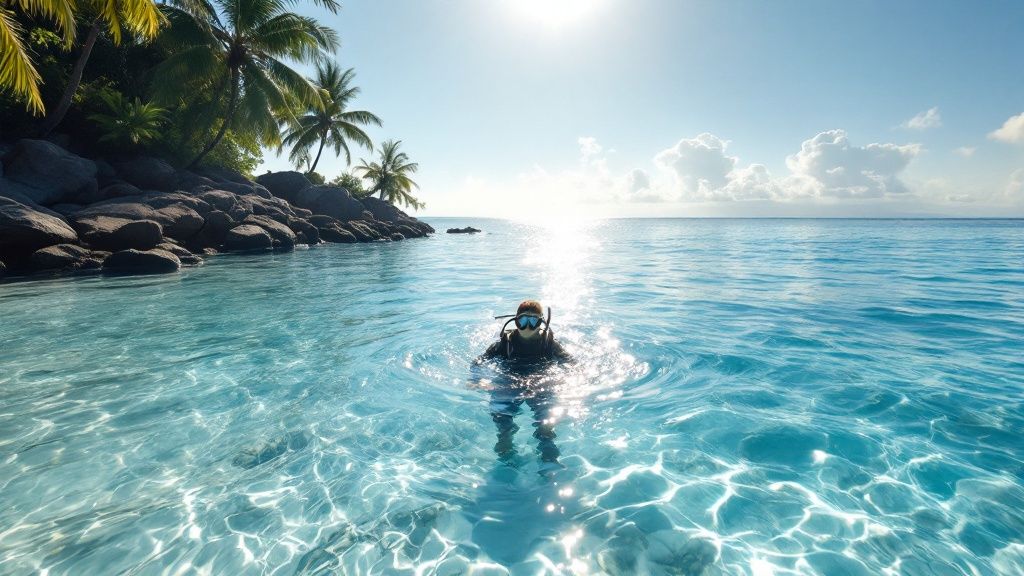
The secret to Kona's amazing diving conditions is all about geography. The island’s massive volcanoes, Mauna Loa and Hualālai, serve as gigantic shields. They block the powerful trade winds that whip across other parts of Hawaii, leaving the Kona side with incredibly calm and predictable seas nearly all year long.
What does that mean for you as a new diver? Less rocking and rolling on the boat and practically no currents to fight underwater. Instead of struggling to stay put, you can just relax and focus on the important stuff: your breathing, your buoyancy, and the incredible world unfolding around you. Add in visibility that often tops 100 feet, and any first-time jitters tend to melt away as soon as you see the reef in perfect detail.
An Underwater Paradise Right at Your Fingertips
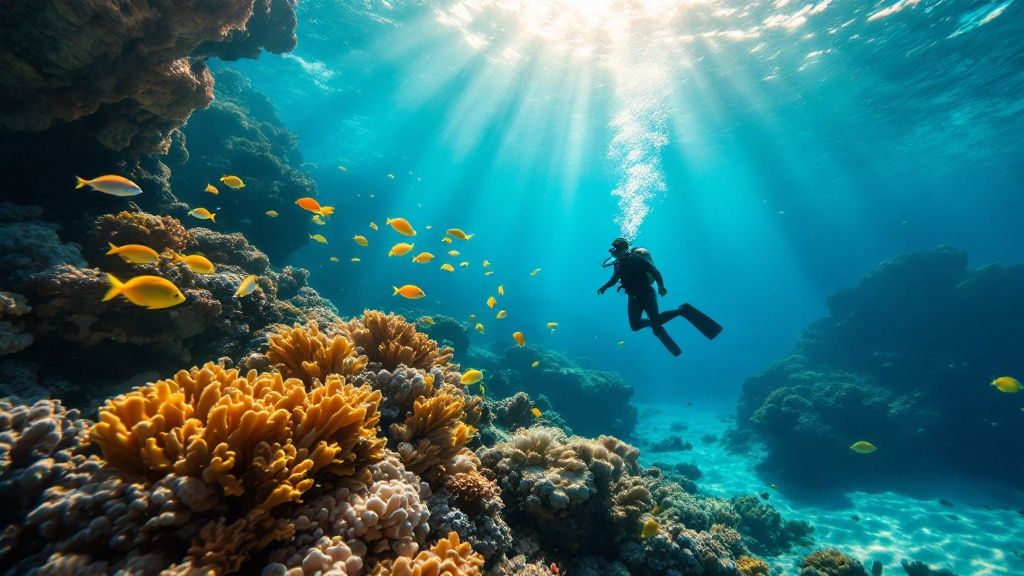
The best part about diving in Kona is that you don't have to work hard for the reward. The most spectacular diving tours for beginners visit shallow, vibrant reefs where the sunlight makes everything pop, and they're just a quick boat ride away.
Within minutes of descending, you’re in the middle of the action. You’ll likely find yourself swimming alongside:
- Hawaiian Green Sea Turtles (Honu): We see these gentle giants on almost every dive, either cruising by or just chilling out on the reef.
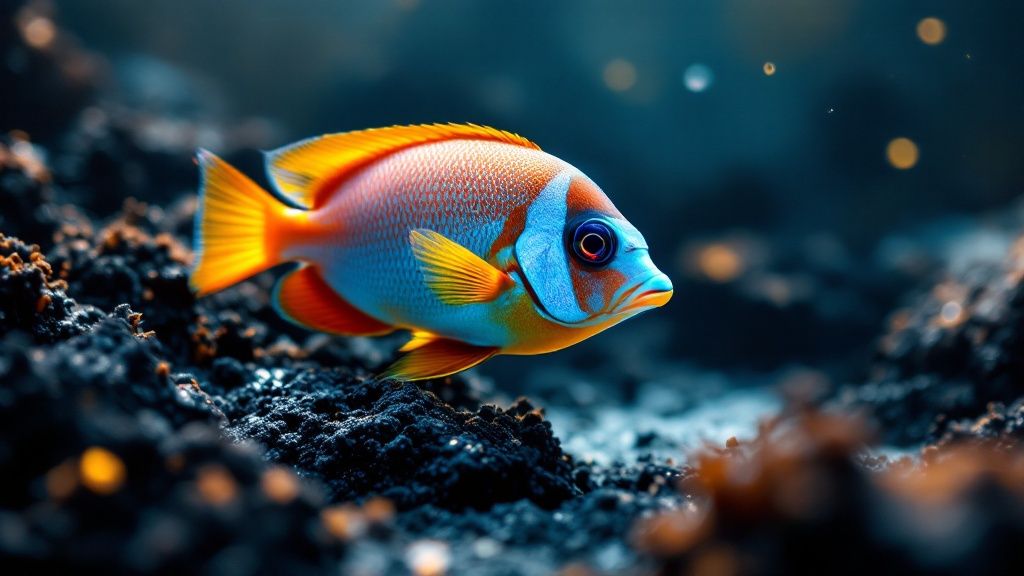
- Colorful Reef Fish: The reefs are alive with huge schools of bright yellow tangs, intricate butterflyfish, and rainbow-colored parrotfish munching on coral.
- Other Cool Critters: Always keep your eyes peeled! You might spot a moray eel poking its head out, a cleverly camouflaged octopus, or even a pod of spinner dolphins playing in the boat's wake.
It's amazing to think about how far diving has come on the Big Island. What started as a small, niche activity in the late 1960s has blossomed into a world-class destination with a fantastic, professional dive community.
The island’s deep roots in the diving world mean you’re in good hands. Today, the Big Island sees around 100,000 certified dives every year, a number that speaks volumes about the quality of the diving and the operators here. If you're curious, you can learn more about the history of Kona's dive scene and how it all started.
This incredible mix of easy conditions, stunning clarity, and a parade of marine life makes your first dive on the Big Island more than just a certification—it’s an adventure from the moment you hit the water.
How to Get Scuba Certified in Hawaii
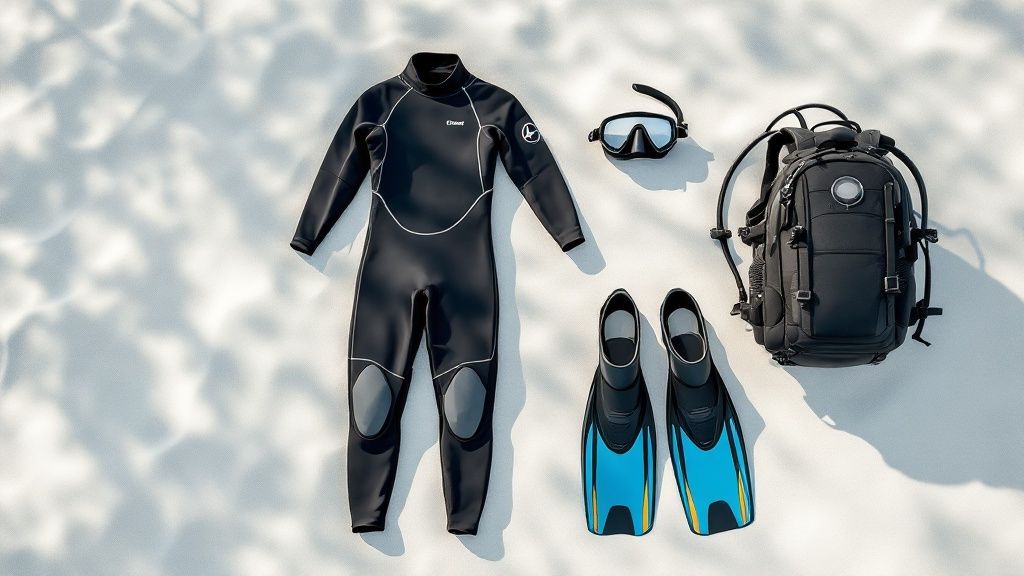
Becoming a certified diver is your ticket to a lifetime of underwater adventure, and honestly, there's no better place to earn it than the Big Island. The most widely recognized certification in the world is the PADI Open Water Diver course. Think of it as your driver's license for the ocean—it’s what you need to dive independently with a buddy anywhere you go.
The whole process is designed to be straightforward and fun, not intimidating. It's broken down into three manageable parts, each one building on the last to make you a safe, confident, and comfortable diver.
The Three Parts of Your Open Water Certification
Think of your certification as a three-legged stool. Each part supports the others, and when they come together, you have a solid foundation for a lifetime of diving. Especially in the calm, clear waters of Kona, the process feels less like school and more like the start of an incredible journey.
Here’s a quick look at what’s involved:
-
Knowledge Development: This is the "book work," but don't worry, it’s not as dry as it sounds. You’ll learn the core principles of scuba diving—things like how pressure affects your body, how to plan a dive, and what all that cool gear actually does. Most of this is handled online now through PADI's eLearning platform, so you can knock it out at your own pace before your plane even touches down in Hawaii.
-
Confined Water Dives: Once you have the theory down, it's time to get wet! These are your very first breaths underwater, taken in a swimming pool or a super calm, pool-like ocean spot. Your instructor will guide you through mastering essential skills like clearing water from your mask (it’s easier than it sounds!), controlling your buoyancy, and what to do if you need to share air. It’s all about building muscle memory in a controlled setting.
-
Open Water Dives: This is the grand finale, where everything you’ve learned comes together in the ocean. You’ll complete four dives over a couple of days, putting your new skills into practice in a real-world environment. These aren’t just drills, though. Here in Kona, these dives are basically your first guided tours of our vibrant reefs. You'll be practicing your skills while turtles glide by and schools of colorful fish check you out.
Choosing Your Certification Path
When it comes to your beginner scuba diving Big Island experience, you have two great options for getting certified. The best choice really just depends on how much time you have on your vacation and what your learning style is.
You can complete the full PADI Open Water course right here in Kona. This route usually takes about three days. It’s a fantastic, immersive experience where you do everything—from your first pool session to your final ocean dive—with the same instructor and in our amazing local waters.
The other popular choice is a referral. With this option, you do the book work (eLearning) and the confined water (pool) dives at a local dive shop back home. Then, you just bring your paperwork to us, and you're ready to complete your four open water dives here in Hawaii. This is a huge time-saver if your vacation schedule is tight, letting you get straight to the best part: exploring the reef.
If you’re trying to decide which is right for you, you can learn more about our full https://konahonudivers.com/scuba-classes/kona-scuba-certification-course/ and see how it fits your travel plans.
The biggest advantage of learning in Hawaii is the environment itself. Practicing skills in the ocean, with real marine life swimming by, makes every lesson more memorable and practical. You build confidence by managing your buoyancy next to a coral head, not a pool drain.
Already certified? Awesome! Your adventure is just getting started. You can skip the coursework and get right to exploring Kona's world-class dive sites on one of our guided diving tours.
Exploring the Best Beginner Dive Sites in Kona
Alright, let's get to the fun part—where will you actually be diving? The Kona coast is an absolute goldmine of dive sites that feel like they were made for your first time underwater. These aren't deep, spooky drop-offs. Think calm, shallow, and vibrant reefs buzzing with life, all just a quick boat ride away.
The conditions here are really what makes beginner scuba diving on the Big Island so incredible. You'll be descending into warm, crystal-clear water with almost no current to worry about. This lets you focus on your breathing and buoyancy without getting pushed around, so you can just soak in the amazing views. It’s the perfect setting to build your confidence and fall in love with diving.
Pawai Bay: A Protected Underwater Classroom
One of my favorite spots to take new divers is Pawai Bay, which is a Marine Life Conservation District. Because it’s a protected area, the fish are incredibly abundant and curious, often swimming right up to check you out. The bay itself is home to several unique dive sites, each with its own personality.
A few spots you might explore within the bay include:
- Pawai Bay Arches: This place is incredible. You'll see stunning lava rock formations creating natural swim-throughs and archways. It's an easy, thrilling way to see some cool underwater terrain.
- Turtle Heaven (Kaloko-Honokōhau National Historical Park): The name says it all. This spot is absolutely fantastic for encounters with our Hawaiian green sea turtles.
- Nai'a (Spinner Dolphins): Located in the same bay, this site is named for the spinner dolphins that often hang out nearby. While we can't dive with them, hearing their clicks and whistles from underwater is a truly magical experience.
Turtle Pinnacle: A Sanctuary for Honu
If you want to see the real magic of Kona diving, Turtle Pinnacle is a must. It's a shallow reef, sitting between 30 and 60 feet, that acts as a natural "cleaning station" for Hawaiian green sea turtles, or honu as we call them.
You get to watch tiny reef fish, like the Hawaiian cleaner wrasse, swim right up to the turtles and nibble off algae and parasites. It's a real-life display of a symbiotic relationship in action. Plus, the water here stays a balmy 75-80°F (24-27°C) all year, making every dive comfortable.
Seeing a turtle cleaning station for the first time is something you'll never forget. The turtles are so chill, just hovering patiently while the little fish do their work. It feels like you've stumbled upon a secret, underwater ritual.
And these sites are just the beginning! Each spot offers a different landscape, from sandy bottoms where you might find sleeping whitetip reef sharks to intricate coral gardens where moray eels and octopuses hide. You can get a better feel for what’s out there by checking out this overview of Big Island scuba diving.
Top Beginner Dive Sites on the Big Island
To give you a better idea of what to expect, here’s a quick look at some of the premier spots we often take new divers. They're all fantastic, but each has its own unique charm.
| Dive Site | Typical Depth | Key Features | Common Marine Life |
|---|---|---|---|
| Pawai Bay Arches | 20-50 ft | Lava arches, swim-throughs | Yellow tang, butterflyfish, eels |
| Turtle Pinnacle | 30-60 ft | Natural turtle cleaning station | Hawaiian green sea turtles, cleaner wrasse |
| Golden Arches | 25-45 ft | Large archway, vibrant reef | Schools of raccoon butterflyfish, turtles |
| Kailua Pier | 15-40 ft | Easy shore entry, calm waters | Frogfish, octopuses, seahorses |
Each of these sites offers a safe and spectacular introduction to the underwater world. They're chosen not just for their beauty, but for their calm conditions that are perfect for building your skills.
What to Look for on Your First Dive
Every single dive is a new adventure, and that’s the beauty of it. You never quite know what you'll see. The reefs along the Kona coast, however, are always teeming with activity. Keep your eyes peeled for massive schools of bright yellow tangs—sometimes hundreds of them—creating a brilliant yellow cloud over the reef.
You'll almost certainly spot parrotfish, with their distinctive beak-like mouths, crunching away on the coral. If you look closely into the reef's nooks and crannies, you might find a moray eel peering out or spot a well-camouflaged scorpionfish. Diving in Kona opens up a world of possibilities, and a good Kona Big Island dive guide can help you plan future trips to see iconic animals like manta rays.
A great guide knows exactly where these critters like to hide and will point them out, turning your dive from a simple swim into an exciting underwater treasure hunt. They handle all the navigation and safety, so your only job is to breathe, relax, and take it all in. Your first logbook entries will be packed with amazing sightings that will have you hooked and planning your next dive before you're even back on the boat.
Finding the Right Dive Shop for Your Adventure
Choosing the right operator can truly make or break your first time beginner scuba diving on the Big Island. It's about so much more than just a boat ride to a pretty spot. It’s about feeling safe, getting clear guidance, and being in an atmosphere where you can actually relax and soak in the magic.
A great dive shop is built on a foundation of safety and professionalism. You should feel like their top priority from the moment you book, which shows in everything from their gear maintenance to the way they run their briefings and manage groups in the water.
What Makes a Dive Shop Stand Out
When you're trying to find the perfect fit, a few key details separate the average operators from the truly exceptional ones. Paying attention to these things will ensure your first dive is memorable for all the right reasons.
-
Professional Affiliations: First things first, look for shops affiliated with major training agencies like PADI or SSI. This isn't just a logo; it's a clear sign they stick to globally recognized safety and training standards. Think of it as a baseline for quality.
-
Small Group Sizes: This is a big one. Always ask about their guide-to-diver ratio. Smaller groups mean more one-on-one attention, which is critical when you're starting out. Your instructor will be right there to offer tips, point out that cool eel you might have missed, and just make sure you're comfortable.
-
Quality of Gear: You don’t have to be a gear expert to get a feel for this. Does the equipment look clean and organized? A shop that takes pride in its gear likely takes pride in every other part of its operation, especially your safety.
It can feel like a lot to consider, but getting this part right is a crucial first step. We actually wrote a whole guide on this, which you can read here: how to choose a Kona dive shop.
Why We Recommend Kona Honu Divers
Here at Kona Honu Divers, we pour our passion for the ocean into every single trip. Our team is made up of experienced, certified instructors who aren't just experts in diving—they're also incredible marine life spotters and storytellers who genuinely love sharing Kona's underwater world.
We really believe that a great dive starts with great support. Our crew is here to make you feel comfortable and confident from start to finish. We handle all the logistics so you can focus on the incredible experience of breathing underwater. This commitment is why so many of our guests come back to dive with us again and again.
See what our guests have to say about their adventures with us:
Ultimately, a professional guide is your key to unlocking the best of Kona. They know these dive sites like the back of their hand—from the hidden nooks where octopuses hide to the cleaning stations where turtles love to hang out. They navigate, keep an eye on your safety, and turn a simple swim into an unforgettable guided adventure.
This lets you just relax, knowing you're in good hands. Your only job is to breathe, look around, and soak in the awe of the vibrant reef life all around you. With the right team, your first dive becomes the first of many.
Ready to experience the best of Kona? Check out our amazing diving tours.
A Preview of Your First Day of Diving
It’s totally normal to have a few butterflies mixed in with all that excitement before your first open water dive. The best way to calm those nerves is to know exactly what to expect. A day out on the boat is so much more than just the time spent underwater—it’s a whole experience, carefully orchestrated to make you feel safe, comfortable, and ready for an adventure.
Your day kicks off the second you step onto the dock. You’ll be greeted by the Kona Honu Divers crew, who will get you checked in and introduce you to your instructor for the day. This is the perfect time to ask any last-minute questions that have been bubbling up.
From there, it's all about getting your gear dialed in. The crew will help you find a wetsuit, mask, and fins that fit just right. Comfort is everything! They’ll also set you up with your BCD (Buoyancy Control Device), regulator, and tank, walking you through what each piece does without overcomplicating it. This hands-on approach really helps demystify all the equipment and builds confidence before you even leave the shore.
Setting Sail and the Dive Briefing
Once everyone is set and on board, the captain will run through a quick but thorough boat briefing. They’ll cover safety essentials, show you where everything is, and give you a sense of the day's itinerary. It’s all designed to make you feel at home on the vessel.
As you cruise toward the first dive site, your instructor will gather the group for the dive briefing. This is where the magic starts to feel real. You’ll learn all the specifics for the upcoming underwater tour, including:
- The Dive Plan: Your guide will lay out the maximum depth, your target dive time, and the general route you'll be taking along the reef.
- Essential Hand Signals: You'll do a quick review of the most important hand signals for communicating underwater—like "okay," "problem," and signs for pointing out all the cool marine life you’re about to see.
- Safety Checks: The instructor will walk you through the pre-dive safety check you’ll perform with your dive buddy. This is a crucial step to make sure all your gear is good to go.
The whole process is relaxed and interactive. No question is a silly question, and the goal is to make sure everyone feels totally prepared.
Taking Your First Breath Underwater
This is it—the moment you've been waiting for. After a final gear check, you'll make your way to the back of the boat and take that famous giant stride into the ocean. As you descend just beneath the surface, you’ll take your very first breath underwater. It’s a sensation you’ll never forget.
Your guide will lead the tour at a mellow pace, giving you plenty of time to get comfortable with your breathing and buoyancy. They have an almost supernatural ability to spot incredible sea life that’s hiding in plain sight, from a perfectly camouflaged octopus to a shy moray eel peeking out of its home. Your only job? Breathe, relax, and soak in the incredible 360-degree views.
The Big Island is legendary among divers for one particular experience: the night dive with manta rays. This amazing encounter, which really took off in the 1980s thanks to pioneers like Jack Clothier, lets you watch massive manta rays glide and feed right in front of you. As detailed in this Oceanographic Magazine article about Hawaii's world-famous dive, it’s a spectacle that draws people from all over the world and cements our island’s reputation for unforgettable marine encounters.
Once you have a few dives under your belt, experiences like the world-famous Manta Ray Night Dive are the perfect next step. It’s a truly magical adventure to look forward to.
Your Top Questions About Learning to Dive in Kona
It's totally normal to have a bunch of questions before you take your first breath underwater. In fact, being prepared is the first step to feeling confident and ready for the adventure. We get these questions all the time from people planning their first beginner scuba diving Big Island trip, so let's tackle them head-on.
Do I Need to Be a World-Class Swimmer?
This is easily the number one question we hear, and the answer usually puts people at ease. You don't need to be Michael Phelps, but you do need to be comfortable in the water. It’s less about being a "strong" swimmer and more about being a relaxed one.
During your certification course, you'll do a simple water skills check. This involves a short, untimed swim (about 200 meters) and a 10-minute float. The goal isn't to break records; it's just to show that you can handle yourself calmly at the surface. Once you have your gear on, your Buoyancy Control Device (BCD) does all the work of floating for you anyway!
Is It Really Safe for a Beginner to Dive on the Big Island?
Absolutely. The Kona coast is one of the best—and safest—places on the planet to learn how to dive. Our unique geography acts as a natural shield against the strong winds and currents you find elsewhere, giving us incredibly calm, clear water pretty much year-round. That’s a massive advantage when you're just starting out.
When you're with a professional crew like ours at Kona Honu Divers, you're in the care of certified instructors who live and breathe international safety standards. Your guide’s top priority is you. They handle the navigation, timing, and air monitoring so you can just relax and take in the amazing scenery. Safety is always a valid concern, and knowing some fundamental outdoor first aid basics is a smart move for any kind of outdoor activity, diving included.
Here's what our divers have to say about feeling safe and comfortable with our crew:
What Will I Actually See on My First Dive?
Get ready for an incredible show. The Big Island's reefs are teeming with life, and you don’t need to be an expert diver to see the best stuff. On a typical introductory dive here, it's almost a guarantee you'll meet our famous Hawaiian Green Sea Turtles, the honu.
Beyond turtles, you’ll find yourself surrounded by vibrant schools of reef fish. Expect to see:
- Yellow Tangs: Huge, brilliant schools that look like a burst of sunshine moving across the reef.
- Butterflyfish: Dozens of different species with beautiful, intricate patterns.
- Parrotfish: You might even hear the distinct crunching sound they make while munching on coral.
- Humuhumunukunukuāpuaʻa: Hawaii’s state fish! It's always a fun challenge to spot one.
Look closely into the cracks and crevices of the reef, and you might spot a moray eel peeking out or a harmless whitetip reef shark chilling on a sandy patch. Wildlife is always unpredictable, but Kona’s biodiversity makes every dive exciting.
A friendly but important reminder: Look, but never, ever touch. The coral you see is a living, fragile animal. Keeping your hands to yourself and managing your buoyancy helps us protect this amazing underwater world for everyone.
What Should I Pack for the Dive Boat?
We've got you covered with all the essential scuba gear, so you can pack light. Your job is just to bring a few personal items to make your day on the water comfortable.
Here’s a quick checklist of what to throw in your bag:
- Swimsuit: The easiest thing is to just wear it under your clothes.
- Towel: You'll definitely want this for drying off after your dive.
- Reef-Safe Sunscreen: Protects you and protects our fragile coral.
- Sunglasses & Hat: The Hawaiian sun is no joke, even on the water.
- Reusable Water Bottle: Staying hydrated is super important.
- Seasickness Medication: If you're prone to motion sickness, take it before we leave the harbor, following the directions.
Don't worry about your bag getting wet; our boats have a dry storage area for your things. Just bring the basics and get ready for an amazing day.
Ready to see it all for yourself? Kona Honu Divers has a variety of guided diving tours designed for every experience level. We'll make sure your first time breathing underwater is safe, fun, and something you’ll never forget.