
Yes, You Can See Whale Sharks In Kona (But It's Rare)
Let’s get this question out of the way right up front: Yes, you can see whale sharks in Kona. But—and this is a big but—it’s an exceptionally rare and special event. It's the kind of thing that makes a dive log legendary.
Unlike other spots around the world where whale sharks show up like clockwork for feeding season, sightings here are a matter of pure, unadulterated luck. Think of it as a delightful surprise from the ocean, not a planned activity you can book.
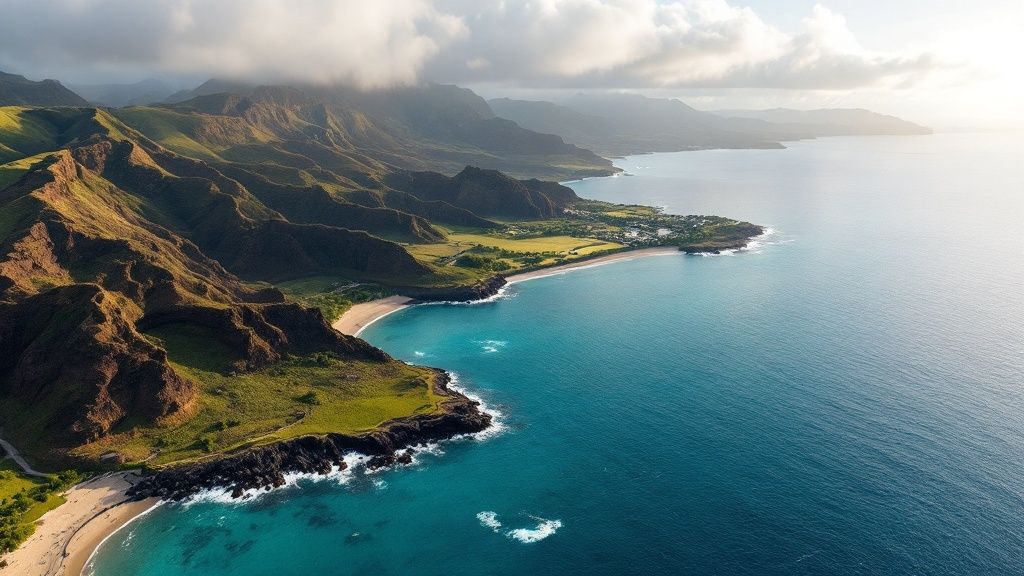
So, to be clear, the answer to "Are there whale sharks in Kona?" is a hopeful yes. It's just crucial to have the right mindset. The Big Island isn’t a known aggregation site where these magnificent fish gather in predictable numbers.
Instead, encounters are completely random. They often happen when you least expect them, which is honestly what makes them so magical. One minute you're admiring some reef fish, and the next, a shadow passes over and you look up to see a creature the size of a school bus gliding silently by. It's truly unforgettable.
An Unplanned, Unforgettable Encounter
Kona's deep, nutrient-rich waters are what make our marine ecosystem so vibrant. Every so often, they attract these gentle giants as they migrate through the vast Pacific. When they are spotted, it’s typically in the open ocean, well away from the shoreline.
This means your best chance of a sighting isn't on a specific "whale shark tour," because they simply don't exist here. Your best shot is as a happy accident during other ocean adventures.
- Dolphin & Whale Watching: Many tours head offshore to find pods of dolphins or humpback whales (during their season). These boats traverse the exact same blue water where a whale shark might be cruising near the surface. You can learn more about the incredible chances for whale watching in Kona on our other tours.
- Scuba Diving Trips: Divers exploring our incredible offshore sites might just get the surprise of a lifetime. It's not unheard of for a whale shark to pass by during a surface interval or, even more breathtakingly, during the dive itself.
To help set expectations, here's a quick summary of what it's like to look for whale sharks in Kona.
Kona Whale Shark Sightings at a Glance
This table breaks down the key factors for a potential whale shark encounter off the Kona coast.
| Factor | Details |
|---|---|
| Predictability | Extremely Low. Sightings are random and cannot be guaranteed. |
| Best Season | No specific season. Encounters have been reported year-round. |
| Tour Availability | None. There are no dedicated "whale shark tours" in Kona. |
| Best Chance | During offshore activities like dolphin/whale watching or scuba diving. |
| Likelihood | Very Rare. It's a once-in-a-lifetime experience for most. |
Ultimately, seeing a whale shark in Kona is all about being in the right place at the right time and hoping for a little bit of ocean magic.
Getting to Know Kona's Gentle Giants
Imagine a creature the size of a school bus, covered in a pattern of white spots like a starry night, gliding silently through the deep blue. That’s the whale shark (Rhincodon typus), the biggest fish in the sea. Despite their intimidating name and massive size, they’re actually one of the most docile animals you could ever hope to meet in the ocean.
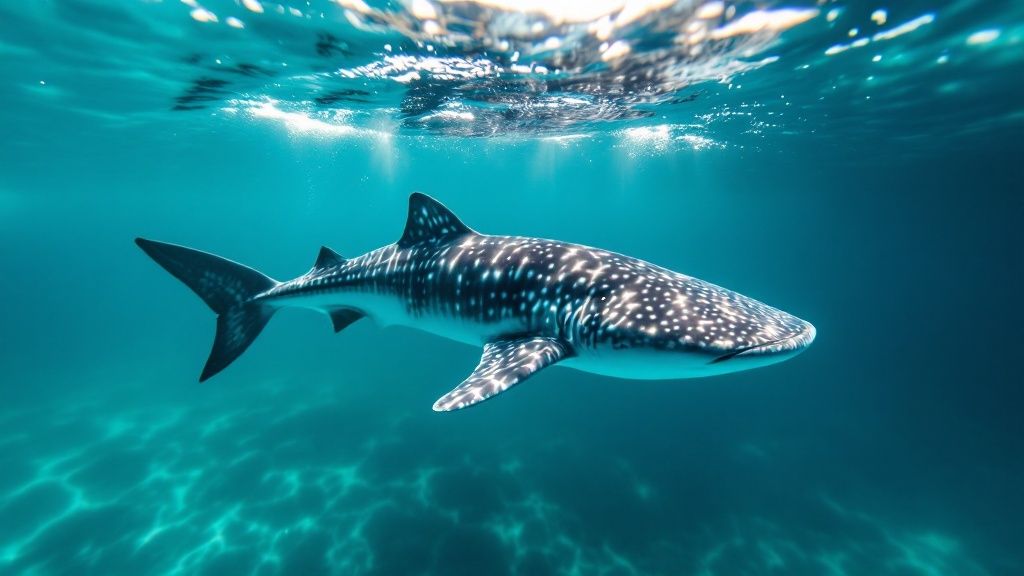
They are filter-feeders, which means their diet consists of some of the ocean's tiniest organisms. Their huge mouths, which can open over four feet wide, work like a giant sieve. They take in massive gulps of water and filter out plankton, krill, and small fish, making them completely harmless to people.
Understanding Their Temperament
Sharing the water with a whale shark is a life-changing moment, and it’s all thanks to this peaceful nature. They seem to move in slow motion, completely unbothered by the world around them. For divers and snorkelers, it’s a truly humbling experience that puts the incredible scale of marine life into perspective.
Kona’s waters are a known hotspot for all sorts of large marine animals. While we’re famous for mantas, dolphins, and whales, the elusive whale shark is another giant that graces our coast. We've seen reports of whale sharks reaching up to 50 feet passing through the Hawaiian Islands, though every single sighting is a special and unpredictable event.
This gentle disposition is exactly why an encounter poses absolutely no threat. They are curious but cautious, often just ignoring our presence as they go about their day. The Big Island is home to an amazing variety of sea creatures, and spotting a whale shark among them is the ultimate prize for any ocean lover. You can learn more about the other endemic marine animals you can find while diving here.
Why Are We Seeing More Whale Sharks in Hawaii
It feels like every other day someone posts an incredible video of a whale shark encounter here in Hawaii. While they’re still a rare sight, it definitely seems like reports are on the rise. But what’s really going on? Are there more sharks, or are we just getting way better at spotting and recording them?
The truth seems to be the latter. We're just getting better at seeing them.
Historically, bumping into a whale shark off Kona was a once-in-a-blue-moon event. But if you look at the data, documented encounters have shot up recently. Between 1991 and 2018, there were over 120 verified sightings in Hawaiian waters, and a huge chunk of those came in after 2017.
Scientists don't think this is a sudden population boom. Instead, it points to more people in the water with cameras and a much greater public awareness. You can read more about these fascinating whale shark findings to get the full picture.
This shift really highlights the incredible impact of citizen science. Every single diver, snorkeler, and boater with a GoPro is now a potential field researcher.
The Power of Citizen Science
You might not realize it, but that amazing photo or video you took is more than just a great memory—it's valuable data. Here’s how everyday people are helping us understand these gentle giants:
- Individual Identification: A whale shark's spot pattern is as unique as a human fingerprint. A clear photo allows scientists to identify specific sharks and track them over time.
- Migration Mapping: When someone in Hawaii logs a sighting, and then another person in another part of the Pacific does the same, researchers can start to connect the dots and map their massive migration routes.
- Population Estimates: The more sightings we have, the bigger the database becomes. This helps scientists build a more accurate picture of the whale shark population in our corner of the world.
This teamwork between the public and the scientific community is absolutely essential. It turns a simple vacation photo into a critical piece of the puzzle, helping us protect these magnificent animals for generations to come.
What this means is that your surprise encounter on a scuba diving tour in Kona could actually contribute to our knowledge of whale shark behavior. It's an awesome example of how technology and community can come together to solve one of the ocean's biggest mysteries, turning every trip into the water into a potential for discovery.
When and Where to Look for Whale Sharks in Kona
So, if you're dreaming of an encounter with one of these gentle giants, where should you even start looking? The first thing to get straight is that there is no "whale shark season" in Kona. It's a common misconception. Unlike the predictable migration of humpback whales, seeing a whale shark here is purely a game of chance. It’s all about being in the right place at the right time.
These encounters almost always happen as a surprise bonus while you're out enjoying other ocean activities. One minute you're admiring the reef, the next, a school-bus-sized shadow glides by. They're typically spotted in the deep, clear waters offshore and aren't tied to any specific time of year. While a random plankton bloom might attract them, these aren't predictable events you can plan a vacation around.
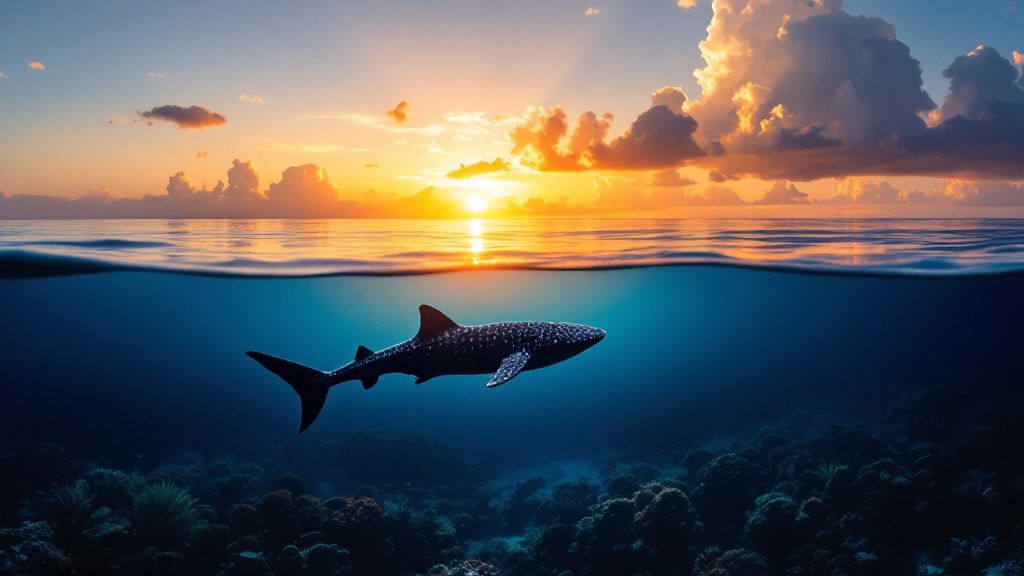
This isn't just anecdotal, either. Research backs it up, showing that Hawaiian whale sharks are true wanderers without the clear seasonal patterns seen in other famous hotspots. If you want to nerd out on the science, you can read the full research about these migratory patterns.
Maximizing Your (Slim) Chances
The takeaway here is pretty simple: your best bet is just to get in the water. The more time you spend offshore, the more you roll the dice for that once-in-a-lifetime encounter.
- Scuba Diving Trips: Divers exploring Kona’s amazing underwater landscapes are prime candidates for a surprise visit. It could happen 60 feet down or right at the surface during your safety stop.
- Offshore Boat Tours: Any trip that takes you out into the open ocean, like dolphin or whale watching tours, passes through the same corridors these massive fish cruise through.
While there's no magic formula for whale sharks, being aware of the Big Island's whale season can't hurt, as all marine life is interconnected. Ultimately, any day you head out for some Kona diving, there's a slim—but very real—possibility of turning a great day into an absolutely unforgettable one. You just never know.
How to Responsibly Interact with a Whale Shark
Running into a whale shark on a dive is the kind of breathtaking surprise you never forget. It's a massive privilege, and with that comes a big responsibility to keep these incredible animals safe. The best thing you can do is know the rules of engagement before you get in the water. That way, if the magic moment happens, you're ready to make it a positive experience for everyone—you and the shark included.
Think of yourself as a passive observer, not an active participant. Your job is to simply witness something amazing. These guidelines, based on NOAA recommendations, are all about keeping the sharks stress-free. Your calm, respectful presence makes all the difference and allows them to carry on their way totally undisturbed.
The Golden Rules of Engagement
The number one rule? Give them space. Lots of it. If a whale shark glides into view, here’s exactly what you need to do to keep the encounter safe and ethical:
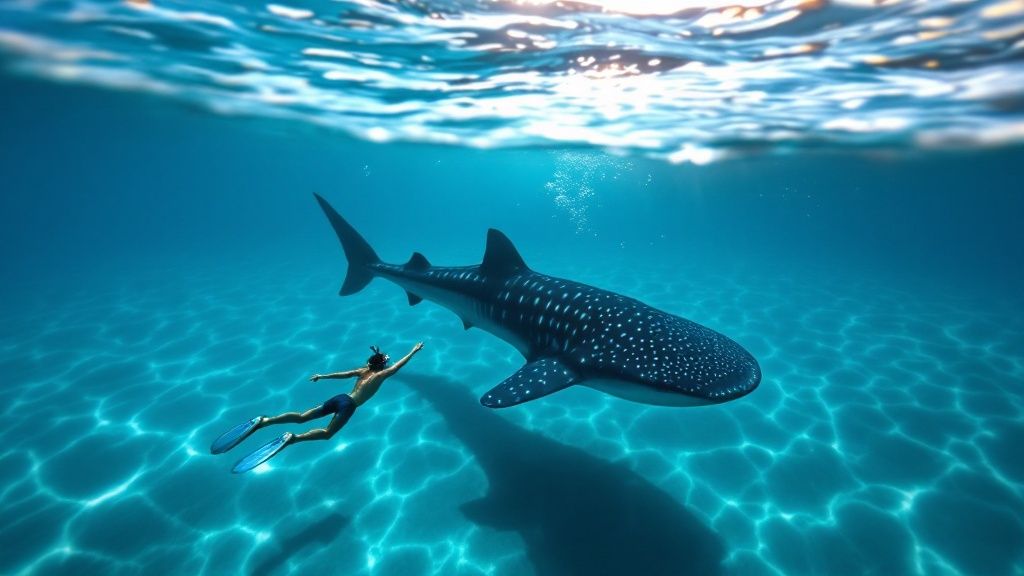
- Keep Your Distance: You need to stay at least 15 feet (5 meters) away at all times. And remember, that includes their powerful tail. You don’t want to be on the receiving end of a casual flick.
- Hands Off. No Exceptions: It might be tempting, but never, ever touch a whale shark. Touching them can strip away their protective slime coat, which is like their immune system, leaving them wide open to nasty infections. Riding or grabbing onto any part of the animal is completely out of the question.
- Don't Block Their Path: Always stay to the side of the shark. Never swim directly in front of them or get in their way. They have places to be, so let them move freely and on their own terms.
- Make a Quiet Entrance: If you're on a boat and a shark is nearby, don't cannonball in. Slide into the water gently and without a lot of splashing or noise. The goal is to minimize your impact.
Following these rules isn't just about being polite; it's about actively helping to conserve a vulnerable species. When we show them respect, they continue to feel safe in our waters, which is a win for everyone.
Going out with a professional crew like Kona Honu Divers means you've got experts on board who make sure any wildlife encounter is handled the right way. Our team puts marine life safety first on all our dives, so you can just soak in the incredible experience.
For a deeper look into being a great ocean steward, check out our guide on how to be a more responsible and considerate diver. And before any ocean adventure, it’s always a good idea to brush up on essential snorkeling safety tips to make sure you're fully prepared.
Guaranteed Amazing Dives While You Hope for a Whale Shark
So, the answer to "Are there whale sharks in Kona?" is a definite maybe. But here's the thing: you can't book a tour specifically to see one. What you can book is a guaranteed, world-class adventure that puts Kona on the map as one of the best diving destinations on the planet.
Don't get so focused on the slim chance of a whale shark that you miss the incredible, reliable marine life we see every single day. Come for the possibility of a gentle giant, but stay for the guaranteed wonders waiting just beneath the waves.
The World-Famous Manta Ray Night Dive
If there's one must-do experience in Kona, it's the legendary Manta Ray Night Dive. Seriously. Imagine kneeling on the ocean floor in the dark as graceful giants with wingspans up to 16 feet glide, swoop, and barrel roll just inches above your head.
It’s a breathtaking underwater ballet that happens consistently, night after night. This isn't just another dive; it's a truly magical spectacle you are guaranteed to never forget.
Unique Thrills After Dark
For certified divers looking for something a bit different, we offer the Blackwater Night Dive. This is a wild one. We take you miles offshore and suspend you over thousands of feet of deep, dark ocean to witness one of the largest migrations on Earth.
You'll come face-to-face with some of the most bizarre and beautiful creatures imaginable—glowing squid, translucent larval fish, and otherworldly jellies—as they rise from the abyss.
And for those ready to explore a little deeper, our advanced dive trips will take you to more challenging sites with dramatic lava formations and a much better chance to see larger pelagic species.
The message is simple: a whale shark is an amazing, lucky bonus. But with Kona Honu Divers, an extraordinary adventure is a sure thing every time you get in the water. But don't just take our word for it—see what our guests have to say.
Ready for a guaranteed amazing dive?
Your Kona Whale Shark Questions Answered
Still wondering about these gentle giants? We get it. Here are some of the most common questions we hear from divers and snorkelers hoping for that once-in-a-lifetime encounter.
What’s the Best Time of Year to See Whale Sharks in Kona?
Honestly, there isn’t one. Unlike other places famous for whale sharks, Kona doesn't have a predictable "season." Sightings here are totally random and can happen any day of the year. It's all about being in the right place at the right time.
Is it Safe to Swim with a Whale Shark?
Absolutely! These are the original "gentle giants" of the sea. As filter feeders, they pose zero threat to people. The most important thing is to be a respectful guest in their home. That means keeping your distance—at least 15 feet is a good rule of thumb—never, ever trying to touch them, and just moving slowly and calmly in the water.
Can I Book a "Whale Shark Tour"?
This is a question we get a lot, but no, you can't book a dedicated whale shark tour in Kona. Their appearances are just too rare and unpredictable for any operator to promise a sighting.
Your best bet is to book a regular scuba diving charter with us. Think of it this way: you're guaranteed an amazing time exploring Kona's vibrant reefs, and if a whale shark shows up, it's the ultimate bonus to an already incredible day.
So, What are my Chances of Actually Seeing One?
We have to be honest: it’s very, very unlikely. A whale shark sighting in Kona is an incredibly special and rare event. The best mindset is to not make it the goal of your trip. Instead, get excited about all the other amazing marine life Kona is famous for, like our resident manta rays, playful dolphins, and colorful reef fish.
If a whale shark does glide by on your dive, you’ll be one of the lucky few who gets a story you'll tell for the rest of your life.