
You wake up in Kona before sunrise, check your dive bag twice, and head to the harbor already thinking about clear water, lava rock drop-offs, and that first giant breath before you roll in. Then the boat clears the calm nearshore water, the swell starts moving under the hull, and your stomach begins that familiar little warning flutter.
That moment can change the whole day if you're not ready for it.
A sea sickness bracelet is one of the simplest tools divers use to stay comfortable on the ride out. It isn't flashy, and it doesn't replace smart prep, but for many people it's a practical way to avoid the groggy feeling that can come with medication. That's a big reason interest in these bands keeps growing. The global market for wearable anti-seasickness bracelets was valued at approximately $1.2 billion in 2023, with projections showing major growth as more travelers look for drug-free, non-drowsy options, according to Market Report Analytics.
Don't Let Seasickness Spoil Your Perfect Dive Day

Most divers don't worry about seasickness until they feel it. That's normal. On land, you feel fine. You've had coffee, checked your camera battery, maybe bragged a little about how ready you are for the trip. Then you sit on a moving boat, stare down at gear, and your body suddenly disagrees with your vacation plans.
I've seen this happen to first-time divers, experienced divers, and people who swear they never get motion sick. Kona can serve up beautiful conditions, but even a good day on the water has movement. If you're heading out for a reef dive, a longer offshore run, or an evening boat ride, comfort matters almost as much as air consumption and mask fit.
Why divers like bracelets
A sea sickness bracelet appeals to divers for one simple reason. It offers a drug-free option that doesn't usually come with the sleepy, foggy feeling some people get from pills.
For a diver, alertness matters. You want your brain fully online while you're gearing up, listening to a briefing, doing buddy checks, and moving around a wet deck. That's one reason many travelers explore non-drug options first. If you're interested in other wearable comfort tools, this overview of Calming Bracelets for Stress Relief is a useful read on how people use bracelets for different body-awareness and wellness goals.
Think of it as part of your boat kit
A lot of people pack fins, a mask defogger, a dry shirt, and reef-safe sun protection, but forget about nausea prevention until it's too late. That's backwards.
A sea sickness bracelet belongs in the same category as your towel and water bottle. You hope you won't need it. You bring it anyway.
Practical rule: Put your anti-nausea plan together before travel day, not while you're standing on the dock.
That plan might include a bracelet as your main tool, or a bracelet plus a backup option. Either way, the goal is simple. Stay comfortable enough to enjoy the ride out, the dive itself, and the ride back in.
The right expectation
A bracelet isn't magic. It also isn't useless.
The better way to think about it is this: it's a low-drama, low-risk piece of gear that can help some people a lot, especially when they use it correctly and combine it with smart habits on the boat. That's where most articles stop too early. They say, "it works for some people," and leave you there.
That isn't very helpful when you're trying to keep your breakfast down on a rolling boat.
How a Simple Bracelet Taps Into Ancient Medicine
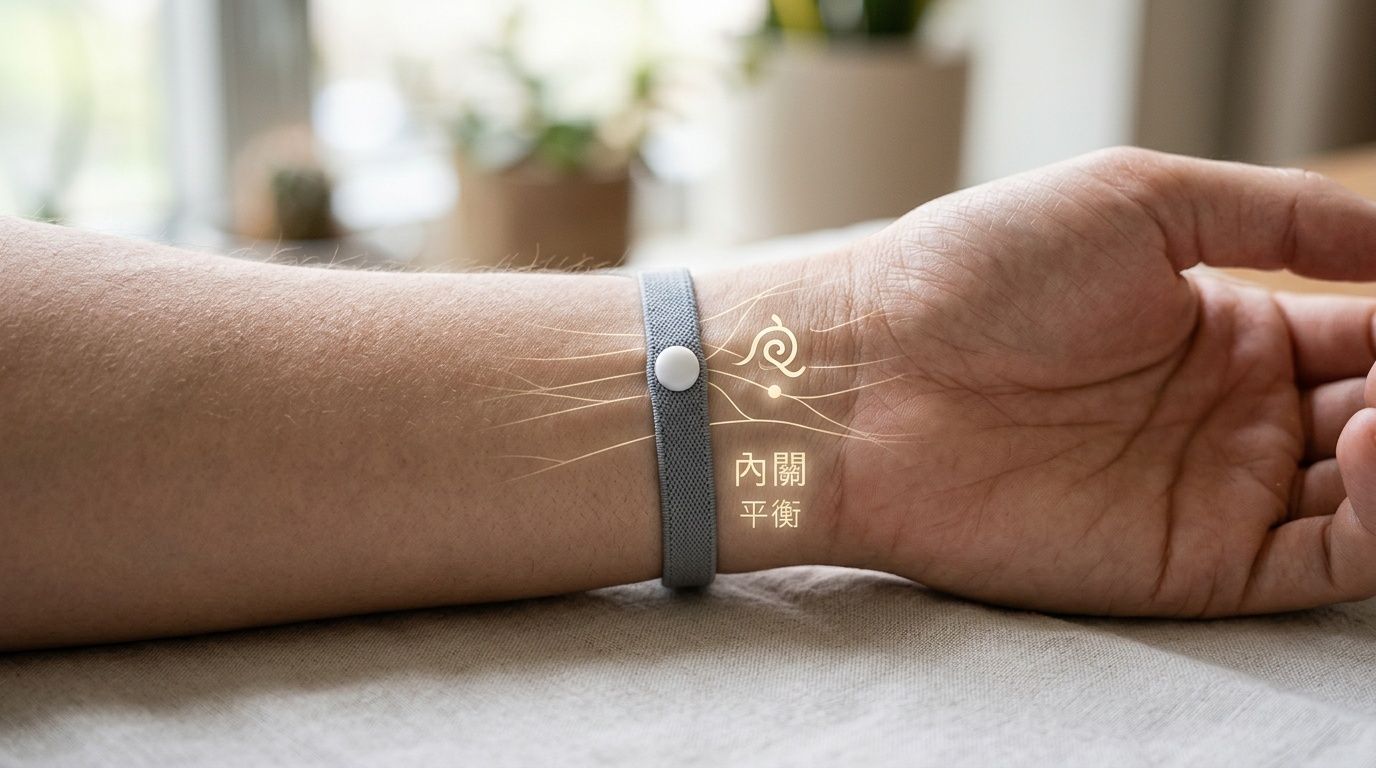
A sea sickness bracelet works by applying pressure to a specific point on the inner wrist called P6, also known as Nei-Kuan. This idea comes from traditional Chinese medicine, where that point has long been associated with nausea relief.
The bracelet itself is simple. It's usually an elastic band with a small plastic stud. That stud presses into the wrist at the target point. No battery. No drug. No scent. Just pressure in the right place.
Where the point is
The P6 point sits about three finger breadths up from the wrist crease on the inner arm, between two tendons. If you've ever heard someone say, "Put the button three fingers below your palm," that's the basic idea.
For a deeper look at how these bands are used around dive trips, this guide to sea sickness acupressure bands is a helpful companion resource.
What the pressure is supposed to do
The short version is easy to understand.
When boat motion scrambles the signals your body sends to your brain, nausea can follow. The bracelet presses on a spot linked to the median nerve pathway, and that stimulation is thought to help modulate the nausea response. If you want a plain-language analogy, it's like turning down the volume on a signal that's getting too loud.
That doesn't mean the bracelet stops the ocean from moving. It means it's trying to reduce how strongly your body reacts to that motion.
This isn't just folklore
Sea-Band bracelets have FDA clearance under K033268 based on substantial equivalence to other medical devices. That clearance is supported by bench testing showing the stud maintains effective pressure and by biocompatibility testing for prolonged skin contact, according to the FDA clearance document.
That detail matters because it separates the bracelet from random "wellness" gadgets that make big promises without showing how they're built or tested. The bracelet is still a simple tool, but it's a simple tool with a defined mechanical job.
The bracelet isn't a lucky charm. It's a pressure device. If it works, it works because that pressure is landing in the right place.
Why divers often prefer this type of tool
For mild to moderate nausea, many divers like acupressure bands because they can wear them through the whole boat day without worrying about medication timing, repeat dosing, or feeling drowsy before getting in the water.
That makes the bracelet especially appealing on active ocean days when you're moving gear, listening carefully, and trying to stay sharp. It also helps that most bands are reusable, easy to pack, and fine to wear around saltwater and spray.
Here are the main reasons people reach for them:
- They don't rely on a drug
- They preserve alertness for many users
- They can be put on before symptoms start
- They're easy to keep in a save-a-dive kit
The catch is important. The bracelet only has one job, and it has to do that job precisely. If the stud isn't pressing the correct spot, you're not really testing the bracelet. You're just wearing knit fabric on your wrist.
The Scientific Evidence What Studies Really Say
You are stepping onto the boat in Kona before sunrise. The water looks calm at the harbor, then the bow clears the breakwater and starts that familiar up and down roll. That is the moment many divers want a straight answer. Is a sea sickness bracelet backed by science, or is it just wishful thinking?
The fairest answer is more useful than a sales pitch. Research on acupressure bands is mixed. Some studies on nausea found benefit from pressing the P6 point on the inner wrist. Studies focused on motion sickness have been less consistent.
That split matters.
It suggests the bracelet is not magic, but it is not random either. Pressure on P6 has enough research behind it to take seriously. At the same time, the evidence is not strong enough to promise that every diver on every Kona boat ride will feel better just by slipping on a band.
What the research supports
The stronger results tend to show up in broader nausea research rather than in open-ocean motion sickness alone. In plain terms, that means wrist pressure may help calm the nausea pathway for some people, even if the boat-specific results are uneven.
A good way to understand this is to picture seasickness as more than one signal hitting your brain at once. Your inner ear says the boat is moving. Your eyes may be fixed on a tank bench or camera screen. Your stomach joins the argument. A bracelet targets one part of that chain. It may reduce the nausea signal for some users, but it does not stop the swell, the diesel smell, dehydration, or nerves before a first manta night dive.
That is why two divers can wear the same band on the same trip and report different results.
Why motion sickness studies are harder to interpret
Boat motion is messy in a way lab research often is not. Sea state changes. Sleep changes. Anxiety changes. One person had coffee and no breakfast. Another took a giant stride into the water feeling fine because they spent the ride looking at the horizon.
So when motion sickness studies show mixed outcomes, that does not automatically mean the bracelet has no value. It means the actual problem has several moving parts, and the wristband addresses only one of them.
For divers, that is the practical takeaway. You are not looking for a perfect verdict. You are asking a more useful question. Does this low-risk tool help enough people, often enough, to deserve a place in your gear bag and your boat-day routine?
For many divers, the answer is yes.
What a realistic diver should conclude
Use the evidence the way a good dive briefing uses conditions. It does not promise a perfect dive. It helps you prepare well.
A sea sickness bracelet makes the most sense if you want a non-drug option, want to stay alert, and are willing to use it carefully rather than casually. If you slap it on anywhere near the wrist and hope for the best, you have not really tested the method. You have tested a placement mistake.
That is also why some divers compare simple acupressure bands with electronic wrist devices before a trip. This guide to a relief band for sea sickness explains how those wrist-based options differ.
The science supports a balanced view. The bracelet can help some people. The better question is how to give it the best chance to help you on an actual boat day in Kona.
How to Use Sea Sickness Bracelets for Maximum Effect
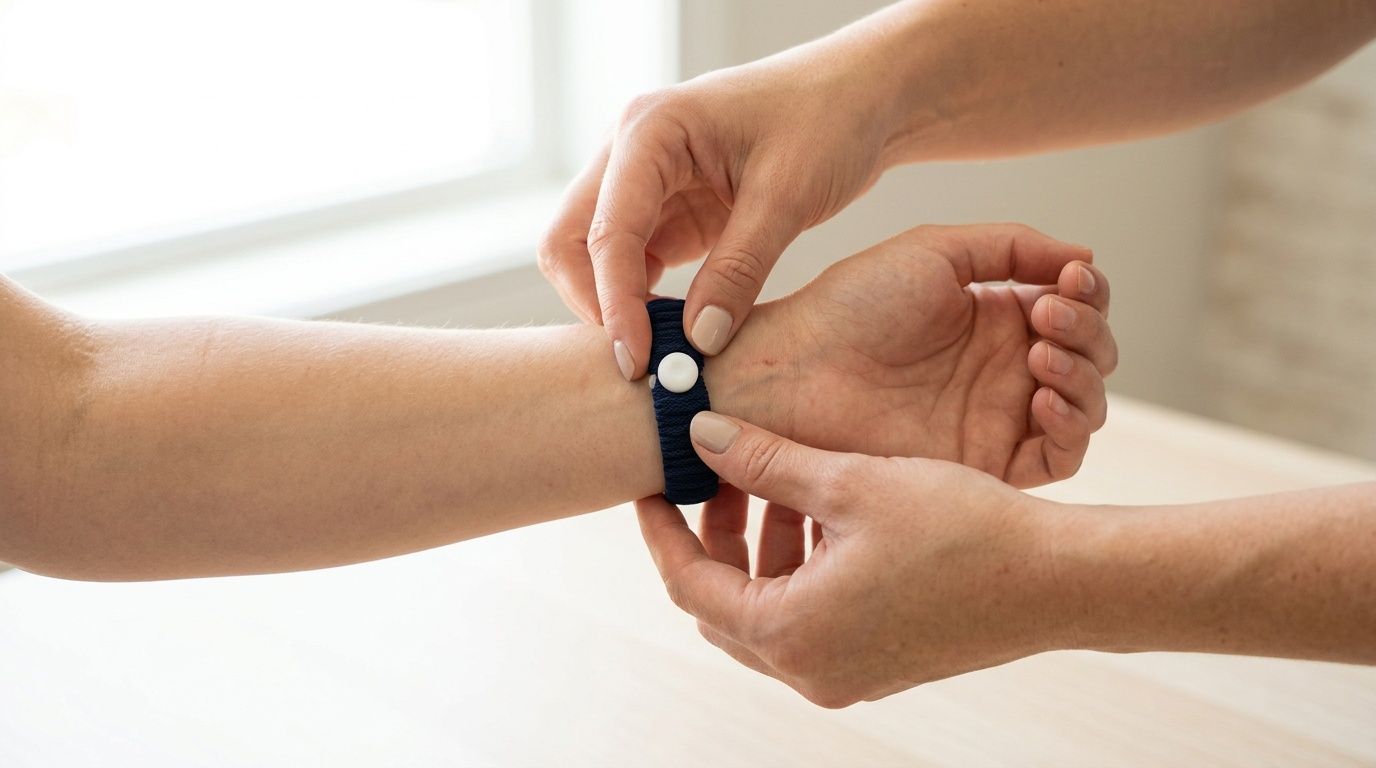
Many stumble at this particular point.
The biggest factor in whether a sea sickness bracelet helps isn't brand loyalty or wishful thinking. It's placement. Research highlighted in this article on seasick bands for pregnancy notes that common user errors, such as placing the stud too close to the wrist crease or wearing the band too loosely, can make the band ineffective.
Find the P6 point correctly
Turn one hand palm-up.
Now take the first three fingers of your other hand and place them across your inner wrist, with your ring finger touching the wrist crease. The P6 point sits just above those three fingers, centered between the two tendons that run up your forearm.
If your tendons don't stand out clearly, lightly flex your hand upward. That often makes them easier to feel.
Place the stud on the point
Once you've found the spot, the plastic stud should sit directly over it. Not beside it. Not half an inch lower. Not wherever feels close enough.
Wear one band on each wrist unless the product instructions say otherwise. With standard acupressure bands, both wrists are the norm.
For readers shopping specifically for this style, these Sea-Band sea sickness wristbands show the classic stud-based design.
Get the fit snug
This part confuses people because "tight enough" and "too tight" are close together.
You want firm pressure. The stud should press into the point consistently. But the band shouldn't feel like it's cutting off circulation, making your hand tingle, or creating sharp discomfort.
A good fit feels noticeable, not painful.
Fit check: If the band slides around easily, it's too loose. If your wrist aches or your fingers feel strange, it's too tight.
Put them on before the boat ride starts
Many users do better when they wear the bands about 30 minutes before boarding, which is the timing described in the verified material. That's prevention, not rescue.
If you wait until you're already pale, sweaty, and trying not to look at anyone, you're asking the bracelet to catch up after motion sickness has already started building.
Common mistakes that quietly ruin the result
Most complaints about bracelets fall into a few predictable categories.
- Too close to the palm: The stud ends up on the wrist crease instead of above it.
- Too high up the forearm: The user overshoots the point and misses the target area.
- Off-center placement: The stud lands beside the tendons, not between them.
- Loose band tension: The button touches the skin but doesn't apply meaningful pressure.
- Late use: The band goes on after nausea is already well underway.
Diver-specific troubleshooting
Boat days add a few extra wrinkles.
If you pull on a wetsuit after fitting the band, check the position again. Wrist seals, sleeve friction, and all that tugging can shift the band. The same goes for climbing ladders, hauling gear, or repeatedly pulling gloves or sleeves into place.
If you're getting splashed all morning, that's usually fine. These bands are meant for real-world wear. But after a lot of movement, press a fingertip over the stud and make sure it's still centered where you intended.
A few more field tips help:
- Test the bands on land first. Put them on at home so you're not learning placement on a moving boat.
- Use a mirror once. One careful check teaches your hands what "correct" feels like.
- Pack them where you can reach them fast. Don't bury them under chargers and sunscreen.
- Combine them with smart habits. Hydration, light food, and looking toward the horizon still matter.
What success should feel like
Success doesn't always mean you feel absolutely nothing.
Sometimes it means you stay at a low level of motion awareness instead of tipping into full nausea. Sometimes it means the boat ride is manageable enough that you can gear up calmly and enjoy the dive. That's still a win.
Bracelets vs Pills vs Patches A Diver's Comparison
Divers don't all need the same remedy. Some people want the most powerful option available. Some care most about staying alert. Others want a drug-free plan first and a backup in their pocket.
The comparison that matters isn't "best for everyone." It's "best for your body and your dive day."
Seasickness Remedy Comparison for Divers
| Remedy | How it Works | Key Side Effect for Divers | Onset Time | Reusability |
|---|---|---|---|---|
| Sea sickness bracelet | Applies acupressure to the P6 point on the inner wrist | Usually no drug-related drowsiness, but incorrect placement can make it ineffective | Best used before boarding | Reusable |
| Ship-EEZ Seasickness Patch | Medicated patch worn behind the ear | Medication side effects can matter on an active boat day | Follow product directions before travel | Single-use or limited-use |
| Dramamine pills | Oral medication for motion sickness | Drowsiness is common in 20 to 30% of Dramamine users, as noted in the verified data | Follow label directions | Not reusable |
| Bonine pills | Oral medication for motion sickness | Can also leave some users feeling less sharp | Follow label directions | Not reusable |
| Ginger chews | Natural stomach-settling option | Usually milder effect than dedicated motion remedies | Often used as needed | Consumable |
Why divers often start with bracelets
For scuba, staying mentally clear matters. You need to hear a briefing, track your equipment, monitor your buddy, and make simple decisions well. Anything that makes you sleepy can be annoying at best and unhelpful at worst.
That's why many divers start with a sea sickness bracelet or another non-drowsy layer before moving to stronger medication options. The tradeoff is that bracelets can be more technique-sensitive. If you misplace them, you may conclude they "didn't work" when fit was the issue.
When pills may make sense
Some people know from experience that they get strongly motion sick and want medication because it works more predictably for them. That's a valid choice.
The caution for divers is straightforward. If you use a pill, test it before an important boat day so you know how your body responds. A medication that helps one person can make another person feel sleepy, dry, or off.
Where patches fit in
Patches appeal to travelers who want longer-lasting coverage and don't want to remember repeat dosing. They can be convenient, especially for extended time on the water.
If you're comparing patch options, this guide to the Ship-EEZ sea sickness patch is useful for understanding that route.
Natural add-ons still have a place
Ginger chews are not a replacement for every diver, but they can be a very handy backup. They travel well, they're easy to use, and they pair nicely with other strategies.
A layered approach often looks like this:
- Primary plan: Sea sickness bracelet before boarding
- Boat habits: Hydration, light food, horizon focus, fresh air
- Backup option: Ginger or medication based on your usual response
That kind of setup is practical because it doesn't force one remedy to do everything.
Your Essential Kona Packing and Dive Prep Guide
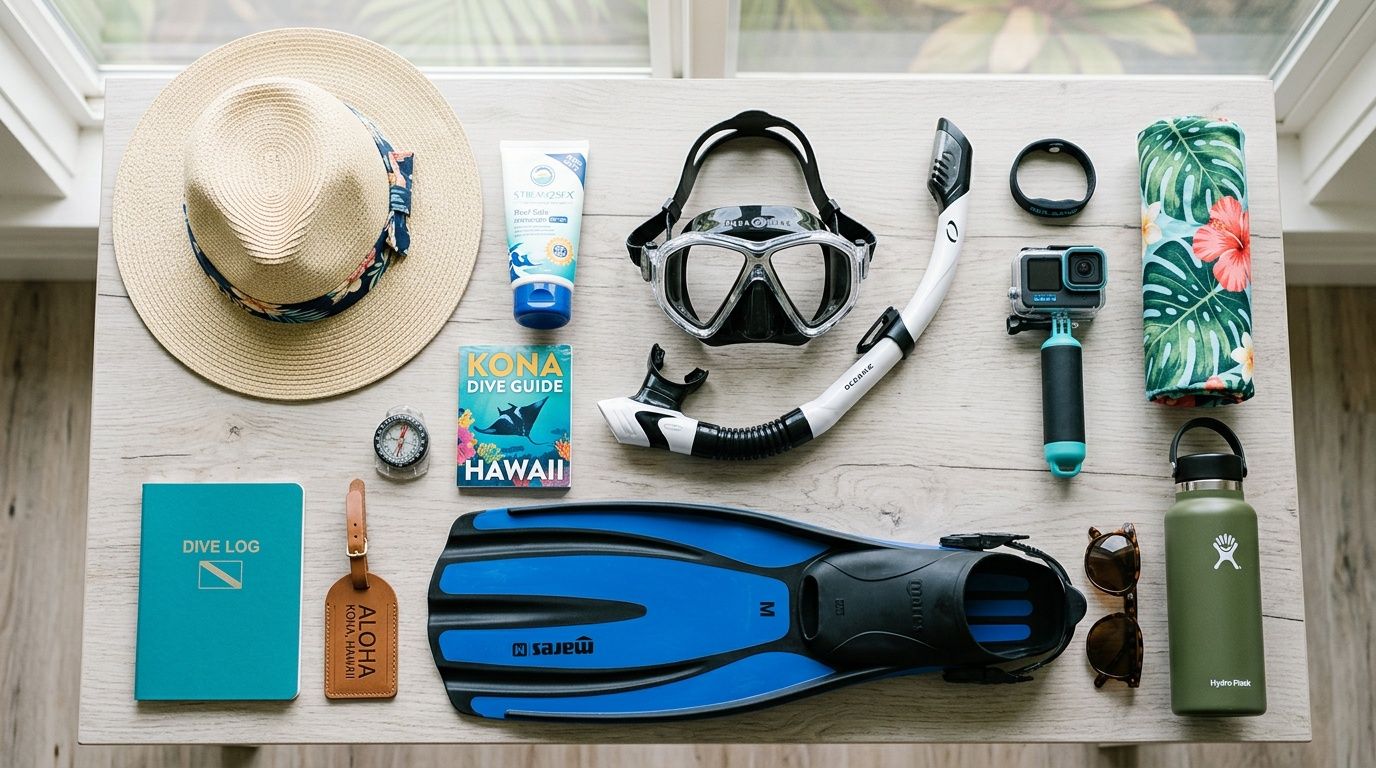
Kona boat days are memorable for the right reasons when you handle the little things early. Seasickness prevention is one of those little things.
If you're packing for diving in Hawaii, treat your anti-nausea setup like any other essential system. You don't want to improvise it in the parking lot.
What to pack
Start with your core anti-seasickness items, then support them with basics that help your body stay settled.
- Sea sickness bracelet: Pack it where you can grab it quickly, not at the bottom of your bag.
- Water bottle: Dehydration and queasiness don't make a good team.
- Simple snack: A light bite is often better than diving on an empty stomach.
- Backup remedy: Pills, patch, or ginger, depending on your preference.
- Dry shirt and towel: Being comfortable after the dive helps the whole day feel better.
For a broader checklist beyond motion sickness items, this guide on the gear you will need for your Kona diving adventure is worth bookmarking.
What to do the night before
Don't wait for morning brain.
Set the bracelet with your sunglasses, certification card, and reef-safe sun gear. If you're using pills or a patch, read the label the night before. If you're testing a bracelet for the first time, practice finding the P6 point at home under calm conditions.
A smooth dive day usually starts with boring preparation. That's a compliment.
Think about the type of trip
Not every boat day feels the same.
A shorter local outing may call for a simple bracelet-and-ginger plan. A longer day on the water may make you want a backup option. If you're planning iconic local experiences like the Manta Ray Night Dive, choosing a comfortable, non-drowsy setup can be especially appealing because you want to stay alert for the whole experience. If you're looking at more challenging outings, the Advanced Long-Range Dive Tours are another reason to dial in your motion plan ahead of time.
Booking support for your trip
If you're planning to dive the Big Island, you can browse Kona diving tours and lock in the trip that fits your experience level.
Frequently Asked Questions About Sea Sickness Bracelets
Can I wear a sea sickness bracelet while diving
Yes. Divers often wear these bands on the ride out, between dives, and during in-water portions of the day. They are simple wristbands, so the main concern is not safety underwater. It is whether they are still sitting on the right pressure point once your gear is on and the boat is moving.
If you want extra reading on fit, timing, and common mistakes, this detailed guide on sea sickness bracelets is a useful companion resource.
Will it fit under a wetsuit
Usually, yes.
The catch is that a wetsuit sleeve can tug the band out of position while you are dressing. That happens a lot with snug cuffs. A bracelet that was centered perfectly on the dock can end up shifted by the time you are seated on the boat.
A good habit is to check both wrists after your wetsuit is fully on. Press the stud with a fingertip and make sure it is still centered where you meant to place it. On a Kona morning charter, that 10-second check is often more helpful than people expect.
How fast do they work
They tend to work best when you use them before your body starts arguing with the boat.
A bracelet is more like putting on fins before the current picks up than trying to chase one after it floats away. If you wait until you already feel queasy, you can still try it, but you are asking it to help you recover instead of helping you stay steady from the start.
Are there side effects
The biggest reason divers like bracelets is simple. They do not usually bring the drowsy feeling that can come with some motion sickness medication.
You may notice a temporary mark on the skin or a little irritation if the band is tight or worn for a long time. In real use, that is usually minor. If your skin is sensitive, loosen it slightly while keeping enough pressure on the point.
Can I use a bracelet with ginger or medication
Yes, many divers combine methods.
A bracelet can be your base layer. Ginger can be a gentle add-on. Medication may also be part of your plan, but test it on a non-dive day first so you know how your body responds. On a boat in Kona, alertness matters. You want to learn that lesson at home, not on the way to your first site.
What else should I do besides wearing the band
A bracelet works better when the rest of your routine supports it. On the boat, use the same common-sense approach you would use with any piece of dive gear. Good setup matters.
- Eat light, but do eat: An empty stomach and a heavy breakfast can both make things worse.
- Drink water steadily: Small sips before and during the trip are easier than trying to catch up later.
- Keep your eyes outside the boat: Looking at the horizon helps your inner ear and eyes agree on what the boat is doing.
- Sit near the middle when you can: That part of the boat usually feels calmer than the bow or stern.
- Put the phone away if you start feeling off: Looking down at a screen can make nausea build fast.
How do I know if I put it on wrong
This is the question that matters most, because placement errors are one of the biggest reasons people say a bracelet "didn't work."
If the stud is sitting too close to the wrist crease, too far up the forearm, off to one side, or pressing so lightly that it feels like regular jewelry, fix that first. The band should feel secure and intentional. Not painfully tight, but firm enough that the pressure point is clearly engaged.
A simple check helps. If you slid your wetsuit on, carried tanks, or peeled off a rash guard, recheck the band. Small shifts matter. With sea sickness bracelets, the difference between "no help at all" and "that made the ride manageable" is often just a few millimeters of placement.
Set Sail for Adventure with Confidence
A sea sickness bracelet is one of the easiest ways to give yourself a better shot at a comfortable boat day. The science is mixed, but the low-risk, drug-free appeal is real, especially for divers who want to stay alert. Use it correctly, put it on early, and combine it with smart boat habits. That's the difference between hoping it works and giving it a fair chance to work.
When you prepare well, you spend less time thinking about your stomach and more time enjoying the reason you came to Kona in the first place.
If you're ready to dive Hawaii with a crew that knows how to make ocean days smooth, safe, and memorable, explore Kona Honu Divers and book your next underwater adventure with confidence.