
You booked the dive. Your gear is packed. The camera batteries are charged. Then one thought starts nagging at you on the drive to the harbor: what if the boat ride gets me before I even hit the water?
That concern is common, and it’s not a sign you’re bad on boats. Plenty of capable divers, strong swimmers, and seasoned travelers get uneasy when the ocean starts rolling. A calm morning can still carry enough swell to turn a short run offshore into a queasy one if you didn’t prepare for it.
The good news is that sea sick tablets, patches, wristbands, and a few smart habits can make a big difference. The trick is choosing the right tool for the kind of day you’re having, especially if that day includes a dawn two-tank charter, a manta night dive, or a demanding open-ocean trip.
Don't Let Seasickness Spoil Your Perfect Dive Day
You see this all the time on dive boats. One guest is excited about giant mantas. Another is thinking about pelagic action on a deep wall. A third is wondering whether they should have taken something before leaving the hotel.
That last person is often the smartest one on the boat.
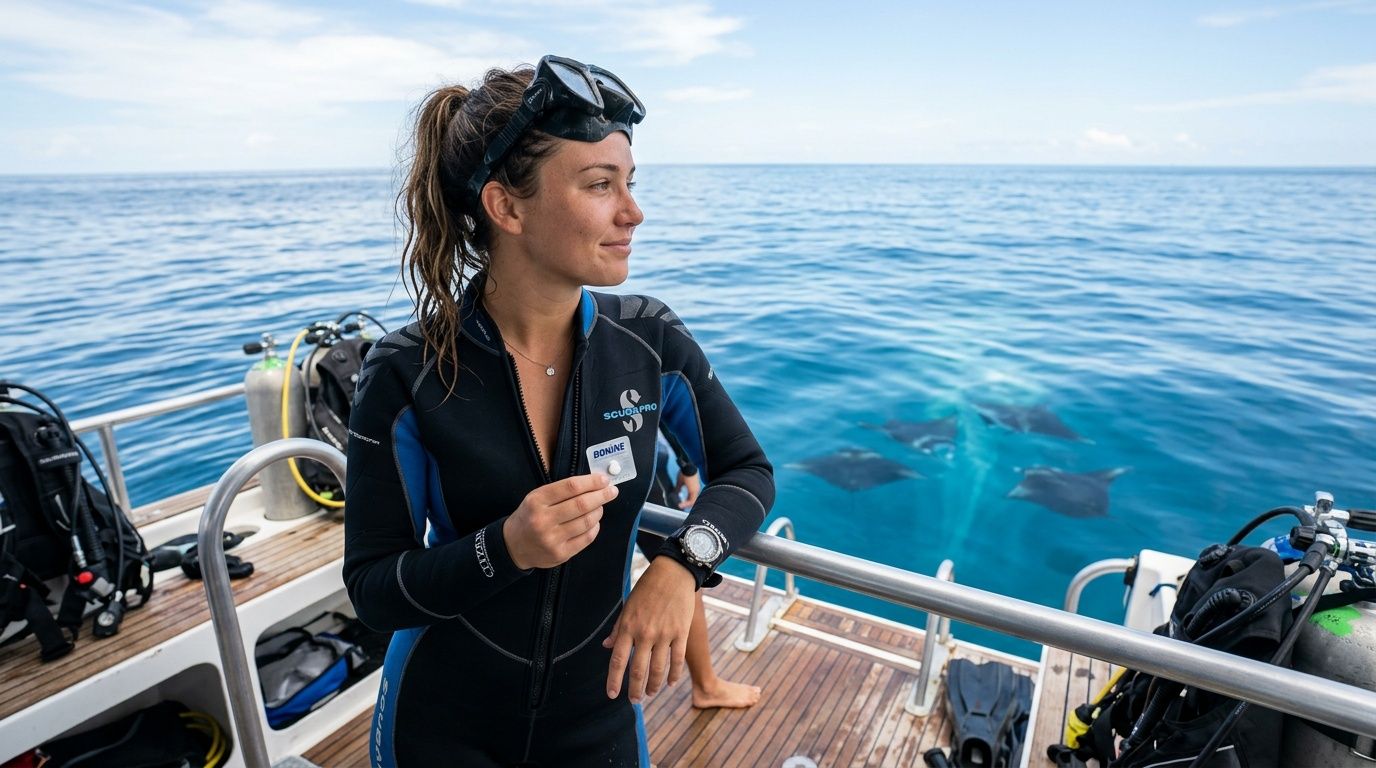
Seasickness has ruined more good dive days than bad visibility ever has. It can turn a beautiful run along the Kona coast into a survival exercise. It can also snowball fast. A little warmth, a little dehydration, and a little stomach slosh can become full-blown nausea before the briefing even ends.
Those who get seasick don’t need heroics. They need timing, the right medication for their body, and realistic expectations. The ocean doesn’t care whether it’s your first boat trip or your hundredth dive. If your inner ear decides today is the day, you’ll feel it.
Why preparation matters more than toughness
What works best is simple preparation done early. The guests who do well usually haven’t guessed. They’ve either tested a remedy before, or they’ve read up and made a plan. That matters more than trying to power through.
Seasickness is manageable. Waiting until you're green and sweaty on the transom is the part that usually goes wrong.
If you want a practical pre-trip overview, this guide on how to avoid sea sickness is worth reading before you head out.
The goal is to protect the dive, not just the boat ride
Divers sometimes think only about getting through the ride to the mooring. That’s too narrow. You want to arrive comfortable, hydrated, alert, and ready to dive well. A remedy that stops nausea but leaves you foggy may still be the wrong call for scuba.
That’s where sea sick tablets become a little more nuanced for divers than for cruise passengers. On a dive boat, feeling better isn’t the only objective. You also need to stay sharp.
Understanding the Science of Motion Sickness
Motion sickness starts with a disagreement inside your head. Your eyes may say one thing, while your inner ear says another.
If you’re sitting in the cabin or looking down at your phone, your eyes tell your brain that you’re relatively still. Meanwhile, the vestibular system in your inner ear feels roll, pitch, and heave from the boat. Your brain gets mixed signals and responds like something is wrong. For many people, that response is nausea.
Why the boat can fool your brain
The ocean is especially good at creating this mismatch. A boat can feel steady one moment and then move in several directions at once the next. That’s why some people feel fine at the dock and rough ten minutes later.
Sea sick tablets work because they interrupt that chain somewhere along the line. Some act more on histamine pathways. Some act more on acetylcholine. Some natural options don’t block signals directly but help settle the body enough to blunt the response.
Why knowing the cause helps you choose the fix
The best remedy often depends on what kind of trip you’re taking and how your body reacts. If your problem is mild nausea on a short run, one approach may be enough. If you tend to get fully incapacitated on choppy crossings, you may need something stronger and earlier.
For a practical look at how long symptoms can hang around after the ride, this piece on how long sea sick lasts fills in that part of the puzzle.
Your Guide to Over-the-Counter Sea Sick Tablets
Walk into any pharmacy and you’ll usually see the same two names come up for boat rides: Dramamine and Bonine. Both can help. They are not the same experience.
For most divers, the trade-off is straightforward. One may act well for prevention but cause more drowsiness. The other often fits better when you want longer coverage and a better chance of staying functional on the boat.
Dramamine and dimenhydrinate
Dramamine pills typically use dimenhydrinate. According to McKesson product information for dimenhydrinate 50 mg tablets, it blocks H1 histamine receptors in the brain and can reduce nausea by 60 to 70% when taken 30 to 60 minutes before travel. The same source notes sedation in 20 to 30% of users.
That sedation point matters a lot for divers. On land, drowsy may mean annoying. On a dive day, drowsy can mean poor focus during a briefing, slower reactions while gearing up, and lower comfort if conditions are lively.
Bonine and meclizine
Bonine pills use meclizine hydrochloride. The practical advantage is duration. Based on the meclizine and hyoscine SPC document, meclizine has a 5 to 6 hour half-life, and a single 25 to 50 mg dose can provide effect for 24 hours.
That’s why many divers prefer meclizine when they need coverage for an early check-in and a long morning on the water. It also fits well with the common strategy of taking it the night before so peak drowsiness is less likely to hit during the actual boat ride.
A simple comparison
| Medication (Brand) | Active Ingredient | When to Take Before Travel | Duration of Effect | Key Side Effect to Note |
|---|---|---|---|---|
| Dramamine | Dimenhydrinate | 30 to 60 minutes before travel | Shorter acting than meclizine | Drowsiness can be significant |
| Bonine | Meclizine hydrochloride | Often used ahead of travel, many divers prefer the night before a morning boat | Can provide effect for 24 hours | Can still cause drowsiness, but many divers find timing easier to manage |
Which one fits which diver
If you want the short answer, use this framework:
- Choose Dramamine if you’ve used dimenhydrinate before, know how you react to it, and aren’t planning to dive if it makes you sleepy.
- Choose Bonine if you want longer coverage and you’re trying to avoid peak drowsiness during the boat portion of the day.
- Choose neither blindly if you’ve never tested them before. Trial any medication on land first.
Practical rule: The best sea sick tablets are the ones you already know your body tolerates.
A lot of travelers compare options before they ever get to the dock. If you want another practical read focused on the same topic, this roundup of sea sick tablets is useful.
If you’re specifically trying to compare pharmacy-style options before a trip, this breakdown of Dramamine seasick tablets is also worth a look.
The Prescription Option for Maximum Protection
If over-the-counter tablets are hit or miss for you, or your trip runs across multiple days, scopolamine is usually the option people ask about next.
It’s popular for a reason. You apply a patch, not a pill, and it keeps working in the background instead of asking you to remember repeat doses.
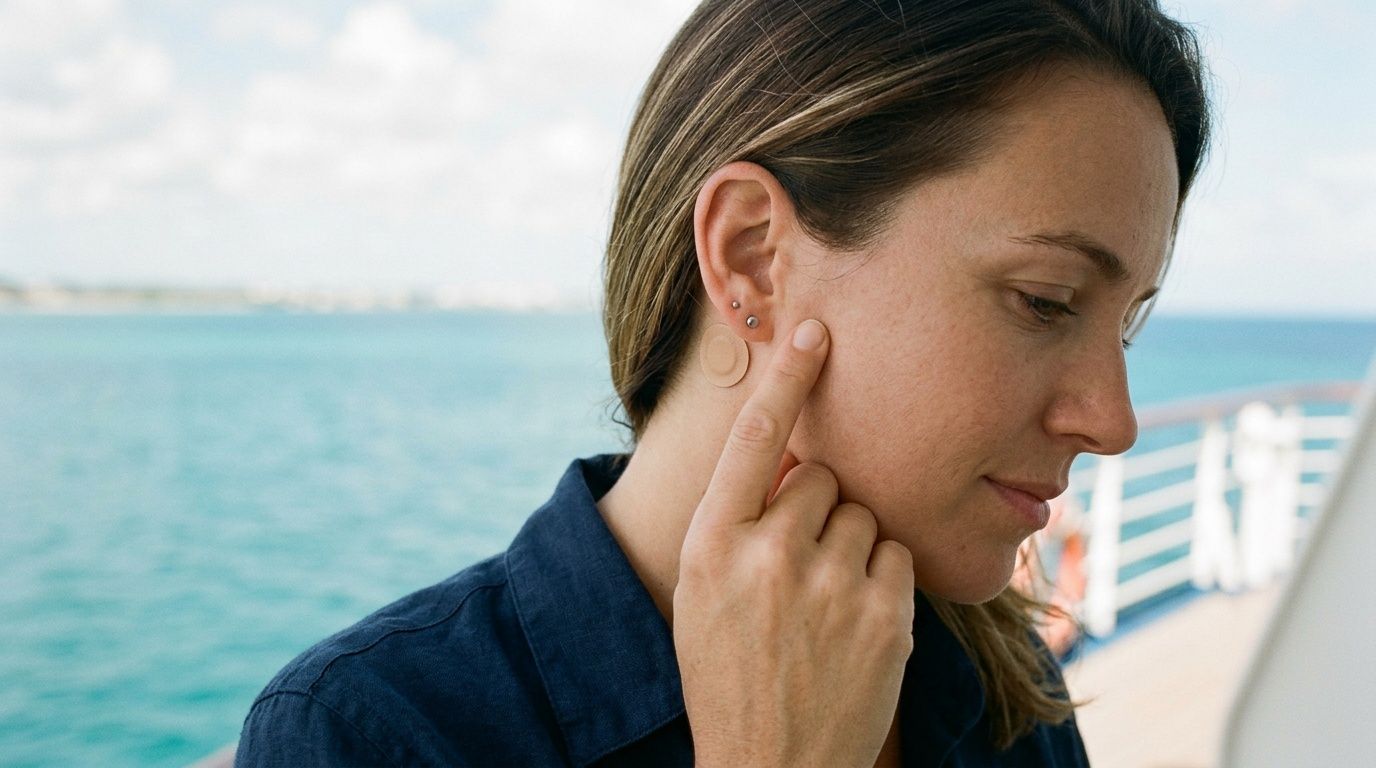
Why divers like the patch
According to GoodRx’s guide to motion sickness medication, scopolamine patches provide up to 72 hours of protection, are applied behind the ear 4 to 8 hours before travel, and showed around 50.1% overall effectiveness in U.S. trials. The same source notes that the patch has fewer sedative effects than oral options.
That combination is what makes it attractive for people who know they’re vulnerable. It’s especially appealing when the ocean portion isn’t a quick out-and-back.
The trade-offs
Scopolamine is not casual candy. It’s prescription-only, and that’s appropriate. You want a clinician involved because the patch can still cause side effects such as dry mouth or blurred vision, and it isn’t the right choice for everyone.
Use also matters. Put it on behind the ear within the recommended window, wash your hands after handling it, and don’t treat it like a last-minute fix while the boat is leaving the harbor.
When it makes the most sense
It’s the strongest candidate when you fit one of these groups:
- You know you get seasick badly
- You’re doing back-to-back boat days
- Oral tablets make you too sleepy
- You want a steady option instead of repeated dosing
If you prefer a retail option while you’re considering the prescription route, some travelers also look at the Ship-EEZ Seasickness Patch. Just make sure you understand what product you’re buying and how it differs from prescription scopolamine.
Natural Remedies and Non-Pharmacological Tips
Not everyone wants medication. Some people can’t tolerate it well. Some divers just want to stay as clear-headed as possible and start with non-drug methods first.
That’s a reasonable approach, especially for mild cases.

What can work without tablets
The old-school advice still holds up better than many people think. Fresh air helps. Looking at the horizon helps. Staying out of diesel fumes helps. Keeping your body aligned with the boat instead of resisting every roll helps.
The newer part is that some non-pharmacological methods have better support than people assume. According to UC Davis Health’s motion sickness article, controlled breathing, “wave-riding” posture, and vestibular habituation apps can reduce symptoms by up to 80%. The same source notes that a 1 g dose of ginger can cut nausea by 40%.
The best drug-free options to pack
Here’s what I’d keep on hand:
- Acupressure bands: Sea Band wristbands are simple, inexpensive, and easy to combine with other strategies.
- Ginger: Ginger chews are easy to carry and easy to use before boarding or during the ride.
- Breathing and posture: Slow your breathing and move with the boat instead of bracing stiffly against it.
- Boat position: Mid-ship is usually the friendliest place to be.
If you want a drug-free first move, start with the horizon, fresh air, and your body position before you start experimenting with complicated fixes.
When natural options make the most sense
Natural remedies are strongest in three situations:
- Mild symptoms
- People sensitive to drowsiness
- As a layer on top of another plan
They can also work well for families, lighter snorkel trips, or anyone who wants a conservative first step. For a closer look at acupressure bands specifically, this guide to Sea-Band sea sickness wristbands is helpful.
One caution. Don’t treat natural as automatic. If you know you get badly seasick, don’t rely on ginger and optimism for a rough offshore run.
Crucial Safety Guidance for Scuba Divers in Kona
You feel fine at the dock. Then the boat clears the harbor, the swell hits from the side, and suddenly your stomach is off right as you start assembling gear for a two-tank morning or an evening manta trip. That is a bad time to find out your sea sick tablet makes you foggy.
Divers have a narrower margin than sightseeing passengers. You are not just trying to stay comfortable on the ride out. You need clear judgment for entries, descents, buoyancy, gas checks, navigation, and buddy awareness. Any motion sickness remedy has to be judged against that standard.
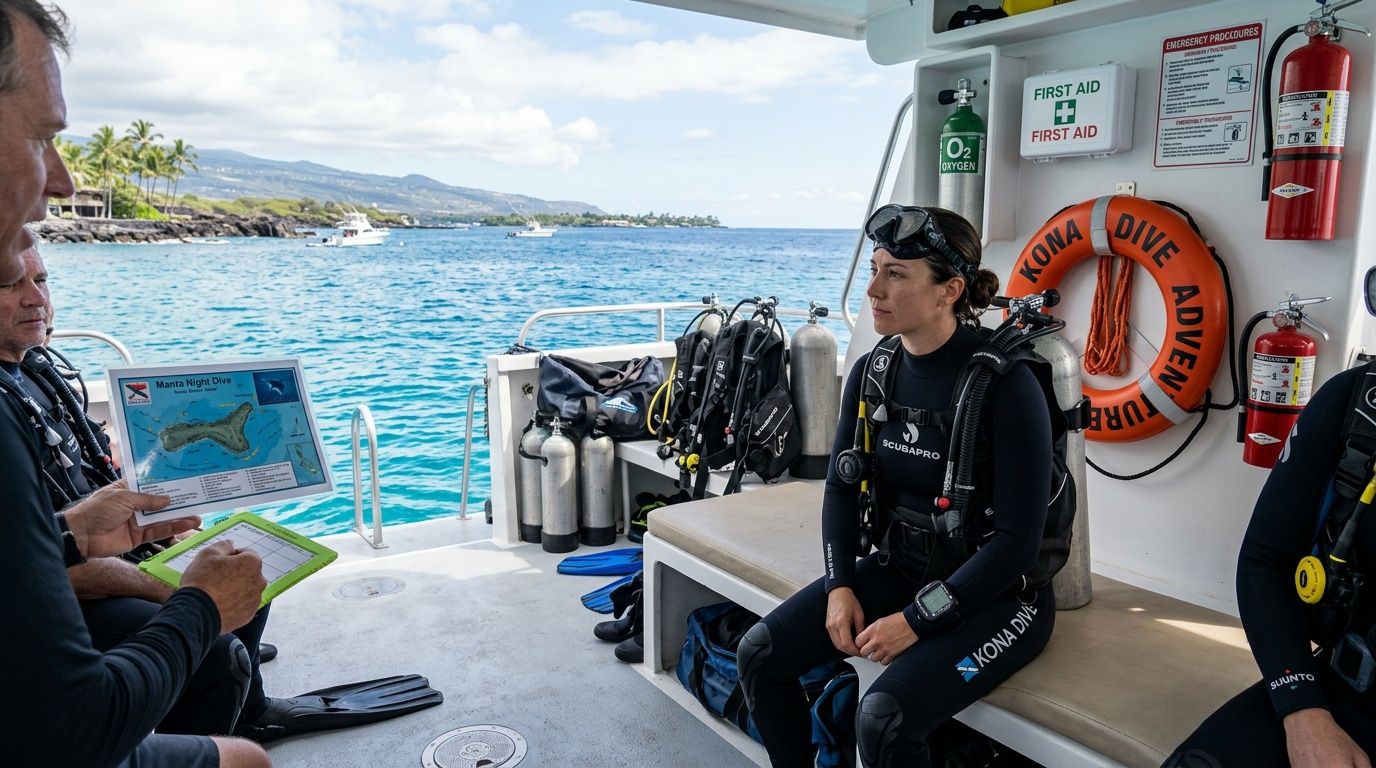
Alertness is part of fitness to dive
The mistake I see most often is simple. A diver wants nausea prevention and forgets to ask how the medication affects mental sharpness.
Dimenhydrinate helps plenty of people, but some divers get sleepy, dry-eyed, or mentally slowed down. On a beach walk, that may be tolerable. On a boat with current, cameras, night conditions, or a negative entry, it matters.
Test any medication on a non-dive day first. Do it at home or on an easy day ashore, where you can judge how you feel for several hours. If you feel off on land, do not expect ocean motion and task loading to improve the experience.
Timing matters more than many divers realize
For early charters, meclizine often fits better because its effect lasts long enough to cover the day, and many divers find that taking it the night before gives useful protection without putting the sleepiest window right in the middle of setup. That timing point was covered earlier, and it is one reason experienced boat divers often plan ahead instead of swallowing something at the dock.
Evening dives need their own plan. A manta ray night dive sounds relaxed on paper, but you are still gearing up after sunset, managing equipment on a moving deck, and entering dark water. If your medication timing is wrong, you feel it right when attention needs to be highest.
The same goes for more advanced outings such as a blackwater dive or a premium advanced long-range dive tour. For those trips, many divers are better served by talking with a physician ahead of time about a low-sedation option than improvising on trip day.
Boat safety and dive safety are the same conversation
A safe dive day starts before the backward roll. Crew briefing, passenger positioning, hydration, food, medication timing, and sea state all affect how stable and capable you are by the time you hit the water. If you like checking the basics before a trip, this comprehensive boating safety equipment guide is a useful general reference.
A few habits pay off almost every time:
- Eat lightly but do eat: An empty stomach can feel as bad as a heavy greasy breakfast.
- Hydrate before boarding: Starting late is harder to fix once nausea begins.
- Stay where there is airflow: Heat, fuel smell, and stale cabin air can turn mild discomfort into real sickness.
- Tell the crew early: We can usually move you to a better spot or help you settle in, but only if we know before you are in rough shape.
Put the whole dive day together
Seasickness planning does not sit in its own little box. Medication choice, hydration, repetitive dives, fatigue, and your travel schedule all interact. Divers who are thinking ahead about surface intervals and flights should also review why you can't fly after diving, because good decisions on the boat carry through the rest of the trip.
If you are unsure, ask a dive-savvy physician
That matters even more if you have glaucoma, urinary retention issues, prostate concerns, other medications in the mix, or a history of strong side effects from motion sickness drugs. A buddy’s favorite tablet is not a fitness-to-dive assessment.
Frequently Asked Questions About Seasickness
What should I do if I start feeling sick on the boat
Act early. Go outside, get airflow on your face, and fix your eyes on the horizon. Sit where motion is calmer if you can, and sip cool water.
Don’t go below deck unless you absolutely have to. Don’t stare at your phone. Don’t wait hoping it will pass if you already know the signs.
Can I give sea sick tablets to my children
Use caution and involve a doctor or pharmacist. Some products have pediatric directions, but children aren’t just small adults, and the wrong dose or product can create problems.
For many families, starting with non-medicated options such as ginger or acupressure wristbands is a sensible first move.
Is it safe to combine remedies
Combining medications should be a doctor question, not a dock question. Don’t stack tablets or add a patch on top of another medication without medical guidance.
Combining a medication with a non-drug option is often the more practical route. For example, some travelers use a tablet and also wear an acupressure band or keep ginger chews on hand.
Will I eventually get sea legs
Sometimes, yes. Habituation is real. Repeated exposure helps some people adapt, and newer vestibular training tools are built around that idea.
But adaptation isn’t guaranteed, and it doesn’t happen on demand because you want it to. If you’ve got an important dive tomorrow, rely on a tested plan, not on hope that this will be the day your body suddenly figures it out.
If you want the kind of dive operation that takes comfort, briefing quality, and real on-the-water safety seriously, book with Kona Honu Divers for your next Big Island trip. Whether you're planning a first boat dive, a manta night dive, or a more advanced offshore adventure, good preparation and the right crew make all the difference.