
You’ve got a Kona dive day on the calendar. Gear is packed. Camera battery is charged. You’re already thinking about lava tubes, reef fish, and that first backward roll into blue water.
Then the boat leaves the harbor and your stomach starts asking a different question.
That’s common. I’ve seen plenty of divers who are calm underwater get uneasy on the ride out. Boat motion in Kona can be gentle one day and oddly sloppy the next, especially when you’re standing up, gearing up, looking down at buckles, and trying to listen to a briefing at the same time. Seasickness doesn’t care whether you’re a new diver or someone with lots of logged dives.
A lot of people want relief without feeling sedated. That’s where sea band sea sickness wristbands come into the conversation. They’re simple, reusable, and drug-free, which makes them appealing for anyone who wants to stay alert on deck. If you want a broader pre-trip game plan, this guide on how to avoid sea sickness is a good place to start.
Don't Let Seasickness Spoil Your Kona Dive Adventure
A diver can look perfectly fine at the dock and feel rough twenty minutes later.
That shift happens fast in real life. You board excited for a reef dive, maybe a night dive later, and then the combination of swell, diesel smell, sun, and gear handling starts to stack up. First comes the warm feeling. Then the yawning, the burping, the “maybe I just need water” phase. If you wait too long, the ride turns into damage control.
Sea-Bands make sense in that moment because they’re low effort. You put them on, keep your head clear, and give yourself a chance to stop the spiral before it builds. They’re not magic, and they’re not the right answer for every diver, but they are one of the few options that don’t trade nausea relief for drowsiness.
Why divers care about the non-drowsy part
On a dive boat, alertness matters. You’re moving around tanks, stepping on a wet deck, listening to entry instructions, and checking your buddy. A remedy that helps your stomach but fogs your head isn’t always a great bargain.
That’s why a lot of divers start with a mechanical option first. No pill timing. No swallowing anything once the ocean starts moving. Just a wristband you can wear before the boat ever leaves the harbor.
The best seasickness plan is the one you’ll actually use early, before your stomach takes over the day.
What usually goes wrong
Most disappointments with seasick bands come from one of three mistakes:
- Too late: People wait until they already feel miserable.
- Too loose: The stud isn’t putting real pressure on the right spot.
- Wrong expectations: They expect a total cure, even for severe motion sickness.
Used correctly, Sea-Bands can be a very practical tool for divers who want to enjoy Kona’s water instead of managing nausea for half the ride.
What Are Sea-Bands and How Do They Work
Sea-Bands are elastic wristbands with a plastic stud that presses on a specific point on the inner wrist. That point is the P6, or Nei-Kuan, acupoint. The basic idea is simple. Instead of using a drug, the band uses steady pressure.
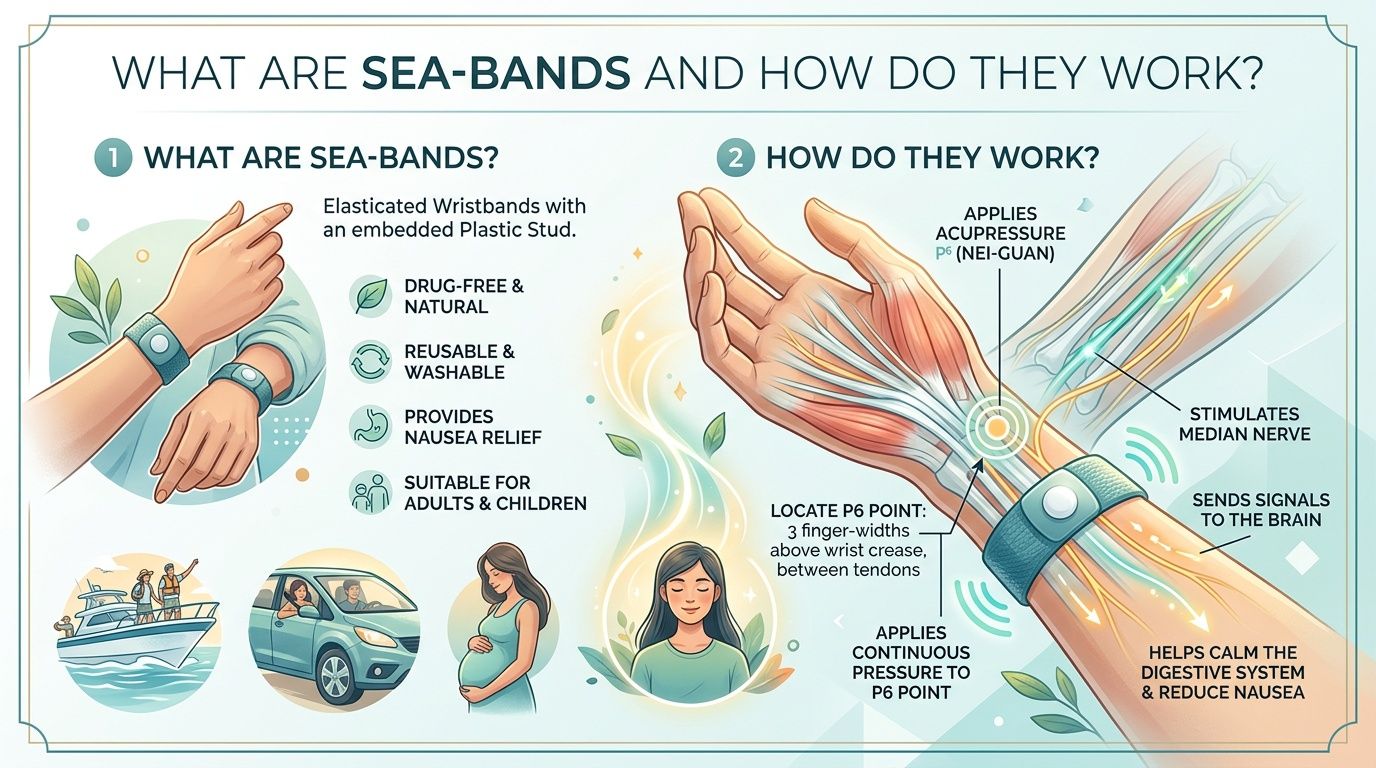
The P6 point sits about three finger-widths from the wrist crease, between the central tendons. According to the FDA clearance record for the device, Sea-Band applies sustained, non-invasive pressure at that point, and effectiveness can begin within 5 minutes of application; the same FDA record also notes the bands are latex-free and cleared as substantially equivalent to other nausea-relief devices in FDA clearance K033268.
If you want a sea-focused overview from a snorkel perspective, this guide to Sea Band Sea Sickness Wristbands gives useful background on how people use them for ocean outings.
What the pressure is actually doing
A lot of people assume the band just “squeezes your wrist.” That’s not really it.
The stud is meant to create targeted pressure, not whole-wrist compression. The mechanism described in the FDA material is acupressure at P6, which is associated with modulation of nausea pathways. In practical terms, the band gives your body a constant signal at a known nausea-relief point instead of introducing medication into your system.
A good way to think about it is this: it’s less like wrapping your wrist for support and more like keeping a fingertip pressed on one exact button.
Why divers like the format
For a boat diver, the format matters almost as much as the mechanism.
- Reusable: You don’t use them once and throw them away.
- Simple to pack: They take almost no room in a save-a-dive kit or day bag.
- Compatible with active trips: You can wear them while moving around, gearing up, and getting in the water.
- Drug-free: No medication-related drowsiness from the bands themselves.
There’s also a practical Kona-specific reason they stay popular. Divers often want to stay sharp during the whole sequence, from briefing to descent. A non-drug option fits that better than a remedy that might leave you groggy.
For a more detailed dive-specific explanation of these bands, this overview of sea sickness acupressure bands is worth reading.
Practical rule: If the stud isn’t on the right point, you’re not really testing Sea-Bands. You’re just wearing wristbands.
Evaluating the Evidence for Sea-Band Efficacy
The honest answer is that the evidence is mixed, but real.
That’s what I want to see in a product discussion, because motion sickness is messy. Different studies look at different kinds of nausea, different patient groups, and different timing. A remedy can work in one setting and fall flat in another.
A review of clinical trials found that a randomized study with 156 post-operative patients compared acupressure wristbands, metoclopramide, and controls. In that study, wristbands reached 21.6% “none” nausea intensity at recovery, compared with 24.5% for metoclopramide and 11.5% for control, with p=0.509. The same review also noted mixed results in some motion and pregnancy settings, while other research, including a study of 739 chemotherapy patients over 5 days, found reduced nausea severity and frequency with P6 acupressure in this clinical review.
What that means in plain language
Two things can be true at once.
First, Sea-Bands are not a guaranteed fix for every person in every setting. Second, there is enough clinical support behind P6 acupressure that it deserves to be taken seriously, especially as a low-risk option.
That lines up with what divers experience in practice. People with mild to moderate motion sensitivity often do well when they put the bands on early and use them correctly. People who get hit hard by boat motion may still need a backup plan.
Where people get misled
Some readers look for one headline and want the answer to be either “proven” or “useless.” Neither is accurate.
A better summary looks like this:
| Evidence question | Practical answer |
|---|---|
| Do Sea-Bands have clinical support? | Yes, there is substantive research behind P6 acupressure |
| Are all study results positive? | No, results are mixed across different nausea settings |
| Are they reasonable for motion sickness prevention? | Yes, especially if you want a non-drug option |
| Should severe sufferers rely on bands alone? | Usually not without a backup plan |
That’s the right mindset for a dive day. Use them as a serious tool, not a miracle cure. If you want another dive-focused discussion of what tends to work on the water, these notes on the best seasick bands are helpful.
Proper Usage and Timing for Maximum Relief
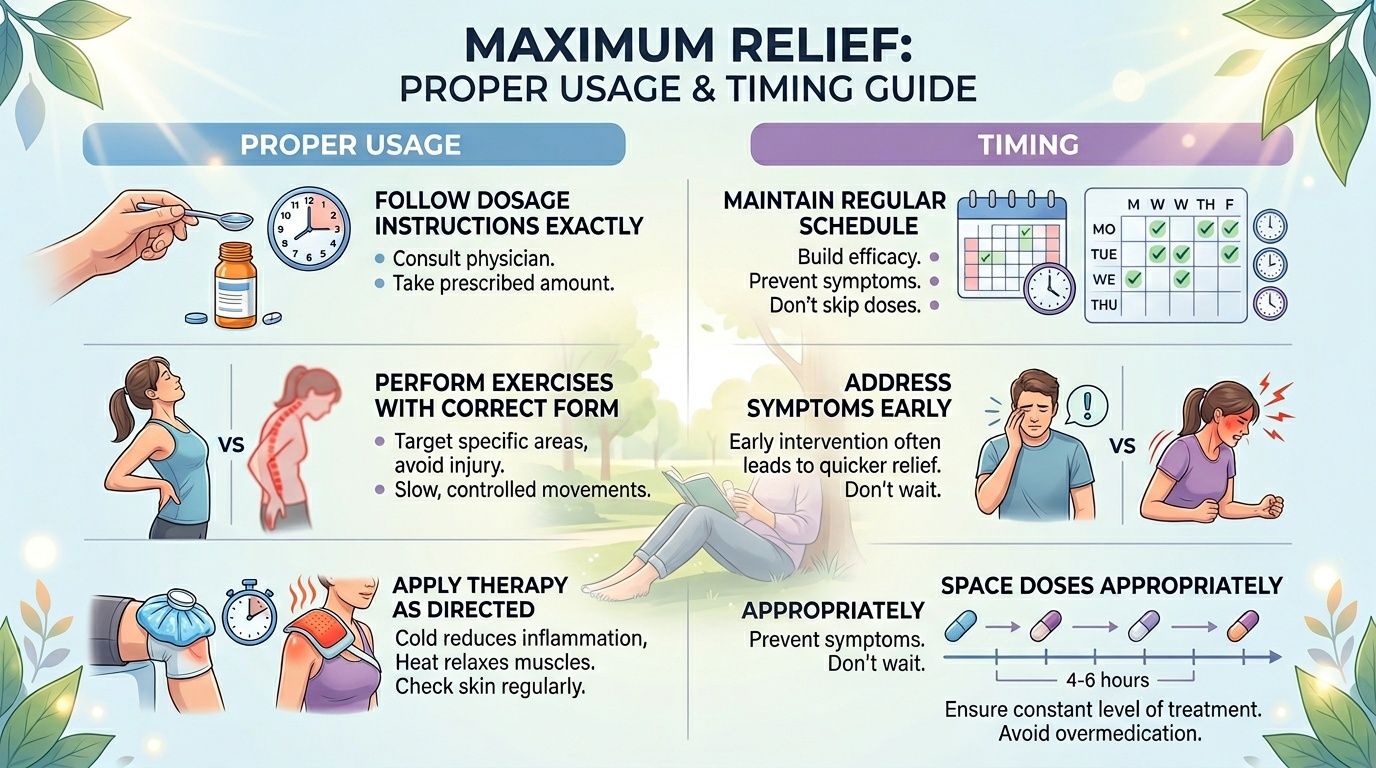
The common failure point is simple. The band is on the wrist, but not on the P6 point.
I see this on Kona boats all the time. A diver slips Sea-Bands on like bracelets in the parking lot, then pulls on a wetsuit top, cinches gear, and by the time we clear the harbor the studs have rotated off target. On shorter, punchier rides and on trips like the Manta Ray Night Dive, that setup mistake matters because the boat motion often starts working on you before you notice it.
The practical rule is to put them on early, on both wrists, and check them again after the rest of your kit is on. A diver-focused article on seasick bands for pregnancy and boat use also stresses correct P6 placement and wearing both bands before symptoms start. That matches what works in the field.
How to place them correctly
Use this sequence on each wrist:
- Turn your palm up.
- Find the wrist crease.
- Measure three finger widths above the crease.
- Feel for the gap between the two central tendons.
- Center the plastic stud on that spot.
If the stud sits off to one side, the pressure is hitting the wrong area. If the band slides around when you grab a tank valve or steady yourself on the ladder, it needs to be adjusted.
What a good fit feels like
A correct fit is firm pressure without numbness.
Use this check before the boat leaves:
- Good fit: steady pressure from the stud, band stays centered through normal hand movement
- Too loose: band rotates, shifts under a sleeve, or moves when you pull on gloves or gear
- Too tight: pinching, tingling, numb fingers, or a pressure mark that feels sharp instead of firm
Kona divers run into a few specific problems that are easy to miss. Wetsuit cuffs and rash guards can drag the band a half inch out of place. Dive computers can crowd the area if worn too close to the stud. Sunscreen and saltwater can also make the band creep more than people expect.
Timing matters just as much as placement. Put Sea-Bands on before the drive to the harbor or before check-in, not once the captain is already backing out. They are better at prevention than catch-up. If you want a dive-focused walkthrough on timing before boat travel, this guide to using Sea-Band for travel sickness covers the basics.
Sea-Bands also work best as part of a routine, not as the only thing you think about. Light food, hydration, and where you sit on the boat still affect how you feel. Better Boat has a useful overview of various seasickness remedies, but for divers the small details matter most: both wrists, correct P6 placement, and a re-check after you suit up.
Comparing Sea-Bands to Medication and Other Alternatives
You feel fine at the dock, then the boat rounds into a lumpier patch off Kona and your stomach starts sending warnings before you even gear up. That is usually the moment divers wish they had chosen a better plan before leaving the harbor.
Sea-Bands, medication, ginger, and simple boat habits all have a place. The right choice depends on two things. How strongly you react to motion, and how much you need to stay sharp for entries, exits, and underwater tasks.
Sea-Bands appeal to divers for a practical reason. They do not add drug side effects. For a diver who wants to stay clear-headed on a two-tank morning or a Manta Ray Night Dive, that matters. The trade-off is reliability. In real boat use, wristbands tend to help mild to moderate symptoms more than severe, well-established seasickness.
Seasickness remedy comparison
| Remedy | Mechanism | Key Pro | Key Con |
|---|---|---|---|
| Sea Band wristbands | Acupressure at P6 | Drug-free and reusable | Placement matters, may be less reliable for severe cases |
| Dramamine pills | Medication | Familiar option for many travelers | Can cause drowsiness |
| Bonine pills | Medication | Useful for travelers who prefer pills | Some people still dislike medication side effects |
| Ship-EEZ Seasickness Patch | Patch-style remedy | Simple format once applied | Not everyone wants a medication-style patch |
| Ginger chews | Natural stomach support | Easy add-on and easy to carry | Often better as backup than as the only plan |
Medication usually gives stronger protection for divers with a known history of getting sick on boats. It also brings more trade-offs. Some people get drowsy. Some feel dry-mouthed or foggy. A remedy that settles your stomach but leaves you slow on a backward roll or distracted during a night briefing is not always the right answer.
That is why I usually frame Sea-Bands as a low-risk first layer, not a miracle fix.
When Sea-Bands make the most sense
Sea-Bands fit well for divers who have mild motion sensitivity, want to avoid medication, or have not yet figured out how their body handles Kona conditions. They are also useful for mixed groups. One person is diving, another is snorkeling, someone else just wants to enjoy the boat ride without taking a pill.
They also pair well with dive gear. If you are already managing exposure protection, a computer, lights, and gloves, a simple wristband is easy to keep in the kit bag and easy to reuse trip after trip.
When medication may be the better tool
Divers with a strong track record of seasickness should be honest about it. If you have been sick on past charters, if long crossings usually get you, or if you already know a medication works for you, pills or patches may be the more dependable starting point.
That does not make Sea-Bands pointless. It means they often work better as part of a layered plan. I have seen plenty of divers do well with bands plus medication they had already tested on land, rather than hoping one mild intervention would carry the whole day.
If you want a broader overview of various seasickness remedies, that roundup is a useful companion read.
A practical way to choose
Use this filter:
- Start with Sea-Bands if your symptoms are usually mild, you want a drug-free option, or you need to avoid drowsiness.
- Start with medication if you are predictably seasick and have tolerated that medication well before.
- Add ginger or simple stomach-friendly snacks if nausea tends to build slowly over the ride.
- Use a layered plan for longer or higher-stakes trips when getting sick would likely ruin the dive for you.
- Test medication before dive day rather than trying it for the first time on the way to the harbor.
For a closer look at how pills compare, this guide to sea sickness pills for dive trips lays out the usual options clearly.
Your Seasickness-Free Strategy for Kona Honu Divers Trips
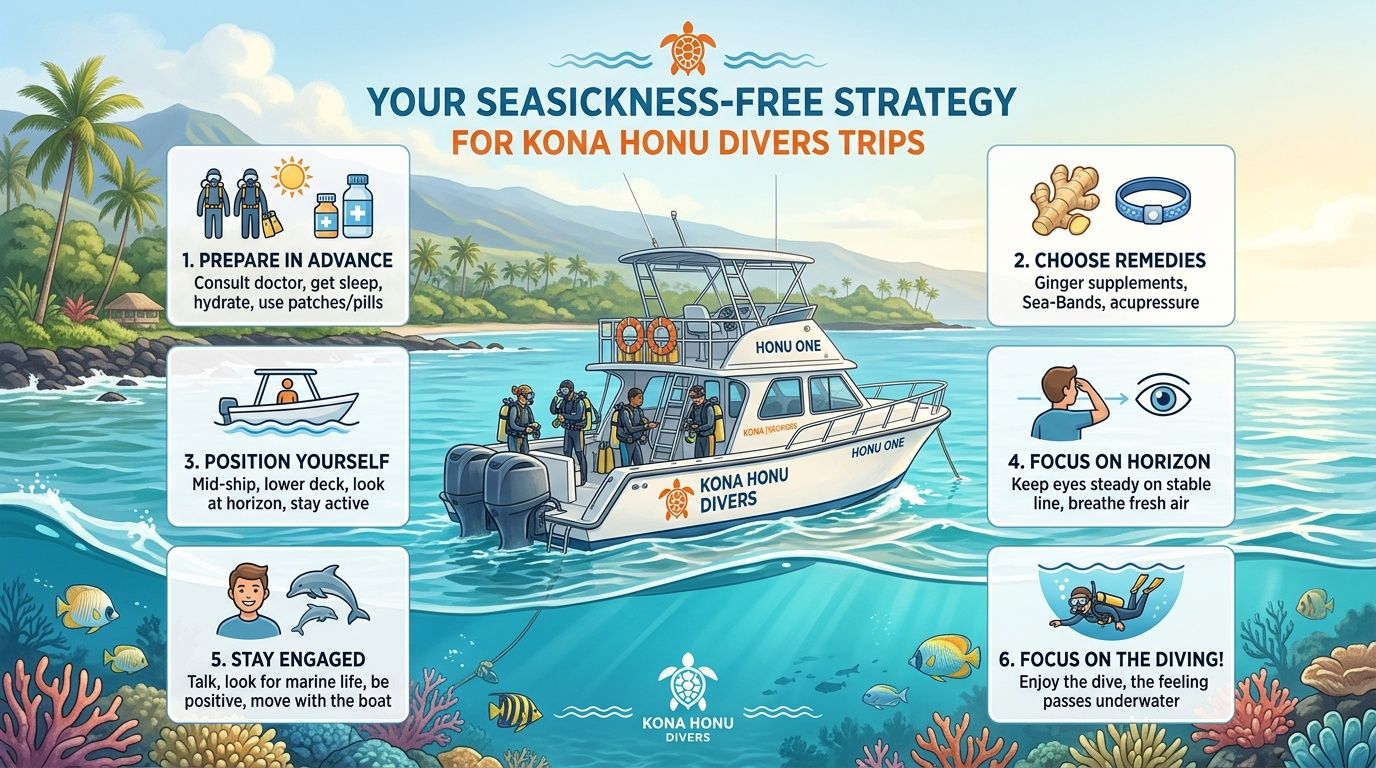
You are geared up for a Kona morning, the boat leaves the harbor, and the first roll hits before your mask is even defogged. That is the moment when a loose plan falls apart. A good seasickness plan needs to be set before the boat starts moving, and it needs to fit the kind of dive you are doing.
For Kona diving, the goal is simple. Keep nausea from starting, and have a reset routine ready if it does. Sea-Bands can be part of that, but divers get better results when they also think about meal timing, hydration, where they sit, and what is happening on their wrists once exposure suits, computers, and gloves enter the picture.
The pre-harbor routine
This part decides a lot.
Before boarding, put both bands on with the stud centered on the pressure point and make sure a watch, dive computer, or wetsuit cuff is not pushing them out of place. I have seen divers wear them correctly in the parking lot, then pull on exposure gear and shift everything just enough to lose the benefit.
Use a light meal that sits well for you. An empty stomach can be just as unhelpful as a heavy breakfast. Sip water on the way to the harbor instead of chugging a bottle right before departure.
If you are diving several days in a row, Kona diving packages make it easier to plan rest, meals, and start times instead of winging each morning.
Match the plan to the trip
Different Kona trips create different motion patterns, and divers should prepare for the ride they are taking, not the ride they hope for.
The full list of diving tours ranges from standard daytime charters to more specialized outings. That matters, because a short daytime run near the coast asks less of your stomach than a night trip with more anticipation and less visual reference.
For the manta ray night dive, timing matters more than many divers realize. Put the bands on well before sunset, eat lightly in advance, and check wrist placement again after you are fully suited up. Night dives can magnify mild nausea because you lose the horizon and spend more time waiting between gearing up and getting in.
For the black water night dive, I would use the most conservative plan you have. Offshore motion, darkness, and pre-dive nerves can stack up fast. If you already know you are prone to seasickness, this is the trip for tested routines, not experimentation.
The same logic applies to premium advanced 2-tank trips. Longer runs and more exposed conditions leave less room for sloppy timing or poor placement.
The in-the-moment reset
If the first warning signs show up, handle them early.
- Get your eyes off your phone, camera screen, or small gear tasks.
- Look out at the horizon or another stable point.
- Move where you can get fresh air.
- Recheck both Sea-Bands in case gear shifted them.
- Sip water.
- Tell the crew before nausea turns into a full problem.
That last step matters. Kona Honu Divers can help you settle into a better spot on the boat and cut down on the things that make symptoms build, but the crew has a much easier time helping when they hear about it early.
Early correction beats recovery every time on a boat.
If you want a dive trip where site choice, boat procedures, and guest comfort are handled with care, take a look at Kona Honu Divers. Pick the trip that fits your experience level, set your seasickness routine before you reach the dock, and give yourself the best shot at enjoying the dive instead of managing the ride.