
Kona's famous night dive isn't really about the mantas showing up on cue. It's about plankton. Lights bunch the food, the food decides how many rays loop through, and your certification card decides whether you should be on that boat, a morning reef, a pinnacle, or hanging in black water far from shore. Get that match right and scuba Kona stops being a brochure list and starts being a workable trip plan.
Scuba Kona Trips Compared by Card and Goal
Scuba in Kona isn't one generic reef day. It's five different outings with different depth, light, patience, and buoyancy demands. I would pick one primary trip first, then add a second day only after that fit is clear.
Your card and your comfort in the dark matter more than the calendar. A strong Open Water diver who can't hold still at night is a poor fit for the manta line. An experienced diver chasing current and structure will be bored if every day stays on a sheltered home reef.
| Trip | Best for | Certification | Signature sights | What changes the day |
|---|---|---|---|---|
| Manta ray night dive | Night lovers who can kneel or hover still | Open Water from a recognized agency, bring the C-card | Reef mantas feeding in lights at Garden Eel Cove | Zooplankton, swell, and how crowded the light line is |
| 2-tank local morning dive | Certified divers wanting an easy reef day | Open Water, generally to 60 feet | Coral gardens, lava tubes, arches, turtles and reef fish | Morning wind, visibility and which lee-side site is calm |
| Premium advanced 2-tank | Experienced divers wanting remote sites | Advanced comfort beyond a standard 60-foot reef dive | Pinnacles, drift, deeper lava structure and possible sharks | Sea state, current and the run to a farther site |
| Blackwater night dive | Curious divers comfortable in open ocean at night | Open Water with solid night-dive buoyancy | Larval fish, squid, jellies and other planktonic animals | Moon, surface chop and comfort hanging in blue water |
| Morning introductory scuba | First-time divers without a card | None, instructor-led shallow session | A calm shallow reef with close supervision | Swell, equalizing and the guest's comfort in the water |
Pick by skill not by animal
The manta ray night dive is shallow and stationary. Garden Eel Cove is the superior site because it sits in a protected location, offers a better viewing area, and is surrounded by better reef than more exposed manta spots. Your job is stillness, not swimming.
The two-tank local morning trip is the default for most certified visitors. You stay near the Open Water limit, move through coral gardens and lava structure, and you get a sense of the coast without current or depth taking over the day.
Premium advanced trips are for more experienced diving opportunities, with remote pinnacles, drift lines, and deeper structure. Blackwater is different again. You're not touring a reef, you're watching small open-ocean life rise into your light.
No operator can promise mantas or any other animal. Wildlife is never guaranteed.
The introductory morning belongs in its own category. It's built for guests with no certification, under close instructor control, and it shouldn't be confused with joining a certified charter.
Read the table again before you book. Then compare dates and formats on the full Kona diving tours menu. If two trips tempt you, book the one that matches your weakest skill, not your biggest hope. A nervous night diver should not make blackwater the first night dive of the trip. A diver who's rusty on buoyancy should fix that on a morning reef before paying for an advanced run.
That ordering saves money and air. It also gives the crew a real read on you for the next outing.
Courses Gear and the Boat Day Order
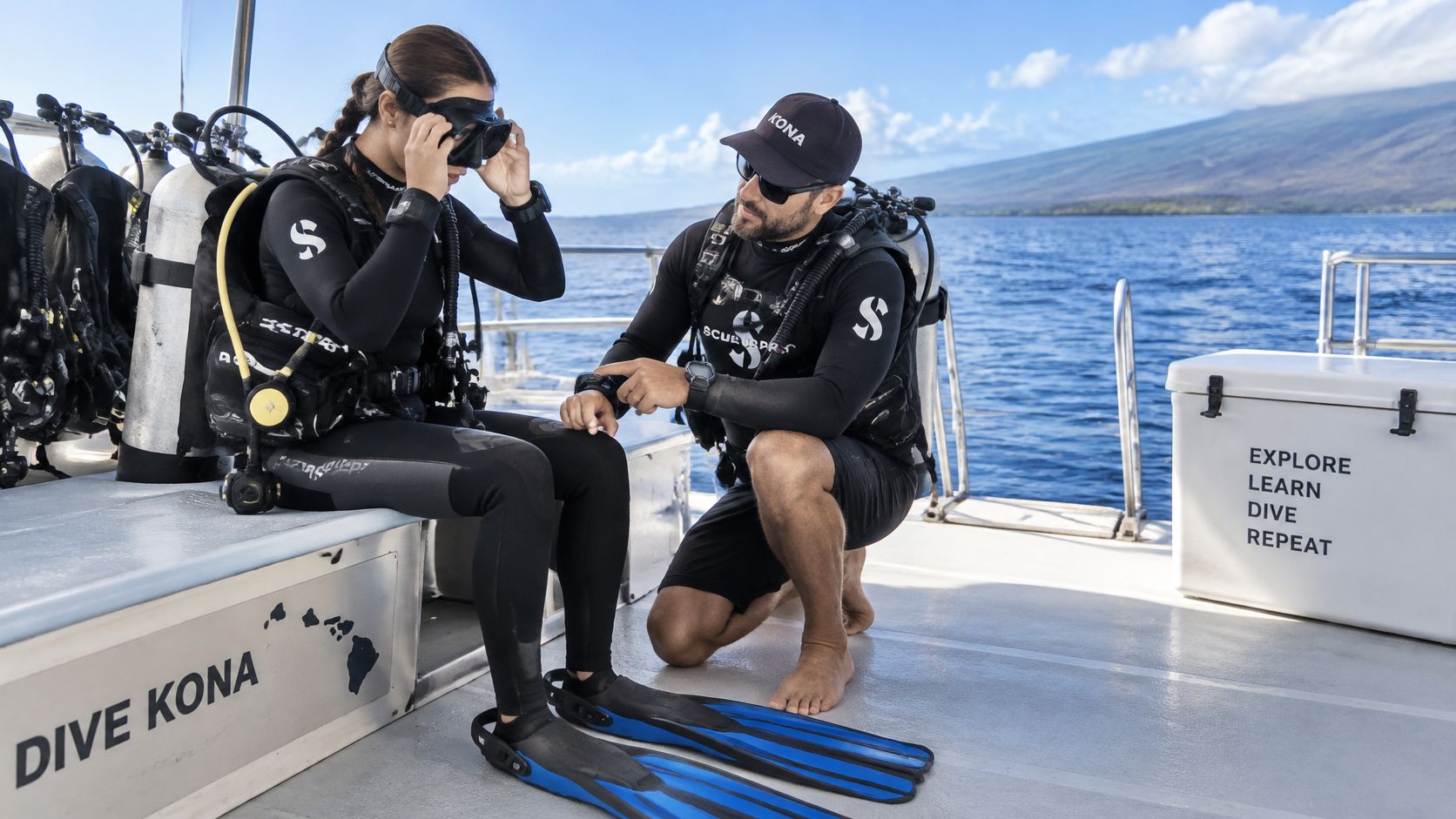
Learning to dive and joining a charter aren't the same booking. For most regular dive charters, we require at least an Open Water Diver certification from a recognized agency such as PADI, SSI or NAUI, which allows diving to 60 feet (18 meters) with a buddy. Divers must bring their C-card.
If you don't have a card, book an introductory dive or a full certification course. Don't book a two-tank charter and hope the crew sorts it out at the dock.
| Course | Who it is for | Prerequisite | What it unlocks |
|---|---|---|---|
| Introductory scuba | Never-certified guests | Comfort in the water | A supervised shallow reef dive, not a certification card |
| Open Water certification | New divers who want a card | Swim comfort and time for the course | Independent diving to 60 feet with a buddy |
| Open Water referral | Divers who finished pool sessions at home | Partial coursework plus referral paperwork | Ocean training dives completed in Kona |
| Advanced, Deep or Boat | Certified divers wanting pinnacles and drift | Open Water card | Deeper sites, drift practice and boat skills |
| Enriched Air Nitrox | Divers doing several days | Open Water card | Nitrox mixes that extend no-decompression time |
| Reactivate | Divers whose last dive was long ago | An existing certification card | A skills tune-up before joining a charter |
Referral is the efficient middle path. You finish academics and pool work at home, then complete ocean dives here instead of spending vacation mornings in a classroom.
Advanced, Deep, and Boat training makes sense after Open Water is solid. Enriched Air matters on a heavy dive week because nitrox can give you more no-decompression time within your plan. Reactivate is cheaper than ruining a charter. If mask clearing or buoyancy feels shaky, fix it before the boat.
Course details and scheduling sit with our Kona scuba classes. Tell us when you last dived. We'll place you better than any online quiz will.
How the boat day runs
Expect this order. 1. Arrive and set up gear. 2. Hear the briefing on the site, conditions, and entry style. 3. Dive the deeper or more condition-sensitive site first. 4. Take a surface interval. 5. Make a more relaxed second dive.
Our crew handles all gear setup, swaps tanks between dives, and rinses gear afterward. That's our valet service, and it's why many traveling divers rent a serviced regulator, BCD, and wetsuit instead of hauling a full kit.
Bring your card, a warm layer for a night ride, and your motion plan if boat rides bother you. Leave the giant gear bag behind if you're renting.
Kona Honu Divers is the operator behind these trips and courses.
Why the Kona Coast Stays Divable
Think of Hawaiʻi Island as a wall, and Kona is the quiet side of that wall. The Kona Coast sits on the dry, leeward side, tucked out of the usual trade-wind push that hits the windward Hilo coast harder. That lee is the whole reason morning boats can work here so often.
It doesn't mean flat water every day. It means the captain often has somewhere to go.
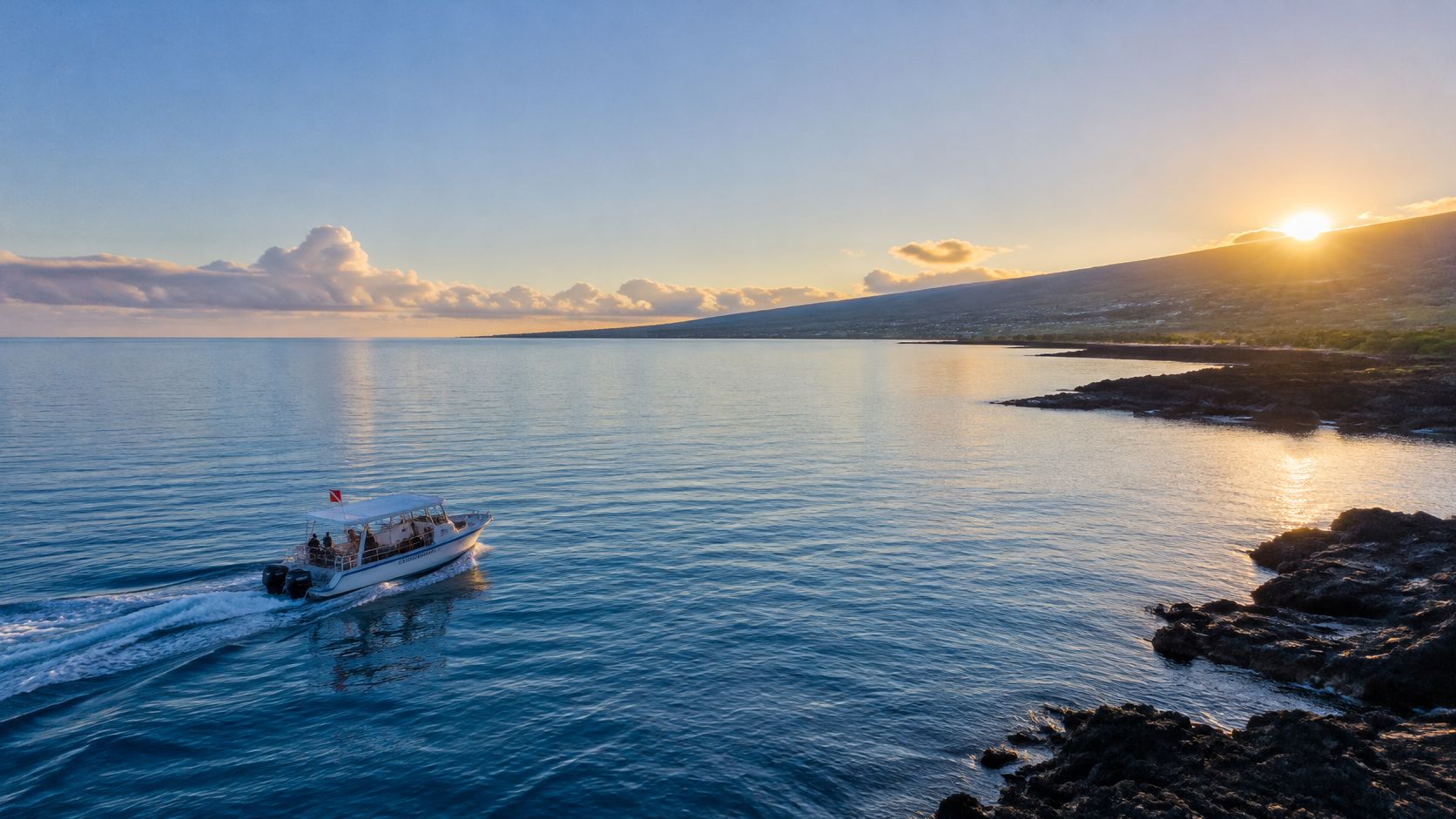
Morning is the useful window. Water is often calm enough for a two-tank day, and visibility commonly runs tens of feet, sometimes far more, over lava fingers, coral, and sand. Afternoon wind is the usual cutoff, which is why charters favor early starts.
Say you're planning a typical week. You'd rather have the advanced or shore-sensitive plan early, while you still have backup mornings. You wouldn't save the most exposed site for your last day and then blame the season if wind closes it.
The year in three beats
Late spring through early fall is the easiest window. Water's warmer, large north swells are less common, and more sites stay in play on the same morning.
Winter still dives well on many mornings. The catch is swell. North-facing and exposed west shorelines can shut down after a swell, entries over lava get ugly, and the captain may stay tucked into protected water. Humpback whales are the seasonal surface show then, not a dive guarantee.
Manta nights run year-round. The food is plankton drawn to lights, not a migrating school passing for a few weeks. Nightly numbers still swing, but the season alone doesn't switch the dive on or off.
Forecast rule: Judge a week by the marine forecast and the captain's site call, not by a month printed on a brochure.
A protected bay can be flat while a point a few miles away is undivable. That's normal here. Lava points, bays, and harbor direction change what the swell does in a short distance.
Build slack into the trip. If you've got only one dive morning, choose the sheltered reef trip. If you've got four mornings, you can gamble one on a farther site and still have a recovery day. Kona rewards flexible divers. It punishes rigid itineraries that treat every named site as available on demand.
Manta Nights at Garden Eel Cove
Treat the manta dive like a porch light on a summer night. The light draws small life in, then bigger animals come to feed on what gathered. At Garden Eel Cove, also called Makako Bay, and at Keauhou, boat lights concentrate zooplankton and reef mantas loop through that glow.
It's a feeding station, not a safari. You don't go looking for the rays. You hold position and let the feeding lane work.
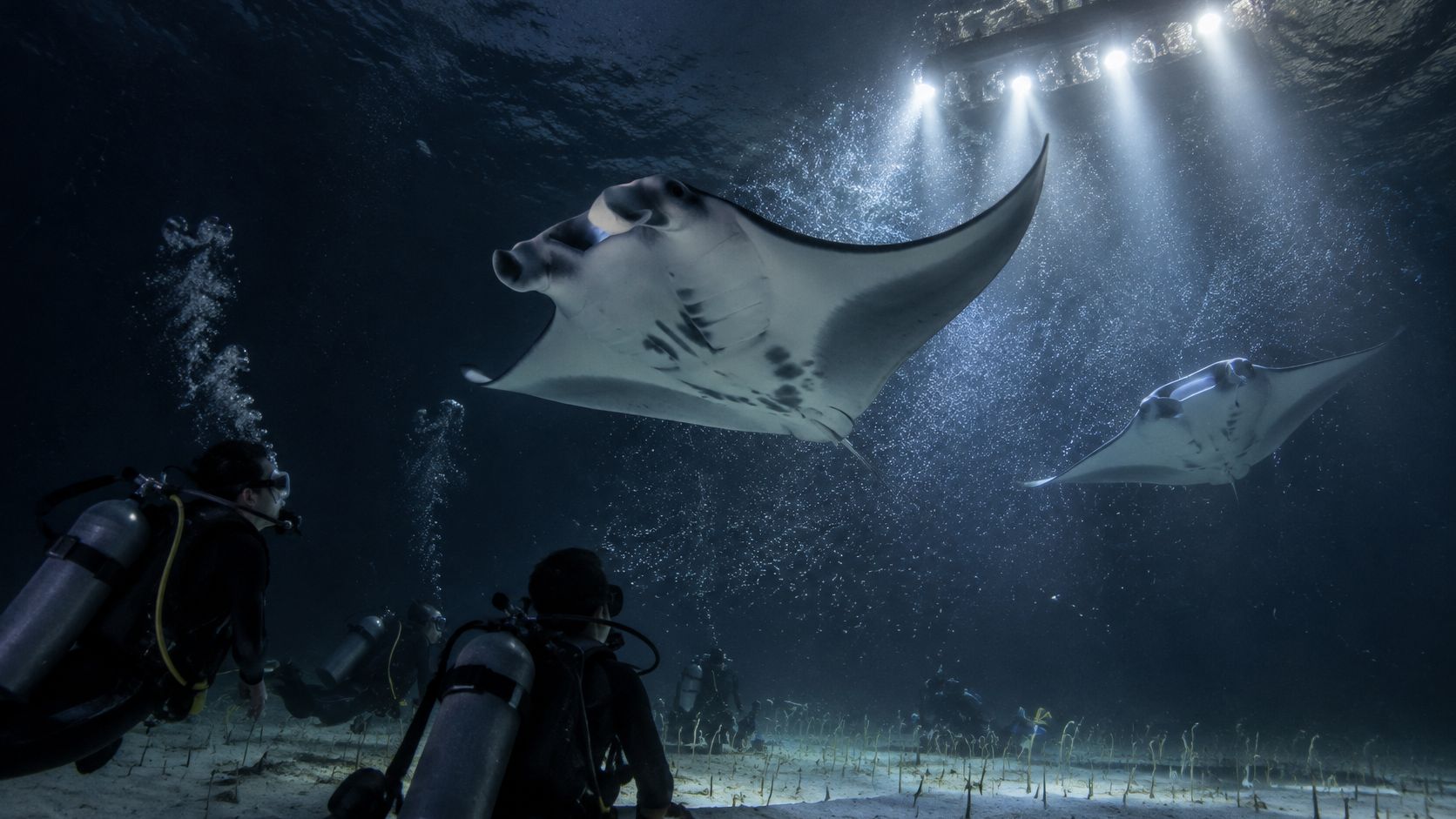
Garden Eel Cove is the superior choice for the dive tour. It's more protected, the viewing area is better, and the reef around the light line is better than at more exposed spots. Divers settle on the sand or just above it, keep lights aimed into the water rather than at the rays, and stay put.
State documentation has put manta observations on approximately 80% of dives at Garden Eel Cove, with 106 individual mantas identified along the Kona Coast from 1992 to 2007, according to the Hawaiʻi Department of Land and Natural Resources manta information. That's a strong record. It isn't a promise for your night.
What the long record explains
A 13-year dataset covering more than 23,000 observations of 167 individually identified reef manta rays found aggregation size varied with zooplankton density, which is described in the Springer study of Kona manta aggregations. Garden Eel Cove generally supported larger and more variable groups, while Keauhou had smaller groups and females accounted for 91% of observations there.
That matters for expectations. If you see two rays working the lights steadily, you've had a real encounter. If plankton is thin, a famous site name won't manufacture a big aggregation.
Wildlife is never guaranteed, and a low-count night can still be a good, well-run dive.
Persistent nighttime aggregations have continued despite sustained tourism and artificial-light feeding conditions. That doesn't give divers permission to crowd the animals. It tells you the encounter depends on food, site discipline, and conditions, not on chasing harder.
Photographers, hold your spot. Let the ray make the pass. Chasing ruins your shot, kicks up the bottom, and pushes other divers out of position. Don't touch a manta to prove it came close.
If the format fits you, book the two-tank manta dive and snorkel tour. For a deeper look at how the night is structured, read our guide to the night manta ray dive in Kona.
I would judge this trip by briefing quality, spacing on the bottom, and whether the group stayed still. Head count comes last.
Reefs Pinnacles and Blackwater Days
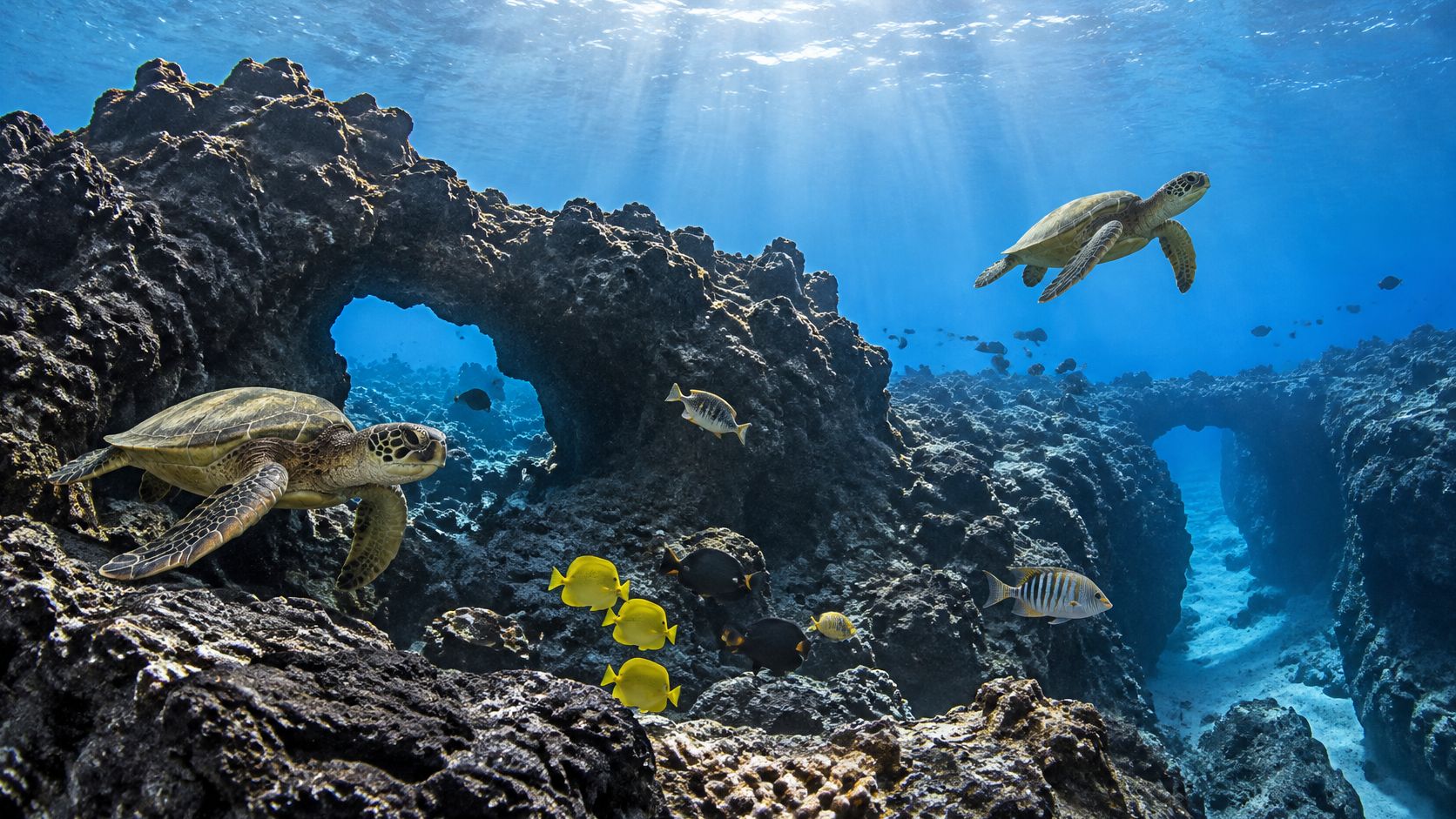
A standard Kona morning is lava fingers, arches, and tubes at recreational depths. Coral and sand sit between the structure, turtles work the reef, reef fish hold around the coral heads, and rays cross the open patches. It's a terrain dive as much as a fish dive.
Advanced days leave that home reef. The point is farther pinnacles, drift, deeper lava structure, current, and a longer boat ride. If that's your goal, look at the premium advanced two-tank trip, and be honest about recent dives and comfort beyond a sheltered reef.
Blackwater is not a reef with the lights off
After dark, the boat holds station offshore and you hang in the water column. There's no bottom to follow. Young fish, squid, jellies, and other planktonic animals rise into range, and your buoyancy has to be quiet enough that you don't yo-yo through them.
Book the blackwater night dive for the experience, not for a named species. Comfort in open water and how you handle a night boat ride matter more than a checklist. Our background piece on the Kona black water dive explains the feel of the dive before you commit.
Old Kona Airport as a separate plan
Shore diving at the Old Kona Airport Marine Life Conservation District needs its own planning. The district extends from the Old Kona Airport to the Kailua Lighthouse, with seaward boundaries extending 500 yards from each endpoint, according to Hawaiʻi Division of Aquatic Resources information on the Old Kona Airport MLCD. The same state page describes shallow lava fingers extending to approximately 50 feet before the bottom drops rapidly, with substantial coral cover, diverse reef fish, and turtles and rays frequently observed.
A northwestern partially protected cove gets used by snorkelers and shore divers. A semiprotected basin at the southeastern end of the former airstrip suits calm to moderate conditions. The shoreline is sharp coral and lava rock, so timing your entry matters.
The rule that changes the plan is permit status. Commercial dive operations from shore or at the state mooring require a permit. Inside the district, don't anchor, and don't treat it as a collecting stop.
Match site to card and to the morning's swell. A calm airport entry can be a fine shore plan. The same entry in surge is a way to get cut up before the dive starts.
Reef Rules Safety and Rough-Day Choices
Kona's reefs aren't a stage set. They're monitored habitat, and contact has a cost. Longitudinal measurements at 25 West Hawaiʻi Protected Area sites showed average stony-coral cover fell from 39.5% during 2003 to 2005 baseline surveys to 18.3% in 2023, a mean relative loss of 53.2%, in the Hawaiʻi Division of Aquatic Resources report to the legislature. That's roughly half gone at those sites.
That doesn't empty today's dive. It means sloppy fins matter.
Rules that protect the dive
- Stay horizontal: Watch your fin tips and keep them off coral and sand clouds.
- Never stand on coral: Don't use the bottom to steady a photo.
- Don't touch wildlife: Turtles, mantas, and reef animals get space, not contact.
- Inside the Old Airport district: Don't take coral, shells, limu, or eggs. Don't move sand or rock. Don't feed fish. Don't anchor.
Our notes on responsible and considerate diver etiquette cover the habits we expect on the boat and on the reef. Good trim isn't vanity here. It's reef protection you can practice on every dive.
On the boat, the briefing is the plan. Depth, time, turn pressure, and lost-buddy steps aren't background noise. Turn the dive while air and no-decompression time are still comfortable, especially on a second tank or when you're diving nitrox across several days.
When to move or skip
Skip or move a site when entry surge pushes divers over lava, when current exceeds what the group can swim against, or when a blackwater guest is already miserable before leaving the harbor. A captain changing sites is often the safest decision of the day.
A small manta group, a missed shark, or flat visibility after weather is a conditions day, not a failed booking. Judge the operation by briefing, spacing, spacing again, and animal handling. Don't judge it by a head count no one controls.
Itineraries and Pricing Guidance
Build the week around recovery and weather, not around squeezing every trip into consecutive days. Put the most weather-sensitive outing on the first clear morning. Put deeper and night dives after you've had a chance to settle in.
Three workable plans
Three days, certified and new to Kona: Start with a morning two-tank reef day on the lee coast. Put the manta night at Garden Eel Cove on day two. Add a relaxed local morning on day three if the forecast holds and you're not rushed for a flight.
Five days, experienced diver: Take two morning two-tank trips, add a blackwater night, then one advanced two-tank day for pinnacles and drift. Keep a rest day after the deepest or longest outing. You'll enjoy the advanced day more if you're not carrying fatigue into it.
Family with one non-certified guest: Book the introductory dive on a calm morning. Use a manta night where non-divers can snorkel under the lights while certified divers sit below. Give certified members their own reef morning instead of forcing everyone into the same profile every day.
Compare what's included
Headline price tells you very little. Compare per-trip versus package pricing, whether regulator, BCD, and wetsuit rental are included, nitrox cost, and tips. Check whether gear handling by the crew is part of the day or an extra you're managing yourself.
Advanced and blackwater trips may be priced separately from reef mornings. Private charters and multi-dive packages change the math again.
For context before you budget, read our breakdown of how expensive scuba diving in Hawaii is. Then confirm the exact trip, inclusions, and current option on the live calendar. Don't build a budget on a rate you saw in an old screenshot.
I would rather see a diver book two well-matched days than four random ones. The right two days feel generous. The wrong four feel expensive.
Book the Trip That Fits Your Card
If you want one Kona operator that can take you from a first reef morning to a manta night, a blackwater dive, or a farther advanced day without changing shops, book with us. Kona Honu Divers was voted best dive operator in Kona, Hawaii, and we offer early diver discounts, dive packages, and free nitrox.
Match the booking to the card in your wallet. Open Water fits the standard two-tank morning and the manta night if your night buoyancy is steady. Advanced comfort belongs on pinnacle days. Guests without a card belong in an introductory session or a course, not on a certified charter.
Bring the C-card for any certified charter. When you call 808-324-4668, tell us your card level, your most recent dive, your dates, and whether your group includes a snorkeler or a brand-new diver. That lets us put you on the right boat and site from the start.
Confirm the current price on the live calendar rather than a printed rate. Prices and package options change, and the calendar shows real space.
Pick your date, check the trip that fits your card, and we'll handle the gear setup from there.
From morning coral gardens to manta nights at Garden Eel Cove, blackwater dives, and advanced pinnacle trips, Kona Honu Divers can match your Kona dive plan to your certification and comfort level. Check live availability, bring your C-card, and let our Kona crew put you on the right site for the day's conditions.