
Kona's clear water can hide a difficult dive. A calm harbor and a clean view don't show whether an exposed site has current, whether a lava-rock exit is manageable, or whether a night dive suits your experience. Match the trip to your skills and the day's conditions. If the shore entry looks wrong, use a guided boat instead.
Why Scuba Diving Kona Big Island Stands Apart
The leeward Kona coast makes a practical base for diving, but its sheltered reputation can lead visitors to plan too casually. Few river outlets and limited coastal sand mean less sediment washes into the water. Conditions are generally calm outside short-lived winter storms. Regional diving guidance reports typical visibility exceeding 100 feet, or about 30 meters. Clear water improves the view, not your read on current. Regional diving guidance for Hawaiʻi
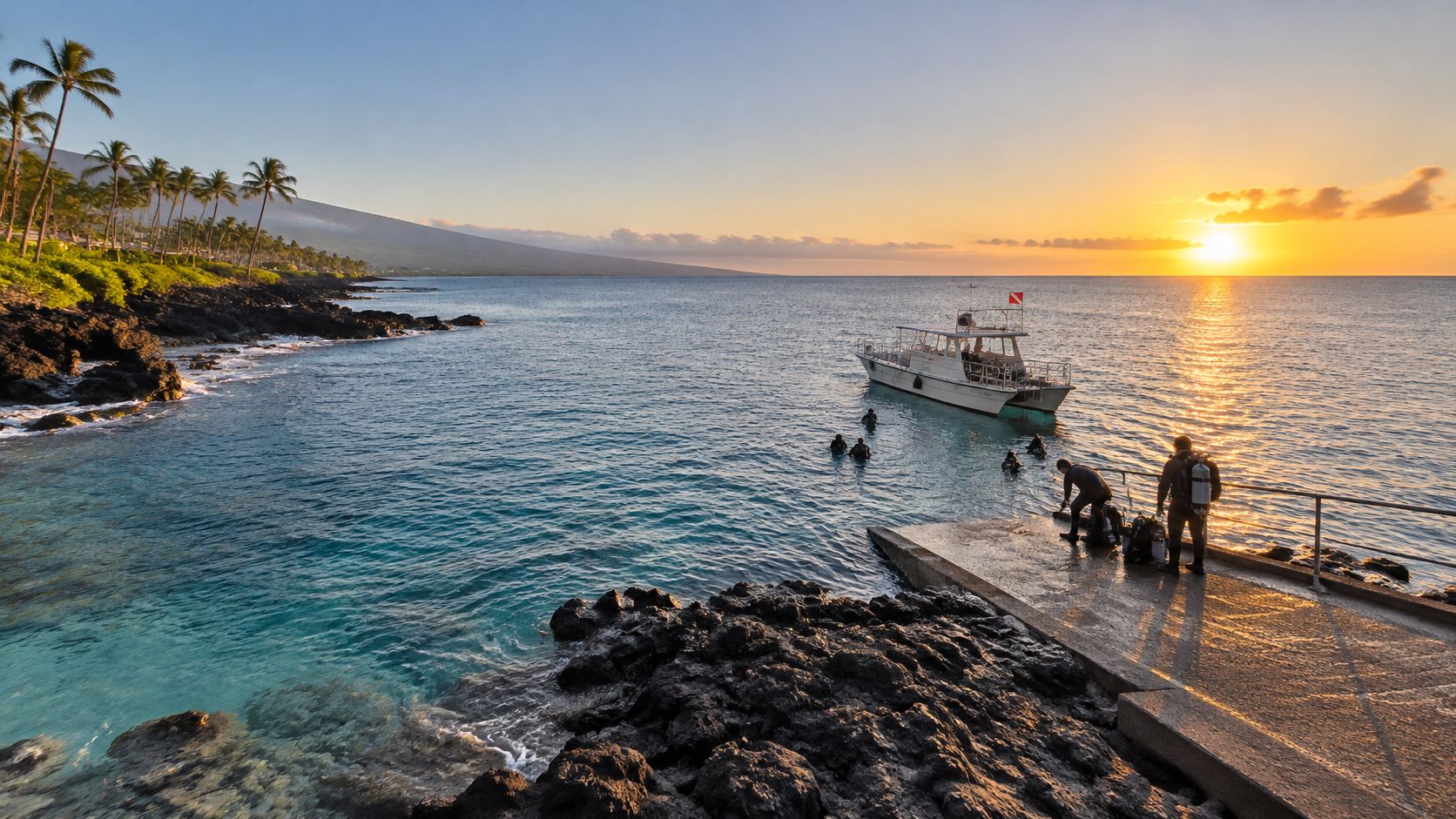
A site can look inviting from shore and still have current once you're in the water. More exposed locations can feel different from sheltered parts of the coast, even on a day when the harbor is calm. Check the specific site, listen to the briefing, stay with your buddy, and carry a surface marker when appropriate.
Water temperature also affects how a dive feels. Regional guidance gives roughly 24°C (76°F) in March and about 27°C (80°F) in September. That difference changes how much exposure protection you may want, especially on repetitive dives or after sunset. Choose a suit for the water and your own cold tolerance, not the air temperature on the dock.
Choose a trip, not just a destination
Ask three practical questions: Does the signature trip fit my certification and comfort? Should I skip a shore entry? Would a guided boat make access safer and easier? These questions matter more than checking off a long list of sites.
A boat avoids entering and exiting over lava rock, and the crew can choose a site based on conditions and the group. It won't remove current or replace good diving habits. It does give you another option when the shore approach looks unwise. Compare the Kona dive trip menu with your experience and the conditions you're prepared to manage.
Signature Kona Dives from Mantas to Blackwater
Kona's signature dives demand different skills. A manta night dive is an organized feeding encounter. Blackwater is an open-ocean night drift, while lava formations and pinnacles are structure dives that require buoyancy control and gas planning. Choose for the experience you want and the skills you can bring, not just the name of the dive.
On manta trips, underwater lights attract plankton, which draws manta rays to feed. A NOAA-hosted study recorded 25,444 observations of 118 individually identified reef manta rays at Manta Heaven and Manta Village from 2009 to 2014. Observations occurred on 92% of study nights at Manta Heaven and 78% at Manta Village; dives generally began shortly after sunset and lasted about an hour. The NOAA-hosted study of Kona manta aggregations
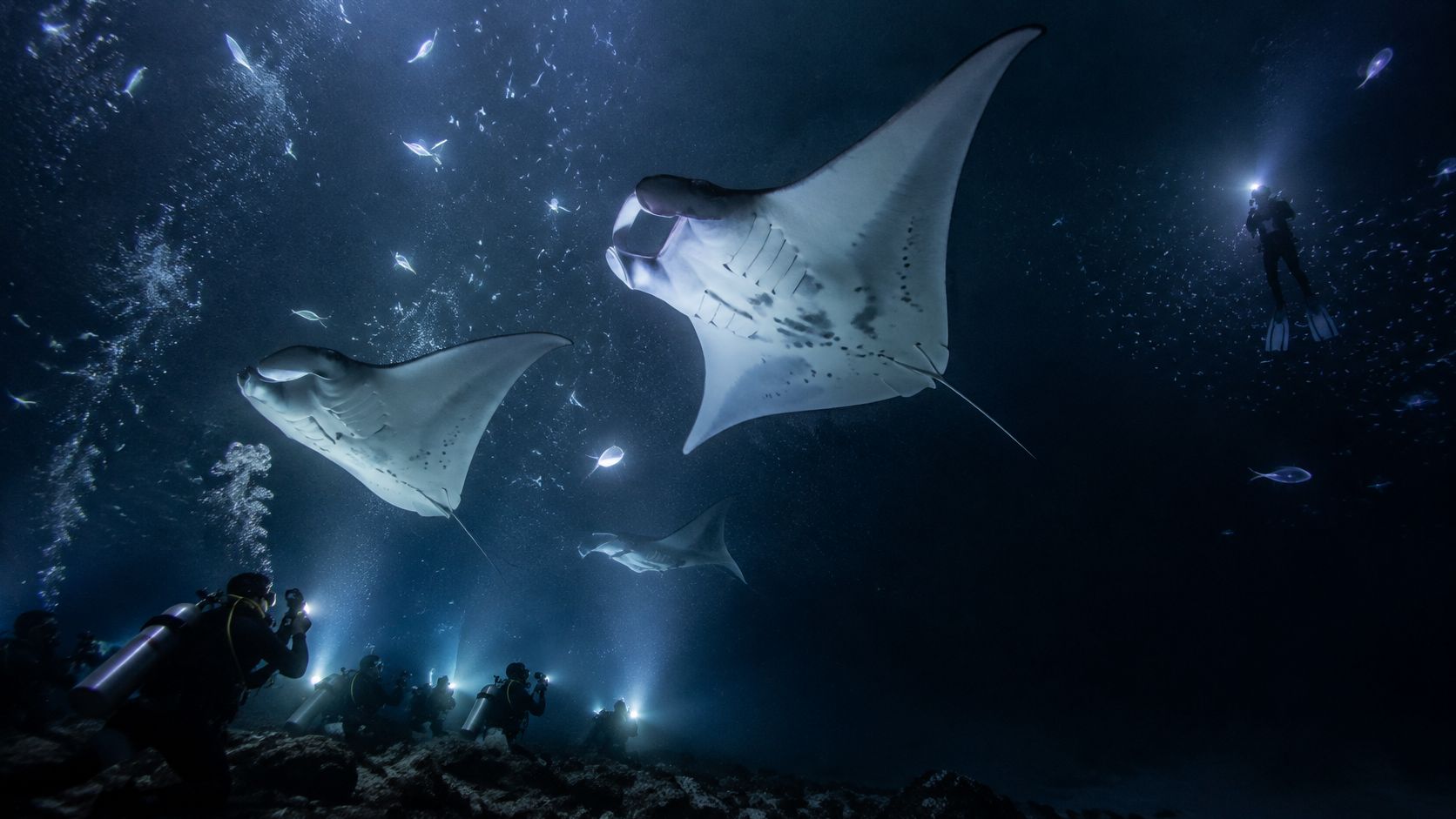
On a manta dive, stay neutrally buoyant, don't chase or touch the animals, and position yourself to look up without blocking their feeding route. The rays can approach closely; the study describes approaches to within 1 meter. Plankton distribution and site conditions affect the encounter, so no operator can guarantee a sighting.
Garden Eel Cove is the more protected boat-based option, with a viewing area suited to the encounter and reef nearby. Compare the Kona manta ray dive and snorkel trip with the experience described in this guide to the Kona night manta ray dive.
Different nights, different jobs
Blackwater is an open-water night drift among migrating plankton and larval animals, not a reef dive in darkness. It suits divers who are comfortable following a night-dive plan and managing their position away from the reef. Review the requirements for a Kona blackwater night dive before booking.
Lava tubes and deep pinnacles offer structure, changing relief, and more demands on buoyancy and gas use. They suit divers whose skills match the planned depth and conditions, rather than someone looking for an easy first dive after time away. Experienced divers can compare the premium advanced two-tank trip.
Hawaiʻi law prohibits knowingly capturing or killing manta rays in state marine waters. Penalties escalate by offense, from $500 for a first offense to $2,000 for a second offense and $10,000 for a third or subsequent offense; authorities may also impose an administrative fine of up to $10,000 for each manta ray and seize the animal or equipment involved. Hawaiʻi law on manta ray protection
Matching Kona Dive Trips to Your Experience
Start with your certification. If you aren't scuba certified, you may be able to join a manta trip as a snorkeler, staying at the surface. Scuba divers need the certification required for their dive. The University of Hawaiʻi at Hilo reports that Kona mantas can weigh up to 3,600 pounds. You can appreciate their size without getting close or making contact. The University of Hawaiʻi at Hilo on Kona's manta encounters
Newly certified, rusty, or uncertain in the water? Choose a guided morning reef trip or a refresher before considering blackwater or a deep pinnacle. A guided boat gives you a briefing and handles site access; a refresher lets you rebuild basic skills before taking on a more demanding dive. If you're working toward certification, ask what the course includes and how confined-water practice prepares you for open water.
See the Big Island scuba certification information for course options. Confined-water practice provides a controlled setting to learn equipment handling and core skills. It's training, not a substitute for following your instructor's direction on a real dive.
| Trip | Who it fits | When | What good looks like |
|---|---|---|---|
| Manta snorkel | Guests who aren't scuba certified, and mixed groups | After sunset | Watching from the surface without crowding or touching wildlife |
| Guided reef morning | Certified divers, including those returning after a break | Morning | Staying with the group, controlling buoyancy, and completing a comfortable dive |
| Certification or refresher | New divers and divers rebuilding confidence | Scheduled with the operator | Completing the required skills under instructor guidance |
| Blackwater night dive | Divers whose certification and comfort suit open-water night diving | After dark | Following the briefing and managing position and task loading |
| Advanced structure trip | Experienced divers comfortable with the planned conditions | Morning | Maintaining buoyancy and gas awareness around lava structure |
A mixed family or travel group can split between scuba and snorkeling when the operator offers a shared trip format. Check availability and requirements before booking so everyone knows what the outing involves.
Photographers should account for task loading before bringing a large rig. A camera adds drag and takes attention. If current or a difficult exit is possible, a guided boat is a better option than a solo shore entry. Leave the camera behind if you can't manage it without losing buoyancy or track of your buddy.
Seasons Visibility and When Not to Shore Dive
Kona's protected reputation can lead to overconfidence. Winter storms are usually short-lived, but summer can bring swell, and an exposed point can have current while the harbor looks flat. Regional averages don't confirm that a particular entry is safe today.
Old Kona Airport shows why site-specific checks matter. Hawaiʻi's Department of Land and Natural Resources warns of sharp coral and lava along the shoreline, with dangerous swells and currents possible during summer and winter storms. The reef generally extends to about 50 feet before dropping rapidly into deep water. Poor navigation, uncontrolled buoyancy, or a gas plan that assumes a gentle slope can have serious consequences. State guidance for the Old Kona Airport Marine Life Conservation District
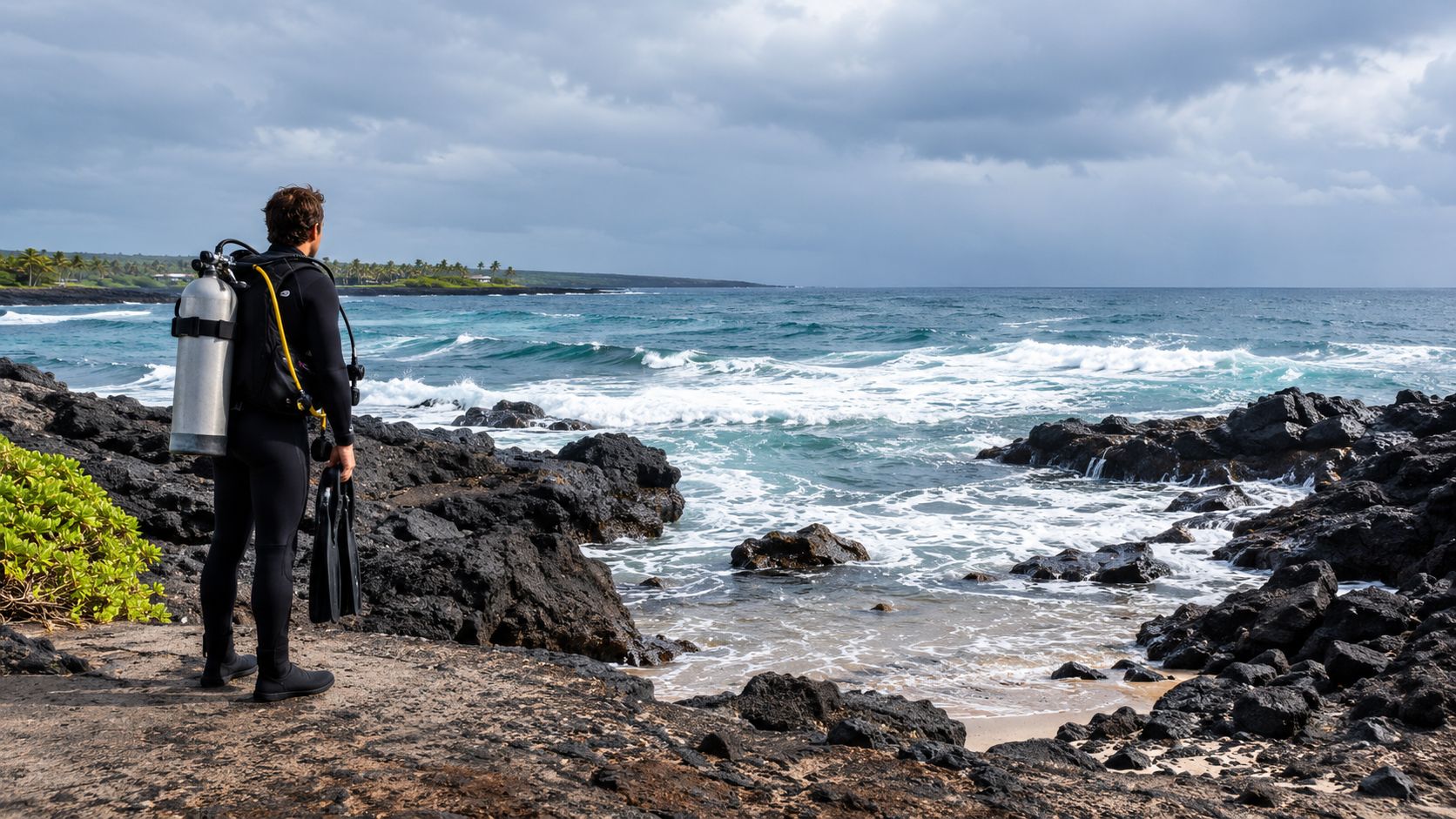
Make a same-day shore decision
Assess the whole dive, not just the water from the parking area. If you can't account for the entry and exit, your buddy's ability, and a safe way to get help, don't force the dive.
- Swell: Check its direction and height against the entry you plan to use.
- Wind and current: Consider how wind, surge, or current could affect the entry, route, and exit.
- Route: Identify both entry and exit before gearing up. Consider whether either will be harder after the dive.
- People and equipment: Match the site to buddy competence, day or night conditions, and camera handling demands.
- Emergency access: Know how the group would get help if something went wrong.
Favorable average conditions do not cancel localized surge, slippery lava, or a hard exit.
If the shore checklist doesn't add up, a boat dive is the safer, more accessible choice. A boat doesn't eliminate every risk, but it avoids an entry the group can't manage. This guide to Big Island shore diving decisions offers more site context. Familiarity with a site still doesn't replace checking current conditions.
Flags and protected areas
Divers must display a dive flag within 100 feet of their position, either in the water or at the highest point of their vessel. Other vessels generally must stay 100 feet from the flag. In a navigational channel, the buffer is 50 feet; vessels participating in the diving or swimming activity may approach but must proceed at slow-no-wake speed. Hawaiʻi County dive-flag safety assessment
Protected areas can have access limits as well as conservation rules. The Old Kona Airport Marine Life Conservation District covers 217 acres. Taking marine life, coral, rock, or sand is prohibited, and motorized craft are restricted in the zone directly offshore. Information on the Old Kona Airport protected area Look and photograph, but don't collect or handle wildlife.
Gear Rentals Nitrox and What to Bring
Start with exposure protection. Water around 24°C (76°F) in March feels different from water around 27°C (80°F) in September, and cold tolerance varies. A night dive can feel colder than a sunny morning reef because you're stationary and the sun's warmth is gone. Bring a suit or layers that keep you comfortable for the full dive, not just the boat ride.
Then consider gas and repetitive dives. Some operators include nitrox on qualifying trips. It can help with dive planning, but it doesn't change your certification limits or replace your dive computer. Follow your computer and the plan in your briefing.
A practical rental approach
You don't need to fly with a full kit if you'd rather rent locally. Ask ahead about the availability and condition of regulators, BCDs, wetsuits, and computers. Rental gear can save luggage space, but confirm the equipment you need before arrival. Check the Kona scuba rental options.
A familiar mask, dive computer, or exposure suit may be worth bringing if fit and setup matter to you. Otherwise, keep the bag simple:
- Exposure gear: Pack a wetsuit or layers suited to the season and your thermal tolerance.
- Personal essentials: Bring any mask or computer you prefer, plus your certification card.
- Dive-day setup: Confirm the rental kit and ask what you need for your specific trip.
- Snorkelers: Check what the operator provides and what surface participants should bring.
- Camera: Set up and clip it before the boat leaves the dock. Make sure you can handle it without losing buoyancy control.
If short channel crossings make you queasy, account for that when packing. Keep it simple. A local rental setup, a suitable exposure suit, and a camera you can manage are more useful than equipment you won't use.
How to Choose a Kona Dive Operator
A site list won't tell you whether an operator fits your needs. Ask how the crew handles changing conditions, group pace, equipment, and divers with different experience levels. Choose an operation whose trip format matches your skills and whose answers are clear before you leave the dock.
Check the details that shape the dive day:
- Group format: Ask whether the trip suits your preference for a smaller group, private charter, or shared boat.
- Briefing: Confirm that guides cover current, buddy separation, and the site plan.
- Boat comfort: For a long or nighttime trip, ask about shade, storage, and a hot shower.
- Rental gear: Ask how equipment is maintained and serviced before use.
- Trip options: If you plan several dive days, check whether nitrox and multi-day packages are available.
Kona Honu Divers states that its staff have more than 200 years of combined experience. Its menu includes two-tank morning dives, a premium advanced two-tank trip, manta night dives and snorkel trips, blackwater dives, and private or group charters. The operator describes its boats as spacious, with shaded seating, storage, and hot showers. It also says rental gear is serviced ahead of time, nitrox is offered free, and dive packages are available for guests planning several days in a row.
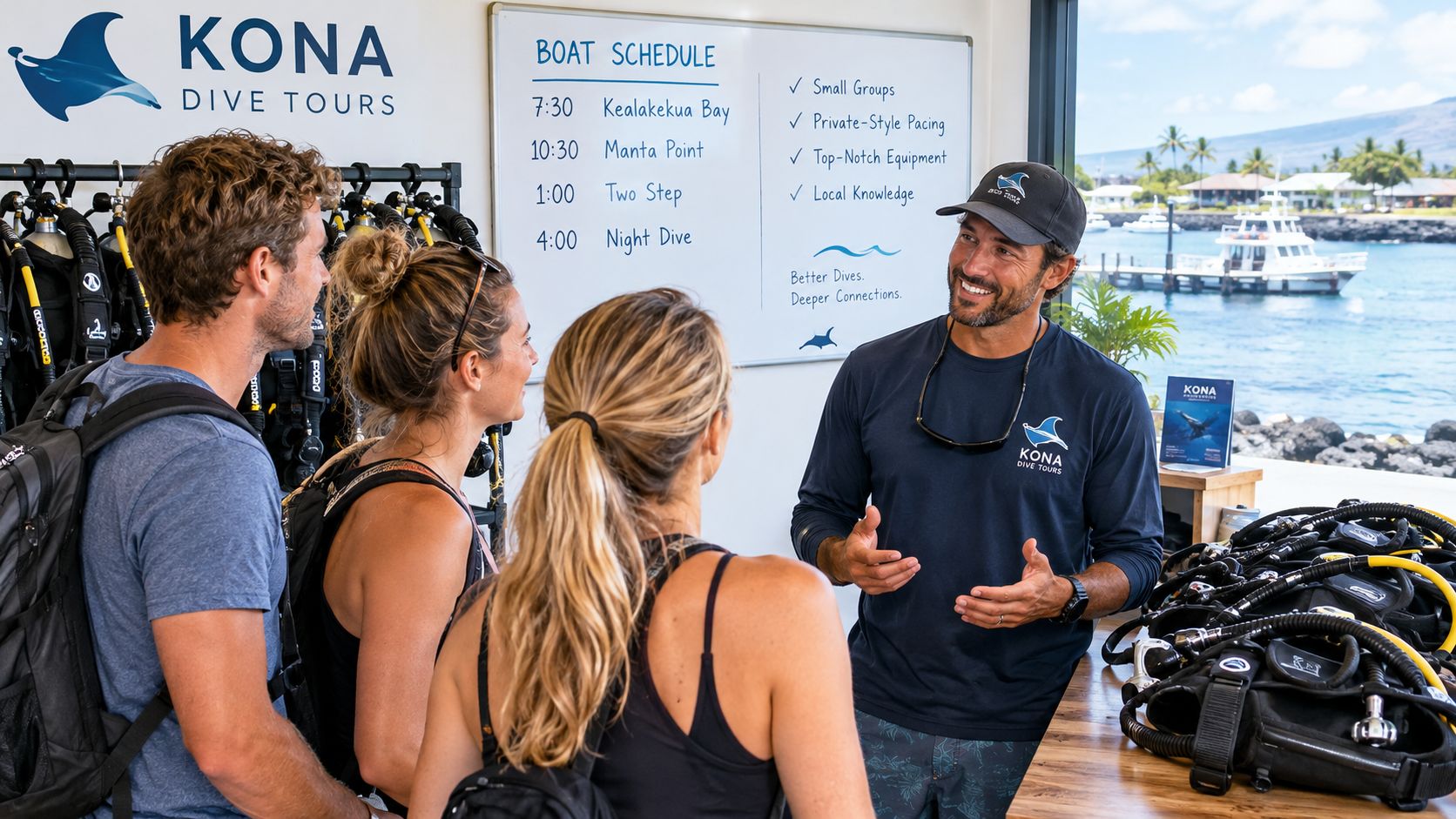
Beginners can ask about certification or a refresher. Advanced divers can ask about trips around lava tubes, deep pinnacles, and less-traveled structure. Confirm that the trip fits your recent experience and certification, and ask what the crew expects from participants. The operator also describes its approach to eco-friendly diving in Kona. Compare the full Kona dive trip menu with your priorities rather than assuming every boat or site suits every diver.
Sample Kona Dive Itineraries and Next Steps
Leave room for the ocean to make the call. For a first visit, plan around the experience you want and the skills you bring, then keep one day flexible rather than treating every booking as fixed regardless of conditions.
A four-day first visit
An arrival day can work for a refresher or an easy guided two-tank trip if you're current and ready to dive. Follow with a reef morning, then schedule a Garden Eel Cove manta night. Snorkelers in the group can join without scuba certification.
Keep another day open for changing weather. It can become an additional guided reef dive, or you can skip the shore plan if swell or entry conditions aren't right. Treat shore access at places like Old Kona Airport as optional. Check the entry, depth change, and no-take rules first. If any item fails, choose a boat trip.
A longer advanced trip
For a longer stay, space out demanding dives instead of trying to fit everything into one stretch. A practical schedule could include two morning two-tank days, an advanced day focused on structure, and a blackwater night. Put the manta night on a separate evening to leave room for rest and gas planning. Book challenging trips only when your certification and recent experience meet the operator's requirements.
The afternoon before each dive, check your certification card, wind and swell, and whether the group includes snorkelers. Ask the operator whether the plan or departure details have changed. Adjust if conditions don't support the dive you planned. A scheduled site name is never a reason to push through an unsafe entry.
Choose the experience that fits your certification and comfort, then check availability rather than building an itinerary around a long list of possible sites.
Kona Honu Divers offers guided reef dives, advanced trips, manta encounters, blackwater dives, training, and snorkel options along the Kona coast. Visit Kona Honu Divers to choose a trip that matches your experience and check availability for your dates.