
Scuba diving Hawaii isn't a niche trip. Hawaii's dive market supports over 1.5 million scuba dives annually across more than 215 licensed dive shops, with warm 75–80°F (24–27°C) water and visibility that often clears 100 feet keeping the islands busy year-round (industry guide). If you're planning a dive vacation, that scale matters. It means you're not gambling on a fringe destination, you're choosing from a mature market where operators know how to run boats, brief divers, and handle local conditions.
The best part is that the islands deliver more than pretty water. Hawaii's dive community includes 68% tourists, 29% local residents, and 3% scientists, so this is part recreation, part local routine, and part marine research infrastructure (industry guide). That mix explains why the good operators stay busy and why the smart way to book here is to match the island, site, and price to your actual experience level.
Why Hawaii Remains a World-Class Scuba Destination
Hawaii stays on divers' short list for one simple reason, the underwater terrain is worth paying for. The islands are volcanic, so you get lava tubes, arches, ledges, and drop-offs instead of the same flat reef profile you see in many warm-water destinations. That kind of topography gives every good operator more room to choose a site that fits the day, and it is a big part of why the state keeps attracting serious dive traffic.
Conditions that make the islands work
The west side is where Hawaii earns its reputation. Kona's leeward coast is sheltered from the worst trade wind chop, so boats can run cleaner trips and divers spend less time fighting surge and surface mess. That matters more than brochures admit. A site that looks ordinary on paper can feel excellent when the swell is down and the current is manageable, and a strong west-side operator will pick that window instead of forcing a dive in marginal conditions.
Seasonality matters here too. Winter brings the bigger north swells, which can shut down or soften some northern and eastern exposures, while summer usually gives you calmer water and more reliable boat days. On the Kona side, visibility is often at its best when the seas are settled, and it can range from very clear to exceptional depending on the site and the time of year. If you want the cleanest conditions, book for sheltered west-side sites and ask the operator how often they switch plans when swell builds.
Practical rule: Pay for the operator that knows how to read local swell and site exposure, not the one with the flashiest brochure. In Hawaii, the right site selection does more for your dive than a nicer boat seat.
Hawaii also works because it is a real dive destination, not a one-note tourist stop. The state has enough local divers, visiting divers, and marine researchers to keep the scene active and operational, which is why shops, boats, and guide teams are used to serving different comfort levels. That is also why a smart trip here means choosing the island and site for your skill level, then deciding whether the package price includes the right boat time, guide attention, and site selection for what you want out of the day.
For a broader view of how Hawaii compares with other major dive destinations, see the best places to dive in the world. Hawaii belongs in that conversation because the diving is not just scenic, it is practical, repeatable, and shaped by geology that gives operators real choices.
Best Hawaiian Islands for Scuba Diving by Experience Level
A good Hawaii dive trip starts with matching the island to your certification level and what you want underwater. Spend for the right island, not the loudest itinerary. Kona on the Big Island gives experienced divers the widest mix of sites and the strongest specialty dives. Oahu and Maui work better for travelers who want diving alongside beaches, restaurants, and other activities. Kauai makes sense for flexible divers who are fine with weather changing the plan.
Island by island, without the marketing fluff
Kona on the Big Island is the smartest choice for divers who want range and control. The Big Island's west side has enough site variety that operators can shift from calm reef dives to deeper volcanic features without pretending every diver wants the same thing, and local dive coverage is laid out clearly in the which Hawaiian island is best for scuba diving analysis. For beginners, that matters because a strong operator can choose sheltered water and keep the profile simple. For advanced divers, Kona is where you go when you want lava tubes, arches, and drop-offs that reward better buoyancy and solid gas management.
Oahu is the practical pick for casual divers, not for people building a trip around the diving itself. The island works best for travelers who already need to be in Honolulu and want a straightforward two-tank day without spending the whole vacation on the boat. Entry-level divers can fit in here if the shop keeps the site shallow and current-light. More advanced divers should treat Oahu as a convenience stop, because the payoff usually comes from the trip logistics, not from the underwater terrain.
Maui sits in the middle. It suits open-water divers, vacation divers, and couples where one person dives and the other wants a broader resort trip. Stick to operators that clearly explain depth, exposure, and current before you book, because Maui's appeal is steady recreational diving rather than a long list of extreme options. If you are newly certified, Maui is a comfortable place to build confidence. If you are chasing signature dives, it will feel less distinct than Kona.
Kauai is the island for divers who value a quieter trip and can work around weather. That makes it a reasonable choice for experienced travelers who do not need a packed dive schedule every day. It is a weaker fit for first-timers who want reliability, because the island gives you less room to rework the plan when conditions shift. If diving is the main reason for the trip, Kauai should be your backup plan, not your anchor.
| Hawaiian Islands Dive Comparison | Dive Sites | Best For | Signature Experience | Water Conditions |
|---|---|---|---|---|
| Big Island, Kona Coast | 50+ | Beginners to advanced divers who want variety | Manta ray night dive, blackwater diving | Often calm on the Kona side |
| Oahu | Varies by operator | Mixed itineraries, shorter dive add-ons | Convenient city-access diving | More variable by site |
| Maui | Varies by operator | Recreational divers and vacationers | Broad recreational dive options | Generally good, but less distinctive |
| Kauai | Limited relative to Kona | Flexible travelers, quieter trips | Low-key island diving | More weather-dependent |
The table is useful only if you read it the right way. Kona is the strongest all-around bet for serious divers because it gives operators the most room to match site, depth, and current to the group in front of them. Oahu and Maui are fine when scuba is one piece of a larger vacation. Kauai works when you already accept that the ocean will set more of the schedule.
Signature Kona Dives You Cannot Find Anywhere Else
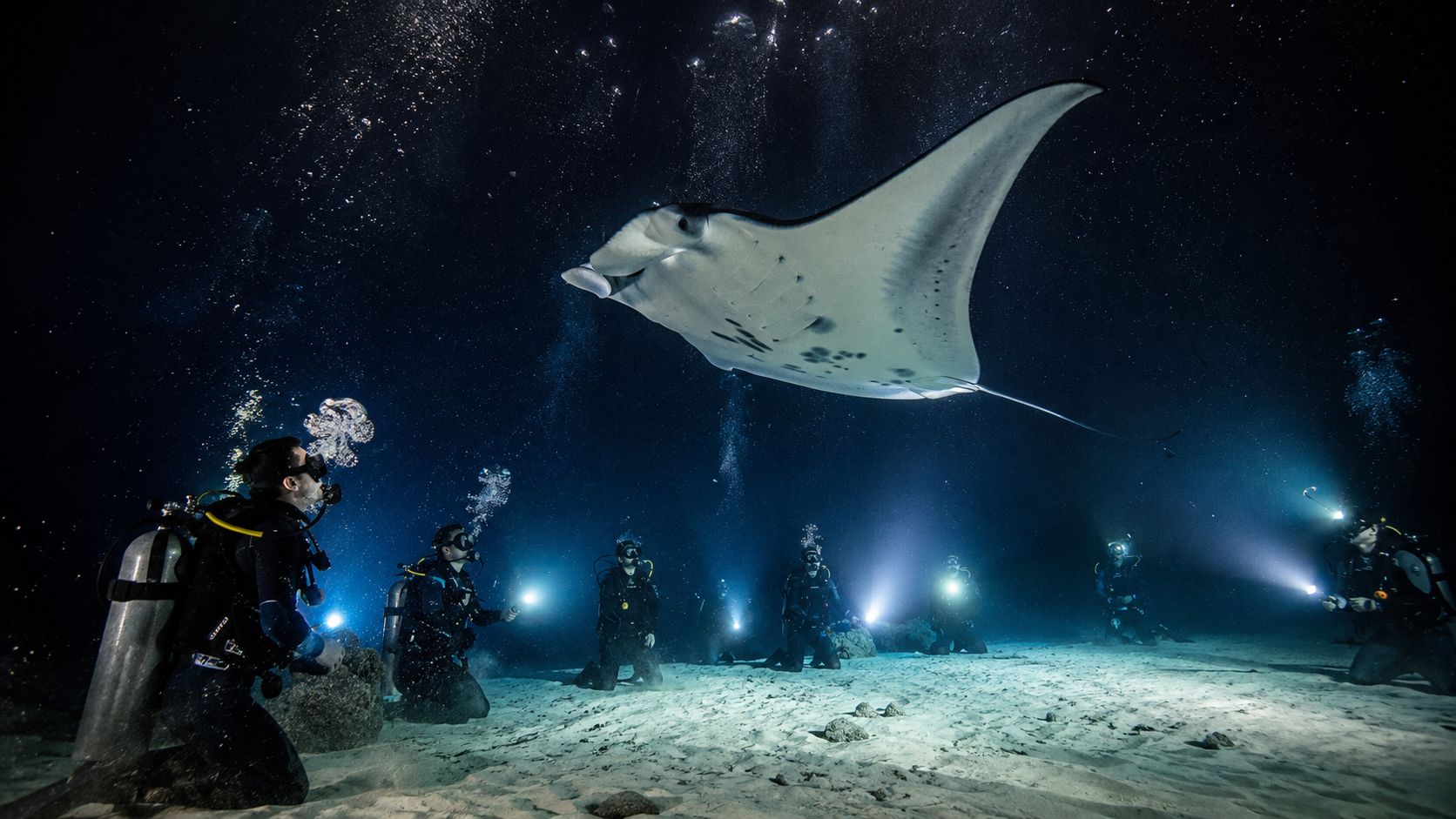
Kona's signature dive is the manta ray night dive, and it earns that reputation for a reason. Divers hold position around 35 feet on an underwater shelf while bright lights draw in plankton, and the mantas show up to feed in a controlled pattern. The dive works because you stay still and watch, not because you chase anything around the reef.
Why Garden Eel Cove is the right call
If you are booking a manta site, Garden Eel Cove is the smarter choice. The protected setting gives you cleaner sight lines and a steadier viewing area than a rougher, less predictable site. That matters because manta dives reward calm positioning and a clear frame of reference far more than aggressive movement.
Direct advice: Book the manta dive for the site and the viewing, not for the headline.
The standard manta dive does not demand advanced technical skills, but it does demand discipline. Good buoyancy control, steady breathing, and enough trim to avoid stirring up silt make the dive better for everyone in the water, including the mantas overhead. Divers who hover cleanly get more out of the experience than divers who drift around trying to force the action.
The blackwater dive is a different kind of commitment. You are in open water at night, watching deep-sea creatures rise through the water column after dark. It is not a reef dive with a flashlight, and it is not the right pick for casual divers. If you are comfortable in the dark and relaxed away from the bottom, it is one of Kona's most specialized experiences, and it justifies the premium when you want something unusually distinct.
For travelers who want the specialized Kona versions, the manta ray dive tours page is the practical starting point. If you want a broader look at what is unique about diving in Kona, that coastline explanation shows why these dives keep drawing serious divers back. If your skill level is already beyond entry-level work, this long-range advanced dive option makes sense for divers who want more time on sites that reward experience.
If you want the operational side of these dives, Kona Honu Divers explains the local setup clearly in the Scuba Diving guide. I would pay for Kona's signature dives before I paid extra for a generic boat ride.
True Cost of Scuba Diving in Hawaii
Hawaii dive pricing only looks simple at first glance. A standard two-tank boat dive usually falls around $150 to $250, and specialty dives such as manta ray nights often run $200 to $300 (cost guide). A Kona-focused guide puts a regular two-tank boat dive at $150 to $225 per person (Kona guide). Those ranges tell you the underlying pattern. Ordinary boat diving is the base rate, and specialty diving costs more because the boat timing, guide setup, and site requirements are more demanding.
What usually pushes the final bill up
The part that frustrates travelers is the add-on list. Rental gear, boat fees, taxes, refresher requirements, and specialty dive surcharges can all raise the total, especially if you assume the base package includes everything (cost guide). A quote that looks cheap on the booking page can end up as the most expensive option once you add what you need.
Use a line-item comparison before you book. Operator A might quote $180 all-in, while Operator B shows $150 base + $40 gear + $25 tax. Operator B looks cheaper until the final checkout screen, and that is exactly how divers get misled.
Here is the clean way to judge value:
- Basic boat dive pricing: Good if you already have certification and your own gear.
- Specialty dive pricing: Worth paying for when the dive itself is the point, like manta night diving.
- Add-ons and exclusions: Check rental sets, refresher rules, taxes, and any site-specific surcharges before you compare operators.
Practical rule: The best value is the trip that tells you exactly what is included before you reach the dock. Surprises at check-in usually mean bad value, not a bargain.
A higher quote can still be the cheaper final bill if it includes gear, fees, and guidance that another shop charges separately. That is why the smart comparison is the whole package, not the first number you see. A clear operator with fewer surprises is worth more than a bare-bones price that keeps climbing.
For a direct breakdown of the pricing question, how expensive scuba diving in Hawaii is is worth reading before you book. My advice is simple, budget above the headline rate, then choose the dive that gives you the clearest total cost and the right experience for your skill level.
Safety Regulations and Experience Requirements
Hawaii's safety rules are there for a reason, and they apply to every diver who enters local water. State boating rules require a dive flag for scuba and free-diving activity in navigable waters, and groups of 2 or more can use one flag as long as each diver stays within 100 feet of it. That rule is basic risk control, because boats, swimmers, and divers share the same water.
Know the depth and know your lane
For recreational scuba, a widely cited standard limit is 130 feet (39 meters) at sea level (Kona guide). Advanced dives can go deeper only with specialized training and the right conditions. Treat depth as a hard planning limit, not a bragging point.
Experience level is the key filter. Beginner-friendly trips should be guided, simple, and honest about currents, surge, and wave action. More advanced exploratory dives are for people with serious comfort in the water, and some operator standards are effectively built around experience thresholds like 25+ logged dives (beginner guide). Beginners should verify operator refresher policies before booking, and advanced divers should confirm that their certification and depth limits match the site they want to dive.
Hawaii's safety record also deserves respect. The state recorded 28 scuba diving fatalities in the decade leading up to 2020, averaging fewer than three deaths per year. That does not make diving a bad idea. It means divers need to be honest about fitness, skill, and how long it has been since their last real dive.
Rule I'd enforce on any boat: If you are rusty, say so. A good operator would rather give you a refresher than watch you improvise underwater.
Be upfront about recent dive activity, medical issues, and how comfortable you are in open water. If you have not been diving in a while, do a refresher or a guided intro instead of pretending you are current. If you are booking with a solid operator like Kona Honu Divers, use the booking call to confirm how they handle refreshers, depth limits, and site matching before you pay. That protects your trip and everyone else on the boat.
How to Choose the Right Dive Operator
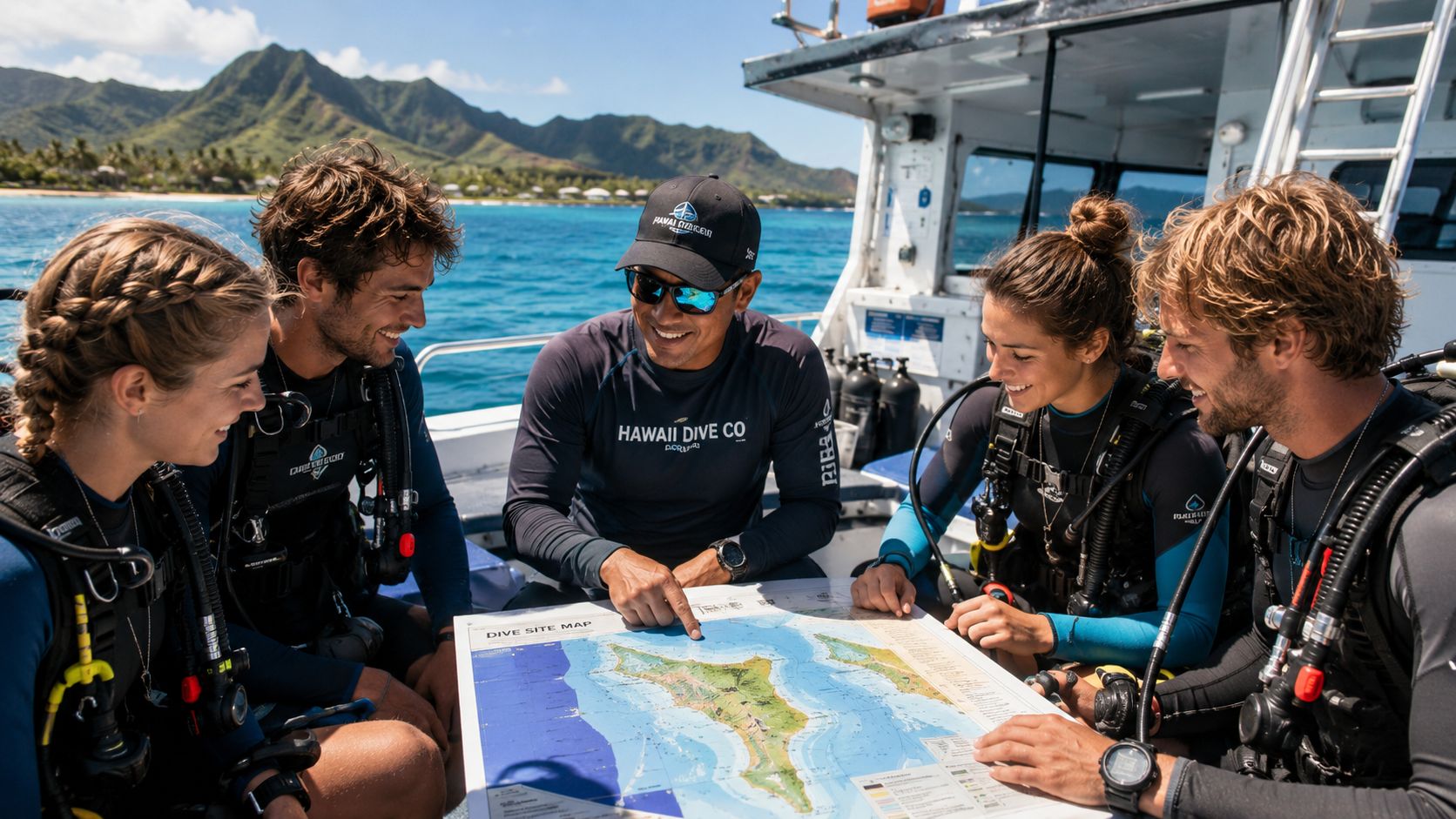
Price alone is a bad filter. A good operator is measured by crew quality, boat setup, gear condition, safety habits, and how much control they keep over group size. If you want a simple test, ask who is guiding you, what the boat is like, and how crowded the dive will feel once you're underwater.
What strong operators do differently
Crew experience matters because calm water still punishes sloppy planning. You want a team that knows the local sites, handles briefings clearly, and keeps the boat organized without rushing divers. You also want reliable maintenance, clean gear, and a layout that makes entries and exits easy instead of awkward.
A concrete example is Kona Honu Divers, which publishes over 200 years of combined industry experience and offers package options that include free nitrox for certified divers. That doesn't automatically make every other operator wrong, but it does show you what a well-built operation looks like when the focus is on logistics and diver comfort, not just selling seats.
- Crew depth: Ask how long the team has worked in Hawaiian water.
- Boat design: Look for stable boarding, shade, showers, and space that isn't cramped.
- Group control: Smaller groups usually mean cleaner briefings and less underwater traffic.
- Gear care: Worn regulators and sloppy rentals are a warning sign.
- Package clarity: Good operators tell you what's included before you pay.
The best way to validate your choice is to read real feedback, not just marketing copy. Kona Honu Divers reviews widget is worth checking because it gives you a direct look at customer experience rather than a polished sales page.
If an operator can't explain the dive in plain language, move on. Good diving feels controlled before you even hit the water.
Planning Your Hawaii Dive Trip from Packing to Itinerary
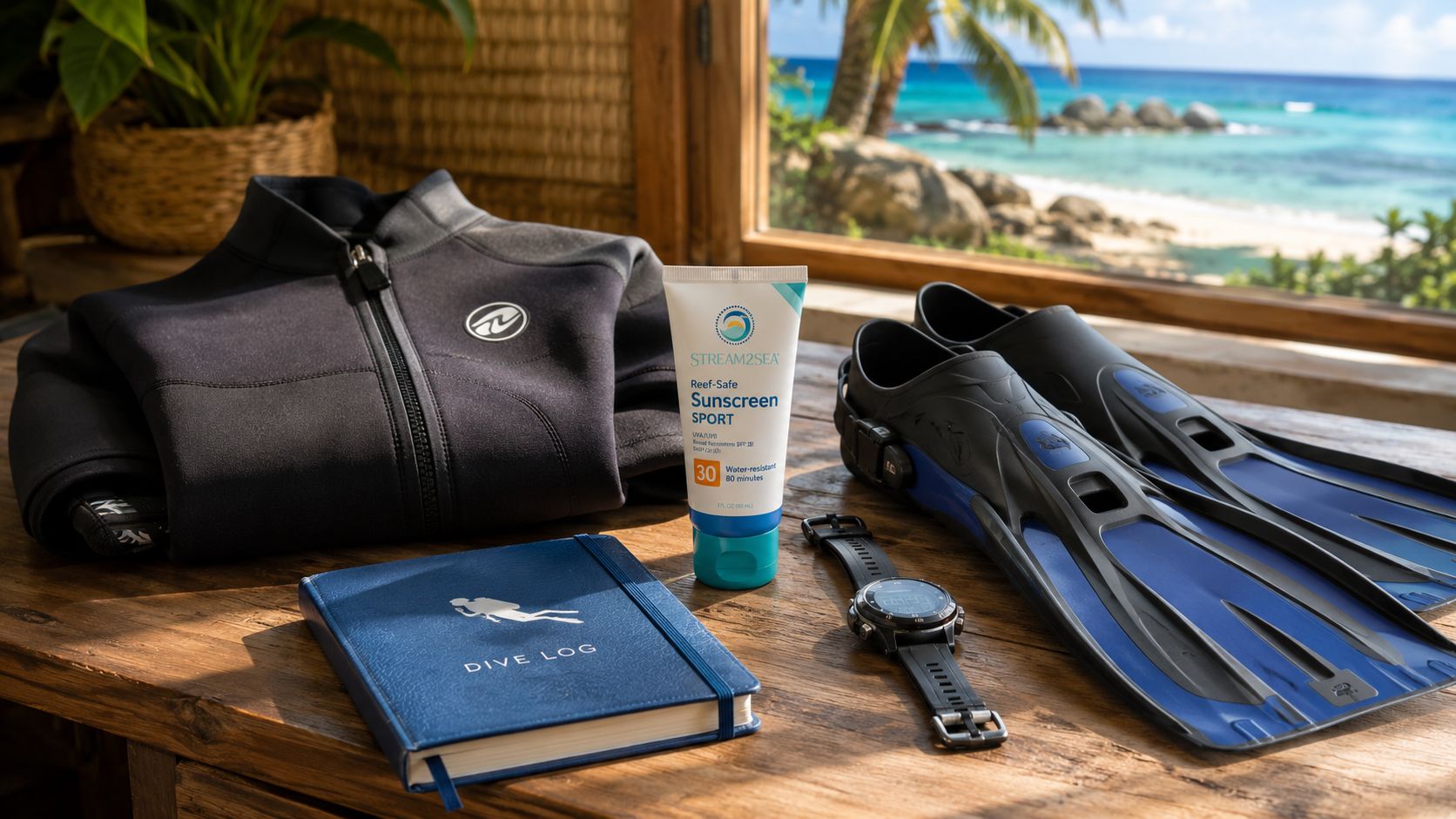
Pack for the dive, not for the fantasy. Bring your certification card, dive log if you use one, a prescription mask if that is part of your setup, and reef-safe sunscreen. Most reputable operators cover the core scuba gear, so leave room in your bag for the pieces that affect your comfort, like your own mask, boots, or dive computer if you prefer them.
Build the trip around your tolerance, not your ambition
If you get seasick, handle it before the boat leaves the dock. Prescription-strength patches, OTC antihistamines, or wristbands are the practical choices. Pick one plan, use it correctly, and do not wait until you already feel awful.
Calm conditions are usually easier to find from late spring through summer in Hawaii. That is the window I would target if your schedule is flexible, especially if you want several boat days or a manta night dive without getting beaten up by rough water. For a broader look at how Hawaii fits into the diving world, see the Kona guide as noted earlier.
A solid beginner itinerary is three days. Use day one for a refresher or intro dive, day two for a standard reef trip, and day three for something a little more ambitious only if your buoyancy feels steady. An advanced five-day plan should include a reef day, a manta night dive, a second reef or drift-style dive, and, if you are qualified and comfortable, a blackwater experience.
Direct advice: Do not put your hardest dive on day one. Warm up, see how your body handles the boat, then book the premium dive once you know you are dialed in.
If you want a clean base for bookings, the Big Island is the easiest place to build around because the site variety is strong and the signature dives are clearly different from each other. I would rather do fewer dives in Kona and do them well than cram in weak dives on the wrong island.
If you want straightforward planning, strong safety standards, and access to Kona's signature dives without guesswork, book with Kona Honu Divers. They run trips that make sense for newer divers and for experienced travelers who want the manta dive, blackwater, or a properly managed day boat.