
You're probably staring at flight options, wondering whether Hawaii diving is as good as the photos, and trying to sort marketing hype from real trip-planning advice. That's a smart place to pause. The difference between an average dive vacation and a trip you'll remember for years usually comes down to matching the right island, conditions, and operator to your actual skill level.
Hawaii rewards divers who plan with intention. The water is warm, the lava topography is dramatic, and the marine life can be spectacular, but the islands don't all dive the same way. A calm reef dive for a newer diver requires a different setup than a manta night dive, and that requires a different mindset than a blackwater drift offshore.
Your Underwater Hawaiian Adventure Awaits
The classic Hawaii dive fantasy is real. Sun on your shoulders. Backroll into clear blue water. Then a slow descent past volcanic ledges, finger coral, hard lava ridges, and the kind of visibility that lets the whole reef open up below you.
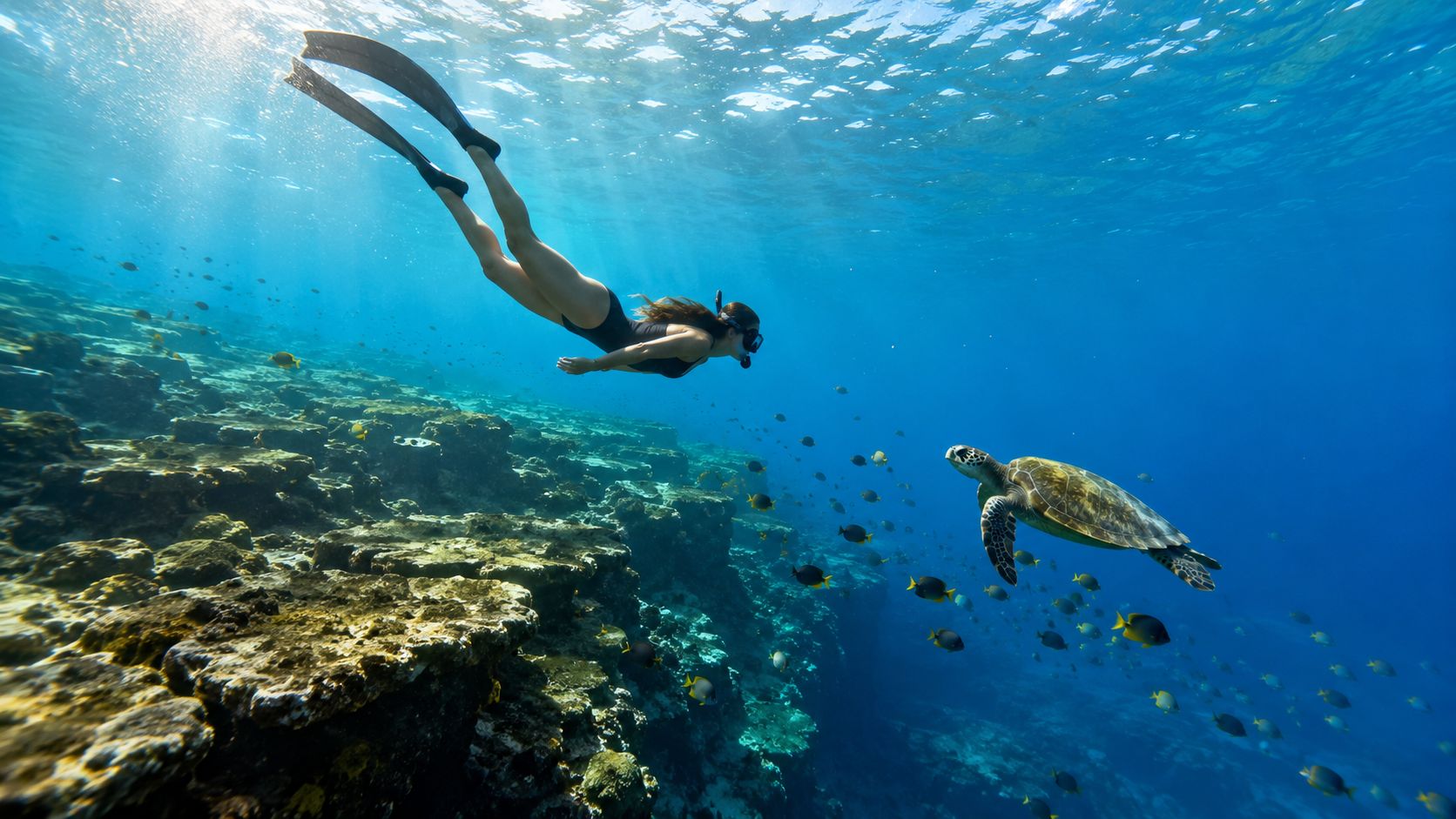
That's why scuba diving in Hawaii keeps drawing divers back. Hawaii hosts over 1.5 million scuba dives annually across more than 215 licensed dive shops, serving 580,000+ unique divers each year, with year-round water temperatures of 75 to 80°F (24 to 27°C) and visibility exceeding 100 feet at volcanic sites driving that demand, according to this Hawaii diving market overview.
Why divers keep choosing Hawaii
Some destinations are seasonal. Hawaii is workable across the year, and that matters if you're trying to plan around vacation windows instead of waiting for one narrow weather band.
A few things make these islands stand out:
- Volcanic terrain: Reefs here aren't just coral gardens. You'll also find lava shelves, arches, and drop-offs.
- Consistent dive culture: With licensed operators spread across the islands, it's easy to find training, guided boat dives, and specialty experiences.
- Range of experiences: New divers can stay on protected reef sites. Experienced divers can target more technical-feeling profiles, current, depth, or night environments.
Practical rule: Hawaii is easy to enjoy, but it isn't automatic. The divers who have the best trips pick dives that fit their comfort level instead of booking the flashiest option first.
What this feels like in real life
A first Hawaii trip often starts with broad goals. See turtles. Dive clear water. Maybe do a night dive if it feels right. By the second or third trip, divers usually get more specific. They start asking better questions. Which coast handles today's wind? Which site stays clean when swell shifts? Which operator explains bottom structure instead of rattling off fish names?
Those are the questions that matter most in scuba diving Hawaii.
For divers focused on the Kona coast, Kona Honu Divers sits in the middle of one of the state's most sought-after dive regions, where lava topography and reliable visibility shape much of what makes the Big Island so appealing underwater.
Planning Your Dive Trip Best Times and Island Conditions
You land in Hawaii with three goals. Get in clear water, avoid a rough first day, and pick dives that match your actual skill level instead of the brochure version of your skill level. That starts with one decision before you ever book a boat. Choose the island, season, and operator based on how they handle changing conditions.
For many visiting divers, the easiest planning window is May through October. Water is often warmer, the ocean is commonly calmer on the leeward sides, and visibility is frequently at its cleanest, as described by the Hawaii tourism authority's seasonal ocean overview. Winter can still produce excellent diving, but it rewards flexibility more than fixed expectations.
Summer versus winter trade-offs
Summer usually gives newer divers a friendlier start. Surface intervals are more comfortable, entries are often simpler, and boats cancel less often on the protected coasts. If the trip priority is relaxed recreational diving with a good chance of clean visibility, summer is the easier bet.
Winter takes more judgment.
North and east exposures can get hammered by swell, and that changes site choice fast. Good operators respond by shifting coasts, adjusting the profile, or scrapping a flashy plan for a better dive. That is not a downgrade. It is how experienced crews protect the quality of the day.
Conditions decide more than whether the boat leaves. They determine which coast, which site, and which divers should be in the water.
This is the essential planning framework for scuba diving Hawaii. Do not ask only, "What is the famous dive?" Ask, "What is the right dive in this weather, for this diver, on this island?"
Hawaii dive islands at a glance
| Island | Best Known For | Typical Visibility | Primary Skill Level |
|---|---|---|---|
| Big Island | Lava formations, night diving, manta and blackwater culture | Often very clear on favorable days | Beginner to advanced |
| Maui | Molokini-style volcanic site appeal | Strong visibility potential at select sites | Beginner to intermediate |
| Oahu | Wreck-focused diving and broad tourism access | Varies by coast and conditions | Beginner to advanced |
| Kauai | Rugged coastal scenery and less hurried feel | Varies by exposure | Intermediate |
The table is a starting point, not a booking formula. Two islands can look equally good on paper and feel completely different in the water based on swell direction, current, entry style, and how much local site access an operator has that week.
The Big Island is usually the easiest fit for divers who want options. The Kona coast has a strong day-boat rhythm, a wide range of reef and lava profiles, and enough site variety that captains can often adapt without sacrificing the dive. That matters more than any single headline site.
Choose Maui if a crater-style dive is high on your list and you are comfortable building part of the trip around a signature site.
Choose Oahu if wrecks are the priority or if your group wants a split trip with city activities between dives. If part of your group prefers surface time, Living Ocean Tours is a strong first stop for Oahu snorkeling planning.
Choose Kauai if you already have some experience and are comfortable with a more condition-dependent trip.
For the Big Island, divers who want day charters, night dives, and specialty trips in one operation can review current Kona diving tours. If your dates are still flexible, this guide to the best months to scuba dive in Hawaii is useful for comparing seasonal trade-offs before you commit.
Hawaii's Signature Dives Manta Ray and Blackwater Experiences
Two dives define the Big Island for visiting divers. One is graceful and theatrical. The other feels like drifting through a living science documentary.
Both are worth doing. They are not interchangeable.
Why the manta ray night dive earns its reputation
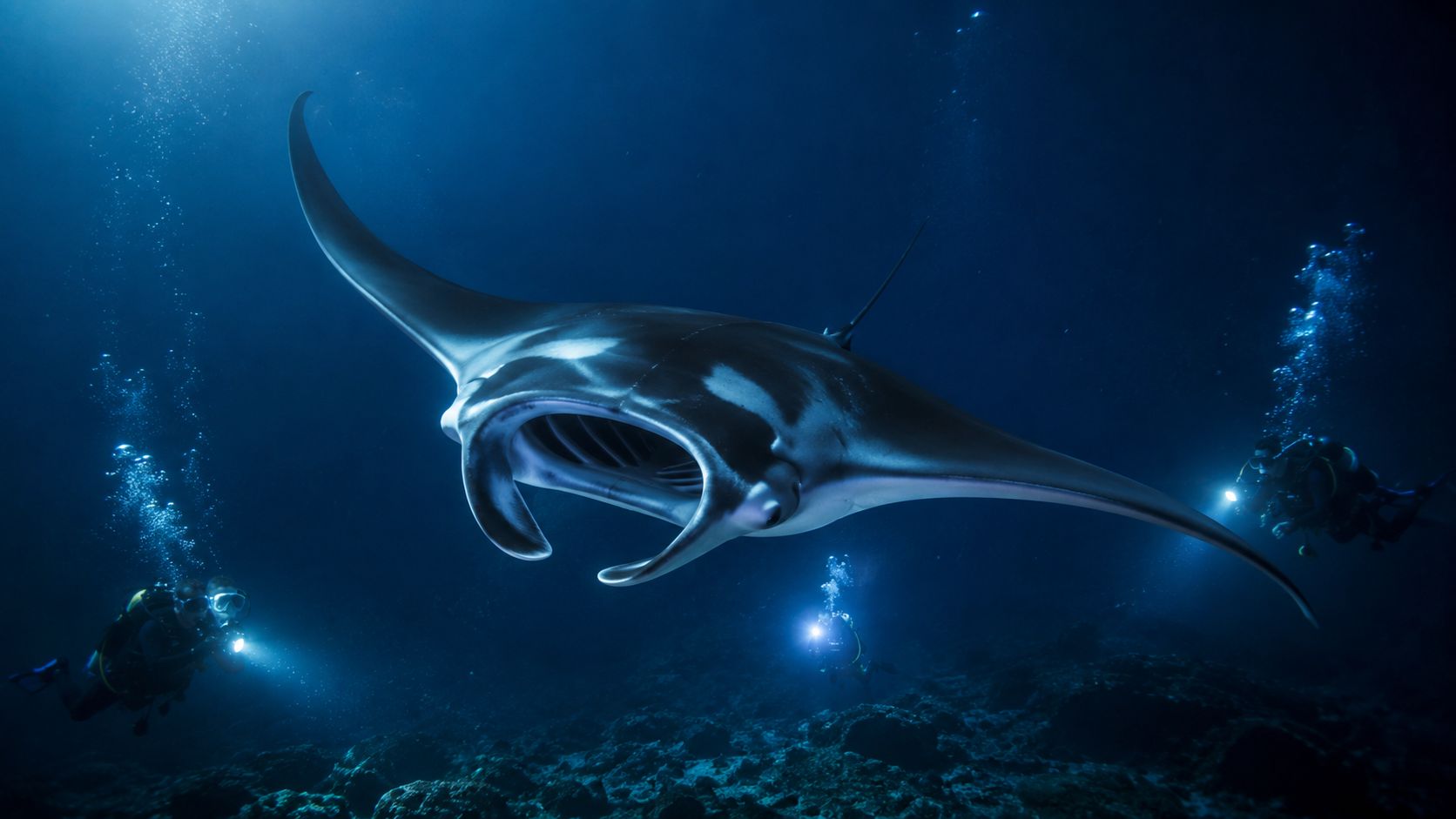
The Kona manta dive is famous for a reason. At the right site, divers settle in, lights attract plankton, and reef manta rays move through the water column in repeated feeding passes. Reports commonly describe 10+ reef manta rays with 12-foot wingspans at depths of 30 to 40 feet, with operators reporting a 95% encounter rate because illuminated boards attract plankton, according to this Big Island manta overview.
That doesn't mean every manta trip is the same. Site choice matters. A lot.
Garden Eel Cove stands apart because it combines a protected location with a better viewing area and stronger reef quality. Kona Honu Divers identifies Garden Eel Cove (Keahole Point) as its exclusive choice for the manta dive over alternatives like Manuka Bay for exactly those reasons in its manta site discussion.
The skill requirement many guides gloss over
Generic travel articles often fail divers. They talk about mantas as if anyone with a certification card should jump in. That's not how good operators think.
For the Manta Ray Night Dive, reputable operators like Kona Honu Divers require Advanced Open Water certification and a recent logbook entry, not just basic Open Water certification, because the dive demands solid night diving skills and precise buoyancy control in dark, crowded conditions, as detailed in this explanation of experience needed for Big Island dives.
If you need to work hard just to hold position at night, you won't enjoy the manta dive nearly as much, and you may make the dive harder on everyone around you.
If the manta dive is on your list, read through this detailed guide to manta ray diving in Hawaii before you book. If you're ready to reserve the experience itself, the manta ray dive tour page is the right place to compare options.
Why blackwater diving is different from every other night dive
Blackwater isn't a reef night dive. It's an offshore drift in open ocean, tethered to a float system over deep water. In Kona, the blackwater drift dive is conducted in 5,000+ feet of water several miles offshore, where divers tether to a float to observe pelagic invertebrates rising from the deep at night, and it is classified strictly as an advanced-diver-only experience in this Hawaii scuba diving guide.
That advanced-only label isn't decoration. Blackwater strips away the familiar references most divers rely on. There's no reef line, no easy visual frame, and no broad margin for weak buoyancy or poor situational awareness.
A second safety issue matters just as much. General Hawaii diving content often skips post-dive elevation planning for these offshore night dives. Recent guidance specifically warns divers, “Don't schedule summit drives or high-elevation sightseeing right after diving”, because of decompression-related risk after blackwater profiles, as noted in this Big Island scuba guide covering blackwater planning.
If blackwater is your kind of dive, book it as the main event of that evening and keep the next stretch of your itinerary low elevation. The dedicated Blackwater Dive tour page is where you can review current trip details.
Beyond the Signature A Tour of Top Hawaiian Dive Sites
The famous night dives get attention, but daytime Hawaii diving is where most divers build the backbone of the trip. The trick is choosing sites by skill and purpose, not by whichever one shows up first on a tourism roundup.
For newer divers building confidence
Start with reef sites that offer straightforward descents, simple navigation, and enough life to keep the dive engaging without creating task overload. The best beginner sites let you settle your breathing, dial in buoyancy, and enjoy the environment instead of feeling rushed by current or depth.
Look for these features:
- Protected profiles: Sites sheltered from prevailing swell usually make entries, descents, and safety stops calmer.
- Clear visual references: Sand channels, reef edges, and distinct lava contours help new divers stay oriented.
- Moderate depth: A site doesn't have to be deep to be memorable. Comfortable bottom time often produces a better first Hawaii dive.
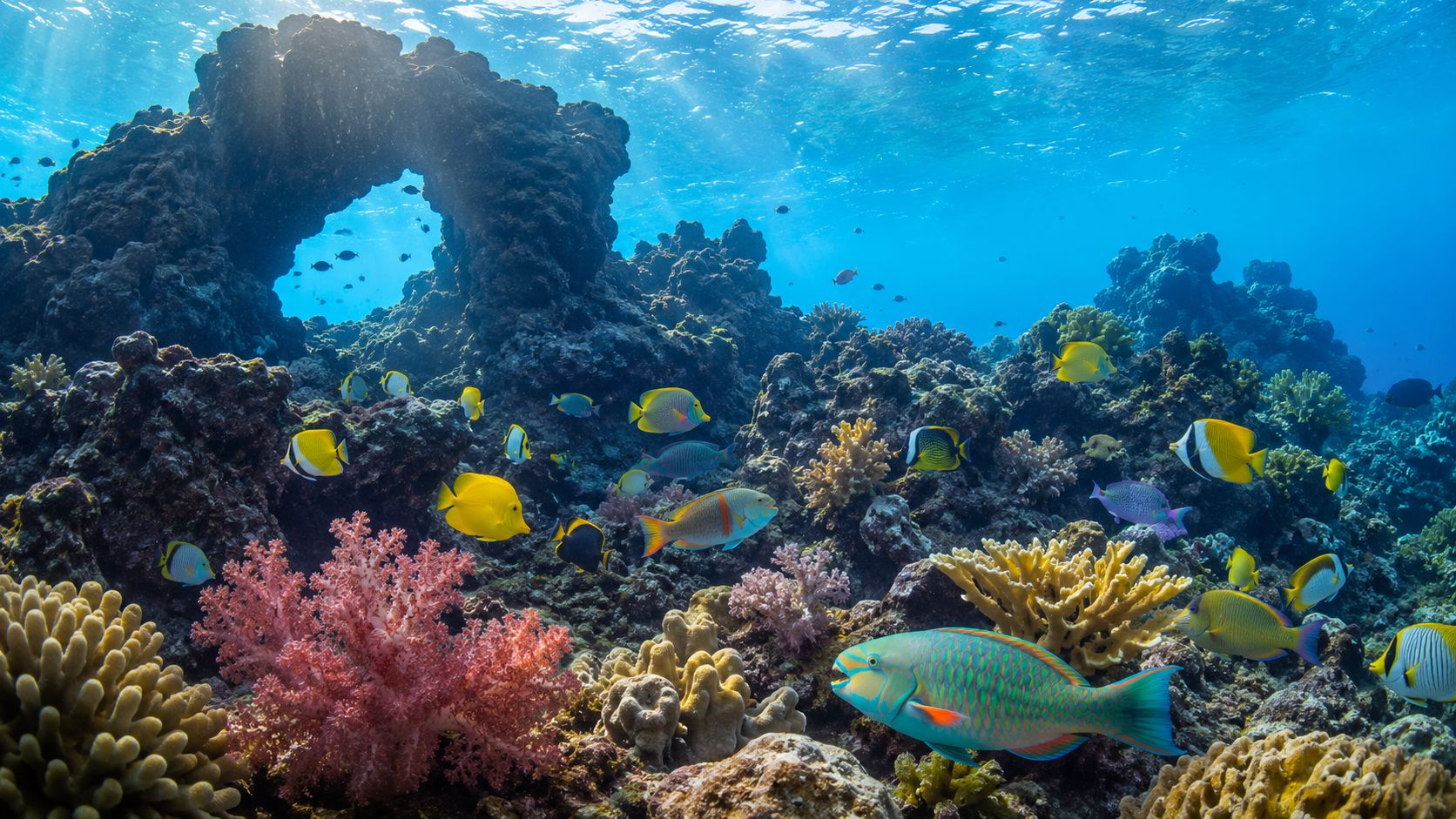
Many divers do better on a calm turtle-and-reef dive than on an ambitious site they aren't ready for.
For intermediate divers who want more structure
Hawaii's distinctive character emerges. Lava tubes, archways, fingers of reef, and irregular volcanic topography create a much more textured dive than a simple slope.
Intermediate divers usually get the most from sites that add one new challenge without stacking several. That might mean more depth, slightly stronger water movement, or more complex structure, but not all at once.
Good intermediate choices often include:
- Arch and cavern-style terrain that rewards careful finning and buoyancy.
- Longer volcanic ridges where fish life changes as you move across the site.
- Mixed terrain dives with coral pockets, hard lava, and occasional blue-water scanning for larger animals.
The best step-up dive is the one that expands your skill set without turning the whole dive into workload.
For advanced divers chasing range and access
Advanced divers usually want one of three things. More demanding topography. More remote sites. Or less crowded dive plans.
That's where premium long-range trips can make sense. Instead of rotating through standard local sites, a more advanced charter can target places that require stronger comfort with buoyancy, gas awareness, and variable conditions. Divers interested in that style of trip can look at the advanced long-range dive tour.
A simple way to think about site selection is this:
| Diver Type | What Works | What Usually Doesn't |
|---|---|---|
| Newer diver | Calm reef, simple entry, easy briefing | Deep or current-heavy plans chosen for bragging rights |
| Intermediate diver | Lava structure with manageable complexity | Multiple stacked challenges on one dive |
| Advanced diver | Remote, technical-feeling terrain with stronger planning | Generic cattle-call itineraries |
The strongest Hawaii itineraries mix it up. Do one easy orientation dive early. Add structure and depth later. Save the specialty dives for when your weighting, trim, and breathing feel settled in local conditions.
Booking with the Best Why Kona Honu Divers Excels
A Hawaii dive trip can go wrong long before anyone gets in the water. It happens at booking, when divers choose based on price, boat photos, or a generic “top 10 dives” article instead of asking how the operation makes decisions.
The fundamental dividing line isn't who has the flashiest marketing. It's whether the crew chooses sites intelligently and briefs divers in a way that matches the site they're diving.
What experienced divers should ask before booking
A 2026 diver guide explicitly identifies “Clear site selection logic that matches the weather and divers on board” and “Briefings that explain terrain instead of just listing fish” as critical, yet underserved criteria for avoiding accidents and ensuring quality, and notes that the Big Island has 50+ professional operators with widely varying standards in this operator-selection guide.
That's the framework I'd use before anything else.
Ask questions like these:
- How do they choose sites each day? You want to hear about wind, swell, current, and the experience level of the divers onboard.
- What's in the briefing? The useful answer includes entry, descent, bottom contour, turnaround points, hazards, and exit.
- Who is this trip really for? If an operation can't clearly describe the expected diver skill level, that's a warning sign.
One operator worth considering
Kona Honu Divers is one option on the Big Island for divers comparing guided trips, specialty dives, training, rentals, and charter formats in one operation. For trip planning, the useful part isn't the brand name. It's that you can compare standard charters, manta schedules, and advanced outings in one place without guessing which experience fits which diver.
That matters because the wrong booking isn't always unsafe. Sometimes it's just a poor match. A new diver ends up on a trip built for stronger guests. An advanced diver gets a generic reef plan with a briefing that adds nothing.
A good operator doesn't just take you to a site. The crew should be able to explain why that site is the right call today.
Safety First Gear and Medical Preparedness
The accident chain in Hawaii usually starts before anyone rolls in. A diver books a trip that exceeds their current comfort level, skips a medical detail on the waiver, or boards already queasy and dehydrated. Warm water and good visibility do not fix poor preparation.
Hawaii has a strong safety reputation, but that comes from conservative decisions by divers and crews. Incidents still happen, and the common causes are familiar to any working divemaster: weak buoyancy, rushing the descent, poor gas awareness, unmanaged medical issues, and divers treating a vacation dive like a controlled pool session.
Certification and dive fit
The card matters less than the match.
An Open Water certification may be enough for an easy guided reef dive in calm conditions. It may be a poor fit for a night dive, lava tubes, surge, or a boat day with multiple deeper profiles. The better question is whether your recent diving matches the site, the entry, the visibility, and the workload.
Before booking, assess four things:
- Recency: If your last dive was years ago, skills will be slower and gas use will usually be higher.
- Buoyancy: Hawaiian reefs and night sites punish sloppy trim fast. So do crowded underwater groups.
- Comfort in current and surge: Even good conditions can include movement that new divers find distracting.
- Task loading: Lights, navigation, cameras, and marine life excitement can stack up quickly.
If any of that feels shaky, schedule a refresher first. Good operators would rather tune up your skills than spend the whole charter solving preventable problems.
Gear checklist that actually matters
Bring the gear that affects fit, awareness, and control. Rent the rest if travel convenience wins.
My priority list is simple:
- Mask: If it leaks, nothing else feels right.
- Dive computer: Every diver should track their own profile.
- Exposure protection: Water that feels warm on dive one can feel cool by dive three.
- Fins: Precise finning matters around coral, in surge, and during night dives.
- SMB and whistle: Smart additions if you are diving from boats and want a better margin in surface conditions.
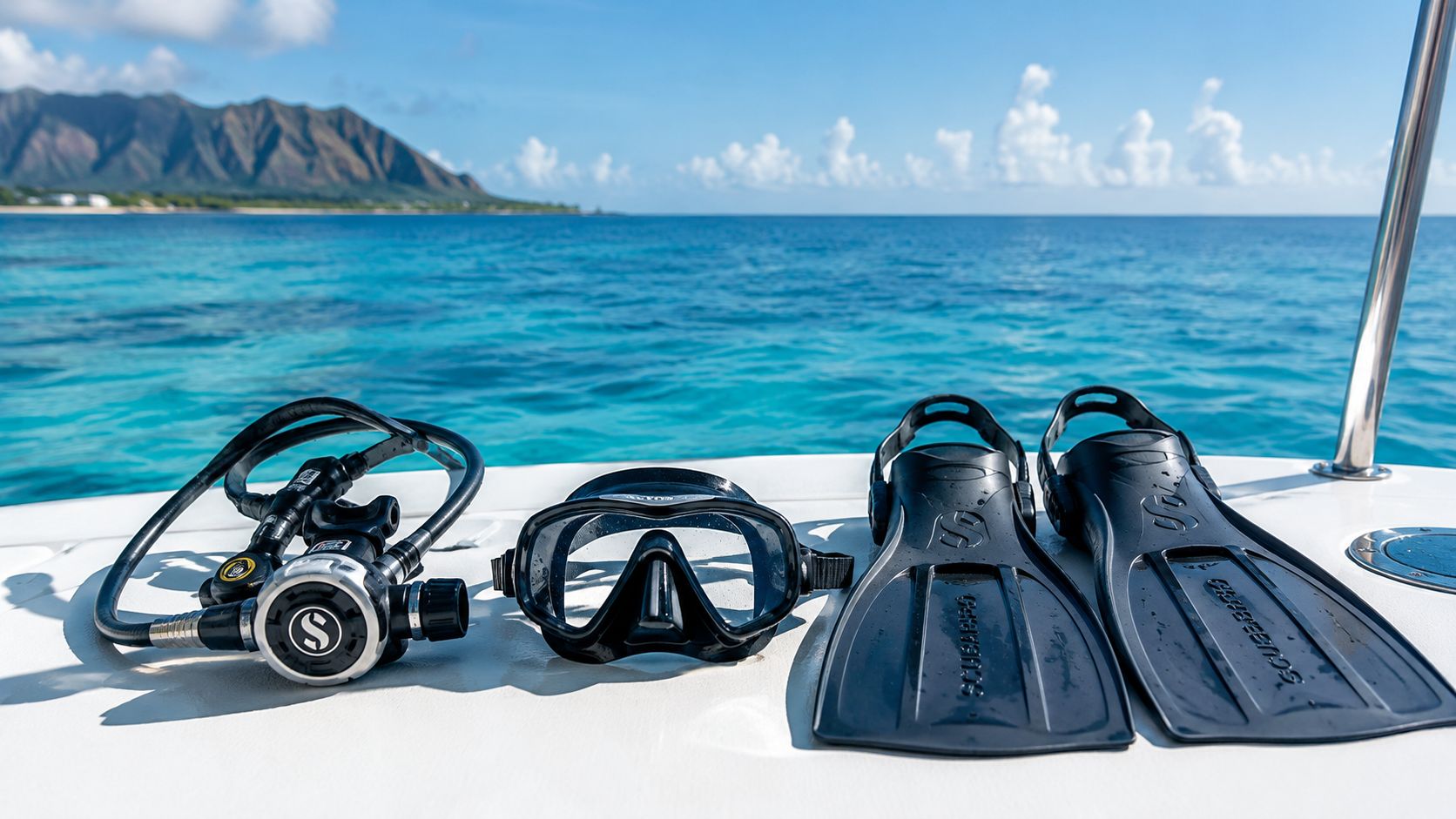
Rental gear is fine if it is maintained and fitted before departure. The mistake is discovering a loose mask strap or unfamiliar weight system while negative on a descent line. Ask to check your setup on the dock or at the shop, not after the boat is already drifting over the site.
Medical honesty and seasickness planning
Medical disclosure is part of dive planning, not paperwork for the crew. Asthma history, heart issues, recent illness, ear trouble, anxiety, past DCS, and current medications can all affect whether a dive is appropriate, how conservative the plan should be, and how a crew responds if something goes wrong.
Seasickness deserves the same respect. A diver who is pale, dehydrated, and vomiting before the first briefing is already behind. On Kona boats, I have seen strong certified divers lose an entire day because they waited to deal with motion sickness until the swell hit them offshore.
Useful options include:
- Patch option: Ship-EEZ Seasickness Patch
- Traditional tablets: Dramamine pills
- Less drowsy favorite for many travelers: Bonine pills
- Non-medication option: Sea Band wristbands
- Simple backup: Ginger chews
For a broader look at prevention strategies, this guide to the best sea sickness medication for boat trips is a helpful planning resource.
Try any remedy before your trip if you can. Some divers get sleepy, dry, or mentally foggy, which is a poor trade on a dive day.
The divers who stay safest in Hawaii are rarely the boldest ones. They arrive rested, hydrated, properly weighted, medically honest, and willing to sit out a dive that is wrong for them.
Frequently Asked Questions About Diving in Hawaii
Should you bring your own gear or rent?
Bring the gear that affects comfort and fit the most, especially your mask, computer, and exposure protection if you already trust them. Rent heavier items if travel convenience matters more than familiarity. The right answer depends on how often you dive and how current your gear is.
Can new divers enjoy scuba diving in Hawaii?
Yes, if they book dives that match their present skill level. Hawaii offers straightforward reef diving, but newer divers do best when they avoid choosing signature dives just because they're famous.
Is the manta ray dive suitable for every certified diver?
No. As covered earlier, the stronger operators treat it as a dive for people who already have solid night skills, buoyancy control, and recent experience.
What if you wear glasses or contact lenses?
Most divers who need vision correction either use contact lenses with a properly fitted mask or arrange a prescription mask. Handle masks carefully on the boat and have a backup plan if losing a lens would ruin the day.
How should you tip the crew?
Tipping practices vary by traveler and trip type, but the easiest rule is to tip when the crew was attentive, organized, safe, and helpful. If a crew solved problems, improved the day, or handled a difficult ocean call well, acknowledge it.
How do you protect Hawaii's reefs while diving?
Keep your buoyancy under control, don't kneel on the reef, secure your gauges and accessories, and keep your hands off marine life. Good divers leave the site looking untouched.
Is there one planning mistake people make most often?
Yes. They choose based on the headline dive instead of the operator's decision-making. In Hawaii, the better question is not “What site do you go to?” It's “How do you decide today's site is the right one?”
If you want a trip built around sound site selection, realistic skill matching, and access to the Big Island's standout dives, Kona Honu Divers is a practical place to start comparing options and booking the dives that fit your experience.